
Image: Alternative Hop Varieties for Substituting Neo1 in Brewing Recipes
Published: October 15, 2026 at 7:40:36 PM UTC
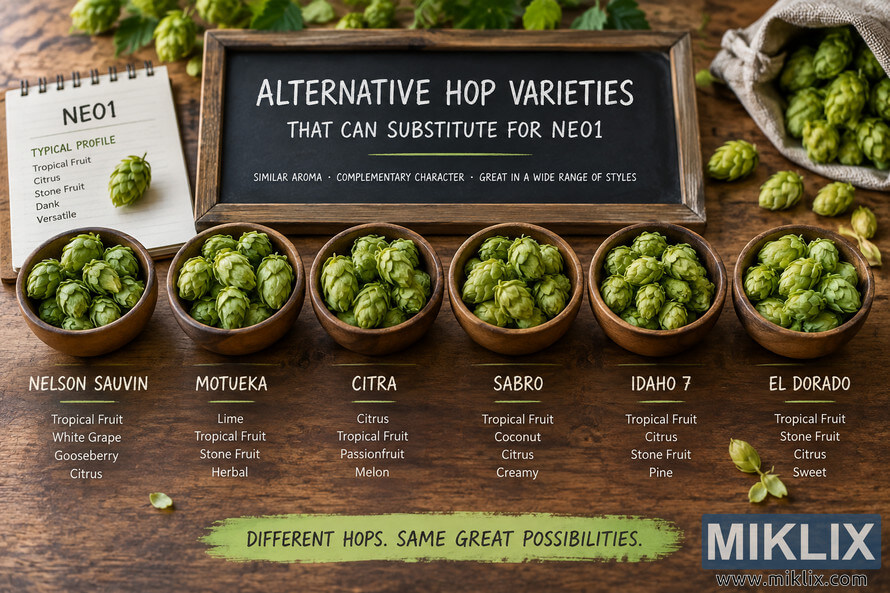
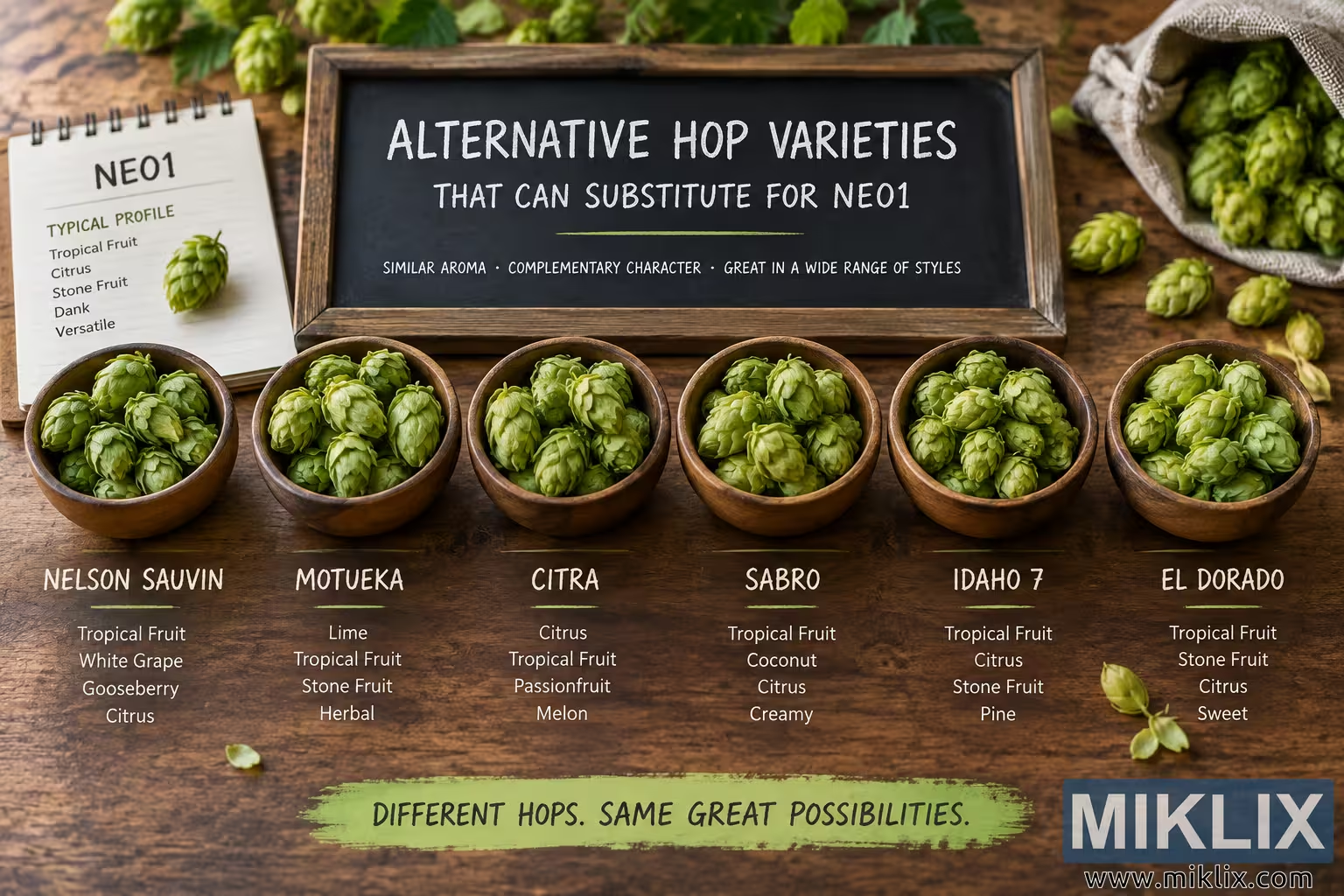
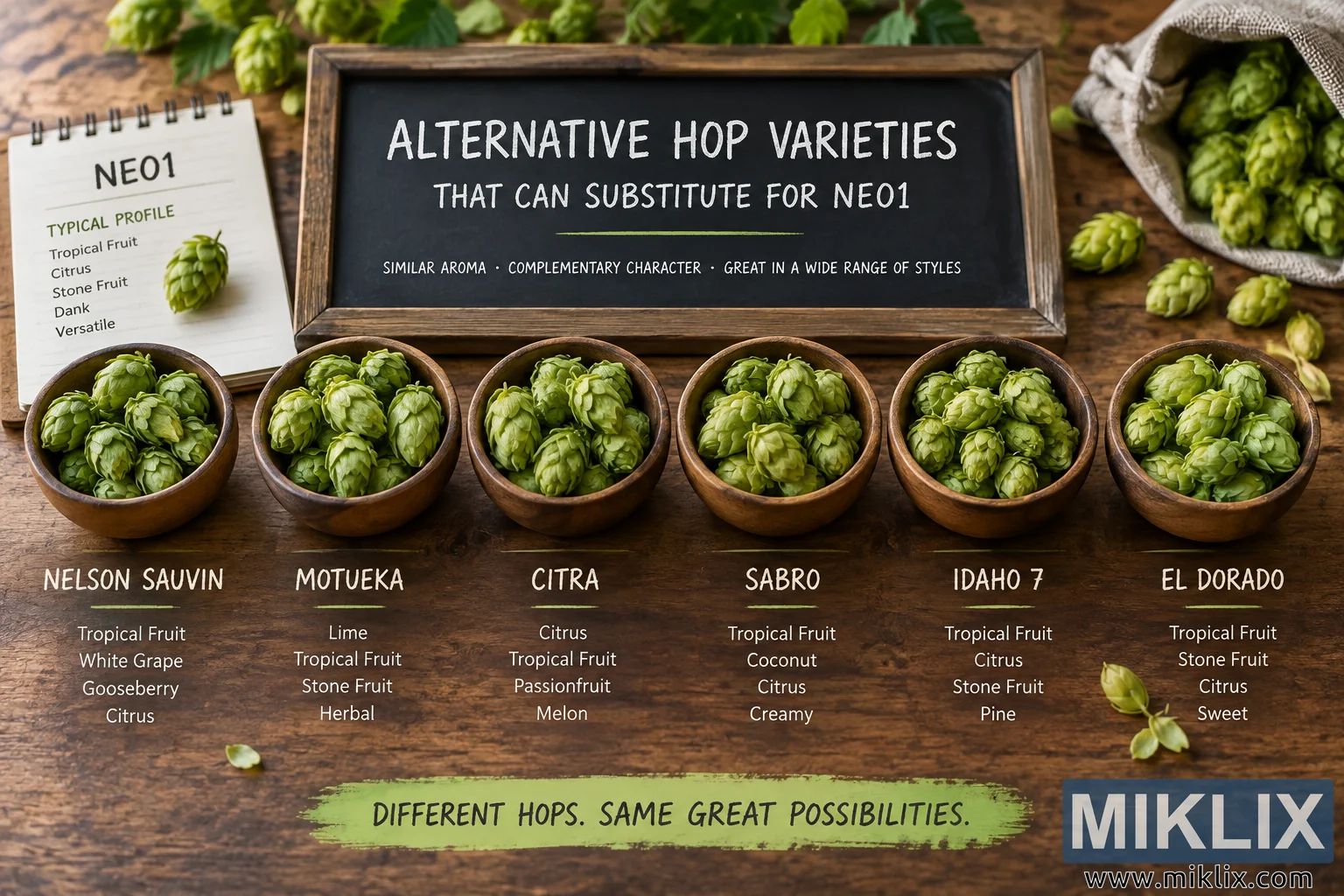
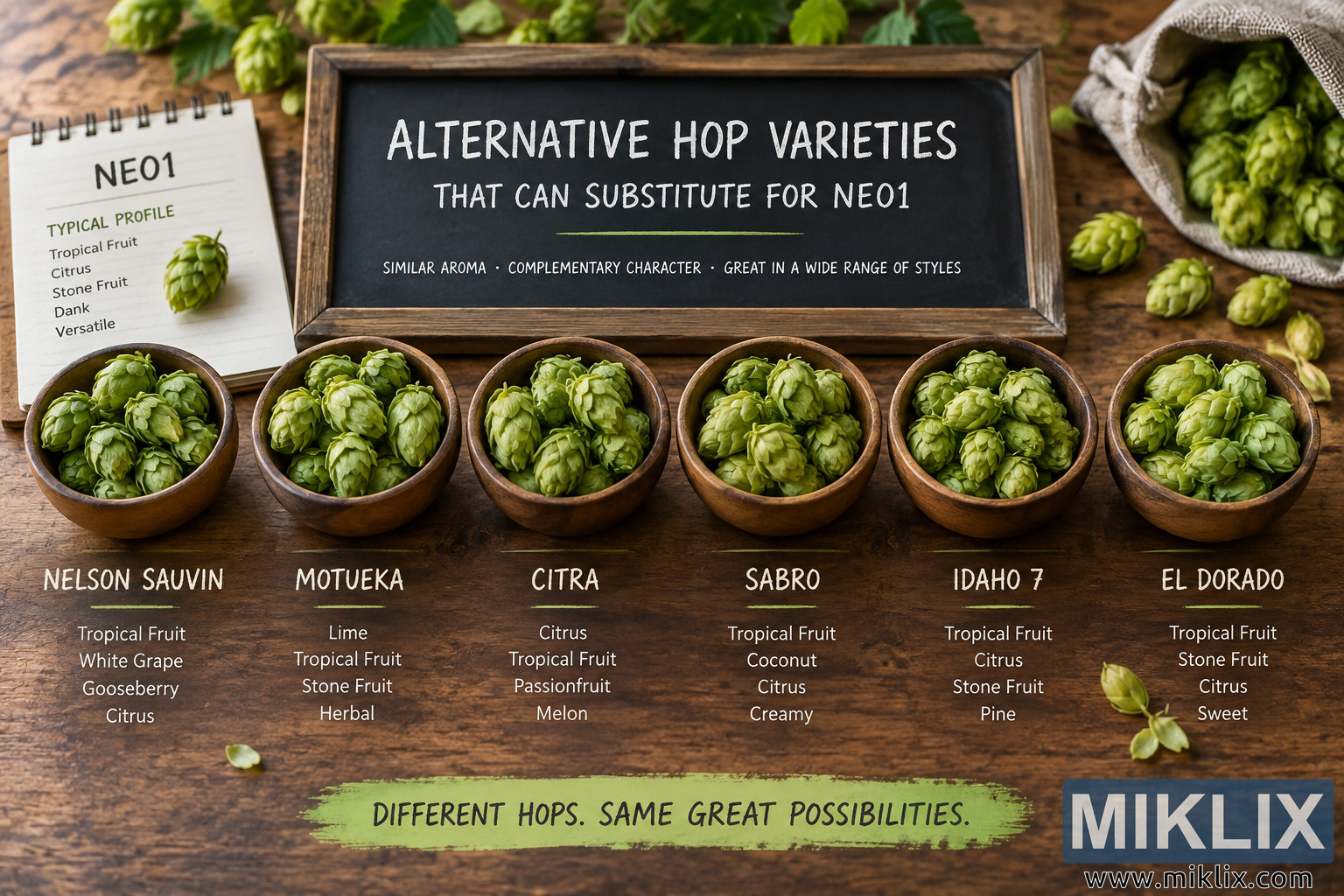
A rustic brewing infographic comparing alternative hop varieties for Neo1, including Nelson Sauvin, Motueka, Citra, Sabro, Idaho 7, and El Dorado, with their key aroma and flavor characteristics.
Available versions of this image
The image files available for download below are less compressed and higher resolution - and as a result of that, higher quality - than the images embedded in articles and pages on this website, which are more optimized for file size in order to reduce bandwidth consumption.
Regular size (1,536 x 1,024)
Large size (3,072 x 2,048)
Very large size (4,608 x 3,072)
Extra large size (6,144 x 4,096)
Comically large size (1,048,576 x 699,051)
- Still uploading... ;-)
Image description
The image is a high-resolution landscape-oriented rustic infographic about alternative hop varieties that can be used as substitutes for Neo1 in brewing recipes. The composition is arranged like a handcrafted brewer’s reference guide photographed on a warm, weathered wooden work surface. In the upper center, a large dark charcoal chalkboard with a substantial wooden frame presents the main subject in hand-lettered white typography: “ALTERNATIVE HOP VARIETIES” followed by “THAT CAN SUBSTITUTE FOR NEO1.” Beneath the main heading, a smaller line communicates the intended comparison by describing the alternatives as having similar aroma, complementary character, and usefulness across a wide range of beer styles. The chalkboard gives the scene the appearance of an informal brewing workshop or recipe-development board rather than a sterile technical chart.
On the left side of the composition, a small spiral-bound notepad is partially tucked behind the main display. The page is headed “NEO1” and contains a concise reference profile describing its characteristic qualities, including tropical fruit, citrus, stone fruit, dank, and versatility. A green hop cone rests over part of the notes, reinforcing the brewing theme and visually connecting the reference profile with the physical ingredients displayed across the foreground. The notebook and chalkboard together establish Neo1 as the reference point while the hop varieties below are presented as possible alternatives rather than as branded packaged products.
Across the foreground are six separate rustic wooden bowls, each filled with fresh-looking green hop cones. The bowls are arranged in a horizontal sequence, with each one representing a different alternative variety. The hop cones are rendered with layered, overlapping bracts and natural variations in green tones, giving them a tactile botanical appearance. The first bowl is labeled “NELSON SAUVIN” and is associated with descriptors including tropical fruit, white grape, gooseberry, and citrus. The second bowl is labeled “MOTUEKA” and is described with lime, tropical fruit, stone fruit, and herbal characteristics. The third bowl is labeled “CITRA” and lists citrus, tropical fruit, passionfruit, and melon. The fourth bowl is labeled “SABRO” and lists tropical fruit, coconut, citrus, and creamy characteristics. The fifth bowl is labeled “IDAHO 7” and lists tropical fruit, citrus, stone fruit, and pine. The sixth bowl is labeled “EL DORADO” and lists tropical fruit, stone fruit, citrus, and sweet characteristics. These names and sensory descriptors form the practical informational core of the image, allowing the viewer to compare the aromatic directions of the alternatives at a glance.
The visual hierarchy is deliberately clear: the reference hop appears in the notepad, the substitution concept is stated prominently on the chalkboard, and the candidate hop varieties are distributed evenly across the lower half. Thin hand-drawn divider lines and lightly illustrated accents separate the individual varieties without making the layout feel overly digital. At the very bottom, a broad brushstroke-like green banner contains the concluding phrase “DIFFERENT HOPS. SAME GREAT POSSIBILITIES.” This statement reinforces the image’s recipe-substitution theme and gives the composition a strong visual endpoint.
Additional hop cones and hop foliage are scattered naturally around the scene. Fresh green hop material appears along the top edge behind the chalkboard, while a partially open cloth sack filled with hop cones sits in the upper-right corner. A few loose cones are positioned near the bowls and on the wooden surface, creating depth and suggesting an active brewing workspace. The warm brown wood, muted green hops, dark chalkboard, natural canvas fabric, and handwritten typography create a cohesive rustic color and material palette. Soft, directional lighting highlights the textures of the hop cones and wooden bowls while maintaining enough contrast for the text to remain readable.
The image does not depict recognizable commercial packaging, logos, trademarks, brewery branding, or branded product containers. Instead, it focuses on the raw agricultural ingredient—the hop cone—and on sensory descriptors useful for recipe formulation. The overall style combines food photography, craft-brewing reference material, and an artisanal educational infographic. It is designed to communicate that several hop varieties can provide overlapping or complementary tropical, citrus, stone-fruit, herbal, pine, grape-like, or other aromatic qualities when developing a recipe that originally calls for Neo1. The landscape format provides enough horizontal space for the six alternatives to be shown side by side, making the image suitable as a visual reference for brewers, recipe developers, brewing educators, or readers researching hop substitutions.
The image is related to: Hops in Beer Brewing: Neo1