
Image: Brewing Mistakes and Problems to Avoid with Neo1 Hops
Published: October 15, 2026 at 7:40:36 PM UTC
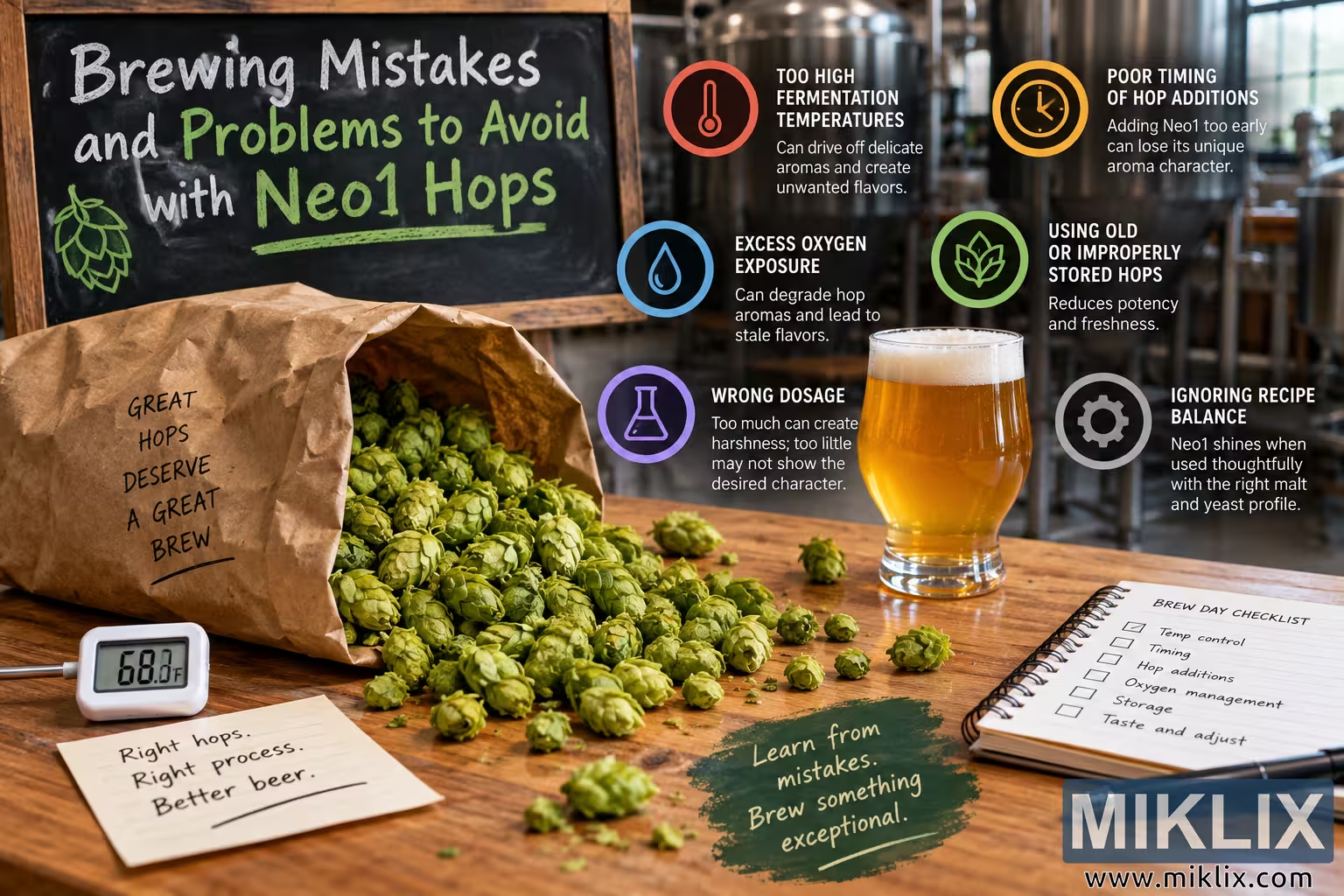
A detailed landscape brewing infographic about avoiding common Neo1 hop mistakes, including temperature, timing, oxygen exposure, hop storage, dosage, and recipe balance.
Available versions of this image
The image files available for download below are less compressed and higher resolution - and as a result of that, higher quality - than the images embedded in articles and pages on this website, which are more optimized for file size in order to reduce bandwidth consumption.
Regular size (1,536 x 1,024)
Large size (3,072 x 2,048)
Very large size (4,608 x 3,072)
Extra large size (6,144 x 4,096)
Comically large size (1,048,576 x 699,051)
- Still uploading... ;-)
Image description
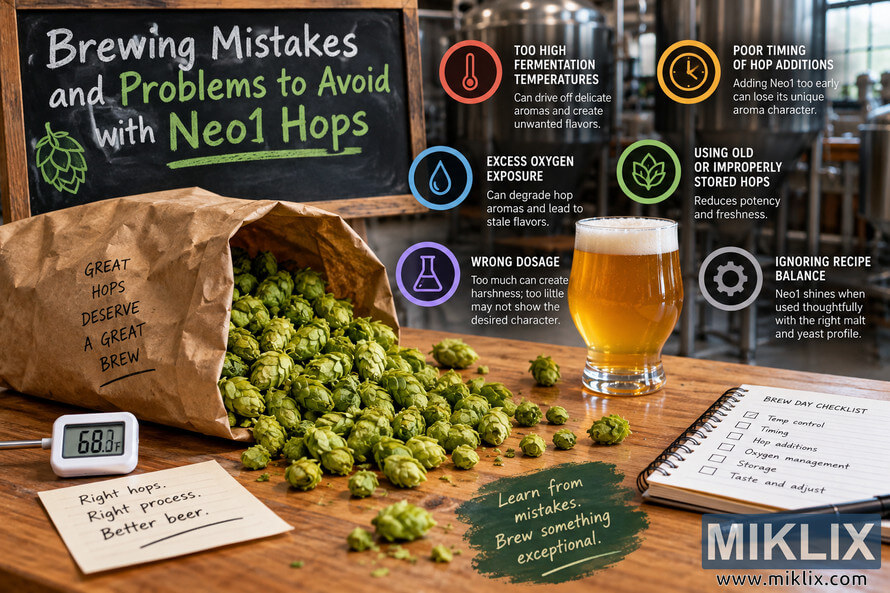
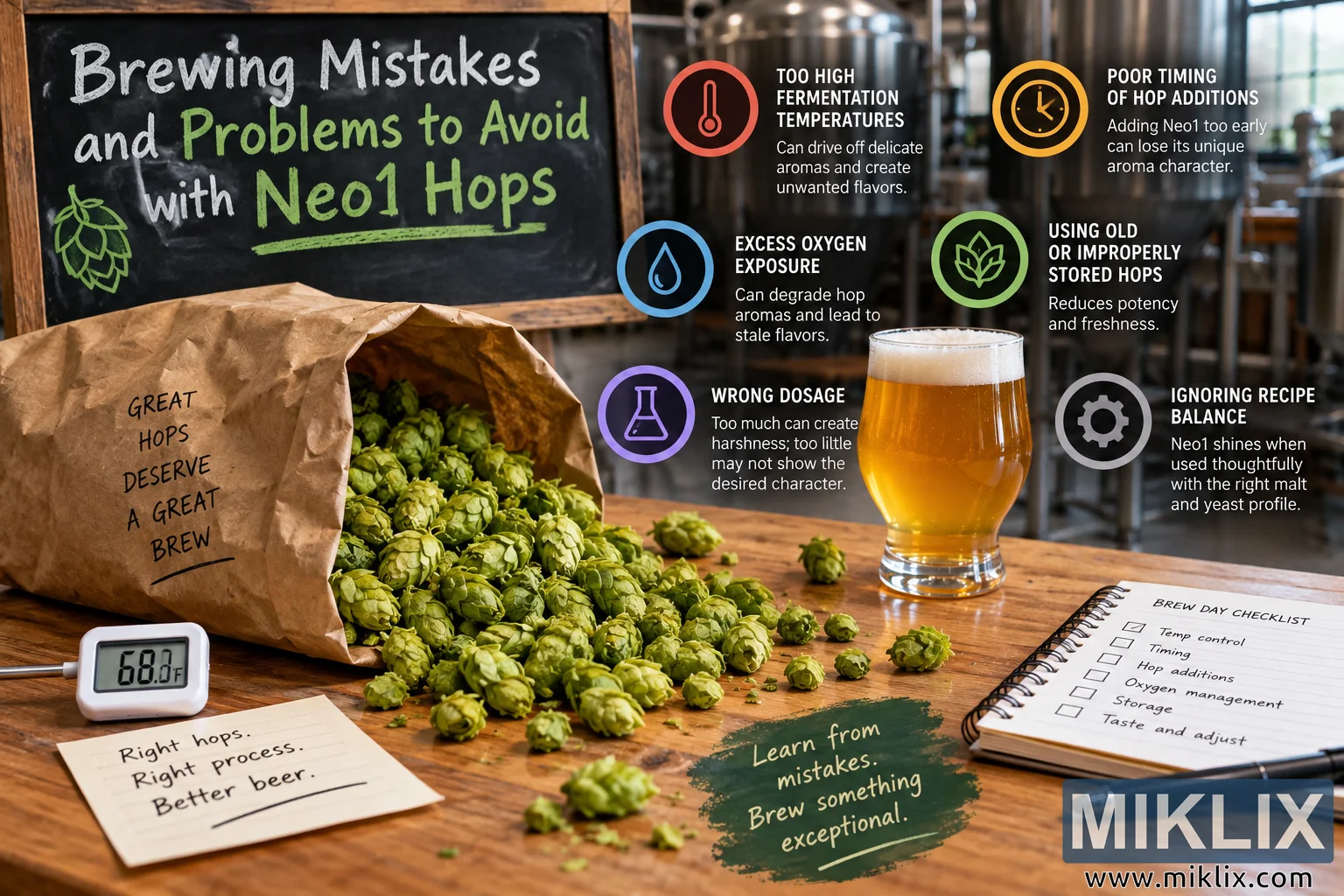
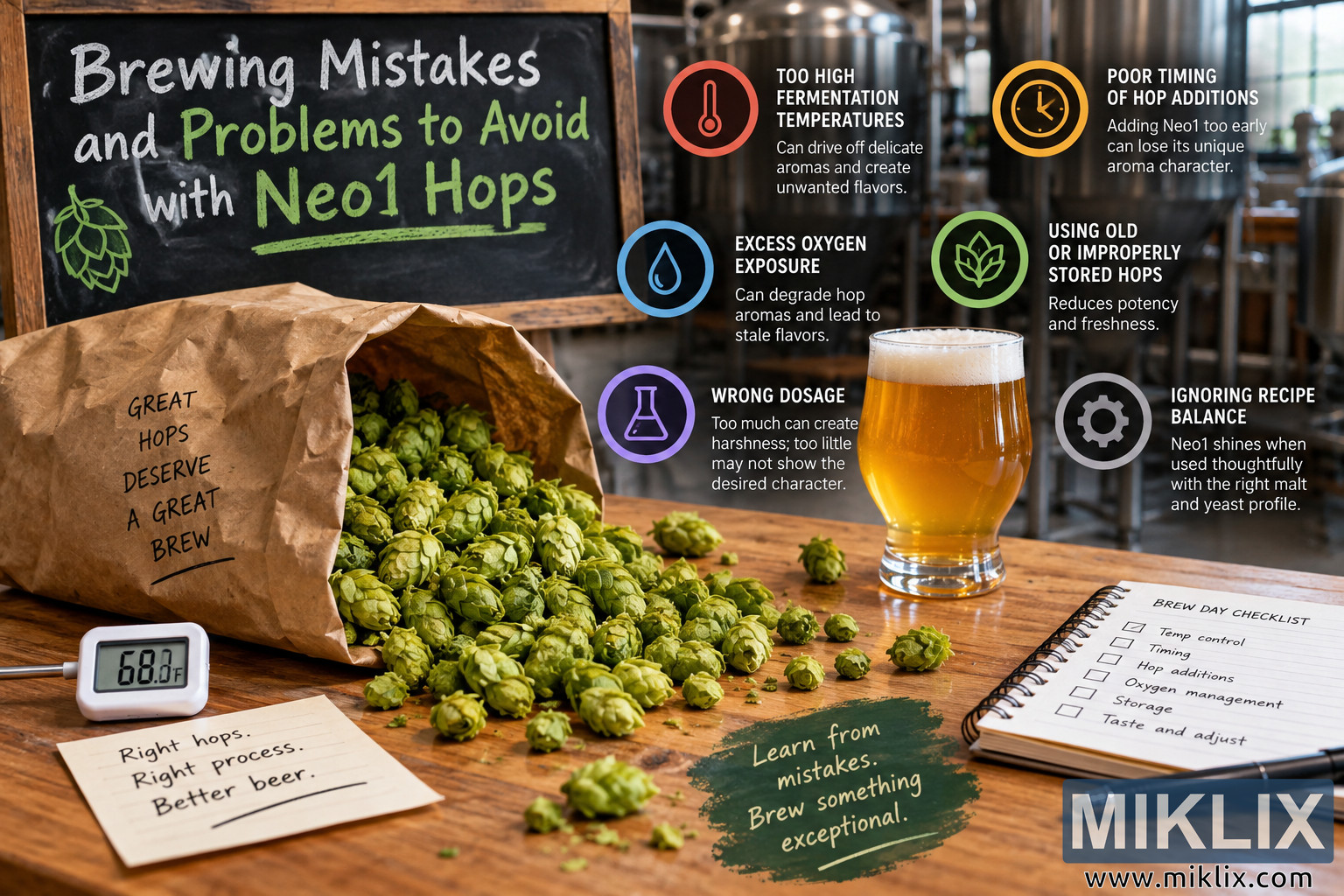
This landscape-oriented image presents an editorial-style brewing infographic focused on “Brewing Mistakes and Problems to Avoid with Neo1 Hops.” The scene is set inside a warm, realistic industrial brew room, combining photographic still-life details with clearly designed chalkboard-style instructional graphics. The composition is wide and horizontally balanced, with a large chalkboard occupying the upper-left portion of the scene, while brewing ingredients, equipment, a glass of beer, and practical brewing notes fill the wooden work surface below. The overall visual language is approachable, educational, craft-oriented, and highly detailed, making the image suitable for explaining common brewing pitfalls while keeping the subject grounded in a believable brewery environment.
The main chalkboard headline is large and hand-lettered, reading “Brewing Mistakes and Problems to Avoid with Neo1 Hops.” The lettering mixes white and green chalk-like strokes, with “Neo1 Hops” emphasized in green. A simple green hop-cone drawing appears near the left side of the board, reinforcing the ingredient focus. The chalkboard is framed in dark wood and sits against a softly blurred brewery background containing tanks, pipes, metallic surfaces, warm overhead lighting, and other brewing-room details. This background gives the image depth without distracting from the instructional content in the foreground.
Several circular visual callouts surround the main information area. At the upper right, a red-orange temperature symbol accompanies the warning “TOO HIGH FERMENTATION TEMPERATURES,” followed by explanatory text stating that excessive fermentation temperatures can drive off delicate aromas and create unwanted flavors. Nearby, a yellow-orange clock icon introduces “POOR TIMING OF HOP ADDITIONS,” explaining that adding Neo1 too early can cause the brewer to lose some of its unique aroma character. These two callouts emphasize the importance of temperature control and hop-addition timing when trying to preserve desired aromatic qualities.
Toward the middle-right, a blue droplet icon marks “EXCESS OXYGEN EXPOSURE,” with supporting text explaining that oxygen exposure can degrade hop aromas and contribute to stale flavors. Beside it, a green hop icon identifies “USING OLD OR IMPROPERLY STORED HOPS,” warning that poor storage or aged hops can reduce potency and freshness. These sections visually connect handling and storage practices with the preservation of hop character, reinforcing that ingredient quality is affected not only by the recipe but also by how hops are stored and exposed to the environment.
Lower in the composition, a purple laboratory-flask icon accompanies the warning “WRONG DOSAGE.” The accompanying message explains that too much hop material can create harshness while too little may fail to deliver the desired character. On the far right, a gray gear icon introduces “IGNORING RECIPE BALANCE,” with text explaining that Neo1 can shine when it is used thoughtfully alongside an appropriate malt and yeast profile. Together, these callouts present dosage and recipe integration as complementary considerations rather than treating the hop addition as an isolated ingredient decision.
The foreground contains a large open brown paper hop bag spilling fresh green hop cones across a rustic wooden workbench. The cones vary naturally in size and shape, with layered bracts and textured surfaces that make them visually recognizable as brewing hops. A handwritten-style message on the bag reads “GREAT HOPS DESERVE A GREAT BREW,” adding a craft-brewing character to the scene. Additional loose hop cones are scattered across the tabletop, creating a tactile connection between the instructional graphics and the physical brewing ingredient.
Near the lower-left corner, a digital thermometer displays approximately 68.0°F, providing a concrete visual cue for temperature monitoring. Beside it is a small handwritten note reading “Right hops. Right process. Better beer.” This note acts as a concise summary of the infographic’s practical theme: selecting the ingredient is only one part of producing a successful brew, while process control and careful handling also matter. The thermometer and note make the workbench feel like an active brewing station rather than a purely decorative scene.
On the right side of the workbench is a clear glass filled with golden-amber beer and topped with a substantial white foam head. The glass catches the warm ambient light and provides a visual representation of the desired finished product. Its bright amber color contrasts with the green hop cones and dark chalkboard, creating a strong focal point in the lower-right portion of the composition. The beer is positioned between the hop ingredients and the checklist, visually linking brewing inputs and process decisions to the finished beverage.
A spiral-bound notebook sits in the lower-right foreground with the heading “BREW DAY CHECKLIST.” The visible checklist includes items such as temperature control, timing, hop additions, oxygen management, storage, and tasting and adjustment. A dark pen rests nearby, suggesting that the brewer is actively recording or reviewing process details. The notebook reinforces the image’s practical, instructional purpose by turning the warnings into a set of concrete actions that can be checked during a brew day.
At the bottom center, a dark green painted brushstroke carries the handwritten-style closing message “Learn from mistakes. Brew something exceptional.” This final statement functions as the visual conclusion of the infographic, encouraging careful process management without overwhelming the viewer with technical detail. The combination of realistic brewing objects, handwritten notes, simple icons, and concise warnings gives the image the feel of a professionally designed educational feature for home brewers or craft-brewing audiences.
The lighting is warm and inviting, with highlights on the metal brewery equipment, glassware, hop cones, and wooden table. The depth of field keeps the central instructional elements and foreground objects legible while allowing the industrial brewery background to recede softly. The image uses a natural palette dominated by greens from the hops, warm browns from the wood and paper, amber from the beer, dark charcoal from the chalkboard, and muted metallic tones from the brewery equipment. Accent colors in the circular warning icons help separate individual problem areas and create a clear visual hierarchy.
Overall, the image communicates a practical lesson: successful brewing with Neo1 hops depends on more than simply adding hops to a recipe. The visual warnings highlight fermentation temperature, timing of additions, oxygen exposure, storage and freshness, dosage, and recipe balance as distinct areas where mistakes can affect aroma, flavor, freshness, or overall harmony. By presenting these issues as an organized set of brewery-floor reminders, the image works simultaneously as a realistic brewing scene and as an educational reference designed to help viewers recognize and avoid common process problems.
The image is related to: Hops in Beer Brewing: Neo1