
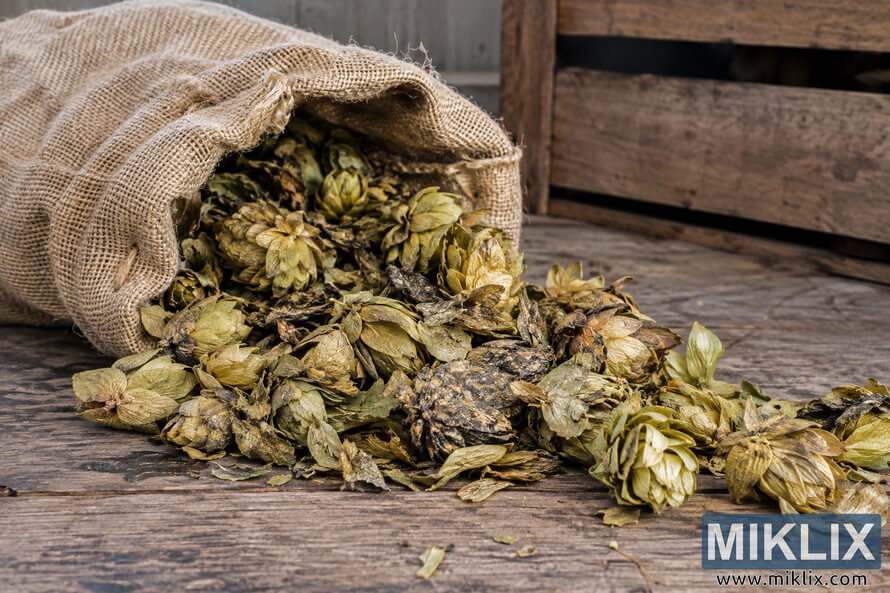
Image: Improper Hop Storage Showing Degraded Hop Quality
Published: October 15, 2026 at 7:40:36 PM UTC
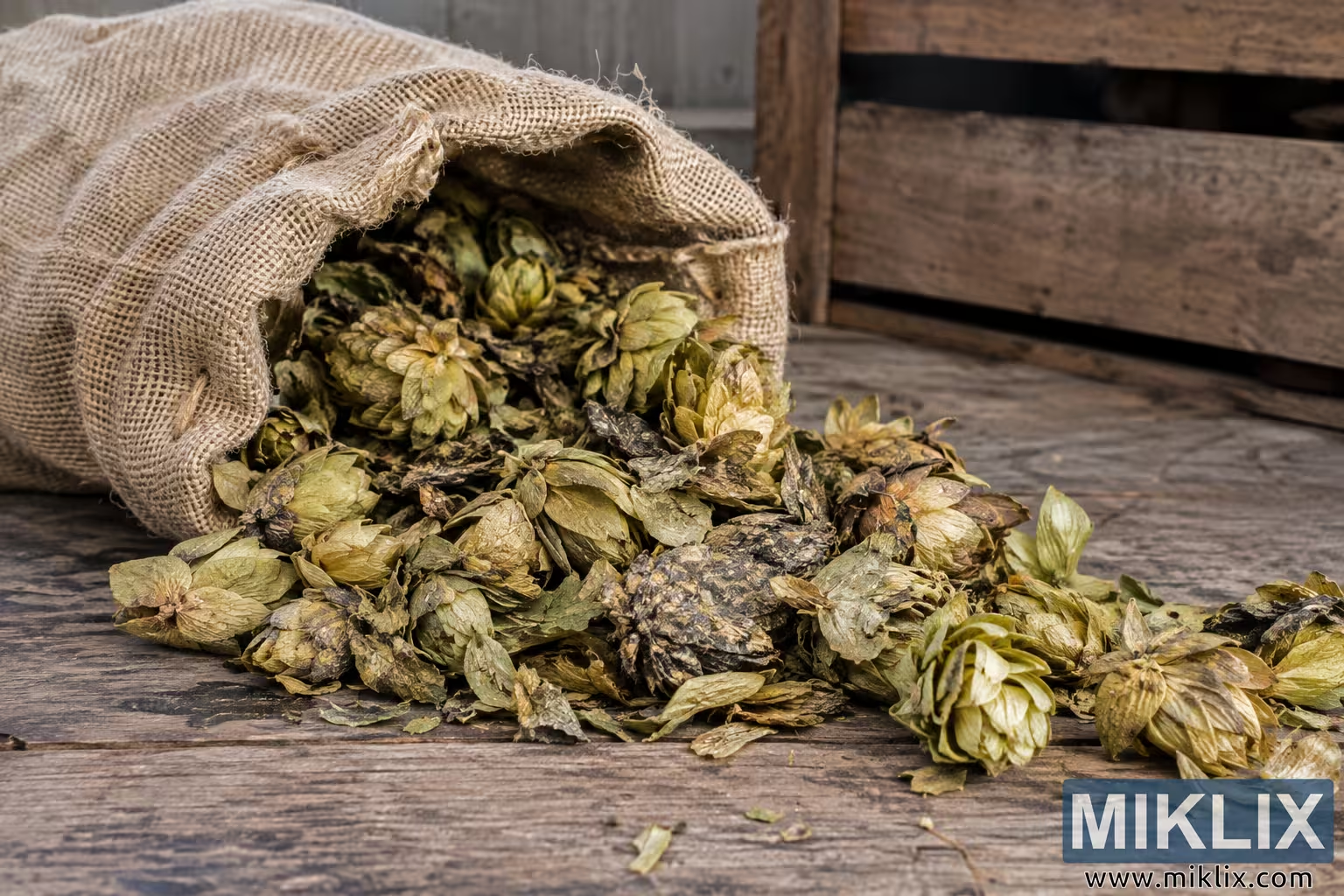
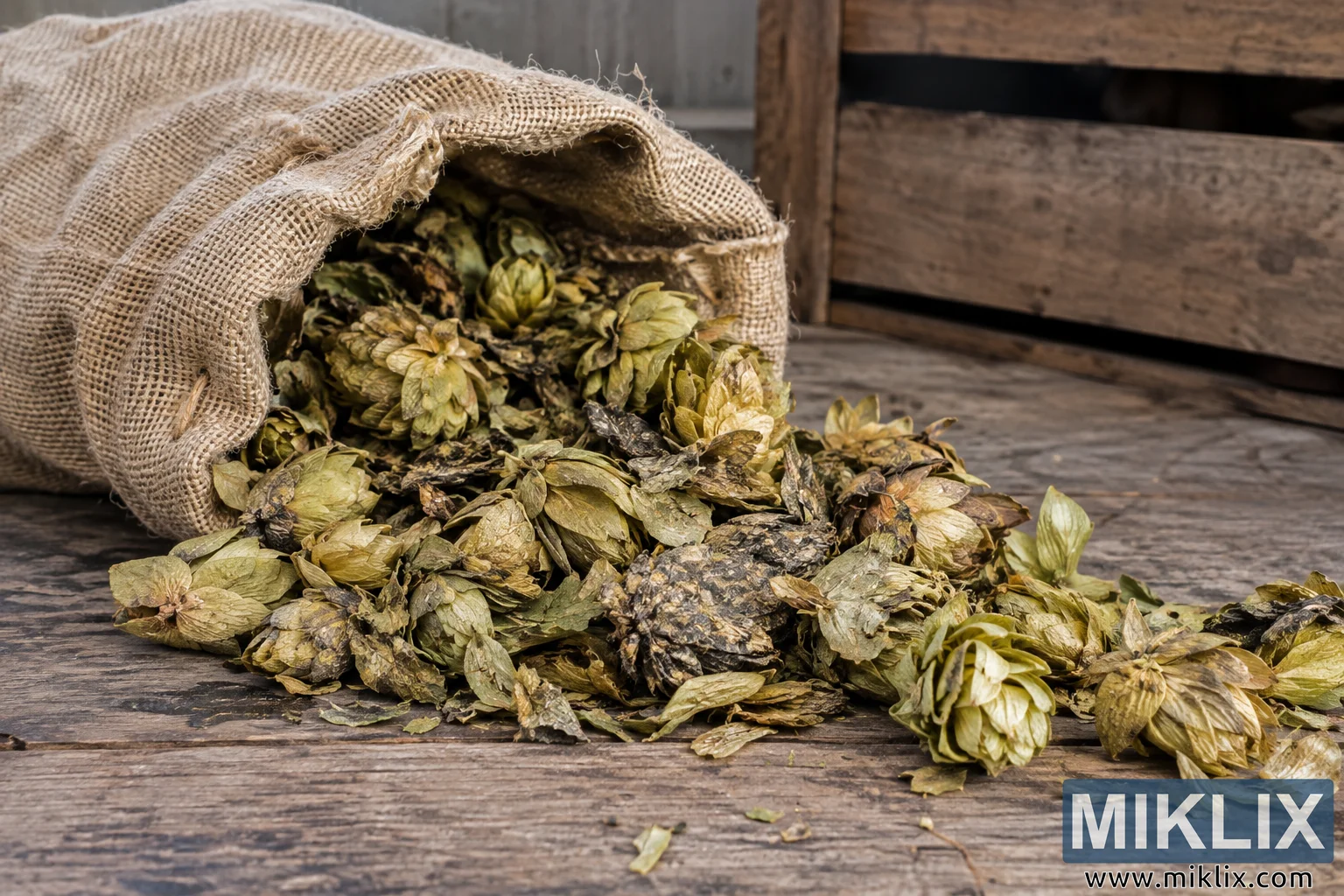
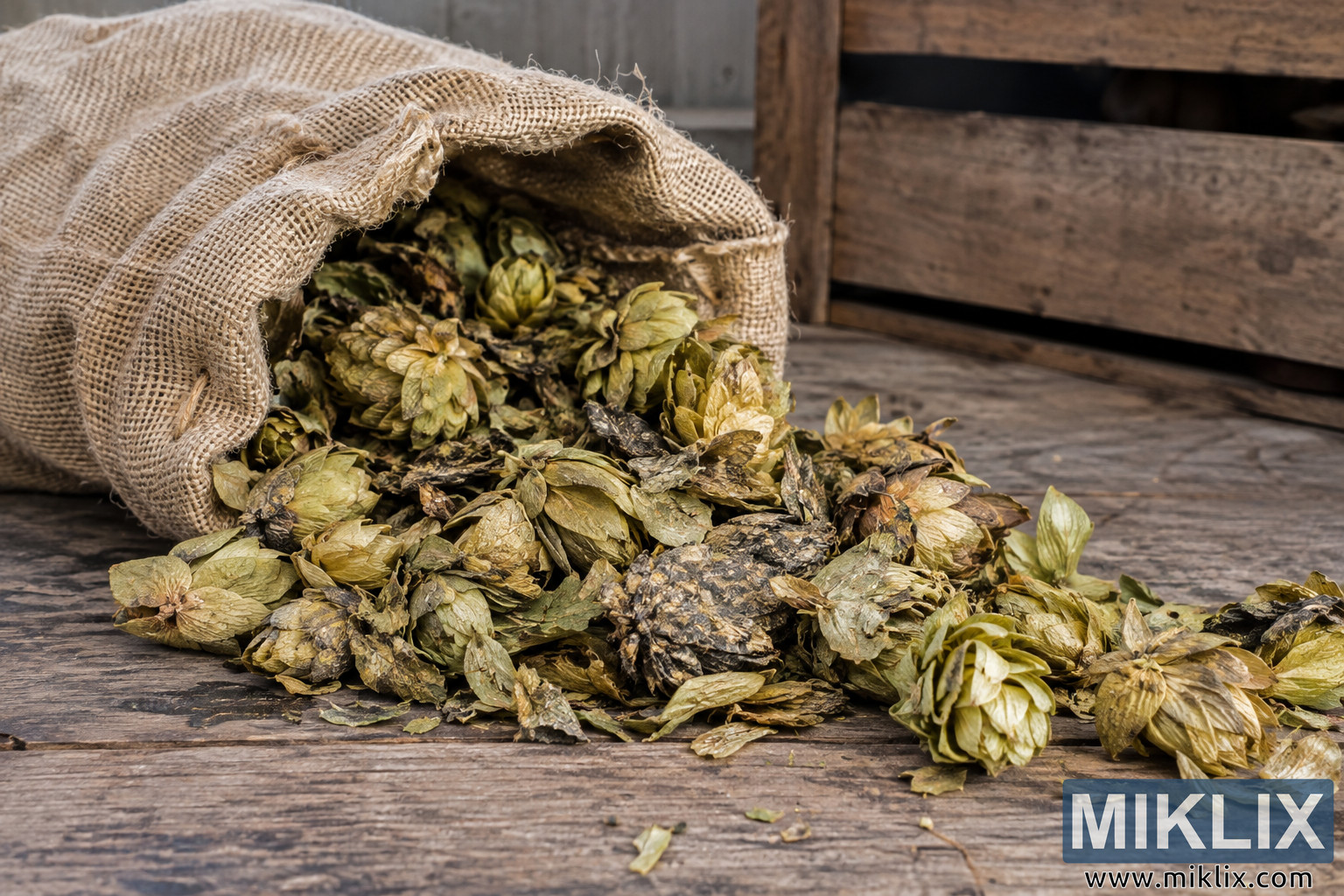
High-resolution landscape image showing improperly stored dried hops with visible discoloration, brittleness, damage, and quality degradation in an open burlap sack.
Available versions of this image
The image files available for download below are less compressed and higher resolution - and as a result of that, higher quality - than the images embedded in articles and pages on this website, which are more optimized for file size in order to reduce bandwidth consumption.
Regular size (1,536 x 1,024)
Large size (3,072 x 2,048)
Very large size (4,608 x 3,072)
Extra large size (6,144 x 4,096)
Comically large size (1,048,576 x 699,051)
- Still uploading... ;-)
Image description
The image is a realistic, high-resolution landscape photograph illustrating an example of improperly stored and visibly degraded dried hop material. In the foreground, a large quantity of dried hop cones is scattered loosely across a weathered wooden surface. The hops show clear visual signs of deterioration: many cones have faded from a healthy greenish-yellow appearance into dull olive, tan, brown, and grayish tones, while numerous individual bracts appear dry, brittle, flattened, damaged, or discolored. Several cones have dark brown and nearly black patches, giving the impression of oxidation, moisture damage, prolonged exposure, or general quality degradation. The scattered material is uneven, with intact cones mixed together with broken pieces, detached bracts, fine plant debris, and fragments that have separated from the original cones. This mixture emphasizes the loss of freshness and structural integrity that can occur when hops are not stored under suitable conditions. A few cones remain relatively recognizable and intact, but their muted coloration and dry, weathered appearance contrast with what would be expected from carefully preserved hop material. The overall arrangement suggests that the contents have been exposed to unsuitable storage conditions rather than being protected in an airtight, temperature-controlled, moisture-resistant environment. Behind the scattered hops, a coarse, natural-fiber burlap sack lies on its side with its mouth open toward the viewer. The sack is visibly worn and loosely folded, with rough woven fibers, frayed edges, creases, and small irregularities in its fabric. Its open end reveals additional dried hop cones and plant matter inside, reinforcing the impression that the material has been stored loosely in a porous container rather than sealed and protected from air, humidity, heat, and light. The opening of the sack is partially collapsed, and some of the hops have spilled naturally onto the wooden surface in front of it. The wooden tabletop is old and heavily textured, with visible grain patterns, scratches, knots, worn areas, and variations in brown and gray coloration. This rustic surface provides a strong visual contrast with the pale green, yellow, tan, and darkened hop material and contributes to the documentary quality of the scene. In the middle and background, a simple wooden crate or slatted wooden structure is visible but deliberately out of focus. Its broad horizontal boards and dark gaps create a subdued storage-environment context without introducing any recognizable branding, labels, logos, packaging, or commercial identifiers. The background remains understated so that attention stays on the degraded hops and the inadequate storage arrangement. Lighting is soft and natural-looking, entering from the front and side and producing gentle highlights across the hop bracts, burlap fibers, and wooden surface. The light reveals the texture of the dried plant material while also making the dark discoloration and brittle sections easy to distinguish. Shadows remain relatively soft, giving the photograph a realistic and observational appearance rather than a dramatic or stylized one. The shallow depth of field keeps the central pile and the open sack visually prominent while allowing the background crate and surrounding environment to recede into a soft blur. The composition is horizontal and landscape-oriented, with the open sack occupying much of the left and central portion of the frame and the spilled hop cones extending broadly across the lower foreground toward the right side. The perspective is close to tabletop level, allowing the viewer to see the condition of the hop cones and the physical characteristics of the storage container in considerable detail. The image communicates the concept of poor hop storage primarily through visual evidence rather than through text, labels, or diagrams. The absence of modern packaging or identifiable commercial products makes the scene generic and suitable for educational, technical, or illustrative use. The degraded cones, exposed plant material, porous sack, and rustic environment together convey a storage situation in which the hops have not been adequately protected from environmental factors. The image is particularly effective as a visual example of quality loss because it shows several conditions simultaneously: discoloration, dryness, physical breakage, loose storage, exposure to surrounding air, and an apparent lack of protective packaging. The photographic treatment remains naturalistic, with detailed textures and believable imperfections throughout the frame. Individual hop cones vary in size, shape, color, and degree of deterioration, preventing the scene from appearing artificially uniform. Some cones retain pale green-yellow centers, while others are more brown, gray, or mottled, creating a range of visible quality states within the same batch. Loose leaves and bracts are interspersed between the larger cones, making the material appear handled and aged. Overall, the image presents a clear visual example of degraded hop quality associated with improper storage. It focuses on the physical condition of the dried hops and the visibly unsuitable storage arrangement, using a rustic but realistic photographic setting to make the deterioration immediately understandable. There are no actual brands, logos, trademarks, printed commercial labels, recognizable product packaging, or other identifiable brand elements anywhere in the scene. The image therefore functions as a neutral, generic representation of improperly stored hops and their resulting loss of visual quality.
The image is related to: Hops in Beer Brewing: Neo1