
Hops in Beer Brewing: Neoplanta
Published: February 10, 2026 at 5:58:36 PM UTC
Neoplanta hops, hailing from Slovenia, are prized in craft brewing for their versatility. They are favored by brewers for their mild European bitterness and delicate floral and herbal undertones.
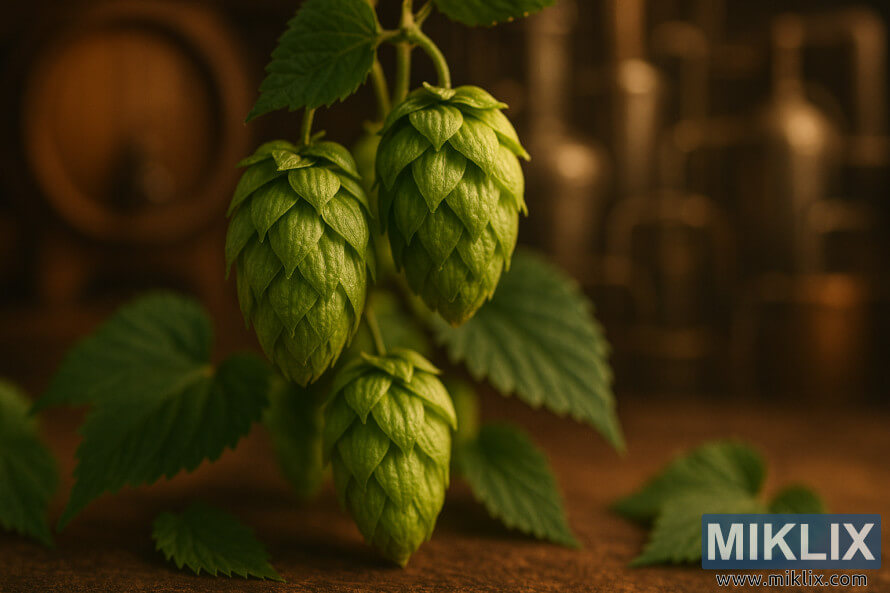
Click or tap the image for more information and higher resolutions.
Emerging in the late 1960s, Neoplanta was a response to the decline of traditional landraces. It shares a lineage with Vojvodina and Dunav, entering global cultivar lists. The USDA and Oregon State University collections list Neoplanta under accession 21082, aiding growers and brewers in verifying its authenticity and origin.
Neoplanta hops are ideal for ales seeking balanced bitterness and a pleasant aroma. As Slovenian hops, they provide moderate alpha acids and a balanced oil profile. This makes them perfect for both bittering and late additions. Detailed brewing practices, agronomy, and storage tips are discussed further for those aiming to incorporate European flair into their recipes.
Key Takeaways
- Neoplanta hops are a Slovenian hop variety used for both bittering and aroma.
- They emerged in the late 1960s alongside Vojvodina and Dunav in regional breeding efforts.
- USDA/OSU collections list Neoplanta (accession 21082) for reference.
- Neoplanta hop variety offers moderate alpha acids and a subtle floral-herbal profile.
- Well suited to craft brewing hops aimed at European-style ales.
Introduction to Neoplanta hops
Neoplanta was born from a breeding program in Slovenia in the late 1960s. It was created by crossing Northern Brewer, Styrian Golding, and a wild Slovenian male. This was done to develop a more reliable cultivar, aiming to replace the older Backa landrace. The Backa landrace was known for its low yields, posing a challenge for growers.
Breeders worked alongside varieties like Vojvodina and Dunav to improve Neoplanta. Their focus was on enhancing yield and agronomic performance. This effort is a cornerstone of Neoplanta's history and its significance in modern farming.
Neoplanta is a dual-purpose hop, used for both bittering and aroma. Its versatility is highly valued by maltsters and brewers. It's included in international hop collections and USDA/OSU cultivar entries, under accession 21082. This confirms its documented origins.
The introduction of Neoplanta in Slovenia marked a transition from small landraces to organized breeding lines. Growers and researchers often reference Neoplanta's history when discussing its advancements. These include better yield, disease tolerance, and marketability. This background is crucial for brewers to understand its widespread adoption.
Neoplanta hops
Neoplanta is recognized by commercial stockists as a dual-purpose hop. It serves both bittering and aroma roles in brewing. It's recommended for balanced pale ales, lagers, and hybrid styles. These beers need a firm bitter backbone and a pleasant aromatic lift.
Neoplanta's characteristics vary with site and season. Cone size and density depend on local soil and climate. Plants mature late in the season. Growers note a high to very high growth rate, aiding vigorous trellising and management.
Yield figures indicate an approximate harvested amount of 1,435 kg per hectare. This is roughly 1,280 lbs per acre. Such data aids craft and commercial producers in planning planting density and supply for brewing programs.
Commercial listings for Neoplanta often include recommended substitutes and style notes. Retailers that ship nationally provide tasting guides and suggested hopping rates. These resources help brewers align Neoplanta's purpose with their recipe goals.
- Usage: dual-purpose for early bittering and late aroma additions
- Season: late-season maturity, harvest timing matters
- Grow rate: high to very high, requires sturdy support
- Typical yield: ~1,435 kg/ha (~1,280 lbs/acre)
Genetic pedigree and development
The origins of Neoplanta pedigree stem from a strategic cross between renowned cultivars and local wild stock. Breeders sought to blend the bittering prowess of Northern Brewer with the refined aroma of Styrian Golding. This was achieved by combining these traits with a wild Slovenian male.
Emerging in the late 1960s, Neoplanta was a product of Slovenian breeding efforts. It was developed alongside other varieties like Vojvodina and Dunav. This parallel development aimed to enhance regional performance characteristics.
The breeding project aimed to surpass Backa by increasing yield and agronomic stability. It sought to maintain the complex flavor profile brewers value. Disease resistance, consistent cone formation, and balanced bittering and aroma were key objectives.
Through structured trials, hop breeding Neoplanta evaluated field performance and brewing suitability. These trials assessed alpha and beta acid consistency, oil profile stability, and adaptability to local conditions.
Neoplanta's inclusion in major germplasm lists underscores its genetic significance. Institutions like Oregon State University and USDA recognize its value, reflecting global interest in its genetic makeup.
- Parentage: Northern Brewer Styrian Golding cross with a wild Slovenian male.
- Timeline: First selected in the late 1960s in Slovenia.
- Goal: Replace Backa with improved yields and stable agronomics.
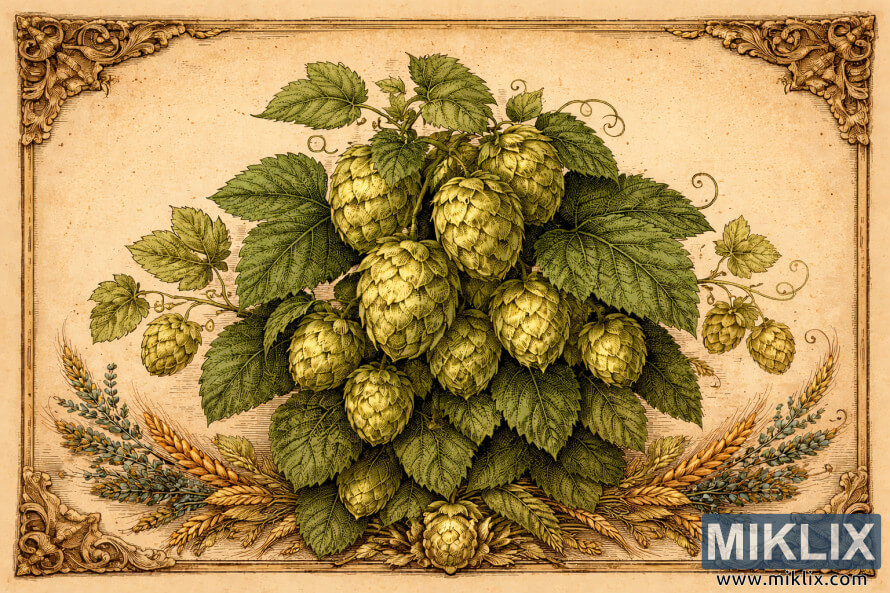
Click or tap the image for more information and higher resolutions.
Alpha and beta acid profile
Neoplanta alpha acids typically range from 7.4% to 12%. This places it as a moderate to moderately high bittering hop. Brewers can use these values to calculate IBUs for various beers, including pale ales and lagers.
Neoplanta beta acids are between 2.9% and 5%. Beta acids contribute less to bitterness but impact aging stability and flavor. Monitoring their levels is crucial for predicting a beer's evolution in the bottle.
Co-humulone is near 36% of total alpha content. This figure influences bitterness perception. It often results in a clean, firm bitterness without harshness, when used correctly.
- hop alpha beta composition informs standard bittering calculations and blending choices.
- Neoplanta alpha acids guide early boil additions for predictable IBU delivery.
- Neoplanta beta acids help assess long-term flavor stability and post-fermentation changes.
Neoplanta is classified as a dual-purpose hop. It's suitable for bittering with measured alpha values. It's also great for late additions or whirlpool hops to extract floral or herbal notes without overpowering delicate malts.
Practical tips: treat the listed alpha range as typical, not fixed. Sample analysis for each harvest improves accuracy. Adjust hopping schedules to balance IBUs and aroma while keeping hop alpha beta composition in mind.
Essential oil composition and aroma characteristics
Neoplanta essential oils measure about 1.3 mL per 100 g of cones. This amount is suitable for both late-boil and dry-hop applications.
The oil composition reveals myrcene at 49%, humulene at 20%, and caryophyllene at 8.9%. Farnesene is near 5%. This combination highlights resinous, herbal, and spicy notes in the hop's profile.
The aroma of Neoplanta blends Styrian Golding and Northern Brewer influences with its oil composition. It yields woody and herbal notes. Light floral and earthy tones, along with a hint of spice and resin, emerge in late additions.
High myrcene content enhances the fresh-hop intensity in late whirlpool or dry-hop additions. Humulene and caryophyllene contribute herbal, woody, and spicy undertones. These elements enrich the hop's character in the final beer.
- Primary oils: myrcene humulene caryophyllene work together to create depth.
- Sensory use: late additions emphasize fresh-hop impact; early additions favor bittering nuances.
- Terroir effects: growing region and processing can shift the balance of Neoplanta essential oils and the expressed Neoplanta aroma.
Assessing variety requires tasting trial batches with different timing and rates. This method shows how myrcene, humulene, and caryophyllene interact in specific recipes and fermentation conditions.
Agronomic traits and growing profile
Neoplanta agronomy exhibits high vigor, with a rapid canopy development. Rows fill up swiftly in temperate climates, necessitating effective trellis management for commercial operations.
The growing season for Neoplanta is notably long. Planting schedules must accommodate extended hang times, especially in areas prone to fall rains or early frosts.
Yield reports for Neoplanta vary significantly based on site and management practices. A documented yield is approximately 1,435 kg/hectare (1,280 lbs/acre). In the United States, yields can fluctuate widely, influenced by cultivar and region, guiding growers' expectations.
- Growth rate: high to very high, demands robust support structures.
- Maturity: late season; plan harvest windows carefully.
- Yield variability: site and inputs can shift Neoplanta yield substantially.
Cone size and density are influenced by terroir. Some areas produce larger, denser cones, while others yield lighter, airier ones. This variation impacts pick timing and post-harvest handling.
Harvest methods depend on scale, favoring mechanical or hand picking. Despite reported ease of harvest, late maturity increases the risk of weather-related losses. Synchronize labor and machinery with the late-season peak to mitigate risks.
Optimal irrigation, balanced fertilization, and a sturdy trellis are crucial for reducing stress and enhancing Neoplanta agronomy outcomes. Vigilant monitoring of vine vigor and adjusting shoot density can protect cone quality and stabilize Neoplanta yield.
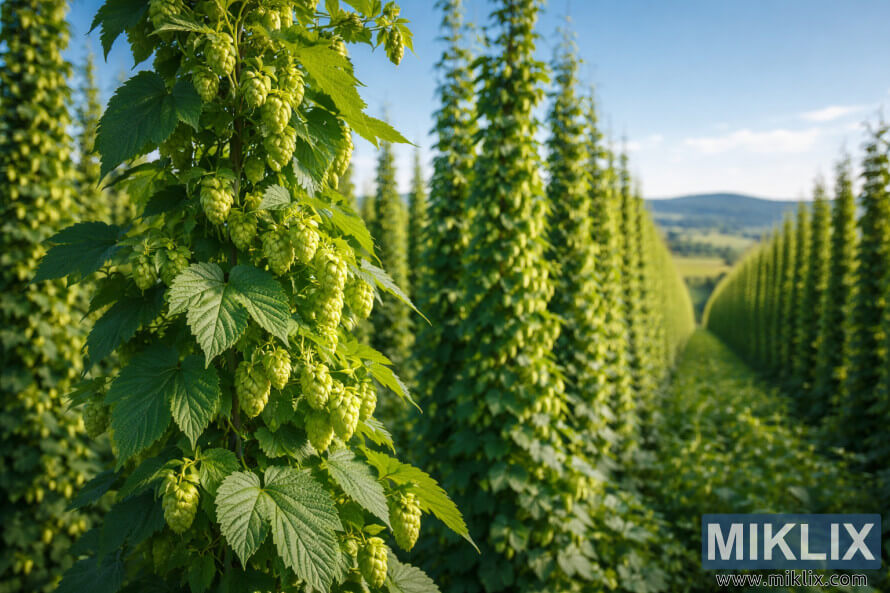
Click or tap the image for more information and higher resolutions.
Disease resistance and storability
Neoplanta offers a clearer disease profile than older landraces. Breeders aimed to reduce common issues seen in Backa, enhancing the variety's resilience. Growers note Neoplanta's disease resistance as a standout feature for a modern hop.
Field assessments reveal moderate protection against downy mildew. This trait is crucial as downy mildew can severely impact yields and cone quality. Neoplanta's downy mildew resistance helps reduce fungicide use, especially with proper canopy management and site selection.
Not all pathogen risks are well-documented for Neoplanta. Specific susceptibilities are less detailed in published summaries. Growers must monitor for local pests and foliar diseases. They should employ integrated pest management tailored to their region.
Storage performance is in the middle range. After six months at 20°C (68°F), Neoplanta retains about 63% of its alpha acids. This places Neoplanta's storage stability below top-tier varieties that retain 75–80% or more under similar conditions.
- For aroma-forward beers, choose fresher Neoplanta hops to protect volatile oils.
- For bittering, slight alpha loss is manageable with adjustment to hop rates.
- Processors should track alpha decline and label harvest dates for buyers.
Practical handling can reduce degradation risk. Cold storage, vacuum or nitrogen-purged packaging, and tight temperature control preserve alpha acids and essential oils. These methods enhance Neoplanta's storage stability in commercial supply chains.
Overall, Neoplanta's disease resistance and storage traits are suitable for many craft and commercial operations. Brewers and processors who plan storage, monitor quality, and adapt use based on intended beer style will achieve the best results with this hop variety.
Brewing uses: bittering, aroma, and dual-purpose
Neoplanta is a versatile dual-purpose hop, suitable for both bittering and finishing. It's particularly valued in crafting European-style ales, amber ales, and balanced pale beers. Its adaptability makes it a favorite among brewers.
For bittering, Neoplanta is best used in early kettle additions to achieve the desired IBUs. Its alpha acids range from 7.4 to 12 percent, making it a strong candidate for primary bittering. The high co-humulone content, around 36 percent, contributes to a sharp bitterness. Adjust the timing and quantity to suit your taste preferences.
Neoplanta's aroma profile is dominated by myrcene, with notable humulene and caryophyllene. Adding it in late-kettle or whirlpool stages captures resinous, herbal, and floral notes. This method helps preserve volatile aromatics that might be lost in extended boils.
Dry-hopping enhances the hop character without adding bitterness. Use it sparingly for a subtle complexity or in larger amounts for a more pronounced herbal nose. Keep in mind that hop utilization can change with pellet age and storage conditions.
- Use 60–90 minute additions for primary Neoplanta bittering.
- Reserve late-kettle or whirlpool hops for Neoplanta aroma hops impact.
- Dry-hop after fermentation to lift resinous and herbal top notes.
Neoplanta is ideal for hybrid ales that require a robust bitter backbone and balanced hop aroma. Its versatility makes it a practical choice for both small breweries and homebrewers. It simplifies the brewing process by handling multiple roles with a single variety.
Substitutes and comparable varieties
Central European and classic English hop lines serve as Neoplanta substitutes. They share its bittering range and aromatic character. Northern Brewer and Styrian Golding are favored for their ability to enhance both bitterness and mid-to-late aroma additions.
For matching alpha acids, Northern Brewer or Willamette are ideal. They offer a bitterness profile close to Neoplanta. Styrian Golding, Fuggle, and other Slovenian and Central European varieties are great for aroma. They bring herbal, woody, and mild spice notes.
- Match on alpha acids for bittering to preserve IBUs and balance.
- Compare essential oil ratios — myrcene, humulene, caryophyllene — to retain aroma character.
- Blend substitutes if a single variety cannot replicate both bitterness and aroma.
OSU and USDA listings provide numerous options. Small adjustments in hopping schedules allow for easy recipe adaptation. Use more late hop or dry hop if the substitute has lower aroma oil content.
Practical swaps vary by beer style. Styrian Golding or Willamette are suitable for lagers and dry ales. For darker or malt-forward beers, Fuggle or Northern Brewer offer the necessary backbone.
Testing a pilot batch is the safest approach when substituting Neoplanta. Start with a 10–20% substitution. Then, adjust rates or timing to achieve the desired balance among comparable hop varieties.
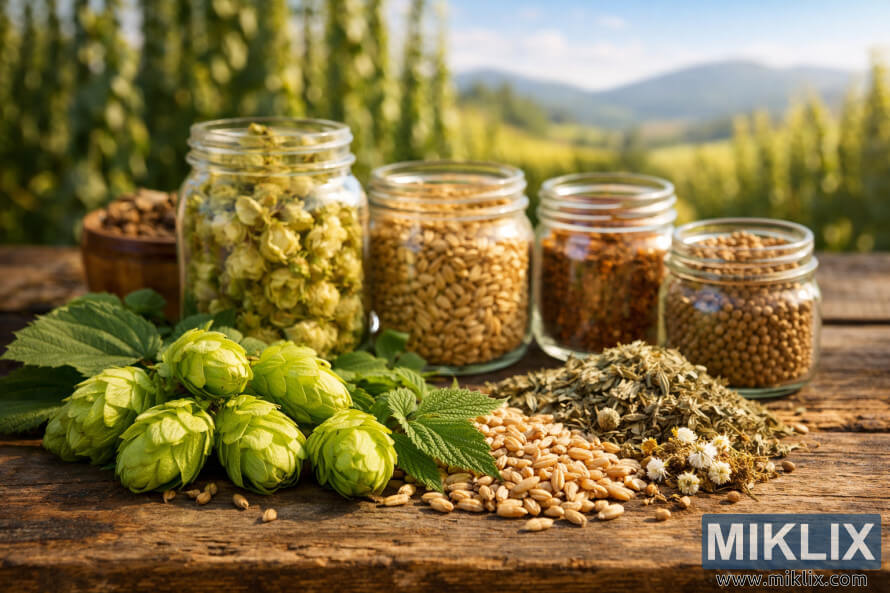
Click or tap the image for more information and higher resolutions.
Recipe ideas and practical hopping schedules
Begin by setting clear objectives: the desired bitterness level, aroma focus, and whether Neoplanta will serve as a dual-purpose hop. For moderate bitterness, plan a 60-minute addition using the measured alpha acid for the lot. Aim for 20–30 IBUs when brewing a Euro-amber ale or 15–25 for a pale ale.
Example bittering schedule for a 5-gallon batch:
- 60-minute addition: Neoplanta to supply the primary IBUs (use alpha acid between 7.4%–12% to size the dose).
- 10–20 minute whirlpool: skip or use neutral hop if focusing only on bitterness.
- Dry-hop: 3–5 g/L scaled to batch size if aroma is desired.
Dual-purpose approach for balanced bittering and aroma:
- Early addition: add enough Neoplanta at 60 minutes to deliver 20–30 IBUs total.
- Whirlpool at 180–200°F for 10–20 minutes: add 10–20 g/L (scale by batch) to retain volatile oils and build herbal resin notes.
- Dry-hop: 3–5 g/L for aroma-forward profiles, timed late in fermentation to protect delicate terpenes.
Style-specific guidance keeps recipes on point. For a Euro-amber ale, use 20–30 IBUs with a late whirlpool addition to emphasize herbal and resinous aromas. For an American or modern pale ale, keep IBUs moderate and favor dry-hop to showcase myrcene-driven citrus and resin character.
Practical tips for any hop schedule Neoplanta planning:
- Adjust rates based on the measured alpha acid of the specific hop lot before final dosing.
- Account for moderate storability by increasing late additions or using fresher Neoplanta for aroma emphasis.
- Record exact grams per liter used so you can replicate favored Neoplanta recipes.
A simple Neoplanta hopping schedule to try: 60-minute bittering to 20 IBUs, 15-minute whirlpool at 190°F with 10 g/L, then dry-hop 4 g/L for five days. Tweak hop amounts and timing to match malt bill and yeast ester profile.
Supply, availability, and where to buy Neoplanta
Neoplanta availability changes with the seasons and by region. Commercial growers list it in European catalogs. Specialty hop merchants also feature it among cultivated varieties. However, US brewers might find it harder to get than common American hops.
To purchase Neoplanta hops, start with well-known hop distributors and importers. They handle Slovenian and Central European varieties. Check warehouse stocklists from merchants like BarthHaas partners or Yakima Chief for regional imports. Before ordering, inquire about shipping options and lot details.
When reaching out to Neoplanta suppliers, ask for recent alpha acid and oil analyses. Request information on harvest and storage dates to gauge freshness. Opt for vacuum-sealed or nitrogen-flushed packaging to keep hop oils fresh during transit.
- Verify lab certificates for alpha and beta acids.
- Confirm storage and pack dates to assess age.
- Select cold-chain shipping when possible for long transits.
If direct supply is limited, consider importers specializing in Slovenian hops or European blends. For US-based sourcing, regional hop merchants might secure small batches through their networks.
For brewers considering options, compare costs, lead times, and quality certificates among Neoplanta suppliers. If immediate procurement is essential, look into comparable US aroma hops as temporary substitutes. Keep an eye on Neoplanta availability for future batches.
Storage, handling, and processing tips
Ensure Neoplanta hops remain cold from the moment they arrive. Store them in a refrigerator at 0–2°C or freeze at −18°C to slow down the degradation of alpha acids and oils. It's crucial to record the harvest dates and the supplier's analysis upon arrival. This way, you can prioritize the freshest lots for beers that focus on aroma.
Utilize oxygen-barrier vacuum bags or nitrogen-flushed packaging to minimize exposure. Neoplanta retains about 63% of its alpha acids after six months at 20°C. By keeping the temperature low and using tight packaging, you can extend its usable life and preserve the hop aroma effectively.
- Open packages only when ready to use.
- Process whole cones or pellets quickly after opening.
- Label containers with date opened and original analysis.
When transferring and processing hops, minimize exposure to heat, light, and oxygen. Use insulated coolers for short trips to maintain the temperature. Avoid leaving hops on warm loading docks or near direct sunlight to prevent rapid loss of terpenes during handling.
Adjust your processing techniques to retain more aroma. Favor late kettle or whirlpool additions and short contact times for dry-hopping. Long boils can strip volatile oils, so use late-stage additions to preserve flavor and aroma when preserving hop aroma Neoplanta is crucial.
Consider the trade-offs of pelletizing. Pellets often have a longer storage life and are easier to dose. However, pelleting can affect how oils are released. Test your formulations if you switch from whole-cone to pellets to ensure the intended aroma and bitterness are maintained.
- Inspect incoming lots: check packaging integrity and supplier analysis.
- Store cold and sealed; rotate stock by date.
- Use freshest lots for dry-hop and aroma-led recipes.
- Document handling steps to track any aroma or alpha changes over time.
Small, consistent practices are key to maintaining quality. Controlled cold storage, careful handling during transfer, and targeted processing choices help brewers maximize the benefits of Neoplanta storage tips. This ensures consistent aroma in the finished beer.
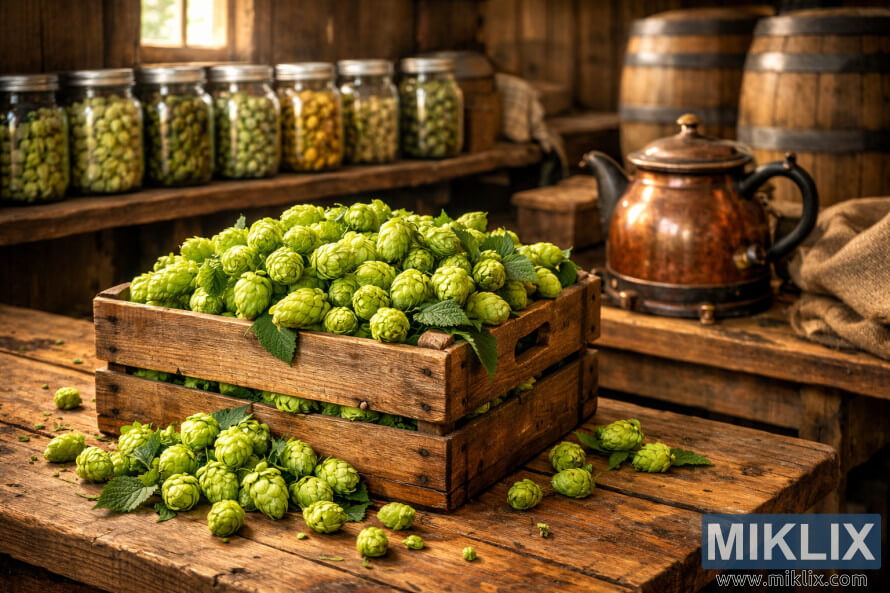
Click or tap the image for more information and higher resolutions.
Breeding importance and role in hop collections
Neoplanta is a result of crossing cultivated European hops with wild Slovenian genetics. The goal was to enhance yield and improve growth habits while retaining the desirable flavors and bitterness. This blend gives Neoplanta significant value for today's breeding programs, which focus on hybrid vigor and resilience.
The mix of Northern Brewer and Styrian Golding traits with wild genetics is highly valued. This combination offers a balance of alpha acids and complex aromas. For those seeking disease resistance and consistent yields, Neoplanta's germplasm is a prime choice.
Thanks to conservation efforts, research and future breeding are possible. Neoplanta is listed in international cultivar registries and the OSU/USDA World Hop Cultivar Collection. This ensures its long-term preservation and availability for breeders.
- Breeding targets: higher yield, uniformity, and improved disease resistance.
- Genetic value: combination of aroma and bittering traits with wild robustness.
- Conservation role: living repository material for crossing and study.
The historical context is crucial for making breeding decisions. In the mid-20th century, Slovenian programs aimed to replace low-yielding landraces like Backa. Neoplanta emerged from these efforts to modernize hop cultivation and meet commercial demands.
Using preserved lines collectively supports ongoing improvement. By combining diverse germplasm, breeders can create hops that suit various climates and brewing styles. Keeping Neoplanta in hop collections ensures options for future cultivars.
Practical considerations for US craft brewers
In the United States, Neoplanta availability is spotty. It's often found through specialty hop merchants and importers, not mainstream suppliers. Brewers should order early and plan for lead times when using fresh aroma hops.
Adjust recipes based on the actual alpha acids from the lot sheet. Use the supplier's measured alpha value for calculations. Neoplanta works well in European-style ales and amber beers as a bittering or dual-purpose hop. For a subtler floral lift, reduce late additions slightly.
Proper storage is crucial. Store Neoplanta in cold, vacuum-sealed conditions to slow alpha loss and preserve essential oils. With moderate storability—roughly two-thirds alpha after six months at room temperature—use the freshest lots for late or dry-hop additions.
For trialing Neoplanta, start with small pilot batches before scaling up. Batch-to-batch variation can reflect terroir and harvest year. Testing is key to fine-tuning flavor and bitterness when scaling recipes.
- Substitution approach: consider Northern Brewer or Styrian Golding-like hops for similar herbal and earthy notes.
- Hopping schedule: favor balanced additions for dual-purpose use; reserve a portion for flameout or dry hop to capture aroma.
- Supplier checks: request analysis certificates and smash-test small samples to confirm aroma profile before committing large orders.
Brewers aiming for consistent seasonal offerings should plan inventory around shipment cycles. Neoplanta can enhance a branded lineup when used deliberately and stored correctly. Document Neoplanta craft brewing trials to ensure repeatable and predictable formula tweaks.
When introducing new hop inputs, inform taproom staff and tasting panels. Clear tasting notes based on Neoplanta brewing advice speed acceptability testing and help maintain quality across batches.
Conclusion
Neoplanta conclusion: This Slovenian hop, with roots in Northern Brewer and Styrian Golding, is a dual-purpose gem. It boasts moderate to high alpha acids (7.4–12%) and a myrcene-forward oil profile. The profile is near 49% myrcene, 20% humulene, and 8.9% caryophyllene. Its late-season maturity and balanced bittering-to-aroma character make it ideal for Central European styles and hybrid recipes.
Neoplanta summary: For brewers aiming for herbal, resinous, and floral notes, Neoplanta is a great choice. It excels in kettle, whirlpool, and dry-hop additions. Its versatility allows it to play both bittering and aroma roles. Adjust hop timing based on the alpha and oil data from the lot you purchase.
Using Neoplanta hops requires attention to storage and freshness. Store pellets cold and vacuum-sealed. Recalibrate hopping schedules to the lot-specific alpha and essential oil analyses. As a valuable asset, Neoplanta is crucial in germplasm collections and breeding programs. It's also practical for craft brewers seeking authentic Central European hop character with dual-purpose performance.
Further Reading
If you enjoyed this post, you may also like these suggestions: