
Image: Laboratory Analysis of Hop Alpha Acids and Essential Oils
Published: October 16, 2026 at 5:44:56 PM UTC
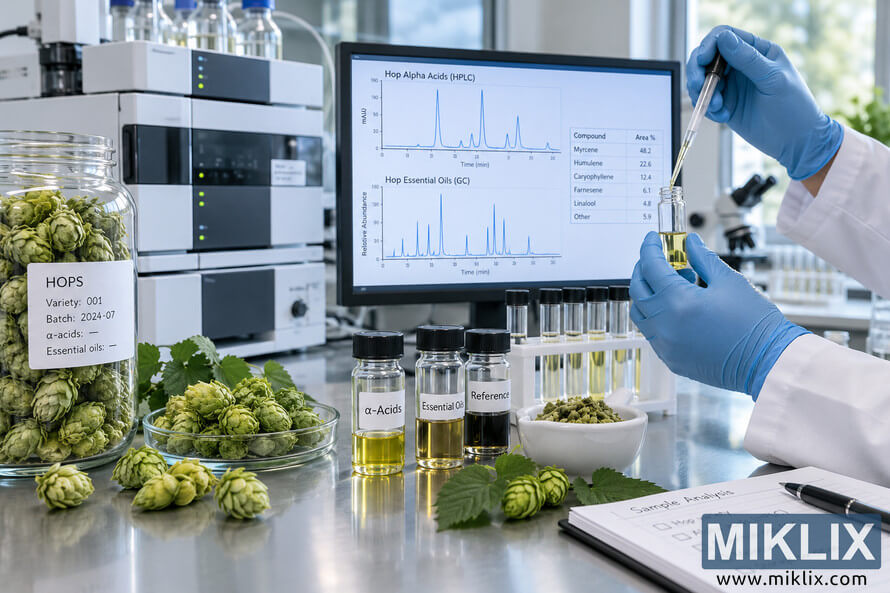
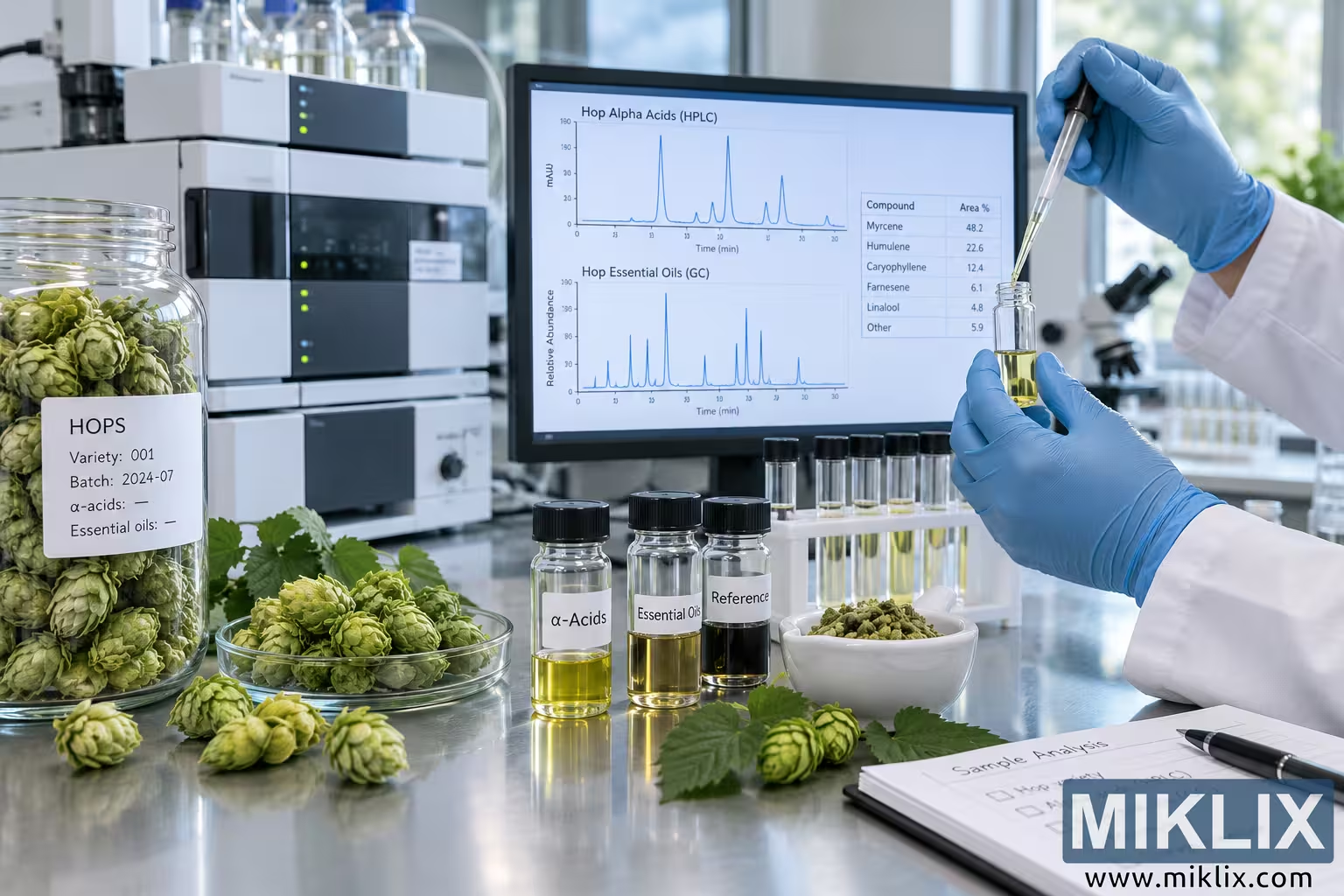
Photorealistic laboratory analysis of hops showing alpha-acid HPLC testing, essential-oil gas chromatography, hop samples, extracts, analytical equipment, and precision pipetting.
Available versions of this image
The image files available for download below are less compressed and higher resolution - and as a result of that, higher quality - than the images embedded in articles and pages on this website, which are more optimized for file size in order to reduce bandwidth consumption.
Regular size (1,536 x 1,024)
Large size (3,072 x 2,048)
Very large size (4,608 x 3,072)
Extra large size (6,144 x 4,096)
Comically large size (1,048,576 x 699,051)
- Still uploading... ;-)
Image description
A high-resolution, landscape-oriented photorealistic image depicts a modern analytical laboratory dedicated to the chemical analysis of hops, with particular emphasis on measuring alpha acids and profiling essential oils. The scene is brightly illuminated by natural daylight entering through large laboratory windows in the background, supplemented by clean, neutral laboratory lighting. The overall atmosphere is precise, hygienic, professional, and scientifically credible, with stainless-steel work surfaces, glass sample containers, analytical instrumentation, and carefully arranged hop material creating a detailed depiction of laboratory quality control and chemical analysis.
On the right side of the image, a laboratory researcher is partially visible from the torso and arms, wearing a clean white laboratory coat and blue disposable protective gloves. The person's face is outside the frame, keeping attention focused entirely on the analytical procedure. One gloved hand holds a small transparent glass vial containing a clear, pale yellow to golden liquid. With the other hand, the researcher operates a pipette and carefully transfers a small quantity of liquid into the vial. The pipette tip is positioned directly above the opening of the sample container, capturing a precise moment during sample preparation or instrumental analysis. The transparent golden liquid visually suggests an extracted hop fraction prepared for chemical measurement.
The central background is dominated by a large computer monitor displaying analytical chromatograms. The upper graph is labeled as an analysis of hop alpha acids using HPLC, or high-performance liquid chromatography. Several distinct narrow peaks appear across the chromatogram, representing compounds separated during the analytical run. Beneath it is another chromatographic graph representing hop essential oils analyzed by GC, or gas chromatography. This lower graph contains numerous peaks of varying heights, visually communicating the complex volatile composition of hop essential oils. A table displayed alongside the graphs lists representative aroma-related compounds and relative values, including names associated with the volatile chemistry of hops. The scientific display reinforces the image's central theme: quantitative laboratory characterization of both bittering compounds and aromatic constituents.
To the left of the monitor stands a substantial piece of modern analytical laboratory equipment with a clean modular construction. Bottles and tubing are visible on its upper section, while indicator lights and instrument modules occupy the front. The equipment resembles the type of chromatography system commonly used for quantitative chemical analysis. No commercial branding or recognizable manufacturer logo is visible, keeping the laboratory equipment generic and appropriate for a brand-neutral scientific illustration.
The foreground contains numerous physical hop samples that connect the analytical instrumentation to the agricultural raw material being tested. On the far left is a large transparent glass container filled with whole dried green hop cones. A plain white laboratory label identifies the contents as hops and provides generic sample information such as variety and batch details, along with spaces for analytical measurements. In front of the container, additional hop cones are scattered naturally across the reflective stainless-steel laboratory bench. Their layered green bracts and characteristic cone-shaped structure are clearly visible. A shallow glass dish near the center-left contains another collection of whole hop cones, suggesting that portions of the sample have been separated for examination or preparation.
Several fresh-looking green hop leaves and individual cones are distributed across the work surface, adding botanical detail while maintaining the controlled laboratory setting. Near the center foreground, three small glass sample bottles contain liquids of different appearances. One contains a bright golden-yellow liquid associated with alpha-acid analysis, another contains a similarly transparent golden extract associated with essential oils, and a darker bottle serves as a reference sample. The containers have simple generic laboratory labels rather than commercial markings. Their arrangement communicates the progression from raw plant material to prepared extracts and analytical reference materials.
Behind these bottles is a white laboratory rack holding a row of narrow glass test tubes. Several tubes contain small quantities of pale yellow liquid at their bottoms, suggesting multiple hop extracts, standards, fractions, or replicate samples awaiting measurement. To the right of the sample bottles is a small white ceramic bowl containing crushed or ground green hop material. This processed sample provides another visual stage in the laboratory workflow, illustrating how whole hop cones may be mechanically prepared before extraction and instrumental analysis.
A microscope is visible in the background on the right, slightly out of focus, together with additional laboratory glassware and equipment. Although chromatography is the primary analytical theme, the microscope and surrounding apparatus broaden the impression of a fully equipped quality-control or research laboratory. The shallow depth of field keeps the researcher, pipette, vial, hop samples, chromatographic monitor, and principal analytical equipment visually prominent while allowing the background to remain realistic without becoming distracting.
At the lower right corner of the image, a laboratory worksheet or sample-analysis form rests on the stainless-steel bench beside a dark pen. The sheet includes a handwritten-style heading indicating sample analysis and a series of checkboxes associated with hop variety, alpha acids, essential oils, moisture, and related quality-control observations. This detail strengthens the sense that the depicted procedure is part of a documented analytical workflow rather than an abstract scientific demonstration.
The composition deliberately balances natural and technical elements. Green hop cones, leaves, and crushed botanical material occupy much of the foreground, while glass vials, test tubes, precision pipetting, chromatography equipment, and digital chromatograms establish the scientific context. Reflections on the polished metal bench add realism and visual depth. The green botanical material contrasts with the pale golden extracts, blue gloves, white laboratory coat, transparent glassware, and neutral gray and white analytical instruments.
Overall, the image represents the complete concept of laboratory testing of hops for brewing, agricultural research, or quality assurance. It visually connects raw hop cones with sample preparation, solvent extracts, analytical standards, high-performance liquid chromatography for alpha-acid measurement, and gas chromatography for essential-oil profiling. The scene emphasizes precision, traceability, chemical characterization, and professional laboratory practice. No actual commercial brands, corporate logos, or recognizable branded products appear in the image, allowing it to function as a neutral scientific visualization of hop alpha-acid and essential-oil analysis.
The image is related to: Hops in Beer Brewing: Northern Brewer