
Hops in Beer Brewing: Northern Brewer
Published: October 16, 2026 at 5:44:56 PM UTC
Northern Brewer is a classic English-bred dual-purpose hop known for its firm bitterness and traditional herbal, woody, and spicy character with subtle earthy notes—well suited to lagers, dark ales, porters, and other classic European-style homebrews.
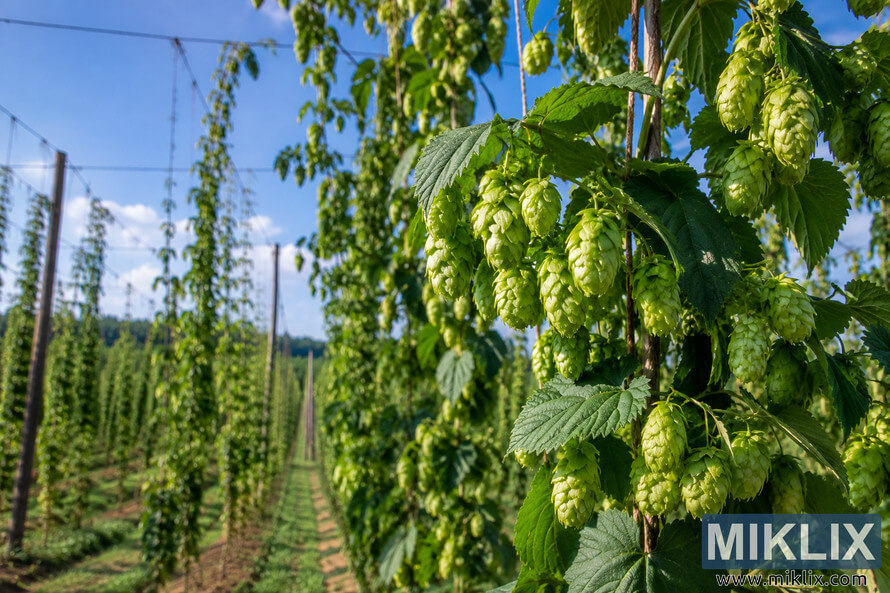
Click or tap the image for more information and higher resolutions.
Northern Brewer hops stand as one of the most versatile hop varieties in the brewing world. This classic hop brings a unique character to beer that homebrewers have valued for decades.
Whether you're crafting your first batch or refining your hundredth recipe, understanding how to work with this hop variety opens new possibilities. The Northern Brewer variety offers brewers a balanced profile that works across multiple beer styles.
This guide walks you through everything you need to know about using Northern Brewer hops in your homebrewing adventures. From its distinctive characteristics to practical brewing techniques, you'll discover how to make the most of this remarkable ingredient.
Characteristics and Origin of Northern Brewer Hops
The Northern Brewer hop variety traces its roots back to England 1934. Developed through selective breeding, this hop emerged as a cross between traditional English varieties. The original breeding program aimed to create a hop that could withstand challenging growing conditions while delivering consistent brewing performance.
Today, two main versions of Northern Brewer exist in the market. The German variety, often labeled as Northern Brewer (GR), differs slightly from its American counterpart. German-grown Northern Brewer typically shows more woody and minty characteristics compared to the American version.
Physical Characteristics and Growing Profile
Northern Brewer hops grow vigorously in both European and American climates. The plants produce medium-sized cones with a distinctive appearance. These cones develop a rich green color at harvest time, indicating optimal ripeness for brewing.
The variety demonstrates excellent disease resistance, making it popular among commercial growers. This hardy nature translates to consistent availability for homebrewers throughout the year. Yakima Chief Hops and other major suppliers maintain steady stock of this reliable variety.
When examining the hop character, you'll notice the cones feel slightly resinous to the touch. This texture indicates good lupulin content, which houses the essential oils and acids brewers seek.
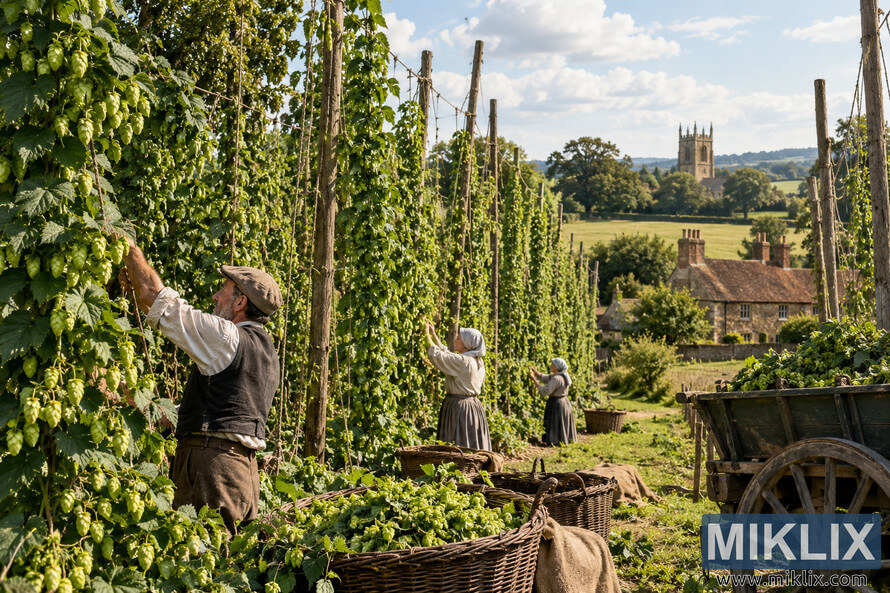
Click or tap the image for more information and higher resolutions.
Chemical Composition and Brewing Value
| Component | Typical Range | Brewing Impact |
| Alpha Acids | 8.0% - 10.0% | Moderate to high bittering potential |
| Beta Acids | 3.0% - 5.0% | Contributes to hop stability and aging |
| Total Oil Content | 1.0 - 1.6 mL/100g | Provides aromatic compounds |
| Myrcene | 35% - 50% of oils | Herbal and woody aromatics |
| Humulene | 15% - 20% of oils | Earthy and spicy notes |
| Caryophyllene | 8% - 12% of oils | Spicy and woody character |
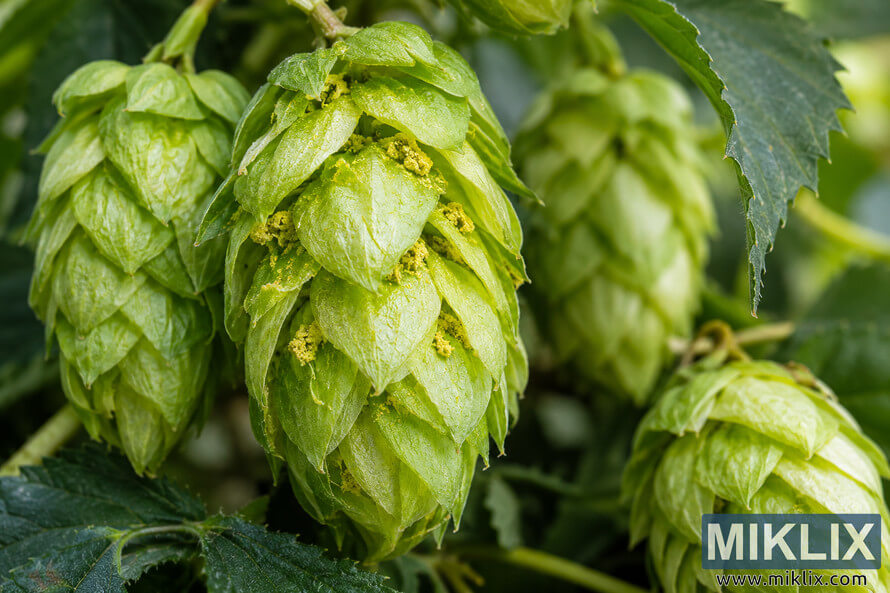
Click or tap the image for more information and higher resolutions.
The unique characteristics of Northern Brewer come from its oil composition. The presence of caryophyllene alongside other compounds creates the distinctive woody and minty profile. These aromatics set Northern Brewer apart from other dual-purpose hop varieties.
Regional Variations: German-grown Northern Brewer typically shows higher mint and woody notes, while American-grown versions lean more toward citrus and herbal characteristics. Both versions work excellently in brewing, though they create slightly different flavor experiences.
The harvest season for Northern Brewer typically runs from late August through September. Fresh hop availability during this period offers homebrewers an opportunity to experience the variety at peak freshness. Most brewers, however, work with processed and packaged hops available year-round.
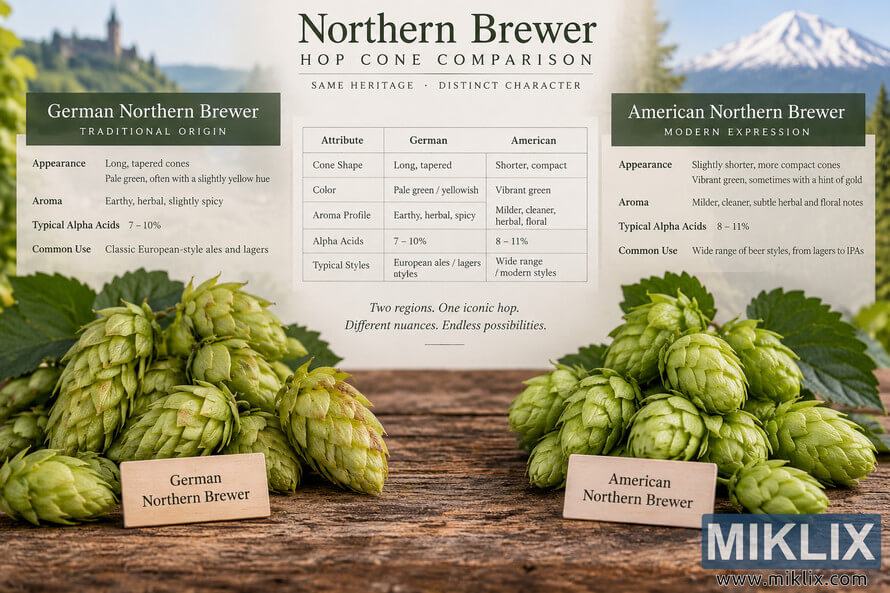
Click or tap the image for more information and higher resolutions.
Alpha Acid Content and Flavor Profile
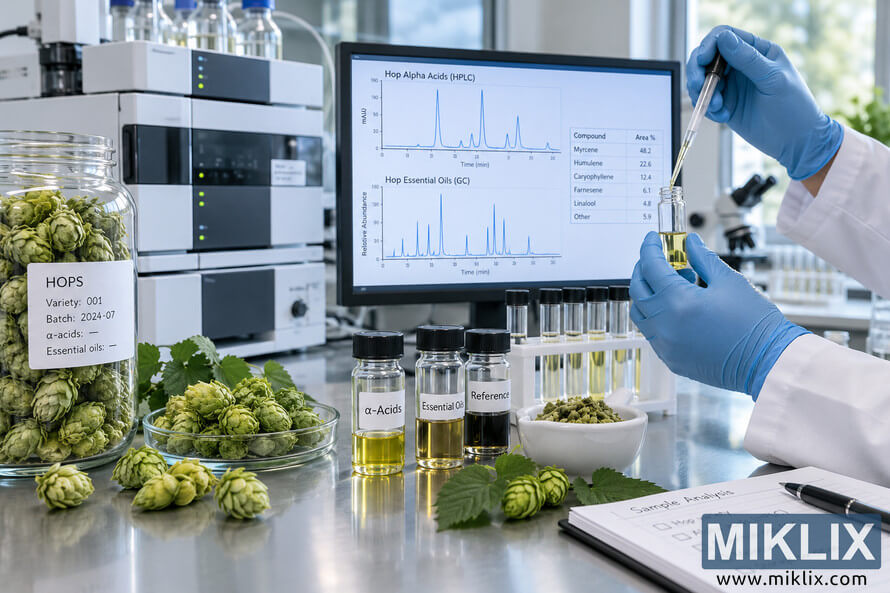
Understanding the alpha acid content of Northern Brewer hops helps you calculate precise bitterness levels in your beer. This variety typically ranges between 8% and 10% alpha acids, placing it in the moderate to high category. These alpha acids convert during the boil into iso-alpha acids, which provide the characteristic bitterness in beer.
The specific alpha acid percentage varies with each harvest year and growing region. Yakima Chief Hops and other suppliers provide detailed analysis certificates with each lot. These certificates specify the exact alpha acid content, allowing for accurate brewing calculations.
Click or tap the image for more information and higher resolutions.
The Complete Flavor and Aroma Profile
Primary Flavor Notes
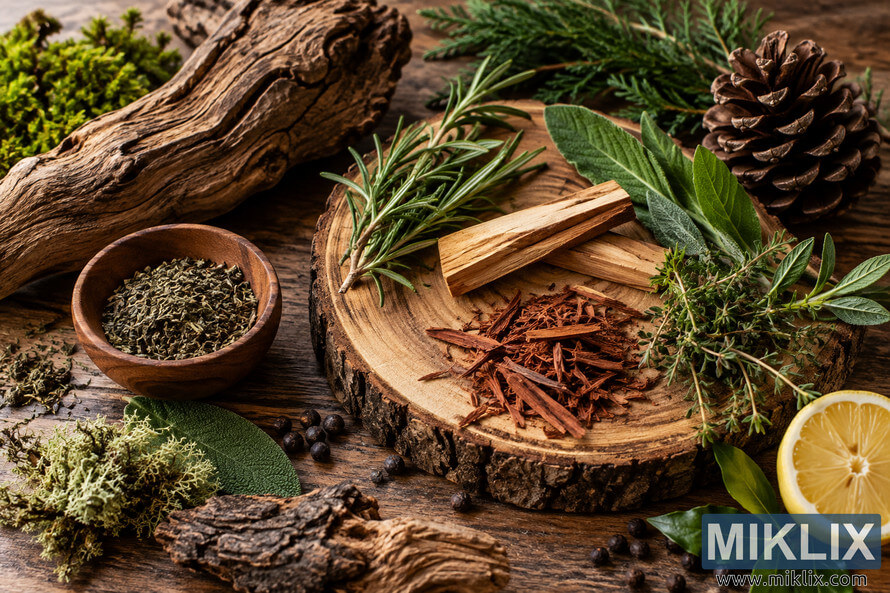
- Woody character reminiscent of cedar or oak
- Mint undertones that add freshness
- Herbal qualities suggesting sage or thyme
- Subtle earthy notes that ground the profile
- Light citrus hints in American-grown versions
Click or tap the image for more information and higher resolutions.
Aroma Characteristics
- Clean hop character without overwhelming intensity
- Balanced aromatics suitable for multiple styles
- Mint and herbal top notes
- Woody base notes that linger
- Moderate aroma intensity compared to modern hops
The flavor profile of Northern Brewer works differently depending on when you add the hops during brewing. Early additions during the boil extract primarily bittering compounds. Late additions and dry hopping bring forward the aromatic qualities that make this variety special.
Click or tap the image for more information and higher resolutions.
How Oil Composition Affects Flavor
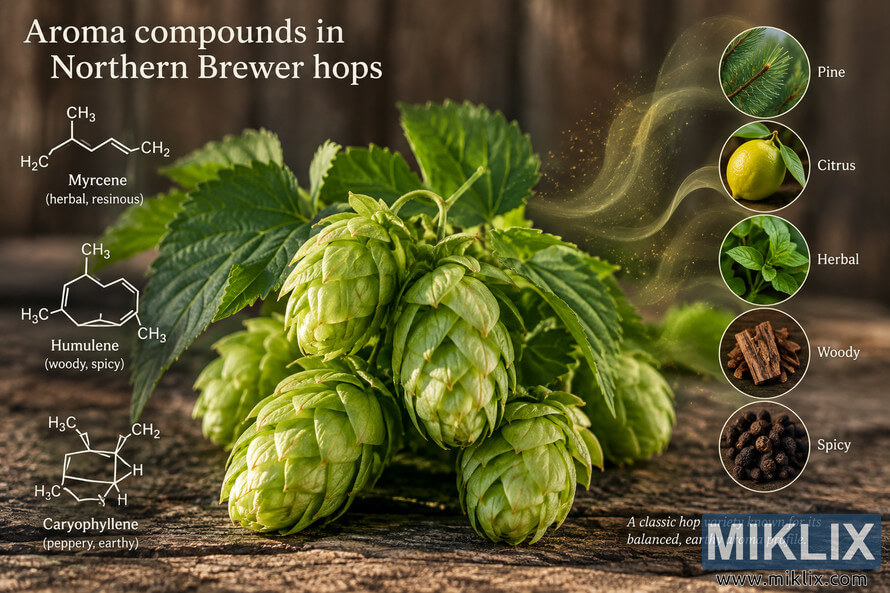
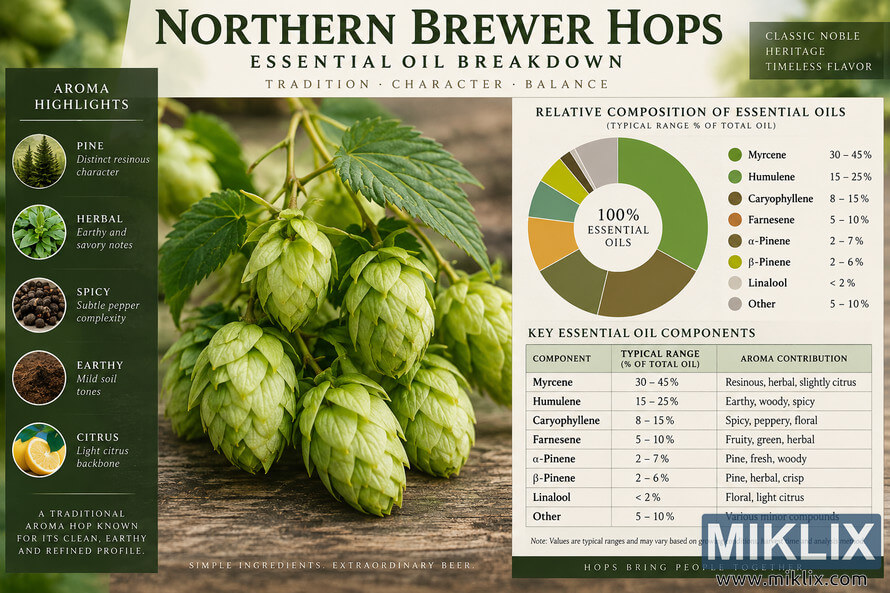
The essential oil content in Northern Brewer hops creates its distinctive flavor experience. Myrcene, the most abundant oil component, contributes herbal and slightly resinous notes. This compound makes up roughly 40% of the total oil content in most Northern Brewer lots.
Humulene adds spicy and woody characteristics that complement the myrcene profile. The interaction between these oils creates complexity without overwhelming the palate. Caryophyllene provides additional spice notes and contributes to the peppery undertones some brewers detect.
The beta acids in Northern Brewer hops play a supporting role in flavor development. While less soluble than alpha acids, beta acids contribute to the overall bitterness quality and help preserve hop character during aging. This makes Northern Brewer suitable for beers intended for longer storage.
Click or tap the image for more information and higher resolutions.
Comparing Northern Brewer to Other Varieties
Northern Brewer Advantages
- Balanced dual-purpose functionality
- Clean flavor without vegetal notes
- Works well in single-hop recipes
- Affordable and widely available
- Consistent crop-to-crop performance
- Complements other hop varieties
Best Used When
- Brewing traditional European styles
- Creating balanced American ales
- Building complex hop bills
- Seeking moderate bitterness
- Wanting woody or minty notes
- Developing unique flavor profiles
Consider Alternatives For
- Intensely citrus-forward IPAs
- Tropical fruit-driven pale ales
- Ultra-modern hazy beer styles
- Extremely high IBU beers
- Juice-like hop character
- Maximum aroma intensity focus
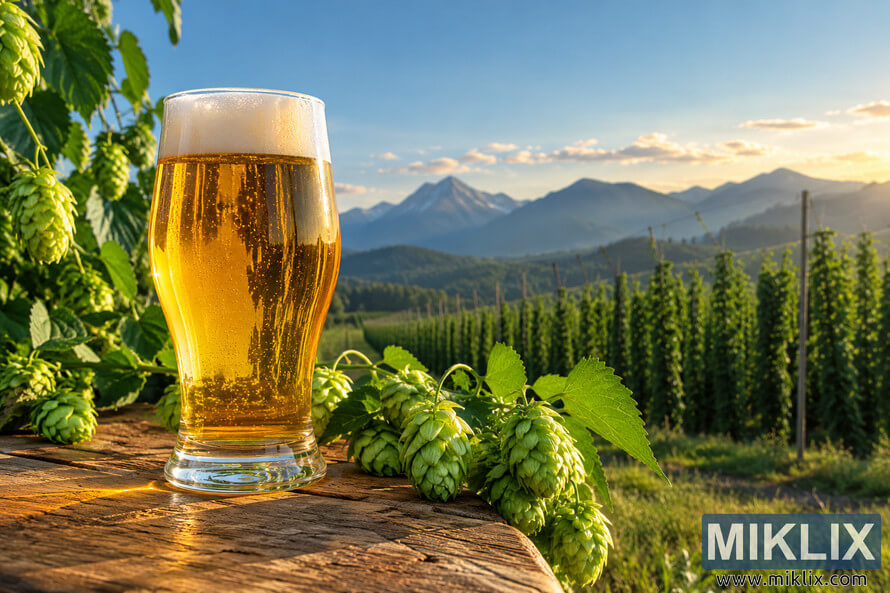
Professional brewers often describe Northern Brewer as having a "noble hop adjacent" character. While not technically a noble hop variety, its clean flavor profile shares some qualities with traditional European hops. This makes it an excellent choice for American interpretations of classic German beer styles.
The mint character in Northern Brewer becomes more pronounced with German-grown hops. Some brewers specifically seek out Northern Brewer from Germany when they want to emphasize this cooling, herbal quality. American-grown versions tend toward the woody end of the spectrum with less mint intensity.
Click or tap the image for more information and higher resolutions.
Sensory Evaluation Tips
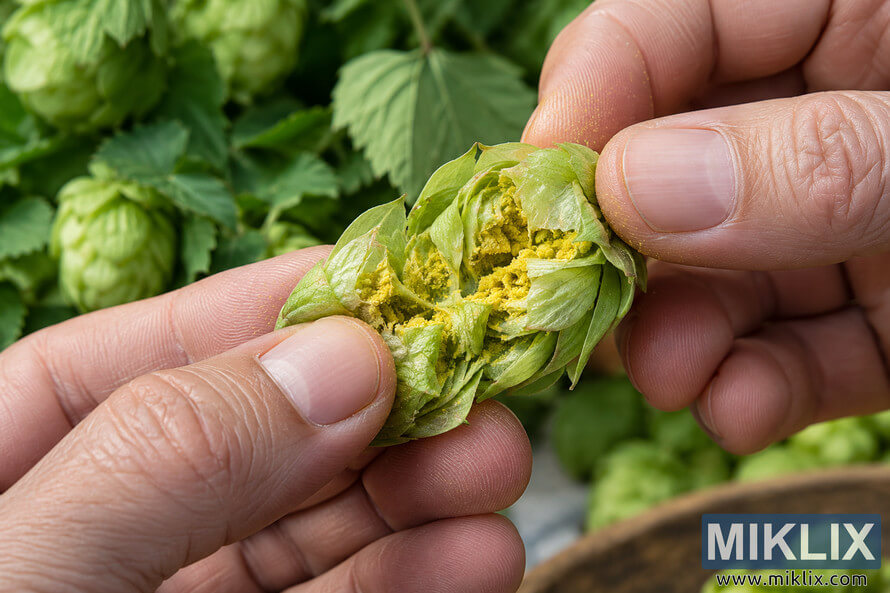
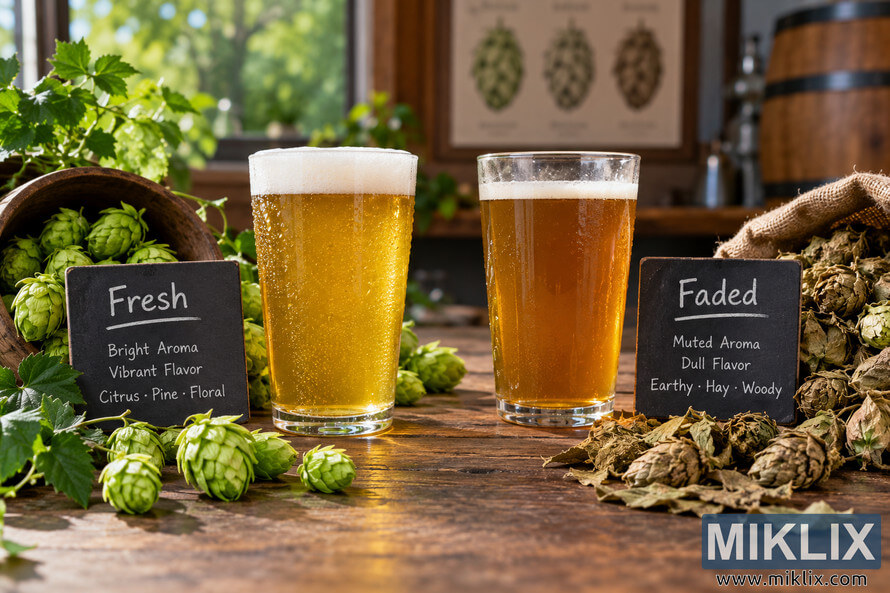
When evaluating Northern Brewer hops before brewing, rub the cones gently between your palms. This releases the essential oils and gives you a preview of the aroma profile. Fresh hops should smell vibrant and resinous, not grassy or hay-like.
The color of the lupulin glands inside the cone also indicates quality. Bright yellow lupulin suggests fresh hops with full potency. Brown or oxidized-looking lupulin indicates age and potential flavor degradation.
Click or tap the image for more information and higher resolutions.
Ideal Beer Styles for Northern Brewer Hops
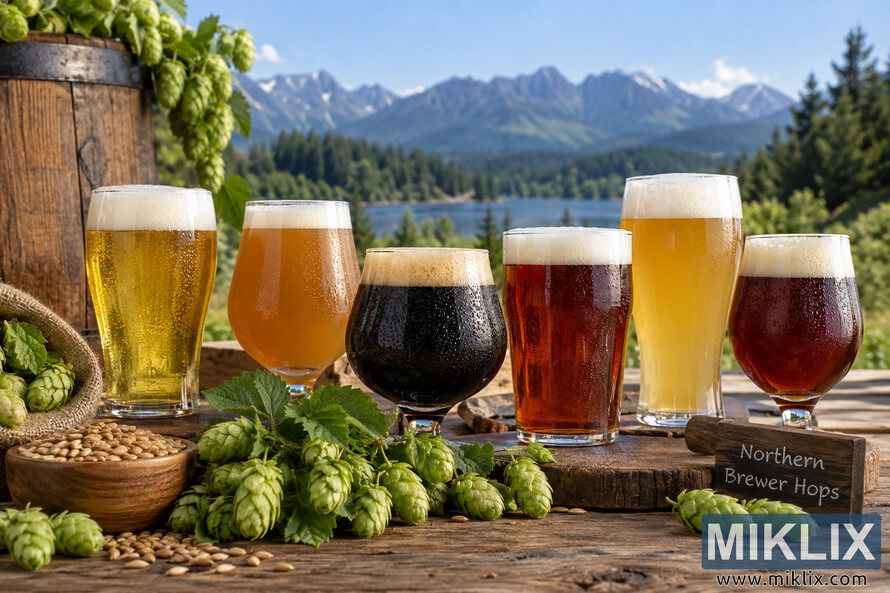
Northern Brewer hops shine across a remarkably wide range of beer styles. This versatility makes the variety valuable for homebrewers who want to maintain a streamlined hop inventory. From crisp lagers to robust porters, Northern Brewer adapts to different brewing contexts with excellent results.
The variety works as both a bittering hop and an aroma hop, giving brewers flexibility in recipe design. Some styles showcase Northern Brewer as the sole hop variety, while others use it as part of a more complex hop bill. Understanding where this hop excels helps you make informed brewing decisions.
Click or tap the image for more information and higher resolutions.
Traditional European Beer Styles
German Altbier
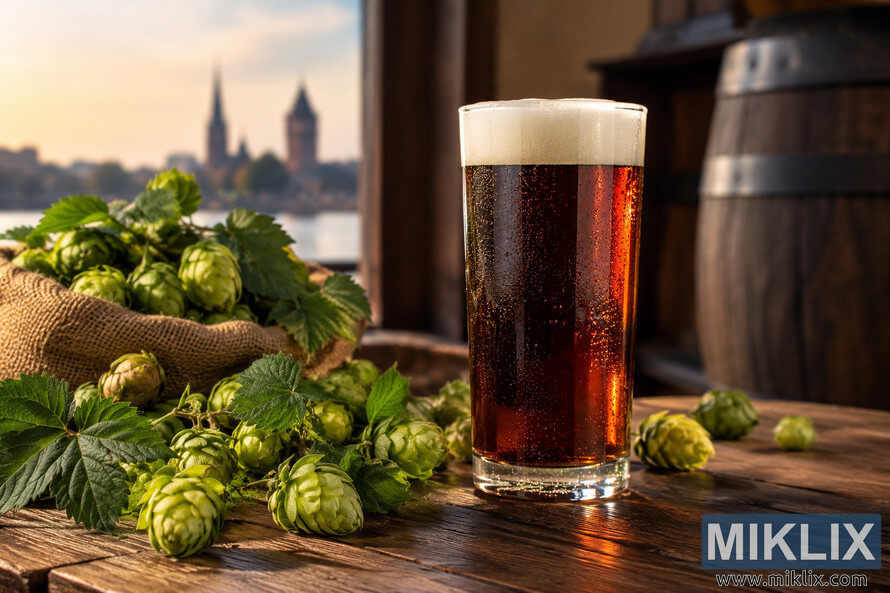
Altbier represents one of the most traditional applications for Northern Brewer hops. This copper-colored German ale style benefits from the hop's clean bitterness and subtle woody character. The variety provides the backbone bitterness these beers require without creating harsh or astringent flavors.
Many authentic Düsseldorf breweries rely on Northern Brewer for their signature Altbiers. The hop's moderate alpha acid content delivers the needed bitterness while complementing the malt-forward profile typical of the style.
Click or tap the image for more information and higher resolutions.
California Common (Steam Beer)
The California Common style practically demands Northern Brewer hops. This uniquely American style developed around the specific characteristics this hop variety provides. The woody and minty notes work perfectly with the hybrid ale-lager character of these beers.
Anchor Steam, the most famous example of this style, built its reputation on Northern Brewer. Homebrewers replicating this classic style should make Northern Brewer their first choice for authentic flavor.
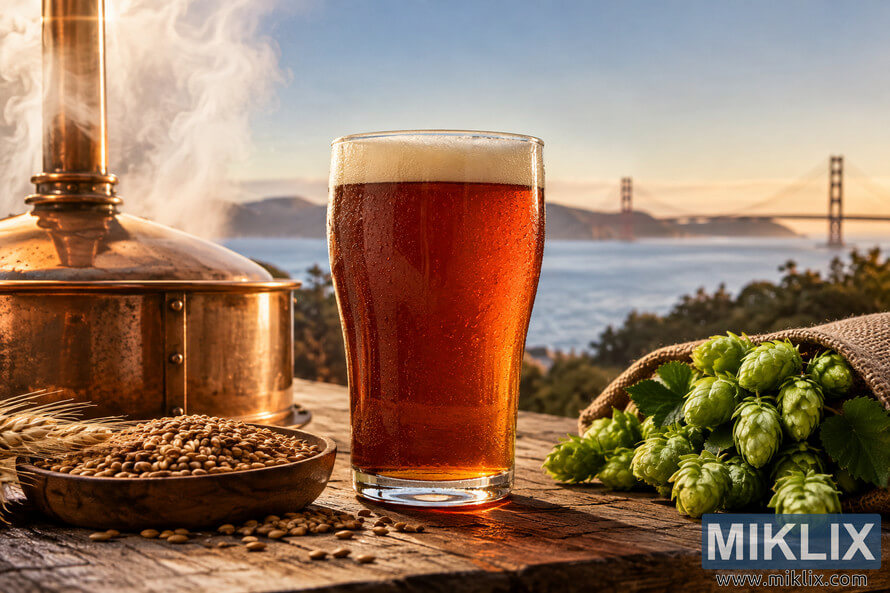
Click or tap the image for more information and higher resolutions.
Modern American Beer Styles
American pale ale brewers increasingly rediscover Northern Brewer as an alternative to intensely fruity modern hops. The variety brings enough character to stand out while maintaining balance with malt flavors. This makes Northern Brewer excellent for sessionable pale ales where drinkability matters more than hop intensity.
The citrus notes in American-grown Northern Brewer work particularly well in pale ales. These subtle citrus hints complement rather than dominate the beer's overall profile. Pairing Northern Brewer with small amounts of American aroma hops creates interesting complexity without losing the distinctive character.
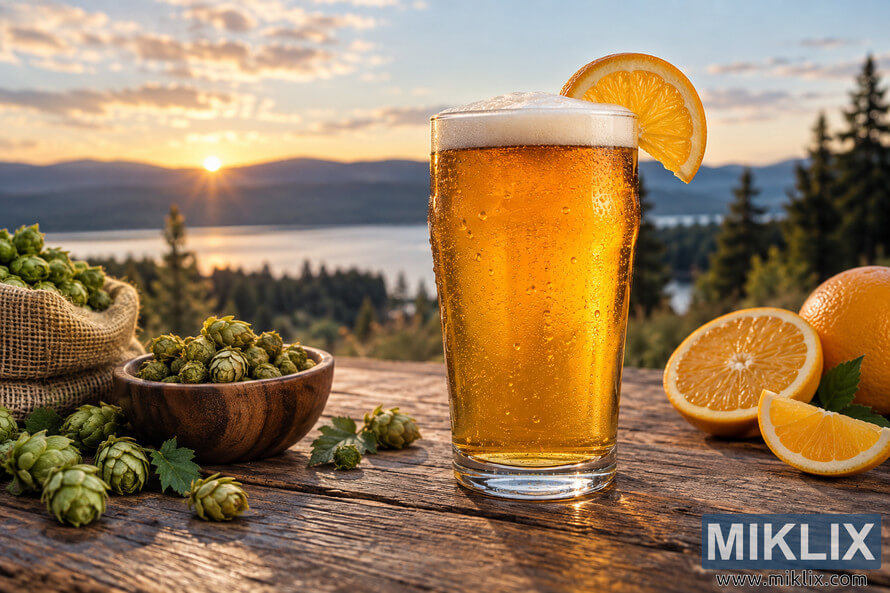
Click or tap the image for more information and higher resolutions.
Dark and Malty Beer Styles
English Brown Ale
Brown ales benefit from Northern Brewer's restrained hop character. The variety provides necessary bitterness to balance malt sweetness without overwhelming the nutty, toffee-like flavors characteristic of the style.
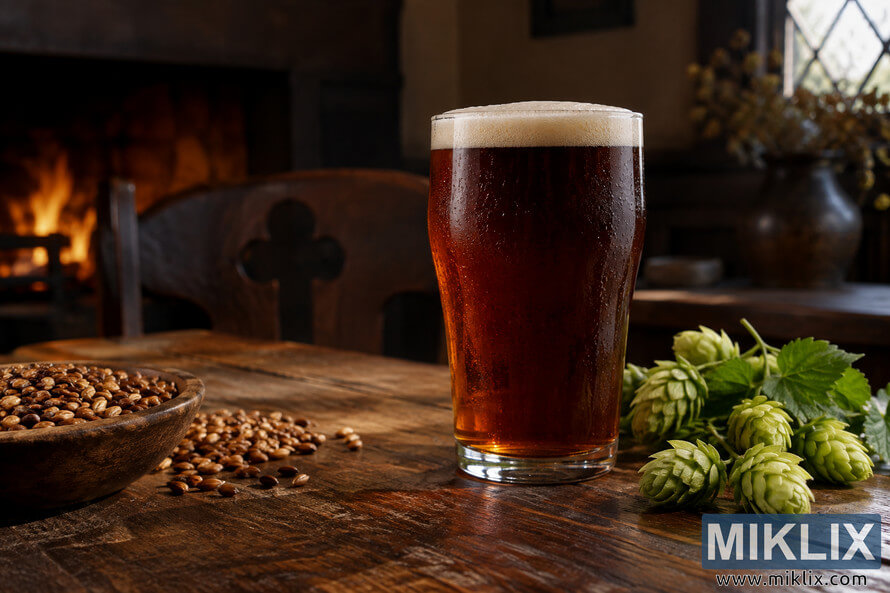
Click or tap the image for more information and higher resolutions.
Porter and Stout
The woody notes in Northern Brewer complement roasted malt flavors beautifully. Many porter and stout recipes use this hop for clean bittering that supports rather than competes with dark malt complexity.
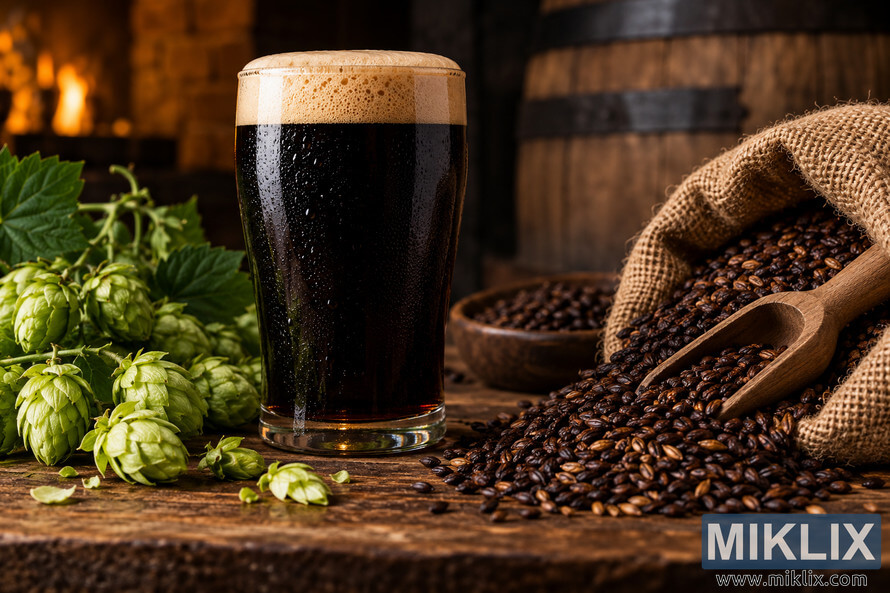
Click or tap the image for more information and higher resolutions.
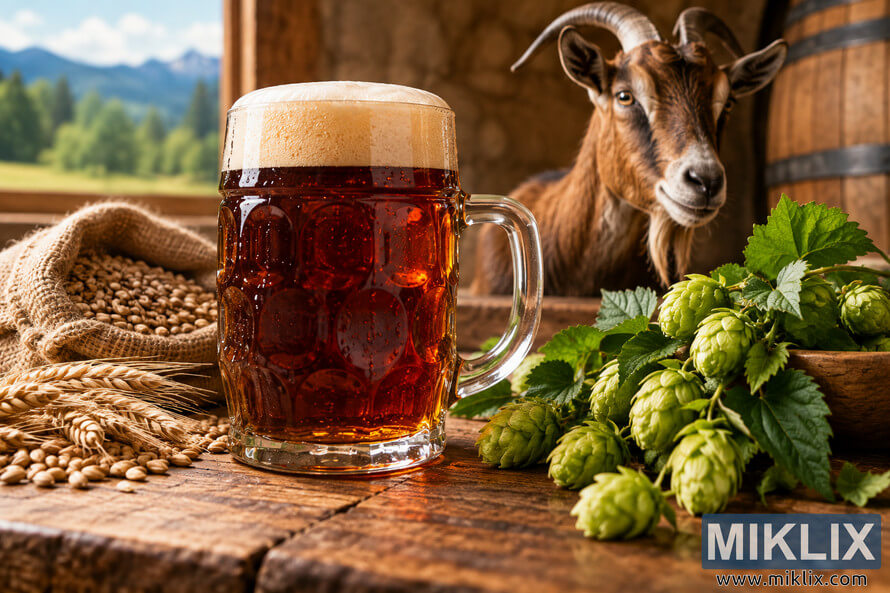
Bock and Doppelbock
Traditional German Bock styles often feature Northern Brewer for its clean bittering qualities. The hop adds structure without introducing flavors that clash with the rich, malty character these beers showcase.
Click or tap the image for more information and higher resolutions.
Complete Style Pairing Guide
| Beer Style | Usage Type | Target IBU Range | Hop Character |
| German Altbier | Dual-purpose | 25-50 IBUs | Woody, herbal bittering |
| California Common | Dual-purpose | 30-45 IBUs | Classic woody and minty |
| American Pale Ale | Bittering and late additions | 30-50 IBUs | Balanced citrus and herbal |
| English Brown Ale | Primarily bittering | 20-30 IBUs | Subtle background support |
| Porter | Bittering | 25-40 IBUs | Clean bitter with woody notes |
| ESB | Dual-purpose | 30-45 IBUs | Traditional English profile |
| Bock/Doppelbock | Bittering only | 20-35 IBUs | Clean, neutral bittering |
| Vienna Lager | Bittering | 18-30 IBUs | Subtle herbal notes |
Experimental brewers also find success using Northern Brewer in non-traditional applications. Some craft breweries incorporate it into hoppy lagers where its clean bitterness works well with crisp lager yeast character. Others blend it with modern citrus-forward hops to add complexity and depth.
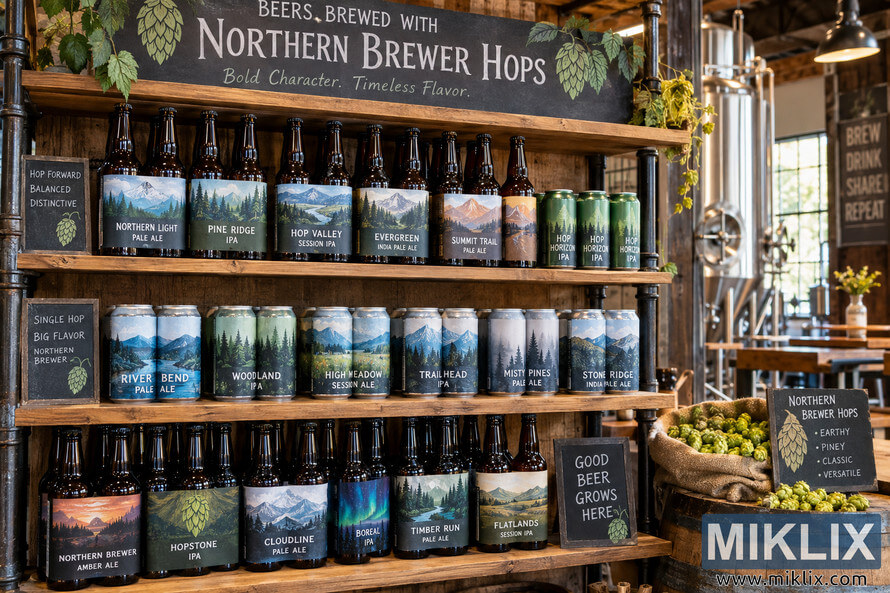
Pro Tip for Style Selection: When choosing whether to use Northern Brewer in a recipe, consider the overall flavor balance you want to achieve. If the beer style benefits from woody, minty, or herbal hop notes, Northern Brewer works excellently. For styles requiring intense tropical fruit or citrus hop character, consider pairing Northern Brewer with more aromatic modern varieties.
Click or tap the image for more information and higher resolutions.
Single-Hop Brewing with Northern Brewer
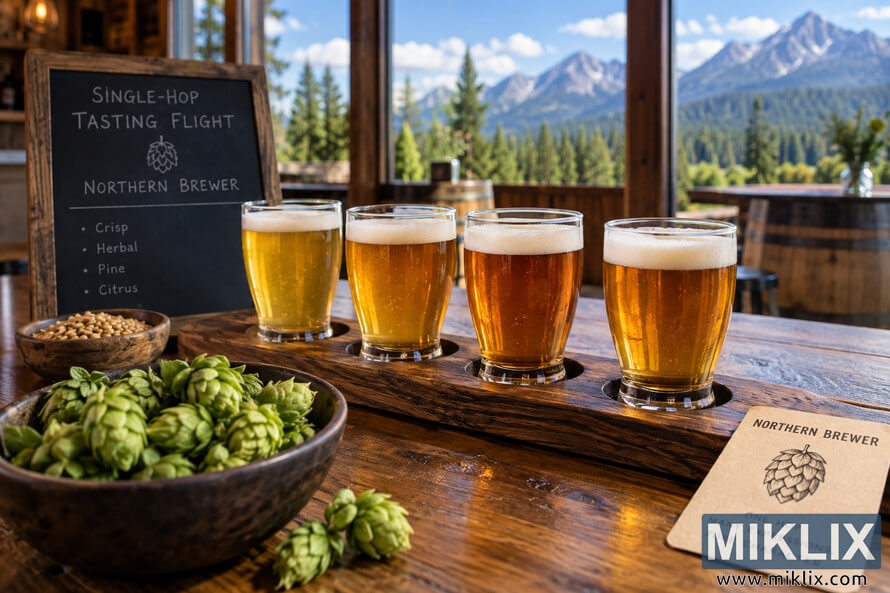
Single-hop beers using only Northern Brewer showcase the variety's complete character. This brewing approach helps you understand exactly what the hop contributes without interference from other varieties. Many homebrewers create SMaSH (Single Malt and Single Hop) beers with Northern Brewer to learn its profile thoroughly.
A simple pale ale recipe using only Northern Brewer reveals the hop's nuanced character. You'll taste the mint and woody notes clearly, along with the subtle citrus undertones American versions provide. This knowledge helps you use the hop more effectively in complex recipes later.
The American pale ale style works particularly well for Northern Brewer single-hop experiments. The moderate malt backbone provides enough support without overwhelming the hop character. Target an original gravity around 1.050 and use Northern Brewer at multiple points during the boil for full expression.
Click or tap the image for more information and higher resolutions.
Brewing Techniques and Usage Rates for Homebrewing
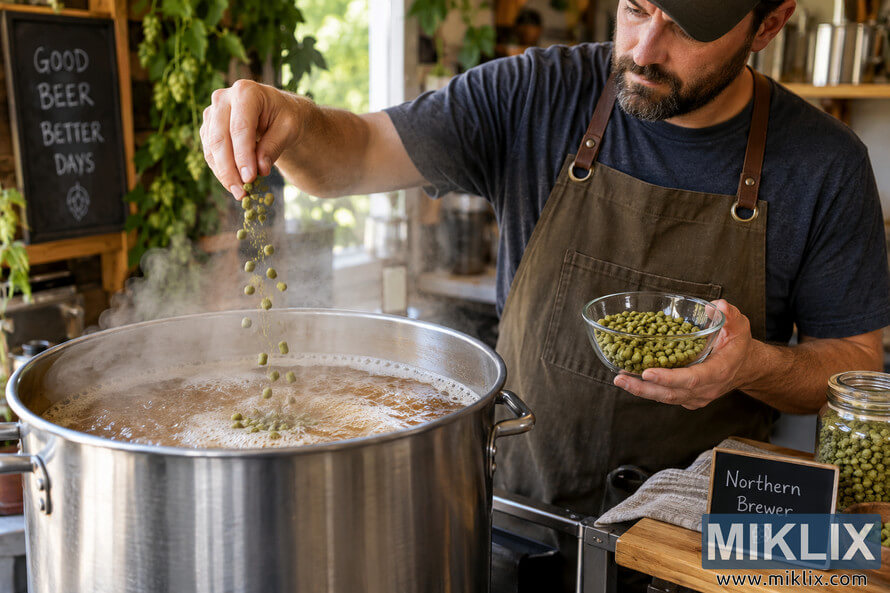
Successful brewing with Northern Brewer hops requires understanding optimal usage rates and timing. The variety's dual-purpose nature gives you flexibility in how you incorporate it throughout the brewing process. Different addition times extract different characteristics from the same hop variety.
Your specific brewing setup impacts how Northern Brewer performs. Factors like boil vigor, wort gravity, and pH levels affect hop utilization. Starting with established guidelines and adjusting based on your experience produces the best results.
Click or tap the image for more information and higher resolutions.
Bittering Additions and IBU Calculations
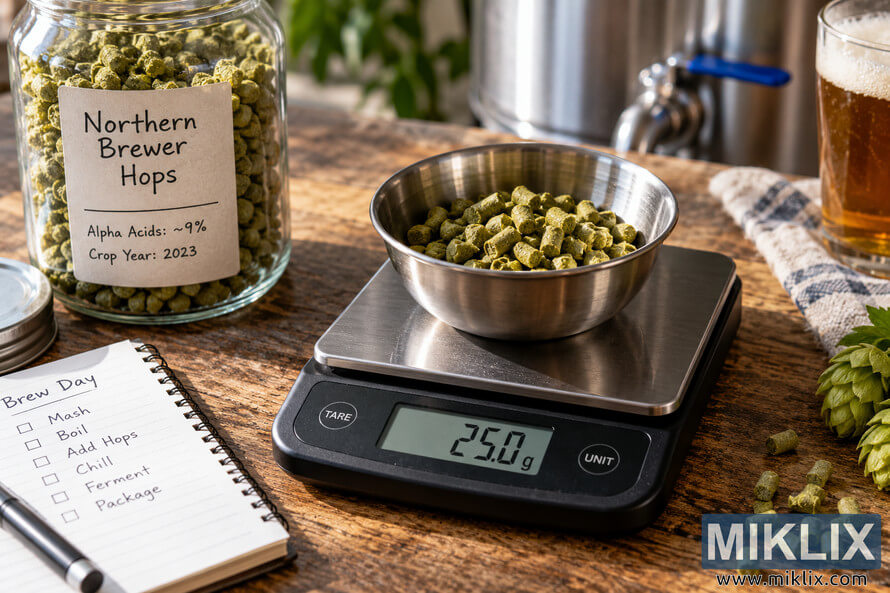
For bittering purposes, add Northern Brewer hops early in the boil. A 60-minute addition extracts maximum alpha acids while volatilizing most aromatic compounds. This creates clean bitterness without strong hop flavor or aroma in the finished beer.
Calculate your hop additions using brewing software or online calculators. Input the specific alpha acid percentage from your hop package for accurate IBU predictions. Remember that actual bitterness perception varies based on malt sweetness and other recipe factors.
For a standard 5-gallon batch targeting 40 IBUs, expect to use approximately 1.5 to 2 ounces of Northern Brewer hops with 9% alpha acids at 60 minutes. Adjust this amount based on your specific alpha acid content and desired bitterness level.
Click or tap the image for more information and higher resolutions.
Flavor and Aroma Additions
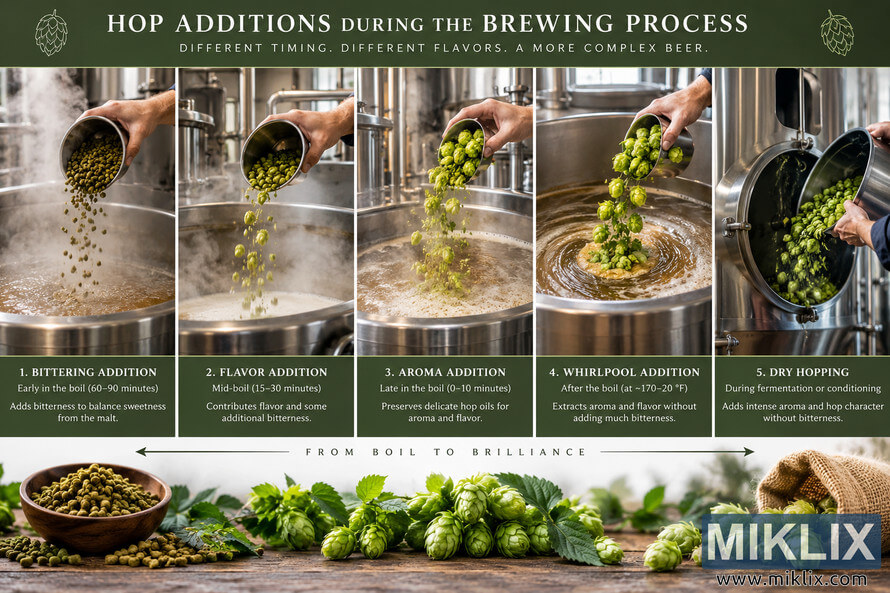
Late-boil additions bring forward Northern Brewer's flavor characteristics. Adding hops between 15 and 5 minutes before the end of the boil preserves more essential oils while still extracting some bitterness. This timing works well for styles where you want noticeable Northern Brewer character.
| Addition Timing | Amount (5-gallon batch) | Primary Contribution | Best Beer Styles |
| 60 minutes | 1.5-2.5 oz | Clean bittering | All styles needing bitterness |
| 30 minutes | 0.5-1.0 oz | Light flavor and bitterness | Pale ales, IPAs |
| 15 minutes | 0.5-1.5 oz | Flavor emphasis | California Common, Altbier |
| 5 minutes | 0.5-1.0 oz | Aroma and flavor | Hoppy ales |
| Flameout/Whirlpool | 1.0-2.0 oz | Aroma preservation | American pale ale variations |
| Dry hop | 1.0-3.0 oz | Maximum aroma | IPAs, pale ales |
Click or tap the image for more information and higher resolutions.
Dry Hopping with Northern Brewer
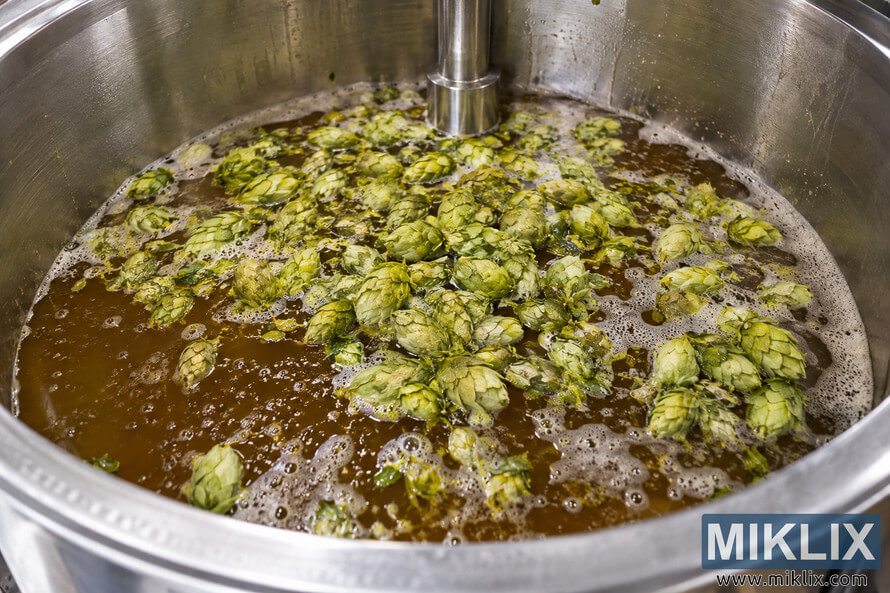
Dry hop additions maximize Northern Brewer's aromatic potential. Adding hops during or after fermentation preserves the volatile compounds that create aroma. While Northern Brewer isn't as intensely aromatic as some modern varieties, dry hopping still enhances its herbal and woody character significantly.
Traditional Dry Hopping Method
Add Northern Brewer hops to the fermenter after primary fermentation completes. This typically occurs 5-7 days after pitching yeast, once vigorous fermentation activity subsides. Allow the hops to contact the beer for 3-5 days before packaging.
- Use 1-2 ounces per 5 gallons for moderate aroma
- Increase to 2-3 ounces for stronger hop presence
- Keep contact time under 7 days to avoid grassy flavors
- Maintain fermentation temperature during dry hopping
Modern Dry Hopping Approaches
Some brewers add dry hops while fermentation remains active. This technique, called biotransformation, allows yeast to modify hop compounds into new flavors. For Northern Brewer, this can emphasize the variety's subtle citrus notes.
- Add hops 2-3 days after fermentation begins
- Active yeast strips out some oxygen, reducing oxidation
- Biotransformation can create unique flavor variations
- Experiment with timing to find preferred results
Click or tap the image for more information and higher resolutions.
First Wort Hopping Technique
First wort hopping involves adding hops to the kettle before the boil begins, as you transfer hot wort from the mash tun. This technique reportedly produces smoother bitterness and enhanced hop flavor. Northern Brewer works excellently for first wort hopping in traditional German styles.
Use roughly the same amount of Northern Brewer you would for a 20-minute addition when first wort hopping. The extended contact time with hot wort extracts compounds differently than standard boil additions. Many brewers report this method creates more integrated hop character in the finished beer.
Hop Bursting and Whirlpool Additions
Hop bursting concentrates hop additions late in the boil or at flameout. This technique emphasizes flavor and aroma over bitterness. While typically associated with citrus-forward American hops, the method also works with Northern Brewer for unique results.
For a hop-bursted American pale ale with Northern Brewer, use minimal bittering hops early in the boil. Load most of your hop additions between 10 minutes and flameout. This showcases the variety's herbal and woody character while maintaining drinkability.
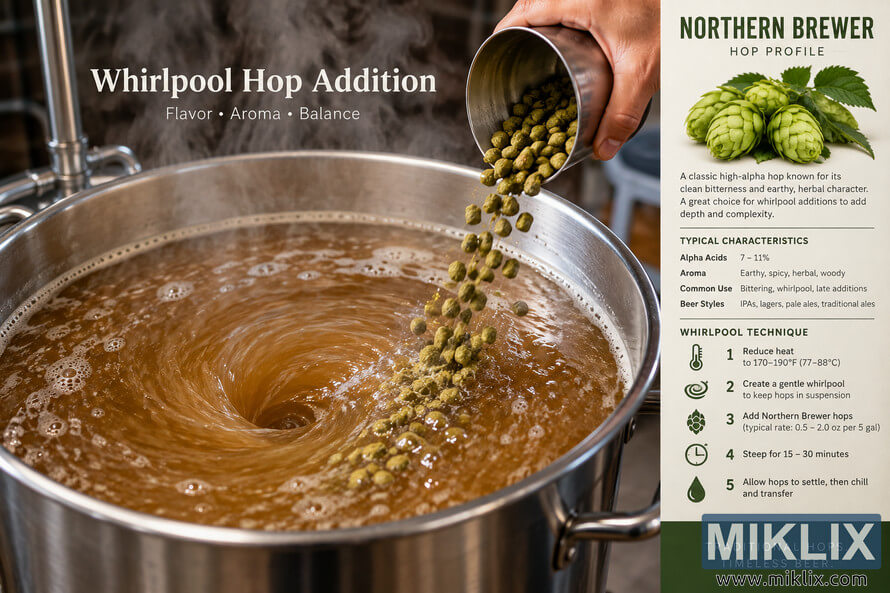
Whirlpool additions occur after the boil ends but while the wort remains hot. Allow the wort to cool slightly to around 170-180°F before adding Northern Brewer. This temperature preserves aromatics while still extracting flavor compounds. Steep the hops for 20-30 minutes before chilling.
Click or tap the image for more information and higher resolutions.
Combining Northern Brewer with Other Hops
Northern Brewer blends well with many other hop varieties. Its clean, woody character provides a foundation that other hops build upon. Consider these successful combinations for different brewing goals:
Traditional Pairings
- Hallertau for authentic German character
- Tettnang for delicate herbal notes
- Perle for increased spicy character
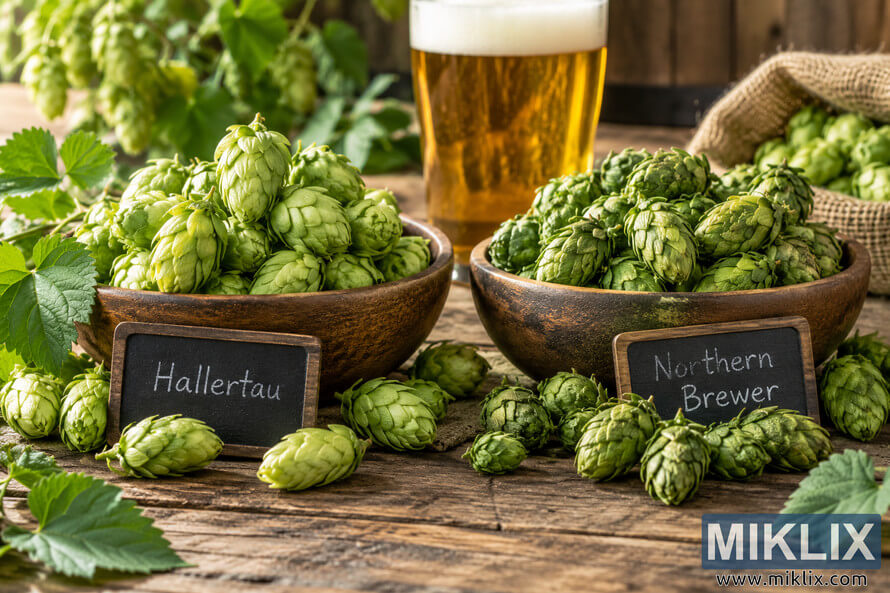
Click or tap the image for more information and higher resolutions.
American Style Pairings
- Cascade for citrus complexity
- Centennial for bold American ale character
- Willamette for balanced fruit notes
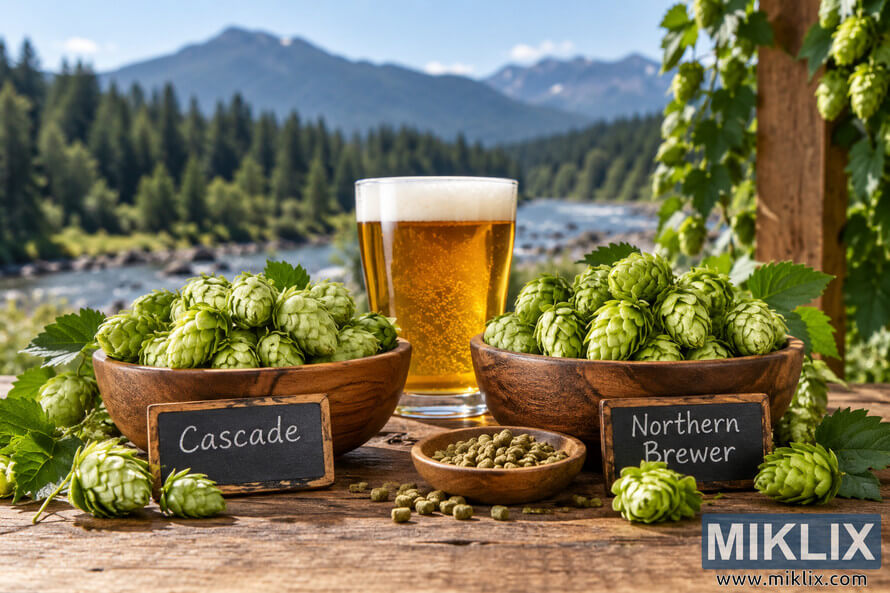
Click or tap the image for more information and higher resolutions.
Modern Combinations
- Citra for tropical fruit accents
- Mosaic for berry-forward complexity
- Simcoe for piney depth
When blending hops, start with Northern Brewer as your bittering addition and base flavor. Add more aromatic varieties later in the boil or as dry hops. This approach maintains Northern Brewer's structural contribution while allowing other hops to provide accent notes.
Brew Day Tip: Always verify your alpha acid percentages before starting your brew day. Check the package label and adjust your recipe calculations accordingly. A difference of even 1-2% alpha acids can noticeably affect your final beer's bitterness.
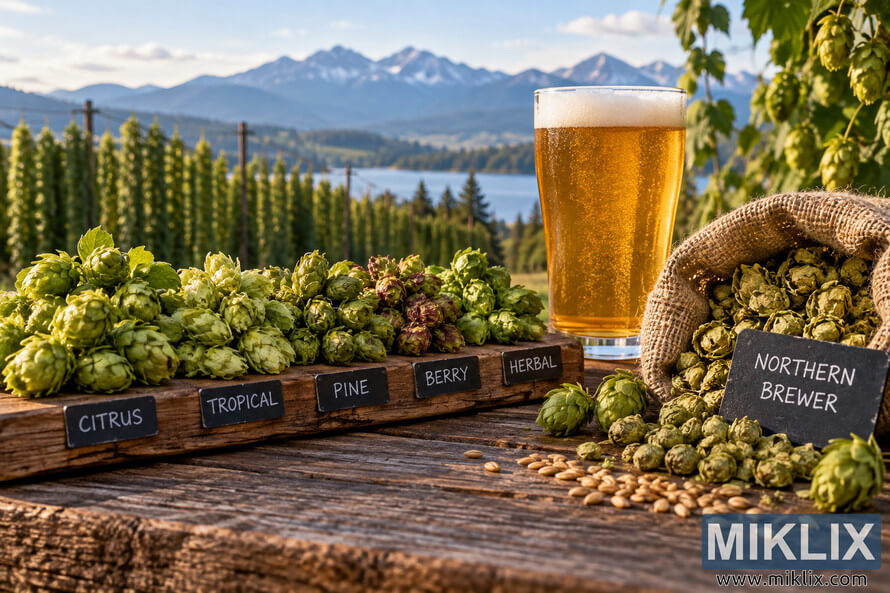
Click or tap the image for more information and higher resolutions.
Form Factor Considerations
Northern Brewer hops come in multiple forms, each with specific advantages for homebrewing. Understanding these differences helps you choose the right form for your brewing setup and goals.
Hop Pellets
- Longer shelf life due to compressed form
- Easier to measure and store
- Better extraction efficiency in the boil
- More consistent alpha acid content
- Widely available from all major suppliers
- Work well in all brewing applications
Whole Leaf Hops
- Require more storage space
- Less efficient for small-scale homebrewing
- Can absorb more wort, reducing yield
- More challenging to measure accurately
- Need special equipment for dry hopping
- Shorter shelf life than pellets
Most homebrewers find pelletized Northern Brewer most practical for regular brewing. The improved storage characteristics and consistent performance outweigh any subtle flavor differences. However, some brewers prefer whole cone hops for traditional styles or when using a hop back device.
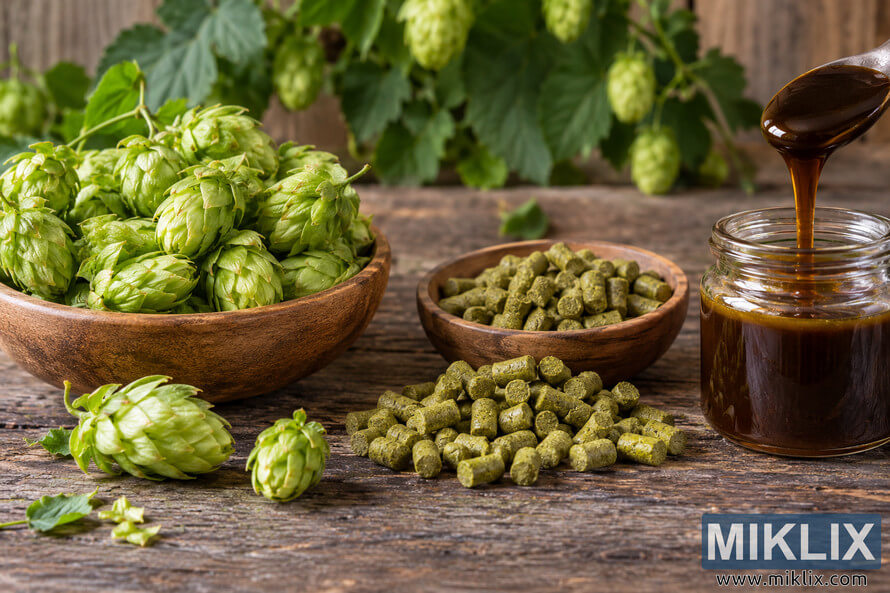
Click or tap the image for more information and higher resolutions.
Tips for Storing and Handling Northern Brewer Hops
Proper storage dramatically affects how long Northern Brewer hops maintain their quality. Hops deteriorate quickly when exposed to oxygen, light, heat, or moisture. Understanding storage best practices ensures your hops perform as expected on brew day, even months after purchase.
The essential oils and alpha acids that create Northern Brewer's distinctive character break down over time. Oxidized hops develop cheesy or stale aromas that ruin beer flavor. Following proven storage methods prevents this degradation and protects your investment in quality ingredients.
Click or tap the image for more information and higher resolutions.
Optimal Storage Conditions
Temperature Management
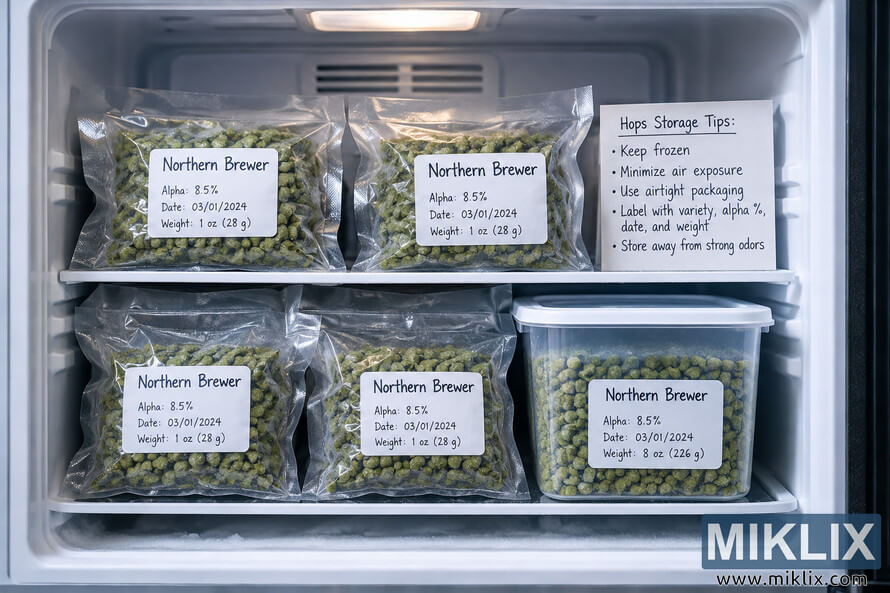
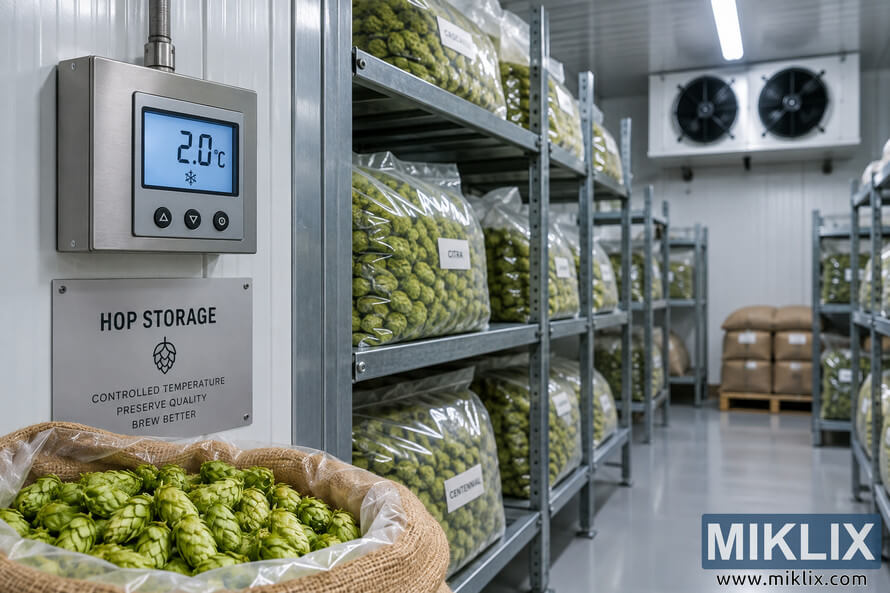
Store Northern Brewer hops in a freezer set at 0°F or below for maximum preservation. Freezer storage stops most degradation processes and maintains hop character for years. Standard refrigerator temperatures slow degradation but don't halt it completely.
Avoid temperature fluctuations that cause condensation inside hop packages. Once frozen, keep hops frozen until you're ready to use them. Allow packages to reach room temperature before opening to prevent moisture condensation on the hop material.
Click or tap the image for more information and higher resolutions.
Oxygen Protection
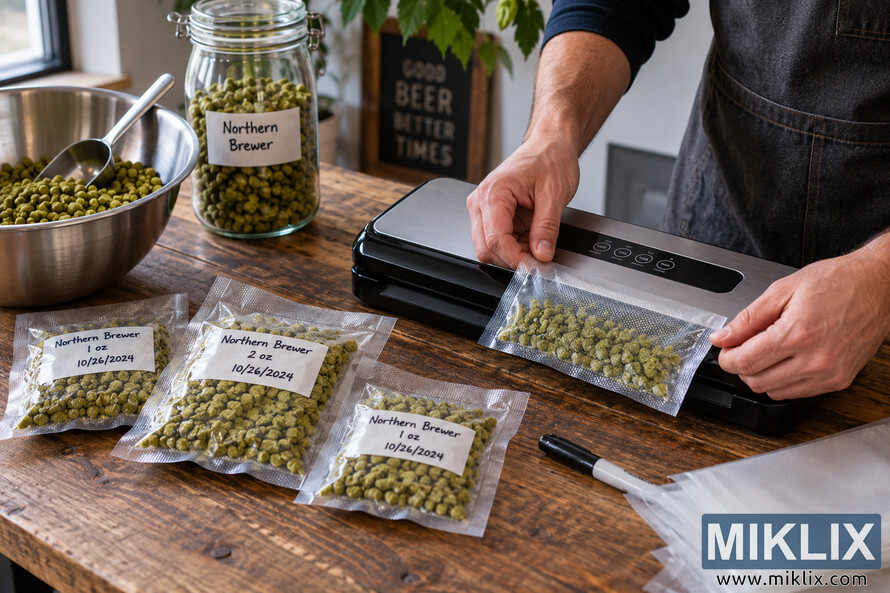
Minimize oxygen exposure by keeping hops in their original packaging until needed. Most commercial hop packages use barrier foil that blocks oxygen transmission. Once opened, transfer unused hops to vacuum-sealed bags or containers with oxygen absorbers.
Vacuum sealers designed for food storage work excellently for repackaging opened hops. If you lack a vacuum sealer, squeeze as much air as possible from resealable freezer bags before sealing. Every bit of oxygen reduction helps extend storage life.
Click or tap the image for more information and higher resolutions.
Packaging and Repackaging Methods
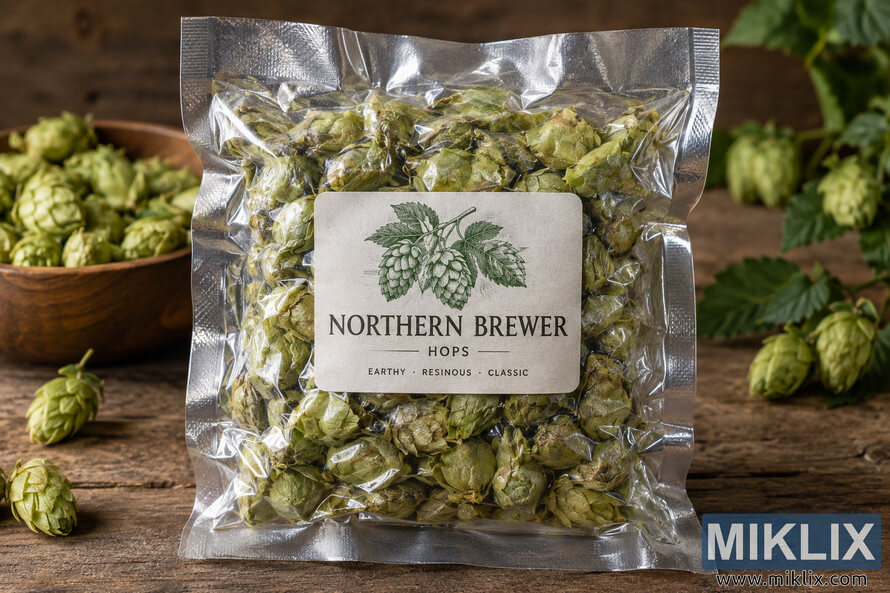
Northern Brewer hops typically arrive in oxygen-barrier foil packages. These packages contain nitrogen or carbon dioxide to displace oxygen. The packaging protects hops during shipping and initial storage, but once opened, protection decreases significantly.
Best Storage Practices
- Keep hops frozen at 0°F or below constantly
- Store in original packaging when unopened
- Vacuum seal opened packages immediately
- Add oxygen absorber packets when repackaging
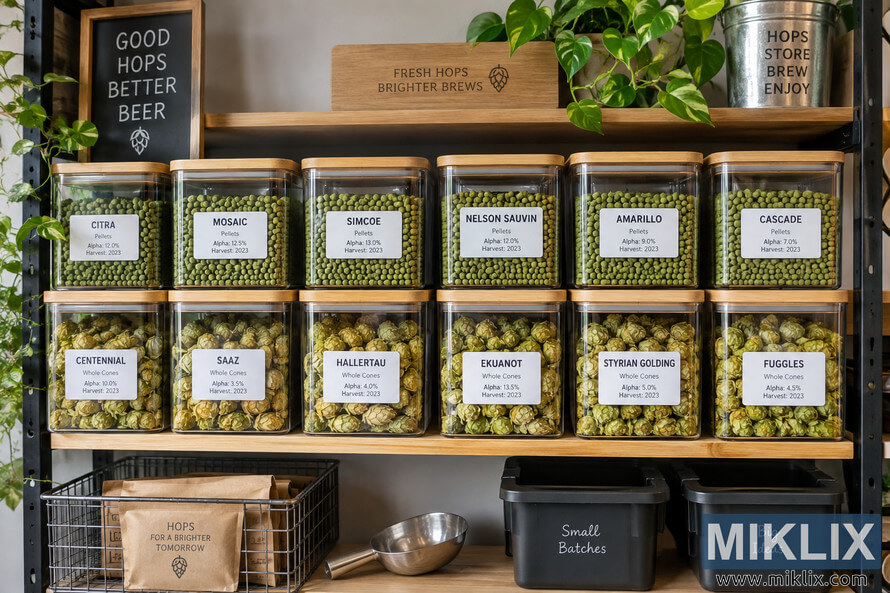
- Label packages with variety and purchase date
- Use oldest hops first (rotate your inventory)
- Avoid exposing hops to light during storage
- Keep storage area dry and well-organized
Storage Mistakes to Avoid
- Storing hops at room temperature for extended periods
- Leaving opened packages exposed to air
- Using hops past their optimal freshness date
- Allowing moisture contact with hop material
- Storing hops in clear containers exposed to light
- Mixing different hop varieties in one container
- Failing to label repackaged hops properly
- Neglecting to check hops for freshness before brewing
Click or tap the image for more information and higher resolutions.
Evaluating Hop Freshness
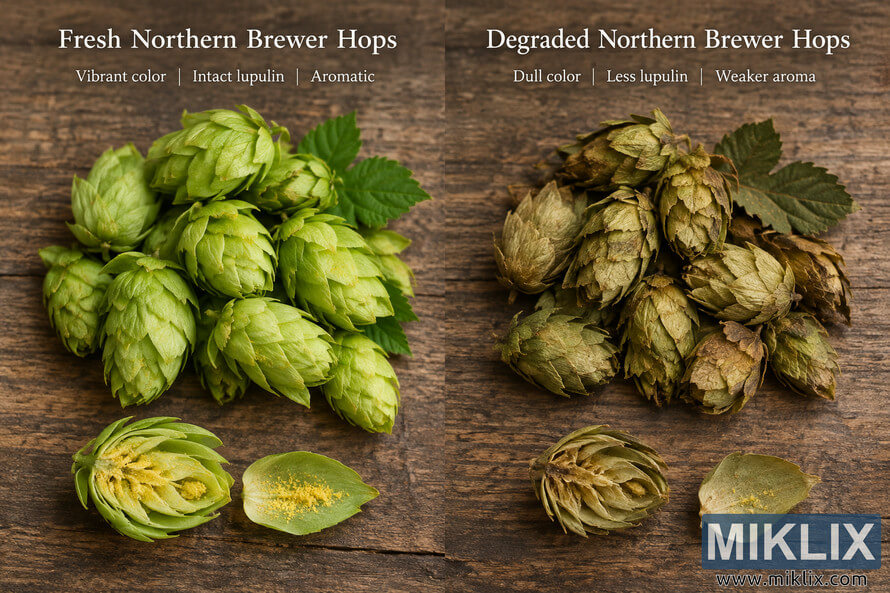
Before brewing, always check your Northern Brewer hops for signs of degradation. Fresh hops smell bright and resinous with clear herbal and woody notes. Degraded hops develop off-aromas that indicate lost brewing value.
Signs of Fresh Hops
- Vibrant green color in whole cones
- Bright yellow lupulin glands
- Strong resinous feel when rubbed
- Clear herbal and woody aroma
- No musty or cheesy smells
Signs of Degraded Hops
- Brown or faded appearance
- Oxidized or dull lupulin color
- Dry, papery texture
- Cheesy or stale aroma
- Weak or absent hop smell
The alpha acids in Northern Brewer degrade at different rates depending on storage conditions. Well-stored hops lose roughly 10-15% of their alpha acid content per year even under ideal freezer conditions. Room temperature storage accelerates this loss dramatically, with hops potentially losing 50% or more of their potency in months.
Click or tap the image for more information and higher resolutions.
Long-Term Storage Strategies
Many homebrewers buy Northern Brewer hops in bulk to save money and ensure consistent supply. Proper long-term storage becomes critical for bulk purchases. Divide large hop packages into smaller portions immediately after purchase to minimize repeated exposure to air and temperature changes.
Click or tap the image for more information and higher resolutions.
Small Quantity Storage
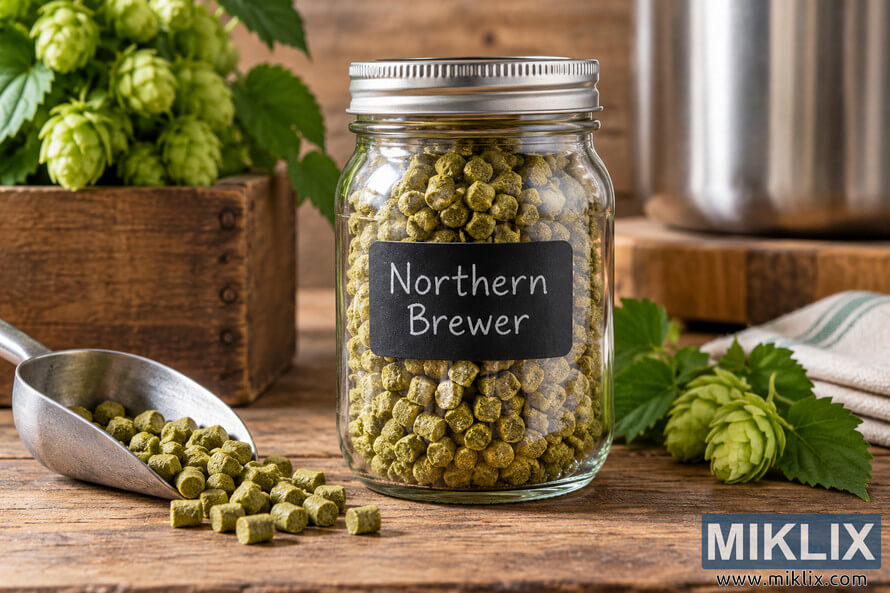
For brewing quantities of 1-2 ounces, store Northern Brewer in small vacuum-sealed bags or mason jars with oxygen absorbers. This prevents repeated exposure when accessing your hop supply. Mason jars work well for short-term freezer storage when vacuum sealing isn't available.
Click or tap the image for more information and higher resolutions.
Bulk Storage
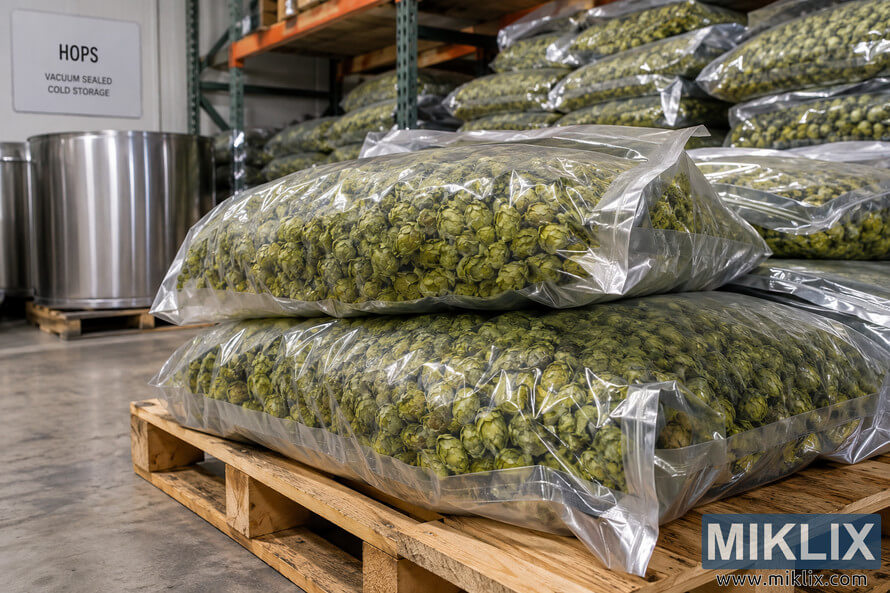
Purchase pounds of Northern Brewer and immediately divide into 4-ounce portions using a vacuum sealer. This allows you to open small quantities as needed while keeping the majority of your hops pristine. Label each portion with the variety, alpha acid content, and packaging date.
Click or tap the image for more information and higher resolutions.
Advanced Storage Systems
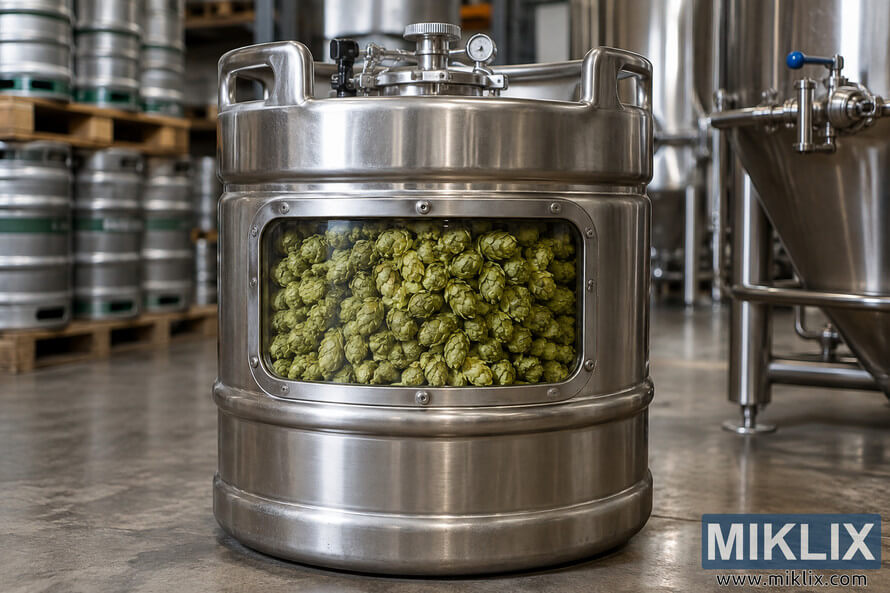
Serious homebrewers sometimes invest in specialized hop storage containers that allow CO2 purging. These systems eliminate oxygen exposure completely when accessing stored hops. While expensive, they offer the ultimate protection for large hop inventories.
Click or tap the image for more information and higher resolutions.
Handling Hops on Brew Day
Your handling procedures during brewing also affect hop quality and beer outcomes. Remove Northern Brewer hops from the freezer about 30 minutes before brew day begins. This prevents condensation when you open the package, which could introduce moisture to unused hops.
Measure your hop additions quickly and return unused hops to storage immediately. Extended exposure to warm, humid brewery air degrades hops rapidly. Have your vacuum sealer or storage containers ready before opening hop packages.
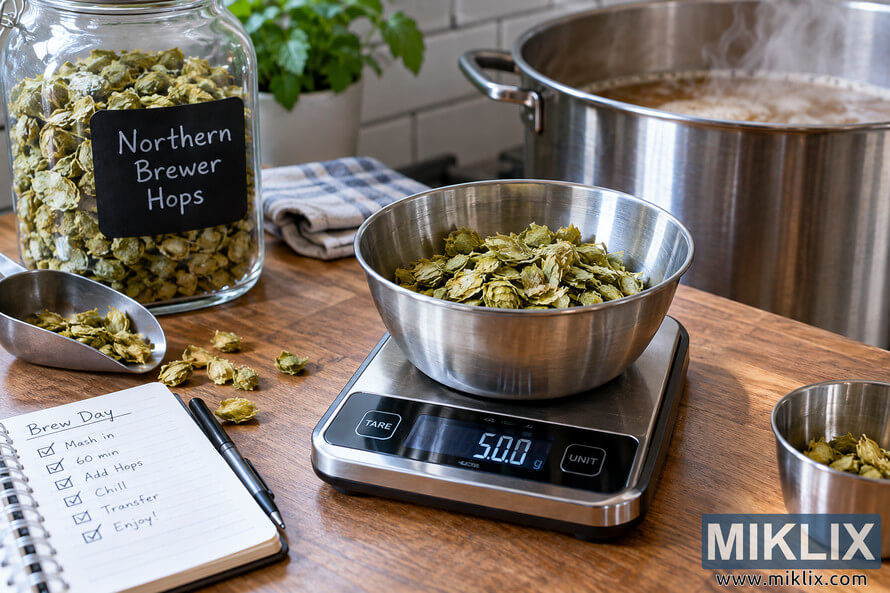
Weigh hops using a digital scale accurate to at least 0.1 ounces. Precision matters for achieving target bitterness levels and consistent results batch to batch. Keep your scale away from steam and splashing wort to maintain accuracy and longevity.
Click or tap the image for more information and higher resolutions.
Understanding Hop Degradation Rates
| Storage Condition | Temperature | Alpha Acid Loss Per Year | Recommended Maximum Storage |
| Deep Freeze (Vacuum Sealed) | -10°F to 0°F | 5-10% | 3+ years |
| Standard Freezer (Sealed) | 0°F to 10°F | 10-15% | 2-3 years |
| Refrigerator (Sealed) | 35°F to 40°F | 20-30% | 1 year |
| Room Temperature (Sealed) | 65°F to 75°F | 50-70% | 3-6 months |
| Room Temperature (Opened) | 65°F to 75°F | 70-90% | 1-2 months |
These degradation rates vary based on the specific hop variety, initial alpha acid content, and exact storage conditions. Northern Brewer stores reasonably well compared to some delicate aroma varieties, but still requires proper care to maintain quality.
Important Note: Even properly stored hops eventually lose their brewing value. Plan your hop purchases based on your brewing frequency. Buying more hops than you'll use within two years rarely saves money when accounting for quality loss. Fresh ingredients consistently produce better beer than aged ingredients, regardless of storage methods.
Supplier Selection and Purchase Timing
Choose hop suppliers carefully to ensure you receive fresh Northern Brewer hops. Yakima Chief Hops and other major suppliers typically turn over inventory quickly and provide proper storage until shipping. Smaller retailers may have older stock or suboptimal storage conditions.
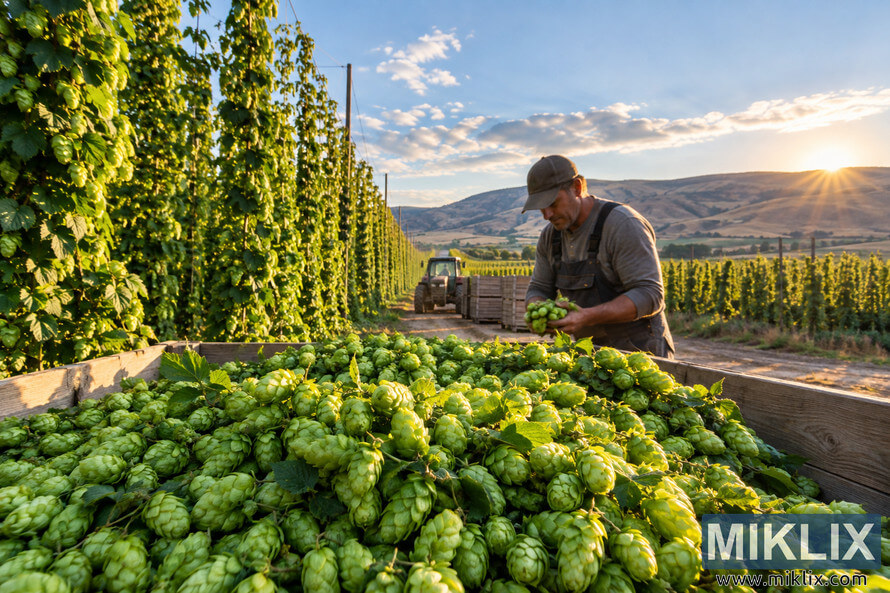
The harvest occurs in late summer and early fall each year. Northern Brewer hops harvested in September reach brewers in October or November. Purchase your Northern Brewer supply shortly after the harvest for maximum freshness. Many suppliers offer pre-orders for the upcoming crop year.
Check package labels for crop year and packaging date when ordering. Reputable suppliers clearly mark this information. Avoid purchasing hops without knowing their age, as you have no way to assess their remaining shelf life.
Click or tap the image for more information and higher resolutions.
Advanced Homebrewing Techniques with Northern Brewer
Experienced homebrewers push beyond basic hop additions to explore advanced techniques that maximize Northern Brewer's potential. These methods require additional equipment and attention but reward brewers with enhanced hop character and unique flavor expressions.
Hop Standing and Temperature Control
Hop standing involves holding wort at elevated temperatures after the boil while hops steep. This extraction method differs from traditional whirlpool additions by maintaining specific temperature ranges for controlled periods. Northern Brewer benefits from hop standing at temperatures between 160-180°F.
Higher temperatures extract more flavor compounds but also create some bitterness. Lower temperatures preserve delicate aromatics at the expense of flavor intensity. Experiment within this range to find your preferred balance for different beer styles.
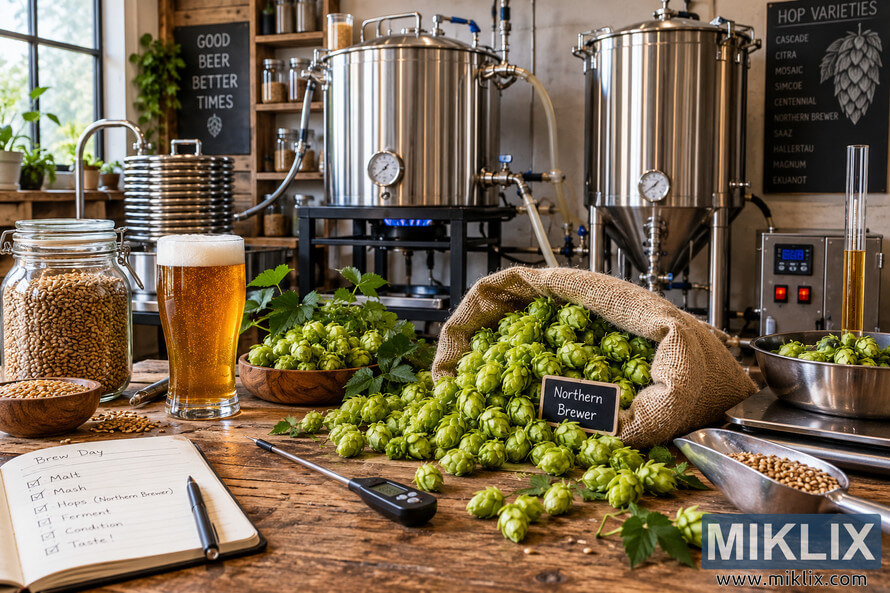
Use an immersion chiller to quickly drop wort temperature from boiling to your target hop stand temperature. Add Northern Brewer hops once the desired temperature stabilizes. Maintain that temperature for 20-30 minutes before continuing with your regular chilling process.
Click or tap the image for more information and higher resolutions.
Biotransformation During Fermentation
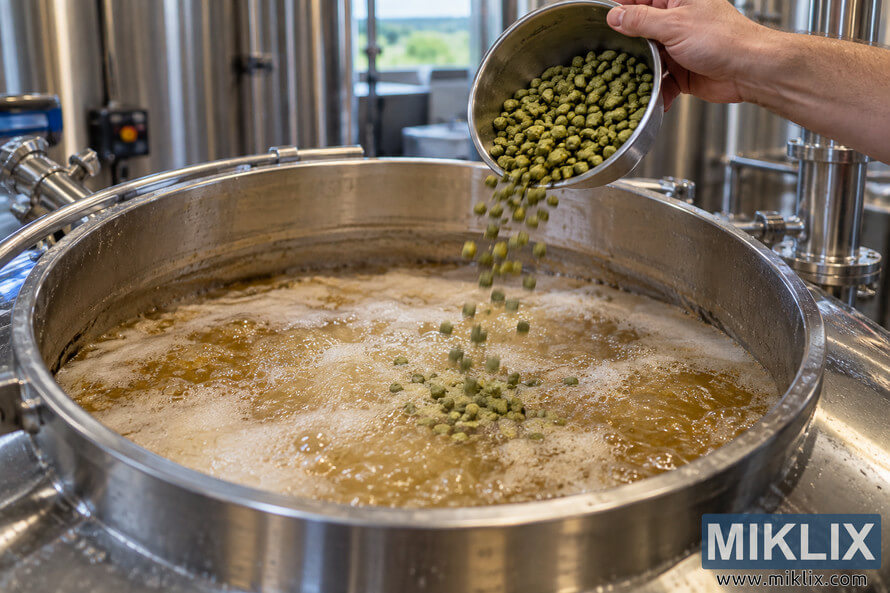
Yeast actively transforms hop compounds during fermentation through biotransformation. This process creates flavor and aroma compounds that don't exist in the original hop material. Northern Brewer's chemical composition makes it an interesting candidate for biotransformation experiments.
Add Northern Brewer hops to the fermenter during high krausen, typically 48-72 hours after pitching yeast. The active yeast population interacts with hop compounds, creating modified aromatics. Many brewers report enhanced fruit character when using this technique, even with traditionally non-fruity hops like Northern Brewer.
Biotransformation Benefits: This technique works particularly well with American-grown Northern Brewer, which already shows subtle citrus notes. The yeast activity can amplify these characteristics while adding complexity. Keep fermentation temperature stable during biotransformation for best results.
Click or tap the image for more information and higher resolutions.
Hop Back and Randall Devices
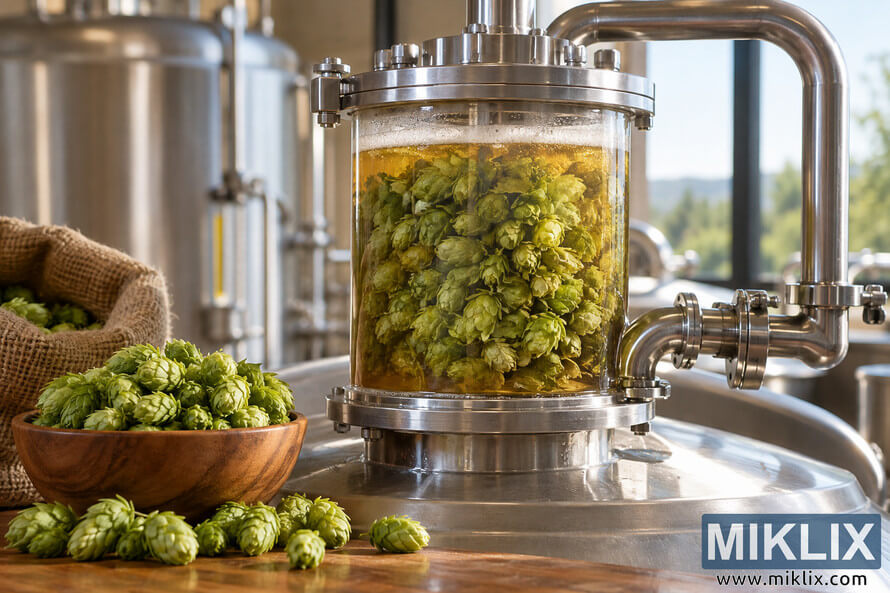
Hop backs and Randalls pass hot wort or finished beer through a chamber filled with whole cone hops. While typically used with more aromatic varieties, Northern Brewer creates interesting effects in these devices. The woody and minty characteristics become more pronounced through this extraction method.
Click or tap the image for more information and higher resolutions.
Hop Back Usage
Install a hop back between your kettle and chiller. After the boil completes, transfer hot wort through the hop-filled chamber before chilling. Use 2-4 ounces of whole cone Northern Brewer for a 5-gallon batch.
The hot wort extracts hop oils rapidly without creating harsh bitterness. This produces aromatic beer with smooth hop character. Clean the hop back immediately after use to prevent hop material degradation.
Click or tap the image for more information and higher resolutions.
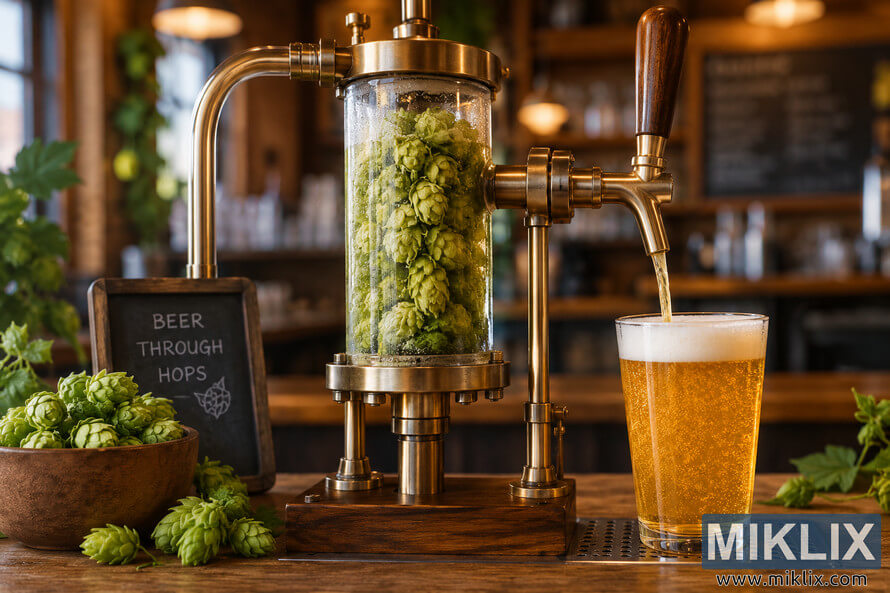
Randall Application
A Randall serves finished beer through fresh hops during dispensing. This creates an intensely fresh hop aroma in each glass. Fill the Randall chamber with Northern Brewer whole cones and connect it inline with your keg or serving line.
The aromatics infuse into the beer moments before serving, creating maximum freshness. Replace the hops after serving approximately one keg. This technique works best for special occasions rather than everyday drinking.
Water Chemistry Optimization for Northern Brewer
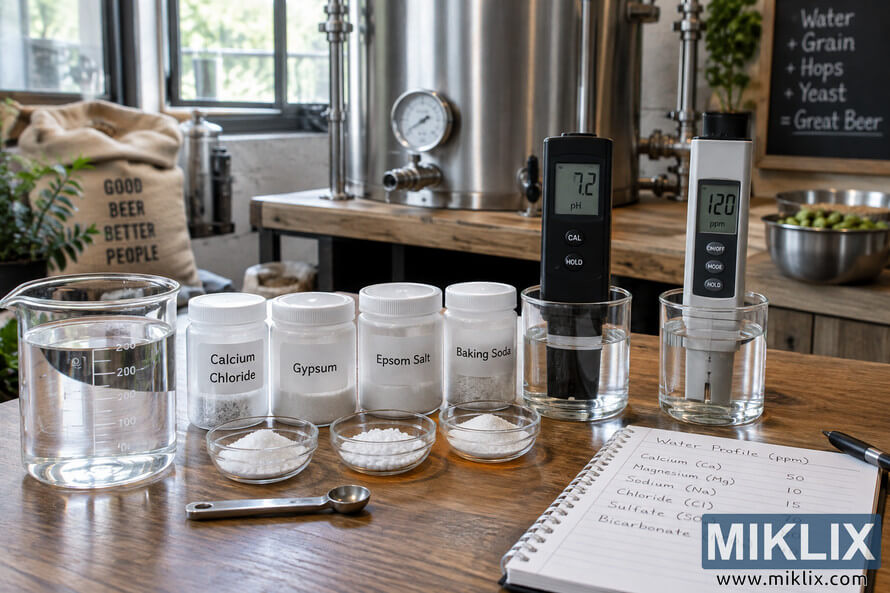
Water chemistry significantly impacts how hop character expresses in finished beer. Northern Brewer performs differently depending on your water's mineral content. Understanding these interactions helps you enhance desirable characteristics while minimizing harsh bitterness.
| Water Profile | Sulfate (SO₄) ppm | Chloride (Cl) ppm | Effect on Northern Brewer | Best Beer Styles |
| Balanced Profile | 50-80 | 50-80 | Neutral hop expression | Traditional German styles |
| Hop-Forward Profile | 150-250 | 50-75 | Enhanced bitterness and crispness | American pale ale, IPA |
| Malt-Forward Profile | 50-75 | 100-150 | Softer bitterness, rounder flavor | Brown ale, porter |
| California Common Profile | 100-150 | 75-100 | Balanced with slight hop emphasis | California Common, Altbier |
Click or tap the image for more information and higher resolutions.
Adjust your water chemistry using brewing salts like gypsum (calcium sulfate) and calcium chloride. Test your base water first to understand your starting point. Most municipal water reports provide the necessary mineral information. Well water users should have their water professionally tested.
Fermentation Temperature Management
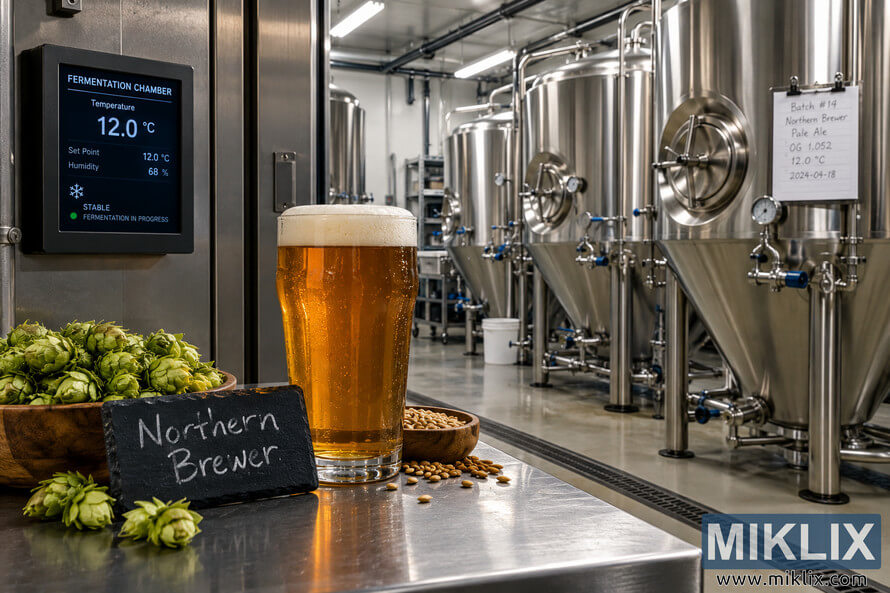
Temperature during fermentation affects how hop character integrates into finished beer. Northern Brewer hops maintain their character well across normal fermentation temperatures, but controlled fermentation produces superior results with this variety.
Maintain consistent temperatures throughout fermentation to preserve hop aromatics. Temperature swings stress yeast and can create off-flavors that mask subtle hop characteristics. Invest in temperature control equipment if you brew regularly with quality ingredients like Northern Brewer hops.
For ales using Northern Brewer, ferment between 65-68°F for clean yeast character that showcases hop qualities. Higher temperatures accelerate fermentation but may produce fruity esters that compete with hop flavor. Lower temperatures slow fermentation and can create subdued hop expression.
Click or tap the image for more information and higher resolutions.
Oxygen Management and Hop Creep
Oxygen exposure during and after fermentation destroys hop aromatics rapidly. This affects dry-hopped beers particularly severely. Northern Brewer contains compounds sensitive to oxidation, though less so than some ultra-aromatic modern varieties.
Minimize oxygen pickup by using closed transfer methods when moving beer between vessels. Purge kegs and bottles with CO₂ before filling. These precautions preserve the herbal and woody character Northern Brewer provides while preventing cardboard or stale flavors.
Hop Creep Awareness: Dry hopping can restart fermentation through enzymes present in hops. Northern Brewer contains diastatic enzymes that may cause "hop creep" in finished beer. Monitor gravity after dry hopping and allow time for any refermentation to complete before packaging. This prevents over-carbonation issues.
Creating Hop Blends and Layered Additions
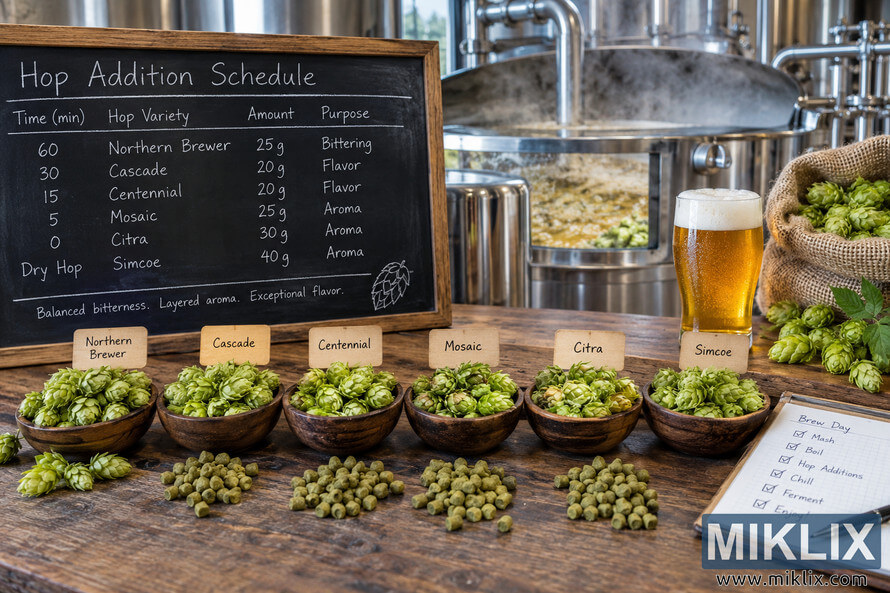
Advanced brewers layer multiple hop additions at different times to create complexity. Northern Brewer works excellently as the foundation layer in complex hop bills. Use it for early bittering, then build aromatic layers with other varieties on top of this base.
For an advanced American pale ale, consider this layered approach with Northern Brewer:
- 60-minute addition: Northern Brewer for clean bittering base (1.5 oz)
- 20-minute addition: Northern Brewer for flavor foundation (0.5 oz)
- 10-minute addition: Cascade for citrus accent (0.5 oz)
- 5-minute addition: Centennial for additional aromatics (0.5 oz)
- Whirlpool: Northern Brewer and Cascade blend (1 oz each)
- Dry hop: Centennial and Cascade for aroma (1 oz each)
This layered approach showcases Northern Brewer's versatility while creating a complex hop character that evolves from the first sip to the finish. The woody and herbal base supports the brighter citrus notes without conflict.
Click or tap the image for more information and higher resolutions.
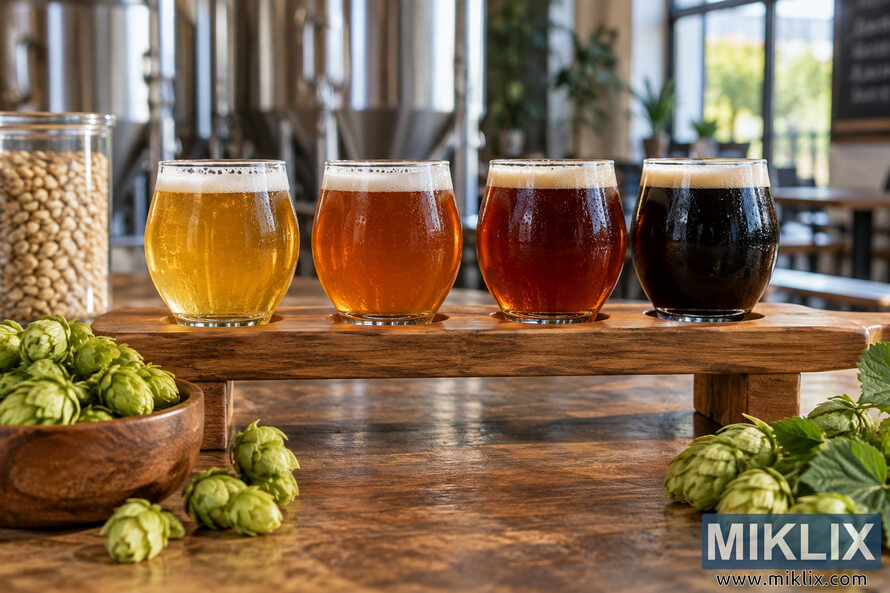
Proven Northern Brewer Hop Recipes
These tested recipes demonstrate Northern Brewer's versatility across different beer styles. Each recipe includes detailed instructions, expected characteristics, and tips for customization based on your preferences and equipment.
Click or tap the image for more information and higher resolutions.
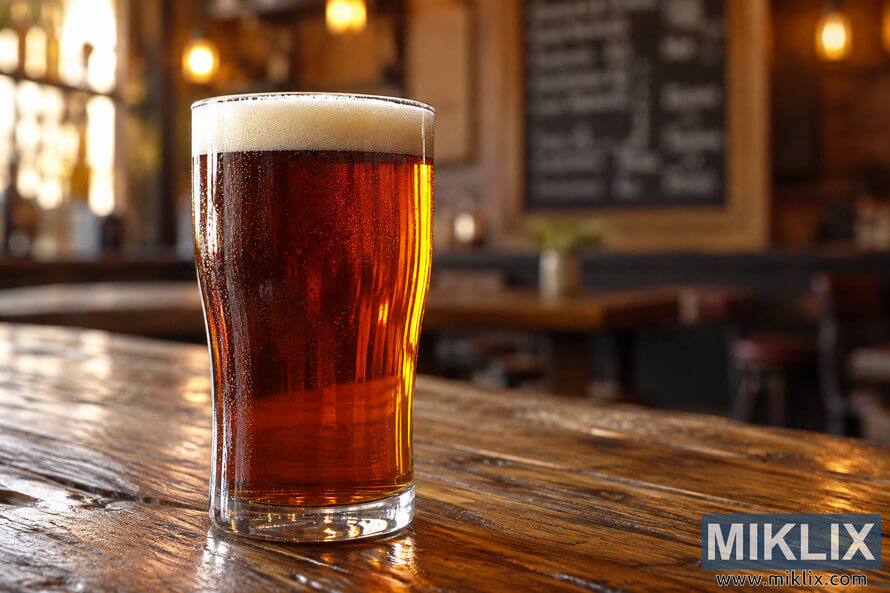
Classic California Common Beer
This recipe recreates the signature American style that made Northern Brewer hops famous. The combination of ale yeast fermented at cool temperatures and assertive Northern Brewer hopping creates a unique beer character.
Recipe Specifications (5 Gallons)
- Original Gravity: 1.048-1.052
- Final Gravity: 1.011-1.014
- IBU: 35-40
- SRM: 10-14 (amber color)
- ABV: 4.5-5.5%
Grain Bill
- 9 lbs American Two-Row Pale Malt
- 1 lb Crystal Malt 40L
- 0.5 lb Vienna Malt
| Hop Addition | Amount | Time | Purpose |
| Northern Brewer (9% AA) | 1.0 oz | 60 minutes | Bittering foundation |
| Northern Brewer | 0.5 oz | 30 minutes | Flavor layer |
| Northern Brewer | 0.5 oz | 15 minutes | Flavor and aroma |
| Northern Brewer | 0.5 oz | Flameout | Aroma boost |
Ferment with California Ale yeast (WLP810 or equivalent) at 60-65°F. The cooler fermentation temperature creates the hybrid character this style requires. Carbonate to 2.5-2.7 volumes for authentic presentation.
Click or tap the image for more information and higher resolutions.
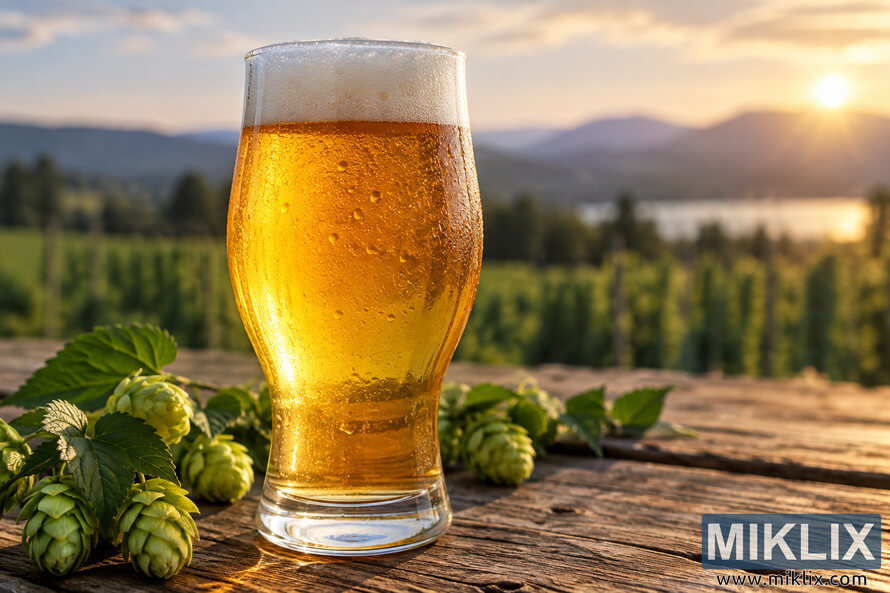
Northern Brewer Single-Hop American Pale Ale
This recipe showcases Northern Brewer as the sole hop variety, allowing you to taste its complete character profile without interference from other hops. The result surprises many brewers with its drinkability and complexity.
Malt Bill (5 Gallons)
- 10 lbs American Two-Row Malt
- 1 lb Munich Malt
- 0.5 lb Crystal 20L
- 0.25 lb Carapils (for head retention)
Target Parameters
- OG: 1.054-1.058
- FG: 1.012-1.015
- IBU: 40-45
- ABV: 5.2-5.8%
Hop Schedule
- 1.5 oz Northern Brewer @ 60 min
- 0.5 oz Northern Brewer @ 15 min
- 0.5 oz Northern Brewer @ 5 min
- 1.0 oz Northern Brewer @ Whirlpool (170°F, 20 min)
- 2.0 oz Northern Brewer dry hop (3-4 days)
Fermentation
Use clean American ale yeast like US-05 or WLP001. Ferment at 67-68°F for 7-10 days. Dry hop after fermentation completes.
Click or tap the image for more information and higher resolutions.
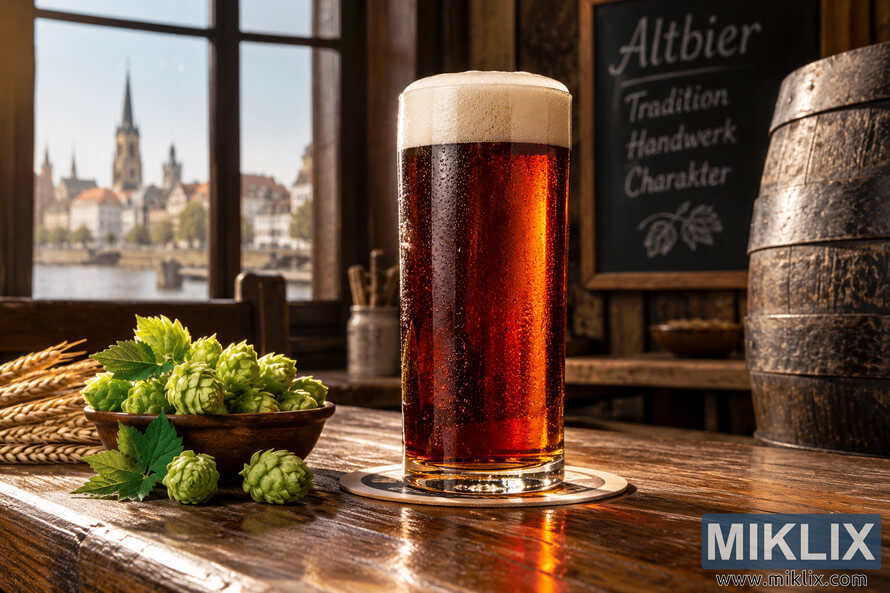
German Altbier with Northern Brewer
Traditional Düsseldorf Altbier relies heavily on Northern Brewer for its characteristic bitterness and subtle hop flavor. This malt-forward style balances toasty malt complexity with firm yet smooth bitterness.
Recipe Overview
This copper-colored ale combines German pilsner and Munich malts with assertive Northern Brewer hopping. Cold lagering after fermentation creates the smooth, clean character Altbier demands.
- Batch Size: 5 gallons
- OG: 1.046-1.050
- FG: 1.010-1.013
- IBU: 35-45
- Color: 13-19 SRM
- ABV: 4.5-5.2%
Malt Composition
- 7 lbs German Pilsner Malt
- 2 lbs Munich Malt
- 0.5 lb CaraMunich II
- 0.25 lb Melanoidin Malt
- 0.25 lb Chocolate Wheat Malt
This grain bill creates authentic German malt character with toasty complexity and appropriate color.
Hop Additions
- 1.75 oz Northern Brewer (GR) @ 60 min
- 0.5 oz Northern Brewer @ 20 min
- 0.25 oz Northern Brewer @ 5 min
Use German-grown Northern Brewer if possible for authentic minty and woody character. American version works but creates a slightly different profile.
Fermentation Process
Ferment with German Ale yeast (WLP036 or Wyeast 1007) at 62-65°F. After primary fermentation completes (7-10 days), lager at 38-42°F for 3-4 weeks. This cold conditioning smooths the beer considerably.
Carbonate to 2.3-2.5 volumes for traditional presentation.
Click or tap the image for more information and higher resolutions.
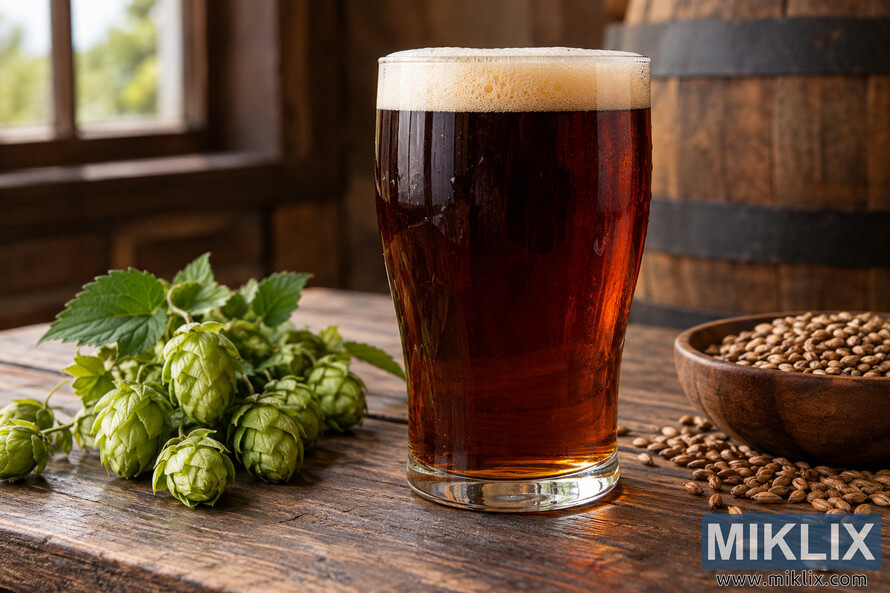
English Brown Ale with Northern Brewer
Northern Brewer provides restrained hop character that supports rather than dominates the nutty, caramel-forward profile of English Brown Ale. This recipe emphasizes malt complexity while maintaining balance.
Grain Bill
- 8 lbs Maris Otter Malt
- 1 lb Crystal 60L
- 0.5 lb Crystal 120L
- 0.25 lb Chocolate Malt
Hop Schedule
- 1.0 oz Northern Brewer @ 60 min
- 0.5 oz Northern Brewer @ 20 min
- Target: 25-30 IBU
Vitals
- OG: 1.048-1.052
- FG: 1.012-1.015
- ABV: 4.5-5.0%
- SRM: 19-22
Click or tap the image for more information and higher resolutions.
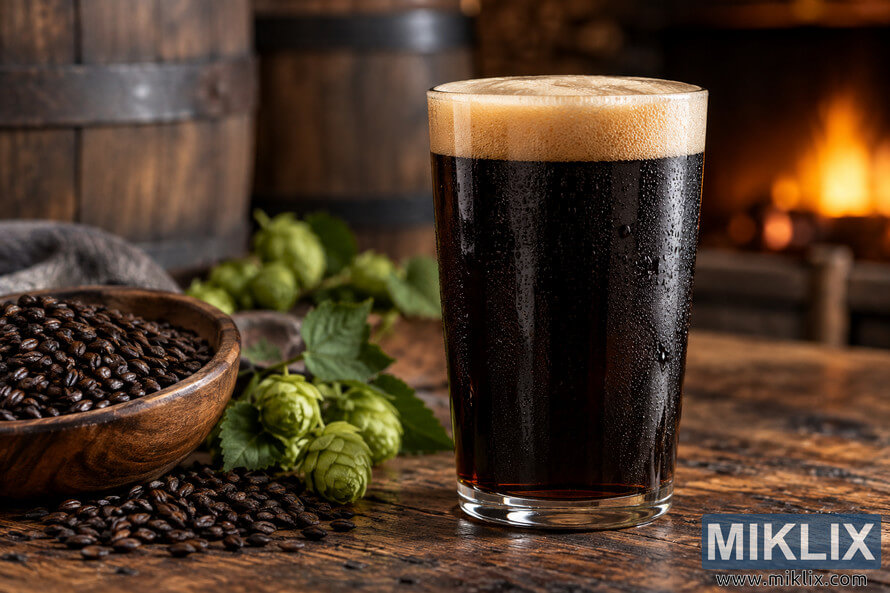
Robust Porter with Northern Brewer
Dark beers benefit from Northern Brewer's clean bittering qualities. This robust porter recipe uses the hop primarily for structure, allowing roasted malt character to shine while maintaining balance.
Grain Bill (5 Gallons)
- 9 lbs American Two-Row Malt
- 1 lb Crystal 60L
- 0.75 lb Chocolate Malt
- 0.5 lb Black Patent Malt
- 0.25 lb Victory Malt
Brewing Notes
Mash at 154°F for enhanced body. The higher mash temperature creates residual sweetness that balances roasted malt bitterness and hop bitterness effectively.
| Hop Addition | Amount | Alpha Acids | Time | IBU Contribution |
| Northern Brewer | 1.5 oz | 9.0% | 60 minutes | ~30 IBU |
| Northern Brewer | 0.5 oz | 9.0% | 15 minutes | ~5 IBU |
Target statistics: OG 1.058-1.062, FG 1.014-1.018, 35-40 IBU, 30-35 SRM, 5.5-6.2% ABV. Ferment with English ale yeast at 67-69°F for full ester development.
Click or tap the image for more information and higher resolutions.
Troubleshooting Common Issues with Northern Brewer Hops
Even experienced brewers encounter occasional problems when working with Northern Brewer hops. Understanding common issues and their solutions helps you achieve consistent results and maximize this variety's potential in your beer.
Click or tap the image for more information and higher resolutions.
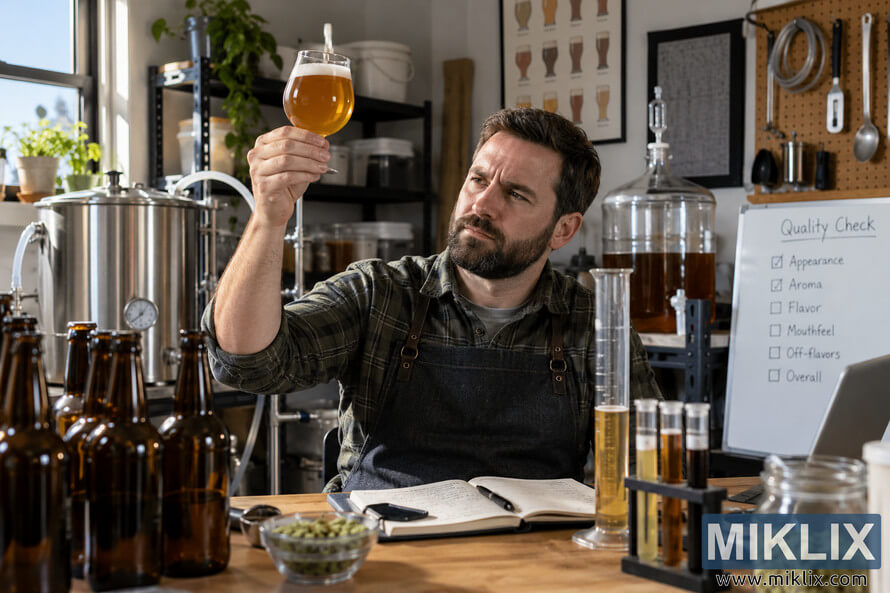
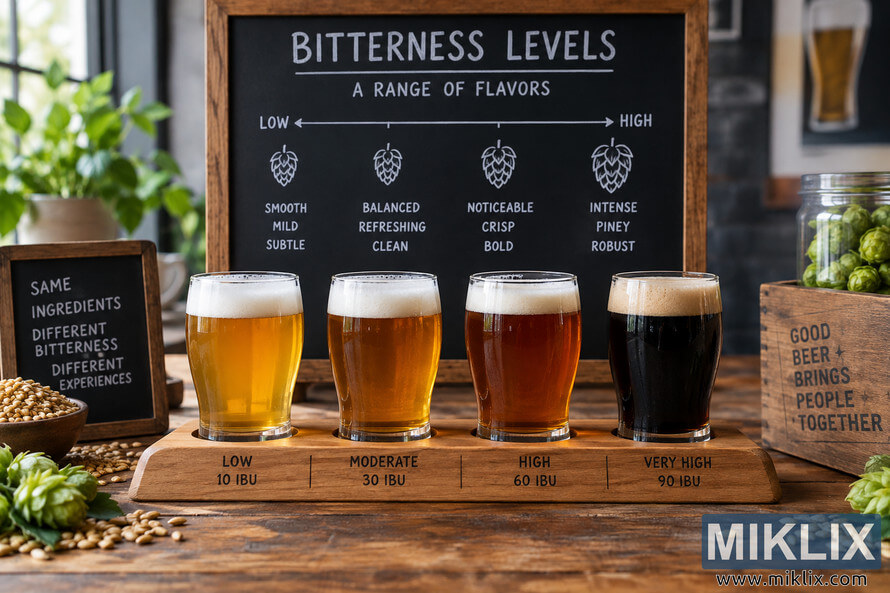
Excessive or Harsh Bitterness
Harsh bitterness often results from boiling hops too vigorously or for too long. Northern Brewer's moderate alpha acid content should produce clean bitterness, but extraction conditions affect bitterness quality significantly.
Common Causes
- Vigorous rolling boil extracting excessive tannins
- High water sulfate levels accentuating bitterness
- Oxidized hops creating harsh flavors
- Incorrect alpha acid calculations
- Excessive early boil additions
Solutions and Adjustments
Prevention Methods
- Maintain gentle rolling boil instead of vigorous boiling
- Verify alpha acid percentages before brewing
- Use fresh hops stored properly
- Balance water chemistry for style
- Reduce bittering hop amounts if needed
- Consider shifting some bittering to later additions
Fixing Current Batch
- Blend with less bitter beer if available
- Age the beer 4-6 weeks for mellowing
- Serve slightly warmer to round perception
- Adjust water for future batches
- Pair with foods that complement bitterness
- Learn from the experience for next brew
Click or tap the image for more information and higher resolutions.
Weak or Faded Hop Character
Disappointing hop character frustrates brewers expecting Northern Brewer's distinctive woody and minty profile. Multiple factors can diminish hop expression from grain to glass.
| Problem | Likely Cause | Solution |
| No hop aroma detected | Insufficient late or dry hopping | Increase late-boil and dry hop amounts by 50% |
| Initial aroma fades quickly | Oxygen exposure during packaging | Implement closed transfer and CO₂ purging |
| Bland hop flavor | Old or improperly stored hops | Purchase fresh hops and verify storage conditions |
| Grassy or hay-like notes | Dry hopping too long or at high temperature | Limit dry hop contact to 3-5 days at fermentation temp |
| Inconsistent batch-to-batch results | Variable alpha acid content not adjusted for | Always check package alpha acids and recalculate |
Click or tap the image for more information and higher resolutions.
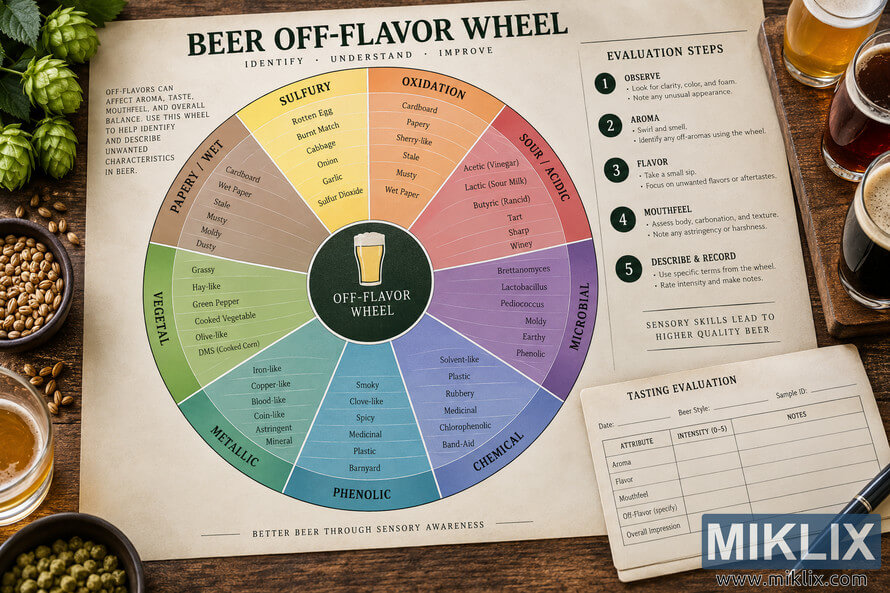
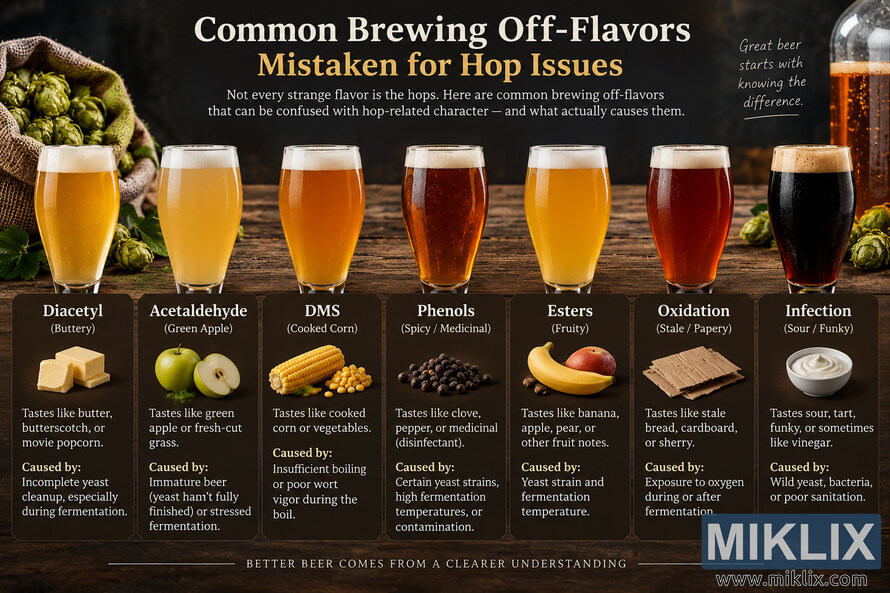
Off-Flavors Attributed to Hops
Not all off-flavors originate from hops, but brewers sometimes incorrectly blame hop-related issues. Understanding the true sources helps you address problems effectively.
Truly Hop-Related Issues
- Grassy flavors from old hops or excessive dry hopping
- Harsh astringent bitterness from over-extraction
- Oxidized cardboard notes from aged hops
- Onion/garlic from poorly stored hops
Click or tap the image for more information and higher resolutions.
Often Misattributed to Hops
- Phenolic flavors (usually from yeast or water issues)
- Diacetyl (fermentation management problem)
- Solvent-like flavors (temperature control issue)
- Soapy character (sanitation or base malt issue)
Click or tap the image for more information and higher resolutions.
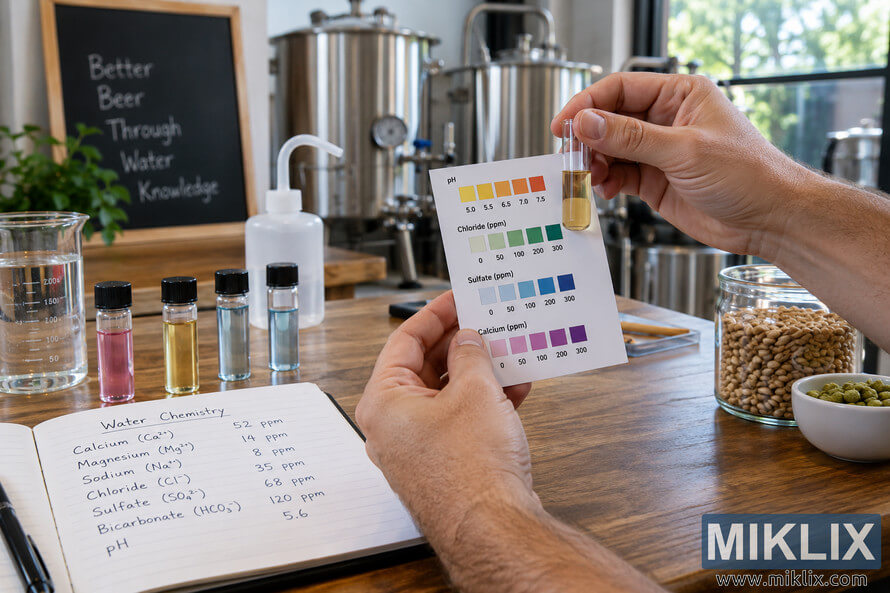
Water Chemistry Problems Affecting Hops
Water mineral content dramatically impacts how Northern Brewer hops express in finished beer. High pH or inappropriate mineral balance creates hop character issues that brewing technique alone cannot fix.
Test your water pH and mineral content before troubleshooting hop-related issues. Many perceived hop problems actually stem from water chemistry creating harsh bitterness or preventing proper hop expression.
Excessive carbonate levels raise mash pH, which extracts harsh tannins from both malt and hops. This creates astringent bitterness that masks Northern Brewer's clean character. Reduce carbonates using acids or dilution with distilled water.
Extremely low mineral content produces flat, lifeless beer where hop character fails to shine. Add appropriate brewing salts to create a mineral profile that enhances rather than fights your desired hop characteristics.
Click or tap the image for more information and higher resolutions.
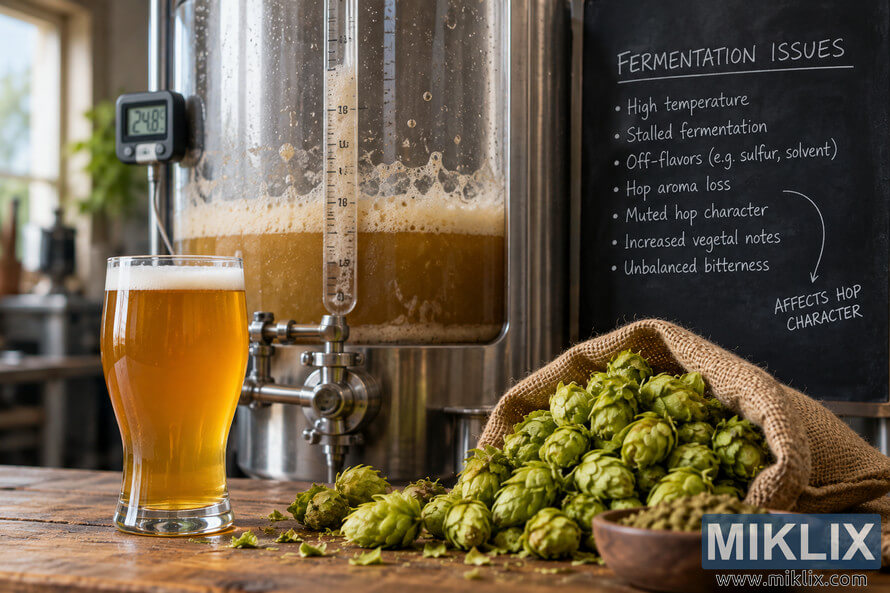
Fermentation Issues Affecting Hop Perception
Yeast health and fermentation management significantly impact final hop character. Stressed yeast produces off-flavors that compete with or mask hop qualities. Northern Brewer's subtle character particularly suffers from fermentation problems.
Healthy Fermentation Practices
- Pitch adequate healthy yeast (1M cells/mL/°P minimum)
- Oxygenate wort properly before pitching
- Maintain stable fermentation temperatures
- Allow adequate time for complete fermentation
- Control temperature rise during active fermentation
- Package only after gravity stabilizes completely
Fermentation Problems to Avoid
- Under-pitching yeast (creates stress and off-flavors)
- Wild temperature swings during fermentation
- Rushing fermentation with excessive heat
- Packaging before fermentation completes
- Poor sanitation leading to contamination
- Oxygen exposure post-fermentation destroying hop aromatics
Click or tap the image for more information and higher resolutions.
Equipment-Related Hop Issues
Your brewing equipment impacts hop utilization and character expression. Understanding these effects helps you achieve consistent results and troubleshoot problems effectively.
Kettle Geometry Effects
Tall, narrow kettles extract hops differently than short, wide kettles. Boil vigor varies with kettle shape, affecting isomerization rates. Adjust your hop amounts based on your specific equipment and observed utilization rates.
Chilling Speed Impact
Slow chilling continues extracting hop compounds after flameout. This creates different results than rapid chilling. Fast chilling preserves aromatics better but may under-extract late additions. Consider your chilling speed when planning late hop additions.
Hop Bag Usage
Hop bags reduce utilization compared to free-floating hops. You may need 10-20% more hops when using bags. However, bags simplify cleanup and reduce trub loss. Experiment to find your preferred approach with Northern Brewer.
Conclusion
Northern Brewer hops offer homebrewers a reliable, versatile ingredient that performs excellently across numerous beer styles. From traditional German Altbier to modern American pale ale, this variety brings distinctive woody and minty character that sets your beer apart.
Your success with Northern Brewer depends on understanding its unique characteristics and applying proper techniques throughout the brewing process. Fresh, well-stored hops make the difference between good beer and great beer. Invest in quality ingredients and storage equipment to maximize your results.
Click or tap the image for more information and higher resolutions.
Key Takeaways for Brewing Success
- Store Northern Brewer hops frozen in oxygen-free packaging
- Verify alpha acid percentages before each brew day
- Use appropriate water chemistry for your target style
- Experiment with different addition timings to understand the variety
- Control fermentation temperature for clean hop expression
- Minimize oxygen exposure during and after fermentation
- Start with proven recipes and adjust based on experience
The brewing community continues discovering new applications for Northern Brewer. While traditional styles showcase its classic character, modern craft brewers blend it with contemporary hop varieties to create unique flavor profiles. Don't hesitate to experiment once you understand the fundamentals.
Remember that brewing excellence comes through practice and attention to detail. Each batch teaches valuable lessons about how Northern Brewer performs in your specific brewing system. Keep detailed notes, taste critically, and continuously refine your technique.
Your journey with Northern Brewer hops starts with understanding but grows through experience. Source quality hops from reputable suppliers like Yakima Chief Hops, store them properly, and apply the techniques covered in this guide. The distinctive character this variety brings to your beer rewards the effort invested in mastering its use.

Click or tap the image for more information and higher resolutions.
Further Reading
If you enjoyed this post, you may also like these suggestions:
- Hops in Beer Brewing: Serebrianka
- Hops in Beer Brewing: Centennial
- Hops in Beer Brewing: Pride of Kent