
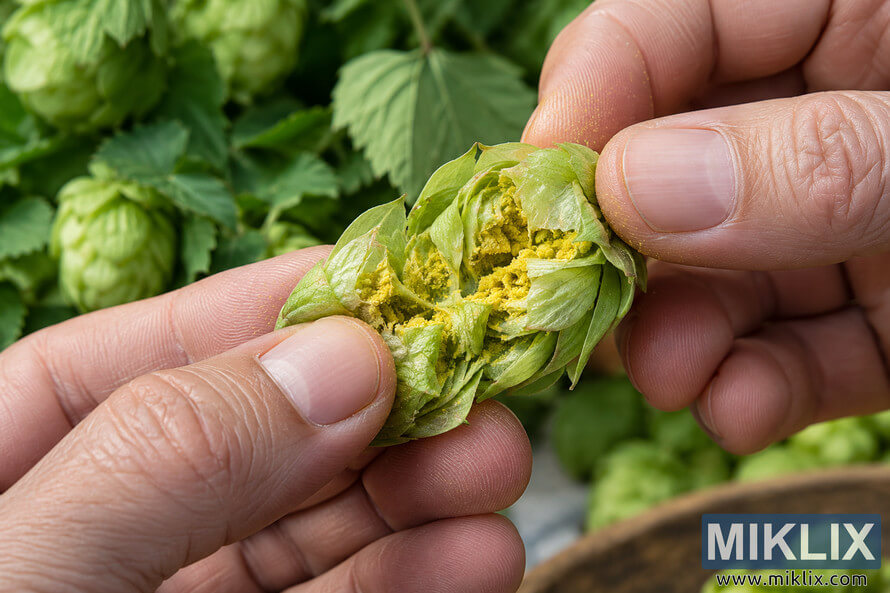
Image: Hands Examining Lupulin Glands Inside a Fresh Hop Cone
Published: October 16, 2026 at 5:44:56 PM UTC
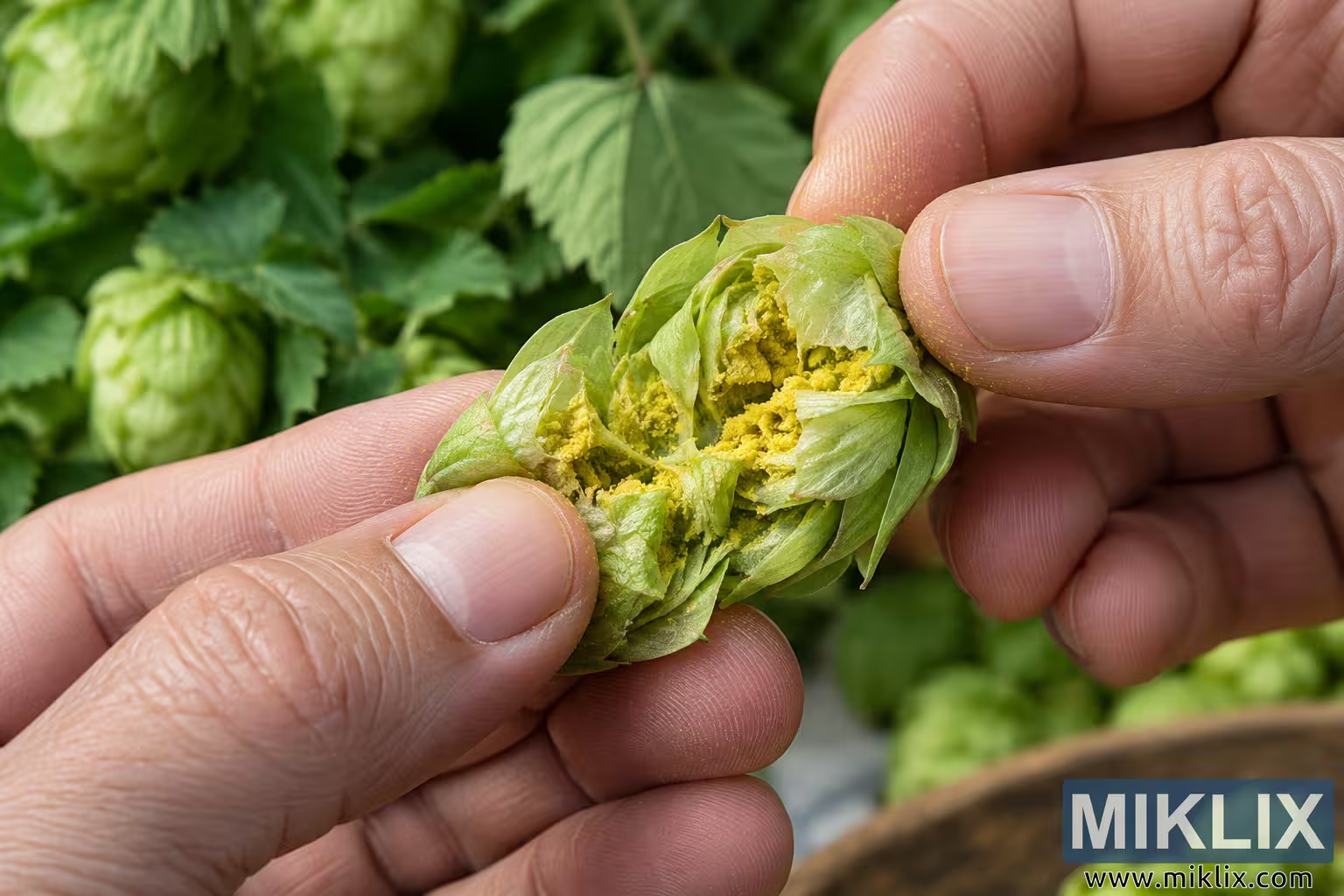
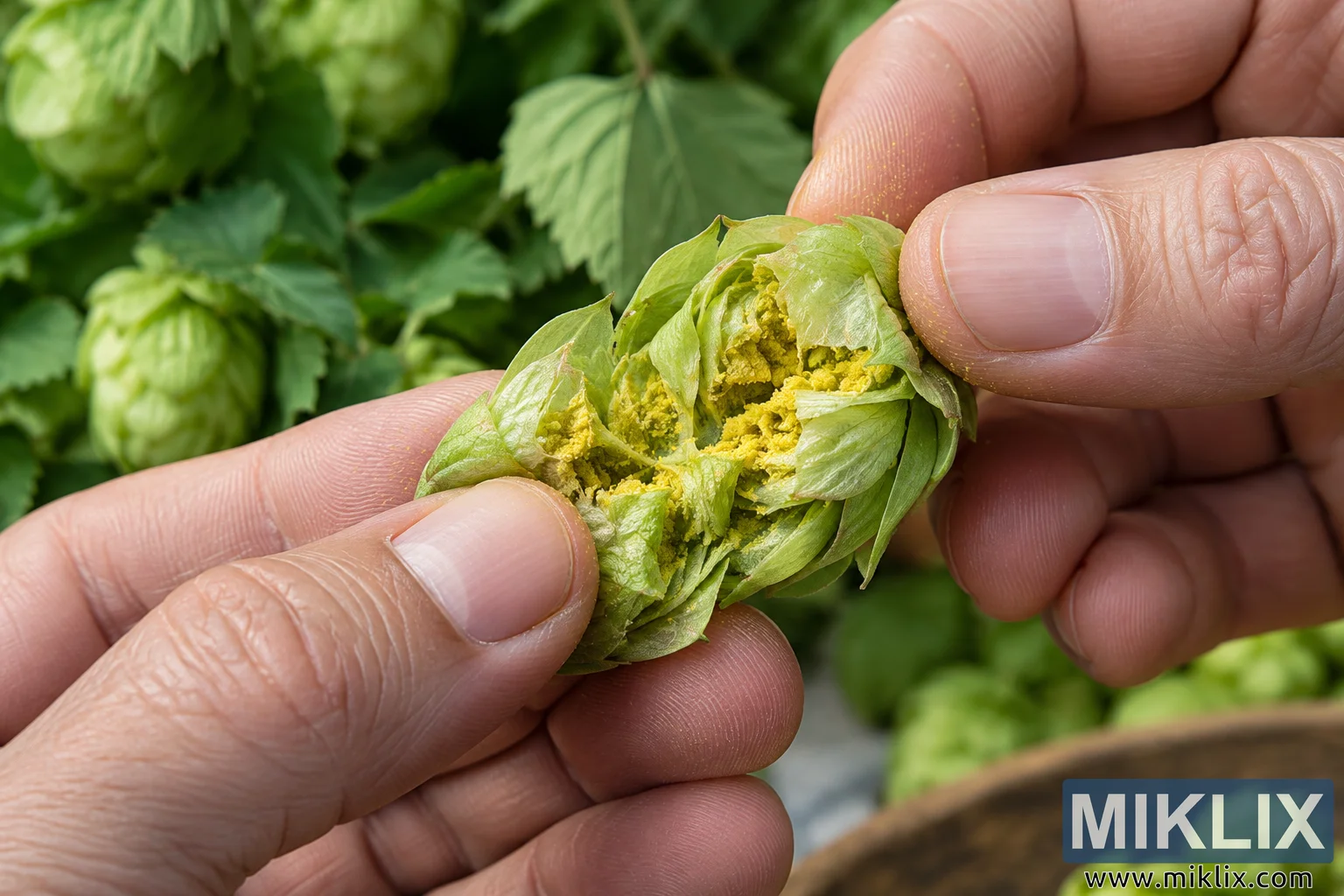
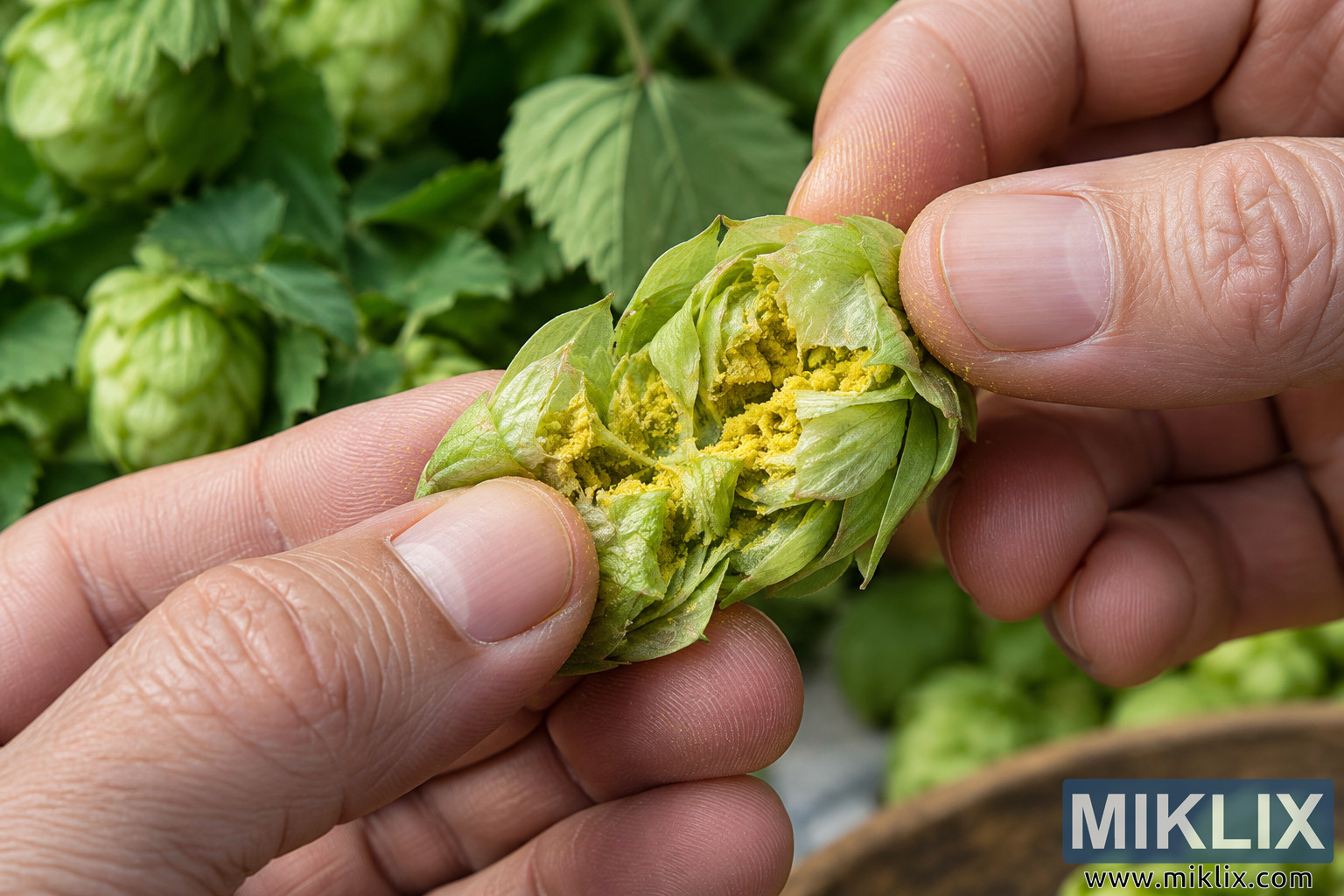
Detailed macro photograph of hands opening a fresh green hop cone to inspect its golden-yellow lupulin glands, surrounded by softly blurred hop foliage in natural daylight.
Available versions of this image
The image files available for download below are less compressed and higher resolution - and as a result of that, higher quality - than the images embedded in articles and pages on this website, which are more optimized for file size in order to reduce bandwidth consumption.
Regular size (1,536 x 1,024)
Large size (3,072 x 2,048)
Very large size (4,608 x 3,072)
Extra large size (6,144 x 4,096)
Comically large size (1,048,576 x 699,051)
- Still uploading... ;-)
Image description
A highly detailed landscape-oriented macro photograph captures a pair of adult hands carefully examining the interior of a freshly harvested green hop cone. The composition is centered on the hop cone, which is being gently pulled open between the fingers so that its internal structures and yellow lupulin glands are clearly visible. The cone occupies the central foreground and is shown at extremely close range, allowing the viewer to see the individual overlapping bracts, their delicate surfaces, and the concentrated golden-yellow lupulin material nestled between them. The lupulin appears as a rich coating of fine yellow granules and small clustered deposits, creating a strong visual contrast with the fresh shades of green surrounding it. The opened portion of the cone exposes these glands particularly clearly, making the image useful as a visual representation of how a grower, brewer, or hop enthusiast might inspect a hop cone for its aromatic and resinous contents. Two hands enter the frame from opposite sides. The hand on the left supports the lower portion of the hop cone between the thumb and fingers, while the hand on the right delicately holds and separates the upper bracts. The fingers are rendered with exceptional photographic detail. Fine lines in the skin, fingerprints, natural creases, subtle variations in skin tone, and the smooth surfaces of the fingernails can all be seen. Tiny traces of yellow lupulin dust are visible on portions of the fingertips, reinforcing the tactile nature of the inspection and suggesting that the cone has just been opened by hand. The fingernails are short and natural, and there are no gloves, jewelry, tools, labels, logos, packaging elements, or recognizable commercial branding anywhere in the scene. The hop cone itself has a fresh, organic appearance. Its layered bracts range from pale yellow-green in the areas receiving the strongest light to deeper leafy green around the outer edges and shaded folds. Each bract has a thin, papery texture with subtle veins and gently curled or pointed edges. Where the cone has been opened, the bracts bend outward and reveal the dense yellow material beneath them. The lupulin glands form the principal point of interest: they appear golden to mustard yellow, with a granular, resinous texture that stands out sharply against the green plant tissue. The high degree of magnification makes the glands visually prominent rather than merely appearing as indistinct yellow coloration. This provides a close observational view of the material associated with the hop cone's aromatic oils and resins. Behind the hands and central cone is a softly blurred background of living hop foliage. Several additional green hop cones can be recognized among broad green leaves, establishing the agricultural or garden setting without distracting from the main subject. One hanging cone is particularly noticeable toward the left side of the background, while other cones and leaves create overlapping organic shapes farther into the scene. The shallow depth of field transforms these background plants into smooth, soft areas of green while preserving enough recognizable structure to communicate that the inspection is taking place around hop plants. The contrast between the sharply focused foreground and defocused background gives the photograph a strong sense of depth and directs attention immediately toward the opened cone and exposed lupulin. Natural-looking daylight illuminates the scene from above and slightly to the side. The light brings out the translucent quality of some of the thinner hop bracts and creates small highlights on the fingertips and fingernails. Shadows inside the opened cone add dimensionality and make the yellow glands easier to distinguish. The illumination is bright but not excessively harsh, retaining fine texture in both the light and dark portions of the image. The overall color palette is dominated by fresh greens, warm natural skin tones, and vivid golden yellow. These colors communicate the botanical and agricultural character of the subject while making the lupulin deposits visually unmistakable. In the lower-right portion of the frame, part of a round brown container or basket-like object is visible. It remains significantly out of focus and only partially enters the composition, functioning as a subtle contextual detail rather than a competing subject. A few additional green hop cones appear near or inside this blurred foreground-background element. No writing or identifiable markings are visible on the container. The photograph is composed in a wide horizontal format, with the hands forming a natural frame around the hop cone. The diagonal positioning of the fingers guides the eye toward the center, where the opened cone reveals its yellow interior. The subject fills much of the image, producing an intimate, observational perspective similar to what a person would see while manually checking a hop cone during harvest. The combination of extreme close-up detail, shallow depth of field, realistic outdoor lighting, and carefully isolated focus gives the photograph both an educational and sensory quality. It emphasizes texture in particular: the soft but wrinkled skin of the hands, the smooth nails, the thin leafy hop bracts, the powdery and resinous appearance of the lupulin, and the softer mass of foliage behind them. The scene communicates hands-on examination rather than harvesting machinery, laboratory analysis, brewing equipment, or a finished beverage. There are no beer bottles, glasses, cans, brewing vessels, text overlays, watermarks, trademarks, or actual brands visible. The visual story is entirely focused on the physical inspection of a hop cone and its lupulin glands at close range. The resulting image presents an exceptionally clear botanical close-up of a person gently opening a mature hop cone to inspect the yellow lupulin concentrated inside, surrounded by healthy green hop foliage in a natural growing environment.
The image is related to: Hops in Beer Brewing: Northern Brewer