
Image: Different Stages of Hop Additions During the Brewing Process
Published: October 16, 2026 at 5:44:56 PM UTC
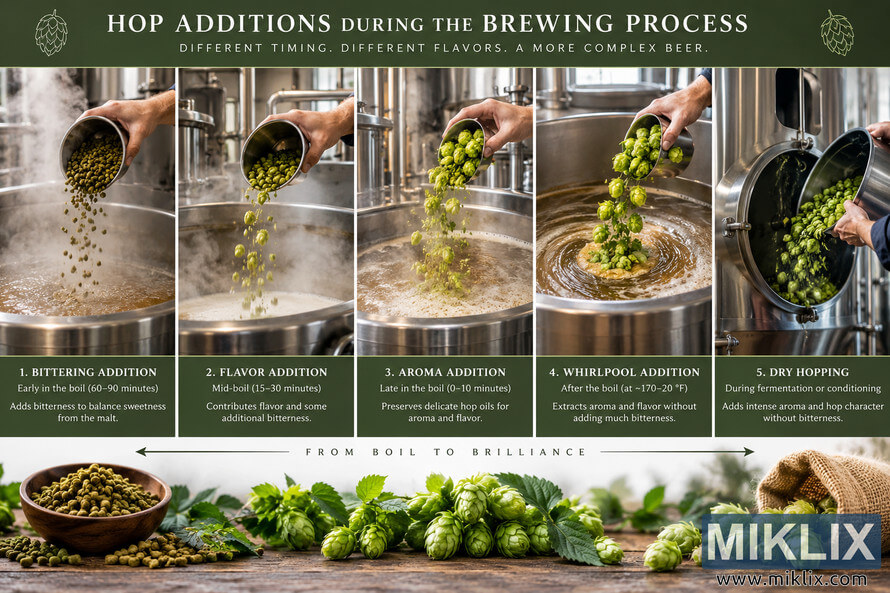
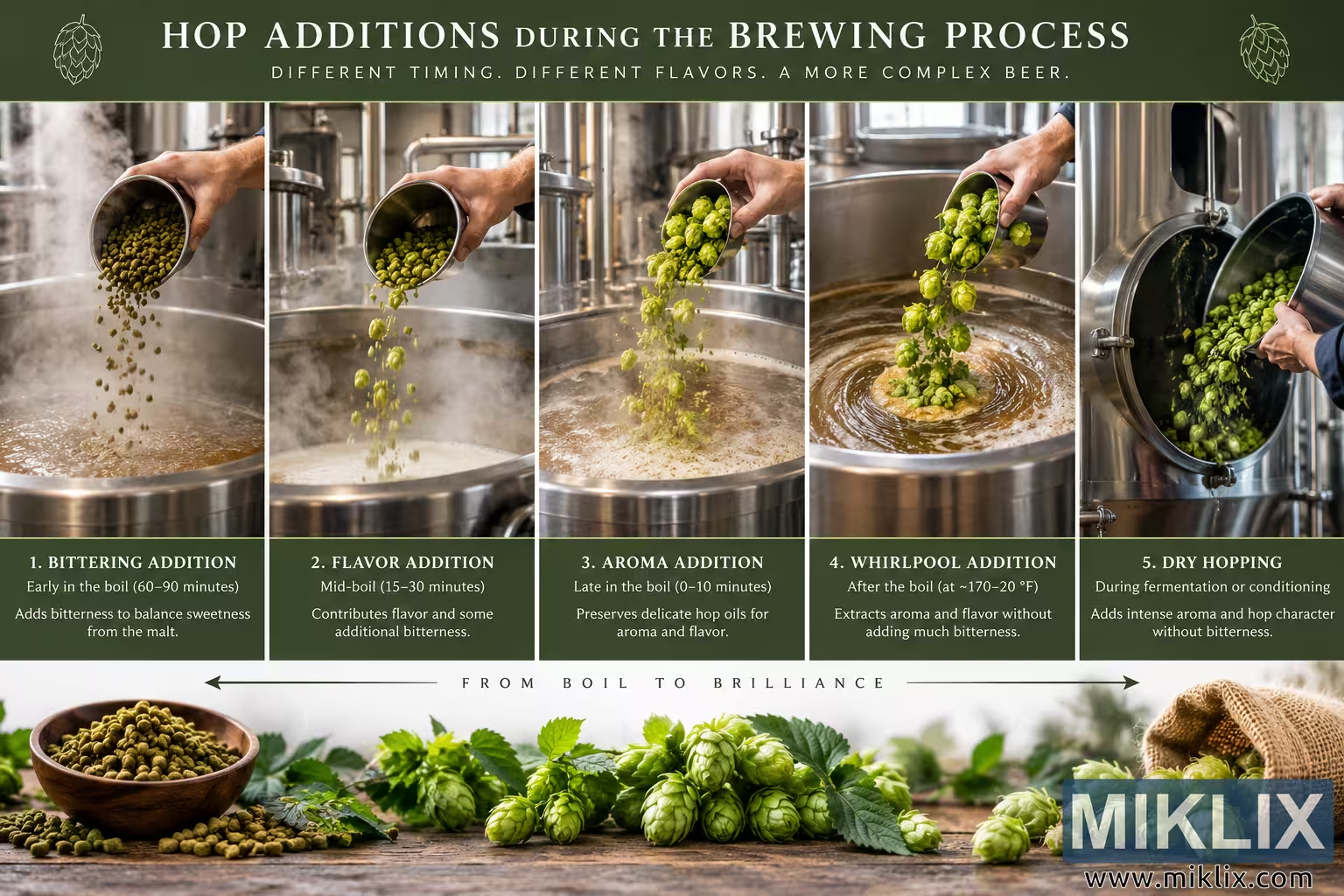
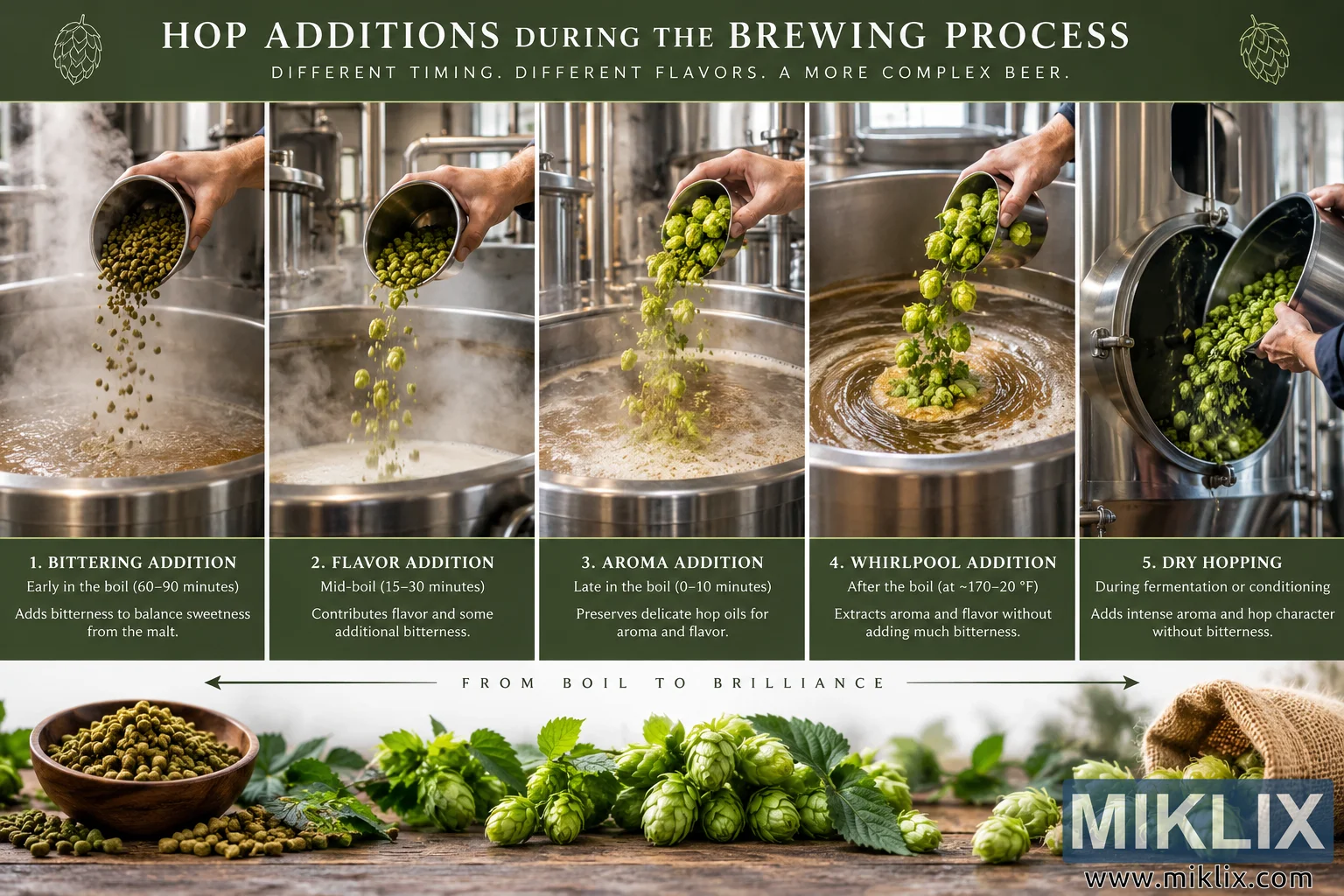
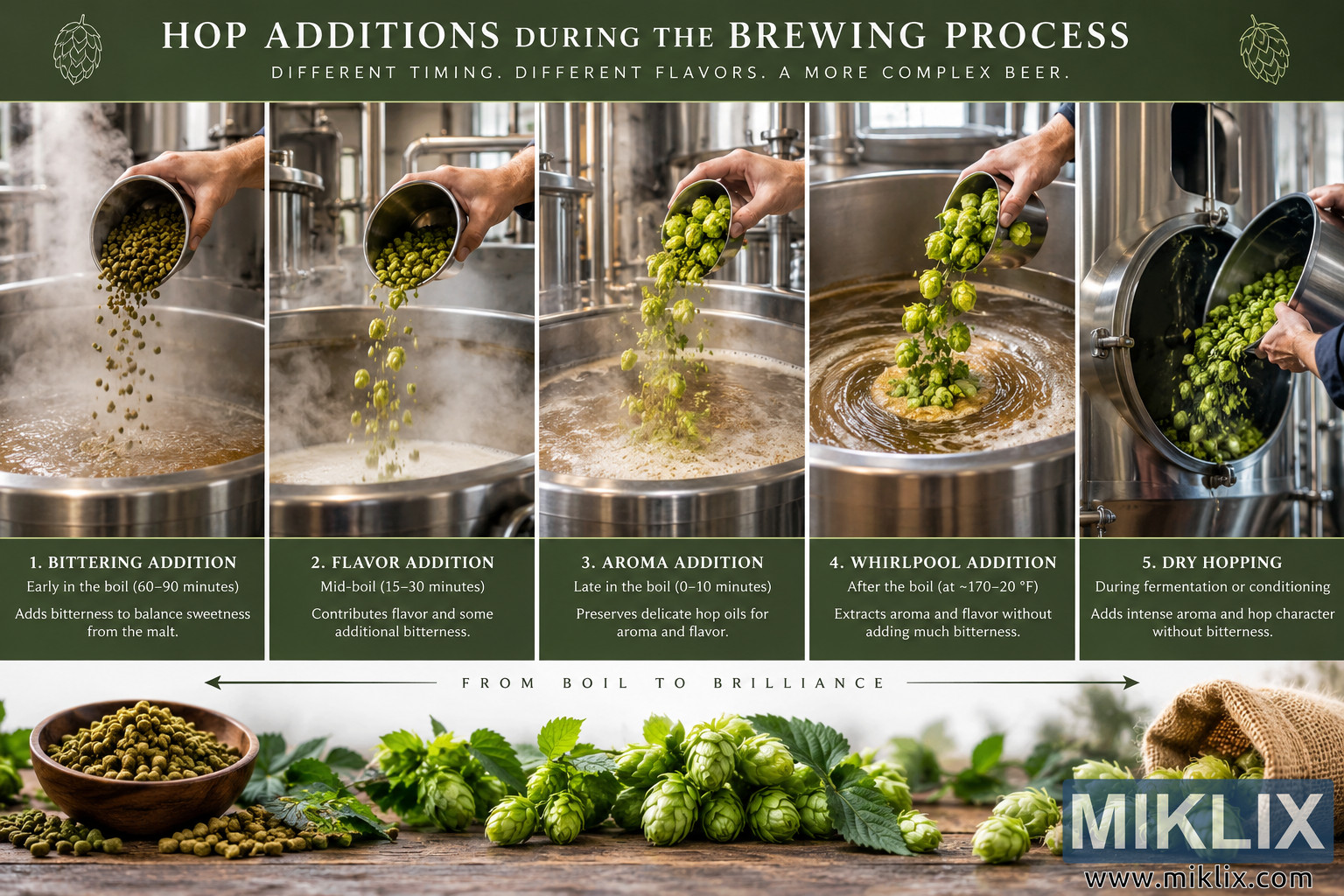
Photorealistic infographic illustrating bittering, flavor, aroma, whirlpool, and dry-hop additions at different stages of the beer brewing process.
Available versions of this image
The image files available for download below are less compressed and higher resolution - and as a result of that, higher quality - than the images embedded in articles and pages on this website, which are more optimized for file size in order to reduce bandwidth consumption.
Regular size (1,536 x 1,024)
Large size (3,072 x 2,048)
Very large size (4,608 x 3,072)
Extra large size (6,144 x 4,096)
Comically large size (1,048,576 x 699,051)
- Still uploading... ;-)
Image description
A wide, landscape-format photorealistic infographic illustrates different stages of hop additions during the beer brewing process. The composition combines realistic brewery photography with an organized educational layout, using stainless-steel brewing equipment, vivid green hops, warm wooden surfaces, and dark olive-green graphic elements. No visible commercial branding or brand logos appear anywhere in the image.
Across the top is a broad dark green header. Centered within it, large white serif lettering reads “HOP ADDITIONS DURING THE BREWING PROCESS.” Directly underneath, smaller, widely spaced uppercase lettering reads “DIFFERENT TIMING. DIFFERENT FLAVORS. A MORE COMPLEX BEER.” Simple line-art illustrations of hop cones appear near the upper left and upper right corners, reinforcing the botanical brewing theme without representing any specific company or brand.
The main central section is divided vertically into five photographic panels. Together, these panels form a visual timeline showing how hops can be introduced at different points during brewing. The brewery environment is dominated by polished stainless-steel vessels, pipes, fittings, open kettles, and fermentation equipment. The metallic surroundings contrast strongly with the natural greens of the hop cones and pellets. Human hands appear in several panels as hops are poured into brewing vessels, but no person's face is visible.
The first panel is labeled “1. BITTERING ADDITION.” It shows a hand holding a metal container over a large open brewing kettle. Numerous small green hop pellets are falling from the container into steaming brownish-gold liquid below. Steam rises prominently from the vessel, creating a sense of heat and active boiling. The accompanying text states that this addition takes place early in the boil, approximately 60–90 minutes, and explains that it adds bitterness to balance sweetness from the malt. This panel emphasizes the functional role of early hop additions in establishing bitterness.
The second panel is labeled “2. FLAVOR ADDITION.” Here, another hand pours green hop material from a small stainless-steel container into a steaming kettle. The brewery equipment remains visible in the background, including reflective metal surfaces and industrial piping. The explanatory text identifies this as a mid-boil addition, approximately 15–30 minutes, and notes that it contributes flavor along with some additional bitterness. Visually, the scene resembles the first stage while placing the hop addition later in the brewing timeline.
The third panel is labeled “3. AROMA ADDITION.” A hand pours bright green whole hop cones or similarly fresh-looking hop material into an open kettle. The hops appear larger and more visually prominent than the pellets shown in the earliest stage. Steam and hot brewing liquid remain visible beneath them. The text describes this addition as occurring late in the boil, approximately 0–10 minutes, and explains that this timing preserves delicate hop oils for aroma and flavor. The brighter green plant material gives this panel a fresh, aromatic visual character.
The fourth panel is labeled “4. WHIRLPOOL ADDITION.” Large, fresh green hop cones are being tipped from a metal container into a broad stainless-steel vessel containing swirling amber-brown liquid. The circular motion of the liquid is clearly visible, visually distinguishing this stage from the earlier boiling additions. The text places the addition after the boil, at approximately 170–200 degrees Fahrenheit, and states that the process extracts aroma and flavor without adding much bitterness. The combination of fresh hops and visibly rotating wort communicates the whirlpool stage in an immediately recognizable way.
The fifth and final panel is labeled “5. DRY HOPPING.” Instead of an open boiling kettle, this scene shows a larger enclosed stainless-steel fermentation or conditioning vessel with an open access hatch. A person uses a metal container to introduce a generous quantity of vivid green hops through the opening. The text explains that dry hopping occurs during fermentation or conditioning and adds intense aroma and hop character without bitterness. This final panel visually separates dry hopping from the hot-side additions by showing the hops entering a closed processing vessel rather than steaming wort.
Beneath the five panels is a pale horizontal transition area containing a long directional graphic. Thin arrows and widely spaced uppercase text form the phrase “FROM BOIL TO BRILLIANCE,” suggesting progression through the brewing stages from early boiling through fermentation and finishing. The restrained graphic treatment keeps the emphasis on the photographic brewing scenes above and the natural hop ingredients below.
The foreground at the bottom forms a decorative still-life arrangement on a rustic wooden tabletop. On the left is a wooden bowl filled with olive-green hop pellets, with additional pellets scattered loosely around it. Across the center are clusters of fresh green hop cones surrounded by serrated green leaves. On the right, more hop cones spill naturally from a coarse burlap sack. The foreground is brightly illuminated and has a shallow-depth-of-field photographic quality, making the hops look fresh, tactile, and detailed. The wooden surface and burlap introduce warm, organic textures that contrast with the cool industrial stainless steel of the brewery equipment above.
Overall, the image functions as both a realistic brewing photograph and an educational process infographic. Its left-to-right sequence clearly communicates how hop additions progress from bittering during the early boil, through flavor and aroma additions, into whirlpool hopping and finally dry hopping during fermentation or conditioning. The visual design uses a consistent palette of dark olive green, bright botanical green, stainless-steel silver, amber brewing liquid, natural wood brown, and neutral white typography. The image conveys a professional craft-brewing atmosphere while remaining generic and brand-free. The combination of sequential photography, concise explanatory labels, hop ingredients, and brewing equipment makes the subject understandable even before reading all of the accompanying text.
The image is related to: Hops in Beer Brewing: Northern Brewer