
Image: Whole Hop Cones, Hop Pellets, and Hop Extract
Published: October 16, 2026 at 5:44:56 PM UTC
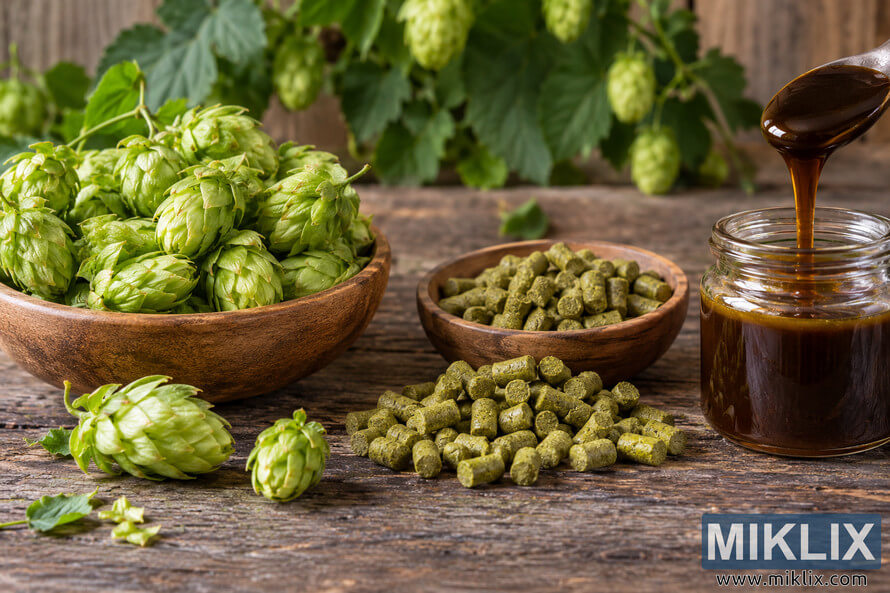
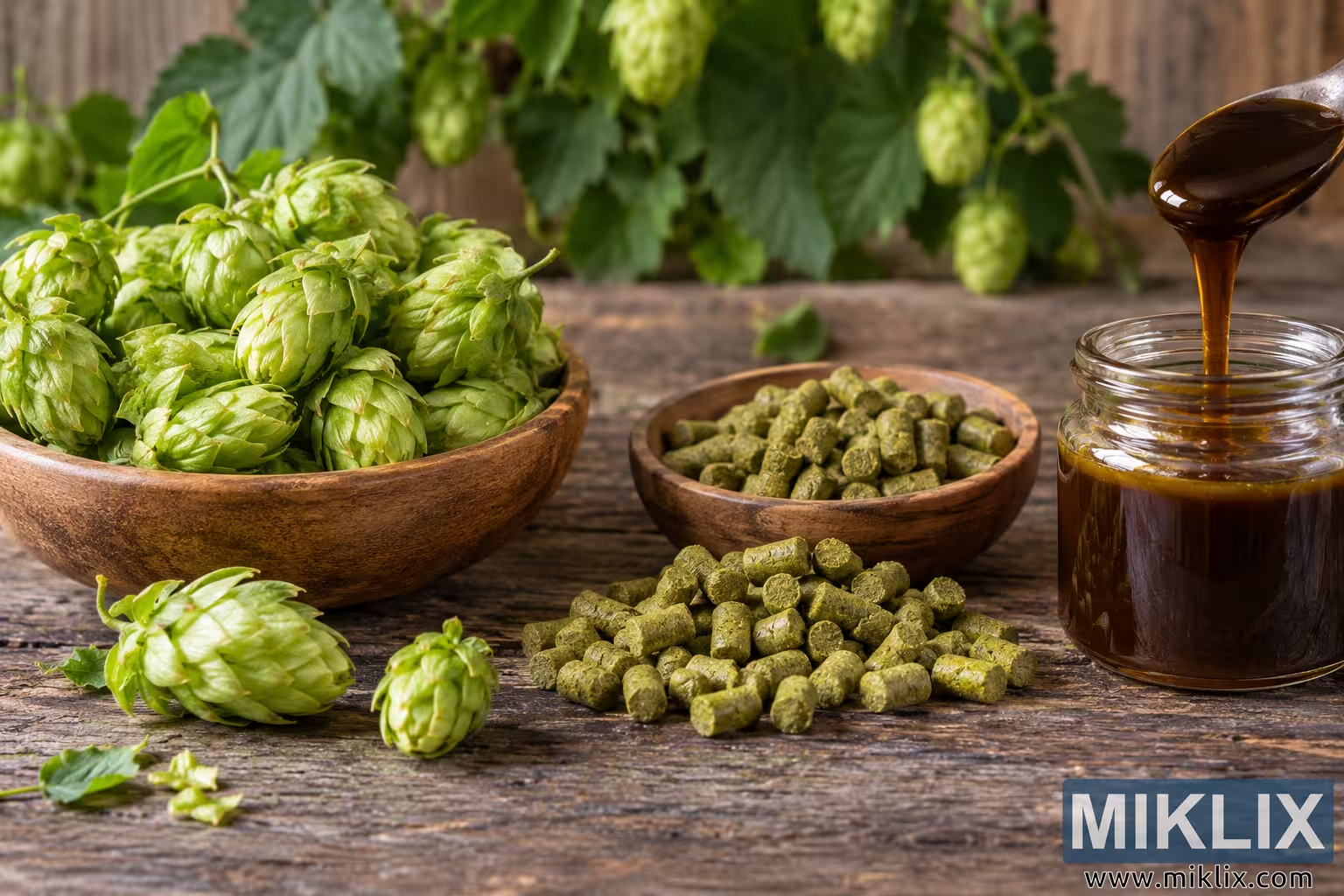
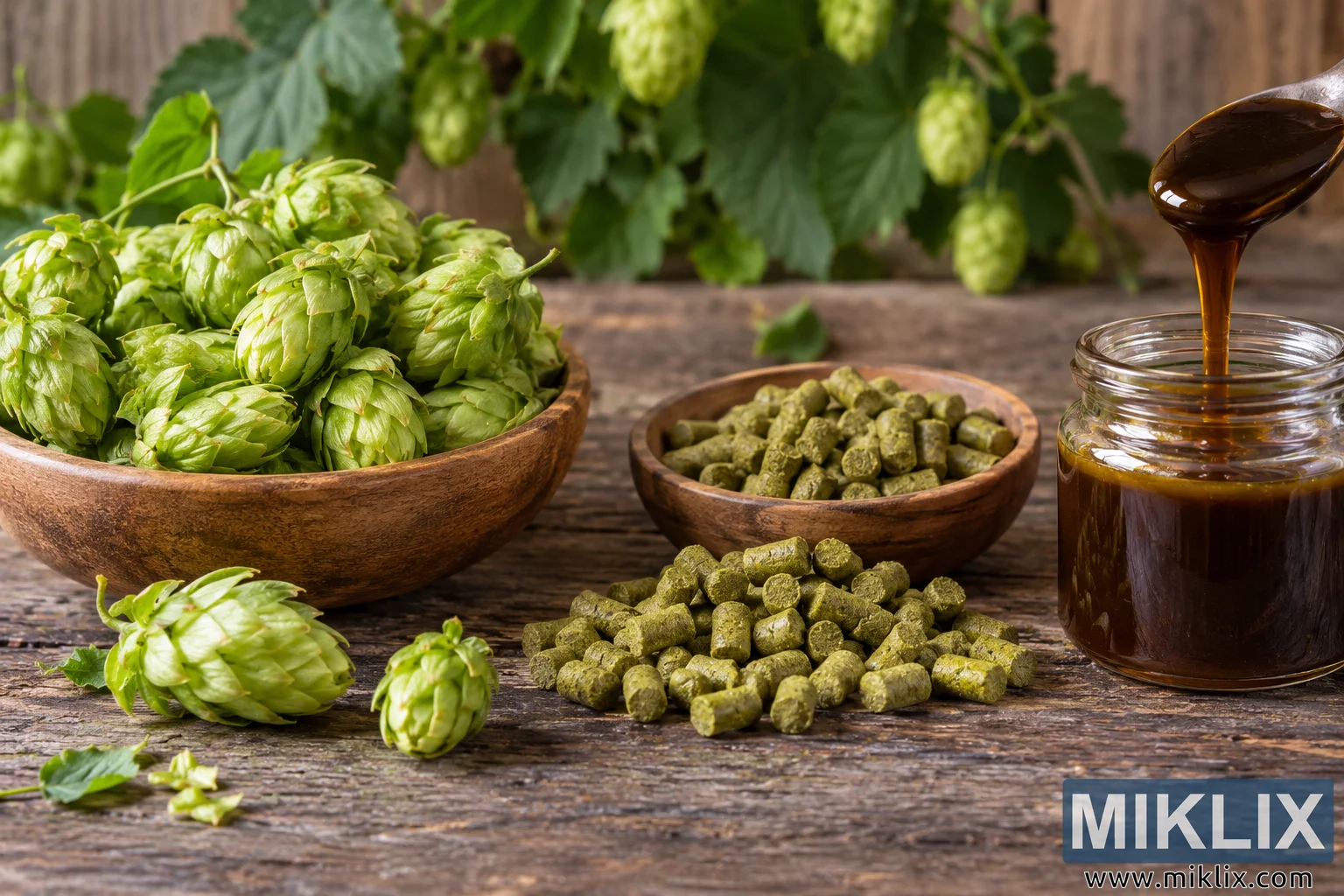
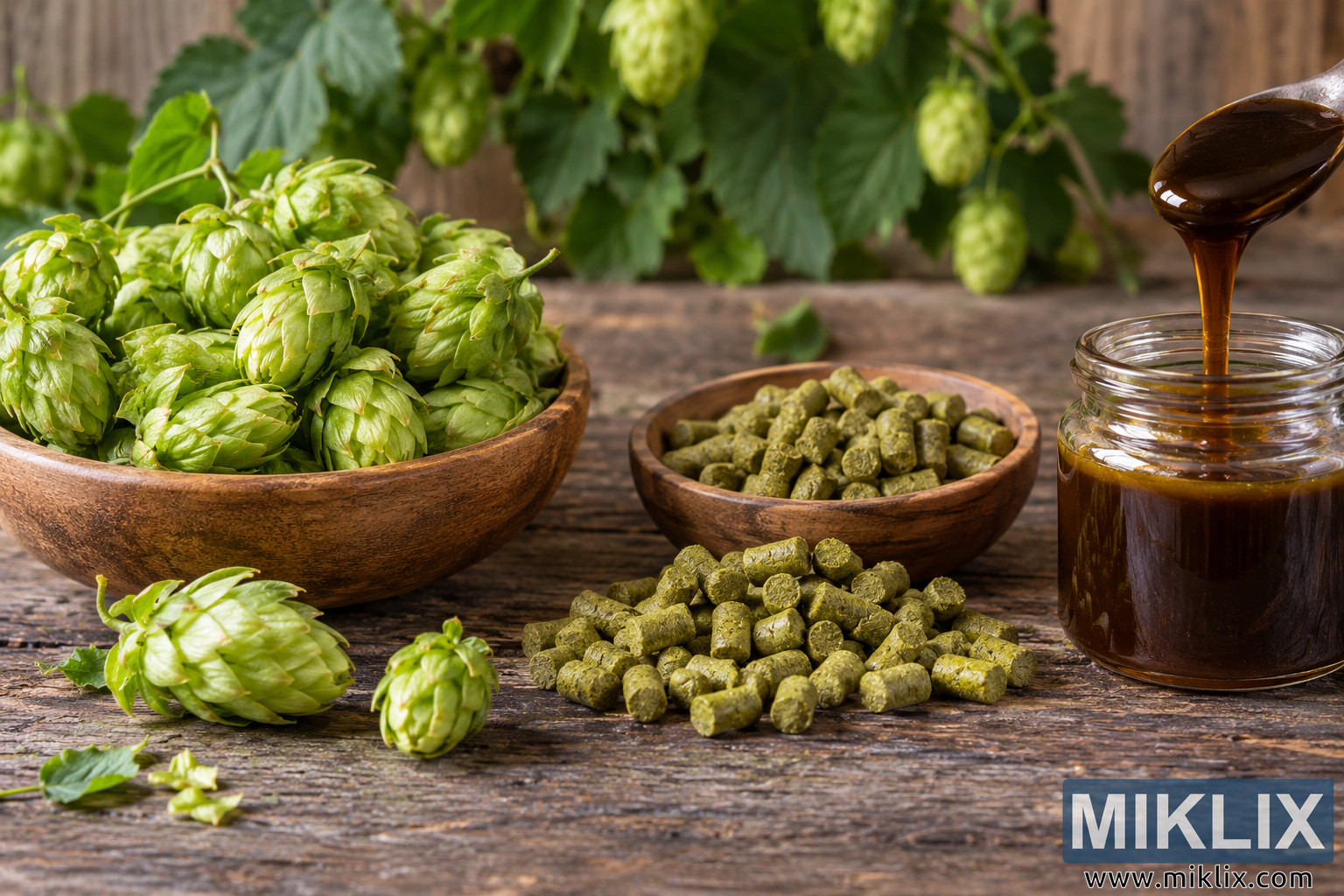
A detailed brewing still life featuring fresh whole hop cones, green hop pellets, and concentrated amber hop extract arranged on a rustic wooden table.
Available versions of this image
The image files available for download below are less compressed and higher resolution - and as a result of that, higher quality - than the images embedded in articles and pages on this website, which are more optimized for file size in order to reduce bandwidth consumption.
Regular size (1,536 x 1,024)
Large size (3,072 x 2,048)
Very large size (4,608 x 3,072)
Extra large size (6,144 x 4,096)
Comically large size (1,048,576 x 699,051)
- Still uploading... ;-)
Image description
A wide, landscape-oriented still-life photograph presents hops in three distinct forms used in brewing: fresh whole cones, compressed pellets, and a concentrated liquid extract. The composition is arranged across a heavily textured, weathered wooden tabletop and uses a warm, rustic visual style reminiscent of a traditional brewery, hop farm, or harvest setting. Natural-looking light enters the scene from the upper left and front, illuminating the green hops and creating gentle highlights across the wooden bowls, glass jar, and glossy extract. The background is softly out of focus, allowing the ingredients in the foreground to remain the clear visual focus while still establishing an agricultural atmosphere.
On the left side of the image, a large, shallow wooden bowl is filled generously with fresh whole hop cones. The cones are predominantly bright yellow-green to medium green, with overlapping papery bracts that create their characteristic layered, almost pinecone-like appearance. Their surfaces display subtle variations in color, from pale green along the illuminated edges to deeper olive tones in the shaded folds. Several cones extend above the rim of the bowl, producing a plentiful, freshly harvested appearance. A few additional hop cones have been placed directly on the tabletop in front of the bowl. One particularly large cone lies near the lower-left foreground, while a smaller cone stands nearby. Loose green leaves and small fragments of plant material are scattered naturally around them, reinforcing the impression that the hops have recently been harvested or handled.
The wooden bowl containing the whole cones has a broad, rounded form and a visibly pronounced grain. Its medium-brown surface shows darker streaks, small irregularities, and a matte finish that complement the rough texture of the tabletop beneath it. The bowl's earthy color provides a warm visual contrast with the vivid green hops. Behind the bowl, additional hop foliage rises into the background. Large green leaves and several hanging hop cones are visible on stems or vines. Because this background vegetation is rendered with shallow depth of field, the leaves and cones become progressively softer and less detailed as they recede, creating depth without distracting from the primary ingredients.
In the center of the photograph are compressed hop pellets. A medium-sized wooden bowl positioned slightly behind the foreground contains a substantial quantity of cylindrical green pellets. More pellets have been poured directly onto the tabletop in front of the bowl, forming a loose mound that occupies much of the central foreground. Individual pellets vary slightly in length, thickness, and orientation, giving the arrangement a natural, irregular appearance rather than a mechanically ordered one. Their color ranges from muted yellow-green to deeper olive green. Their surfaces look dry, compacted, and slightly coarse, with visible flecks of finely ground plant material. The ends of some pellets reveal the dense, compressed texture of the processed hops. The difference between the pellets and the intact cones is visually clear: the whole hops retain their delicate layered structure, whereas the pellets appear dense, uniform, and highly compacted.
The bowl holding the pellets is smaller than the bowl on the left and is positioned farther back on the table, helping create a sense of perspective. It has the same warm wooden character, with a smooth rounded rim and visible grain. Several pellets rise above the rim, while the larger pile in front spreads outward in an uneven semicircular formation. Some individual pieces lie slightly apart from the main mound, which makes the arrangement feel casually prepared for comparison or demonstration. Light striking the upper surfaces of the pellets reveals their rough granular texture, while small shadows between them emphasize their cylindrical shapes.
On the right side of the image, the third form of hops is represented by a concentrated dark amber extract contained in a clear glass jar. The jar is short and broad with a wide opening and a thick, transparent rim. It is filled most of the way with a dense, glossy brown liquid. The extract appears extremely viscous, with rich tones ranging from deep reddish brown and dark mahogany in the thicker areas to translucent amber where the light passes through thinner portions near the glass. Reflections along the jar's curved surface and rim emphasize the transparency of the glass and the syrup-like consistency of the extract.
Above the jar, entering the frame from the upper-right corner, is a metal spoon holding more of the dark extract. A thick continuous strand of the liquid descends from the spoon into the jar. The stream is narrow but clearly visible and catches warm highlights along its edges, making its sticky, concentrated texture apparent. The spoon itself is partly cropped by the edge of the composition, keeping attention on the dripping extract rather than on the utensil. The glossy surface of the liquid in the spoon produces small reflections, and the descending strand connects visually with the dark contents of the jar below. This pouring action adds a subtle sense of movement to an otherwise static arrangement.
The tabletop stretches across the entire lower portion of the image and contributes strongly to the rustic atmosphere. Its boards are dark brown with lighter worn patches, visible grain lines, scratches, cracks, and irregular marks. The uneven surface suggests aged or reclaimed timber. Small hop leaves, fragments, and plant pieces scattered across the wood add visual detail without making the scene feel cluttered. The rough table contrasts with the smooth glass jar, the polished wooden bowls, the papery texture of the hop cones, the compact granular pellets, and the glossy liquid extract, giving the photograph a wide range of tactile qualities.
The background consists primarily of vertical wooden boards in muted brown tones together with green hop foliage. Large leaves occupy much of the upper central area, and several pale green cones hang among them. These background elements are intentionally blurred through shallow depth of field. The softness creates separation between foreground and background while maintaining a coherent hop-growing context. The blurred vertical wooden boards also provide a neutral, earthy backdrop that harmonizes with the bowls and tabletop.
The overall color palette is dominated by natural greens, warm browns, olive tones, and deep amber. The fresh cones provide the brightest colors in the composition, while the pellets introduce more subdued green shades and the extract supplies the darkest, richest tones. Warm wood connects all three ingredient groups visually. Directional yet soft lighting creates highlights on the hop bracts, the tops of the pellets, the glass rim, and the flowing extract while leaving enough gentle shadow to preserve depth and texture. There are no labels, packages, logos, brand names, printed text, or other commercial identifiers visible anywhere in the scene.
Compositionally, the photograph reads naturally from left to right as a comparison of three hop formats. The large bowl of whole cones establishes the raw botanical ingredient; the central bowl and mound of pellets illustrate a compact processed form; and the glass jar with dripping extract represents a concentrated liquid form. Their different shapes and textures make each category immediately distinguishable while the consistent wooden setting unifies the scene. The generous horizontal framing provides comfortable spacing around the three forms and makes the image suitable for educational, editorial, brewing, agricultural, or ingredient-focused contexts. Overall, the image communicates a clear progression from recognizable harvested hop flowers to compressed hop pellets and finally to a dense concentrated extract, presented as an inviting, detailed, brand-neutral brewing ingredient still life.
The image is related to: Hops in Beer Brewing: Northern Brewer