
Image: Temperature-Controlled Hop Storage at 2°C
Published: October 16, 2026 at 5:44:56 PM UTC
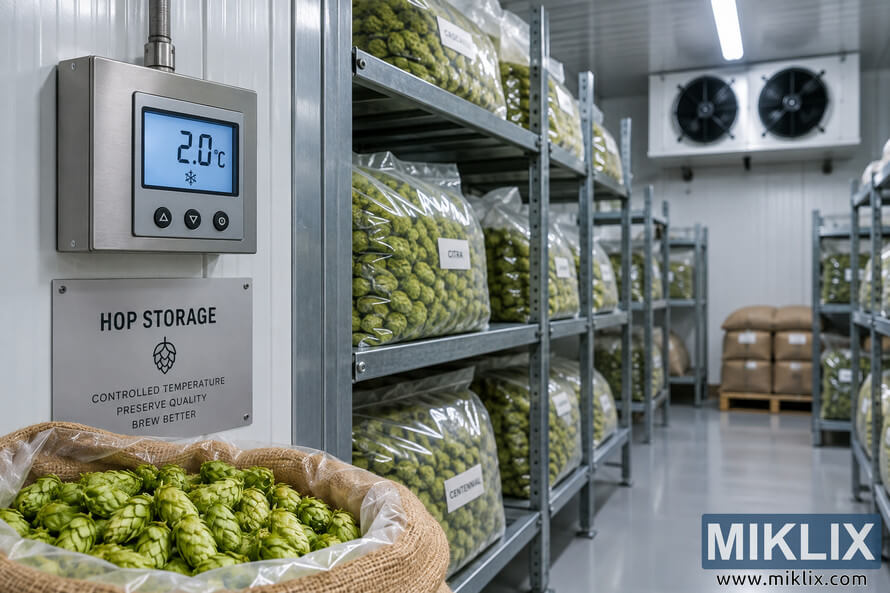
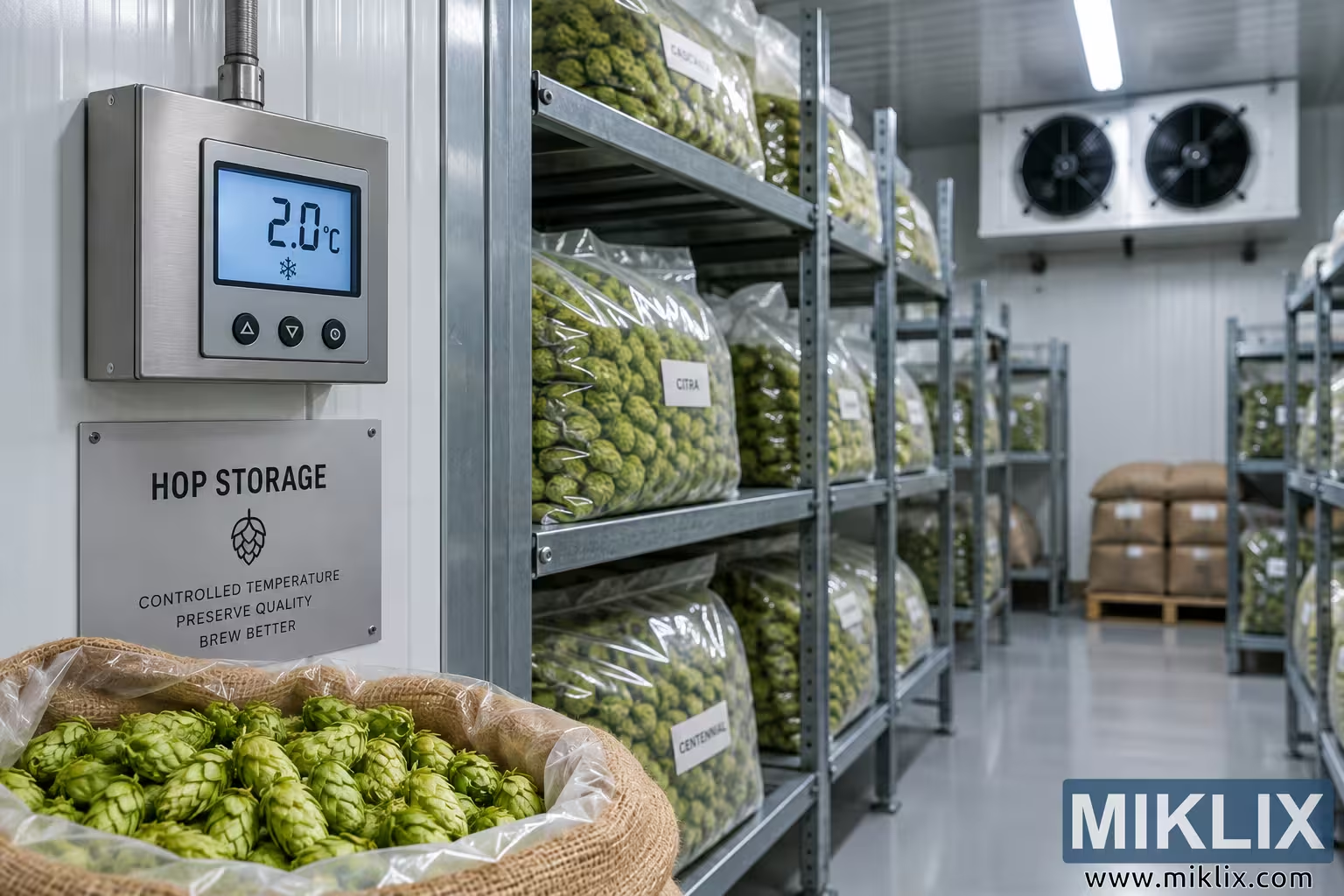
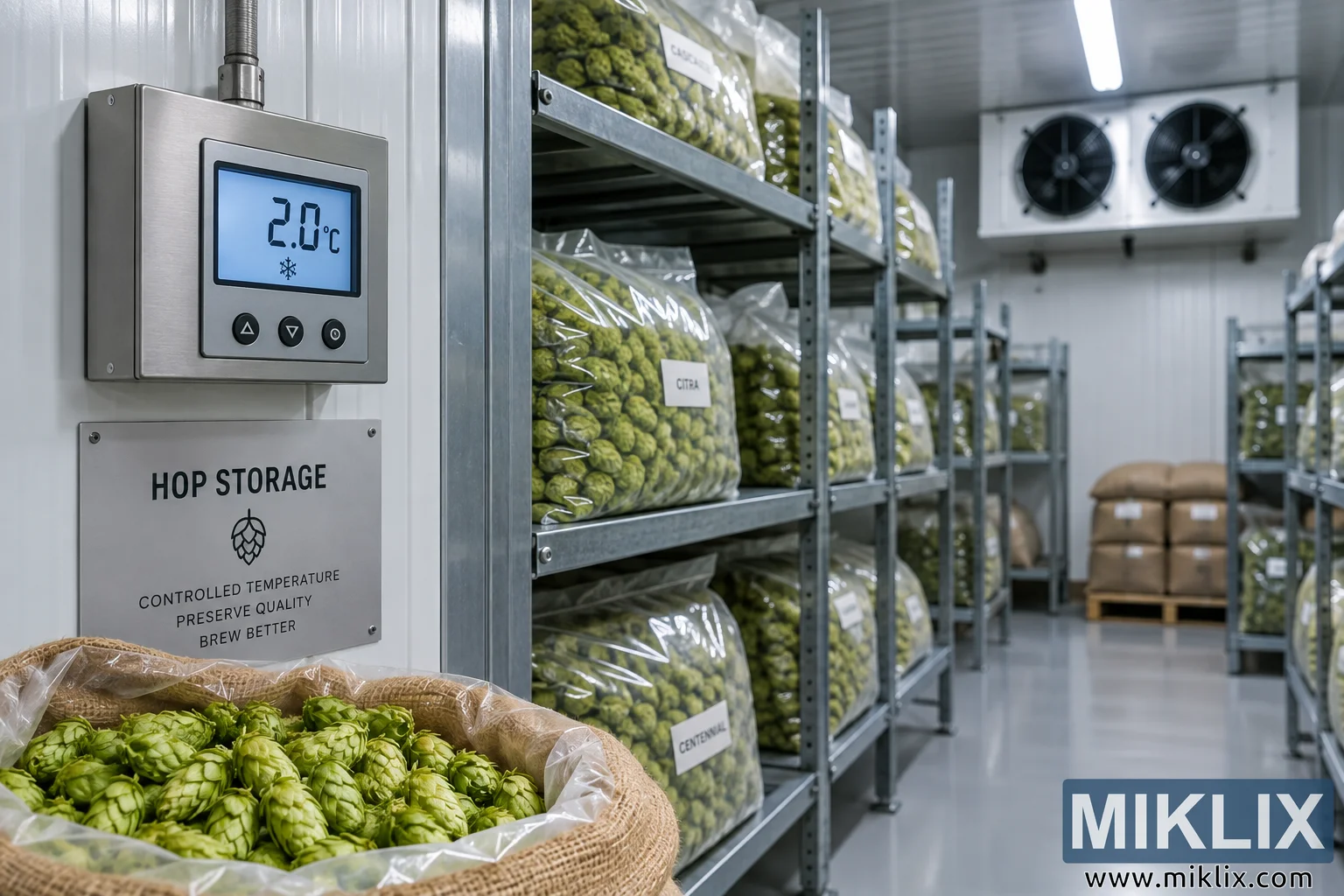
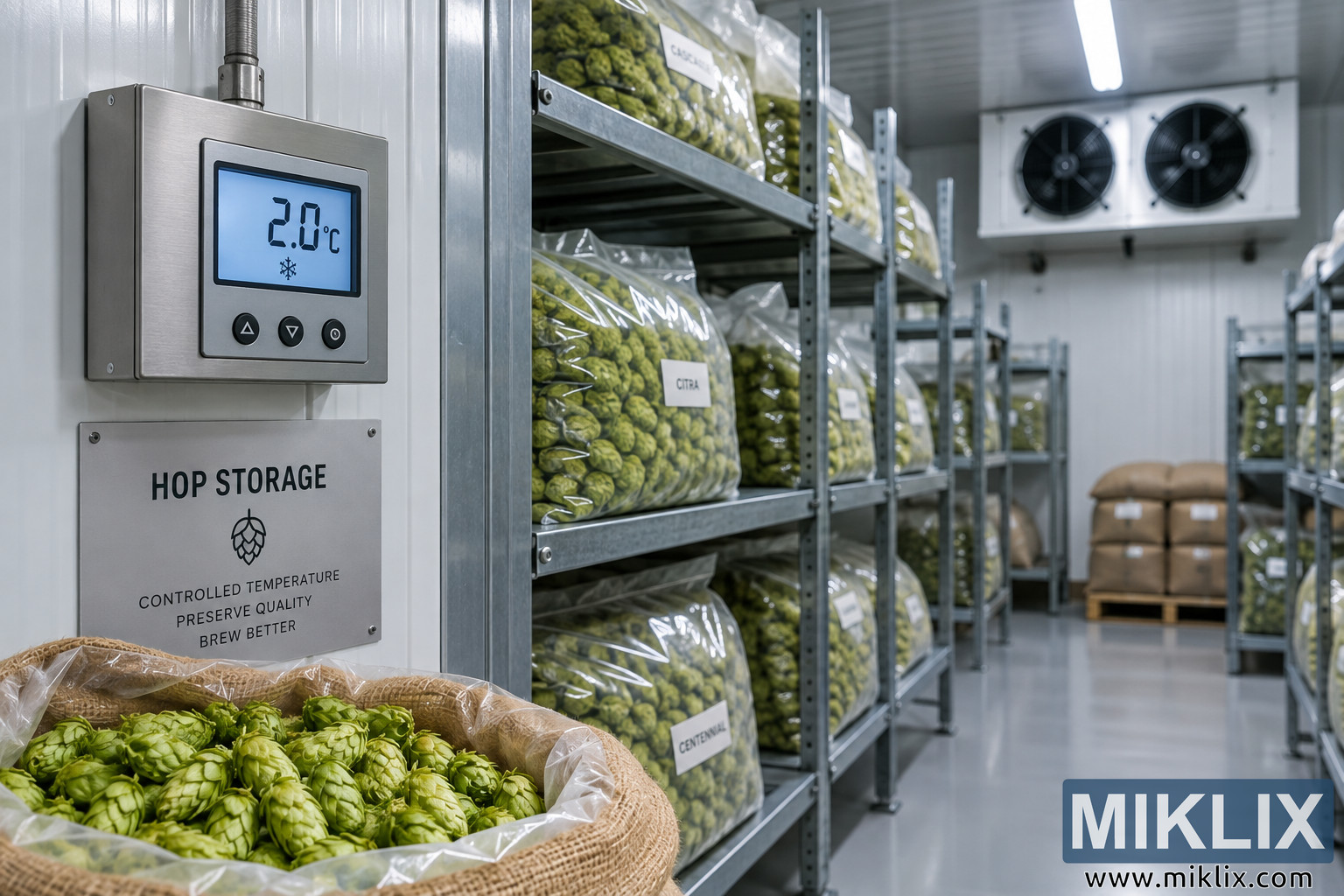
Photorealistic temperature-controlled hop storage room featuring a 2.0°C digital thermometer, green hops, organized metal shelving, sealed hop packages, and commercial refrigeration equipment.
Available versions of this image
The image files available for download below are less compressed and higher resolution - and as a result of that, higher quality - than the images embedded in articles and pages on this website, which are more optimized for file size in order to reduce bandwidth consumption.
Regular size (1,536 x 1,024)
Large size (3,072 x 2,048)
Very large size (4,608 x 3,072)
Extra large size (6,144 x 4,096)
Comically large size (1,048,576 x 699,051)
- Still uploading... ;-)
Image description
A wide, landscape-oriented photograph depicts a clean, temperature-controlled storage room designed for preserving hops in a cool and carefully managed environment. The scene has the appearance of a professional refrigerated agricultural or brewing-storage facility, with white insulated wall panels, a smooth light-gray floor, galvanized metal shelving, packaged hops, and commercial refrigeration equipment. The composition leads the viewer from a detailed foreground on the left toward a long storage aisle extending into the background on the right, creating a strong sense of depth and an orderly industrial atmosphere.
On the left side of the image, mounted prominently on a white insulated wall panel, is a rectangular digital temperature controller housed in a brushed-metal enclosure. Its illuminated pale-blue display clearly shows a temperature reading of 2.0 degrees Celsius, accompanied by a small snowflake symbol that visually reinforces the refrigerated conditions. Three dark circular control buttons are positioned beneath the display. A metal conduit extends upward from the controller, adding to the functional industrial character of the room. Immediately below the controller is a rectangular metal sign identifying the area as hop storage and indicating that controlled temperature is being used to preserve the quality of the stored material. The combination of the thermometer display and storage signage makes temperature management a central visual theme of the image.
In the lower-left foreground, a large open burlap sack lined with transparent plastic is filled with fresh-looking green hop cones. The hops are sharply rendered and occupy a substantial portion of the foreground, making their layered, leafy structure easy to see. Their vivid natural green appearance contrasts with the neutral white, gray, and metallic surfaces throughout the refrigerated room. The coarse woven texture of the burlap, the glossy folds of the clear plastic liner, and the detailed hop cones provide tactile visual interest and make this area of the photograph feel especially immediate. The sack is positioned close to the camera and is partially cropped by the lower and left edges of the frame, which gives the impression that the viewer is standing directly inside the storage area.
A long row of galvanized steel shelving dominates the center of the composition. The shelving runs away from the viewer toward the rear of the room, producing strong perspective lines and emphasizing the scale and organization of the storage facility. Multiple shelves contain large transparent or translucent sealed bags packed with green hops. Small plain white identification labels are attached to several packages. Some labels identify hop varieties such as Citra, Cascade, and Centennial. These names function as generic agricultural variety labels rather than commercial branding, and no corporate logos or recognizable brand identities are visible anywhere in the scene. The clear packaging allows the green contents to remain visible while suggesting that the hops have been sealed to help protect freshness and quality during cold storage.
The shelves are sturdy and utilitarian, with perforated vertical supports and horizontal metal beams. Their galvanized surfaces catch the cool overhead illumination, producing subtle highlights without making the room appear overly reflective. Additional shelves are visible farther down the aisle and along the right edge of the photograph, reinforcing the impression of a dedicated storage room containing a substantial hop inventory. Because the depth of field gradually softens toward the rear, the foreground thermometer, hops, and nearby packages receive the greatest visual emphasis while the distant equipment remains clearly recognizable as part of the environment.
At the back of the room, a large commercial refrigeration evaporator is mounted high on the wall. The rectangular white unit contains two prominent dark circular fans. It is positioned above the storage area so that chilled air can circulate throughout the room. A bright elongated ceiling light is visible nearby, providing clean, even illumination that contributes to the hygienic appearance of the space. The overall lighting has a cool, slightly bluish quality that visually communicates refrigeration without making the photograph look unnatural. The white insulated walls and ceiling further suggest that the room has been constructed specifically to maintain stable low temperatures.
Near the rear-right portion of the room, several closed brown sacks are stacked neatly on a wooden pallet. These packages introduce warmer tan and brown tones into an otherwise predominantly white, silver, gray, and green palette. They also help communicate the practical warehouse function of the room. More shelving and packaged green hops appear around them, although these background elements are less sharply focused than the objects in the foreground. The clean floor remains largely unobstructed, leaving a clear central aisle for workers or material-handling activities even though no people are present in the photograph.
The visual hierarchy is straightforward and informative. The digital thermometer immediately establishes the controlled temperature, the open sack of hops identifies the stored agricultural product, and the receding shelves demonstrate organized bulk storage. The refrigeration equipment in the background completes the visual explanation of how the environment is maintained. The photograph therefore communicates not only hop storage but specifically cold, temperature-controlled hop preservation. It conveys cleanliness, organization, freshness, quality control, and professional handling of brewing ingredients.
The image uses a realistic photographic style with crisp foreground detail, natural material textures, balanced exposure, and moderate background blur. The perspective is approximately eye level and slightly angled down the aisle, making the scene feel accessible rather than architectural or diagrammatic. There are no people, vehicles, decorative elements, advertisements, or recognizable commercial brands. Instead, attention remains focused on the physical infrastructure of refrigerated storage and the hops themselves. Overall, the image presents a modern, orderly cold-storage environment in which green hop cones and packaged hop varieties are maintained at approximately 2.0 degrees Celsius, with a clearly visible thermometer and refrigeration system emphasizing careful temperature control.
The image is related to: Hops in Beer Brewing: Northern Brewer