
Image: Bulk Hops in Vacuum-Sealed Cold Storage Bags
Published: October 16, 2026 at 5:44:56 PM UTC
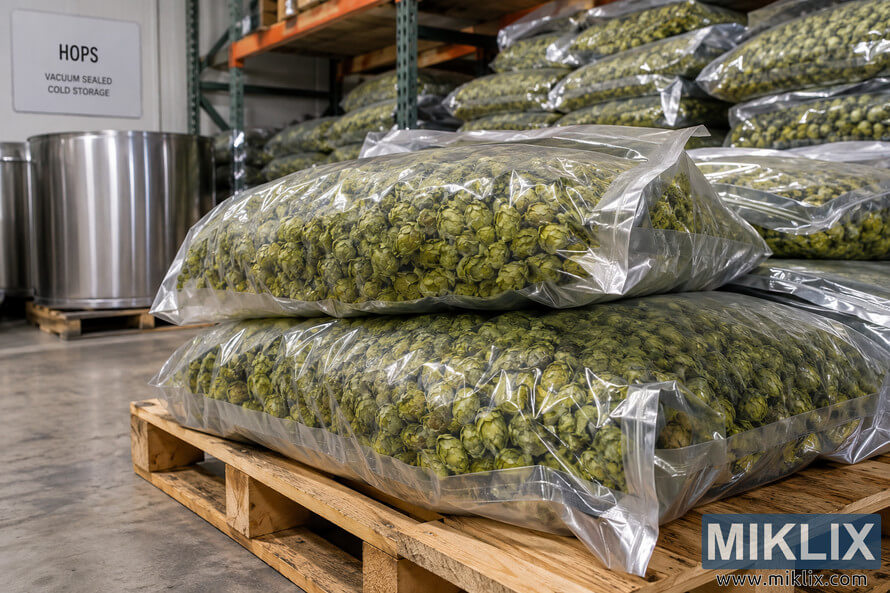
Landscape warehouse image showing bulk green hops packed in large transparent vacuum-sealed bags and stored on wooden pallets and industrial shelving in a clean cold-storage environment.
Available versions of this image
The image files available for download below are less compressed and higher resolution - and as a result of that, higher quality - than the images embedded in articles and pages on this website, which are more optimized for file size in order to reduce bandwidth consumption.
Regular size (1,536 x 1,024)
Large size (3,072 x 2,048)
Very large size (4,608 x 3,072)
Extra large size (6,144 x 4,096)
Comically large size (1,048,576 x 699,051)
- Still uploading... ;-)
Image description
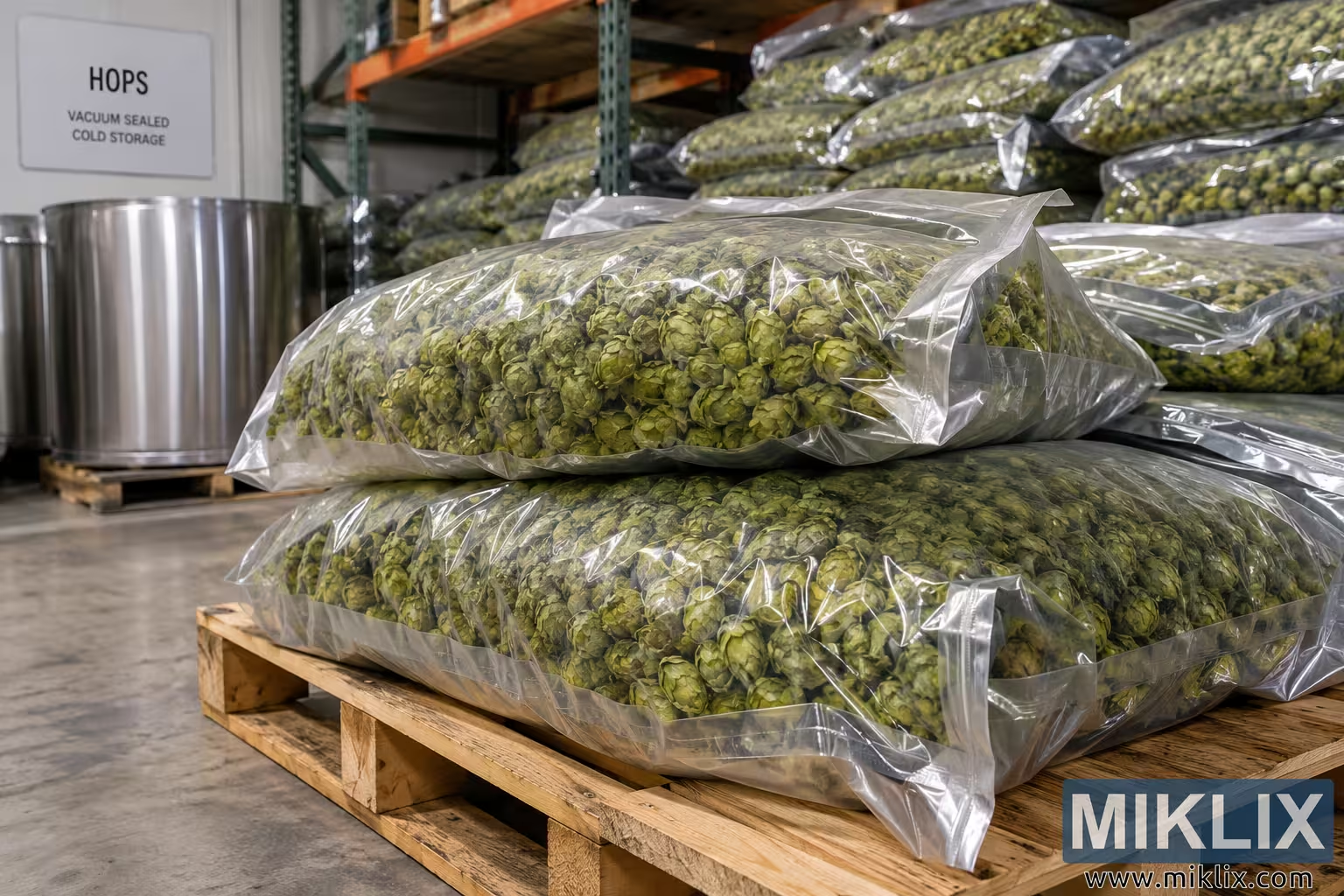
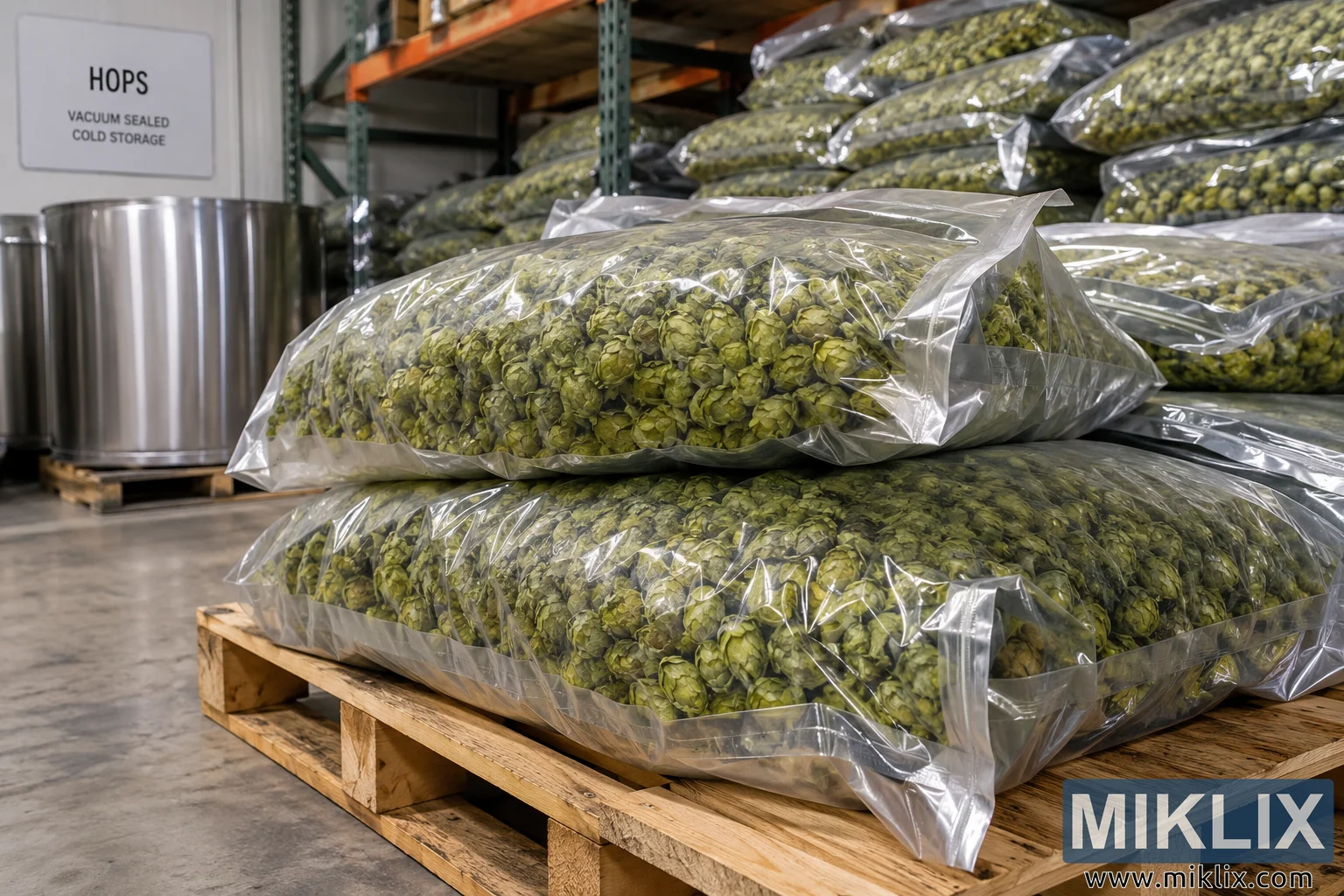
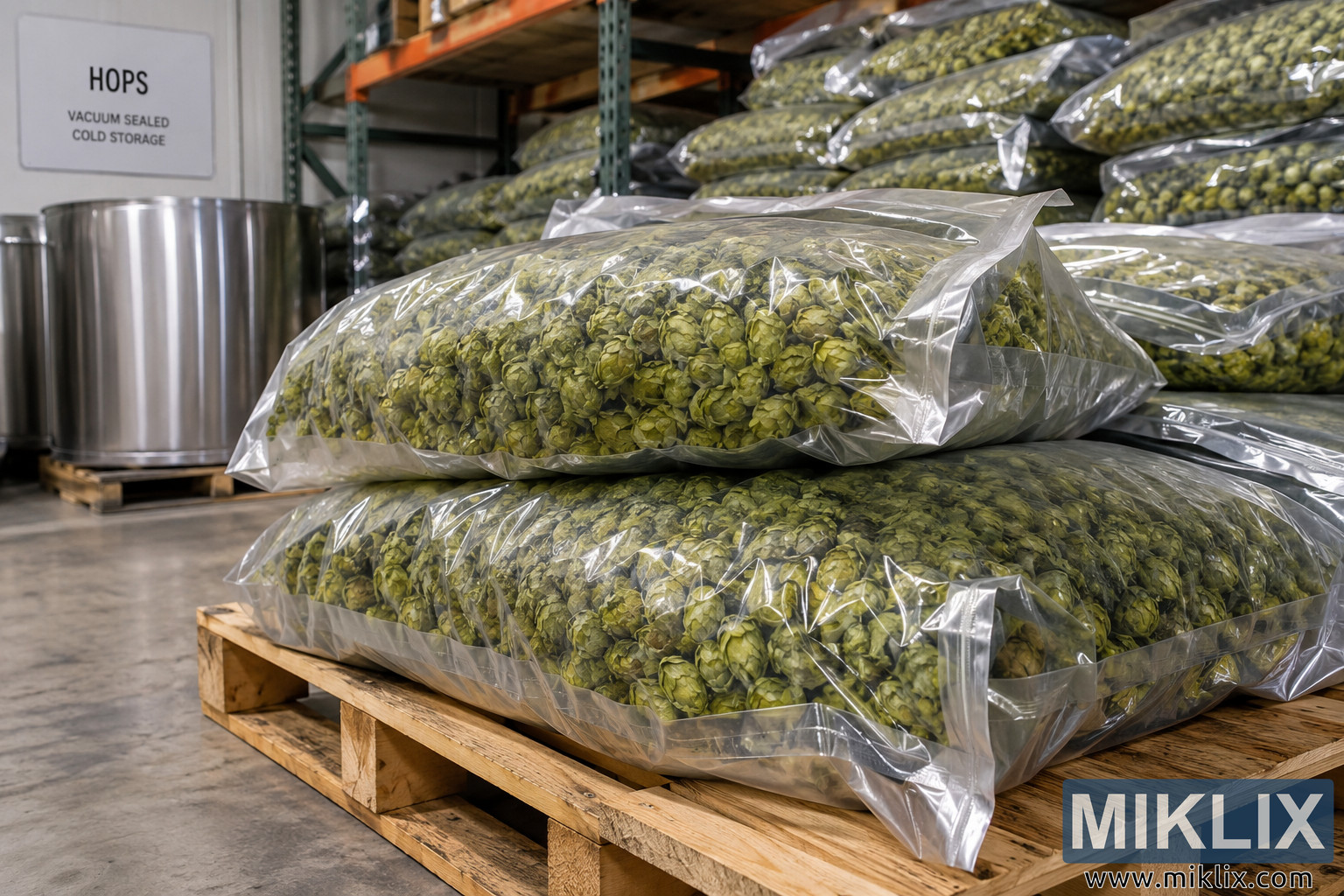
A wide, landscape-oriented photograph shows a commercial cold-storage or warehouse environment dedicated to the bulk storage of hops. The scene is dominated by large quantities of green hop cones packed tightly inside oversized transparent vacuum-sealed plastic bags. In the foreground, two especially large bags of hops are stacked on a sturdy wooden shipping pallet. The lower bag occupies much of the bottom-right and central portion of the composition, while another large bag rests directly on top of it. Because the packaging is clear, the individual hop cones can be seen in considerable detail. Their layered, leafy structures create a dense, textured surface in varying shades of muted green, olive green, yellow-green, and occasional darker green. The tightly compressed contents and flattened areas of the plastic make it clear that the bags have been prepared for compact bulk storage.
The transparent packaging has thick seams and reinforced edges, with loose folds and angular creases around the corners. Bright overhead warehouse lighting reflects from the smooth plastic, producing numerous white highlights across the surfaces of the bags. These reflections contrast with the organic, matte texture of the hops inside. The upper foreground bag is positioned horizontally and extends from the middle-left toward the right side of the image. Its transparent material is pulled closely around the hop cones, while excess plastic gathers near the sealed edges. The lower bag is broader and heavier-looking, spreading across most of the wooden pallet beneath it.
The pallet itself is clearly visible along the bottom of the photograph. It is constructed from unfinished wood with a warm tan and brown appearance. Natural grain patterns, scratches, knots, rough edges, and signs of ordinary industrial use give the pallet a realistic warehouse character. Its horizontal boards and supporting blocks provide a strong geometric base beneath the irregular shapes of the vacuum-packed hops. The concrete floor surrounding the pallet is smooth but subtly worn, with neutral gray tones that reinforce the utilitarian industrial atmosphere.
Behind the foreground pallet, tall industrial storage racks extend across the background and toward the right side of the frame. The shelving consists of dark green or gray-green vertical metal supports combined with orange horizontal beams and wooden shelf surfaces. Numerous additional vacuum-sealed bags of hops are stacked on these shelves. Some bags are arranged in neat horizontal layers, while others overlap slightly, creating the impression of a working storage facility rather than a perfectly staged display. The repetition of the green contents and reflective transparent packaging emphasizes the substantial quantity of hops being stored. The shelves recede into the background, providing depth and suggesting that the visible inventory represents only part of a larger bulk storage operation.
On the left side of the image, a large cylindrical stainless-steel vessel stands on another wooden pallet. Its polished metallic surface reflects the surrounding warehouse lighting and environment in soft, distorted bands. The vessel is partially cropped by the left edge of the composition and sits behind the main pallet of hops, making it a secondary industrial element rather than the primary subject. Its clean metallic finish contrasts with both the rough wood of the pallets and the natural plant material visible through the bags.
Mounted on the pale wall above and behind the stainless-steel vessel is a simple rectangular sign. The sign contains generic informational wording identifying the stored material as hops and indicating vacuum-sealed cold storage. The typography is plain, dark, and functional, consistent with practical warehouse labeling rather than commercial branding. There are no visible company names, logos, trademarks, product labels, branded packages, or other recognizable brand identifiers anywhere in the scene.
The overall composition uses the large foreground bags as the visual focal point. Their proximity to the camera allows the viewer to see individual hop cones, wrinkles in the packaging, compressed areas, sealing details, and reflections with considerable clarity. The background becomes progressively less prominent as the shelving recedes, creating a natural sense of spatial depth. The camera appears to be positioned relatively low, close to the height of the pallet, which makes the foreground bags seem substantial and communicates the scale of the bulk inventory.
Lighting throughout the warehouse is bright, cool, and even, resembling practical overhead illumination in a temperature-controlled industrial facility. There are no dramatic shadows or decorative lighting effects. Instead, the lighting emphasizes cleanliness, visibility, and the reflective properties of the plastic and stainless steel. The restrained palette is built primarily from the greens of the hops, neutral gray concrete and walls, warm natural wood, dark metal shelving, orange rack beams, and silver stainless steel. The result is a realistic documentary-style image of agricultural ingredient storage and handling.
No people are present, and there is no active machinery or visible motion. The absence of workers keeps attention entirely on the stored hops, packaging method, and warehouse environment. The large quantity of sealed bags communicates commercial or industrial-scale storage rather than household use. The vacuum-packed presentation suggests an effort to protect the hops from excessive air exposure while allowing them to be stored efficiently. Overall, the image depicts an organized bulk hop storage area where large transparent vacuum-sealed bags filled with green hop cones are stacked on pallets and industrial shelving inside a clean cold-storage warehouse.
The image is related to: Hops in Beer Brewing: Northern Brewer