
Image: Complex Hop Addition Schedule in a Craft Brewery
Published: October 16, 2026 at 5:44:56 PM UTC
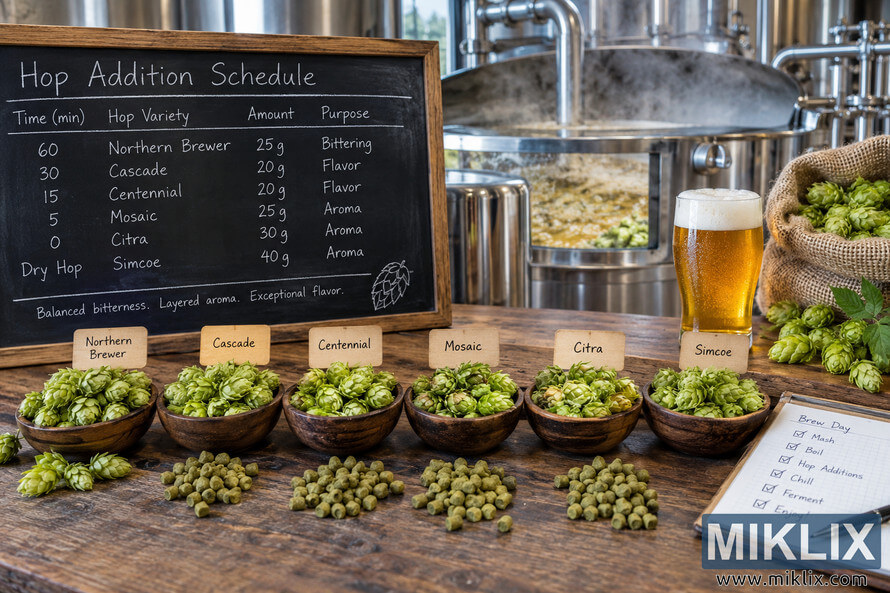
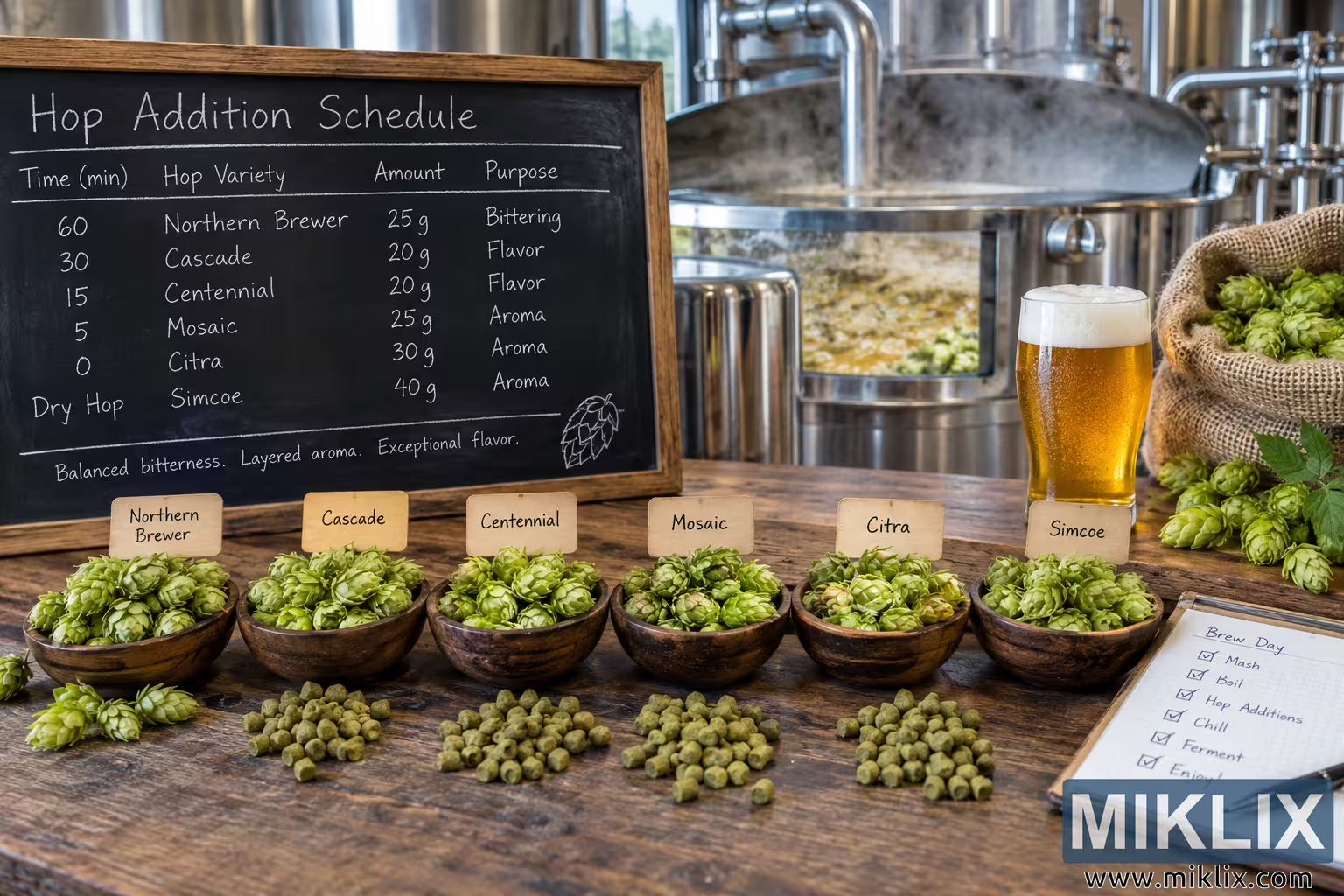
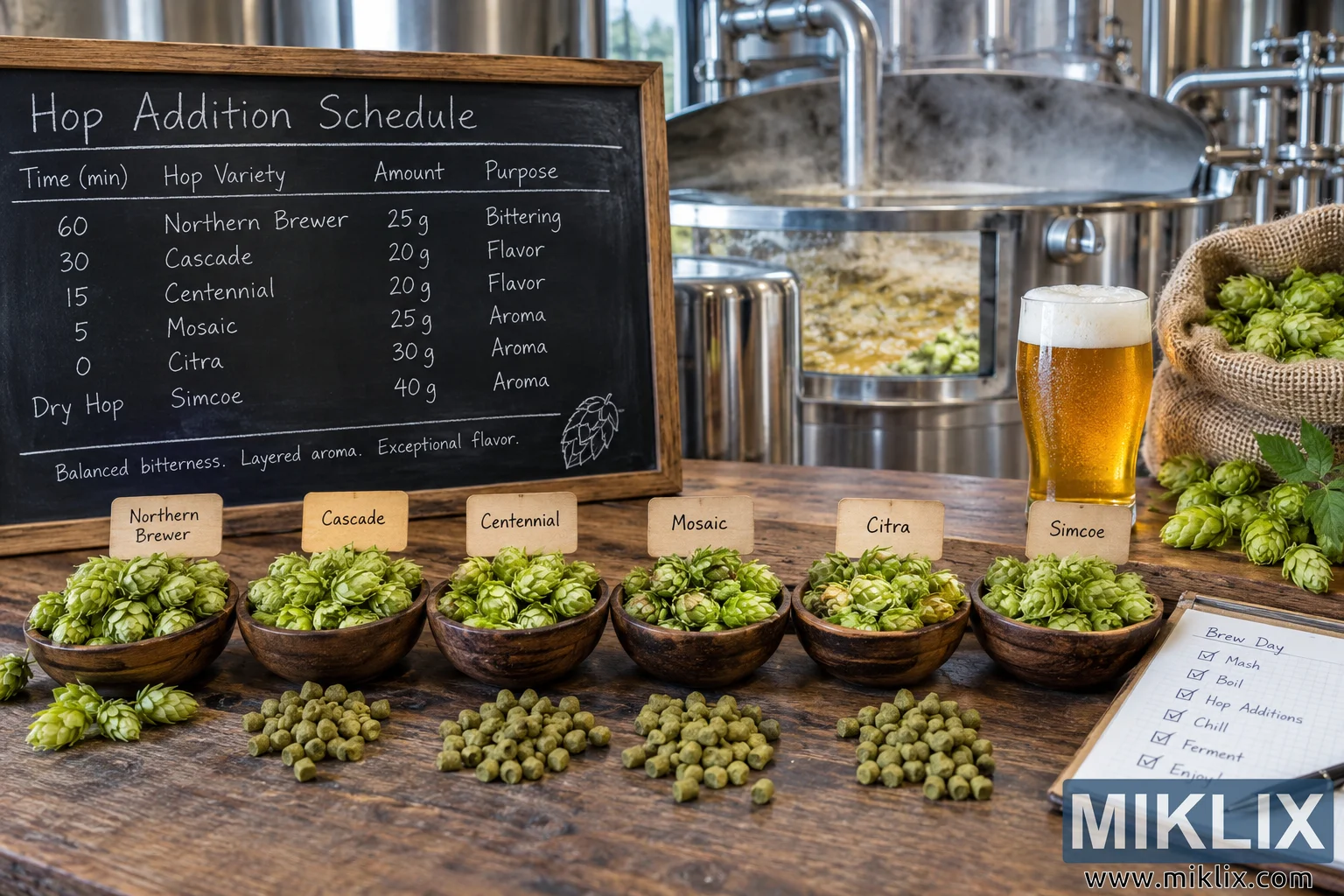
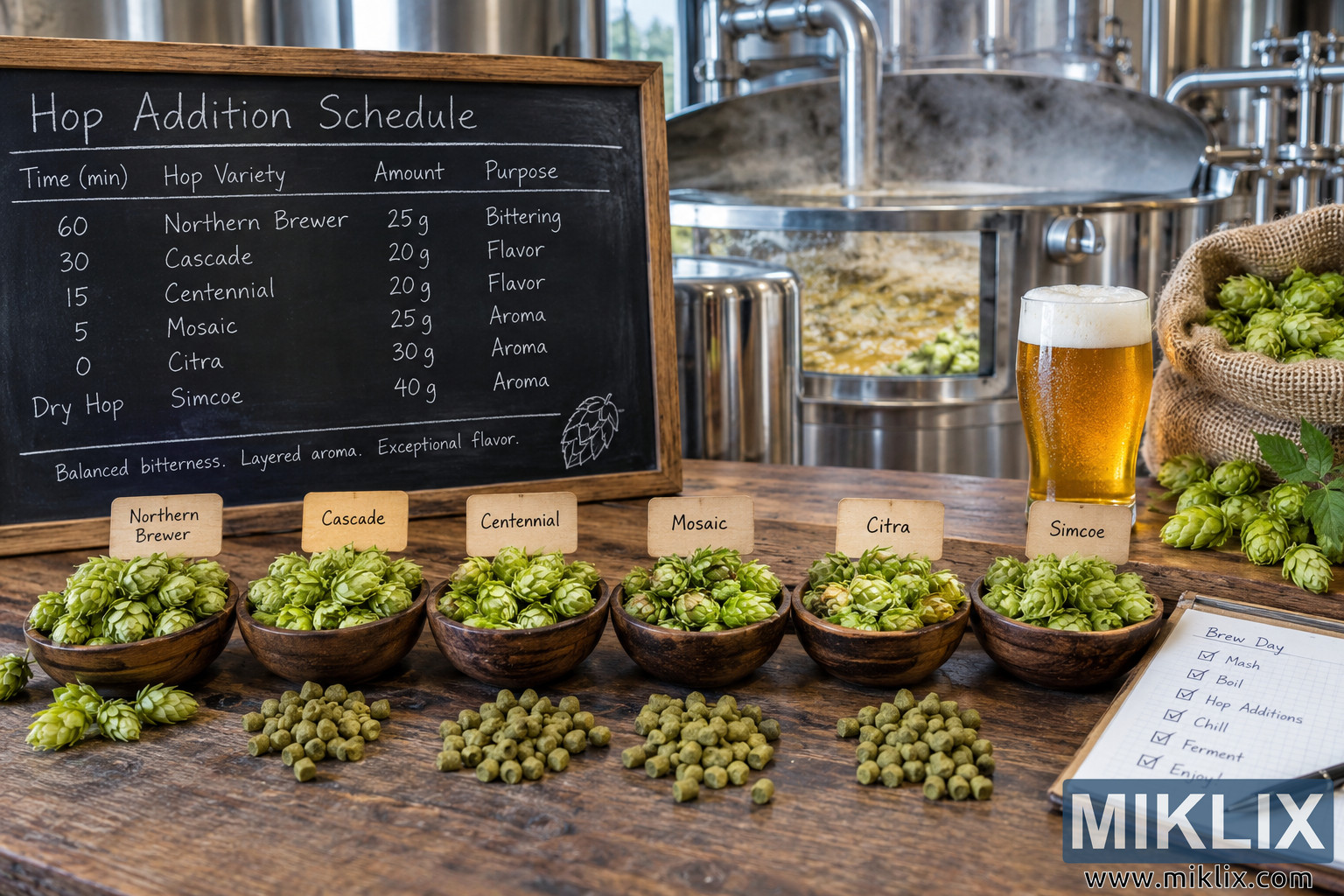
Photorealistic craft brewery scene featuring a complex timed hop addition schedule, six hop varieties, hop cones and pellets, brewing equipment, a checklist and a finished golden beer.
Available versions of this image
The image files available for download below are less compressed and higher resolution - and as a result of that, higher quality - than the images embedded in articles and pages on this website, which are more optimized for file size in order to reduce bandwidth consumption.
Regular size (1,536 x 1,024)
Large size (3,072 x 2,048)
Very large size (4,608 x 3,072)
Extra large size (6,144 x 4,096)
Comically large size (1,048,576 x 699,051)
- Still uploading... ;-)
Image description
A wide, photorealistic landscape image presents a detailed craft-brewing workspace focused on a complex hop addition schedule. The setting resembles a small professional brewery or an exceptionally well-equipped brewing room, combining polished stainless-steel equipment with a rustic wooden work surface and carefully arranged brewing ingredients. Warm natural light enters the space and reflects softly from the metallic brewing vessels and pipework in the background, creating an inviting balance between industrial brewing equipment and traditional craft aesthetics. The main visual element on the left side of the composition is a large black chalkboard in a medium-brown wooden frame. Written across the top in white chalk is the heading “Hop Addition Schedule.” Beneath the heading, a structured table organizes the brewing plan into four columns labeled “Time (min),” “Hop Variety,” “Amount,” and “Purpose.” The schedule begins with Northern Brewer at 60 minutes, using 25 grams for bittering. A 30-minute addition specifies Cascade at 20 grams for flavor, followed by Centennial at 15 minutes with 20 grams for flavor. Mosaic appears at 5 minutes with 25 grams for aroma, while Citra is listed at 0 minutes with 30 grams for aroma. The final entry is a dry-hop addition of Simcoe at 40 grams for aroma. Horizontal chalk lines divide the schedule from a short statement near the bottom of the board reading “Balanced bitterness. Layered aroma. Exceptional flavor.” A simple hand-drawn hop cone illustration decorates the lower-right area of the chalkboard. In front of the board, six small dark wooden bowls are arranged in a neat row across the worktable. Each bowl is filled generously with fresh-looking green hop cones. Small rectangular wooden identification cards stand behind the bowls and label the varieties from left to right as Northern Brewer, Cascade, Centennial, Mosaic, Citra, and Simcoe. The labels make the relationship between the physical ingredients and the written brewing schedule immediately understandable. The hop cones have layered, papery green bracts and subtle variations in size and tone, giving them a natural agricultural appearance. Several loose hop cones are scattered around the bowls, reinforcing the impression of an active brew-day preparation area rather than a perfectly sterile display. In the foreground, multiple small piles of compressed green hop pellets are positioned directly on the dark, weathered wooden table. Their compact cylindrical forms contrast with the larger leafy hop cones in the bowls. The combination of whole hops and pellets visually emphasizes the raw materials used to build bitterness, flavor, and aroma during different stages of brewing. The tabletop itself has prominent grain, knots, scratches, and tonal variations, contributing warmth and tactile character to the scene. On the right side of the image stands a clear glass filled with golden amber beer. The beer is bright and translucent, with visible carbonation and a thick, creamy white foam cap. The glass catches the surrounding light, making the golden liquid stand out against the darker wood and silver brewing equipment. A small wooden card marked “Simcoe” sits near the base of the glass, visually connecting the finished beverage with the hop ingredients displayed across the table. Behind the glass is an open burlap sack overflowing with additional fresh green hop cones. More hops spill naturally from the sack onto the work surface, accompanied by a few green leaves and stems. In the lower-right corner, a clipboard holds a sheet of graph-style paper titled “Brew Day.” A handwritten checklist shows the stages “Mash,” “Boil,” “Hop Additions,” “Chill,” “Ferment,” and “Enjoy!” with each item visibly checked. A dark pen rests diagonally along the bottom edge of the clipboard, suggesting that the brewer has just completed or reviewed the process. The background contains substantial stainless-steel brewery hardware. A large open brewing vessel occupies the central area, with hot wort visible inside and steam rising from its surface. Green hop material appears to be floating or mixing into the liquid, visually representing the hop-addition process described on the chalkboard. Behind and above the vessel are polished tanks, vertical cylinders, curved pipes, valves, and fittings. Reflections and highlights across these metal surfaces create a convincing professional brewery atmosphere without displaying any corporate logos or commercial branding. The depth of field keeps the foreground ingredients, chalkboard, and finished beer especially clear while allowing the equipment farther back to provide environmental context without overwhelming the central subject. Overall, the composition tells the story of a carefully planned brewing session from ingredient selection through timed additions to the finished glass of beer. The orderly schedule and labeled hop varieties communicate precision and recipe development, while the scattered hops, steaming kettle, checked brew-day list, textured wood, and full beer glass add a sense of hands-on craftsmanship. The image combines technical brewing information with an appealing still-life presentation, making the complex hop schedule easy to understand visually. Its landscape format provides enough horizontal space to show the schedule, six hop varieties, brewing equipment, raw ingredients, checklist, and finished beverage together as parts of one coherent brewing process. No recognizable commercial brands, company logos, branded packaging, or trademarked brewery identities are visible anywhere in the scene.
The image is related to: Hops in Beer Brewing: Northern Brewer