
Image: Craft Beer Flight Featuring Northern Brewer Hops Recipes
Published: October 16, 2026 at 5:44:56 PM UTC
Explore a rustic craft beer flight featuring four beer styles made around a Northern Brewer hops theme, surrounded by fresh hops in a warm, scenic brewery setting.
Available versions of this image
The image files available for download below are less compressed and higher resolution - and as a result of that, higher quality - than the images embedded in articles and pages on this website, which are more optimized for file size in order to reduce bandwidth consumption.
Regular size (1,536 x 1,024)
Large size (3,072 x 2,048)
Very large size (4,608 x 3,072)
Extra large size (6,144 x 4,096)
Comically large size (1,048,576 x 699,051)
- Still uploading... ;-)
Image description
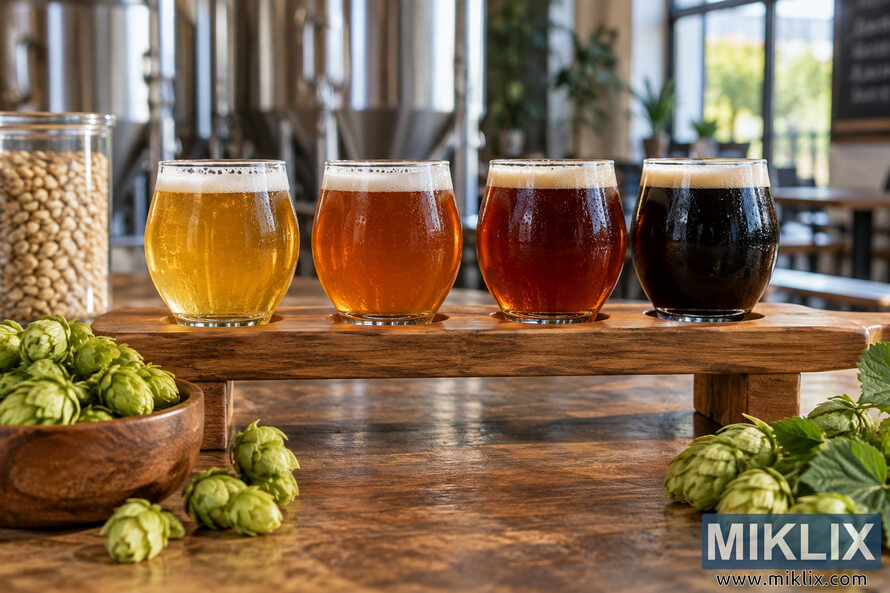
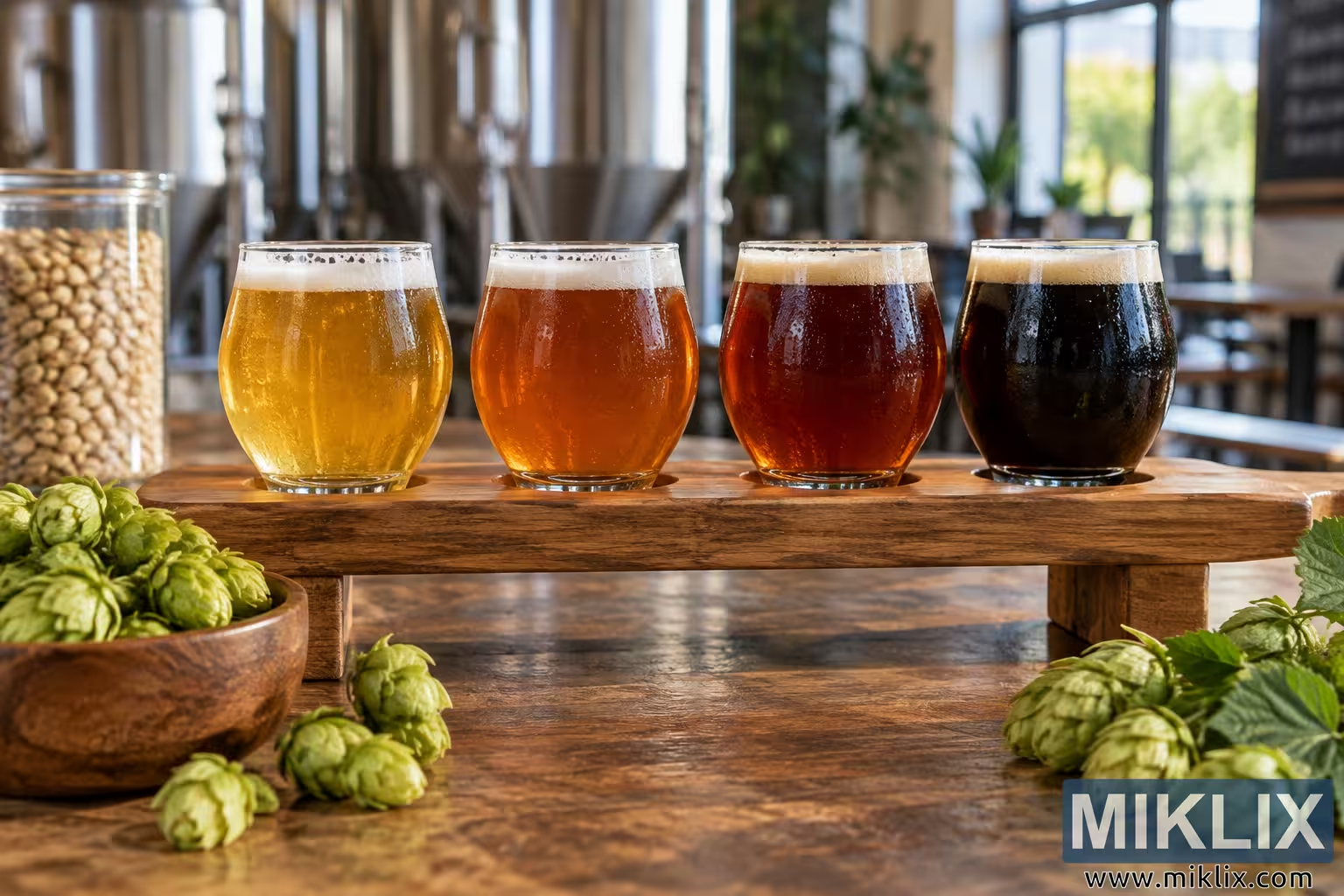
A crisp, photorealistic landscape-oriented image presents a carefully arranged flight of four craft beers in a warm, rustic brewery setting, with fresh hop cones prominently incorporated into the composition. The scene is photographed at approximately eye level with a shallow depth of field, allowing the beer glasses, wooden tasting board, hops, and foreground sign to remain exceptionally clear while the more distant brewery environment becomes pleasantly soft and atmospheric. The overall visual character is inviting, artisanal, natural, and strongly associated with small-batch brewing and hop-forward beer recipes.
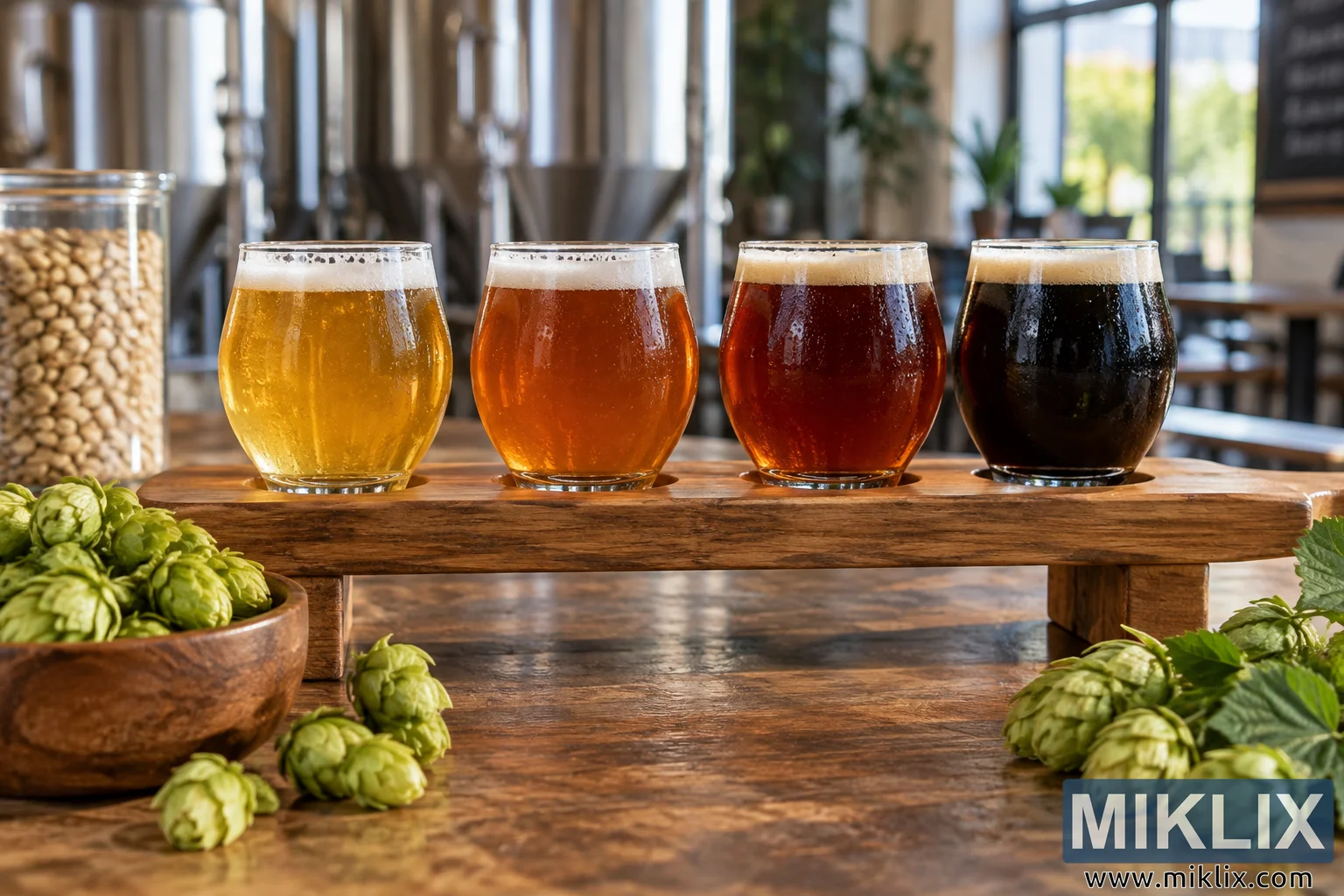
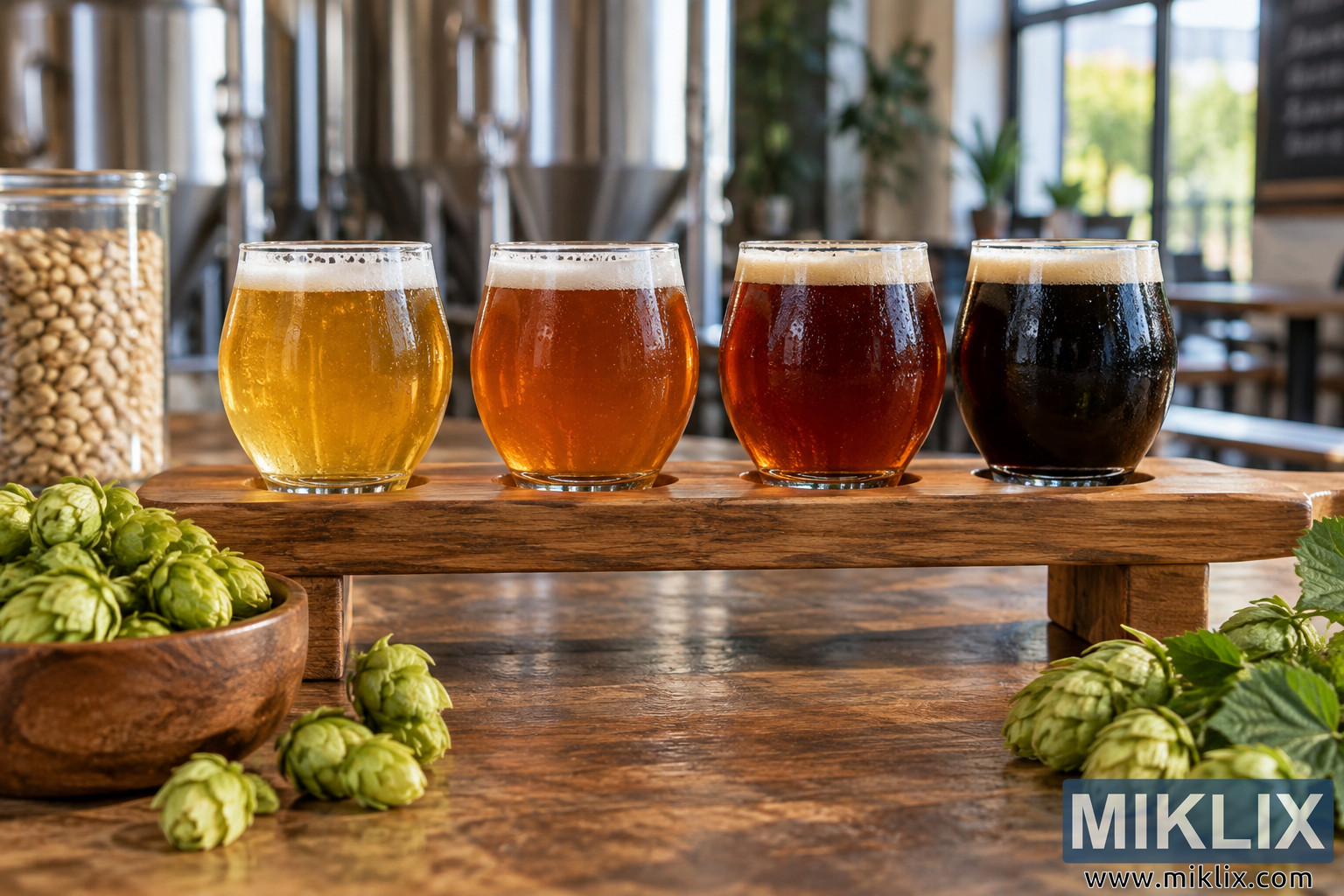
At the center of the image is a substantial wooden beer flight board made from dark, weathered timber. Four individual tasting glasses are positioned in circular recesses along the board. Although the glasses share the same compact shape, the beers inside them display a progression of distinct colors. The first beer on the left is a bright, luminous golden yellow with visible carbonation and a generous white foam head. Light passing through the glass gives the beer a particularly fresh and sparkling appearance. The second sample is a slightly deeper gold to light amber, retaining excellent clarity and a dense layer of pale foam. The third beer introduces a richer reddish-copper or deep amber tone, suggesting a more malt-forward recipe or darker specialty grains. The fourth glass, positioned at the far right, contains an almost opaque dark brown to black beer with subtle reddish highlights near its edges and a creamy tan head. Together, the four beers create a visually appealing spectrum from pale and refreshing to dark and robust.
The wooden tasting board is one of the strongest textural elements in the photograph. Its surface shows pronounced grain patterns, natural imperfections, scratches, and tonal variations that communicate age and repeated use. This rustic character contrasts attractively with the smooth, transparent surfaces of the beer glasses. Condensation and reflections on the glassware reinforce the impression that the beers have recently been poured and are ready for tasting. Fine streams and points of carbonation can be seen within the lighter samples, adding further realism and freshness to the scene.
Fresh green hop cones are scattered generously across the wooden tabletop in the foreground and along the right side of the composition. Their overlapping papery bracts, varied green tones, and irregular organic shapes provide an immediate visual connection to brewing ingredients. Some hop cones are intact while small fragments and leaves are distributed naturally around them, preventing the arrangement from appearing overly staged. More hop material appears in containers and plants farther back in the brewery, visually repeating the ingredient motif throughout the photograph. The hops provide a strong botanical counterpoint to the warm amber colors of the beer and wood.
In front of the tasting flight, a small rectangular black chalkboard sign leans backward at a slight angle. Written across it in informal white chalk lettering is the heading “BREWS,” accompanied by a simple hand-drawn hop illustration. Below the heading, the sign identifies the brewing theme as “NORTHERN BREWER HOPS.” The handwritten presentation reinforces the craft-brewery atmosphere and suggests a tasting room, recipe demonstration, brewing workshop, or educational presentation focused on hop-based beer recipes. The sign is generic in its styling and contains no commercial logo or recognizable brand identity.
The background expands the setting into a comfortable brewery or taproom with a strong connection to the outdoors. Large windows on the left reveal a softly focused mountain landscape beneath a bright blue sky. The distant mountains appear blue-gray, while darker evergreen vegetation occupies the lower slopes. Sunlight entering through the windows creates warm highlights across the wood, beer, and glass surfaces, producing a pleasant mixture of natural daylight and cozy interior tones. Vertical wooden architectural elements frame portions of the view and reinforce the rustic aesthetic of the tasting area.
Behind the beer flight are several dark containers or brewing-related vessels as well as abundant green hop foliage. These background elements remain sufficiently blurred to prevent them from competing with the tasting glasses, yet they add depth and establish the location as a place associated with brewing and fresh ingredients. Toward the upper right is a larger framed chalkboard displaying the phrase “GOOD BEER BRIGHTER DAYS” in white hand-lettered typography, along with a small stylized hop drawing. Its informal visual language complements the smaller foreground sign and contributes to the relaxed, contemporary craft-beer atmosphere without introducing an actual commercial brand.
The lighting is particularly effective in differentiating the four beers. Bright sunlight illuminates the pale golden sample from behind, making its color glow and revealing numerous tiny bubbles. The amber samples catch warmer orange and copper highlights, while the darkest beer reflects portions of the surrounding room on its glossy surface. Foam textures vary subtly between the glasses, ranging from bright white to pale cream and light tan. These differences help each sample feel individually brewed rather than appearing like duplicated glasses with digitally altered colors.
Compositionally, the four glasses create a strong horizontal rhythm suited to the landscape format. Their nearly equal spacing makes the progression of beer styles immediately understandable, while the scattered hops and angled foreground sign break up the symmetry enough to retain a natural editorial quality. The flight occupies the visual center, with the hops establishing a foreground layer and the windows, mountains, brewery furnishings, and chalkboard establishing the background layer. This produces clear visual depth without distracting from the principal subject.
The image communicates the concept of experimenting with multiple beer recipes that share a common hop ingredient. The progression from golden beer through amber and copper to nearly black beer suggests that the featured hops can be explored across different brewing styles rather than being associated with only one type of beer. The combination of fresh hops, varied beer colors, rustic wood, natural light, and brewery surroundings gives the photograph an educational yet aspirational character. It could comfortably illustrate an article about homebrewing, hop varieties, recipe development, craft-beer tasting, or ways of using a traditional hop variety in several different beer styles. No recognizable commercial packaging, branded glassware, company logos, or actual beer brands are visible, keeping the scene focused on the brewing ingredients, recipes, and tasting experience itself.
The image is related to: Hops in Beer Brewing: Northern Brewer