
Image: Traditional English Brown Ale with Fresh Hops and Malt
Published: October 16, 2026 at 5:44:56 PM UTC
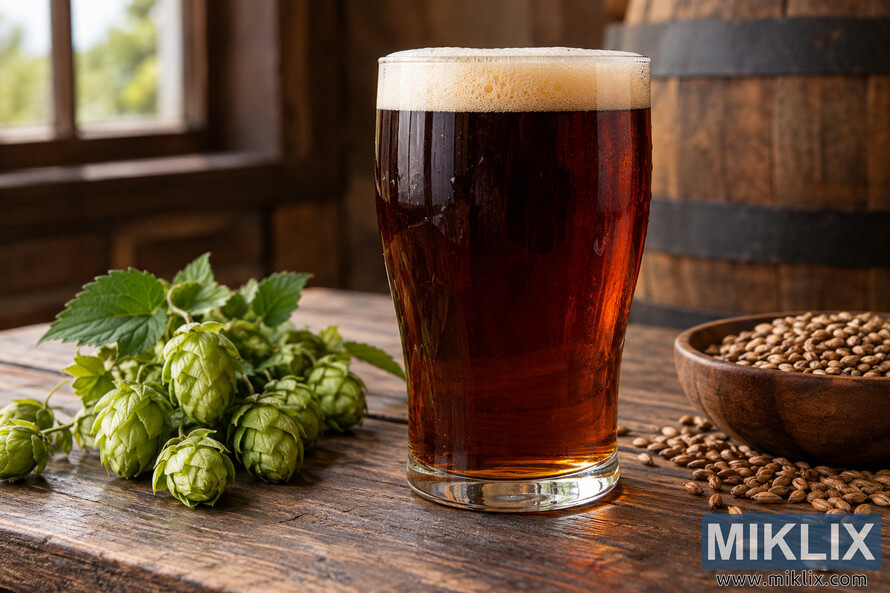
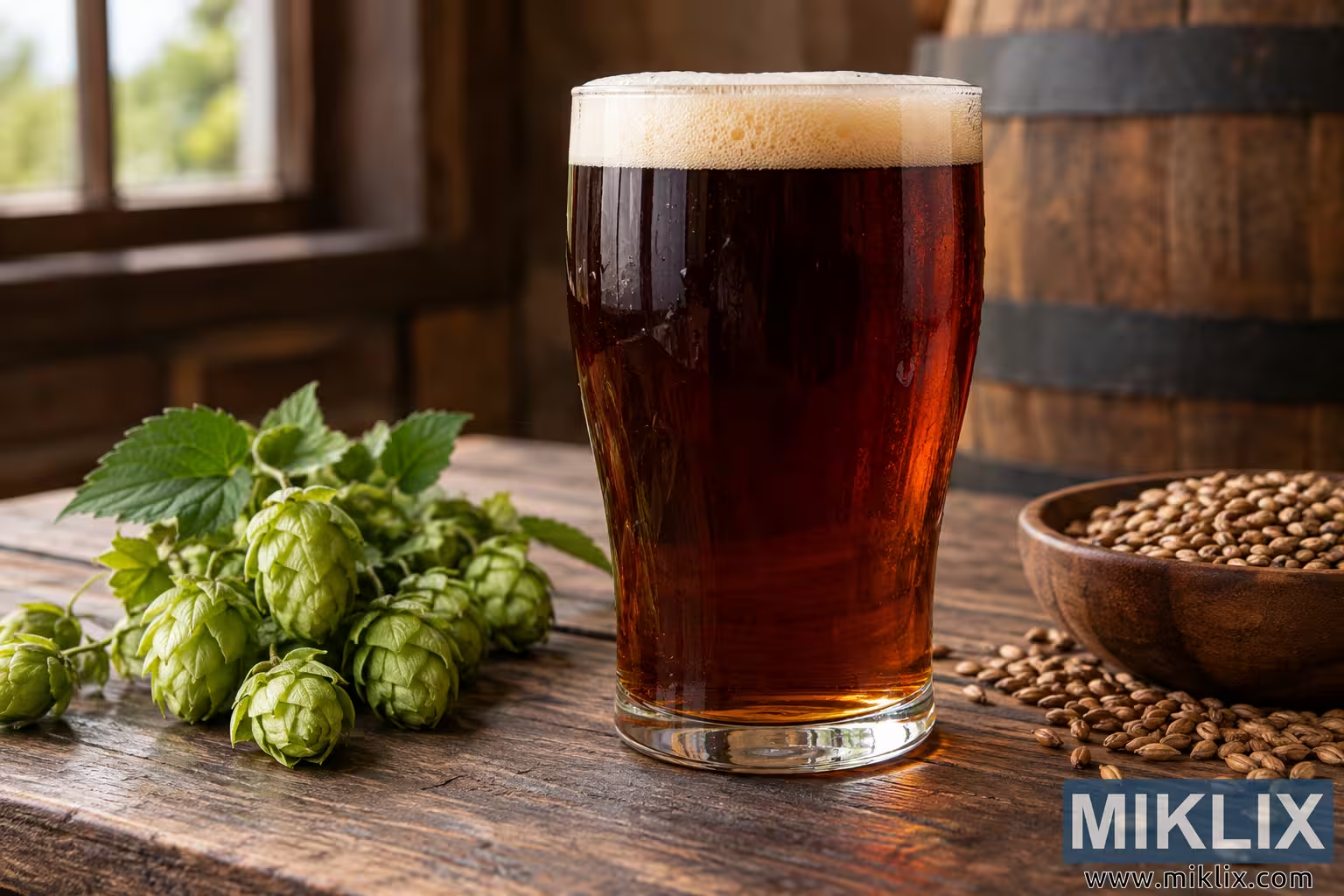
Rustic still life of traditional English brown ale with a creamy head, fresh green hops and malted grain on a wooden table in a warmly lit brewery setting.
Available versions of this image
The image files available for download below are less compressed and higher resolution - and as a result of that, higher quality - than the images embedded in articles and pages on this website, which are more optimized for file size in order to reduce bandwidth consumption.
Regular size (1,536 x 1,024)
Large size (3,072 x 2,048)
Very large size (4,608 x 3,072)
Extra large size (6,144 x 4,096)
Comically large size (1,048,576 x 699,051)
- Still uploading... ;-)
Image description
A warm, atmospheric still-life photograph presents a traditional glass of English-style brown ale as the central subject, surrounded by ingredients and rustic brewery elements that evoke classic beer making. The composition is arranged in landscape orientation and uses a shallow depth of field to keep the beer, hops, and nearby malted grain visually prominent while allowing the background to dissolve into a soft, inviting blur. At the center of the image stands a tall, traditional pub-style pint glass filled almost to the rim with a deep brown ale. The beer has a rich chestnut-to-mahogany appearance, with warm reddish and copper highlights becoming visible where sunlight passes through the liquid. The darkest areas of the ale appear nearly opaque brown, while the thinner illuminated edges glow with translucent amber and burnt-orange tones. This variation in color gives the beer depth and reinforces the impression of a malt-forward traditional brown ale.
A generous but controlled head of pale tan foam rests across the top of the beer. The foam has a fine, natural texture composed of many tiny bubbles, with subtle variations in density across its surface. Its creamy beige color contrasts strongly with the dark body of the ale beneath it. Small droplets of condensation and delicate reflections appear on the outside of the glass, contributing to the sense that the beer has been freshly poured and served at an appealing temperature. Reflections from the nearby window stretch vertically across the glass, creating bright highlights against the dark liquid. The thick transparent base of the pint glass catches additional light and produces clear, glassy reflections along the wooden tabletop.
To the left of the beer lies a loose arrangement of fresh green hop cones and leafy hop vines. The hop cones are plump and highly detailed, with overlapping scales that form their characteristic layered shape. Their fresh green color provides a vivid natural contrast to the brown, copper, and amber tones that dominate the rest of the composition. Several hop leaves extend upward and outward behind the cones, their serrated edges and visible veins adding botanical detail. The hops are arranged casually rather than symmetrically, suggesting freshly harvested brewing ingredients placed directly onto the work surface. They visually communicate the hop component of the beer without displaying any packaging, logos, labels, or commercial branding.
On the right side of the composition is a rounded wooden bowl filled with malted grain. The bowl has a dark brown finish and a smooth, simple form that harmonizes with the rustic setting. Numerous tan and golden-brown grains fill the bowl, and additional kernels have been scattered naturally across the tabletop in front of it. Individual pieces of grain are clearly visible, showing slight differences in shape, size, and toasted coloration. These malted grains reinforce the traditional brewing theme and complement the deep malt-derived color suggested by the brown ale in the glass.
The subjects rest on a broad, weathered wooden table constructed from rustic planks. Its surface contains pronounced grain patterns, seams, scratches, tonal variations, and signs of age. Warm sunlight travels across portions of the table and emphasizes its texture, particularly around the base of the glass, the hops, and the scattered grain. The irregular character of the timber helps create the feeling of a traditional brewery, country pub, farmhouse brewing room, or historic alehouse rather than a modern commercial studio.
The background is intentionally out of focus. On the left is a wooden-framed window through which soft daylight enters the scene. Beyond the window, indistinct green vegetation suggests a bright outdoor landscape, but the shallow focus prevents any specific location from being identifiable. The daylight creates a gentle directional illumination that highlights the hops, traces the contours of the pint glass, and makes the reddish tones of the beer more apparent. The combination of natural light and warm interior shadows creates a comfortable, handcrafted atmosphere.
Behind and to the right of the glass stands a large wooden barrel. Its curved wooden staves and broad dark metal hoops are recognizable even though they are softly blurred by the depth of field. The barrel contributes historical brewing associations and gives the background visual weight without competing with the central glass. Warm brown wooden surfaces continue throughout the interior, producing a cohesive palette of walnut, chestnut, caramel, amber, and toasted grain tones. The brighter greens of the hops and outdoor foliage act as complementary accents within this otherwise earthy color scheme.
The photographic composition is balanced around the central pint: fresh hops occupy the lower-left portion, while the wooden bowl and scattered malt occupy the lower-right portion. The beer rises vertically between these ingredients and serves as the dominant focal point. The blurred barrel behind the glass adds scale and context, while the bright window on the opposite side balances the darker background. The perspective is approximately at tabletop level, giving the viewer a close, tactile impression of the drink and ingredients. Fine details such as the hop scales, grain kernels, foam bubbles, condensation, glass reflections, and rough wooden surface contribute to a realistic photographic appearance.
Overall, the image conveys the character of a traditional English brown ale through color, glassware, ingredients, and setting rather than through written labels or recognizable commercial imagery. The deep mahogany beer, creamy tan head, fresh hops, malted grain, wooden table, softly illuminated window, and brewery-style barrel combine to suggest traditional brewing craftsmanship. The scene contains no people, text, logos, labels, trademarks, branded bottles, branded glassware, or other identifiable commercial elements. Its emphasis is entirely on the visual qualities of the ale and the natural brewing ingredients surrounding it, resulting in a warm, rustic, appetizing depiction of a classic brown ale.
The image is related to: Hops in Beer Brewing: Northern Brewer