
Image: Homebrewer Inspecting Beer for Quality Issues
Published: October 16, 2026 at 5:44:56 PM UTC
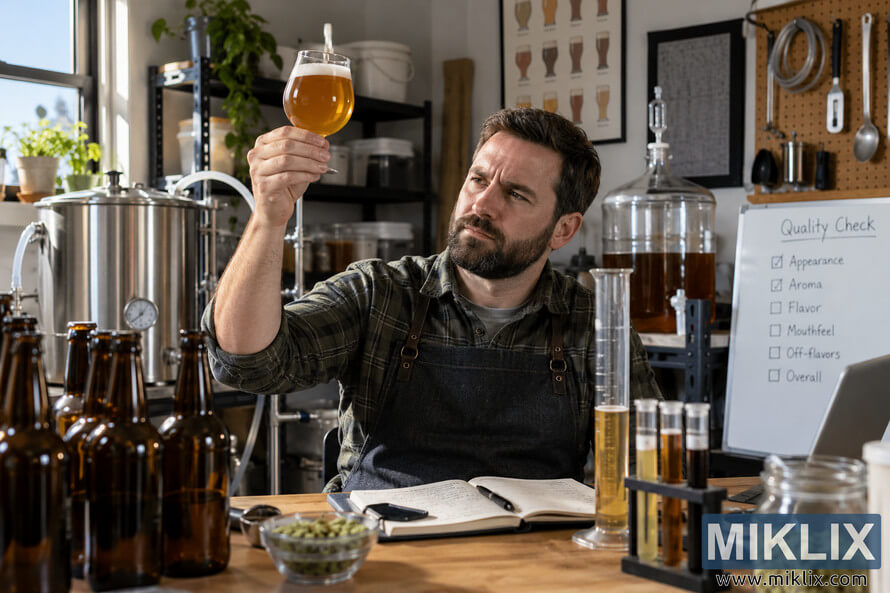
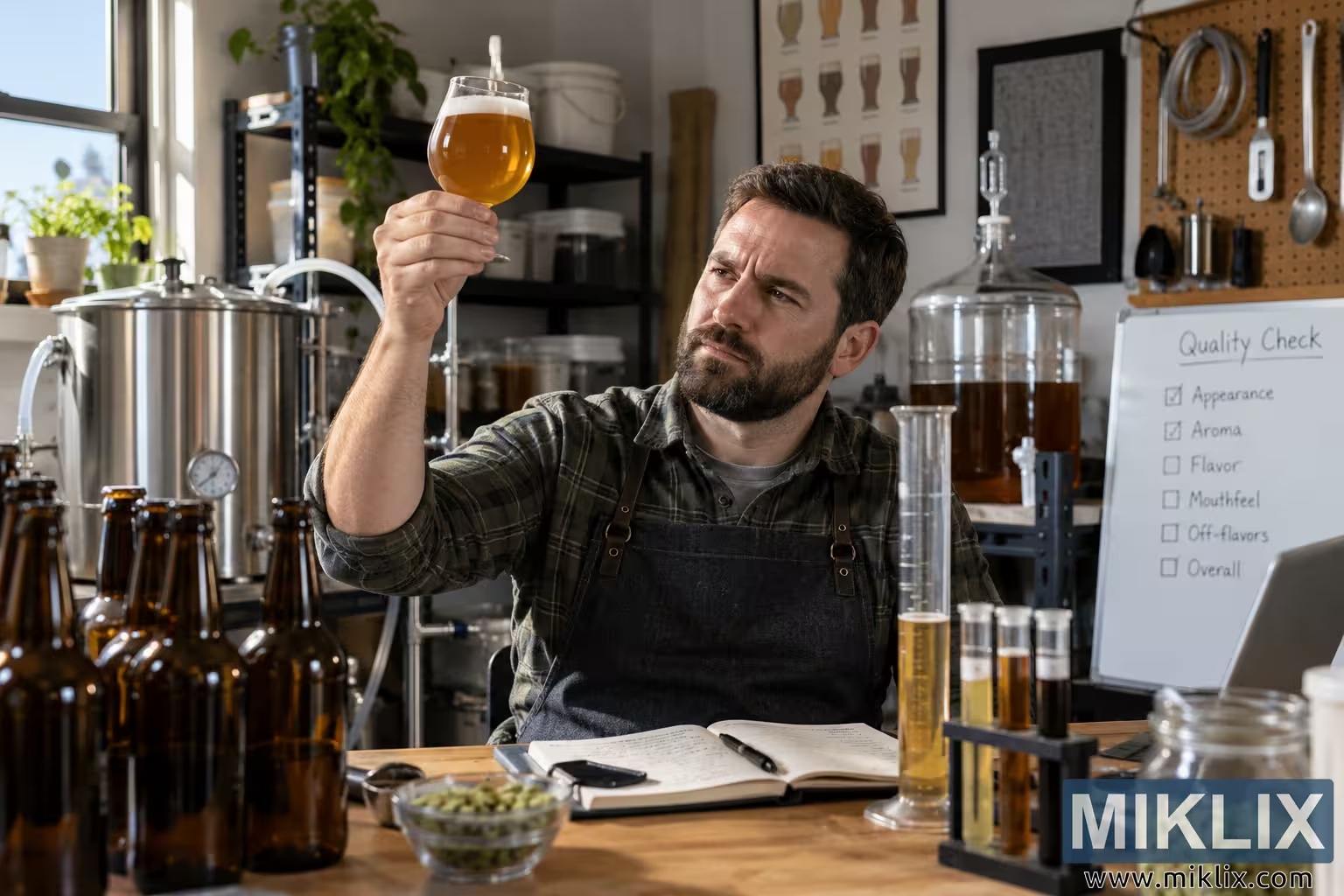
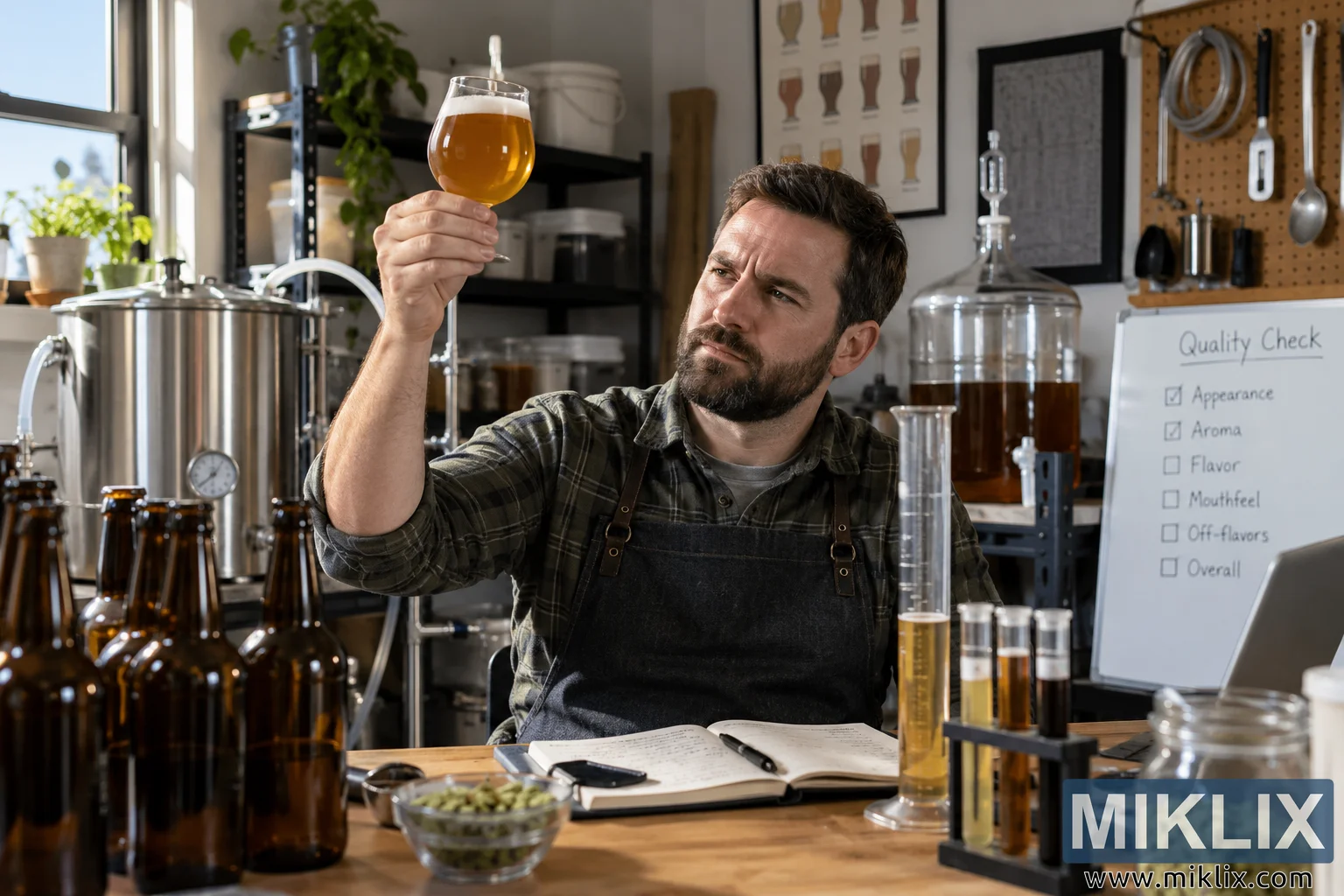
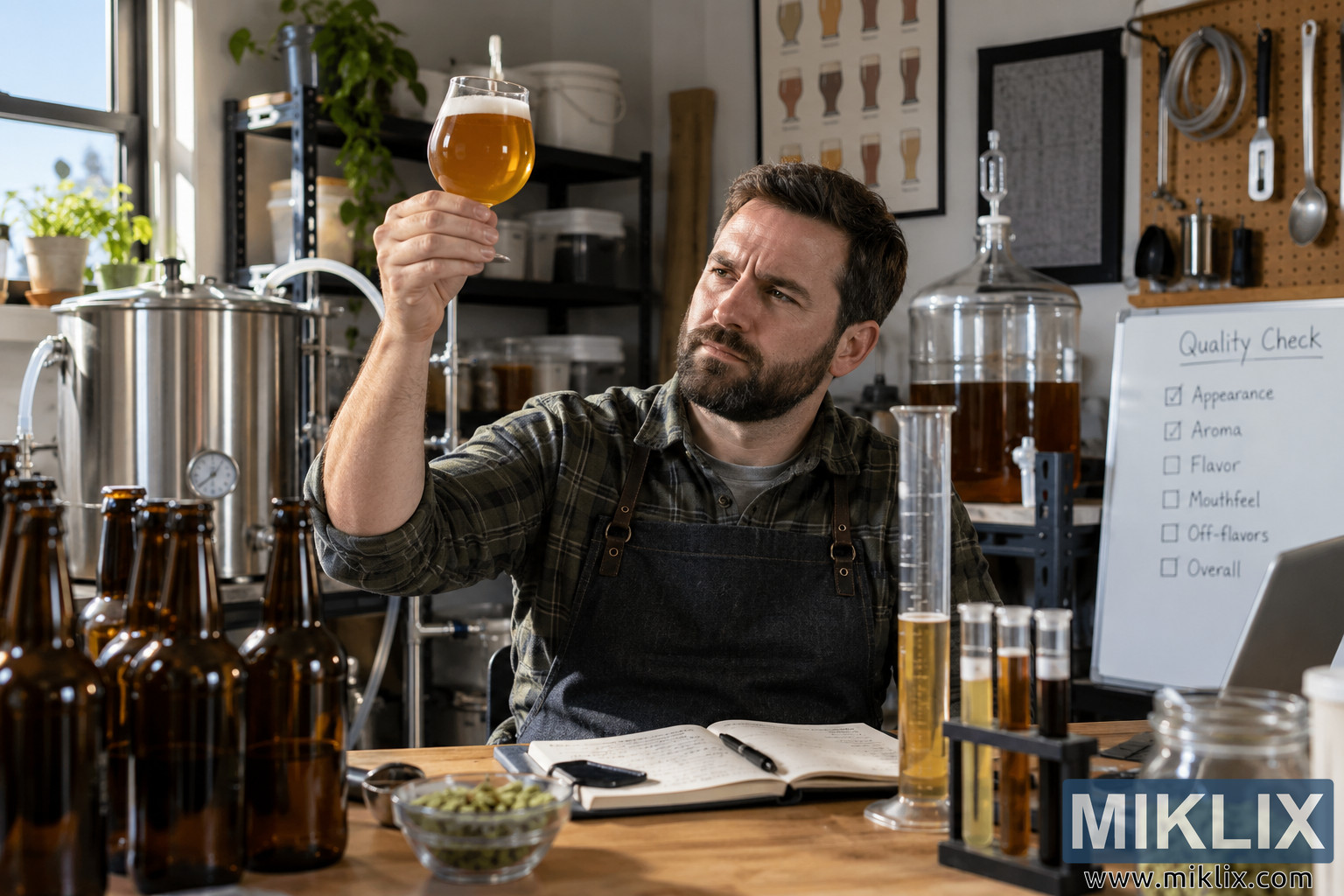
A homebrewer carefully inspects amber beer for quality issues in a workshop equipped with brewing vessels, test samples, hops, notes, and sensory evaluation tools.
Available versions of this image
The image files available for download below are less compressed and higher resolution - and as a result of that, higher quality - than the images embedded in articles and pages on this website, which are more optimized for file size in order to reduce bandwidth consumption.
Regular size (1,536 x 1,024)
Large size (3,072 x 2,048)
Very large size (4,608 x 3,072)
Extra large size (6,144 x 4,096)
Comically large size (1,048,576 x 699,051)
- Still uploading... ;-)
Image description
A realistic, documentary-style landscape photograph depicts a homebrewer carefully analyzing a glass of beer for potential quality issues in a well-equipped home brewing workspace. The central figure is an adult man with short dark brown hair and a neatly trimmed dark beard. He is seated behind a wooden workbench and wears a muted olive and dark gray plaid shirt over a gray undershirt, together with a dark charcoal brewing apron featuring simple brown leather-like shoulder straps. His expression is serious, attentive, and analytical. With one hand, he holds a clear stemmed tasting glass containing a golden amber beer up toward the natural light coming through a large window on the left side of the room. He looks closely through the beer, apparently inspecting its color, clarity, foam retention, haze, carbonation, or other visible characteristics that could reveal a brewing or fermentation problem. A thin layer of pale foam remains at the top of the beer, and the illuminated liquid has a rich golden-orange appearance.
The environment strongly communicates small-scale brewing, experimentation, and quality control. On the wooden work surface in front of the brewer is an open notebook filled with handwritten observations, with a black pen resting across the pages. Nearby are several pieces of equipment and ingredients associated with evaluating and producing beer. A tall transparent graduated cylinder contains a light golden liquid sample, while a black laboratory-style rack holds several narrow test tubes containing liquids of different shades, ranging from pale yellow to amber and very dark brown. These samples suggest that the brewer may be comparing batches, testing characteristics, or investigating possible quality defects. A small transparent bowl containing green hop cones or hop material sits toward the front of the table. Additional brewing ingredients are visible in a clear glass container at the lower right. Several plain brown glass beer bottles occupy the foreground on the left. They have no labels, logos, trademarks, or other brand identification, reinforcing the impression that this is an independent home brewing setup rather than a commercial product display.
Behind the brewer, the workspace contains substantial brewing equipment. On the left stands a large stainless-steel brewing kettle with a fitted lid, attached tubing, and a round analog gauge. Clear flexible hoses curve around the equipment, suggesting liquid transfer between brewing vessels. In the center-right background is a large transparent glass fermentation vessel partially filled with dark amber or brown beer. An airlock is fitted at the top, indicating an active or recently completed fermentation process. Black metal shelving holds additional containers, buckets, and brewing supplies. The arrangement is functional and organized but still has the practical, slightly improvised character of a dedicated home workshop.
The room combines technical brewing details with a warm domestic atmosphere. Daylight enters strongly from the window on the left and illuminates the raised glass, making the beer glow and emphasizing the brewer's visual inspection. A leafy green plant sits near the window and another plant is positioned on shelving, softening the industrial appearance of the stainless steel, glass, and laboratory equipment. The walls are light colored, while dark shelves and equipment provide visual contrast. On the back wall is an illustrated reference chart showing multiple beer glasses or beer samples in a range of colors, from pale gold through amber to deep brown. This reinforces the analytical theme by suggesting that the brewer has visual references available for evaluating beer styles or appearance.
On the right side of the image, a whiteboard titled "Quality Check" provides an especially clear indication of the activity taking place. It contains a checklist of sensory and quality categories including appearance, aroma, flavor, mouthfeel, off-flavors, and overall evaluation. Some of the first categories have been checked while others remain unchecked, suggesting that the brewer is progressing systematically through a quality assessment. A partially visible laptop sits on the work surface near the board, potentially being used for brewing records, recipes, measurements, or reference information. Above this area, a wooden pegboard holds neatly arranged brewing or kitchen tools, including coiled transparent tubing and long-handled utensils.
The composition places the brewer and raised tasting glass at the visual center of the scene, making the act of inspection immediately understandable. His arm creates a strong diagonal line from the workbench toward the brightly illuminated beer, while his concentrated gaze connects his face directly with the sample. Foreground bottles, laboratory samples, brewing ingredients, notebooks, and measuring equipment add depth and provide contextual clues without distracting from the main action. The shallow-to-moderate depth of field keeps the brewer and important quality-control objects crisp while allowing background elements to remain clearly recognizable.
Overall, the image portrays home brewing as a careful, methodical process rather than simply a recreational drinking activity. The brewer appears to be diagnosing or preventing quality problems through visual inspection, sensory evaluation, sample comparison, measurement, and written documentation. The combination of traditional brewing hardware, fermentation equipment, laboratory-style samples, sensory evaluation criteria, and handwritten notes conveys experimentation and attention to detail. Warm natural light and realistic materials give the scene an approachable, authentic feeling, while the absence of visible commercial branding keeps the focus entirely on the homebrewer, the beer, and the process of assessing quality.
The image is related to: Hops in Beer Brewing: Northern Brewer