
Image: Comparing Beer Bitterness Levels: From Low to Very High IBU
Published: October 16, 2026 at 5:44:56 PM UTC
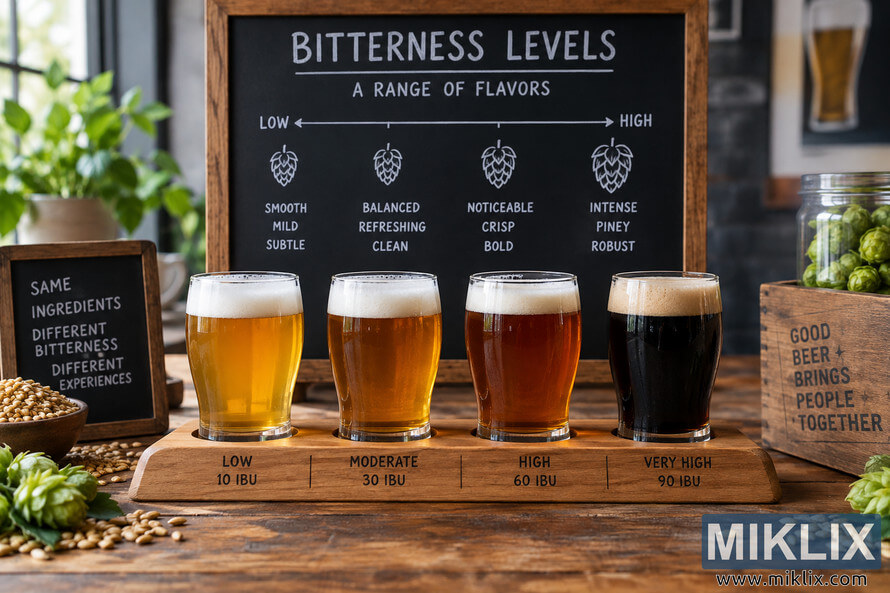
Explore beer bitterness levels with an unbranded four-glass tasting flight ranging from 10 to 90 IBU, accompanied by hops, grains, and sensory flavor descriptors.
Available versions of this image
The image files available for download below are less compressed and higher resolution - and as a result of that, higher quality - than the images embedded in articles and pages on this website, which are more optimized for file size in order to reduce bandwidth consumption.
Regular size (1,536 x 1,024)
Large size (3,072 x 2,048)
Very large size (4,608 x 3,072)
Extra large size (6,144 x 4,096)
Comically large size (1,048,576 x 699,051)
- Still uploading... ;-)
Image description
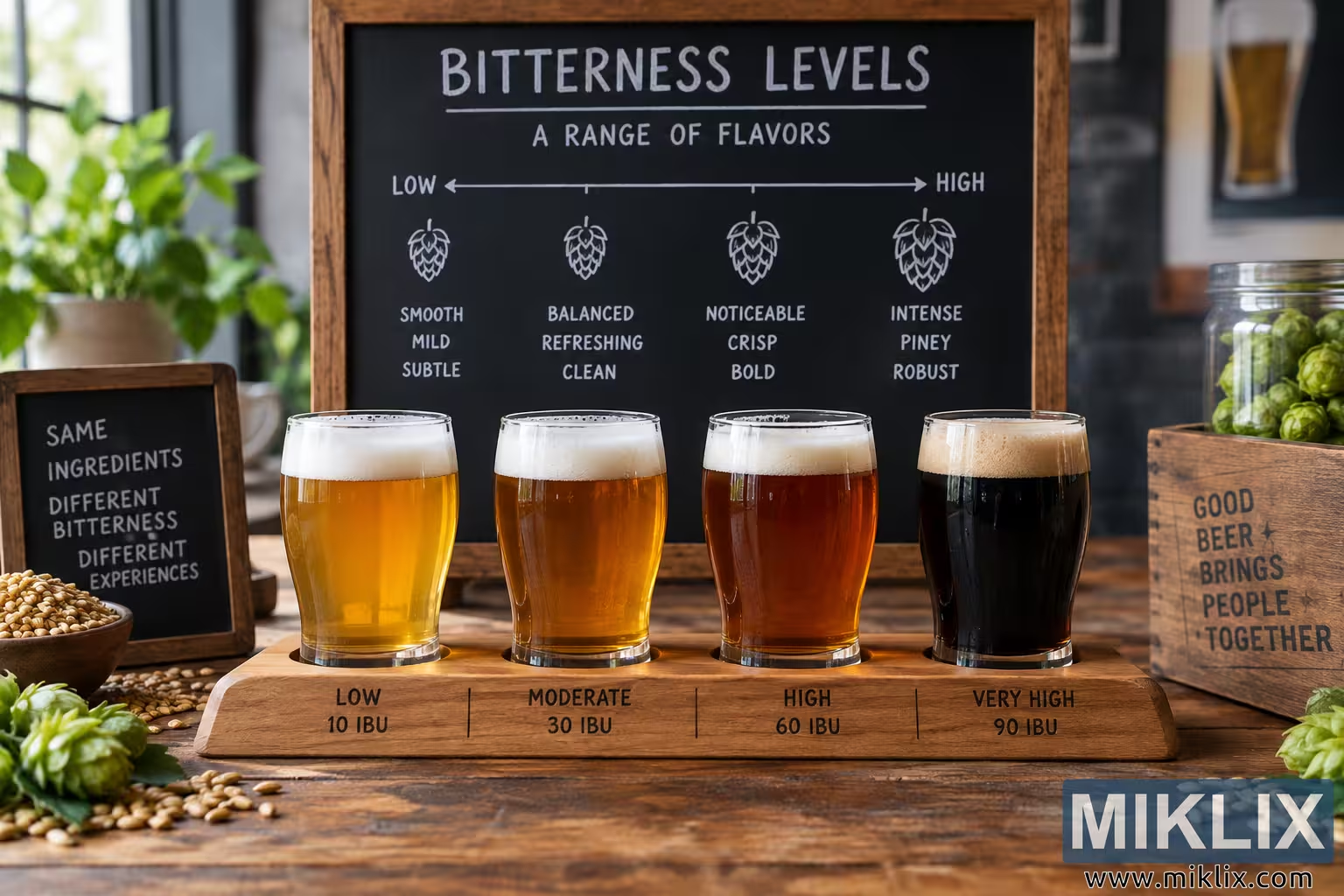
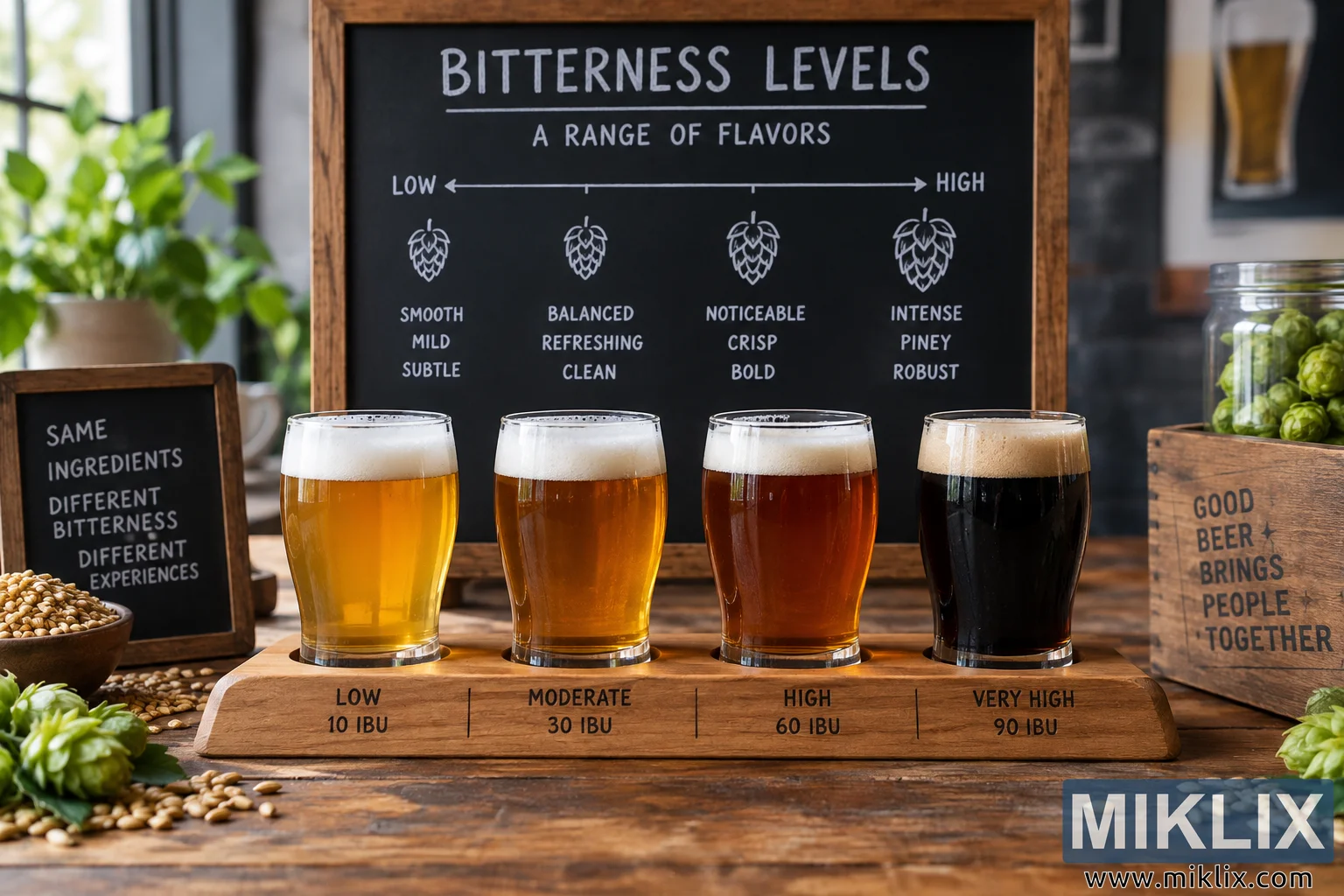
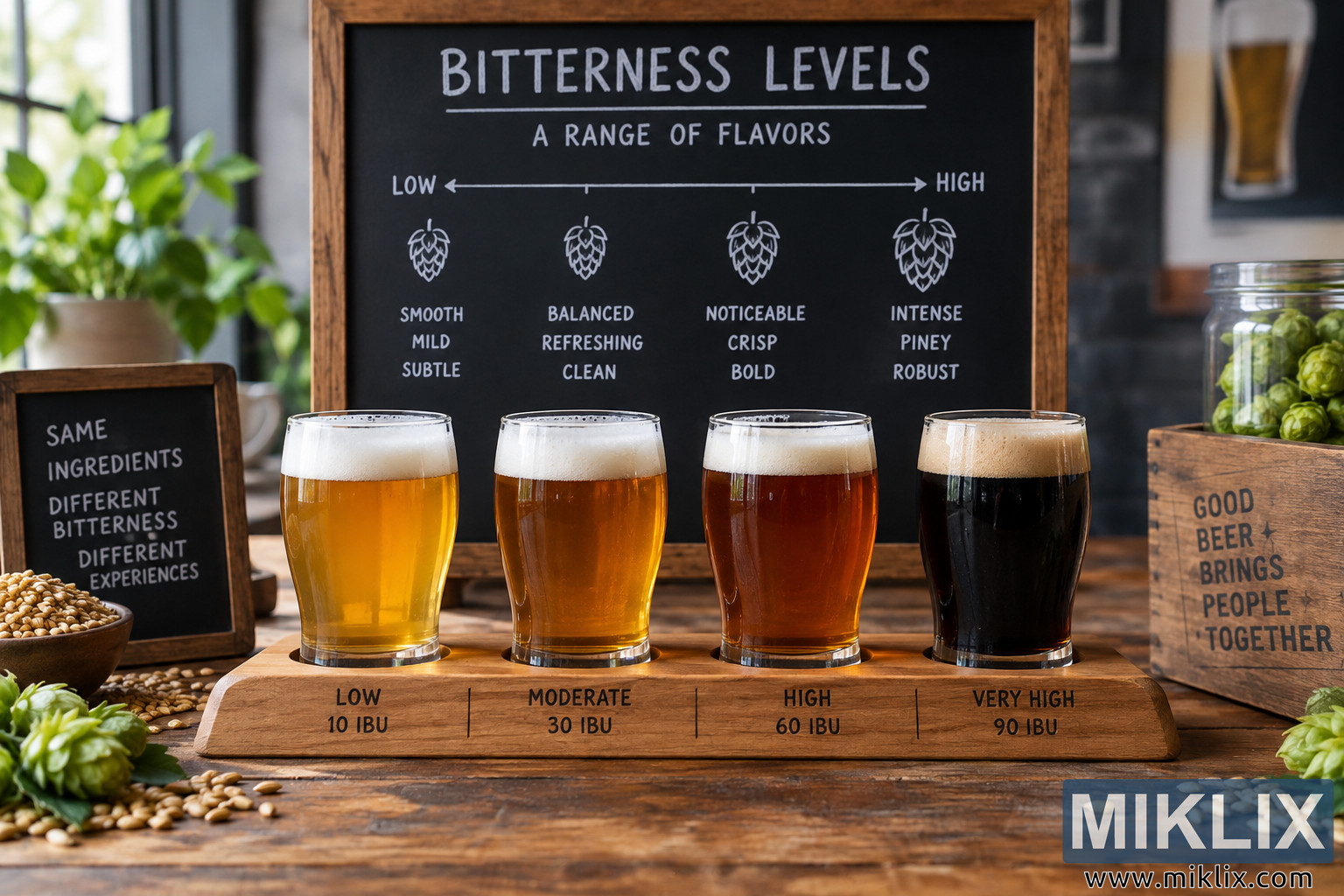
A landscape-oriented, photorealistic image presents an educational beer tasting display designed to compare different levels of bitterness. The scene is arranged on a rustic wooden tabletop in a warm, contemporary brewery or tasting-room environment. At the center of the composition is a wooden tasting flight holding four clear beer glasses positioned in a straight horizontal row. Each glass contains a different-looking beer, progressing visually from a bright golden beer on the left through deeper amber and reddish-brown tones to a nearly black beer on the right. All four glasses have generous, creamy foam heads, giving the beverages a freshly poured appearance. The glasses are similar in shape and size, making the differences in color and apparent style especially easy to compare.
The wooden flight beneath the glasses provides a simple bitterness scale. The first beer, at the far left, is labeled "LOW 10 IBU." It is a luminous golden-yellow color with a thick white head. Next to it is a somewhat darker amber beer labeled "MODERATE 30 IBU." The third glass contains a deeper copper or reddish-brown beer and is labeled "HIGH 60 IBU." The fourth beer, at the far right, is extremely dark brown to black with a tan-colored foam head and is labeled "VERY HIGH 90 IBU." The progression from left to right creates an immediate visual impression of increasing intensity. Although beer color and bitterness are not inherently equivalent characteristics in real brewing, the staged display uses the changing colors as an intuitive visual device for communicating the idea of a spectrum.
Behind the tasting flight stands a large black chalkboard framed in medium-toned natural wood. Written across the top in large white chalk-style lettering is the heading "BITTERNESS LEVELS," followed by the subtitle "A RANGE OF FLAVORS." Beneath this heading, a horizontal line with an arrow runs from "LOW" on the left toward "HIGH" on the right. Four stylized hop illustrations are spaced along the scale, corresponding broadly to the four beers displayed in the foreground. Under the first hop illustration are the descriptors "SMOOTH," "MILD," and "SUBTLE." Under the second are "BALANCED," "REFRESHING," and "CLEAN." The third section uses the words "NOTICEABLE," "CRISP," and "BOLD," while the fourth and most intense section reads "INTENSE," "PINEY," and "ROBUST." These words reinforce the central theme by suggesting how the sensory experience can change as perceived bitterness becomes more prominent.
The surrounding objects contribute to the atmosphere of a small craft brewery without displaying any identifiable commercial branding. On the left side of the table, a smaller framed chalkboard reads "SAME INGREDIENTS DIFFERENT BITTERNESS DIFFERENT EXPERIENCES." A bowl filled with pale brewing grain sits nearby, while loose grains are scattered naturally across the wooden surface. Fresh green hop cones and leaves appear in the lower-left foreground, visually connecting the bitterness theme with hops, one of beer's principal ingredients. A leafy green plant is visible farther back on the left, softly blurred by the shallow depth of field.
On the right side of the composition, a transparent glass jar contains several fresh green hop cones. Beside it is a rustic wooden box bearing the decorative phrase "GOOD BEER BRINGS PEOPLE TOGETHER." Additional hop cones and scattered grains occupy the lower-right foreground. These details frame the central tasting flight and make the scene feel abundant and tactile while preserving a clear visual hierarchy. No recognizable brewery logos, product labels, bottle designs, trademarks, or other actual brands are visible anywhere in the image.
The background is intentionally out of focus, suggesting an inviting brewery, taproom, or tasting space rather than a specific real-world establishment. Dark wall surfaces, wooden trim, and a blurred beer glass or beer-themed decoration can be seen in the distance. Natural light appears to enter from a window on the left, combining with warm interior illumination to create attractive highlights in the transparent glasses. The golden and amber beers glow as light passes through them, whereas the darkest beer absorbs most of the light and provides strong tonal contrast at the right end of the flight.
The photographic treatment emphasizes warmth, craftsmanship, and sensory comparison. The wood grain of the tabletop and tasting paddle is sharply rendered, as are the condensation-free glass surfaces, foam textures, grains, and hops nearest the camera. A shallow depth of field gradually softens the background, keeping attention on the four beers and the educational chalkboard. The composition is symmetrical enough to feel organized but includes scattered natural ingredients and decorative elements that prevent it from appearing overly clinical. Warm brown wood, green hops, golden beer, amber liquid, black chalkboard surfaces, and white lettering form the dominant color palette.
Overall, the image communicates the concept of comparing different beer bitterness levels through a carefully staged tasting flight. The four beers form the primary visual sequence, while the IBU labels provide numerical reference points and the chalkboard adds descriptive sensory vocabulary. Hops and brewing grains establish the brewing context, and the rustic tasting-room setting makes the educational concept approachable and visually engaging. The scene contains no people and instead focuses entirely on the beverages, ingredients, tasting equipment, and explanatory signage. Its wide landscape format leaves ample horizontal space for the four-stage progression, making the image suitable for editorial content, educational material, presentations, websites, or articles discussing beer bitterness, hop character, tasting flights, and the International Bitterness Units scale.
The image is related to: Hops in Beer Brewing: Northern Brewer