
Image: Fresh vs. Faded Hop Character in Beer
Published: October 16, 2026 at 5:44:56 PM UTC
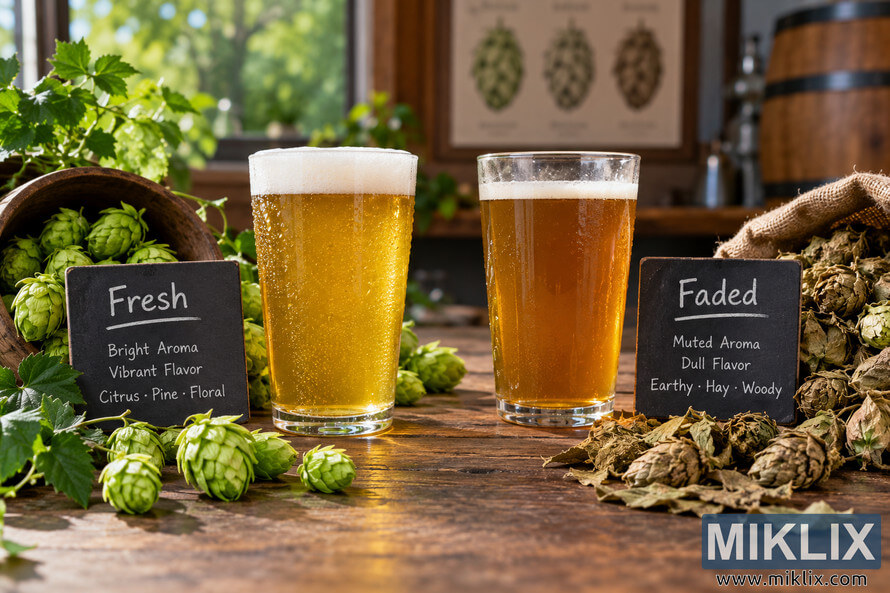
A visual comparison of fresh and faded hop character in beer, contrasting bright golden beer and vivid green hops with darker beer and dried, muted hops.
Available versions of this image
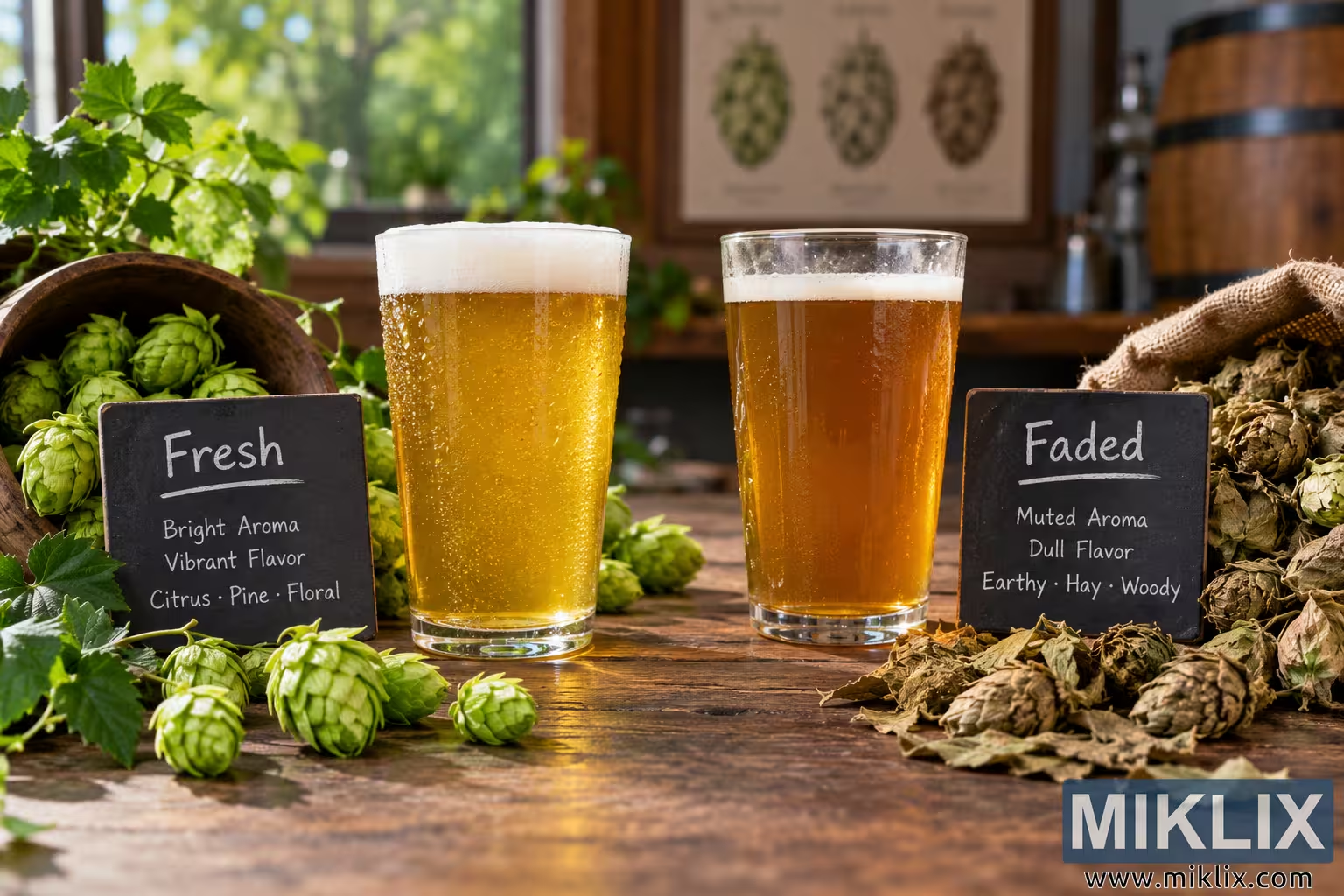
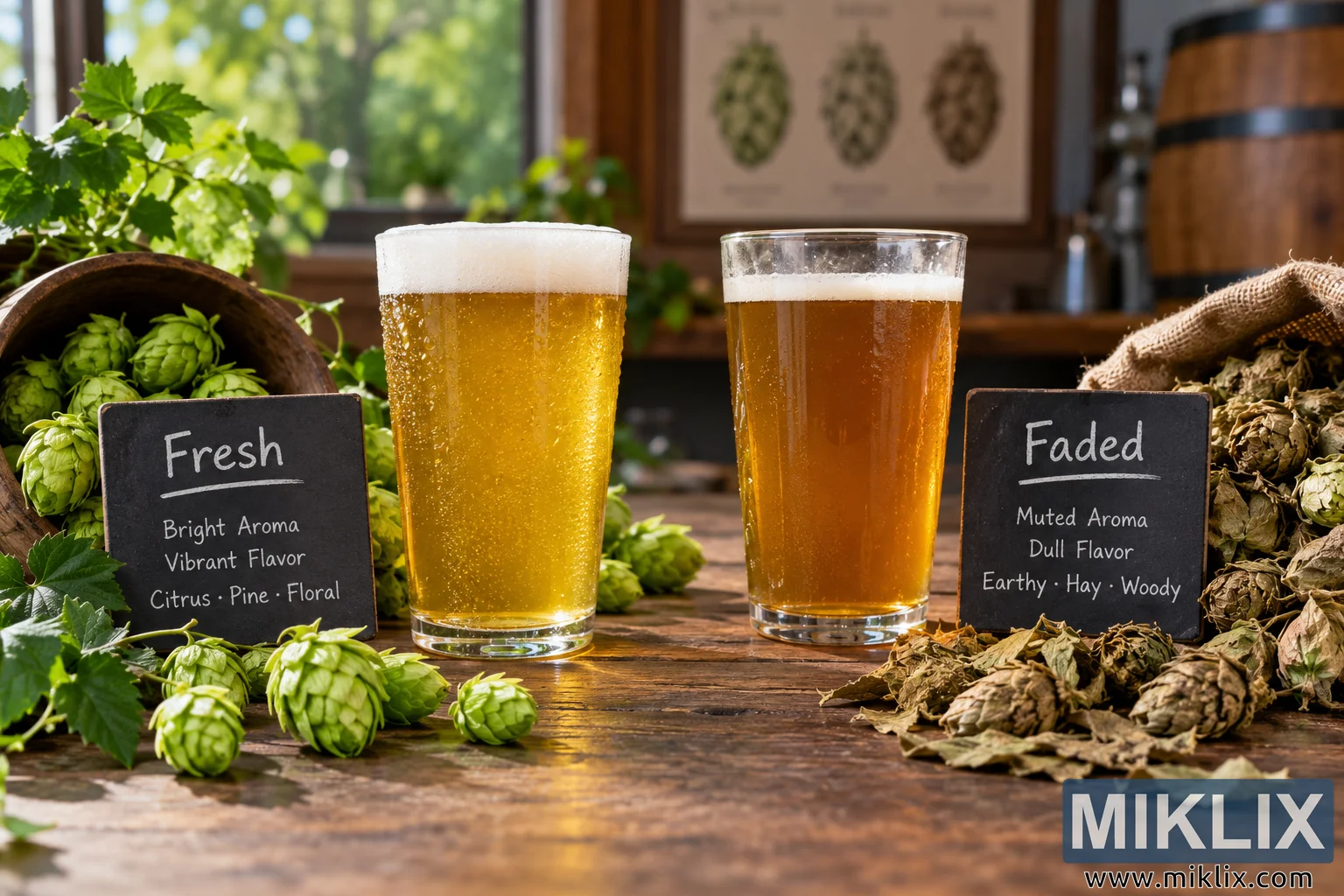
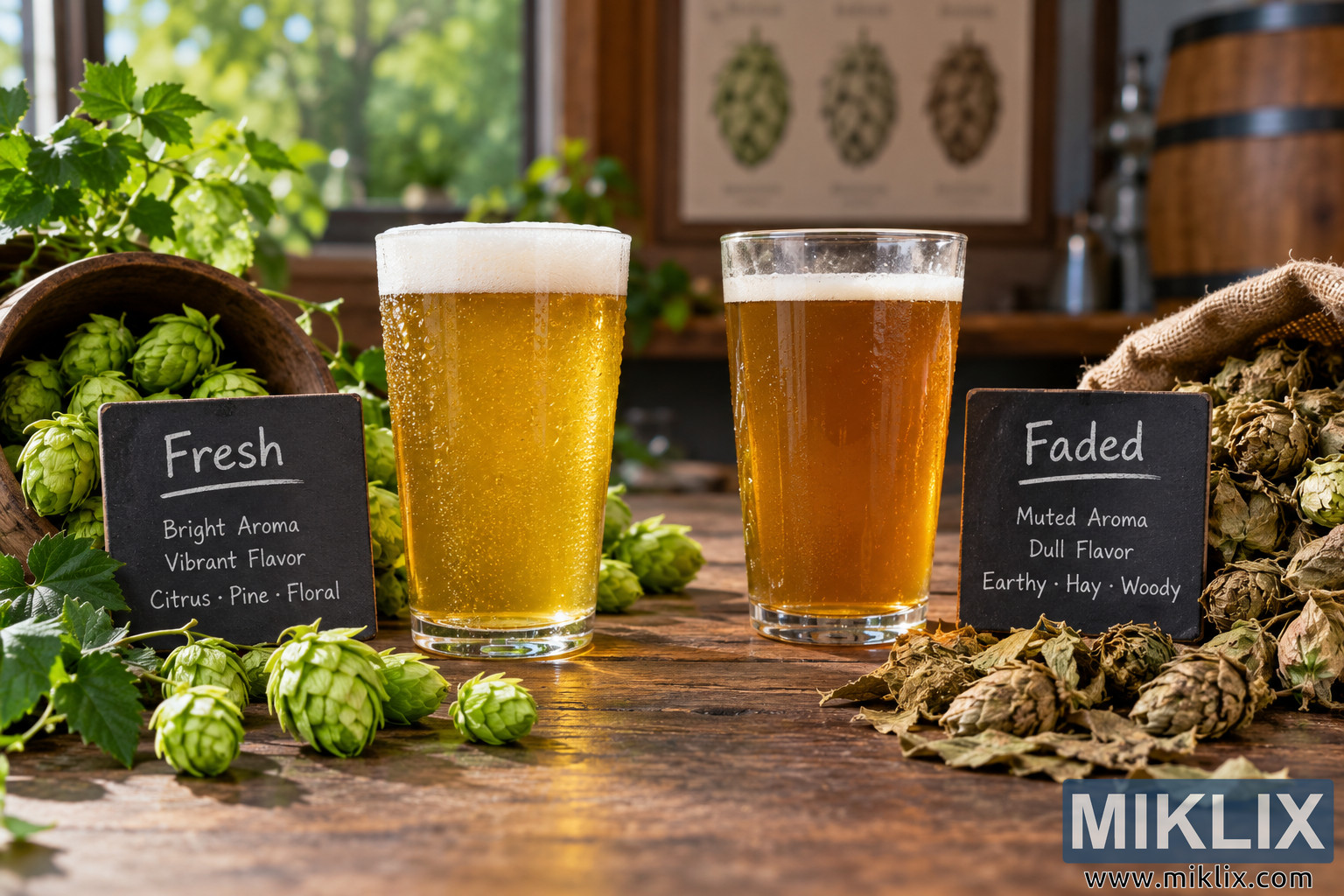
The image files available for download below are less compressed and higher resolution - and as a result of that, higher quality - than the images embedded in articles and pages on this website, which are more optimized for file size in order to reduce bandwidth consumption.
Regular size (1,536 x 1,024)
Large size (3,072 x 2,048)
Very large size (4,608 x 3,072)
Extra large size (6,144 x 4,096)
Comically large size (1,048,576 x 699,051)
- Still uploading... ;-)
Image description
A high-resolution, landscape-oriented still-life photograph presents a clear visual comparison between fresh and faded hop character in beer. The composition is arranged symmetrically across a rustic wooden tabletop in a warm, softly illuminated brewery or tasting-room environment. Two tall, transparent pint glasses of beer form the central focus. The glass on the left represents fresh hop character, while the glass on the right represents faded hop character. Surrounding ingredients, handwritten-style informational signs, differences in beer appearance, and contrasting hop colors reinforce the comparison without displaying any commercial branding.
On the left side, the fresh beer is a brilliant, luminous golden yellow. Light passing through the glass emphasizes its clarity and creates sparkling highlights throughout the liquid. Numerous tiny bubbles are visible rising through the beer, suggesting lively carbonation and freshness. A substantial layer of dense, clean white foam crowns the glass. Small beads of condensation cover the exterior, adding a cool, freshly poured appearance. The glass catches warm reflections from the surrounding environment, making the beer appear particularly bright and inviting.
Beside and around the fresh beer is an abundant collection of vivid green hop cones. Several hops rest directly on the wooden table in the foreground, while additional cones spill naturally from a dark wooden bowl positioned toward the left edge of the scene. The hop cones look plump, intact, and recently harvested, with overlapping pale-green bracts and subtle yellow-green highlights. Fresh green hop leaves and stems frame this side of the image, extending upward toward a sunlit window and reinforcing the impression of vitality, freshness, and aromatic intensity.
A small rectangular black chalkboard stands in front of the fresh hops. Written in casual white chalk lettering is the heading “Fresh,” underlined for emphasis. Beneath it are the phrases “Bright Aroma,” “Vibrant Flavor,” and “Citrus · Pine · Floral.” These descriptors communicate the sensory qualities commonly associated with a vivid, fresh hop impression and visually connect those characteristics with the intensely green hops and bright golden beer positioned immediately behind the sign.
The right side of the composition provides a deliberate contrast. The second pint contains beer with a deeper amber-gold to copper tone. It is noticeably darker and visually more subdued than the beer on the left. Although the liquid remains translucent, it has less of the brilliant golden glow seen in the fresh example. A comparatively thin layer of pale foam rests on the surface, and traces of foam cling lightly around the inner edge of the glass. The overall presentation feels quieter and less lively, helping communicate the concept of diminished hop freshness without suggesting that the beer is necessarily spoiled or unsafe.
Around the right-hand beer is a generous pile of dried and faded hop cones. Instead of vivid green, these hops display muted olive, tan, beige, and brown shades. Their leaves and bracts appear dry, curled, papery, and somewhat brittle. Some cones remain recognizable and intact, while others blend into loose dried leaves scattered across the tabletop. A coarse burlap sack is partially visible behind the pile, contributing additional earthy texture and reinforcing the impression of hops that have aged or lost their original vibrancy.
A matching black chalkboard sign stands beside the faded hops. The heading “Faded” is written prominently in white chalk and underlined. Below it are the phrases “Muted Aroma,” “Dull Flavor,” and “Earthy · Hay · Woody.” The sign mirrors the structure and style of the fresh-side sign, allowing the viewer to compare the two sets of sensory descriptors immediately. The pairing of the signs makes the photograph function not only as an atmospheric beverage image but also as a straightforward educational visualization of how hop character can change as freshness declines.
The wooden table beneath the arrangement has a heavily textured, weathered surface with visible grain, scratches, seams, and variations in warm brown color. Reflections from the beer glasses and sunlight create subtle golden patches across the wood. The foreground is sharply detailed, especially around the hops, glass bases, chalkboards, and dried leaves. Depth of field gradually softens the environment farther behind the main subjects, keeping attention concentrated on the comparison.
In the background, the setting resembles a small craft brewery, hop room, or rustic tasting space. A large window toward the upper left admits warm natural daylight and reveals softly blurred green foliage outside. The greenery produces circular bokeh highlights that contribute freshness and depth without distracting from the central subjects. Behind the beers hangs a framed educational illustration featuring several hop cones in different shades, visually echoing the fresh-to-aged theme. Toward the right side of the background is a large wooden barrel with dark metal hoops, accompanied by indistinct brewing equipment and warm wooden interior surfaces. These details establish a brewing context while remaining deliberately out of focus.
The lighting is warm and naturalistic, with sunlight entering primarily from the left and illuminating the fresh hops and golden beer especially strongly. The left side consequently feels greener, brighter, cooler, and more energetic, whereas the right side contains more amber, brown, beige, and muted olive tones. This color contrast is central to the image's visual storytelling. Rather than relying exclusively on written labels, the photograph uses differences in saturation, texture, beer color, foam, ingredient condition, and lighting to communicate the distinction between fresh and faded hop expression.
The overall composition is balanced and immediately readable: fresh hops and bright beer occupy the left half, while aged-looking hops and darker beer occupy the right half. The two glasses are approximately equal in scale and positioned at similar depths, making direct visual comparison easy. The chalkboards provide concise sensory vocabulary, while the surrounding ingredients give those abstract aroma and flavor concepts a tangible visual identity. No people appear in the scene, and no logos, brewery names, product labels, trademarks, or recognizable commercial brands are visible. The result is a polished, educational beverage photograph that communicates the contrast between vibrant fresh hop character and a more muted, faded hop profile through a combination of beer appearance, hop condition, color, texture, typography, and atmospheric brewery styling.
The image is related to: Hops in Beer Brewing: Northern Brewer