
Image: Beer Off-Flavor Wheel and Sensory Evaluation Guide
Published: October 16, 2026 at 5:44:56 PM UTC
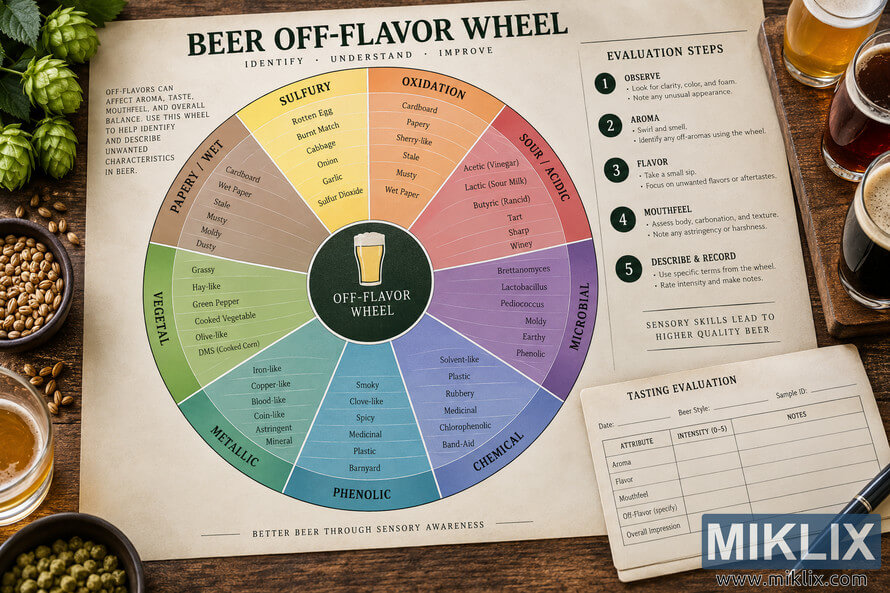
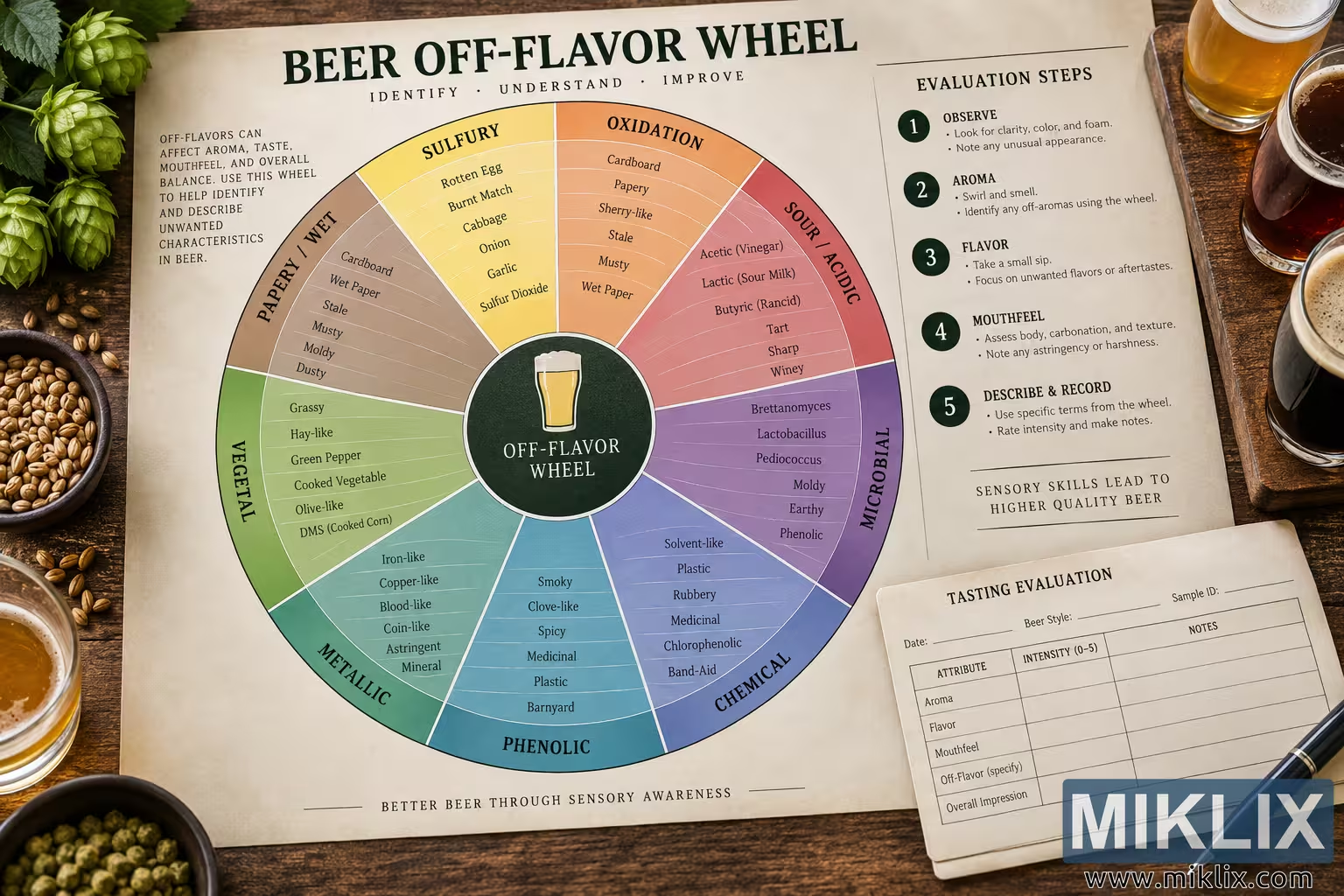
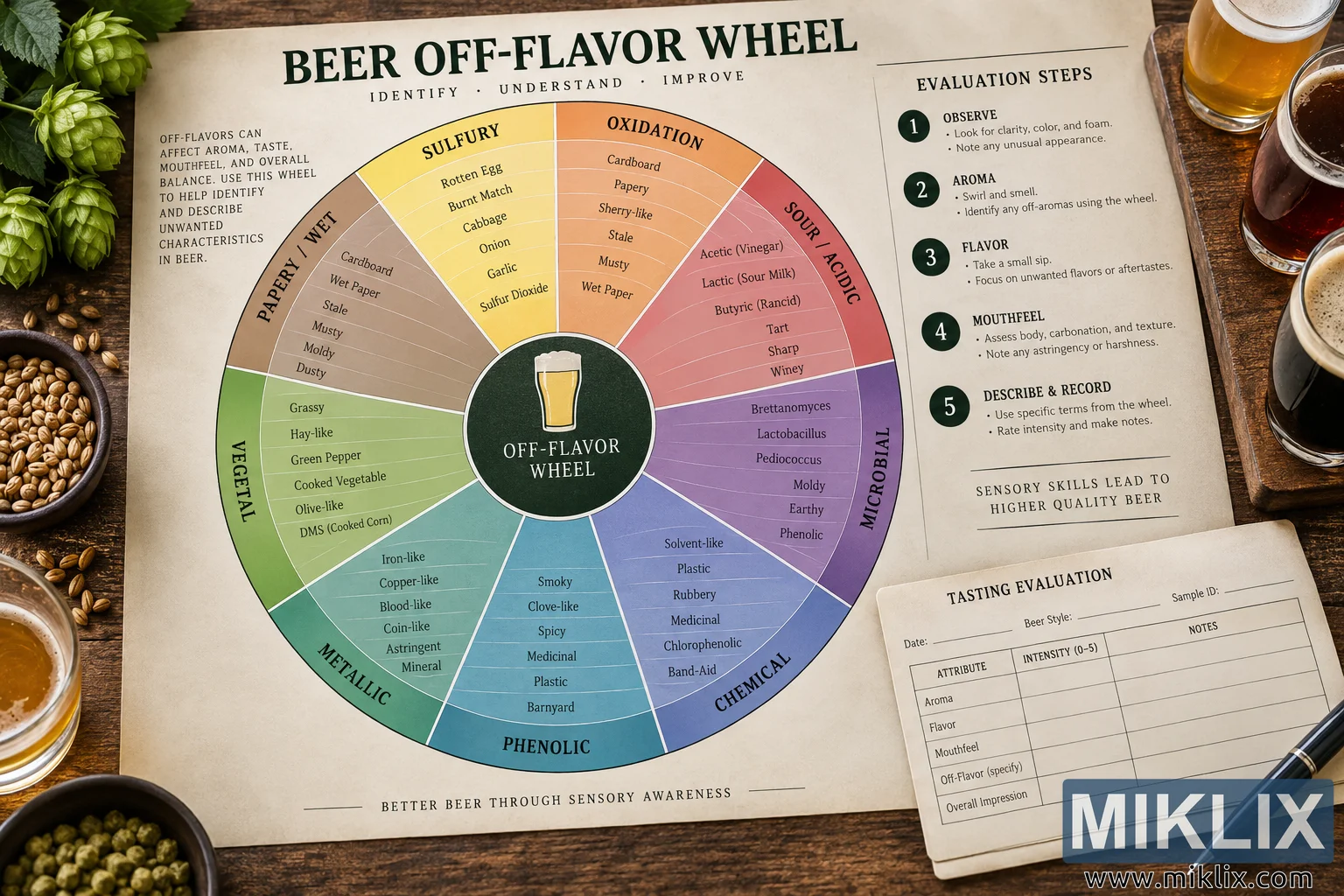
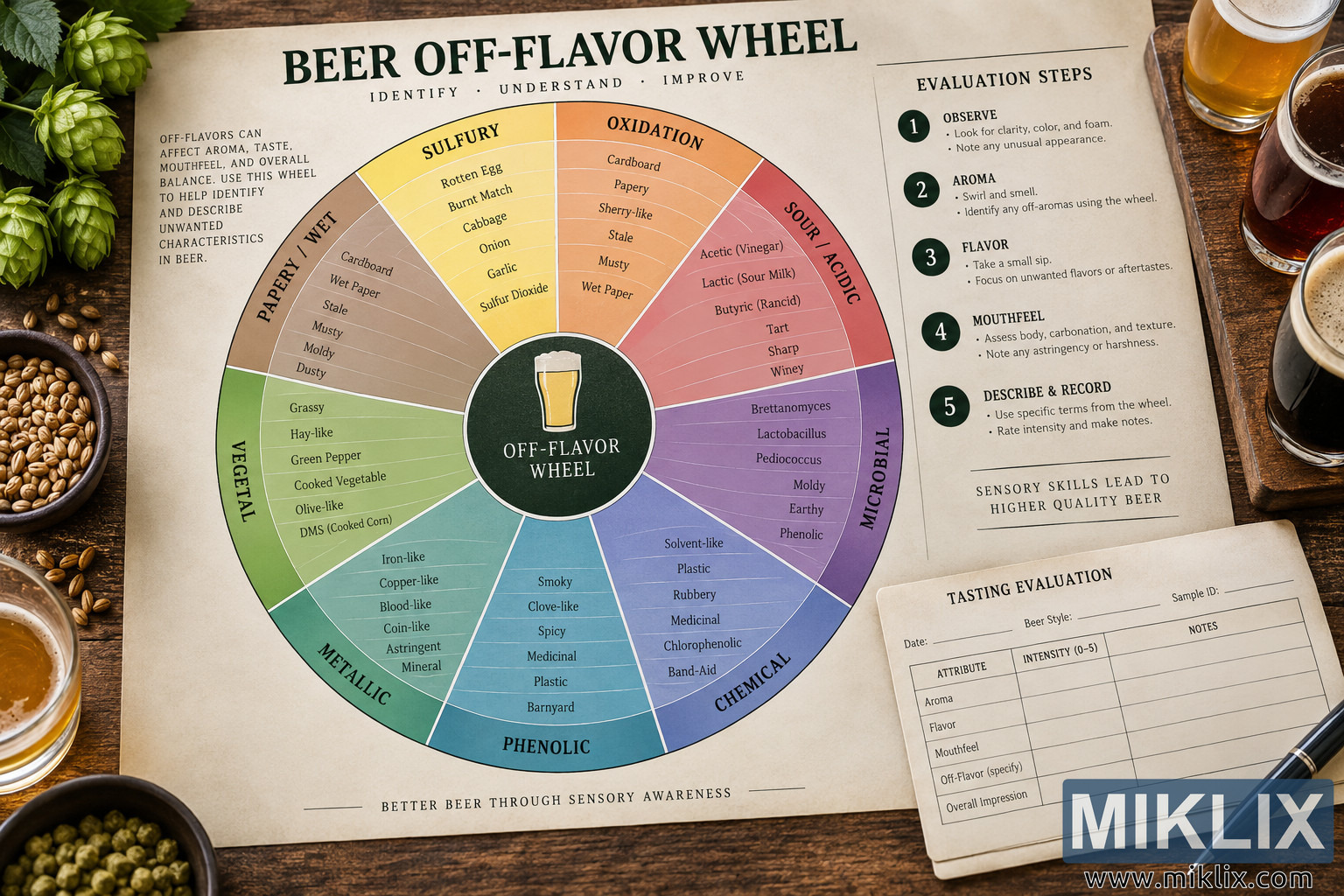
Beer off-flavor wheel and sensory evaluation setup showing color-coded aroma and flavor categories, tasting steps, an evaluation worksheet, hops, malt, and unbranded beer samples.
Available versions of this image
The image files available for download below are less compressed and higher resolution - and as a result of that, higher quality - than the images embedded in articles and pages on this website, which are more optimized for file size in order to reduce bandwidth consumption.
Regular size (1,536 x 1,024)
Large size (3,072 x 2,048)
Very large size (4,608 x 3,072)
Extra large size (6,144 x 4,096)
Comically large size (1,048,576 x 699,051)
- Still uploading... ;-)
Image description
A landscape-oriented, high-resolution editorial-style photograph presents a comprehensive beer off-flavor wheel and sensory evaluation setup arranged on a warm, rustic wooden tabletop. The composition is photographed from directly overhead, giving the viewer a clear view of the educational materials and the surrounding beer-tasting ingredients and glassware. The central visual element is a large cream-colored printed sheet headed “BEER OFF-FLAVOR WHEEL” in prominent dark lettering. Beneath the heading, a short phrase emphasizes the purpose of the chart: identifying, understanding, and improving sensory awareness. The overall design combines the practical appearance of a professional tasting reference with the inviting atmosphere of a craft brewing workshop. No actual commercial beer brands, logos, labels, or recognizable branded products appear anywhere in the image.
The dominant circular flavor wheel occupies much of the left and center of the printed sheet. It is divided radially into multiple color-coded categories representing families of undesirable aromas and flavors that can occur in beer. Each broad category is subdivided into increasingly specific sensory descriptors. Warm yellow tones identify sulfur-related characteristics, including associations such as rotten egg, burnt match, cabbage, onion, garlic, and sulfur dioxide. Orange sections represent oxidation and contain descriptors associated with cardboard, papery, stale, musty, sherry-like, and wet-paper impressions. A red or muted rose section represents sour or acidic qualities, with examples such as acetic or vinegar-like character, lactic or sour-milk notes, butyric or rancid impressions, tartness, sharpness, and wine-like acidity.
Moving clockwise around the wheel, purple sections address microbial characteristics, including references to organisms or sensory impressions associated with Brettanomyces, Lactobacillus, Pediococcus, moldiness, earthiness, and phenolic qualities. Blue-violet areas identify chemical off-flavors and contain terms such as solvent-like, plastic, rubbery, medicinal, chlorophenolic, and adhesive-bandage-like characteristics. A blue-green section focuses on phenolic attributes, including smoky, clove-like, spicy, medicinal, plastic, and barnyard-like impressions. Turquoise-green sections cover metallic qualities, with descriptors such as iron-like, copper-like, blood-like, coin-like, astringent, and mineral. A fresh green section represents vegetal characteristics, including grassy, hay-like, green-pepper, cooked-vegetable, olive-like, and cooked-corn or DMS-related notes. A muted brown-gray section addresses papery or wet characteristics, including cardboard, wet paper, stale, musty, moldy, and dusty impressions. Together, the segments form a visually organized sensory vocabulary intended to help tasters recognize, classify, and communicate undesirable beer characteristics.
At the center of the wheel is a dark circular hub containing a simple generic illustration of a glass of golden beer topped with white foam. The illustration is intentionally unbranded and functions only as a visual symbol for beer evaluation. The surrounding colored segments radiate outward from this center, creating an intuitive hierarchy from broad sensory families to more precise descriptors. Fine dividing lines, restrained typography, and softly saturated colors give the chart the appearance of a carefully designed professional brewing reference rather than a commercial advertisement.
To the right of the flavor wheel is a vertically organized section titled “EVALUATION STEPS.” Five numbered stages guide the sensory assessment process. The first stage focuses on observing the beer, including its clarity, color, foam, and unusual visual characteristics. The second concerns aroma and encourages swirling and smelling the sample while using the wheel to identify undesirable aromatic qualities. The third focuses on flavor, instructing the evaluator to take a small sip and consider unwanted tastes or aftertastes. The fourth addresses mouthfeel, including body, carbonation, texture, astringency, and harshness. The fifth asks the evaluator to describe and record observations using specific sensory terminology and an intensity rating. A short statement beneath the steps reinforces the idea that sensory skills can contribute to higher-quality beer.
A separate tasting evaluation card overlaps the lower-right portion of the main reference sheet. Printed on similarly warm, lightly textured paper, it contains blank fields for information such as date, beer style, and sample identification. A structured table provides rows for aroma, flavor, mouthfeel, specified off-flavor, and overall impression, along with columns for intensity and written notes. A dark pen lies diagonally across the lower-right edge of this card, suggesting that an evaluator is ready to record tasting observations. The form is blank and does not contain personal information or commercial branding.
The educational materials are surrounded by carefully arranged brewing ingredients and beer samples that reinforce the sensory-analysis theme. Fresh green hop cones and leafy hop foliage enter the composition from the upper-left corner. Along the left side are small bowls and scattered kernels of malted grain, with individual grains naturally distributed across the wooden surface. Near the lower-left edge, another container holds green hop material. Several generic, unlabeled beer glasses appear around the perimeter of the composition. They contain beers of noticeably different colors, ranging from pale golden and amber tones to deep brown and nearly black. Some glasses have visible white or tan foam, emphasizing variation among beer styles without referencing any particular brewery or product.
The lighting is warm, soft, and directional, producing gentle shadows around the sheets of paper, bowls, glasses, hops, grains, and pen. The aged wooden table contributes rich brown texture and contrasts with the pale cream paper and colorful flavor wheel. The scene feels tactile and realistic: the paper has subtle natural texture, the grain kernels have visible dimensionality, the hop cones appear fresh and layered, and reflections in the glassware suggest a carefully staged professional photograph. The arrangement balances educational clarity with an artisanal brewing atmosphere.
Overall, the image communicates beer sensory training, quality evaluation, brewing education, and systematic identification of off-flavors. The central wheel functions as the primary informational focal point, while the evaluation instructions and tasting worksheet demonstrate how the terminology might be applied during a structured tasting session. Surrounding ingredients and diverse beer samples provide visual context without introducing actual brands. The final result resembles a polished magazine photograph or training-material hero image designed for an article, brewing course, sensory workshop, quality-control guide, or educational resource about identifying and evaluating undesirable aromas, flavors, and mouthfeel characteristics in beer.
The image is related to: Hops in Beer Brewing: Northern Brewer