
Image: Water Chemistry Testing for Brewing
Published: October 16, 2026 at 5:44:56 PM UTC
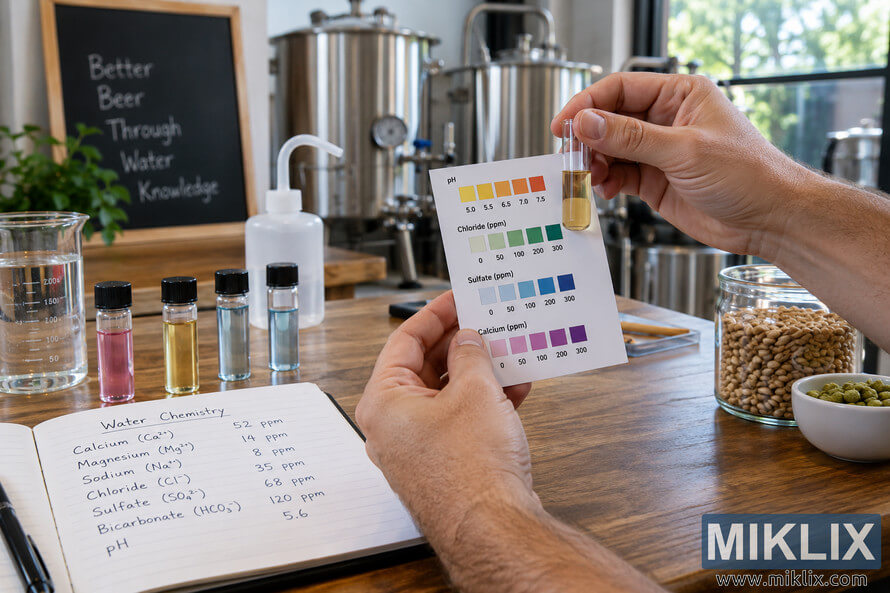
Detailed brewing workspace showing water chemistry testing with a sample vial, pH and mineral reference chart, laboratory glassware, brewing notes, malt, hops, and stainless-steel equipment.
Available versions of this image
The image files available for download below are less compressed and higher resolution - and as a result of that, higher quality - than the images embedded in articles and pages on this website, which are more optimized for file size in order to reduce bandwidth consumption.
Regular size (1,536 x 1,024)
Large size (3,072 x 2,048)
Very large size (4,608 x 3,072)
Extra large size (6,144 x 4,096)
Comically large size (1,048,576 x 699,051)
- Still uploading... ;-)
Image description
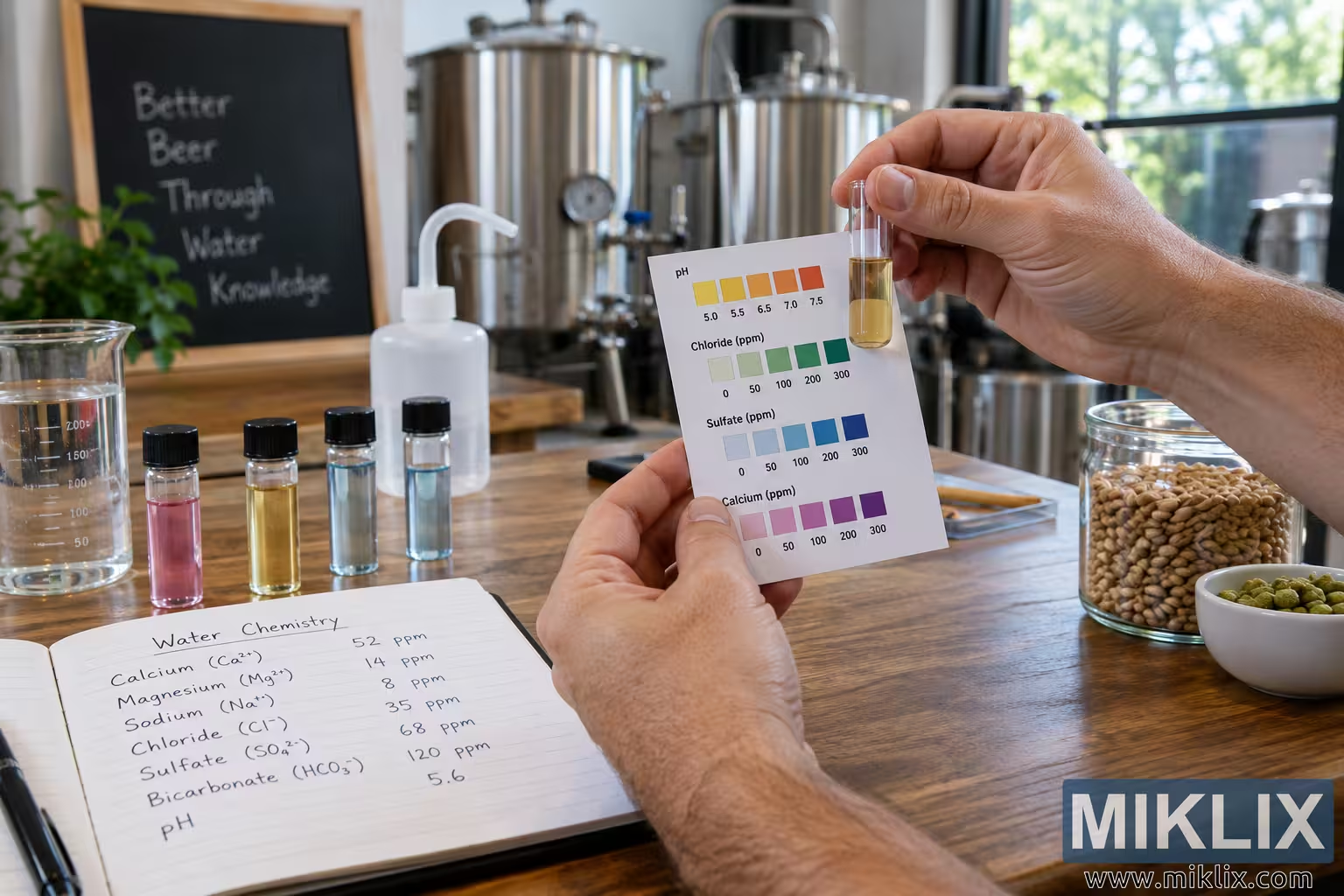
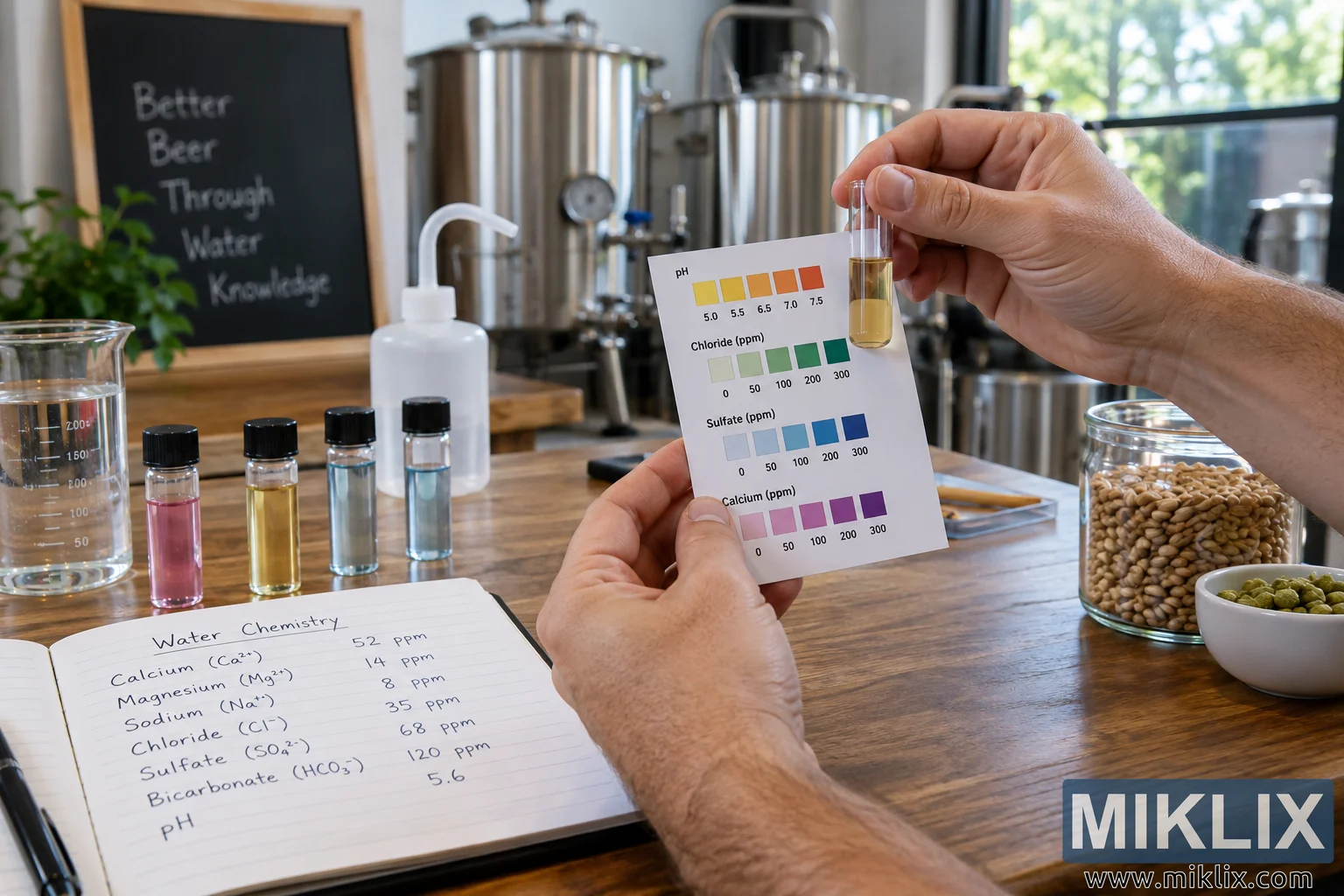
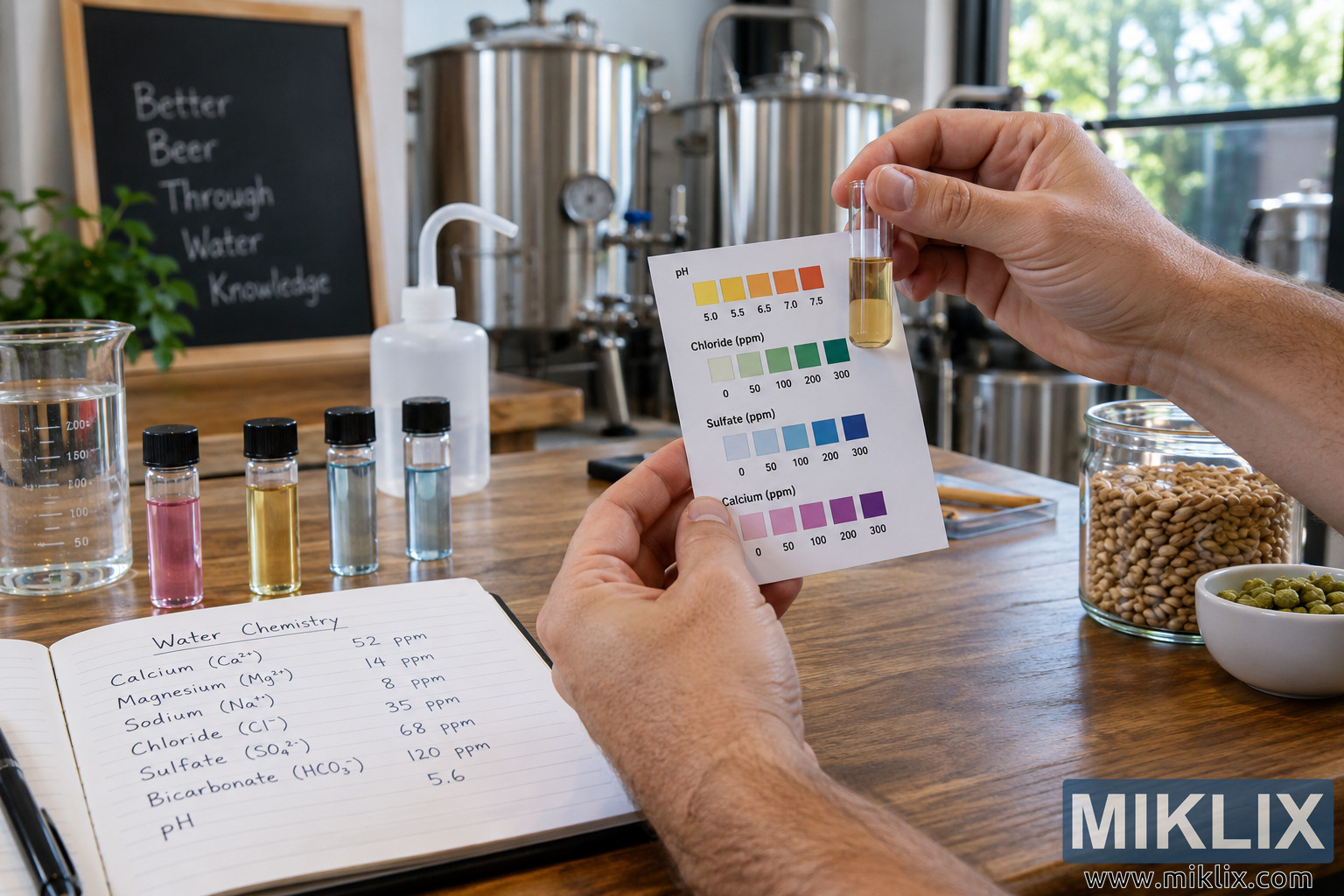
A bright, highly detailed landscape photograph depicts a practical water chemistry testing setup for brewing in a clean, well-equipped home or small-scale brewing workspace. The central focus is on a pair of adult hands performing a visual water test. The right hand holds a narrow transparent glass test vial containing a pale golden-yellow liquid, while the left hand holds a rectangular printed reference card immediately behind and beside the vial. The arrangement suggests that the person is comparing the color of the treated water sample with standardized reference colors in order to evaluate its chemistry before brewing. The reference card is divided into several clearly organized sections. Across the top is a pH scale represented by a sequence of yellow, amber, orange, and reddish color blocks accompanied by numerical values. Below it are additional rows labeled for chloride, sulfate, and calcium concentrations in parts per million. These rows use progressively changing shades of green, blue, and purple, visually communicating different concentration levels. The transparent sample vial overlaps the upper portion of the chart, making the act of color comparison the most prominent element in the composition.
The foreground and surrounding work surface reinforce the analytical brewing theme. A large wooden countertop extends across the image and provides a warm, natural contrast to the stainless-steel equipment in the background. On the lower left lies an open notebook containing handwritten water chemistry notes. The page is headed with the words "Water Chemistry" and includes a list of common brewing-water parameters such as calcium, magnesium, sodium, chloride, sulfate, bicarbonate, and pH. Concentrations are recorded in parts per million beside several of the entries. A dark pen rests near the notebook, suggesting that measurements are being recorded as the testing process progresses. This detail gives the scene the appearance of an active brewing session rather than a staged display of laboratory equipment.
Several small glass testing vials stand upright on the countertop behind the notebook. Each has a dark screw cap, and the vials contain liquids of noticeably different colors, including pink, yellow, pale blue, and nearly transparent blue. Their varied colors imply that multiple chemical parameters or water samples are being evaluated separately. At the far left is a larger transparent laboratory-style beaker filled with clear water. White measurement markings are printed along its side. Slightly farther back sits a plain white plastic wash or dispensing bottle with a curved nozzle. None of the equipment displays a commercial logo or identifiable brand, keeping the setting generic and focused entirely on the brewing and testing process.
On the right side of the countertop, brewing ingredients provide an immediate visual connection between the chemistry work and beer production. A clear glass jar is filled with light tan malted grain kernels, and beside it is a small white bowl containing green hop pellets. The ingredients are positioned close to the testing area but remain secondary to the water sample and reference chart. Their presence explains why the water is being analyzed: the brewer is preparing or adjusting brewing liquor so that its mineral balance and acidity are suitable for a desired brewing process or recipe.
The background contains multiple pieces of polished stainless-steel brewing equipment. Large cylindrical vessels with lids, valves, fittings, tubing, and a round gauge occupy much of the center and right side of the room. Their reflective metal surfaces and functional appearance create the impression of a serious home brewery, pilot brewery, or compact craft-brewing environment. Although the equipment is somewhat softened by depth of field, it remains recognizable enough to establish the setting. No manufacturer names, logos, labels, or other actual brands are visible on the brewing vessels or accessories.
To the left of the brewing vessels is a small framed chalkboard standing on the rear portion of the work surface. Written across it in casual white chalk lettering is the phrase "Better Beer Through Water Knowledge." The message summarizes the educational theme of the scene and emphasizes the importance of understanding water chemistry in brewing. A leafy green plant appears beside and partially behind the chalkboard, introducing a fresh organic element among the technical equipment and wooden surfaces.
Natural daylight enters through a large window in the upper-right background. Outside the window, bright green foliage is visible in soft focus, giving the room an airy and welcoming atmosphere. The daylight produces realistic reflections on the stainless-steel vessels and transparent glassware while illuminating the person's hands, the water sample, and the reference card. The lighting is bright without appearing clinical, combining the precision of laboratory-style testing with the warmth and familiarity of a hands-on brewing workspace.
The photograph uses a shallow to moderate depth of field to establish a strong visual hierarchy. The hands, sample vial, and chemistry reference card are rendered particularly sharply, immediately directing attention to the act of testing brewing water. Nearby objects such as the notebook, test vials, beaker, malt, and hops retain substantial detail, while the larger brewing equipment and outdoor greenery become progressively softer toward the background. The overall composition balances scientific measurement with recognizable brewing materials. Warm wood tones, amber liquid, tan grain, and natural skin tones contrast with cool stainless steel, blue test solutions, and green hops and foliage. The result is an informative and realistic visual representation of water chemistry testing as part of the brewing process, emphasizing measurement, documentation, mineral analysis, pH evaluation, and careful preparation without featuring any actual commercial brands.
The image is related to: Hops in Beer Brewing: Northern Brewer