
Image: Fermentation Problems Affecting Hop Character in Craft Beer
Published: October 16, 2026 at 5:44:56 PM UTC
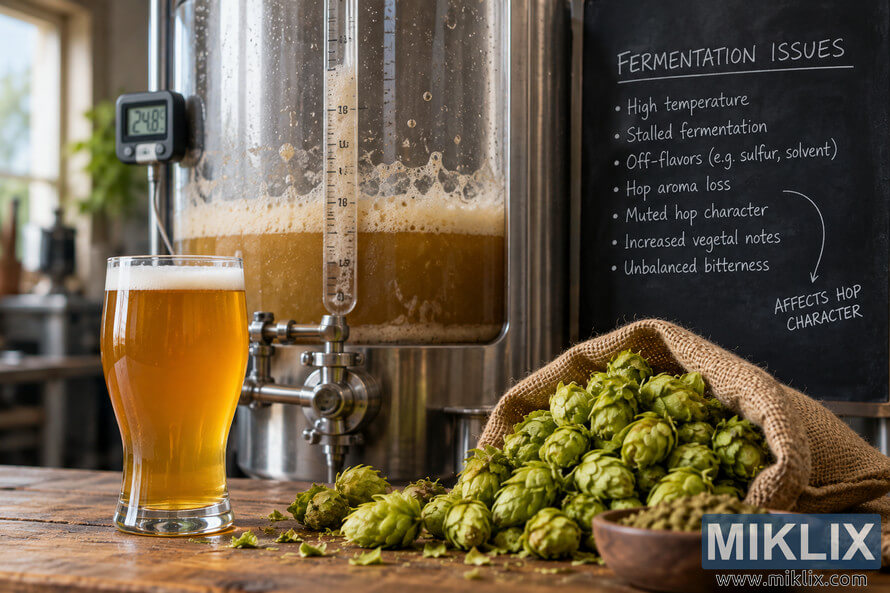
Photorealistic craft-brewing scene illustrating fermentation problems that can affect hop character, including aroma loss, off-flavors, vegetal notes, and unbalanced bitterness.
Available versions of this image
The image files available for download below are less compressed and higher resolution - and as a result of that, higher quality - than the images embedded in articles and pages on this website, which are more optimized for file size in order to reduce bandwidth consumption.
Regular size (1,536 x 1,024)
Large size (3,072 x 2,048)
Very large size (4,608 x 3,072)
Extra large size (6,144 x 4,096)
Comically large size (1,048,576 x 699,051)
- Still uploading... ;-)
Image description
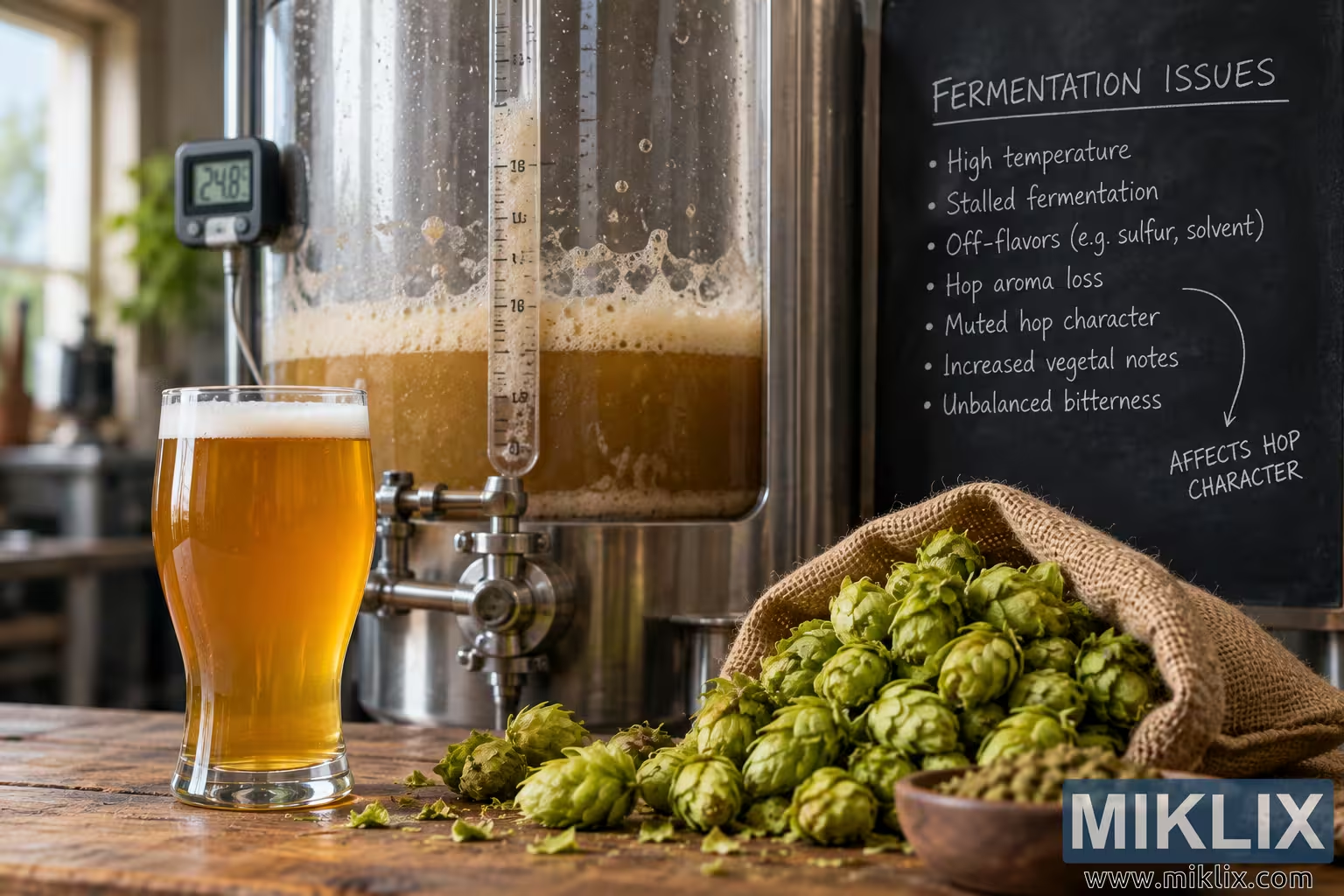
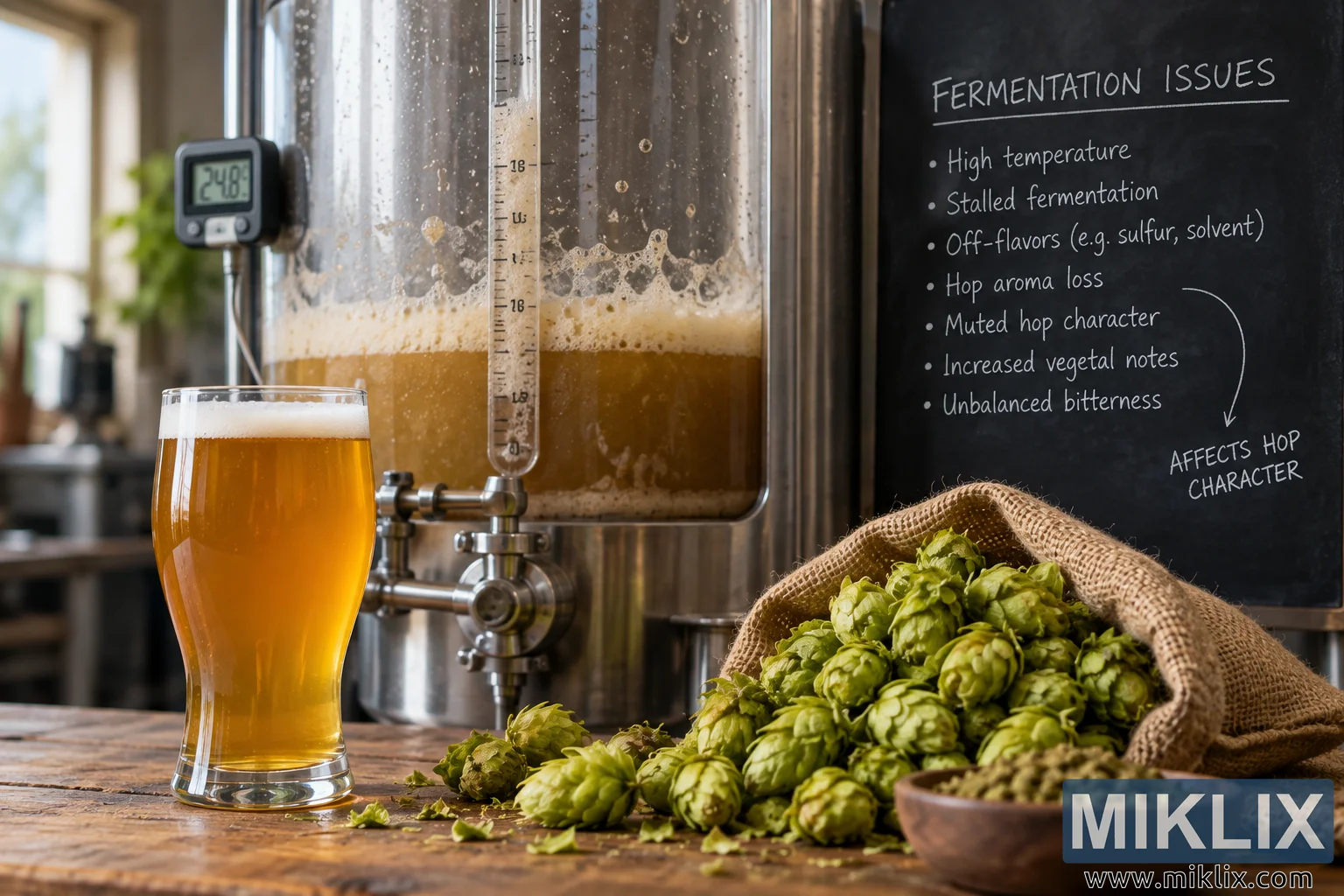
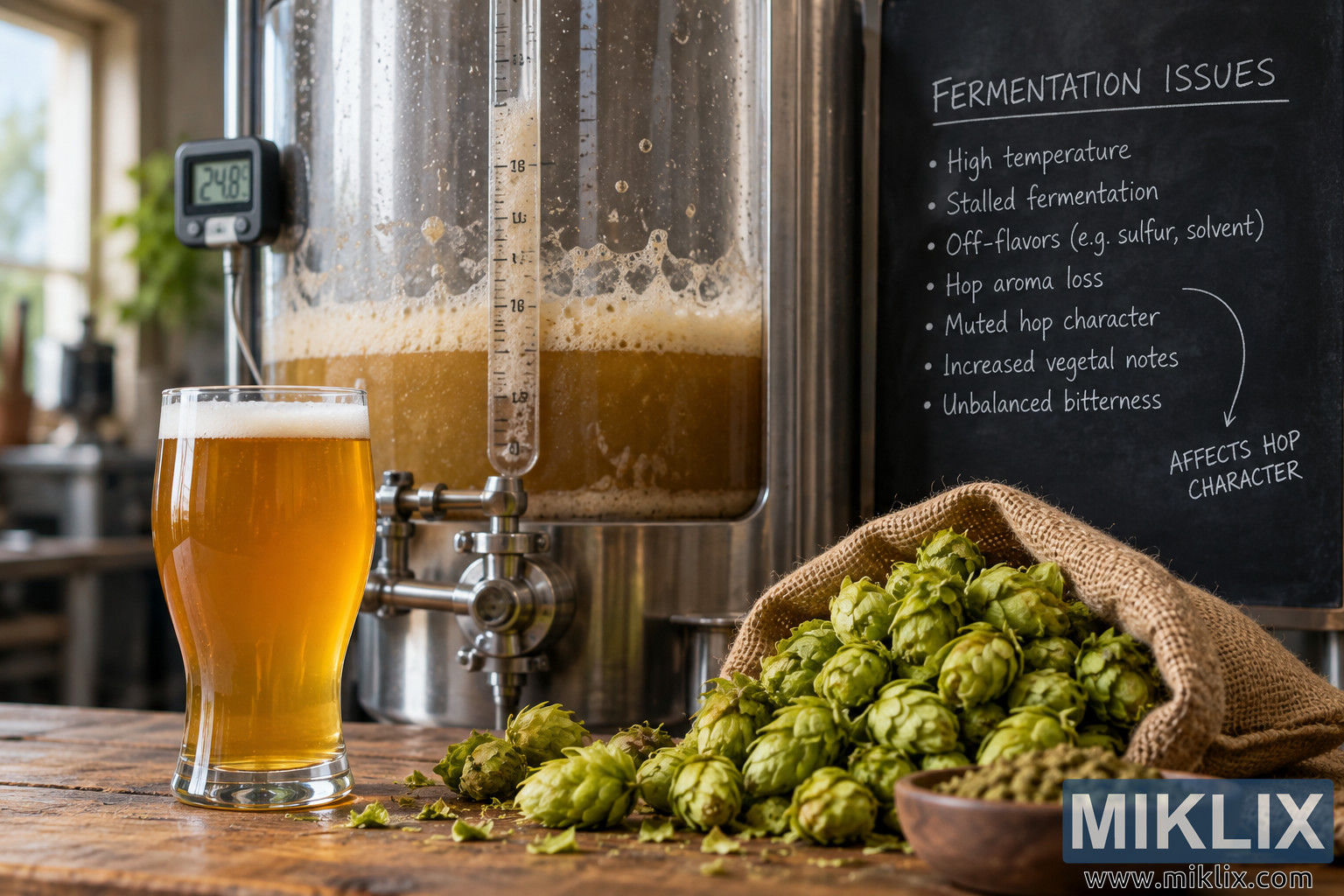
A high-resolution, photorealistic landscape image depicts a craft-brewing environment focused on fermentation problems and the ways they can negatively affect hop character in finished beer. The composition combines brewing equipment, a freshly poured beer, an abundant quantity of green hop cones, and an educational chalkboard to communicate the subject visually. Warm natural light enters the room from the left side of the frame, creating an inviting but technically oriented brewery atmosphere. The lighting produces soft highlights on the stainless-steel equipment, emphasizes the golden color of the beer, and brings out the layered green textures of the hops in the foreground.
On the left side of the image stands a tall, clear beer glass filled almost to the top with golden-amber beer. A compact layer of pale foam rests on the surface. The beer is translucent and warmly illuminated, with subtle reflections visible on the curved glass. The glass sits directly on a rustic wooden work surface whose grain, scratches, joints, and slightly worn finish contribute to the handcrafted brewery setting. The clarity and attractive color of the beer contrast with the technical problems described elsewhere in the scene, visually connecting the final beverage with the fermentation process behind it.
Dominating the center and upper-left portion of the image is a large stainless-steel fermentation vessel. The metallic surface is realistic and slightly reflective, with condensation, droplets, brewing residue, and other small imperfections that make the equipment appear actively used rather than decorative. A visible section of fermenting liquid inside the vessel is cloudy golden-brown, and a thick, irregular layer of pale foam has developed near its surface. This active-looking fermentation reinforces the central theme. Attached to the vessel are polished metal valves, fittings, pipes, and a prominent outlet assembly near the lower section. A vertical measurement device is mounted against the front of the fermenter, while a separate digital temperature display near the upper-left area reads approximately 24.8 degrees Celsius. The conspicuous temperature reading supports the visual suggestion that fermentation temperature is one of the variables capable of influencing beer quality and hop expression.
The foreground on the right is filled with fresh green hop cones. Many of the hops spill naturally from an open coarse burlap sack onto the wooden workbench, forming a dense mound that extends toward the center of the image. Individual cones show detailed overlapping bracts, variations in green coloration, curled edges, and natural irregularities. Several loose hop cones are scattered independently across the table between the sack and the beer glass. Small fragments of hop material are also visible on the wood, strengthening the impression of an active brewing workspace. Near the lower-right corner is a small brown bowl containing additional hop material or pellets. The large quantity of hops makes hop character an unmistakable visual subject and creates a direct connection between the raw aromatic ingredient and the fermentation problems described on the chalkboard.
The right side of the composition contains a large black chalkboard with handwritten white lettering. At the top, the heading reads 'FERMENTATION ISSUES.' Beneath the heading is a list of potential fermentation-related problems and sensory consequences. The listed concepts include high temperature, stalled fermentation, off-flavors such as sulfur or solvent-like characteristics, hop aroma loss, muted hop character, increased vegetal notes, and unbalanced bitterness. A curved hand-drawn arrow leads from the list toward the phrase 'AFFECTS HOP CHARACTER' near the lower-right portion of the board. This visual annotation explicitly connects fermentation management with changes in hop-derived aroma, flavor, bitterness, and overall sensory expression.
The image uses depth of field to keep the primary brewing elements crisp while allowing the distant background to become softly blurred. In the far-left background, indistinct brewery or workshop objects, a bright window, and hints of greenery provide environmental context without competing with the main subjects. The warm wood, golden beer, vivid green hops, dark chalkboard, and cool metallic fermenter create a balanced palette that separates the different informational elements while maintaining a cohesive photographic appearance.
The overall composition functions as both a realistic craft-brewery photograph and a visual explanation of a brewing problem. The beer glass represents the finished product, the hop cones represent the source of desired aroma, flavor, and bitterness, the fermenter represents the biological stage where yeast activity and process conditions can alter sensory results, and the chalkboard summarizes several fermentation issues associated with diminished or distorted hop expression. The prominently displayed temperature reading adds a practical process-control detail, while the cloudy fermenting beer and foam make the scene feel active and authentic. No recognizable commercial branding, company logos, product packaging, or branded brewing equipment is visible. The result is a generic, educational craft-brewing scene illustrating how fermentation problems can contribute to hop aroma loss, muted hop character, vegetal qualities, off-flavors, and an unbalanced perception of bitterness in beer.
The image is related to: Hops in Beer Brewing: Northern Brewer