
Image: Beer Color and Clarity Comparison with Palisade Hop Additions
Published: October 20, 2026 at 5:48:45 PM UTC
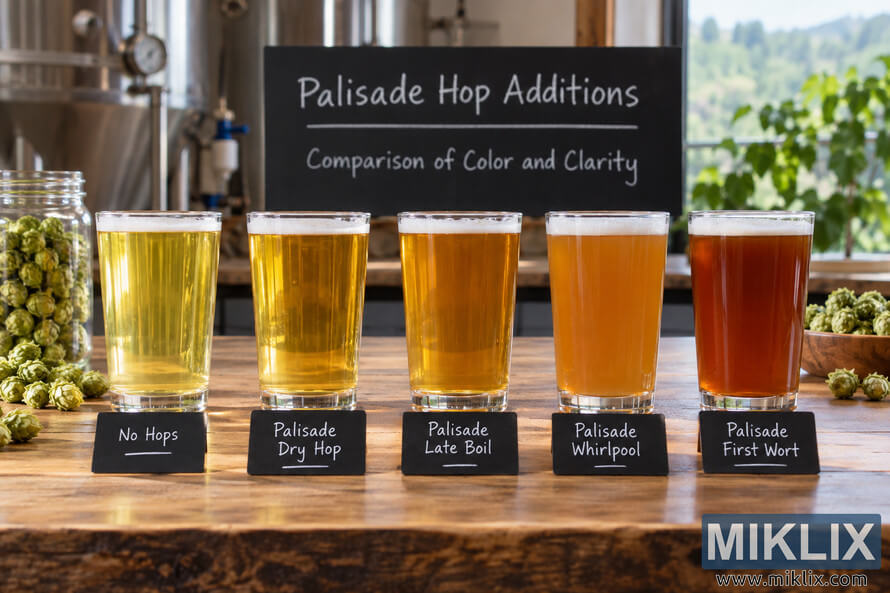
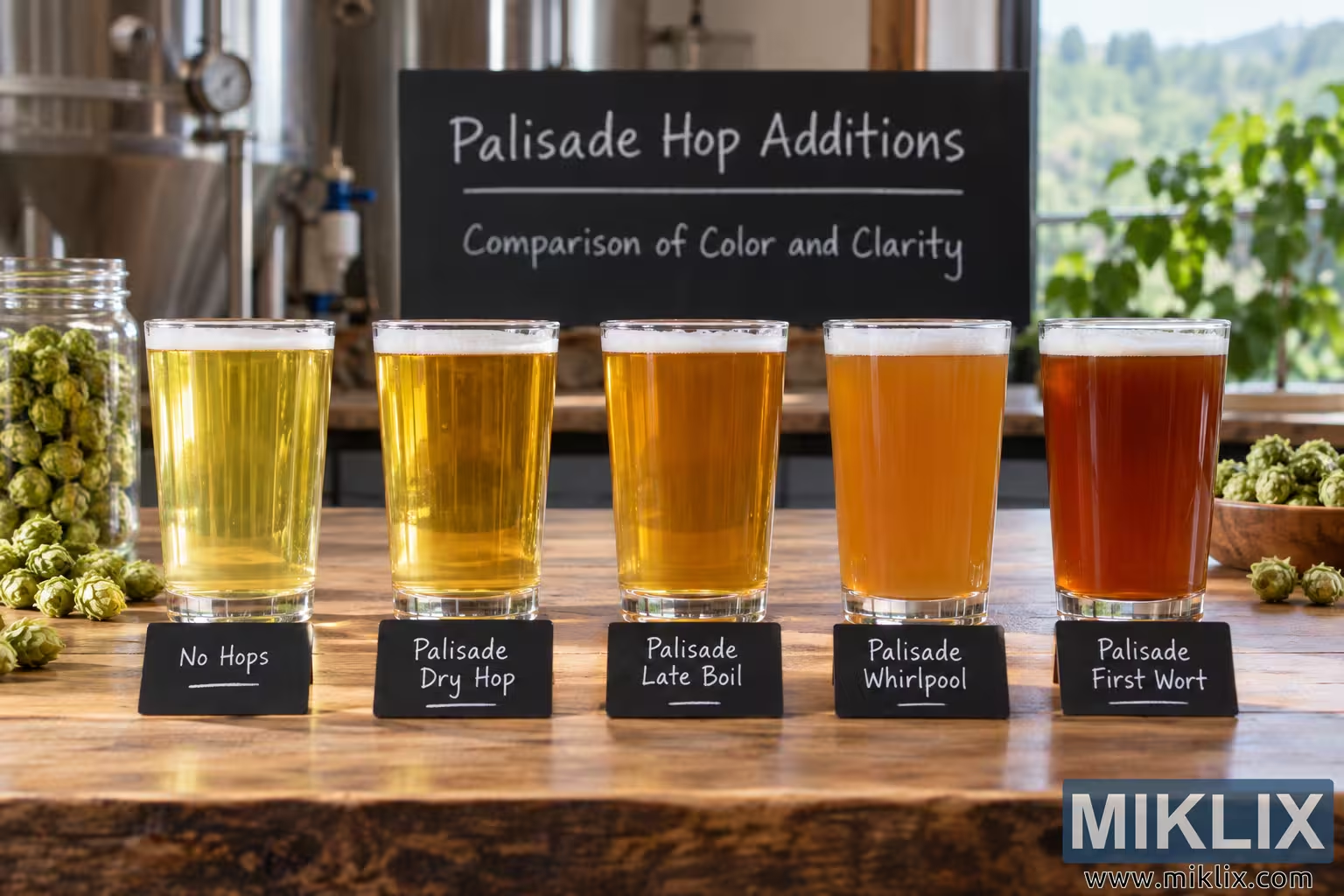
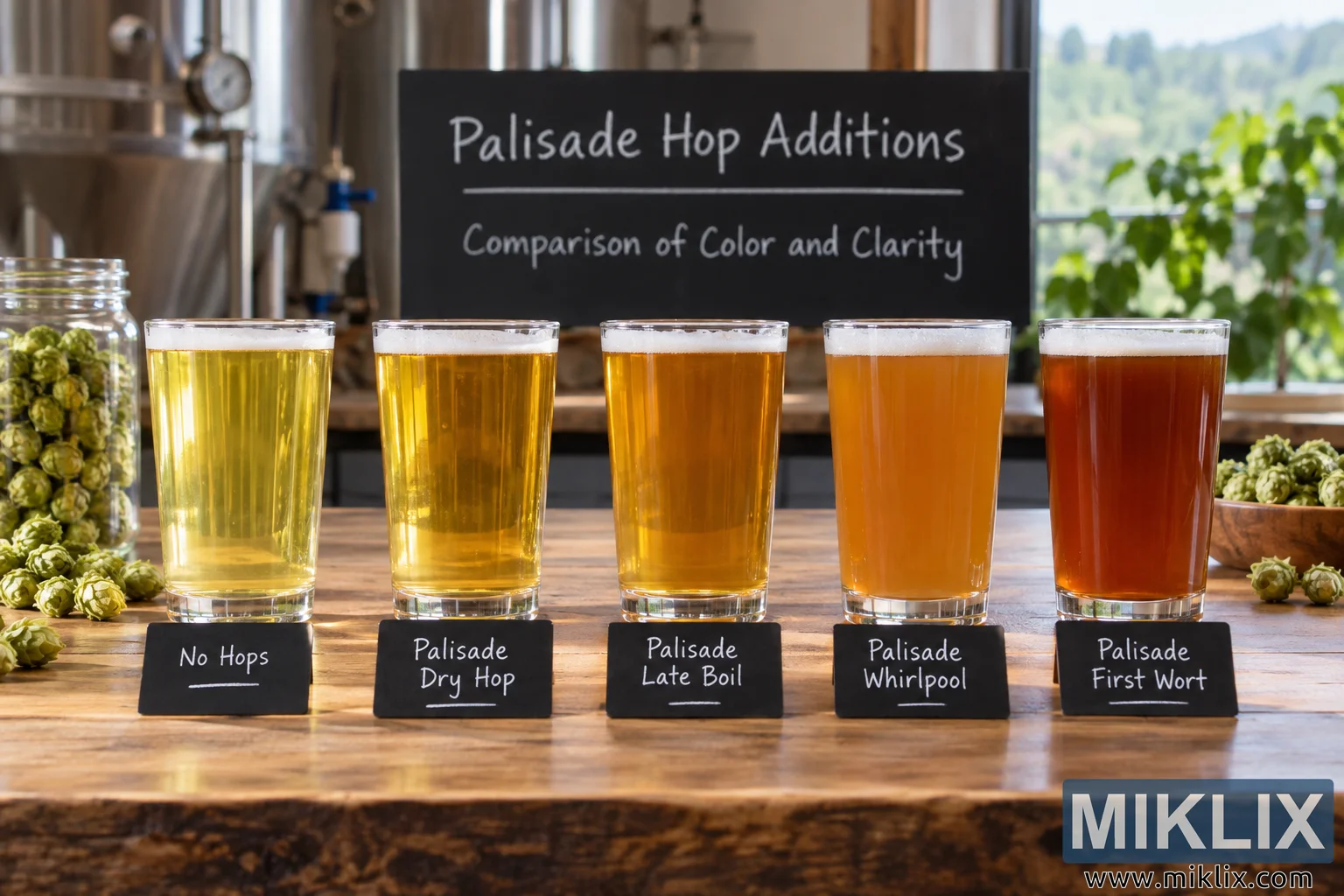
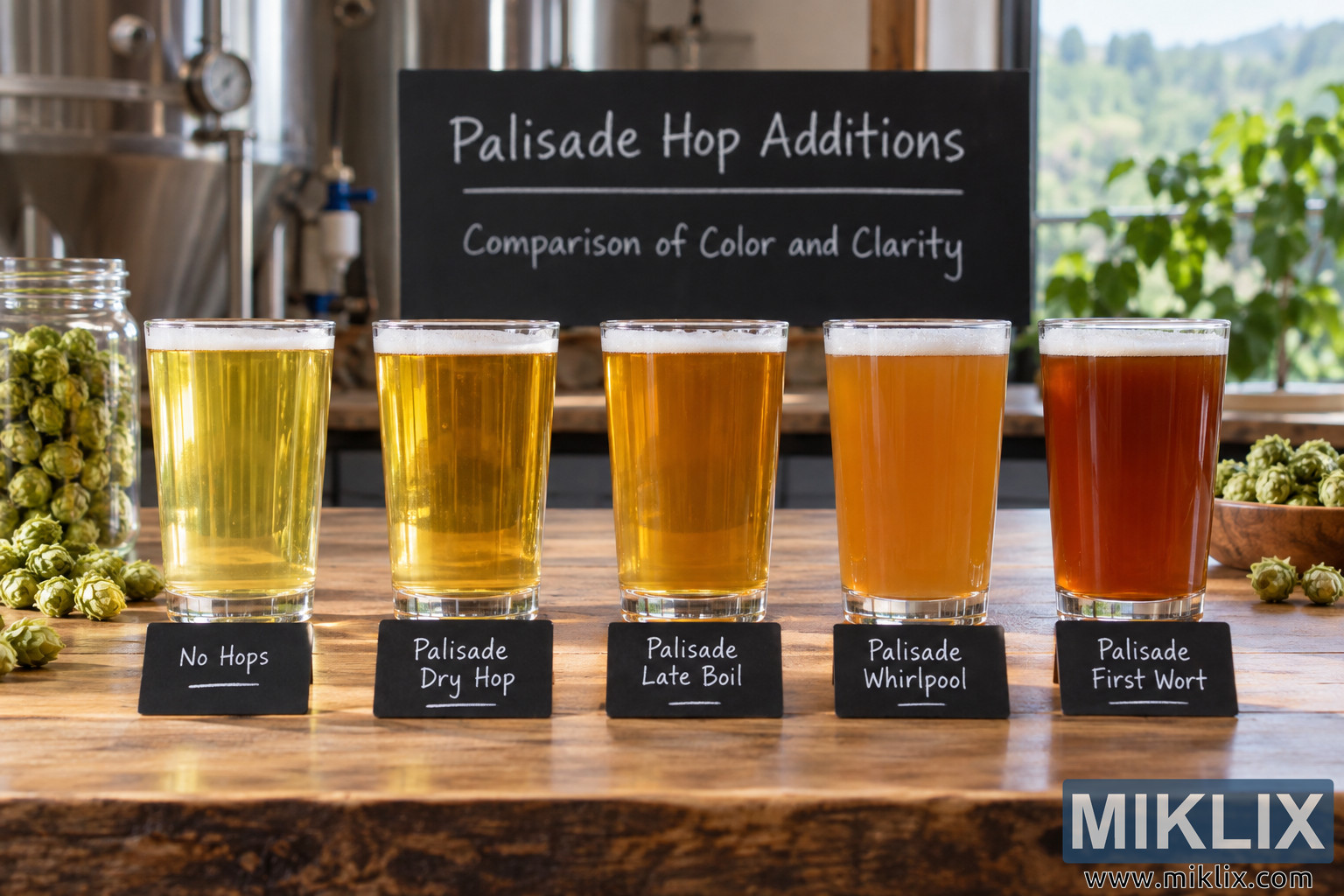
Landscape brewery photograph comparing five beer samples with different Palisade hop additions, highlighting visible differences in color and clarity from pale clear gold to hazy deep amber.
Available versions of this image
The image files available for download below are less compressed and higher resolution - and as a result of that, higher quality - than the images embedded in articles and pages on this website, which are more optimized for file size in order to reduce bandwidth consumption.
Regular size (1,536 x 1,024)
Large size (3,072 x 2,048)
Very large size (4,608 x 3,072)
Extra large size (6,144 x 4,096)
Comically large size (1,048,576 x 699,051)
- Still uploading... ;-)
Image description
A wide, landscape-oriented photograph presents a controlled visual comparison of five beer samples arranged in a straight row across a substantial rustic wooden countertop. The composition is photographed from approximately eye level with the glasses, creating a clear laboratory-meets-craft-brewery presentation in which differences in beer color and clarity are immediately visible. Five matching, straight-sided pint glasses dominate the foreground and middle of the frame. Each glass contains a beer sample with a thin, even layer of pale white foam across the surface. From left to right, the samples progress noticeably in both color intensity and apparent haze. The first beer is a very pale straw-to-lemon yellow and appears exceptionally bright and transparent. Light passes easily through the liquid, emphasizing its high clarity. The second sample is a somewhat deeper golden yellow but remains highly transparent, with a clean, luminous appearance. The third sample shifts further toward a saturated golden-orange or light amber hue and is still relatively clear, although it appears slightly richer and less brilliantly transparent than the first two samples. The fourth beer is distinctly orange and visibly hazier. Its opacity makes the sample look softer and more diffuse, with considerably less background detail visible through the liquid. The fifth and final sample is the darkest of the group, displaying a deep reddish amber to copper-brown color. It also appears comparatively opaque, providing a strong visual endpoint to the progression from pale and clear to dark and less transparent.
Small rectangular black placards with handwritten white lettering stand directly in front of the five glasses. Reading from left to right, they identify the samples as “No Hops,” “Palisade Dry Hop,” “Palisade Late Boil,” “Palisade Whirlpool,” and “Palisade First Wort.” These labels establish the image as a comparison of different hop-addition treatments rather than simply a display of unrelated beer styles. Behind the glasses, a larger horizontal black chalkboard serves as a visual heading for the experiment. Written across it in large white chalk-style lettering is “Palisade Hop Additions,” with a horizontal line underneath. Below that, smaller lettering reads “Comparison of Color and Clarity.” The chalkboard is centered behind the samples and reinforces the educational, experimental character of the scene.
Hop cones are used as contextual props around the beer samples. On the far left, a clear glass jar is filled with numerous green hop cones, while additional loose hop cones are scattered naturally across the wooden counter beside it. On the far right, a shallow wooden bowl contains more green hops, with several individual cones resting on the countertop nearby. The hops have a dry, layered, leafy texture and muted yellow-green coloring, making their botanical form recognizable while keeping attention focused on the beer samples. No commercial beer labels, brewery logos, product packaging, or other actual brand identifiers are visible anywhere in the scene.
The background depicts a small-scale brewing environment and is intentionally rendered with a shallow depth of field. Large stainless-steel brewing vessels occupy much of the left side, including polished cylindrical metal surfaces, pipework, fittings, and a round pressure or temperature gauge. These industrial brewing elements are softly out of focus, providing authentic context without competing with the glasses in the foreground. Toward the right side of the background is a large window admitting abundant daylight. Through the softly blurred window, green vegetation and a bright outdoor landscape can be seen. A leafy indoor plant sits near the window, adding another natural green accent that visually echoes the hop cones.
Lighting is warm, bright, and directional, resembling natural daylight entering from the right and rear of the scene. The illumination creates attractive highlights along the rims and vertical sides of the glasses and makes the differences in transparency especially easy to evaluate. Reflections and refractions are visible in the clear glass bases, while the wooden surface picks up warm golden highlights beneath the samples. The paler beers glow where light travels through them, whereas the hazier orange sample and dark amber sample absorb and diffuse more of the light. This treatment makes clarity and color the central visual variables in the photograph.
The countertop itself has pronounced natural wood grain, knots, tonal variation, and a thick live-edge-like front face, contributing a handcrafted brewery or tasting-room atmosphere. Its warm brown coloration complements the gold, orange, and amber tones of the beer. Despite the rustic surroundings, the five glasses are carefully aligned and evenly spaced, giving the comparison an orderly, quasi-scientific quality. The repeated glass shape controls the presentation visually so that changes in the liquid are easier to compare from one sample to the next.
Overall, the photograph combines the visual language of a brewing experiment, educational tasting demonstration, and polished beverage photography. The strongest feature is the unmistakable left-to-right progression in the beer samples: very pale yellow and crystal clear, deeper gold and clear, golden amber and mostly clear, orange and hazy, and finally deep reddish amber and comparatively opaque. The accompanying labels connect those visible differences with different Palisade hop-addition approaches, while the brewing equipment and loose hop cones establish the broader brewing context. The landscape framing leaves enough environmental detail around the samples to communicate a working craft-brewery setting while keeping the row of five beers, their differing colors and levels of clarity, and the explanatory chalkboard as the primary subjects.
The image is related to: Hops in Beer Brewing: Palisade