
Hops in Beer Brewing: Pilgrim
Published: July 23, 2026 at 5:58:20 PM UTC
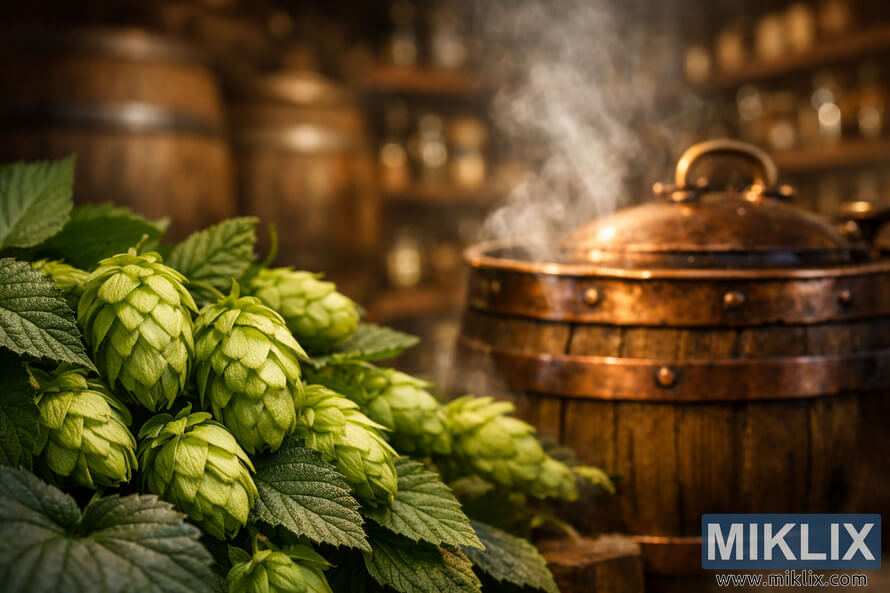
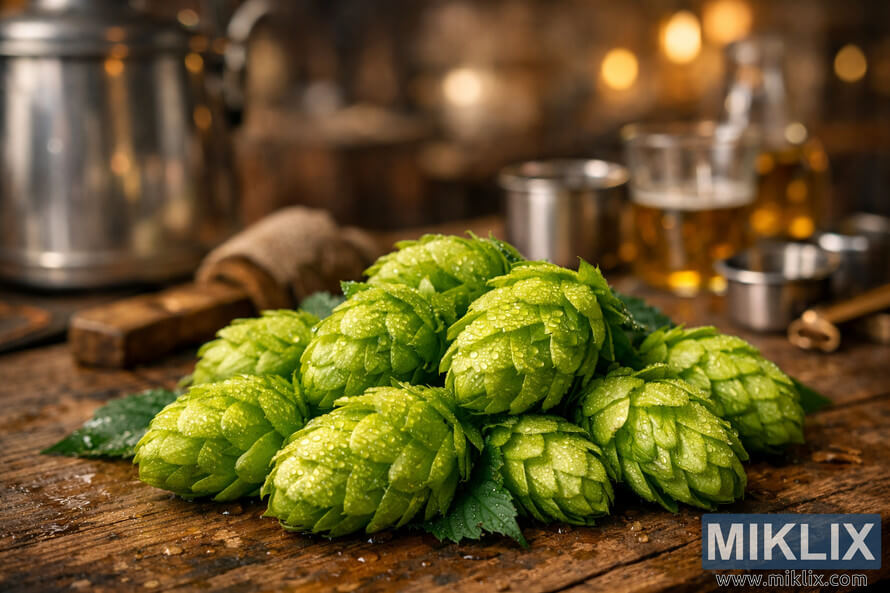
Pilgrim hops have emerged as a new aromatic option from U.S. breeding programs. They offer bright citrus and floral notes, along with light tropical hints. These characteristics make them ideal for late-kettle, whirlpool, and dry-hop additions.
Click or tap the image for more information and higher resolutions.
Pilgrim hops are gaining popularity among U.S. homebrewers and small craft breweries. They are known for their clean citrus and floral character. This guide offers practical steps and sensory expectations. It helps brewers determine the right place for Pilgrim hops in their recipes.
This introduction prepares you for a detailed exploration of Pilgrim aroma and flavor. We'll delve into their origin, alpha acids, hop schedules, dry-hop techniques, and pairing strategies.
Key Takeaways
- Pilgrim hops deliver notable citrus and floral notes that suit hop-forward ales.
- Brewing Beer with Pilgrim requires balancing late additions and dry-hop to preserve aroma.
- Pilgrim hop variety works well in single-hop pale ales and as a complementary flavor hop.
- Alpha acid variability means checking supplier sheets for accurate IBU calculations.
- Proper storage and using pellet or cryo formats help retain Pilgrim aroma and flavor.
Introduction to Pilgrim hops and their brewing appeal
Pilgrim hops have emerged as a new aromatic option from U.S. breeding programs. They offer bright citrus and floral notes, along with light tropical hints. These characteristics make them ideal for late-kettle, whirlpool, and dry-hop additions. The origin of Pilgrim hops traces back to Pacific Northwest propagation, selected for both aroma and field performance.
Origin and development of Pilgrim hops
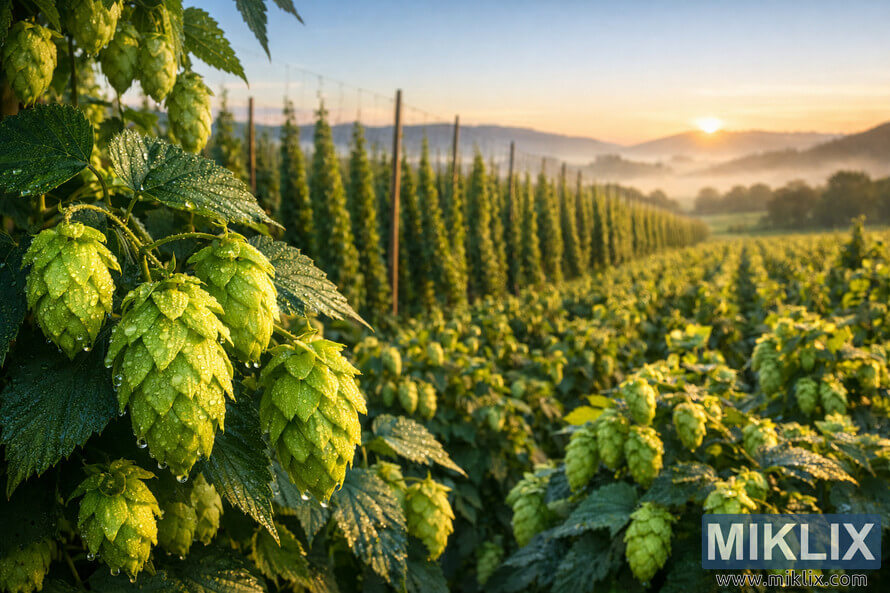
The development of Pilgrim hops was driven by U.S. breeding efforts. These focused on increasing aromatic intensity and disease resistance. Breeders in Washington and Oregon worked on oil composition and agronomic traits. This was to ensure growers in Idaho and other Pacific Northwest states could achieve good yields.
Why craft brewers are interested in Pilgrim hops
Craft brewers are drawn to Pilgrim hops for their versatility. They can be used as both aroma and flavor hops. Pilgrim delivers clean citrus, floral lift, and a subtle tropical edge. This makes it suitable for single-hop brews or adding complexity to blends.
How Pilgrim compares to more common hop varieties
Comparing Pilgrim to Citra, Pilgrim offers a more balanced citrus-floral profile. It has softer tropical notes compared to Citra's intense fruit and citrus. When compared to Mosaic, Cascade, and Amarillo, Pilgrim presents a cleaner citrus-floral mix. It also has a moderate alpha range, making it suitable for dual-purpose use. Brewers looking to replace overused marquee hops or cut costs may find Pilgrim a good alternative.
- Breeding goals: aromatic intensity, favorable alpha acids, attractive oil profile, yield and disease resistance.
- Growing regions: Pacific Northwest—Washington, Oregon, Idaho—and typical late-summer harvest.
- Brewing use: late additions, whirlpool, dry-hop, single-hop beers, and blends as a cost-effective alternative.
Click or tap the image for more information and higher resolutions.
Pilgrim hops flavor profile and aroma characteristics
Pilgrim hops introduce a bright, inviting character to beers, enhancing them without overpowering the malt. The flavor profile is a blend of citrus, floral, and a clean, resinous finish. The way Pilgrim is used in brewing influences how these elements are experienced in the final product.
Taste notes to expect
Beers made with Pilgrim hops often start with a lemon and orange zest taste. Light stone fruit and subtle tropical hints, like peach or apricot, emerge at moderate usage rates. A soft floral backbone supports these flavors, while a mild resinous finish closes the palate. At higher rates, the citrus pith or resin becomes more pronounced, shifting the beer's bitterness perception.
Aroma descriptors and evolution
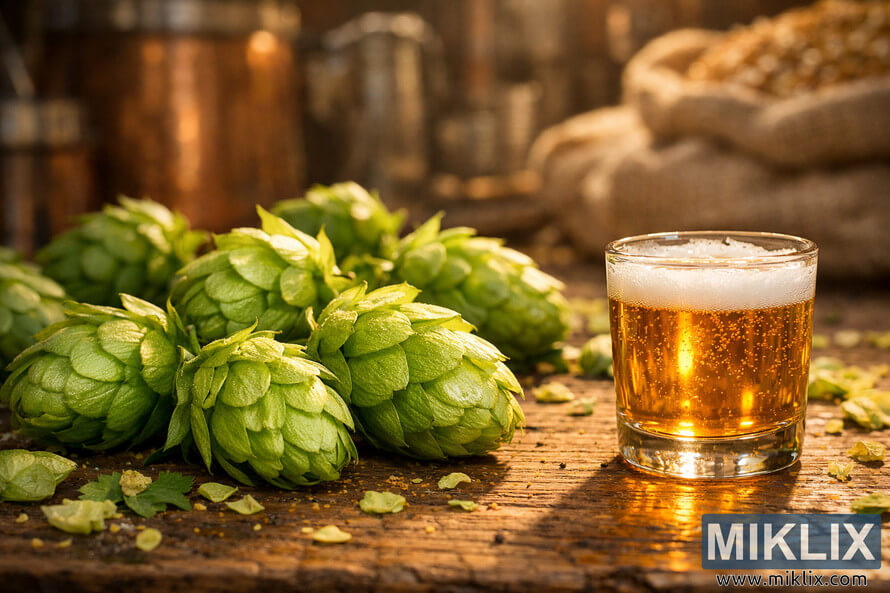
The fresh Pilgrim aroma, rich in citrus and floral notes, is best showcased through late-kettle, whirlpool, and dry-hop additions. During fermentation, volatile aromatics may decrease as CO2 strips them away. Conditioning and a post-fermentation dry-hop can revive delicate esters and enhance the beer's aroma.
How hop oils create character
The hop oil composition is key to Pilgrim's distinct personality. Monoterpenes like myrcene contribute herbal and green notes. Terpenoids, including linalool, add floral tones. Esters like geraniol introduce fruity or rose-like nuances. Sesquiterpenes, such as humulene, add woody and spicy depth. Technical sheets often highlight Pilgrim's higher linalool and geraniol levels, emphasizing its floral-citrus profile.
Sensory interactions in the brew
The interaction between malt, yeast, and bitterness significantly influences the Pilgrim flavor profile. A clean pale malt and a neutral ale yeast allow the citrus and floral notes to shine. However, estery ale strains or rich specialty malts can dampen these subtler flavors. Adjusting bitterness levels and timing of hop additions can help preserve the hop's aromatic qualities.
Practical tips for preserving aroma
- Favor late additions and dry-hop to protect volatile monoterpenes and sesquiterpenes.
- Dry-hop after primary fermentation for maximum retention of Pilgrim aroma.
- Keep contact time moderate; long dry-hop periods can introduce vegetal character.
Click or tap the image for more information and higher resolutions.
Recommended beer styles for Pilgrim hops
Pilgrim hops truly shine when the malt and yeast allow for citrus and floral notes to take center stage. Brewers opt for lean, pale grists and neutral yeasts. This ensures Pilgrim's bright character can stand out without being overshadowed by heavy malts or strong esters.
Traditional ales that showcase hop character
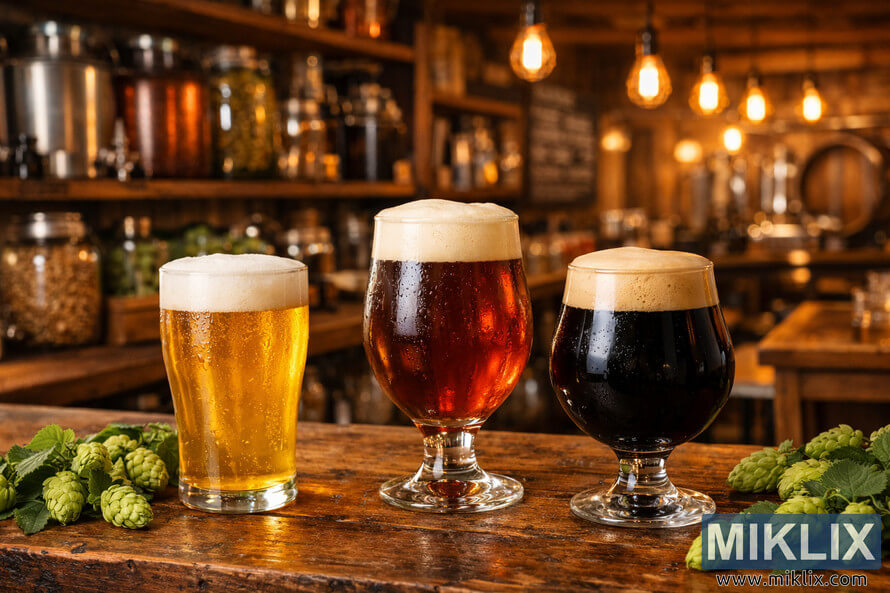
American Pale Ale and American IPA are ideal for showcasing Pilgrim hops. A Pilgrim pale ale benefits from a simple two-row base with a touch of light crystal for balance. Single-hop session ales highlight Pilgrim's citrus, set against a clean malt backdrop.
Subtle additions to Vienna or amber ales add a bright citrus and floral note. These styles maintain malt warmth while Pilgrim's citrus and floral notes provide a polite edge.
Modern and experimental beers using Pilgrim
New England and hazy IPAs showcase Pilgrim's fruit-forward side, especially with soft water and oats. Flaked oats and higher-protein malts enhance mouthfeel, while Pilgrim delivers juicy aromatics.
Fruited sours and kettle sours pair well with Pilgrim, as citrus tones complement stone fruit and berries. Blend Pilgrim with experimental hops for layered aroma in contemporary IPA blends.
Pairing Pilgrim with malt and yeast choices
For clarity and hop focus, choose clean American ale yeasts like Safale US-05 or Wyeast 1056. These strains ensure a clear path for hop expression in a Pilgrim IPA or pale ale.
For haze and mouthfeel, use English-derived estery strains like Wyeast 1318 London Ale III. Add oats or flaked wheat for New England-style beers. This approach keeps Pilgrim's aromatics in the forefront.
- Base malts: pale two-row or pale ale malt for a neutral foundation.
- Specialty malts: small additions of CaraMunich or light crystal for balance; oats for body in hazy beers.
- Lager notes: use Pilgrim in lagers sparingly for subtle citrus lift without overt hoppiness.
Keep the grist simple and target attenuation and fermentation temps that avoid masking hop aromatics. These choices help brewers find the best beer styles for Pilgrim, ensuring balance across pale ales, Pilgrim IPA recipes, and restrained uses like Pilgrim in lagers.
Click or tap the image for more information and higher resolutions.
Pilgrim hops alpha acids and brewing utilization
Pilgrim hops fall into a moderate alpha acid range, a common sight on lot sheets. Their alpha acids typically range from 6% to 9%. However, seasonal variations can cause these numbers to fluctuate by a point or two. Always check the supplier's certificate for the exact alpha acid percentage before making calculations.
To convert Pilgrim alpha acids into bitterness, brewers use formulas like Tinseth or Rager. These calculations require the alpha percentage, hop weight, wort gravity, boil time, and a chosen utilization table. Short boils and whirlpool additions tend to have low utilization. Conversely, long, vigorous 60-minute boils increase utilization and Pilgrim's IBU contribution.
Brewers often choose Pilgrim for late-kettle, whirlpool, and dry-hop additions to emphasize its aroma. This approach helps avoid green, vegetal notes. If a lot's alpha acids are at the higher end, Pilgrim can also serve as a bittering hop in session-strength ales. For stronger IPAs, pairing Pilgrim with high-alpha varieties like Magnum or Warrior creates a solid base. Reserve Pilgrim for flavor and aroma stages.
- Typical Pilgrim bitterness strategy: use early, small additions only when alpha acids are high.
- For aroma-forward beers: reduce early additions and shift weight to flameout, whirlpool and dry-hop.
- When blending: treat Pilgrim as a balancing hop that smooths resinous high-alpha bitterness.
Set practical IBU targets based on style and desired hop profile. Aim for 25–40 IBU in pale ales, 40–70 IBU in IPAs, and 20–35 IBU in session IPAs. To enhance aromatic clarity, trim early-boil Pilgrim additions. Add more at flameout or in the whirlpool to increase Pilgrim IBU from late extractions.
Adjustments are straightforward. Increase boil-time additions when Pilgrim alpha acids are low for more bittering. Cut early additions for lower Pilgrim bitterness and higher aromatic intensity. Track lot data, run the math, and taste-test small pilot batches to fine-tune Pilgrim utilization for your recipe.
Click or tap the image for more information and higher resolutions.
Hop schedule examples featuring Pilgrim hops
Pilgrim hop timing is crucial for showcasing its citrus and floral oils in beer. Below are practical schedules for a 5-gallon batch. Adjust bittering additions based on alpha acids on the packet.
Simple single-hop builds are ideal for learning Pilgrim's characteristics. Use clean malt and neutral yeast to highlight the hop's flavor.
- 60 min: 0.5 oz Pilgrim (bittering) — adjust by alpha acid to hit target IBU.
- 15 min: 1.0 oz Pilgrim (flavor).
- 5 min: 1.0 oz Pilgrim (aroma).
- Flameout/whirlpool: 2.0 oz Pilgrim.
- Dry-hop: 2–3 oz Pilgrim per 5 gallons after primary fermentation.
The Pilgrim pale ale schedule above yields a focused hop character with clear bitterness and layered aroma. Adjust the 60-minute amount based on alpha acid to maintain balance.
For a more complex IPA, use Pilgrim as a flavor and aroma accent alongside citrus-forward varieties. Layering builds depth and contrast.
- 60 min: 0.5 oz Magnum (bittering).
- 20 min: 0.75 oz Citra.
- 10 min: 0.5 oz Mosaic.
- 5 min: 0.75 oz Pilgrim (late flavor).
- Whirlpool (160°F, 20 min): 2.0 oz Pilgrim + 1.0 oz Citra.
- Dry-hop: 2.0 oz Pilgrim + 2.0 oz Mosaic.
This Pilgrim hop schedule favors citrus and tropical layers from Citra and Mosaic while Pilgrim adds floral and bright citrus lift. Use cryo or pellets per your preference.
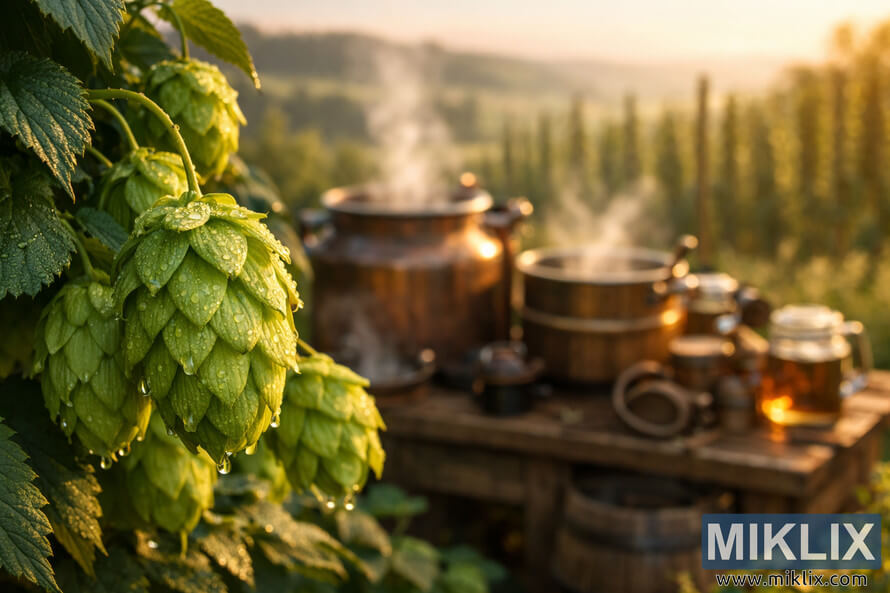
Whirlpool and dry-hop timing affect extraction and aroma retention. Use moderate temperatures to pull oils without adding harsh bitterness.
- Whirlpool: 160–170°F for 15–30 minutes, then allow 10–24 hours of settling before chilling.
- Dry-hop options: post-primary additions preserve volatile aromatics.
- Early dry-hop during active fermentation encourages biotransformation and can boost tropical esters.
Minimize oxygen pickup during dry-hop additions. Use hop bags or a hop drop to reduce trub transfer and follow contact times noted in later sections for optimal results.
Click or tap the image for more information and higher resolutions.
Dry-hopping with Pilgrim hops
Dry-hopping is where Pilgrim hops truly shine. It's all about timing and dosage to enhance bright, floral, and fruity notes. This method helps keep grassy or vegetal flavors to a minimum.
Dosage guidelines for dry-hopping
Start with typical ranges for your beer style. For session or single-hop beers, aim for 0.5–1.0 oz per gallon. IPAs and NEIPAs can use 1.0–2.0 oz per gallon.
For Pilgrim, begin with a mid-range dosage and adjust based on taste. Start with 4–6 oz per 5 gal for a subtle aroma. For a more pronounced aroma, use 8–12 oz per 5 gal. These amounts help maintain balance without overpowering malt or yeast.
Optimization of aroma retention during fermentation
Most dry-hop additions should go in after fermentation peaks. This reduces loss of volatile oils due to CO2. Late-active fermentation additions can add fruity complexity through biotransformation.
Keep temperatures between 40–50°F after adding hops to protect aromas. Limit agitation and avoid splashing. Use CO2 blanketing to reduce oxygen exposure and enhance Pilgrim aroma retention.
Cold soak and contact time best practices
Contact times vary from 3–7 days at cellar temperatures. NEIPA brewers might prefer 48–72 hours to avoid grassy notes. Longer times can result in fuller extraction but increase the risk of vegetal flavors.
- Use hop bags or stainless hop cages to contain debris and ease removal.
- Consider CO2 purge of headspace before and after dry-hopping to cut oxygen pickup.
- Sanitize all tools and handling equipment to prevent contamination during dry-hop transfers.
Follow these practices and monitor aroma in pilot batches. Adjust Pilgrim dry-hop dosage and contact time to achieve your desired profile while preserving aroma.
Pilgrim hops in kettle and whirlpool additions
Pilgrim hops benefit from precise handling on the hot side. Brewers can enhance bright floral and citrus notes while avoiding harsh bitterness. This is achieved through careful timing and temperature control. A strategy involving small early additions, focused late-kettle work, a targeted whirlpool, and controlled dry-hop contact results in the cleanest flavor.
Long, vigorous boils can extract heavy oils and vegetative compounds. These can overshadow the delicate terpenes brewers value. Minimize long-boil additions and focus on late timing for aroma. Small 5–10 minute additions in the kettle provide body and some aroma without harsh vegetal notes.
Temperature and time considerations for whirlpool additions
Whirlpool temperatures should be between 150–175°F (65–80°C). Aim for 160–170°F for 10–30 minutes. This range helps solubilize desirable oils while minimizing isomerization. Gentle agitation or recirculation ensures even contact. Allow hop particulate to settle before chilling to reduce suspended solids.
Combining kettle and whirlpool strategies for layered aroma
- Begin with a small early boil bittering addition only if IBUs are required.
- Make most Pilgrim kettle additions at 5–10 minutes left for body and rounded aroma.
- Perform a Pilgrim whirlpool at about 165°F for 20 minutes as the primary aroma extraction step.
- Finish with a 3–5 day dry-hop after primary fermentation for bright topnotes.
Hot-side aeration increases oxidation risk when handling hopped wort. Minimize splashing during transfers. Use hop-blocking methods such as clarifying agents or a dedicated whirlpool cone to reduce trub pickup and enhance clarity. Proper handling ensures Pilgrim extraction focuses on the floral and citrus compounds brewers aim for.
Pairing Pilgrim hops with other hop varieties
Pilgrim hops offer a vibrant citrus and floral profile, complementing both classic and modern aroma hops. They work best as a middle or late addition, enhancing floral notes while another variety adds bold fruit or resin. It's crucial to start with small batches to refine ratios, contact times, and alpha-acid differences.
For a citrus and floral balance, pair Pilgrim with hops that enhance fruit intensity without overpowering delicate florals. Hops like Citra, Amarillo, and Centennial are excellent choices. A 50/50 blend of Pilgrim and Citra, for instance, creates a bright citrus aroma with tropical fruit undertones and a pronounced floral lift.
- Pilgrim and Citra — late additions at equal parts produce a lively citrus-forward aroma with tropical undertones.
- Pilgrim and Centennial — use Centennial to add orange-peel brightness while Pilgrim keeps the topnotes fresh and floral.
- Pilgrim blends with Amarillo — adds sweet orange and candied peel accents to Pilgrim’s floral base.
To achieve a resinous or piney backbone, use darker-lit hops sparingly to avoid overpowering Pilgrim's character. Simcoe, Chinook, and Columbus are strong partners when used in smaller ratios and applied in whirlpool or dry-hop stages.
- Pilgrim (70%) + Simcoe (30%) — a whirlpool or dry-hop mix that leaves floral-citrus in front and a subtle resinous support behind.
- Pilgrim with Chinook — place Chinook at low dosage to add pine and spice without stealing the floral notes.
- Pilgrim plus Columbus — reserve Columbus for short contact times to avoid harsh resin while gaining structure.
Here are tested sample blends and expected outcomes to guide recipe work.
- Pilgrim + Citra (50/50 late additions): Bright citrus and layered tropical fruit with a distinct floral lift.
- Pilgrim (70%) + Simcoe (30%) whirlpool/dry-hop: Floral-citrus forefront with a restrained resin backbone.
- Pilgrim (40%) + Mosaic (40%) + Amarillo (20%): Complex tropical-citrus-floral aroma suitable for hazy IPAs.
Keep a record of alpha acids, timing, and contact length for each trial. Small changes in ratio or timing can significantly alter a blend's balance. Use Pilgrim hop pairings and blends as a starting point, then experiment with Pilgrim and Citra or Pilgrim and Centennial to achieve your desired aromatic profile.
Water chemistry and mash adjustments for Pilgrim-forward beers
Adjusting water and mash for Pilgrim hops significantly impacts aroma and bitterness. Begin with a strategy that aligns with the beer's style. For instance, a drier IPA will require different salts than a soft, hazy New England IPA.
Beers with a focus on hops often benefit from a sulfate-rich mix. This enhances bitterness and dryness. Aim for a sulfate-to-chloride ratio of 2:1 to 3:1 for a crisp hop presence. For an IPA, consider Ca 50–100 ppm, Mg 5–10 ppm, Na 10–20 ppm, SO4 150–300 ppm, Cl 50–100 ppm. NEIPA or hazy styles, however, may require higher chloride and lower sulfate to improve mouthfeel and keep hop oils suspended.
The interaction between mash pH and hops is crucial. Measure mash pH at room temperature and aim for 5.2–5.5. A pH in this range enhances hop perception and clarity. Avoid letting mash pH rise too high, as it can dull hop flavors and emphasize bitterness. Use lactic acid, gypsum, or calcium chloride to adjust pH accurately, not by guesswork.
When brewing with Pilgrim, clarity and head retention are key. For clear beers, include a protein rest, limit heavy wheat or oats, and cold crash to reduce haze. To maintain head retention, add dextrin malt or cara-pils in moderation. In hazy beers, include flaked oats or wheat to enhance mouthfeel and support hop suspension.
- Profile your source water with a reliable test before adding salts.
- Use brewing tools like Bru’n Water or Brewers Friend for precise calculations.
- Adjust sulfate and chloride according to style goals, not trends.
- Test mash pH and make small corrections; repeat for consistency.
Keep detailed records of Pilgrim water chemistry and mash adjustments for each batch. Small, measured changes lead to consistent results. They help refine hop character without compromising clarity or foam stability.
Pilgrim hops availability and sourcing for homebrewers
Securing Pilgrim hops for your homebrew requires a strategic approach. Seasonal availability means quick sales, so planning is crucial. Verify the crop year and packaging dates to guarantee the best aroma.
- National homebrew retailers such as MoreBeer and Northern Brewer often list Pilgrim when it is in season.
- Regional distributors and hop yards in Yakima Valley supply many craft stores; Yakima Chief Hops and Jebro serve as brokers and can point you to stockists.
- Local hop shops and craft-brew supplier co-ops may carry small batches or leftovers from recent harvests.
Freshness indicators and storage tips
- Look for a clear harvest year and packaging date on the bag. An alpha acid certificate from the supplier confirms potency.
- Open a sample to check aroma. Bright citrus or floral notes signal freshness. Musty or cardboard scents mean the hops have aged.
- Visual cues matter: green cones and visible lupulin glands suggest good condition.
- For best results, use hops within 6–12 months. Cryo and vacuum-sealed packaging extend usable life.
- Pilgrim storage works best in vacuum-sealed mylar or nitrogen-flushed bags with oxygen absorbers. Keep hops refrigerated or, ideally, frozen at 0°F (-18°C) to preserve oils and alpha acids.
Choosing between whole cone, pellet, and cryo formats
- Whole cone: Gentle handling keeps leaf character intact. Prefer these for whirlpool additions that benefit from softer extraction. They take more space and extract less per weight.
- Pellet: Offer higher utilization and consistent dosing. Easier to measure and compress into jars for dry-hopping. Many hobbyists favor pellets for space and predictability.
- Cryo: Concentrated lupulin with reduced vegetative matter. Provides intense aroma per ounce and lowers trub in the fermenter. Use cryo to limit vegetal extraction while boosting hop perfume.
- Conversion guidance: When substituting formats, use about 0.8x pellet for whole-leaf by weight. For cryo, plan roughly 0.4–0.6x pellet weight depending on supplier concentration.
To simplify sourcing, keep a short list of trusted Pilgrim hop suppliers and check them before each season. If you prefer to buy Pilgrim hops in bulk, contact Yakima Valley distributors or hop brokers for availability. Proper handling and Pilgrim storage will keep aroma and bitterness stable until brew day.
Cost considerations and budgeting with Pilgrim hops
Understanding Pilgrim hop cost is crucial for brewers to plan batches without unexpected expenses. The price of Pilgrim hops can fluctuate based on crop year, yield, and market demand. It's wise to check listings from suppliers like Yakima Chief and local homebrew shops to stay updated on current trends.
Pilgrim hops often fall into a competitive mid-range category, offering a strong aroma at a lower cost than top-tier varieties. This makes them an excellent choice for balancing quality with budget.
- Opt for small, fresh lots for single-release beers to avoid bulk purchases.
- Keep an eye on market seasons; new crop arrivals can lead to lower Pilgrim pricing.
Comparing prices to other aroma hops
Tracking price per ounce is essential for fair comparisons. Pilgrim hop cost generally undercuts premium hops, yet it delivers distinct citrus and floral notes. This makes Pilgrim a great option for brewers seeking aroma without the premium price tag.
Formats like pellets, whole cones, and cryo differ in price. Cryo concentrates alpha and oil, which can reduce required weight and improve cost-efficiency.
Stretching hop usage without losing character
Utilize Pilgrim in late additions and dry-hop to maximize its aromatic impact. A small amount can go a long way when added near the end of the boil or during fermentation.
- Blend Pilgrim with economical bittering hops like Magnum or Warrior to save cost.
- Employ whirlpool concentration to extract oils while keeping IBUs in check.
- Try cryo Pilgrim for stronger aroma per ounce when budget hops Pilgrim must stretch farther.
Conduct small pilot tests to determine the minimal effective dose. Track cost-per-batch and aroma retention to refine substitution ratios over time.
When to splurge for small-batch releases
Allocate more of the budget for Pilgrim when it will be the star of the beer. For taproom singles, pilot brews, or seasonal cans, investing in higher-volume or fresher Pilgrim can enhance marketability.
Pilgrim small-batch runs benefit from using fresher, smaller lots to preserve vibrancy. Avoid bulk buys for specialty projects unless you plan rapid use and proper cold storage.
- Prioritize fresh pellets or cryo for headline releases.
- Record batch costs and customer feedback to justify future Pilgrim pricing decisions.
Potential challenges when brewing with Pilgrim hops
Pilgrim hops bring bright aromatics and useful alpha acids to the brew. However, brewers must be aware of a few practical issues. These points outline common challenges and simple solutions to protect aroma, balance, and consistency when using Pilgrim in recipes.
- Warm wort contact and long whirlpool holds can pull grassy oils from whole-cone material. Limit hot-side contact time to reduce leafy extraction.
- Choose pellet or cryo formats when you want cleaner aromatics. These formats reduce vegetal matter compared with aged whole cones.
- Monitor whirlpool temperatures and avoid prolonged periods above 160°F. Short, controlled rests preserve desired top notes without creating Pilgrim off-notes.
Mitigating harsh bitterness from late additions
- Late additions at high temperatures can generate sharper iso-alpha fractions. Favor lower-temperature whirlpool or flameout hops to keep bitterness smooth.
- If a batch shows excessive Pilgrim bitterness, shift some early bittering hops down and move Pilgrim to flameout or dry-hop slots on future batches.
- Keep late-hop boil time minimal. Avoid decoction-like exposures for aroma hops to prevent extraction of harsher bittering compounds.
Addressing harvest and supplier variability
- Alpha acid and oil profiles change by lot and year. Ask suppliers for COAs and aroma notes before committing large quantities to a release.
- Run small pilot batches when you receive a new lot. Sensory checks identify Pilgrim variability early so recipes can be tweaked without risking full-scale production.
- Log sensory results and blend ratios. Maintaining records helps dial in compensations for differing alpha and oil levels across suppliers.
Conditioning and aroma drift considerations
- Pilgrim top notes may mellow during conditioning. Plan packaging windows to capture peak aromatics when possible.
- Cold storage of kegs and packaged beer preserves volatile oils. Rapid cooling and steady cold chains reduce loss of hop character.
Recipe ideas and example formulations using Pilgrim
Below are three practical recipe outlines that show how Pilgrim hops perform across styles. Each idea includes grain, hopping focus, and yeast choices for a 5-gallon batch. These formulations aim to highlight the citrus-floral lift Pilgrim provides. They are designed to be accessible for both homebrewers and professional brewers.
Single-hop session brew for easy replication and consistent character
- Grains: 8 lb Pale 2-row, 1 lb Vienna, 8 oz CaraPils, 8 oz flaked oats.
- Mash: 152°F for 60 minutes. Target OG 1.042–1.048.
- Hops: 60 min 0.25 oz Pilgrim; 10 min 1.0 oz Pilgrim; flameout/whirlpool 2.0 oz Pilgrim; dry-hop 4.0–6.0 oz Pilgrim for 3–5 days.
- Yeast: Safale US-05 or Wyeast 1056; ferment 64–68°F.
- Targets: IBU 25–35; ABV ~4.5–5.0%. Expect bright citrus-floral aroma and a clean finish.
This single-hop outline gives a clear Pilgrim IPA recipe for a balanced, sessionable pint. Keep dry-hop contact short to avoid grassy notes and cold crash gently for clarity.
Hybrid New England concept that leans on biotransformation and soft mouthfeel
- Grains: High-protein base with oats and wheat to boost haze and plush body.
- Bittering: Minimal early bittering, for example 0.25 oz Magnum at 60 min.
- Late additions: Kettle/whirlpool Pilgrim 2.0 oz + Citra 2.0 oz.
- Dry-hop and biotransformation: Add a small Pilgrim + Citra charge during active fermentation. Post-fermentation, double dry-hop for aroma impact.
- Yeast and water: London Ale III or a modern NE strain. Use a high chloride water profile for silkiness.
- Outcome goal: Soft, juicy mouthfeel with Pilgrim giving floral-citrus lift to Citra’s tropical notes.
That Pilgrim NEIPA approach blends Pilgrim with Citra for complexity. Time the biotransformation dose to coincide with active yeast to deepen hop esters and reduce harshness.
Subtle hop use for lagers and cold-fermented hybrids
- Application: Use Pilgrim sparingly at whirlpool or late kettle, about 0.5–1.0 oz per 5 gal.
- Process: Keep fermentation cool and extend lagering to preserve crisp malt character.
- Hybrid styles: In cold-fermented pale ales, Pilgrim can add nuance without overwhelming the grain bill.
- Goal: A faint citrus-floral background that supports clean lager malt.
These short outlines provide a practical Pilgrim session IPA option, a Pilgrim-Citra NEIPA concept, and conservative Pilgrim lager usage. Each recipe emphasizes hop timing and yeast selection to make the most of Pilgrim’s aromatic strengths.
Conclusion
Pilgrim hops summary: Pilgrim hops offer a clean citrus-floral aroma, perfect for late additions or dry-hopping. They work well across various styles, from session pale ales to bold New England IPAs and lagers. This hop variety brings bright top notes without requiring heavy bittering.
For optimal use, start with lot-specific data. Check alpha acid and oil analyses for each shipment. Favor late additions and dry-hop for maximum aromatic impact. Adjust water chemistry and mash pH to enhance hop perception.
Store hops cold and airtight to preserve oils. This prevents stale or vegetal off-notes that can hide the citrus-floral character.
Pilgrim brewing tips: begin with small test batches to find the ideal dosage and pairings. Use the example schedules and blends in this article as starting points. Then, iterate based on sensory evaluation and the specific lot you received.
For publishers, include supplier lot sheets, reliable homebrew retailers, and brewing tools. This helps readers put Pilgrim-centric recipes into practice.
FAQ
What flavor and aroma should I expect when brewing with Pilgrim hops?
Pilgrim hops offer a bright citrus profile, with notes of lemon and orange zest. They also bring light stone-fruit or tropical hints, such as peach and apricot. The hop has a mild floral backbone and a clean, slightly resinous finish. When used moderately, these flavors are balanced and fresh. At high rates, you might notice citrus pith or increased resin character. Late-kettle, whirlpool, and dry-hop additions emphasize the top-note citrus and florals most effectively.
Is Pilgrim best used for bittering or aroma? How do its alpha acids compare?
Pilgrim is primarily an aroma/dual-purpose hop. Its alpha acid ranges are similar to other aroma hops, around 6–9%. However, actual values can vary by lot and harvest. Use Pilgrim mainly for late additions, whirlpool, and dry-hop. If a lot’s alpha is on the higher side, you can use small early-boil additions for balanced bittering. Or blend Pilgrim with high-alpha bittering hops like Warrior or Magnum for the 60-minute addition.
What beer styles showcase Pilgrim hops best?
Traditional styles include American Pale Ale, American IPA, blonde ale, and single-hop session ales. Modern uses include hazy/NEIPAs to highlight fruitiness, fruited sours where citrus complements fruit, and experimental IPA blends. For subtle lift, Pilgrim can also be used sparingly in lagers or hybrid cold-fermented ales.
How should I schedule Pilgrim additions in a recipe?
A common single-hop pale ale schedule includes small 60-min bittering additions, adjusted by alpha. Use 15- and 5-min flavor/aroma additions, 2 oz flameout/whirlpool, and 2–3 oz dry-hop per 5 gal. For whirlpool, aim for 160–170°F for 15–30 minutes. In multi-hop beers, use Pilgrim as a late flavor/aroma accent paired with Citra, Mosaic, or Amarillo for layered citrus/floral complexity.
What dry-hop dosages and contact times work well with Pilgrim?
Typical dry-hop ranges are 4–8 oz per 5 gal for session beers and 8–16+ oz per 5 gal for IPAs/NEIPAs. Start mid-range (8–12 oz/5 gal) and adjust by intensity. Contact times: 48–72 hours for NEIPAs to avoid grassy extraction; 3–7 days at cellar temps (38–55°F) for clearer styles. Add hops post-primary to preserve volatiles, or during late active fermentation for biotransformation if you want boosted fruity esters.
How can I extract Pilgrim’s aroma in the whirlpool without creating vegetal or harsh bitterness?
Keep whirlpool temperatures in the 150–175°F (65–80°C) range, ideally near 160–170°F, and steep 10–30 minutes. Avoid prolonged hot-side contact and excessive agitation. Use a small early bittering hop elsewhere in the bill and reserve most Pilgrim for flameout/whirlpool plus dry-hop. Consider cryo or pellet formats to reduce vegetative matter.
Which hops pair well with Pilgrim for blended aroma profiles?
For citrus/floral lift, pair Pilgrim with Citra, Amarillo, or Centennial. For resinous backbone, use smaller ratios of Simcoe, Chinook, or Columbus. Sample blends: Pilgrim + Citra (50/50) for bright citrus; Pilgrim 70% + Simcoe 30% for floral-citrus with resin support; Pilgrim + Mosaic + Amarillo for layered tropical-citrus-floral profiles in hazy IPAs.
What water profile and mash pH should I use for Pilgrim-forward beers?
For hop-forward clarity and bite, favor a sulfate-forward profile (SO4:Cl ≈ 2:1 to 3:1) — e.g., SO4 150–300 ppm, Cl 50–100 ppm depending on style. For NEIPAs, shift toward higher chloride to enhance mouthfeel. Aim mash pH 5.2–5.5 (5.2–5.3 brightens hop perception). Use measured adjustments (gypsum or calcium chloride) to hit targets.
Where can I source Pilgrim hops and how should I store them?
U.S. homebrew retailers and regional brokers like MoreBeer, Northern Brewer, and Yakima Valley distributors often list Pilgrim when in season; specialty brokers such as Yakima Chief can provide lot sheets. Check crop year, packaging date, and lot alpha-acid/oil analysis. Store hops vacuum-sealed or nitrogen-flushed in the freezer (0°F / -18°C) to preserve oils and alpha acids; use within 6–12 months for best aromatics.
Which hop format is best—whole cone, pellet, or cryo—for Pilgrim?
Each has pros and cons. Whole cone preserves leaf character and can be gentler in whirlpool but is bulkier. Pellets offer higher utilization and shelf stability, easier measuring for dry-hopping. Cryo is concentrated lupulin with high aroma per weight and less vegetal matter—useful to reduce trub and vegetal extraction. Adjust weights when substituting (pellet ≈ 0.8× whole-leaf; cryo often 0.4–0.6× pellet depending on supplier).
How do I manage cost while keeping Pilgrim’s character in small-batch releases?
Stretch hops by concentrating them in late-kettle/whirlpool and using layered dry-hop techniques to maximize perceived intensity. Blend Pilgrim with less expensive bittering hops for the 60-minute addition and consider cryo if you need strong aroma from smaller amounts. For special small-batch releases, buy small fresh lots rather than bulk to ensure aroma quality.
What common problems should I watch for when brewing with Pilgrim?
Watch for vegetal off-notes from extended warm contact or excessive whole-cone breakup, and harsh bitterness from long high-temperature late additions. Variability between harvests can change alpha and oil profiles—always request lot analysis and aroma notes. To avoid loss of top notes, package and cold-store beer promptly and limit oxygen exposure during dry-hop and transfers.
Can you provide a simple single-hop session IPA outline using Pilgrim?
Example for 5 gal: Malt: 8 lb Pale 2-row, 1 lb Vienna, 8 oz CaraPils, 8 oz flaked oats optional. Mash 152°F 60 min. Hops: 60-min 0.25 oz Pilgrim (adjust to lot alpha), 10-min 1.0 oz, flameout/whirlpool 2.0 oz, dry-hop 4.0–6.0 oz for 3–5 days. Yeast: Safale US-05 or Wyeast 1056; ferment 64–68°F. Target IBU 25–35, ABV ~4.5–5.0%. Expect bright citrus-floral aroma and clean finish.
Should I adjust my fermentation or yeast choice when using Pilgrim?
Yes. For clean hop clarity use neutral American ale strains like US-05 or Wyeast 1056. For NEIPAs or haze synergy, choose English-derived or NE strains (Wyeast 1318, certain Kveik/NE strains) and manage higher protein grists (oats, wheat). Control fermentation temperature to limit estery masking if you want Pilgrim’s aromatics prominent.
How do I calculate IBUs when using Pilgrim?
Use the hop’s alpha-acid percentage from the lot sheet with a chosen formula (Tinseth or Rager), boil time, wort gravity, and utilization factors. Because Pilgrim is often moderate in alpha, adjust the 60-minute addition accordingly or use a dedicated bittering hop for consistent IBUs while reserving Pilgrim for late aroma-focused additions.
Further Reading
If you enjoyed this post, you may also like these suggestions: