
Hops in Beer Brewing: Polaris
Published: March 22, 2026 at 9:42:31 PM UTC
Polaris hops, bred in Germany, are celebrated for their bittering and aromatic qualities. They boast very high alpha-acid levels, making them perfect for brewers aiming for intense bitterness and a strong aroma.
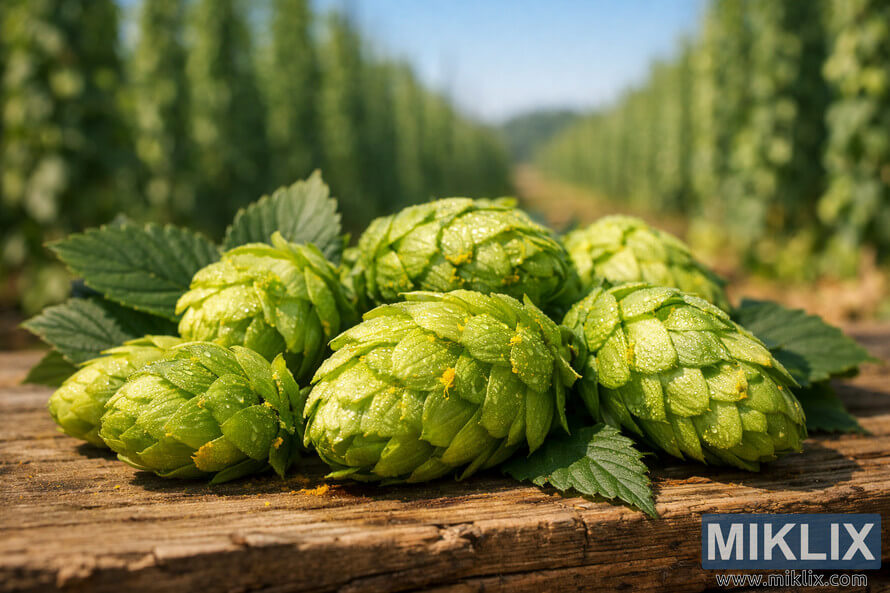
Click or tap the image for more information and higher resolutions.
Polaris hop's potent alpha acids and distinct aroma notes, such as mint, menthol, and pine, enhance brewing. Breweries and homebrewers obtain Polaris hops from specialty suppliers, larger distributors, and retail outlets like Amazon. They often prefer pellets or whole-cone nuggets. Polaris is also processed into bittering extract for large-scale brewing, thanks to its reliable IBU contribution.
As you continue reading, you'll discover lab values, oil profiles, and best practices for using Polaris. Expect practical advice on single-hop showcases, blends, and timing choices that showcase Polaris' unique traits.
Key Takeaways
- Polaris hops are a German hops cultivar used for both bittering and aroma.
- High-alpha hops status makes Polaris ideal for efficient IBU contribution.
- Available in pellets, nuggets, and extract; sold through retail and B2B channels.
- Aroma profile leans toward minty, pine, and menthol notes that suit IPAs and lagers.
- Commonly used by craft brewers in the United States for bold hop character.
Introduction to Polaris hops and their role in brewing
Polaris hops emerged from Germany, aiming to bring intense bitterness and a distinctive aroma in one variety. This brief overview highlights why brewers appreciate its high-alpha profile and bold aroma.
Polaris is a standout among German-bred hops, thanks to the Hüll Institute's breeding efforts. It showcases the importance of German-bred hops in both experimental and traditional brewing.
Polaris is designed as a dual-purpose hop. Its high alpha acids are perfect for early kettle additions, reducing the amount needed for desired IBUs. The same plant boasts high oil content, ideal for late-addition aroma in whirlpool and dry-hop applications.
In the US, Polaris has become increasingly popular among American brewers looking for something unique. It adds minty, eucalyptus-like top notes with pineapple and pine nuances, enhancing the beer's character. This makes it ideal for IPAs, lagers, and mixed-fermentation beers that aim to stand out.
- Brewing efficiency: high alpha acids reduce bittering rates and cost per IBU.
- Aromatic impact: late additions preserve volatile oils for clear sensory lift.
- Format flexibility: processors often make extracts, though pellets and nuggets remain common for breweries and homebrewers.
This introduction prepares us for a deeper exploration of Polaris's lineage, chemistry, and practical use in recipe design.
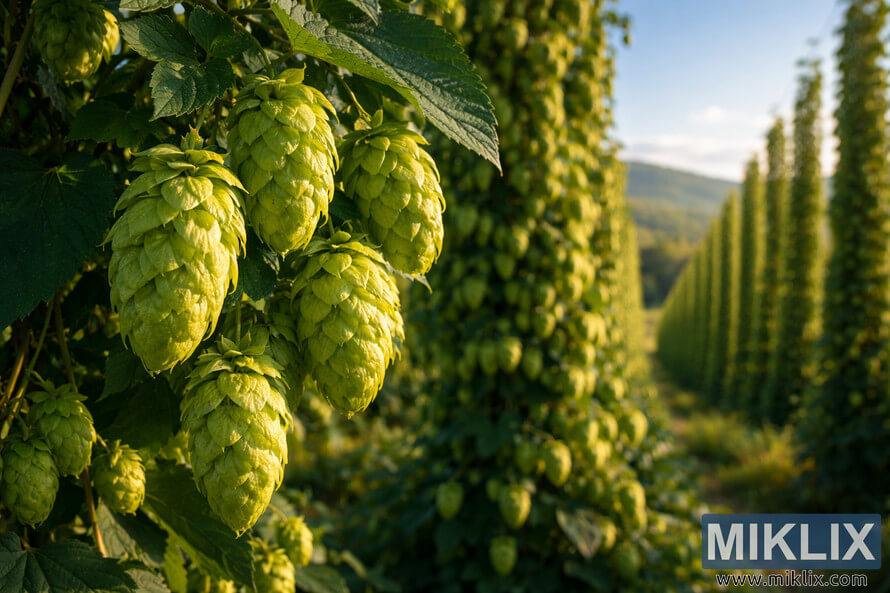
Click or tap the image for more information and higher resolutions.
Origin and breeding history of Polaris
The journey of Polaris started in Germany, where breeders focused on merging high alpha acids with unique aroma characteristics. This effort was a result of careful crossbreeding aimed at creating a hop that excels in bitterness while also offering aromatic depth.
The lineage of Polaris can be traced back to a specific cross between breeding lines 94/075/758 and 97/060/720. The second parent, 97/060/720, carries Huell heritage. This heritage adds herbal and minty notes to the offspring. It's this mix that gives Polaris its distinctive bittering profile and aromatic complexity.
- Parentage: 94/075/758 × 97/060/720
- Huell-derived traits present in the 97/060/720 line
The development and official release of Polaris were spearheaded by the Hüll Institute Polaris program in Germany. The hop was introduced to the market in 2012. It became a valuable asset for brewers, offering a high-alpha, aromatic German hop suitable for both bittering and late additions.
Polaris is typically harvested in Germany from late August to September. Weather conditions from year to year can significantly impact the alpha levels, oil composition, and overall crop volume. This variability affects how much of the harvest is converted into bittering extract. Consequently, the availability of whole-leaf or pellet material for suppliers and craft brewers is influenced.
- Harvest window: late August–September in Germany
- Crop variability impacts alpha and oil content
- Commercial routing to extract can limit pellet availability
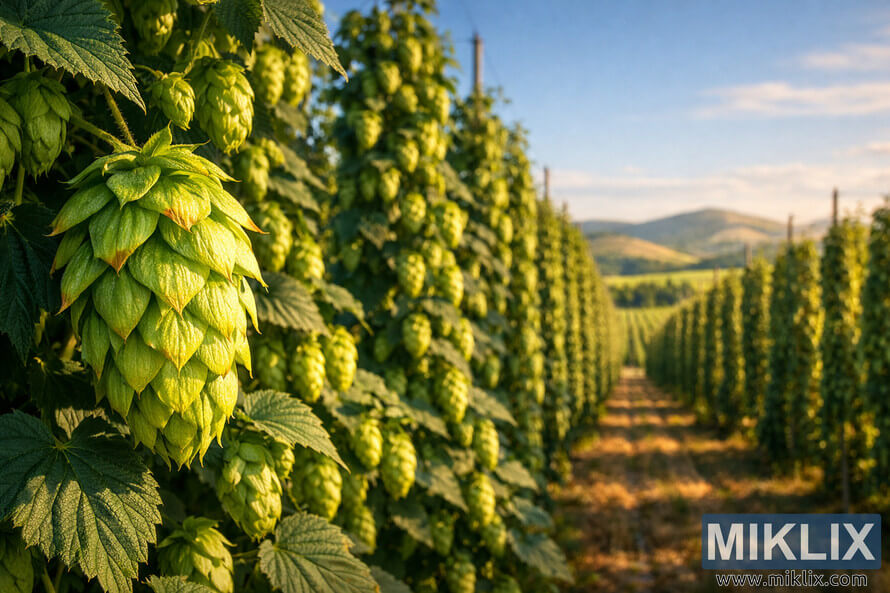
Click or tap the image for more information and higher resolutions.
Chemical and brewing values of Polaris hops
Polaris hops present a clear chemistry profile, aiding brewers in planning bitterness and aroma. Below, we outline key analytical values and their impact on wort and beer.
- Alpha acids
- Typical ranges for Polaris alpha acids are 18–23%, with historical highs reaching 24%. An average of 20.5% indicates strong bittering power per gram. Thus, precise IBU calculations are crucial for recipe formulation.
- Beta acids and ratio
- Beta acids usually range from 4.5–6.5%, averaging 5.5%. The alpha-beta ratio typically falls between 3:1 and 5:1, averaging 4:1. This ratio affects bitterness stability and perception over time.
- Co-humulone proportion
- Co-humulone in Polaris is moderate, often between 22–29% of total alpha, averaging 25.5%. This proportion influences the bitterness's bite and harshness perception.
- Total oil content
- Total oil content is typically 4–5 mL per 100 g, averaging 4.5 mL/100 g. Higher oil content enhances aroma when hops are added late in the boil, in whirlpool, or during dry-hop.
Comparing lab values to practical use, Polaris chemical values provide predictability for bittering and aroma planning. Use alpha and beta figures for IBUs, consider co-humulone Polaris for harshness, and rely on hop oil content for late-addition aroma.
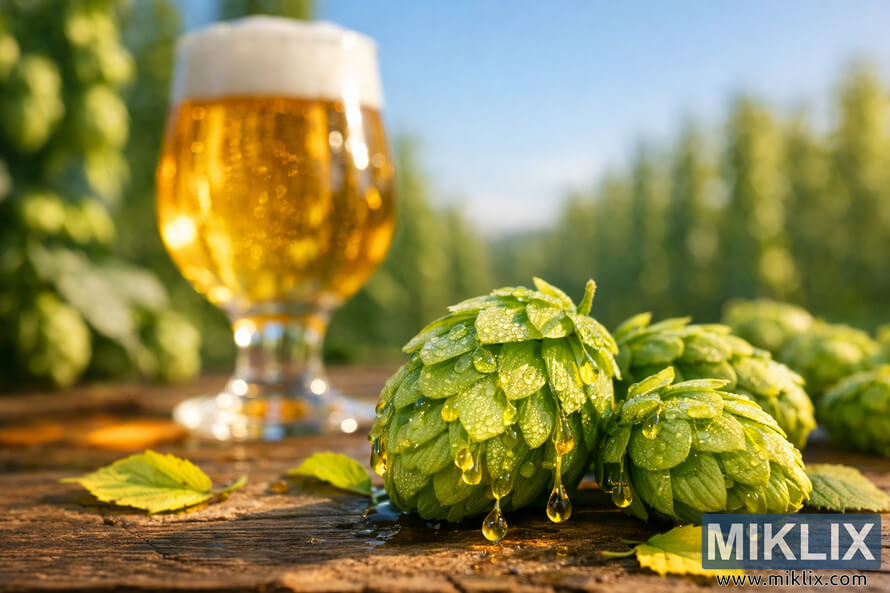
Click or tap the image for more information and higher resolutions.
Aromas and flavor profile of Polaris hops
Polaris exhibits a wide range of sensory experiences, transitioning from fresh herbal to bold menthol notes. This transition is crucial for brewers aiming to select the right hop rates and yeast strains.
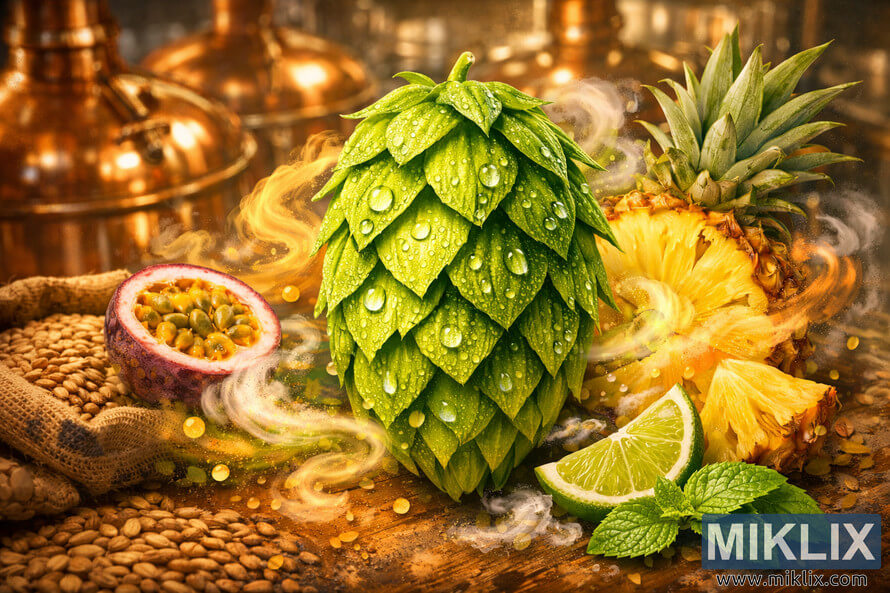
Upon rubbing the cone, wintergreen and eucalyptus aromas emerge prominently. These scents are reminiscent of minty hops or menthol. In beer, these traits are more refined, creating a robust herbal foundation.
- Mint and menthol: clear, cool top notes that can dominate if used heavily.
- Pineapple and tropical fruit: fruity lift that earns Polaris a spot among pineapple hops for certain recipes.
- Pine and spice: resinous depth with light woody, peppery edges.
- Sweet-herbal hint: a Hallertau-like softness that rounds sharper elements.
The intensity of Polaris's aroma and flavor changes with timing and dosage. Late additions and dry-hop doses preserve the pineapple and minty notes. Conversely, heavy early bittering emphasizes resinous pine and spice.
Brewers note that Polaris's flavor descriptors evolve during fermentation. Initially, the menthol or wintergreen can seem exotic or pungent. However, as the beer matures, these scents soften, revealing a harmonious blend of herbal and fruit notes. This balance rewards brewers who exercise restraint in hopping and choose their ingredients carefully.
Click or tap the image for more information and higher resolutions.
How Polaris performs in the boil, whirlpool, and dry-hop
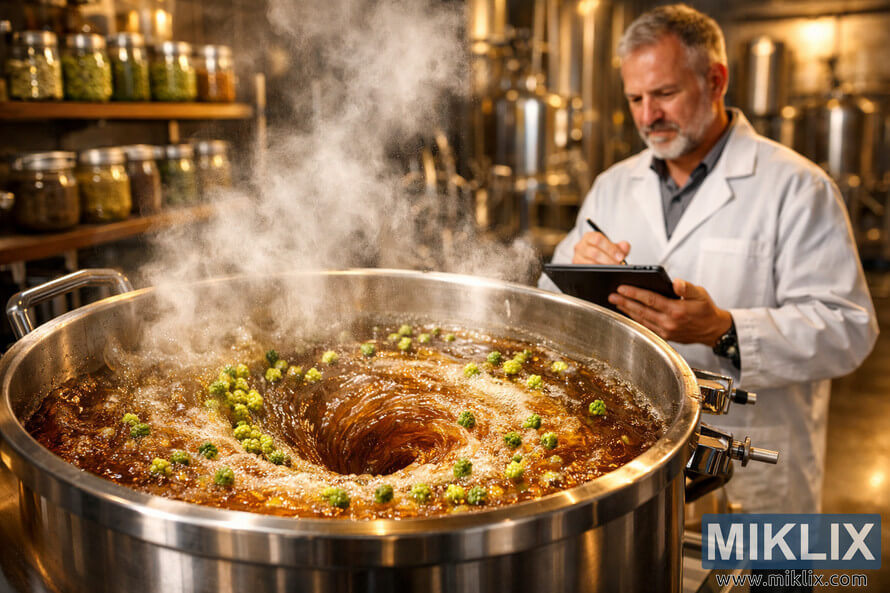
Polaris exhibits a distinct separation between its bittering and aromatic qualities. Its high alpha acid content makes it cost-effective for early additions. However, its substantial oil content demands cautious late use to preserve its volatile character.
Bittering power and ideal boil usage
When calculating IBUs, use conservative mass due to Polaris's 18–24% alpha acids. This high-alpha characteristic allows for strong bitterness with small weights. Commercial breweries often convert Polaris into bittering extract for consistency. Homebrewers should aim for lower hop grams to avoid harshness.
Late additions and whirlpool technique
Late-boil hops and a controlled mash-out into a whirlpool preserve citrus, pine, mint, and spice notes. Polaris whirlpool additions release flavorful oils without harsh vegetal compounds from long boils. Maintain whirlpool temperatures between 65–80°C and limit contact time to protect myrcene and humulene-driven aromatics.
Dry-hopping, aroma retention, and fermentation interaction
Polaris dry-hop additions reliably impart strong wintergreen and eucalyptus top notes along with herbal spice. Aroma retention is robust, but yeast choice is crucial. Saccharomyces strains highlight bright minty character, while Brettanomyces or mixed-fermentation blends accentuate exotic, pungent spice early in fermentation.
- Balance minty intensity by pairing Polaris with fruit-forward hops for contrast.
- Stagger dry-hop timing to manage extraction: early post-fermentation gives integration, late contact preserves volatile lift.
- Adjust rates downward when substituting Polaris for lower-alpha varieties to maintain intended bitterness and aroma.
Click or tap the image for more information and higher resolutions.
Best beer styles to use Polaris hops
Polaris hops introduce a sharp, minty top note and firm bitterness, reshaping recipe construction. Brewers should select styles that highlight wintergreen, pine, and resinous flavors without overpowering delicate malt or yeast notes.
Below are practical style recommendations and simple approaches for showcasing Polaris in brewing.
- IPAs and pale ales
- For IPAs, late additions and dry-hop are key to emphasize minty, eucalyptus-like aromas. Opt for minimal whirlpool times and a clean yeast strain to enhance bright pine and tropical notes. In pale ales, reduce crystal malt and use leaner grists to maintain a crisp hop profile.
- Strong lagers and single-hop lagers
- Polaris lagers benefit from careful hopping during the boil and precise temperature control. A single-hop lager can highlight clear bitterness with a hint of Hallertau sweetness. Cold conditioning smooths the sharper menthol edge while preserving clarity.
- Stouts, porters, and experimental farmhouse beers
- Polaris stouts excel when paired with robust dark malts and judicious hop dosing. The wintergreen and spice contrast beautifully with chocolate and roast. In Brett or mixed-fermentation beers, Polaris adds an herbal, lively lift. Balance with malts and attenuation to avoid yeast-hop clashes.
When planning recipes, test small batches and stagger dry-hop rates. This approach helps fine-tune intensity for each style. It ensures balanced representation of Polaris hops in IPAs, lagers, and stouts across tasting notes.
Polaris hops in single-hop recipes and blended grists
To truly understand a hop, let it speak for itself. A single-hop Polaris recipe emphasizes a clean malt bill and a neutral yeast. This approach highlights mint, pine, and tropical flavors without obscuring them.
Creating a single-hop showcase beer involves a simple base. Use Pilsner malt or US two-row, with a touch of light crystal for body. Keep specialty malts minimal to preserve the hop's wintergreen and pineapple notes. A conservative mash profile helps avoid heavy dextrins that could dull the hop's impact.
For fermentation, choose a neutral yeast strain. Opt for dry, clean-fermenting lager yeasts or American ale strains to enhance hop aromatics. If you aim for yeast complexity, select strains that complement the hop's character. Test small batches with Brett or Belgian yeasts, as they significantly alter the hop's profile.
- Single-hop Polaris recipe tip: bitter with early additions, preserve oils with whirlpool, and finish with a focused dry-hop.
- Polaris blend hops approach: add fruit-forward varieties in whirlpool or dry-hop to soften mint and add tropical or citrus top notes.
- Malts for Polaris: use Pilsner, two-row, or a light Munich for more backbone without stealing aromatics.
- Yeast for Polaris: choose clean American or lager strains for clarity; pick Saison or Brett only if you want funky layers.
When blending Polaris with fruit-forward hops, balance is crucial. Pair it with Mosaic, Citra, or Galaxy for citrus, berry, and tropical lift. Add these hops later in the whirlpool or as part of a split dry-hop to preserve delicate esters and maintain minty high notes.
In bolder grists—strong lagers or robust porters—select malts that can stand up to high alpha acids without covering aroma. A modest crystal or dark base can provide contrast, yet avoid heavy roast that buries nuance. Adjust hopping rates to account for Polaris’ potency and target IBUs with precision.
Finish trials with small-scale dry-hop blends and varied yeast strains to dial in the interplay between malt, hop, and fermentation. This process reveals how malts for Polaris and yeast for Polaris work together to shape the final beer.
Common substitutions for Polaris hops
When Polaris is scarce or you need a different profile, a few options stand out for bittering and aroma work. First, align your goals: aim for IBUs for bittering, or oils for aroma. This approach ensures you pick Polaris hop substitutes that align with your beer's intent.
Herkules is often cited as a top substitute when comparing Herkules vs Polaris. Both are high in alpha-acid content, ideal for bittering. However, Herkules tends to offer more resinous and spicy notes. Use it where a firmer profile is desired, rather than an exact minty finish.
- For bittering, match alpha acids first. Many high-alpha hops can achieve target IBU with smaller additions.
- In aroma roles, focus on myrcene and humulene ratios. No single substitute perfectly replicates Polaris’ wintergreen and menthol hints.
- Blend a high-alpha bittering hop with a small amount of a menthol-leaning hop to better mimic Polaris’ minty edge.
Decide your substitution method based on your intent. For bittering, choose any high-alpha hop with similar AA% and low co-humulone for cleaner bitterness. For aroma, prioritize oil composition and sensory match over raw alpha numbers.
Employ a data-driven approach when precision is crucial. Compare lab values for alpha acids, total oils, and co-humulone. Use IBU calculators and adjust for utilization differences in your system.
For sensory-led recipes, rely on experience-based choices. Tasting trials, small-batch trials, and peer notes often reveal workable blends. Many brewers combine a strong bittering hop with modest amounts of Cascade, Citra, or Hallertau for balance.
- For bittering-only swaps: match alpha-acid percentage, then tweak quantity to hit IBUs.
- For aroma swaps: select hops with similar dominant oils or use 2–3 hop blends to recreate complexity.
- For flexible recipes: trial a partial swap—replace 50–75% of Polaris with a high-alpha alternative and reserve some Polaris or a minty adjunct for late additions.
Keep records. Note harvest year, pellet vs. whole-leaf format, and observed aroma after aging. These entries will refine future choices between Herkules vs Polaris and among potential Polaris hop substitutes.
Polaris hop chemistry breakdown by oil components
Polaris hops have a unique oil profile, crucial for brewers aiming to enhance aroma and flavor. With total oils ranging from 4–5 mL per 100 g, an average of 4.5 mL/100 g is common. This characteristic makes Polaris a top choice for late additions and dry hopping.
Myrcene is the dominant oil, making up about half of the total. It contributes resinous, fruity, and citrus notes, thanks to myrcene Polaris at 49–51%. Due to its volatility, myrcene is best preserved through late-whirlpool additions or dry hopping to maintain its vibrant, tropical aroma.
- Myrcene: ~50% of total oils; fruity, citrus, resinous.
- Volatility: favors late additions to preserve aroma.
Humulene and caryophyllene provide the foundation for the hop's character. Humulene, present at 20–35% (average 27.5%), adds woody and noble spice notes. Caryophyllene, at 8–13% (average 10.5%), contributes peppery and herbal tones. Together, they define the hop's middle aroma register.
- Humulene: woody, herbal, and lightly spicy.
- Caryophyllene: peppery and warm, gives backbone to hop character.
Minor oils, though present in small fractions, subtly influence the beer's character. Farnesene, at 0–1%, adds soft green or floral hints. Other compounds like β-pinene, linalool, and geraniol, present in trace amounts, contribute floral, citrus, and fruity-floral notes. These minor components are crucial for achieving balance in the beer.
- Farnesene: low impact but adds soft green or floral hints.
- Linalool and geraniol: contribute delicate floral and citrus notes.
- β-pinene and selinene: enhance resinous and woody depth.
When crafting recipes, consider the oil breakdown to optimize hop timing and dosage. High myrcene Polaris requires techniques that protect volatile aromatics. The humulene caryophyllene Polaris fraction is ideal for aging and complexity in malt-forward or mixed-fermentation beers.
Practical sourcing and availability of Polaris hops
Securing Polaris hops for brewing requires a strategic approach, blending timing with the selection of reliable sellers. German growers typically harvest in late August and September. This timing influences when Polaris becomes available, depending on commercial buyers' processing decisions.
- Where to buy: Polaris suppliers include specialized hop merchants, B2B distributors such as BarthHaas and YCH, and retail hop shops catering to homebrewers. Online marketplaces and established retailers offer small packs for those looking to buy Polaris hops.
- Crop year variability: Alpha-acid levels, oil content, and aroma intensity can vary with each harvest. It's crucial to review supplier harvest-year metadata and lot analyses to ensure the desired bittering or aromatic profile is met before ordering.
- Commercial processing: A significant portion of the Polaris crop is processed into bittering extract and bulk products. This can limit the availability of pellets and whole-cone hops at retail. Therefore, it's wise to plan purchases early when suppliers announce harvest releases.
- Polaris packaging: Retail sizes typically include 1 oz and 8 oz nitrogen-purged packets for hobbyists. Distributors offer larger formats and bulk quantities for breweries. Packaging notes sometimes mention the use of YCH nitrogen-purged lots when brands consolidate inventory.
Breweries aiming for consistency should partner with a trusted Polaris supplier to secure lot certificates and schedule shipments. Homebrewers should compare package dates and storage practices when purchasing Polaris hops to preserve aroma and potency.
Polaris processing formats and lupulin availability
Polaris comes in various forms, each affecting how it's handled, stored, and used in brewing. You'll mostly find Polaris pellets, with nuggets being less common. Suppliers often nitrogen-purge their packs to slow down oxidation and preserve volatile oils.
- Polaris pellets: These compress the leaf material, protecting alpha acids and oils during shipping. They offer consistent bittering and are easy to measure for precise IBU levels.
- Polaris nuggets: These formats retain more vegetal matter. They add a greener character, ideal for rustic lagers and experimental ales, especially when used late in the boil or as dry hops.
- Polaris lupulin and Cryo Polaris: Currently, there's no widely available lupulin powder or Cryo/LupuLN2 variant for Polaris. This limits brewers' options for concentrated gland products.
The limited lupulin supply stems from practical reasons. Polaris's high alpha acids mean a significant portion of the crop goes to bittering extract and bulk alpha products. Companies like Yakima Chief, BarthHaas, and Hopsteiner focus on varieties with high lupulin demand for their Cryo or lupulin lines.
Choosing a format impacts aroma and potency in brewing. Pellets protect acids and oils but release them differently during late additions and whirlpool rests. Whole-leaf hops, on the other hand, shed more vegetal matter, which can mute hop aroma but add complexity to some beers.
If a Polaris lupulin product becomes available, it will likely offer a concentrated aroma punch with less vegetal carryover. Until then, brewers should plan for late additions and dry-hop techniques to manage pellet oil volatility. This helps preserve the minty, piney, and fruity notes sought from Polaris.
Recipe examples and hop schedules featuring Polaris
Below are practical templates and timing tips to help brewers use Polaris in both hop-forward ales and restrained lagers. Each example emphasizes measured bittering, targeted whirlpool additions, and split dry-hop schedules. Use lab-reported alpha acid values from your supplier to refine amounts and keep Polaris IBUs on target.
Sample IPA outline
- Target: 6.5% ABV, 65 IBU. Assume Polaris AA = 20% for initial math.
- 60-minute bittering: small base addition to reach about 30–35% of total IBUs; reduce mass versus lower-AA hops to hit Polaris IBUs goals.
- 10–20 minute late hop: sizable addition for flavor, not aroma.
- Whirlpool (170–180°F, 20–30 minutes): heavy addition to extract oils gently and showcase pine, mint, and tropical notes.
- Dry-hop: split into two additions across active and post-fermentation to avoid harsh wintergreen intensity.
Polaris IPA schedule tips
- Calculate bittering using measured AA% from the lot. If substituting a 5% AA hop with Polaris (~20%), divide mass by four to hold IBUs steady.
- Reserve at least 50% of aromatic additions for whirlpool and dry-hop to preserve volatile oils.
- When stacking with fruity hops, use smaller Polaris late additions to prevent mint from dominating.
Single-hop lager approach
- Grain bill: clean Pilsner malt base with under 5% Vienna or Munich for color and body.
- Yeast: classic lager strain such as Wyeast 2124 Bohemian or White Labs WLP830 for clean fermentation that highlights hop character.
- Bittering: very restrained 60-minute addition to achieve modest IBUs and allow malt sweetness to balance minty top notes.
- Whirlpool: single late addition at 170–180°F for 15–30 minutes to lift aroma without harsh oils.
- Cold-conditioning dry-hop: short, low-mass dry-hop during lagering to preserve subtle pine and menthol facets.
Adjusting hop amounts for target IBUs
- Use the actual alpha acid from the supplier lot when calculating additions. Polaris alpha acid typically ranges 18–24%.
- Example rule: desired mass = (target IBU × batch volume × utilization factor) / (AA% × 7462). Replace AA% with the lot value for accurate Polaris IBUs.
- When swapping hops, scale mass proportionally. Swapping from 5% AA to 20% AA requires roughly one-quarter the mass to keep IBUs constant.
- Track bitterness with small test brews and adjust future Polaris recipes based on sensory results and measured IBUs.
Flavor pairing and complementary ingredients with Polaris
Polaris introduces a cool menthol edge, bright pineapple, and resinous pine, shaping its culinary and brewing partners. Its distinct profile guides adjunct choices, malt selection, and plate pairings for balanced results.
Fruit adjuncts can soften Polaris’ minty lift, highlighting its tropical side. Late-hop additions, purees, or fresh adjuncts work best when added near fermentation to preserve aroma.
- Citrus: Meyer lemon, grapefruit, or orange zest brighten bitterness and cut menthol intensity.
- Berry: Raspberry or blackberry purees add red-fruit sweetness that plays well with pine notes.
- Tropical: Pineapple or passionfruit accent Polaris’ inherent pineapple character without overwhelming the beer.
Select herbs, spices, and malts that echo or contrast the hop to deepen complexity. Choose grain bills and seasonings with purpose based on beer style.
- Herbs and spices: Fresh mint, rosemary, and juniper mirror the minty and pine-like oils. Light coriander can add citrusy lift.
- Malts for bright beers: Pilsner malt or American two-row keeps the canvas clean so Polaris’ oils pop.
- Malts for dark beers: Medium crystal or roasted barley gives body and allows Polaris to show as a novel top note in stouts and porters.
Consider ingredients for Polaris beers when building recipes and menus. Balance intensity so hop-driven aromas don’t clash with other strong flavors.
Polaris food pairings shine where fresh herbs, citrus, or grilled character exist on the plate. Match texture and flavor weight to the beer.
- Seafood: Citrus-accented ceviche or grilled shrimp with lemon pairs with citrus-forward Polaris beers.
- Grilled meats: Lamb or pork rubbed with rosemary and juniper complements the piney, herbal hop tones.
- Herb-forward dishes: Salads with mint and parsley or dishes featuring chimichurri match the hop’s menthol lift.
- Desserts: Mint-chocolate desserts suit beers that emphasize Polaris’ wintergreen notes; keep sweetness moderate.
Use this guidance to test Polaris flavor pairing ideas in small batches. Tweak adjunct timing and amounts to favor aroma retention and to achieve harmonious Polaris food pairings.
Conclusion
Polaris hops summary: Introduced in 2012 by the Hüll Institute, Polaris is a German-bred hop. It is known for its very high alpha acids (18–24%) and significant oil content. These characteristics make it an effective bittering hop and a potent aroma source. It adds minty, wintergreen, eucalyptus, pineapple, pine, and spicy herbal notes, especially when used later in brewing.
For brewers considering Polaris, it's best used for conservative bittering and bold late additions. Small amounts in the boil or as an extract help maintain stable IBUs. Emphasize whirlpool and dry-hop additions to preserve volatile oils. Blending it with fruit-forward hops like Citra or Mosaic can soften its minty edge. Clean lager yeasts or expressive Brett strains can highlight different aspects of its flavor.
Polaris brewing takeaways: Choose pellets or nuggets with care, considering crop-year variability. Adjust hop quantities for its high alpha values. Match malt and yeast to the style you aim for. When used thoughtfully, Polaris can elevate IPAs, single-hop lagers, porters, and mixed-fermentation beers. It rewards brewers who balance its bittering power with careful aroma management.
FAQ
What is Polaris and where was it developed?
Polaris is a German-bred hop variety, known by the international code PLA. It was developed by the Hüll Institut in Germany in 2012. The hop was bred from a cross between lines 94/075/758 and 97/060/720, with the latter derived from Huell material.
Is Polaris a bittering hop, an aroma hop, or both?
Polaris is classified as a dual-purpose hop. Its high alpha-acid levels, typically 18–24%, make it efficient for bittering. The substantial total oil content and distinctive aromatic compounds also make it suitable for late-addition and dry-hop use.
What aromas and flavors does Polaris contribute?
Polaris offers bold, unusual aromas. These include mint, menthol, wintergreen/eucalyptus, pineapple, pine, spice, and herbal notes. It also has a Hallertau-like sweetness. When rubbed, wintergreen and menthol are very pronounced, and these notes can be intense and lingering in finished beer.
How should I use Polaris in the boil, whirlpool, and dry-hop?
Use Polaris conservatively for early-boil bittering due to its high AA. Reserve late-boil, whirlpool (around 170–180°F), and dry-hop additions to preserve volatile oils. Splitting late and dry-hop additions helps control the minty/eucalyptus intensity.
What beer styles work best with Polaris?
Polaris shines in modern IPAs and pale ales where bold bitterness and exotic aromatics are desirable. It also works in single-hop lagers and strong lagers if used restrainedly. In stouts, porters, or mixed/Brett fermentations, it adds vivid top notes, provided base malts and yeast are chosen to balance the hop’s intensity.
How do I adjust hop amounts for IBUs when using Polaris?
Because Polaris typically measures 18–24% alpha acids (avg ~20.5%), reduce hop mass proportionally when substituting lower-alpha hops. Always use the supplier’s lot AA% for precise IBU calculations rather than relying solely on averages.
Can Polaris be used as a single-hop showcase?
Yes. For a single-hop showcase, use a clean malt bill (Pilsner or simple two-row base) and a neutral, clean-fermenting yeast. Restrained bittering additions and late/whirlpool plus measured dry-hop are recommended to highlight Polaris’ mint/pine/pineapple notes without overwhelming the beer.
What hops are good substitutes for Polaris?
For bittering roles, high-alpha varieties such as Herkules are commonly cited as workable substitutes due to similar alpha levels. For aroma roles, matching oil composition and sensory character is harder; consider blending to approximate Polaris’ minty, piney profile when exact replacement isn’t available.
How does Polaris’ oil composition affect brewing choices?
Polaris’ total oils (~4–5 mL/100g) include a dominant myrcene fraction (~49–51%), substantial humulene (~20–35%), and caryophyllene (~8–13%). Myrcene is highly volatile and benefits from late additions, while humulene and caryophyllene add woody, spicy, and herbal facets that persist into finished beer.
Is Polaris available year-round and where can I buy it?
Polaris is sold by multiple hop suppliers, B2B distributors, specialty hop retailers, and online marketplaces such as Amazon. Availability varies by crop year because much of the crop is converted into bittering extract; check supplier harvest-year metadata and lot analysis when buying.
What processing formats does Polaris come in?
Polaris is commonly offered as pellets and occasionally as whole-leaf/nuggets. Retail packs often include nitrogen-purged 1 oz and 8 oz sizes; bulk commercial formats are available through distributors. A significant portion of Polaris is processed into bittering extract, which can limit pellet/nugget inventory.
Is there a Polaris Cryo or lupulin powder (lupulin/Cryo) product available?
There is not a widely available Polaris Cryo or lupulin powder produced by major processors such as Yakima Chief Hops, BarthHaas/Hallertau, or Hopsteiner. Limited commercial incentive—because much Polaris is routed to bittering extract—has kept lupulin products from being widely developed.
How does crop-year variability affect Polaris?
German hop harvest runs late August into September. Crop-year differences can shift alpha-acid levels, oil content, and aromatic intensity. Because supply is also influenced by extract processing, lot-specific data from suppliers is important for recipe accuracy and consistency.
How does Polaris behave in mixed-fermentation or Brett beers?
In Brettanomyces or mixed-fermentation beers, Polaris can yield pronounced, sometimes pungent wintergreen/eucalyptus and exotic spice impressions early in fermentation. That intensity can add vivid complexity but requires recipe choices that either support or temper those aromatics (robust malts, complementary yeast selection).
What pairing and adjunct strategies help balance Polaris’ minty intensity?
Pair Polaris with fruit-forward hops (citrus, tropical, berry) in late additions to balance minty notes. Fruit adjuncts (purees or late additions) and herbs/spices that echo mint can harmonize flavors. Malt choices depend on style—clean Pilsner or two-row for clarity; richer malts for stouts to give body against intense top notes.
What packaging sizes and preservation methods are common for Polaris?
Common retail sizes include nitrogen-purged 1 oz and 8 oz packages. Distributors offer larger commercial formats. Nitrogen purging and vacuum packaging are used to preserve pellet freshness and oil integrity; always check packaging date and storage recommendations.
Will Polaris overwhelm a beer if used heavily in dry-hop?
Polaris can produce intense, lingering mint/wintergreen and eucalyptus notes when used heavily in dry-hop. To avoid overpowering the beer, split dry-hop additions, reduce total hop mass relative to lower-alpha varieties, or blend with fruit-forward hops that soften the menthol character.
How do pellet and nugget formats change Polaris’ performance?
Pellets concentrate alpha acids and oils and reduce vegetative matter, improving storage and dosing. Whole-leaf/nuggets preserve a fresher, slightly greener aroma but are less shelf-stable. Pellets release oils differently during whirlpool and dry-hop; account for volatility of myrcene when planning additions.
Are there commercial beers that use Polaris?
Polaris has been used by craft breweries in a range of styles, including IPAs, lagers, and porters. Examples exist in brewery taplists and homebrew recipe sharing; Polaris appears in single-hop showcases and experimental blends where its minty/piney profile is a focal point.
What practical tips do brewers give for working with Polaris?
Brewers advise conservative bittering additions, emphasizing late-boil/whirlpool and split dry-hop doses. Use supplier lot AA% for IBU math, consider blending with fruit-forward hops to balance mint, and choose malts and yeast that either showcase or support Polaris’ strong aromatics depending on style goals.
Further Reading
If you enjoyed this post, you may also like these suggestions: