
Hops in Beer Brewing: Celeia
Published: November 30, 2025 at 9:53:23 PM UTC
Celeia hops, a traditional Slovenian variety, are celebrated for their delicate aroma and smooth flavor. Known as Styrian Golding Celeia and registered as SGC (HUL010), this hop combines noble European character with modern brewing needs. It's a dual-purpose hop, adding gentle bitterness and a pleasant aroma to lagers, pale ales, and classic European styles.
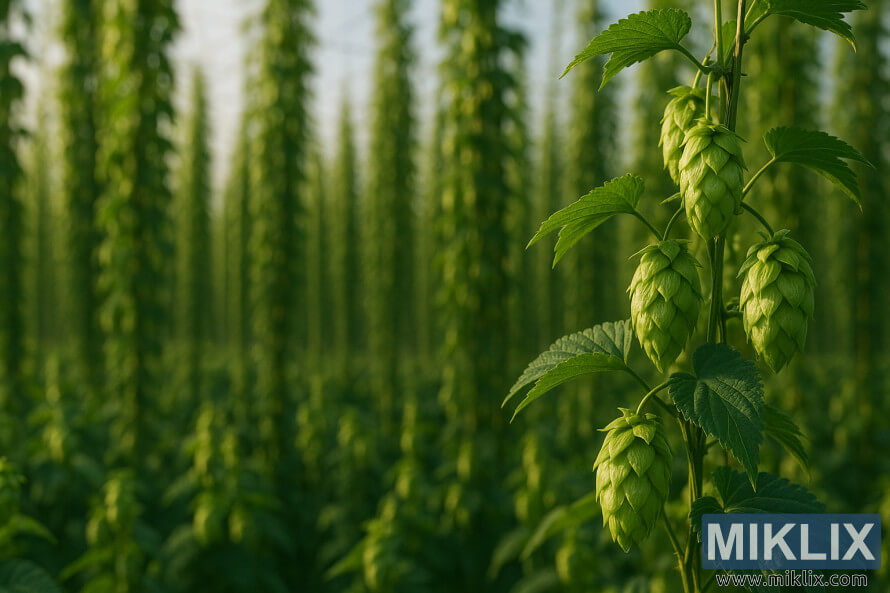
Click or tap the image for more information and higher resolutions.
Developed from Styrian Golding, Aurora, and a local Slovenian line, Celeia offers improved stability and yields. It retains floral, herbal, and earthy notes. Brewers often use Celeia hops for late-boil additions and dry hopping. This enhances its lavender, spicy, and lemon facets without overwhelming malt or yeast.
Alpha acids are modest, ranging from 3–6%, making Styrian Golding Celeia accessible to both homebrewers and commercial brewers. This article aims to provide a detailed guide for U.S. brewers and enthusiasts. It covers the origins, chemical profile, brewing use, storage, and applications of Celeia.
Key Takeaways
- Celeia hops are a Slovenian hop variety valued for delicate, noble aromas and balanced bitterness.
- Also called Styrian Golding Celeia (SGC / HUL010), it works well in lagers, pale ales, and traditional styles.
- Typical alpha acids range from 3–6%, making it a gentle dual-purpose hop.
- Flavor notes include floral, herbal, earthy, spicy, and subtle lemon.
- Best used in late-boil additions and dry hopping to showcase aroma.
- The hop combines Styrian Golding, Aurora, and Slovenian breeding for improved yield and stability.
Introduction to Celeia Hops and Their Role in Brewing
Celeia hops are known for their subtle, refined qualities. They are favored by brewers who seek delicate herbal and floral notes. These hops add floral, herbal, earthy, and lemon nuances that enhance aroma without overpowering malt.
As aroma hops, Celeia shines in late-boil additions and dry hopping. This is because volatile oils are preserved, making it ideal for these applications. Its floral profile is more pronounced than Styrian Golding or Fuggle, yet it retains the elegance of noble hop varieties. These are highly valued in European lagers and pilsners.
Being dual-purpose, Celeia offers a gentle bitterness while focusing on scent. This balance is perfect for both ales and lagers. It's ideal for those who desire mild bitterness and a refined bouquet, without the boldness of citrus or resin.
The brewing role of Celeia is centered on subtlety. It's best used in pilsners, lagers, English ales, ESBs, and pale ales. Whether used alone for a traditional noble nose or blended with other noble hops for complexity, it enhances aroma. It adds earthy, lemon, spicy, and woody accents that complement malt, never overpowering it.
- Late additions and whirlpool: maximize aroma hops impact.
- Dry hopping: preserve volatile floral and herbal oils.
- Early use in small amounts: add soft, balancing bitterness.
Origins and Breeding History of Celeia
In Slovenia, Celeia was crafted through a focused effort in hop breeding. The goal was to merge the classic noble aroma with modern performance. By crossing Styrian Golding, Aurora, and a local Slovenian wild hop, breeders aimed to create a stable, aromatic cultivar for today's breweries.
Records indicate that Celeia is the triploid offspring of Styrian Golding, Aurora, and a Slovenian wild hop. It is often referred to as Styrian Golding Celeia origin in documentation. It carries the international code SGC with cultivar ID HUL010 for formal recognition.
The breeding history of Celeia showcases a focus on aroma fidelity, improved yield, and processing stability. Breeders aimed to preserve the noble character of Styrian Golding while introducing vigor from Aurora and local material. This resulted in a hop suitable for both lagers and ales.
Significant milestones in Slovenian hop breeding led to the widespread adoption of Celeia by craft and commercial brewers. Trials highlighted consistent alpha levels, disease resistance, and reliable aroma expression. These traits meet the demands of modern brewing.
- Parentage: Styrian Golding × Aurora × Slovenia wild hop.
- Identification: International code SGC, cultivar/brand ID HUL010.
- Breeding aim: Noble-style aroma with stable yield and performance.
The written history of Celeia origins and breeding history offers a clear lineage and purpose. This background clarifies why Styrian Golding Celeia origin is mentioned when discussing European aroma hops. It also highlights the role of Slovenian hop breeding in contemporary brewing.
Chemical and Brewing Values of Celeia Hops
Celeia alpha acids range from 3% to 6%, averaging 4.5%. This moderate bitterness is perfect for balanced beers needing a gentle bitter touch. Late additions are preferred to preserve the hop aroma, avoiding early bittering.
Lab data indicate Celeia beta acids are between 2% and 4%, averaging 3%. The alpha-beta ratio varies, typically around 2:1, influencing beer stability and aging. This ratio is key for the long-term quality of bottled beers.
Co-humulone in Celeia is about 25%–29% of alpha acids, averaging 27%. This moderate level impacts the bitterness sharpness. Brewers aiming for softer bitterness might use brief hop contact or blend with varieties with lower co-humulone.
Celeia total oils range from 0.5 to 3.6 mL per 100 g, averaging 2.1 mL. The oil content is critical for aroma. Volatile compounds are best captured through late kettle additions and dry hopping, preserving floral and herbal notes.
- Myrcene: 26%–35% (about 30.5%) — resinous, citrus, fruity character.
- Humulene: 18%–23% (about 20.5%) — woody, noble, and spicy tones.
- Caryophyllene: 8%–9% (about 8.5%) — peppery and herbal edge.
- Farnesene: 3%–7% (about 5%) — fresh, green, floral highlights.
- Other components (β-pinene, linalool, geraniol, selinene): total 26%–45% — add citrus, floral, and terpene complexity.
Celeia is ideal for adding aroma and character to beer. Its balanced oil profile enhances lemony, herbal, spicy, and woody flavors. Use it in whirlpool hops, late kettle additions, or dry hopping to maximize these traits.
For pilsners, pale ales, and hybrid lagers, Celeia is a great choice. Its 4.5% average alpha acid and moderate oil content ensure a balanced flavor. Adjust usage to avoid vegetal or green notes.
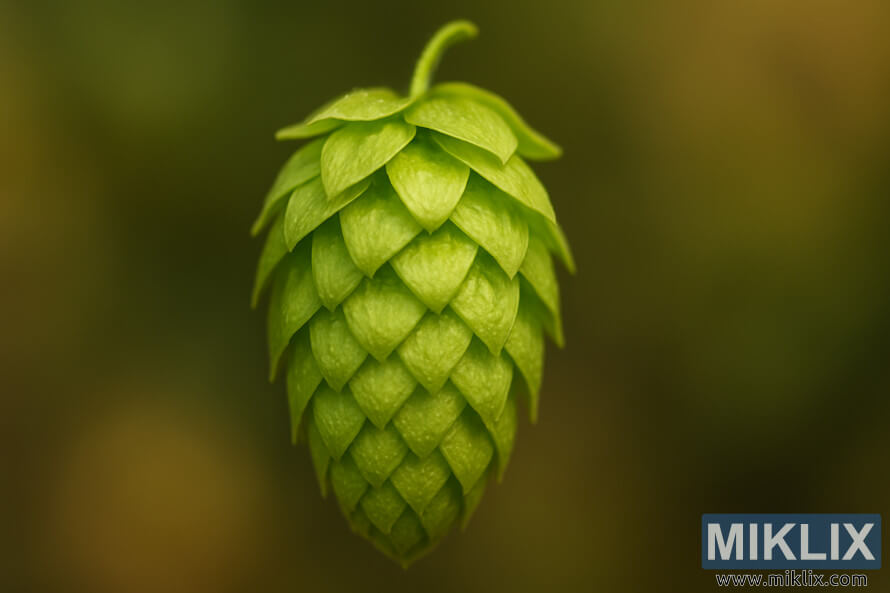
Click or tap the image for more information and higher resolutions.
Aroma and Flavor Profile of Celeia
Celeia boasts a refined, noble hop aroma, leaning towards floral and gently herbal. Upon tasting, it reveals top notes reminiscent of lavender, with a soft lemon brightness and a muted spice edge. These characteristics are central to the Celeia aroma profile, sought after by many brewers for its subtlety.
Below the floral hops, earthy and woody undertones emerge. Humulene and caryophyllene contribute to a light woody spice, while myrcene adds mild citrus and resinous accents. This balance ensures that the Celeia flavor notes remain smooth and non-aggressive on the palate.
Brewers find Celeia to be more floral than Styrian Golding or Fuggle, with an elegant bouquet. It's perfect for lagers, pilsners, and delicate ales. Here, it supports malt and yeast without overpowering them.
- Top notes: floral, lavender, light citrus
- Mid notes: herbal, earthy, lemony brightness
- Base notes: woody spice, gentle resinous finish
When added in whirlpool or late additions, Celeia's flavor notes remain fresh and nuanced. Early kettle additions, on the other hand, develop a subtler bitterness and warm, rounded earthiness. This versatility is key in crafting beers that require a classic, restrained hop signature.
Brewing Applications for Celeia Hops
Celeia shines as an aroma hop, not a primary bittering agent. Brewers aiming for soft bitterness use early boil additions. These additions provide measured alpha acid, but avoid floral character.
Late-boil and whirlpool additions bring out herbal and lavender notes. This method preserves volatile oils. For the best scent, plan a dry hop step after fermentation. This step preserves delicate aromatics and enhances citrus notes.
Given its modest AA% range of 3–6%, use Celeia sparingly for bitterness. Early additions can provide gentle balance. Later additions are key for aroma impact and complexity.
Blending enhances Celeia's strengths. Pair it with noble varieties like Saaz or Styrian Golding for classic European profiles. For a brighter, modern character, blend with citrus-forward hops while maintaining herbal depth.
- Early boil: smooth, gentle bitterness; avoid expecting aroma from this stage.
- Late-boil/whirlpool: preserve volatile oils and boost floral, herbal tones.
- Dry hop Celeia: highest aromatic return; use whole-leaf or pellet, no cryo/lupulin concentrates exist.
- Celeia blending: mix with Saaz or Styrian Golding for tradition, or with citrus hops for brightness.
Practical tip: keep late additions modest and time dry hop Celeia for 3–5 days at cooler temperatures. Small adjustments in timing and quantity significantly impact aroma and perceived bitterness.
Beer Styles That Showcase Celeia
Celeia shines in beers that highlight subtle floral and noble spice notes. It's perfect for lagers, where it adds a clean, understated hop flavor. This supports the malt without overpowering it.
In pilsners, Celeia brings a delicate floral and peppery touch. It's ideal as the primary aroma hop, creating a classic, elegant finish. This makes it a staple in continental lagers.
For pale ales, Celeia offers refined floral-citrus accents. It enhances the hop profile without overwhelming the malt. This makes it a favorite for brewers aiming for balance and drinkability.
- Traditional European lagers: gentle noble character, subtle spice.
- English ales and ESB: floral and herbal nuance that complements malt.
- Pilsners: crisp, clean aroma when used as a primary aroma hop.
- Pale ales: delicate citrus-floral lift for sessionable beers.
When planning beer styles with Celeia, consider hop timing and quantity. Late additions and dry hopping preserve its floral notes. Minimal bittering ensures the hop's finesse is maintained.
Small batches and pilot brews are great for exploring Celeia's versatility. They help determine its best role in different malts and water profiles. Tasting these side-by-side can guide you in finding the perfect fit for this versatile hop.

Click or tap the image for more information and higher resolutions.
Pairing Celeia Hops with Other Varieties
For the best results, aim for a balanced, floral, and mildly spicy profile when pairing Celeia hops. Saaz and Styrian Golding are classic choices that enhance Celeia's noble character without dominating it.
Styrian Golding, with its shared lineage and subtle earthiness, pairs well with Celeia. Small additions can deepen floral notes, maintaining an elegant and restrained hop blend.
Bobek adds delicate floral and spicy tones that complement Celeia's aroma. It's often paired with Styrian Golding and Saaz for traditional lagers and pilsners.
- Saaz: strengthens noble, earthy spice and lends European authenticity to the beer.
- Styrian Golding: enhances floral subtlety and smooths transition between bitterness and aroma.
- Bobek: adds gentle florals and a soft spice that pairs well in small amounts.
In brighter beers, include modern citrus or resin hops sparingly. A light touch can enhance lemon and grapefruit notes, while keeping Celeia as the aroma anchor.
When blending Celeia, blend with clear intent. Start with low percentages for the secondary hop, run aroma-only trials, and adjust based on how each partner modifies the final beer.
When selecting hops to mix with Celeia, plan for restraint. This ensures the beer remains cohesive, allowing Celeia's nuanced floral and spicy traits to shine.
How to Use Celeia Hops on Brew Day
Begin with early boil additions for a clean, smooth bitterness. Celeia's low alpha acids necessitate larger quantities for bittering. Calculate IBUs based on the crop-year alpha acid and adjust volumes to reach your target.
For aroma and flavor, focus on late additions and dry hopping. Add hops at 10–5 minutes left, at flameout, or during whirlpool contact to capture floral and herbal notes. Aim for a whirlpool temperature of about 160–180°F (71–82°C) and steep for 10–30 minutes to get the best Celeia whirlpool use effects.
Use Celeia in dry hop to maximize volatile oils that drive aroma. Typical dry-hop windows range from 2 to 7 days during fermentation maturation. Respect sanitation and limit oxygen pickup during transfers to preserve bright aromatics.
- Forms: whole leaf, T90 pellets, or standard pellets from suppliers. No lupulin powder is commonly available.
- Bittering tip: plan for a 3–6% AA range; increase weight versus higher-AA hops to match desired bitterness.
Practical dosage examples help dial in intensity. For a 5-gallon batch aiming for a pronounced Celeia character, try 0.5–1.5 oz in late-boil additions and 0.5–1.0 oz for dry hop. Tweak amounts by alpha acid and oil content of the specific harvest.
Handle hops with care: keep packages airtight and cold until use, limit oxygen exposure when dry hopping, and use sanitized tools. These steps preserve aroma and make using Celeia hops straightforward and rewarding on brew day.
Storage and Aroma Stability of Celeia
Celeia stands out for its aroma stability, a trait rare among noble varieties. Its floral and lavender notes remain distinct even after months of proper storage. This makes it a reliable choice for beers that emphasize aroma.
The total oil content in Celeia is moderate, with myrcene, humulene, linalool, and geraniol being key contributors to its scent. To preserve these oils, it's essential to limit exposure to heat, light, and oxygen. These elements can strip the essential compounds from the hop cones.
Proper storage of Celeia hops is critical to protect its volatile aromatics. Vacuum-sealing or nitrogen-flushing packages before freezing or refrigerating is recommended. These methods significantly reduce oxygen exposure and slow down oil degradation.
- Vacuum-seal or nitrogen-flush to minimize oxygen.
- Keep temperatures at or below freezing (0–4°C / 32–39°F) when possible.
- At minimum, refrigerate to maintain freshness.
It's important to monitor the harvest year and opt for the freshest crop available. Even with good aroma stability, a recent crop will preserve the peak floral and lavender character brewers desire.
Adhere to supplier-recommended shelf life and label packages with purchase and harvest dates. Thoughtful storage and regular stock rotation are key to preserving hop oils. This ensures consistent results on brew day.
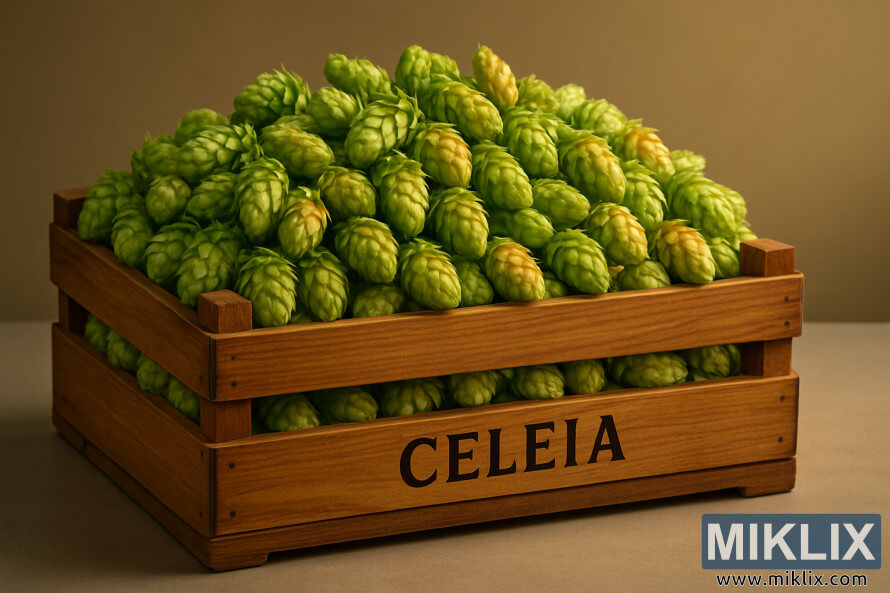
Click or tap the image for more information and higher resolutions.
Substitutes and Alternatives for Celeia
When Celeia is hard to find, brewers turn to reliable substitutes. Styrian Golding is the closest match, with its floral and earthy notes. It's perfect for those seeking a Styrian Golding alternative that retains delicate floral and biscuit-like earthiness.
Saaz from the Czech Republic is a top choice for pilsners and lagers. It brings a noble, spicy earthiness, leaning less floral and a bit peppier than Celeia. Use it in recipes needing subtle spice and classic continental bitterness.
Bobek offers a soft floral-spice profile, ideal for English ales and clean lagers. It's a good substitute for Celeia hops in beers where a gentle herbal top note is desired. Remember to adjust hop amounts slightly, as alpha acids and oil content differ by variety.
- Styrian Golding alternative: closest in aroma and lineage; start with a 1:1 late-addition swap and tweak for scent.
- Saaz alternative: ideal for pilsners; expect more spice, reduce or increase late hops to taste.
- Bobek: good for English-style ales and lagers; increase dry-hop weight modestly if aroma seems light.
Practical substitution tips ensure recipe consistency. Scale late additions and dry-hop doses in small test batches. Taste and measure alpha acids, then adjust bittering additions. Blending substitutes can recreate Celeia’s balance when a single substitute falls short.
Availability and Purchasing Celeia Hops
Celeia hops are available through online distributors and retail platforms. Their availability changes with each harvest year and package size. Small homebrew shops and national suppliers offer Celeia in whole-leaf form or as T-90 pellets.
When purchasing Celeia hops, verify the harvest year and storage conditions. Fresh crops have brighter aromas, essential for late-hop additions and dry hopping.
Compare prices from different suppliers to find the best deal. Look for alpha and beta acid analyses to adjust bitterness and hop utilization.
Reputable suppliers offer Celeia in whole leaf or T-90 pellets. Major names like Yakima Chief Hops, BarthHaas, and Hopsteiner rarely provide Cryo or lupulin-concentrate versions.
- Verify the cultivar ID HUL010 or the international code SGC to ensure authentic Slovenian Celeia.
- Match package size to your batch size to avoid long-term storage of opened hops.
- Ask suppliers about vacuum sealing and cold-chain handling to preserve aroma quality.
Celeia pellets are convenient for brewers who prefer ready-to-use formats. They are easier to measure and handle. Retail platforms like Amazon and dedicated hop shops may offer small packs for test batches.
For larger quantities, request detailed information from suppliers. Look for transparent testing and recent harvest dates to ensure aroma quality in your beer.
Cultivation and Agronomic Notes for Celeia
Celeia was bred to combine noble aroma with robust field performance. It boasts improved yield over older European varieties. This variety, a triploid hybrid from Slovenian breeding, combines vigor with a balanced aroma and stability.
For those aiming to grow Celeia hops, soil fertility and water management are key. A well-drained loam with consistent moisture fosters cone development. Training systems that ensure light and air circulation are essential to prevent disease and promote even cone maturation.
While triploid hybrids like Celeia may offer stability and yield advantages, local conditions impact cone chemistry. Factors such as soil type, microclimate, and pruning methods influence alpha and beta acids, as well as essential oils. Regular tissue tests and tailored nutrition are vital to preserve brewing characteristics.
Seasonal variability demands close monitoring for harvest planning. Each year's crop may vary in alpha acid, beta acid, and oil percentages. It's essential for buyers and brewers to request lab analyses for each lot to ensure quality matches brewing targets.
- Planting: choose sunny sites with wind protection and deep, fertile soil.
- Training: use trellis heights of 4–6 meters to maximize canopy and yield.
- Pest and disease: scout for downy and powdery mildew; apply integrated controls.
- Harvest: time by cone feel and lupulin color to secure target bitterness and aroma.
No major commercial lupulin powder forms exist for Celeia. Processing focuses on whole cones and pellets, preserving key oils for brewing. This approach aligns supply chains with traditional pellet suppliers and craft brewers following Slovenian hop agronomy practices.
Field records tracking crop inputs and weather are essential for predicting Celeia yield and cone chemistry. Accurate record-keeping ensures consistent supply and helps buyers understand seasonal quality shifts when sourcing Celeia hop cultivation lots.
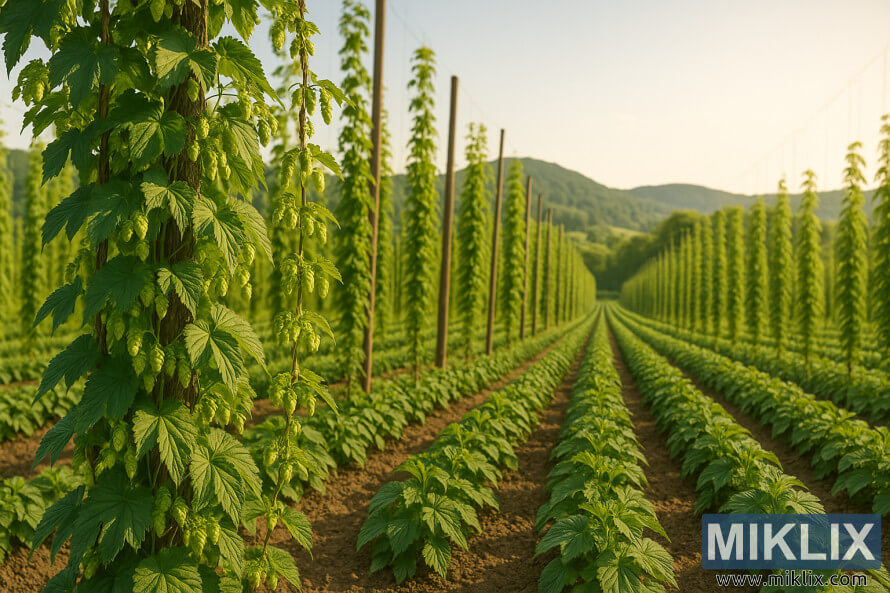
Click or tap the image for more information and higher resolutions.
Tasting Notes and Sensory Evaluation with Celeia
Begin by smelling the dry cone or pellet of Celeia hops. Notice the initial floral and lavender-like top notes. These impressions are key to a successful tasting session.
Warm the cone or pellet in your hand. This action releases essential oils, revealing citrus and lemon notes. Document these changes during your sensory evaluation to capture fleeting aromas.
Conduct a simple trial using a small-scale beer test. Prepare one batch with Celeia added late or as a dry hop, and another without. Compare the aroma intensity and how the hop notes alter the beer's profile.
- Floral intensity — rate how strongly lavender or floral tones appear.
- Herbal and earthy backbone — judge the depth and clarity of green, herbal notes.
- Citrus brightness — look for lemon or light citrus lift.
- Spiciness and woody undertones — spot peppery or humulene-driven woodiness.
- Perceived bitterness smoothness — assess how gently bitterness sits with malt.
Use numeric scoring to maintain consistency in your tasting sessions. Short, focused evaluations help highlight Celeia's subtle qualities.
The goal of Celeia sensory evaluation is to showcase its role as a balancing, noble-style hop. It should enhance floral complexity and add gentle citrus without overpowering malt or hop bitterness.
Celeia hops in Commercial and Craft Brewing Examples
Small and regional breweries often use Celeia in commercial beers. They add a gentle floral and earthy tone. Fyne Ales Farm Brewery, for instance, uses Nàdar Celeia in a spontaneously fermented blend. Here, Celeia enhances mixed-culture aromatics and complements native microflora.
In Central Europe and the UK, brewers frequently include Celeia in traditional styles. They use it in pilsners, lagers, ESB, and red ales. This hop adds a noble nuance, avoiding harsh bitterness. These beers highlight balance and drinkability.
Craft brewers in the United States and Europe feature Celeia in limited releases. They showcase it as a specialty aroma hop. Recipe notes often mention the harvest year and hop lot, demonstrating provenance and building trust with customers.
Practical Celeia usage examples:
- In pilsners, use a modest late addition to lend floral, slightly spicy character without pushing bitterness.
- In mixed-culture or spontaneously fermented beers, pair with native yeasts to enrich complex fruity and earthy layers.
- In English-style ales and ESBs, combine with traditional UK hops to add subtle continental brightness.
These examples illustrate how beers with Celeia hops can vary. They range from delicate lager expressions to bold farmhouse blends. Brewers select Celeia for its ability to refine aroma while supporting the beer's broader profile.
Conclusion
Celeia hops summary: Celeia presents a classic Slovenian noble profile, with delicate floral, herbal, and earthy notes. It has a smooth, balanced bitterness. Its chemical profile, with alpha acids around 3–6%, beta acids 2–4%, and modest total oils, is ideal for aroma-focused use. Brewers seeking subtlety will find Celeia perfect for late-boil, whirlpool, and dry-hop additions to preserve volatile oils.
Why use Celeia: Opt for Celeia when you desire gentle lavender, soft spice, and light citrus to enhance lagers or refined pale ales. It won't overpower malt character. Its noble traits align well with Styrian Golding and Saaz, making it a great substitute for a softer floral tone. For optimal results, use fresh harvests and store hops cold and oxygen-free to maintain aroma stability.
Celeia brewing conclusions: In both traditional and modern recipes, Celeia is a reliable, versatile choice for aroma-driven beers. Late additions or dry hopping are best to capture its oils. Consider Styrian Golding or Saaz as substitutes if availability is limited. For U.S. brewers aiming for classic noble character with a refined footprint, Celeia requires careful handling and thoughtful pairing.
Further Reading
If you enjoyed this post, you may also like these suggestions: