
Image: Progress Hop Variety Growing on Bines in a Traditional English Hop Garden
Published: October 22, 2026 at 11:11:22 PM UTC
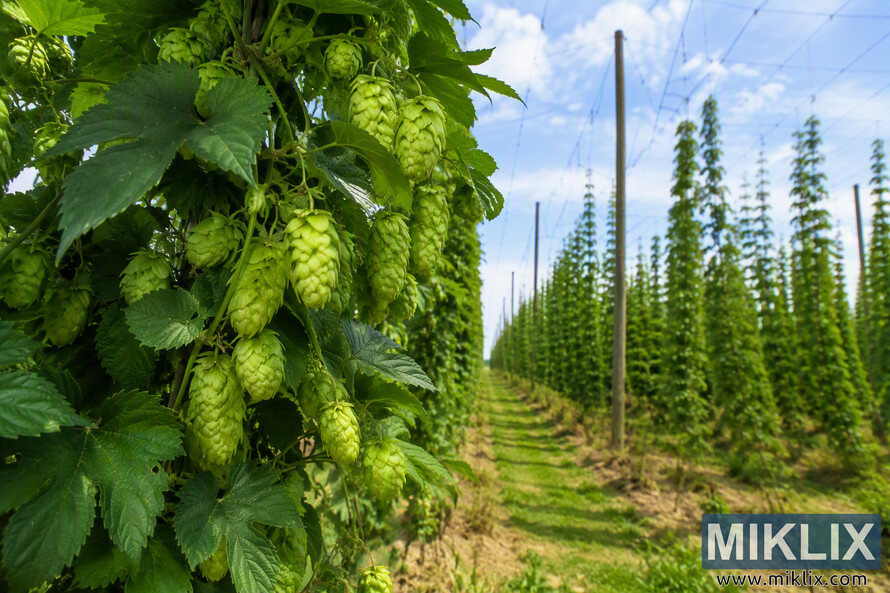
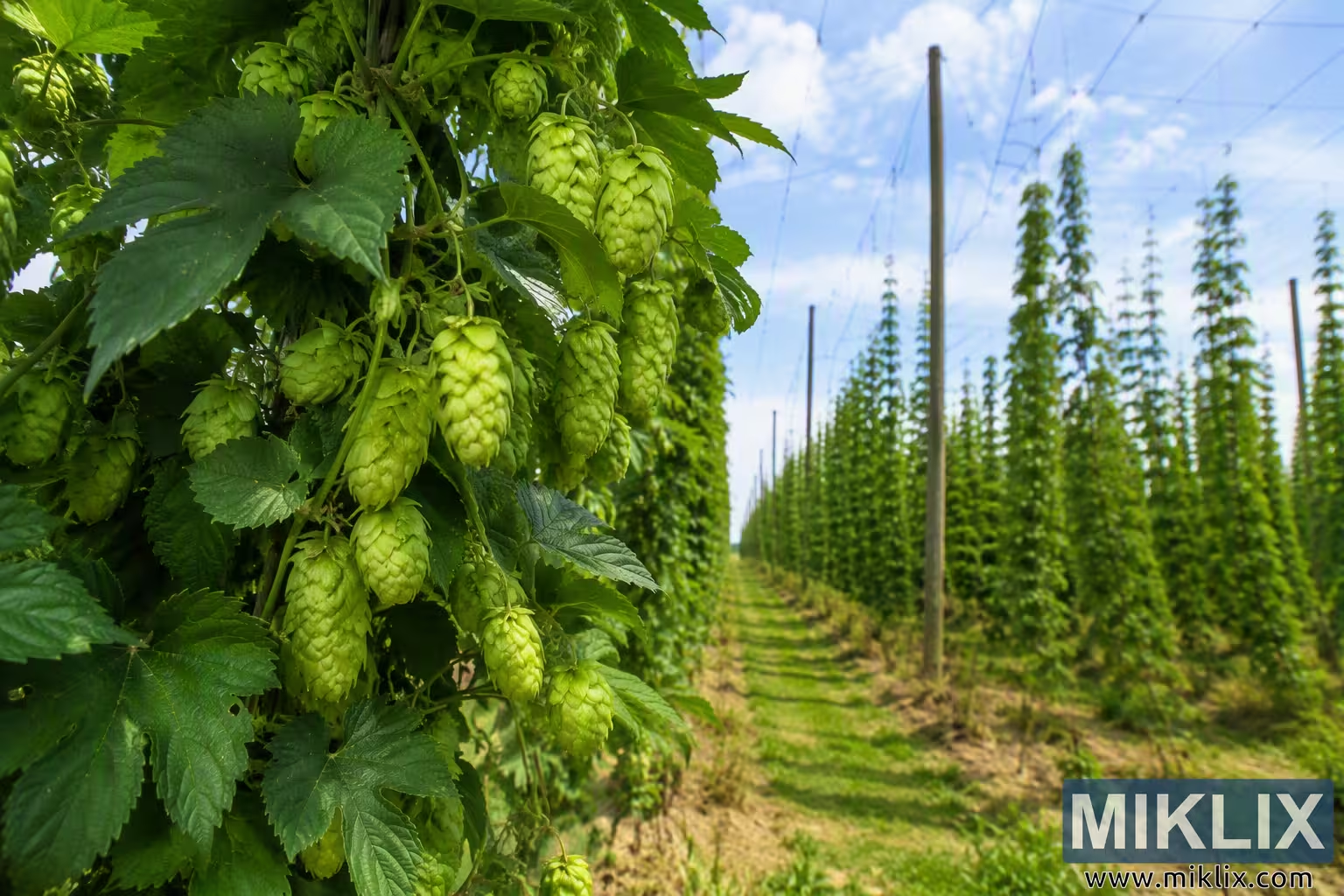
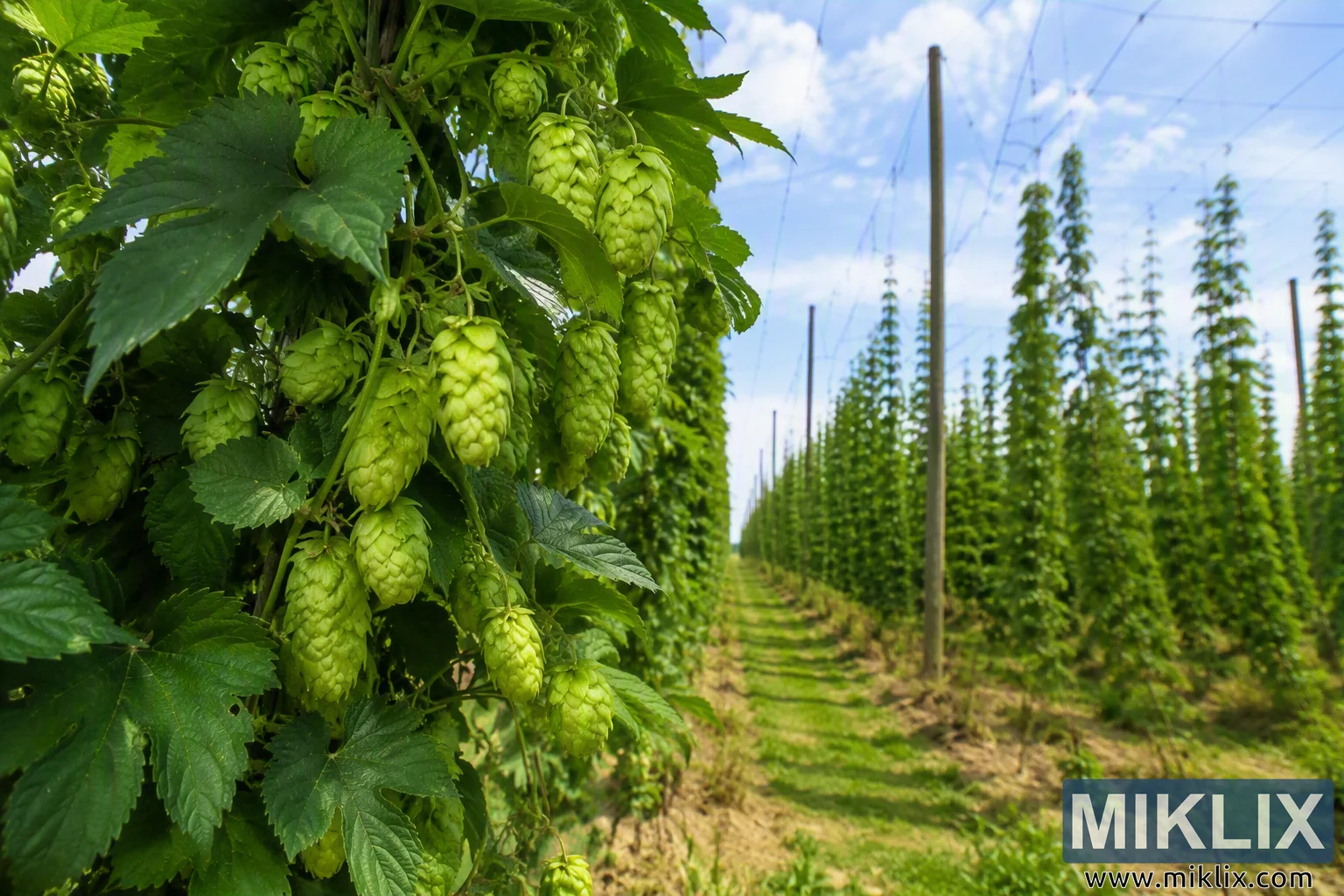
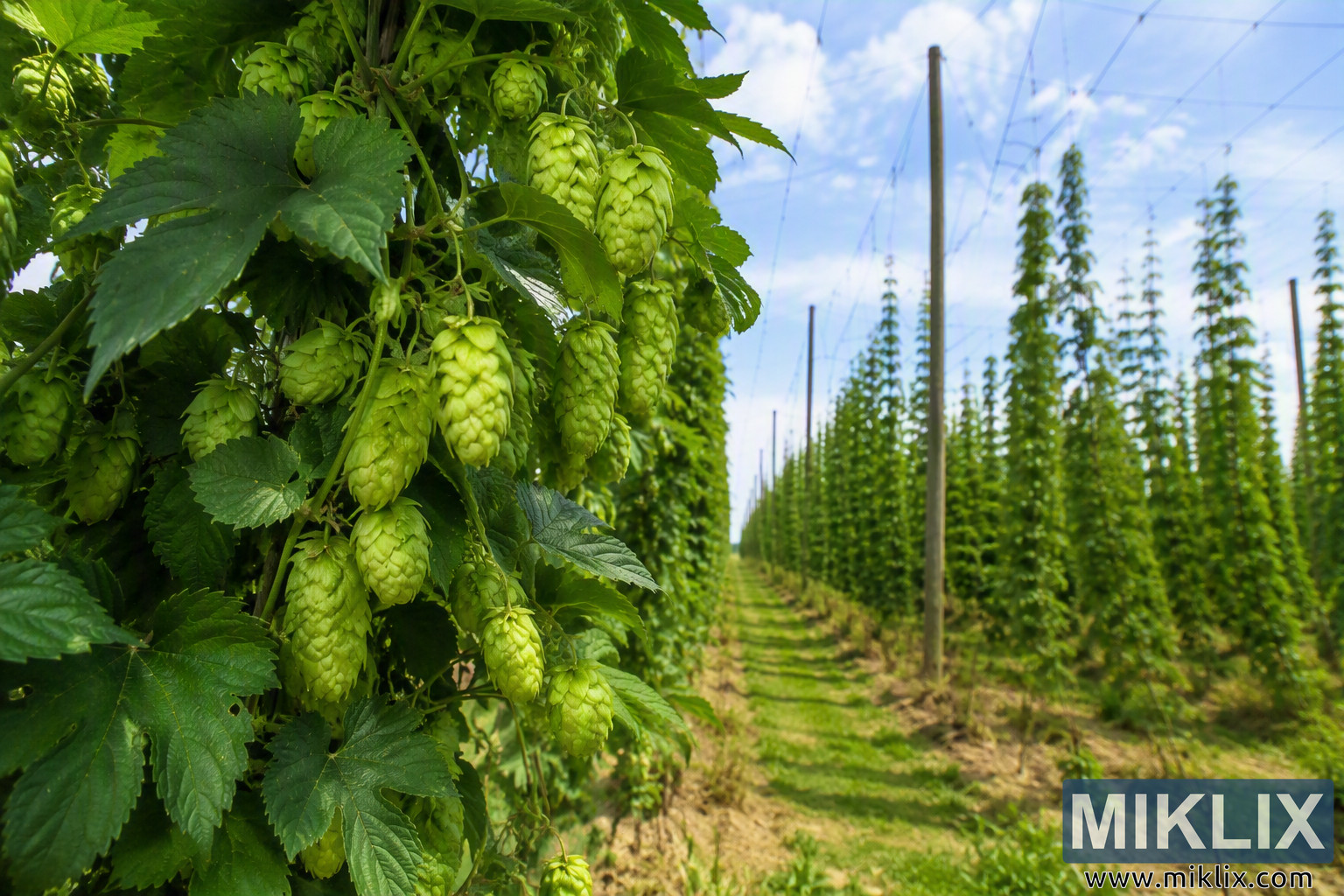
High-resolution landscape image showing Progress hops growing on bines in a traditional English hop garden. Fresh green hop cones dominate the foreground, with orderly trellised rows stretching across the agricultural landscape under bright daylight.
Available versions of this image
The image files available for download below are less compressed and higher resolution - and as a result of that, higher quality - than the images embedded in articles and pages on this website, which are more optimized for file size in order to reduce bandwidth consumption.
Regular size (1,536 x 1,024)
Large size (3,072 x 2,048)
Very large size (4,608 x 3,072)
Extra large size (6,144 x 4,096)
Comically large size (1,048,576 x 699,051)
- Still uploading... ;-)
Image description
This high-resolution landscape photograph depicts a cultivated hop garden in England featuring the Progress hop variety growing vigorously on tall bines supported by a traditional trellis system. The image is composed with a strong sense of depth and perspective, drawing attention first to the abundant clusters of hop cones occupying the left side of the frame before leading the viewer's eye along the receding rows of hop plants extending into the distance. The overall scene presents a productive agricultural environment during the growing season, when the hop plants are mature and carrying numerous well-developed cones.
In the foreground, dense green foliage surrounds multiple hanging hop cones. The cones display the characteristic overlapping bracts that create a layered, pinecone-like appearance associated with hop flowers. Several cone clusters vary in size and maturity but share a fresh green coloration that contrasts against the darker green leaves surrounding them. The leaves are broad, textured, and serrated along the edges, showing visible veins and subtle variations in tone. Some leaves are sharply focused, revealing fine surface details, while others blend into surrounding vegetation due to the shallow depth of field.
The hop bines climb vertically along support strings that are attached to a large trellis structure. These climbing plants form a dense living wall of vegetation along the left side of the image. The concentration of cones and leaves creates a rich texture of layered greens, ranging from deep forest tones in shaded areas to lighter yellow-green highlights where sunlight reaches the foliage. The photograph emphasizes the agricultural value of the crop by showing a large number of cones distributed throughout the visible plant growth.
Moving toward the center and right side of the image, the scene opens into long rows of cultivated hops. Tall support poles rise vertically from the ground at regular intervals. Overhead wires stretch between the poles, forming the framework required to support the climbing plants. The arrangement creates strong linear patterns that guide the eye toward a distant vanishing point. The geometry of the trellis system contrasts with the organic forms of the leaves and cones, illustrating the combination of natural growth and structured agricultural management.
A grassy access path runs through the middle of the hop yard. The path is bordered by cultivated soil and rows of hop plants, creating a corridor that enhances the sense of depth. The grass appears healthy and green, while patches of exposed earth along the edges reveal the working agricultural nature of the location. The path serves both a practical and visual function, providing access through the field while also contributing to the composition of the photograph.
In the background, additional rows of hop bines continue across the landscape. These more distant plants appear progressively softer and less detailed due to atmospheric perspective and lens focus characteristics. The repeating vertical forms create a rhythm throughout the image and communicate the scale of the cultivation area. The rows appear carefully maintained, suggesting a managed commercial or heritage hop-growing operation typical of traditional hop-producing regions.
The lighting indicates daylight conditions with bright natural sunlight illuminating much of the scene. Sunlight highlights the edges of leaves and hop cones, producing subtle reflections and variations in brightness. Areas of shade among the foliage introduce depth and dimensionality. The balance between illuminated and shaded regions contributes to a realistic and visually appealing representation of the crop. Colors are vivid without appearing artificial, dominated by multiple shades of green that convey freshness, vitality, and active plant growth.
Above the hop garden, a blue sky occupies the upper portion of the frame. Soft white clouds are scattered across the sky, adding visual interest while maintaining a bright atmosphere. The sky serves as a contrasting backdrop to the vertical poles and climbing plants. Thin support wires are visible against the sky, emphasizing the engineering infrastructure required for hop cultivation.
No people, vehicles, signage, logos, brand identifiers, or manufactured products are visible within the photograph. The focus remains entirely on the agricultural landscape and the hop plants themselves. The image conveys themes of farming, cultivation, crop production, horticulture, brewing ingredients, rural landscapes, seasonal growth, and traditional agricultural practices. The overall composition balances close-up botanical detail with wider environmental context, providing both an intimate view of the hop cones and a broader understanding of the organized hop garden in which the plants are grown. The result is a detailed, visually rich portrayal of Progress hops thriving on tall bines within a structured English hop-growing environment.
The image is related to: Hops in Beer Brewing: Progress