
Hops in Beer Brewing: Progress
Published: October 22, 2026 at 11:11:22 PM UTC
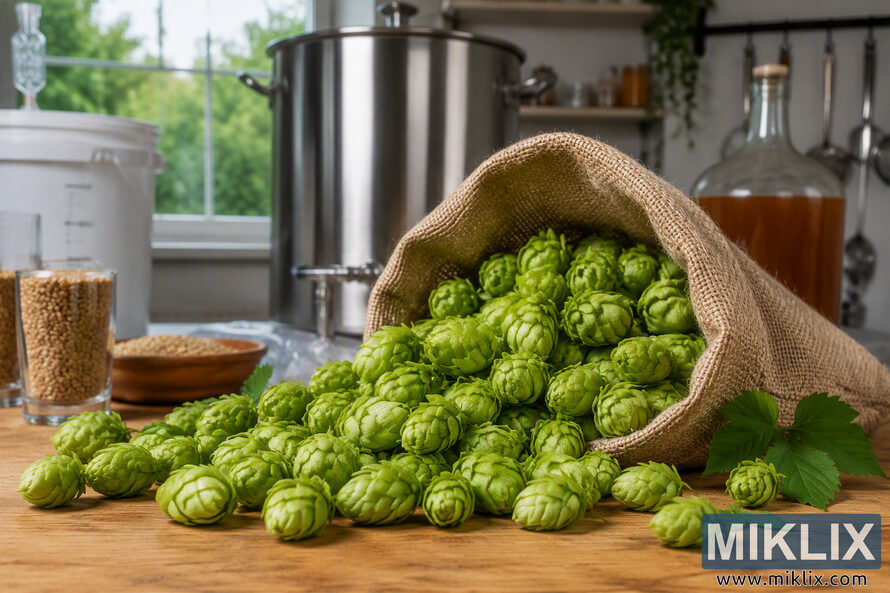
Progress is a classic British dual-purpose hop bred as an alternative to Fuggle, offering gentle floral, herbal, and earthy notes with touches of spice and subtle fruit—well suited to bitters, pale ales, porters, and other traditional British-style homebrews.
Click or tap the image for more information and higher resolutions.
Progress hops have earned their place in brewing history as a reliable English variety. This hop brings traditional flavors to your homebrew with a modern twist. Whether you brew pale ales or rich porters, understanding Progress can elevate your beer to new levels.
Many homebrewers overlook this versatile hop. Yet it offers unique characteristics that shine in multiple beer styles. This guide covers everything you need to know about brewing with Progress hops.
What Are Progress Hops?
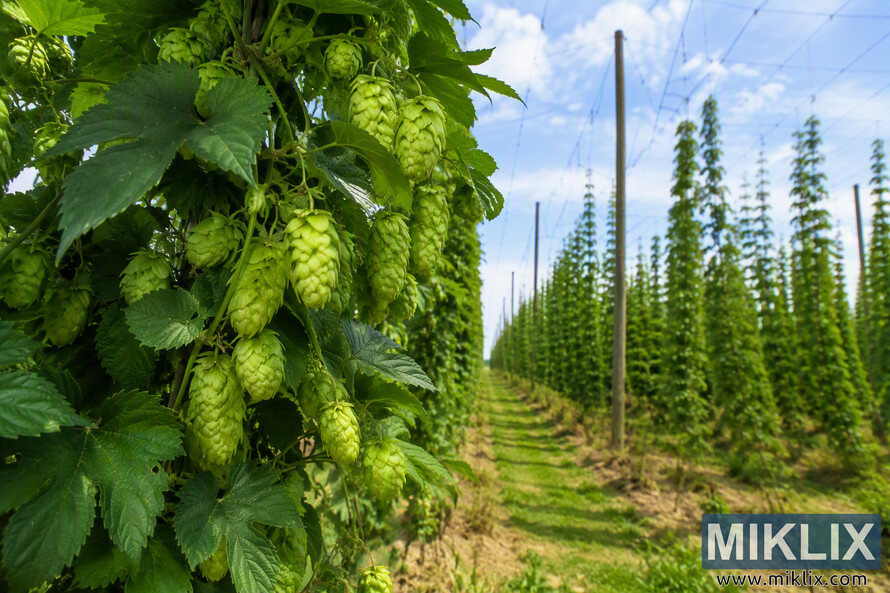
Progress is an English hop variety developed wye college in the 1950s. The hop serves as a replacement Fuggle in many recipes. Progress was created to provide better disease resistance while maintaining classic English hop characteristics.
This hop variety comes from Wye College breeding programs. The daughter of Whitbread Golding variety brings reliable performance to homebrewers. Progress hops offer consistent quality year after year.
Click or tap the image for more information and higher resolutions.
Origin and Development
The hop was developed Wye College to address farming challenges. British growers needed a hop with better wilt resistance. Progress emerged as a solution that preserved traditional English hop character.
Breeders crossed several varieties to create Progress. The result was a hop that could withstand disease pressure. This made Progress a practical choice for commercial and home brewing operations.
Heritage Background
Progress carries genetics from classic English varieties. This heritage gives it authentic British hop flavor.
- Whitbread Golding parentage
- Traditional English breeding
- Disease-resistant genetics
- Consistent crop yields
Modern Applications
Today's brewers use Progress in many beer styles. The hop adapts well to different brewing techniques.
- Traditional English ales
- Modern craft beers
- Experimental recipes
- Blended hop profiles
Growing Characteristics
Progress plants show strong vigor in the garden. They produce reliable harvests for growers.
- High yield potential
- Good wilt resistance
- Moderate cone size
- Consistent alpha acids
Availability
You can find Progress hops from multiple suppliers. The variety remains popular with brewing vendors.
- Pellet form widely available
- Whole cone options
- Fresh crop annually
- Reasonable pricing
Characteristics and Chemical Profile of Progress Hops
Understanding the chemical makeup helps you brew better beer. Progress hops contain specific acids and oils that create their unique profile. These compounds determine how the hop performs in your recipes.
Alpha and Beta Acids Content
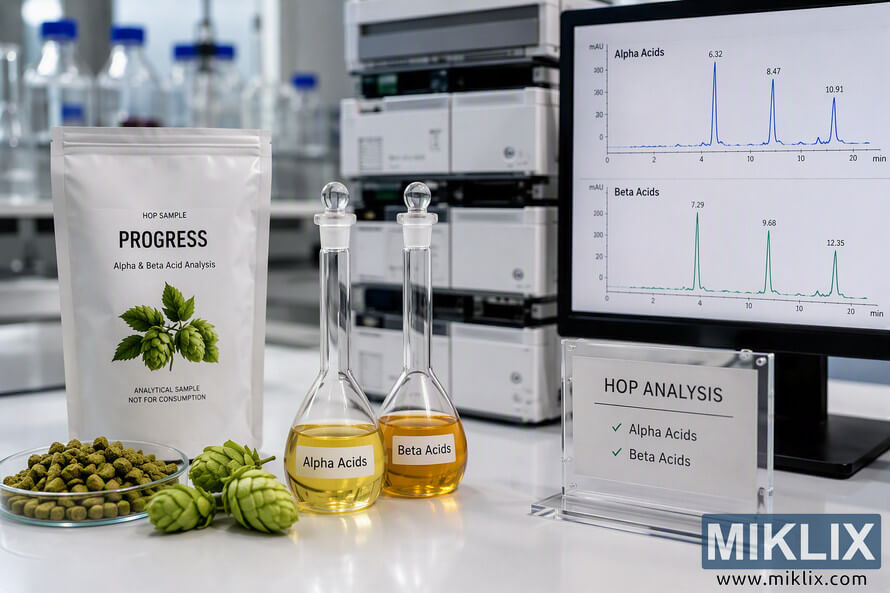
Progress typically contains between five and seven percent alpha acids. This moderate level makes it suitable for both bittering and aroma. The beta acids range from two to four percent.
These acid levels place Progress in the dual-purpose category. You can use it early in the boil for bitterness. Late additions preserve the delicate aroma characteristics.
Click or tap the image for more information and higher resolutions.
Essential Oil Composition
The oil profile gives Progress its distinctive aroma. Myrcene dominates the essential oil content at around thirty-five percent. This compound contributes earthy and herbal notes.
Other oils include humulene and farnesene. These create spicy and floral undertones. The oil blend produces a complex aroma in finished beer.
| Component | Typical Range | Contribution | Brewing Impact |
| Alpha Acids | 5-7% | Moderate bitterness | Balanced IBU contribution |
| Beta Acids | 2-4% | Oxidative stability | Extended shelf life |
| Myrcene | 30-40% | Earthy, herbal | Primary aroma base |
| Humulene | 12-18% | Spicy, woody | Complexity in aroma |
| Cohumulone | 25-30% | Bittering character | Smooth bitterness |
Flavor and Aroma Profile of Progress Hops
Progress brings classic English hop character to your beer. The aroma combines earthy notes with subtle floral hints. Many brewers describe it as refined and elegant.
Primary Flavor Notes
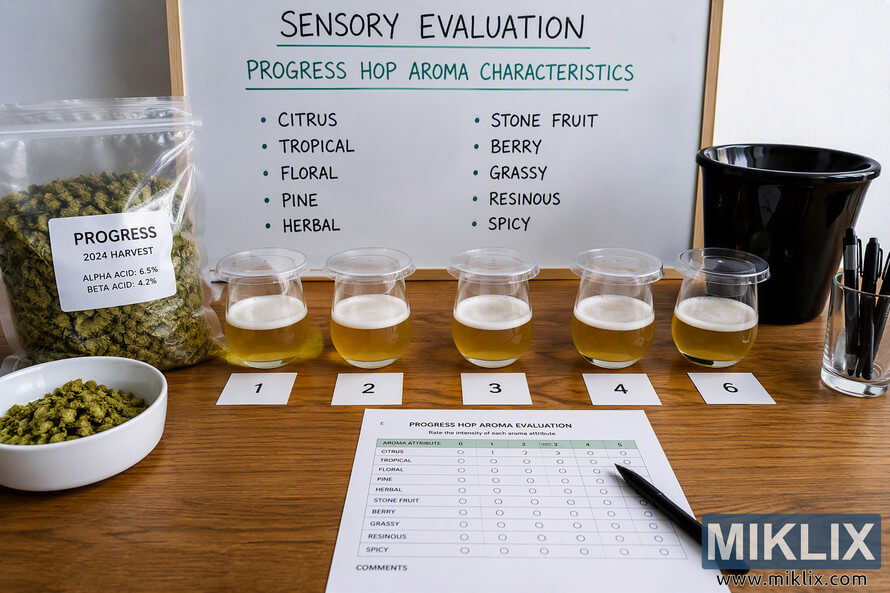
The flavor profile features grass and mint characteristics. These herbal notes define the Progress hop experience. Some brewers detect subtle honey sweetness in the background.
The bitterness quality remains smooth and refined. Unlike harsh hop varieties, Progress offers a gentle bite. This makes it perfect for session beers and balanced ales.
Click or tap the image for more information and higher resolutions.
Aroma Descriptors
The aroma presents multiple layers of complexity. Each component contributes to the overall impression.
- Fresh cut grass and meadow herbs
- Gentle mint and spearmint
- Subtle floral undertones
- Light honey sweetness
- Earthy garden character
- Soft spice notes
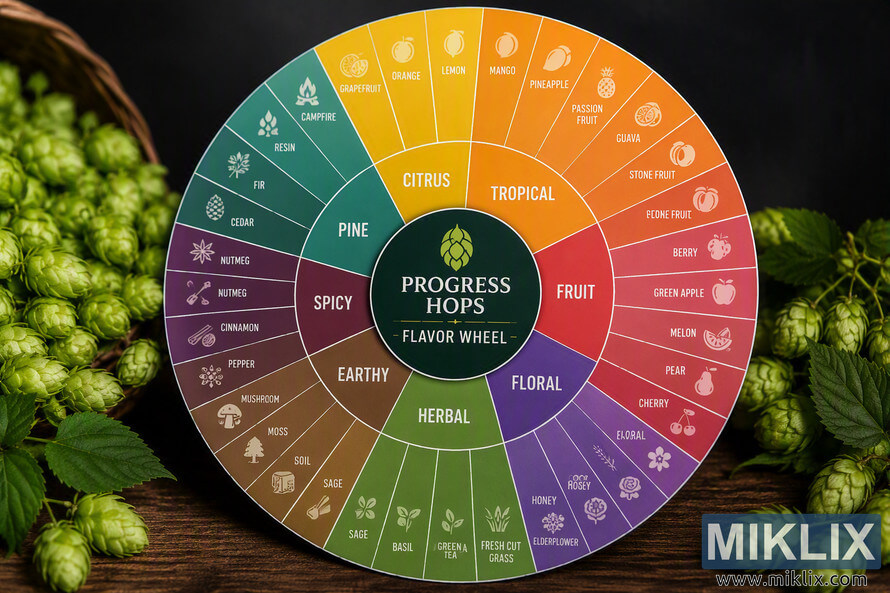
Click or tap the image for more information and higher resolutions.
Comparison to Similar Hop Varieties
Progress works as a replacement Fuggle in most recipes. The two varieties share similar profiles. Progress typically shows slightly stronger aroma intensity.
Whitbread Golding also compares closely to Progress. Being a daughter of this variety, Progress carries forward many characteristics. The main difference lies in disease resistance rather than flavor.
Progress Advantages
- Better disease resistance
- More consistent availability
- Slightly stronger aroma
- Easier to grow commercially
- More predictable chemistry
Fuggle Advantages
- Traditional heritage status
- More widely recognized
- Softer overall character
- Extensive recipe history
- Slightly earthier profile
Whitbread Golding
- Parent variety genetics
- More floral emphasis
- Lower availability today
- Premium pricing
- Historical significance
Click or tap the image for more information and higher resolutions.
Ideal Beer Styles for Progress Hops
Progress shines in traditional English beer styles. The hop matches perfectly with classic ale recipes. Many British breweries have used Progress for decades.
Traditional English Ales
Pale ales benefit from Progress hop character. The herb and grass notes complement malt sweetness. Use Progress for authentic British pale ale flavor.
Bitters showcase Progress at its best. The moderate alpha acids provide proper bitterness levels. The aroma adds complexity without overwhelming the malt.
Best Style Matches
- English Bitter and Best Bitter
- English Pale Ale
- Extra Special Bitter (ESB)
- English IPA
- Brown Ale
- Mild Ale
- Porter and Stout
- Old Ale
Modern Applications
- Session IPAs
- American Brown Ale
- Blonde Ale
- Cream Ale
- Golden Ale
- Irish Red Ale
- Scottish Ale
- Specialty Hybrids
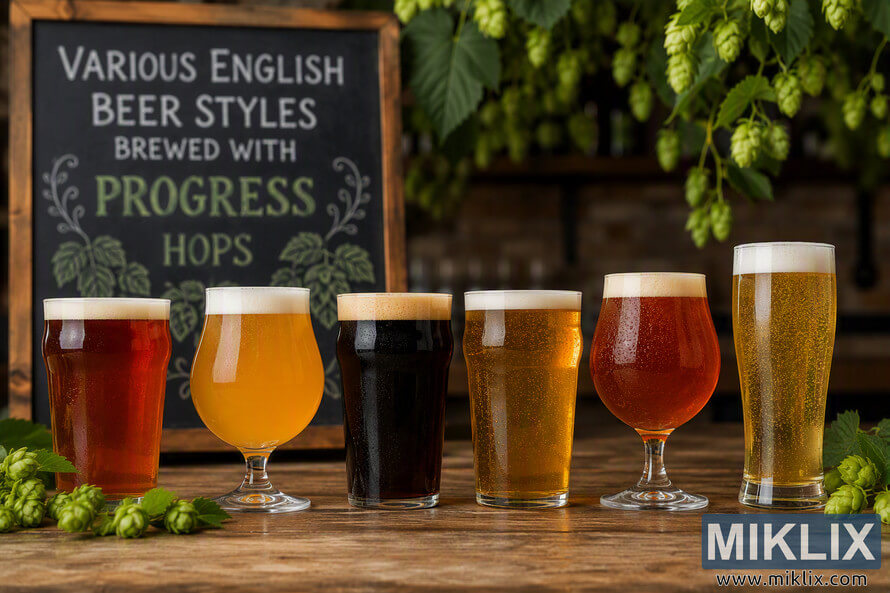
Click or tap the image for more information and higher resolutions.
Porters and Dark Beers
Porters pair wonderfully with Progress character. The earthy hop notes complement roasted malt. This creates a balanced dark beer with refined bitterness.
Brown ales also work well with this hop. Progress adds herbal complexity to nutty malt profiles. The combination produces approachable, sessionable beers.
Pro Tip: Progress works exceptionally well in lower-alcohol beer styles. The refined character shines in session-strength beers between 3.5% and 4.5% ABV.
Brewing Techniques and Timing for Progress Hops
Proper timing extracts the best qualities from Progress. Different addition points create different effects. Understanding when to add hops improves your finished beer.
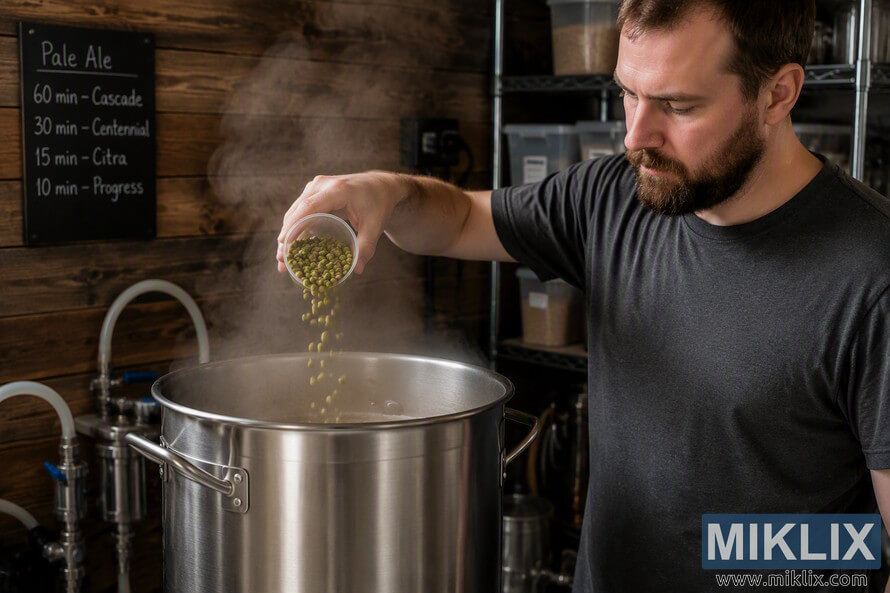
Click or tap the image for more information and higher resolutions.
Bittering Additions
Add Progress at the start of your boil for bittering. A sixty-minute addition extracts maximum alpha acids. Calculate your quantity based on desired IBUs.
The moderate alpha acid content means you need more hops than high-alpha varieties. This actually benefits your beer. More hop material adds complexity beyond simple bitterness.
| Addition Time | Purpose | Typical Amount | Expected Result |
| 60 minutes | Primary bittering | 1-2 oz per 5 gallons | 20-30 IBUs |
| 30 minutes | Flavor development | 0.5-1 oz per 5 gallons | Moderate flavor contribution |
| 15 minutes | Late boil flavor | 0.5-1 oz per 5 gallons | Strong flavor, light aroma |
| 5 minutes | Aroma emphasis | 1-2 oz per 5 gallons | Fresh hop aroma |
| Whirlpool | Maximum aroma | 1-2 oz per 5 gallons | Intense aroma preservation |
| Dry hop | Raw hop character | 1-3 oz per 5 gallons | Fresh grass and herb notes |
Aroma and Late Additions
Late boil additions preserve Progress aroma compounds. Add hops in the final fifteen minutes for flavor. Five-minute additions maximize aroma retention.
Whirlpool additions work excellently with Progress. Steep hops at around one hundred seventy degrees for twenty minutes. This technique extracts oils without harsh bitterness.
Start your boil and add bittering hops at sixty minutes
Add flavor hops at the thirty or fifteen minute mark
Plan late additions for the final five minutes of boiling
Cool wort to 170°F after turning off heat
Add whirlpool hops and steep for fifteen to twenty minutes
Cool wort rapidly to preserve hop aromatics
Consider dry hopping during fermentation or conditioning
Dry Hopping with Progress
Dry hopping amplifies the grass and mint characteristics. Add Progress during active fermentation or after. Use one to three ounces per five gallons.
The herb and honey notes intensify through dry hopping. This technique works especially well in pale ales. Contact time of three to five days produces optimal results.
Recipe Formulation: For a balanced English Bitter, use 1.5 oz Progress at sixty minutes, 0.5 oz at fifteen minutes, and 1 oz for dry hopping. This creates a beer with 25-28 IBUs and authentic English character.
Typical Usage Rates and Substitutions for Progress Hops
Getting the right amount of hops in your recipe ensures proper balance. Progress usage rates vary by beer style and desired intensity. Start with tested ranges and adjust based on your preferences.
Standard Addition Rates
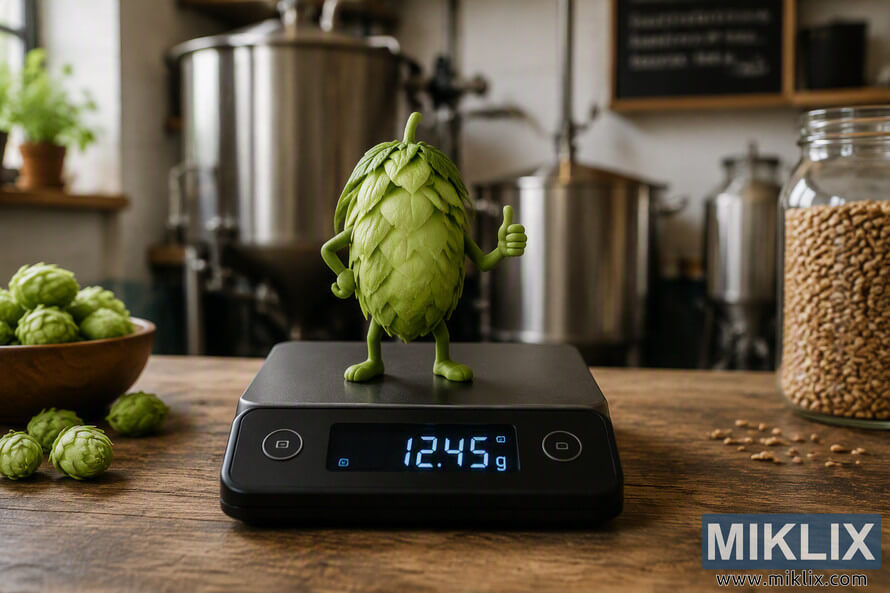
For bitter beers, use one to two ounces of Progress per five gallons as bittering hops. This creates twenty to thirty IBUs depending on your alpha acid percentage. Check your specific batch for exact numbers.
Aroma additions typically range from half an ounce to two ounces. More hop material increases aroma intensity. Balance this with your malt profile and beer style.
Click or tap the image for more information and higher resolutions.
By Beer Style
- English Bitter: 2-3 oz total
- ESB: 3-4 oz total
- Pale Ale: 3-5 oz total
- Porter: 2-3 oz total
- Brown Ale: 2-3 oz total
- Mild: 1-2 oz total
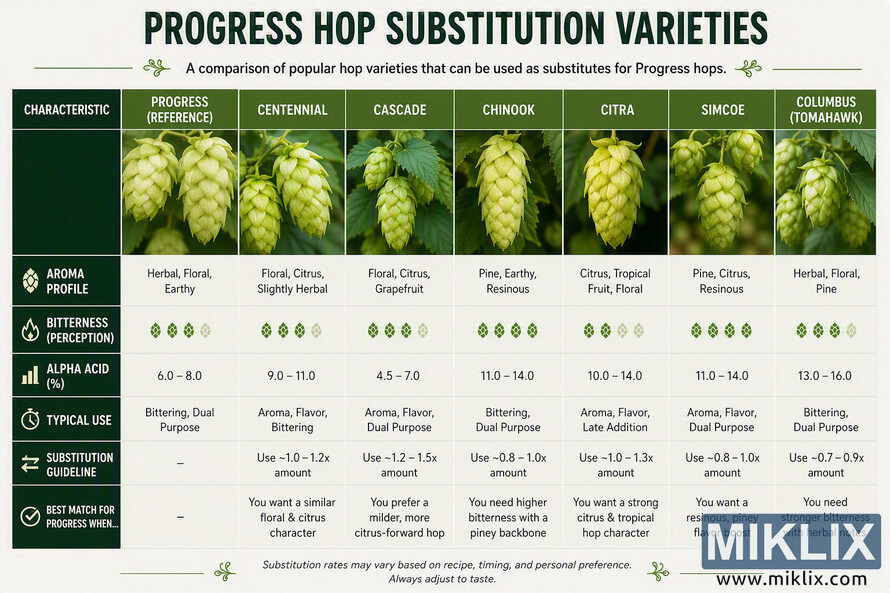
Hop Substitutions Progress
Several varieties work as substitutions Progress in recipes. Choose based on availability and desired characteristics.
- Fuggle (closest match)
- Whitbread Golding Variety (WGV)
- East Kent Goldings
- Willamette
- Styrian Goldings
Click or tap the image for more information and higher resolutions.
Adjusting for Alpha Acid Variations
Alpha acid percentages vary by crop year. Check your package for specific information. Adjust your quantities to hit target IBUs.
Higher alpha acids mean less hops needed for bittering. Lower percentages require more material. Use brewing calculators to determine exact amounts for your batch.
Important: Always verify alpha acid content on your hop package before brewing. A two percent difference can significantly impact your final beer bitterness.
Storage and Handling Tips for Progress Hops
Proper storage maintains hop quality over time. Progress hops stay fresh longer with correct handling. Follow these guidelines to preserve aroma and alpha acids.
Optimal Storage Conditions
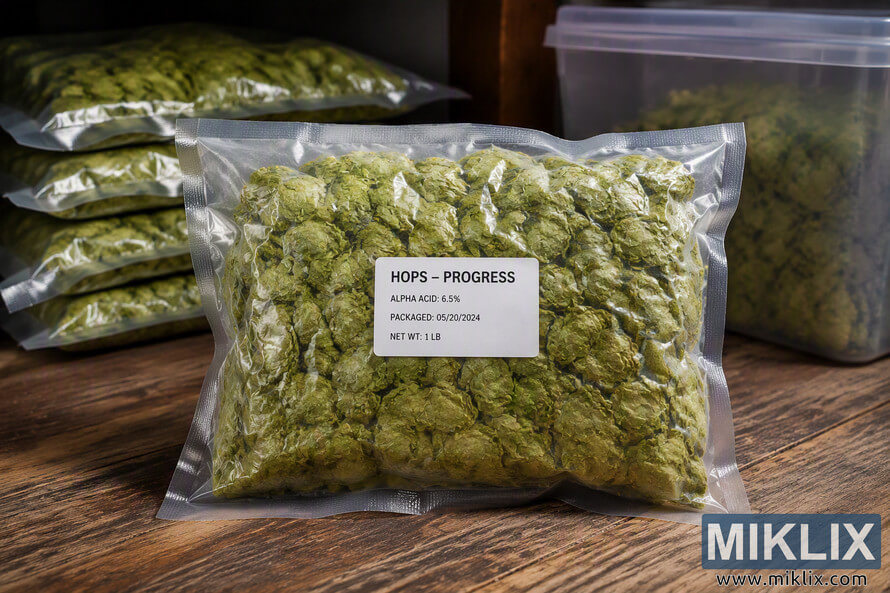
Store hops in your freezer at zero degrees or below. Cold temperatures slow oxidation and preserve oils. Keep hops in airtight packaging to prevent moisture exposure.
Vacuum-sealed bags work best for long-term storage. Remove as much air as possible before freezing. Label packages with variety, alpha acids, and purchase date.
Click or tap the image for more information and higher resolutions.
Best Practices
- Freeze immediately after purchase
- Use vacuum-sealed packaging
- Minimize air exposure
- Keep away from light
- Label with complete information
- Use oldest hops first
Avoid These Mistakes
- Storing at room temperature
- Leaving bags open to air
- Exposing to direct light
- Mixing crop years together
- Using without date tracking
- Allowing moisture contact
Shelf Life and Freshness
Progress hops maintain quality for twelve to eighteen months when frozen. Beta acids provide good stability compared to some varieties. Still, fresher is always better for maximum aroma.
Check hops before brewing by smelling them. Fresh Progress should smell strongly of grass and mint. Oxidized hops smell cheesy or like old cheese.
Vacuum Sealer Option
A home vacuum sealer helps preserve hop freshness. Models designed for home use work perfectly for small hop packages.
Mylar Bags
Food-grade mylar bags with oxygen absorbers provide excellent hop storage. Resealable options make portion control easy.
Oxygen Absorbers
Small oxygen absorber packets remove oxygen from sealed bags. Essential for maintaining hop freshness in storage.
Common Questions About Brewing with Progress Hops
Homebrewers often have similar questions about Progress. Here are answers to the most frequently asked topics. These solutions help you avoid common mistakes.
Click or tap the image for more information and higher resolutions.
Can Progress replace Fuggle in any recipe?
Yes, Progress works as a direct replacement Fuggle in nearly all recipes. The two hop varieties share similar profiles with Progress showing slightly more intense aroma. Use the same quantities as called for with Fuggle. Some brewers actually prefer Progress for its consistency and availability.
What makes Progress different from American hops?
Progress exhibits traditional English characteristics rather than bold American citrus notes. The hop provides grass, mint, and herb flavors instead of grapefruit or pine. This makes Progress ideal for authentic British beer styles. American hops typically contain higher alpha acids and different oil profiles.
How much Progress should I use for dry hopping?
Use one to three ounces of Progress per five gallons for dry hopping. Start with one ounce if you want subtle aroma enhancement. Increase to two or three ounces for more pronounced grass and mint characteristics. Dry hop for three to five days during or after active fermentation.
Does Progress work in IPAs?
Progress shines in English-style IPAs but differs from American IPA expectations. The hop provides traditional bitter character without tropical fruit notes. For authentic English IPA, Progress works perfectly. For West Coast or New England IPA styles, choose more assertive American hop varieties.
Can I grow Progress hops at home?
Progress grows well in home gardens with proper conditions. The variety needs full sun and vertical growing space. Progress shows good disease resistance making it suitable for hobby growers. Rhizomes become available from specialty suppliers in early spring. Expect your first significant harvest in the second growing season.
What water profile works best with Progress?
Progress pairs well with traditional English brewing water profiles. Moderate sulfate levels around 150-200 ppm enhance hop character. Keep chloride around 50-100 ppm for balance. Burton-style water works excellently for pale ales with Progress. Softer water suits darker beer styles like porters and milds.
Conclusion
Progress hops offer homebrewers a reliable path to authentic English beer character. This variety brings history and tradition to your brewing. The consistent quality and availability make Progress a practical choice.
Experiment with different addition timings to find your preferred profile. Start with traditional recipes and then create your own variations. Progress rewards both conventional and creative brewing approaches.
The moderate alpha acids and refined aroma make this hop approachable for beginners. Experienced brewers appreciate the subtle complexity Progress brings to beer. Whether you brew bitters, pale ales, or porters, Progress delivers authentic English character.
Click or tap the image for more information and higher resolutions.
Further Reading
If you enjoyed this post, you may also like these suggestions: