
Image: Laboratory Analysis of Progress Hop Alpha and Beta Acids Using Chromatographic Testing Equipment
Published: October 22, 2026 at 11:11:22 PM UTC
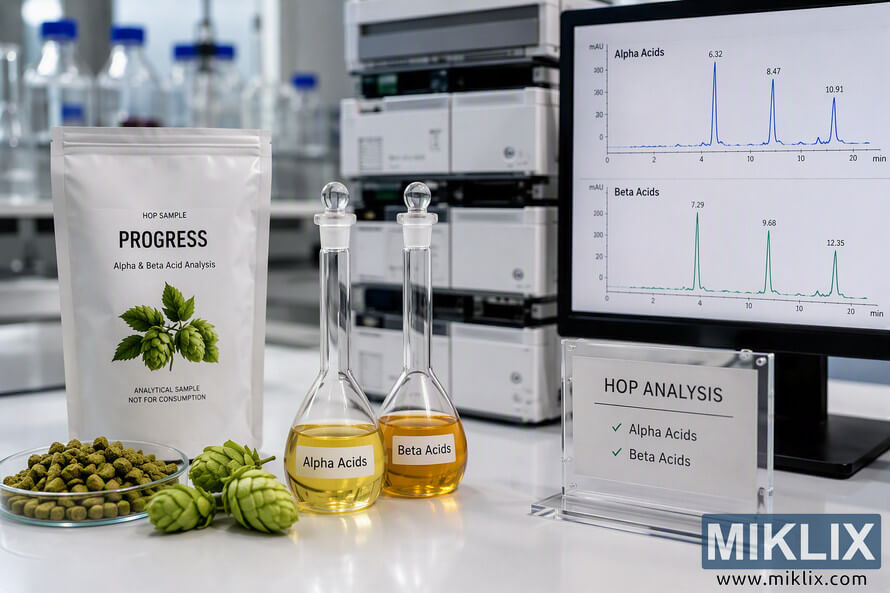
Professional laboratory analysis of Progress hop alpha and beta acids featuring hop samples, glass flasks, chromatography equipment, and analytical graphs displayed on a monitor. Scientific quality control and chemical composition testing of hop compounds in a modern research environment.
Available versions of this image
The image files available for download below are less compressed and higher resolution - and as a result of that, higher quality - than the images embedded in articles and pages on this website, which are more optimized for file size in order to reduce bandwidth consumption.
Regular size (1,536 x 1,024)
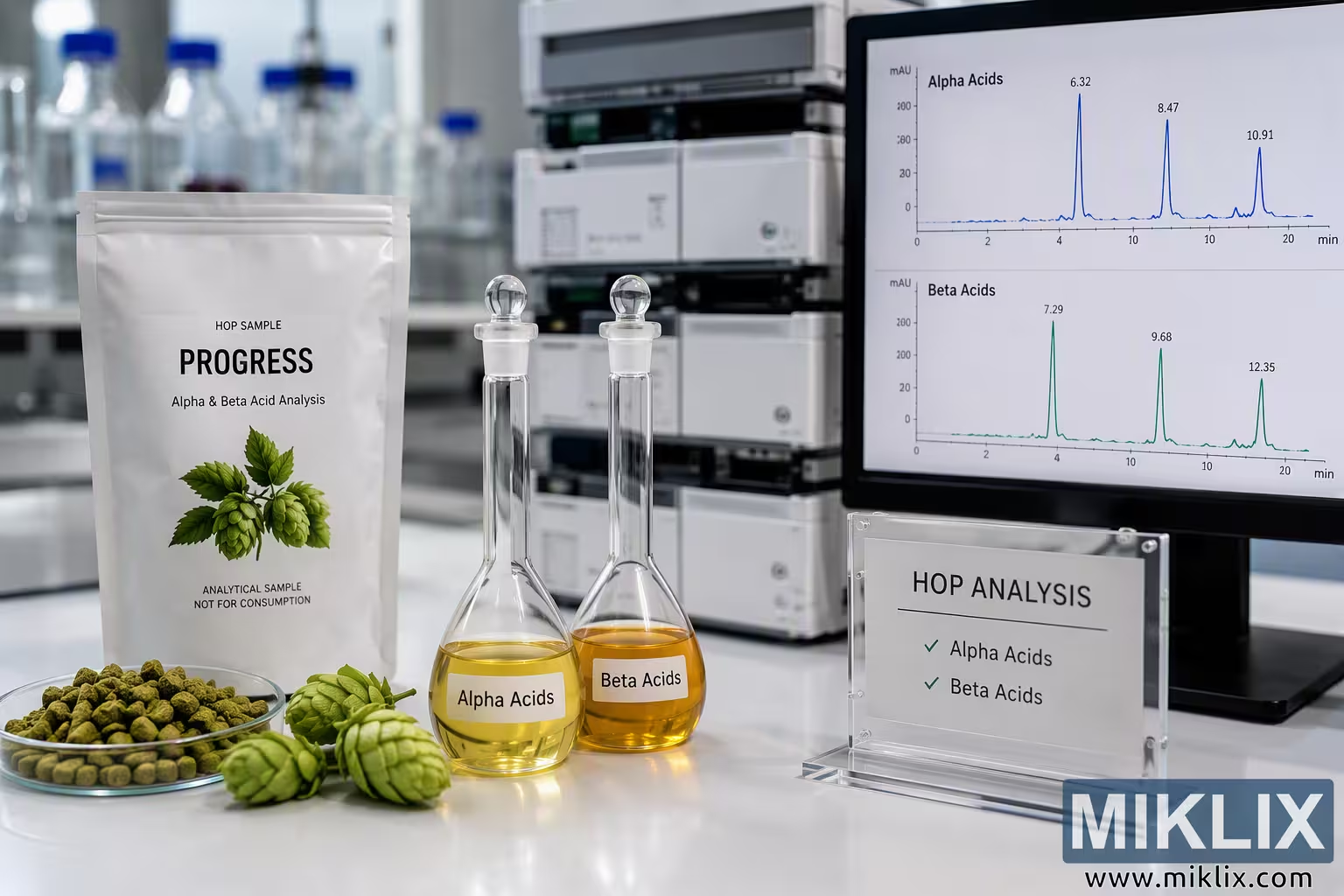
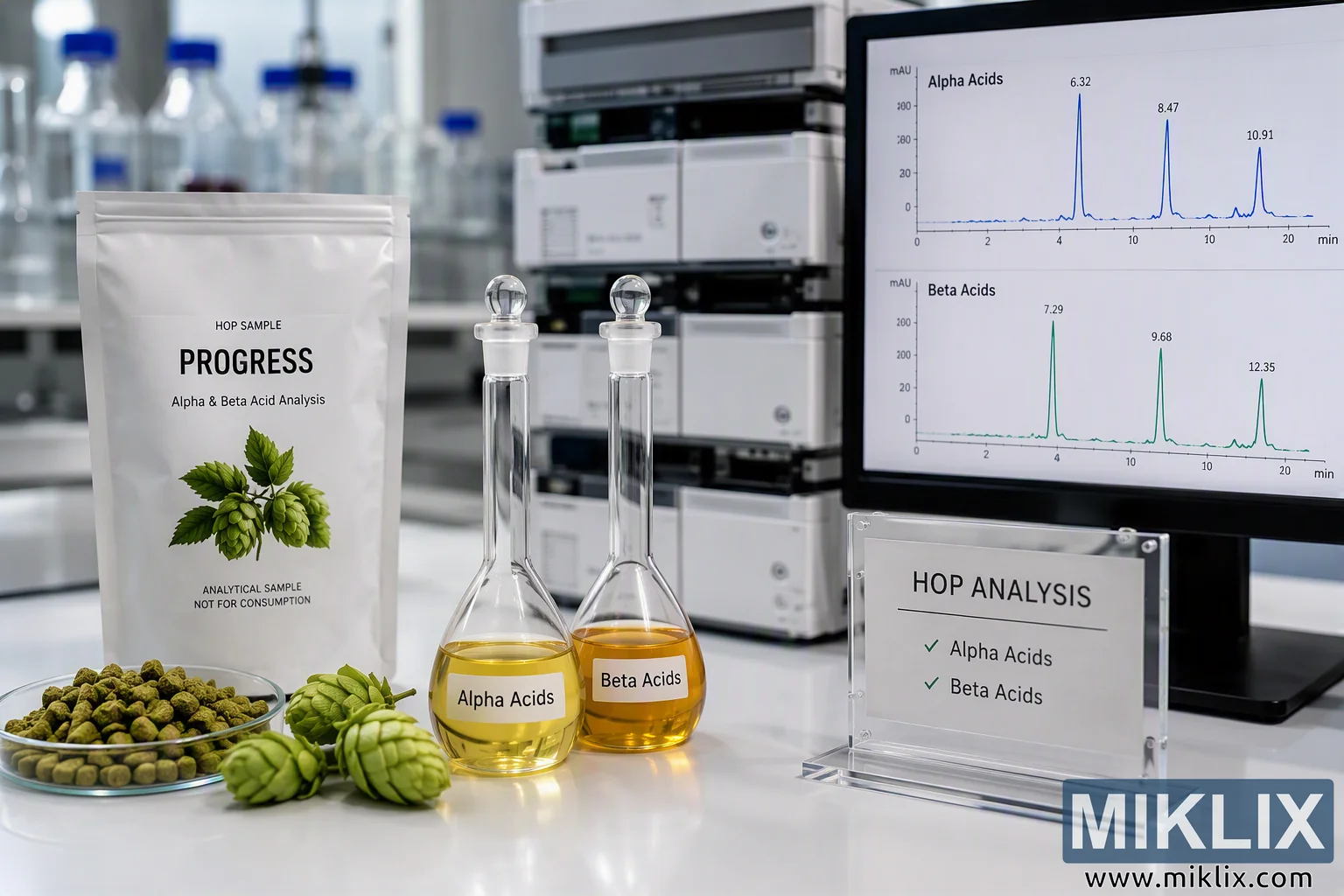
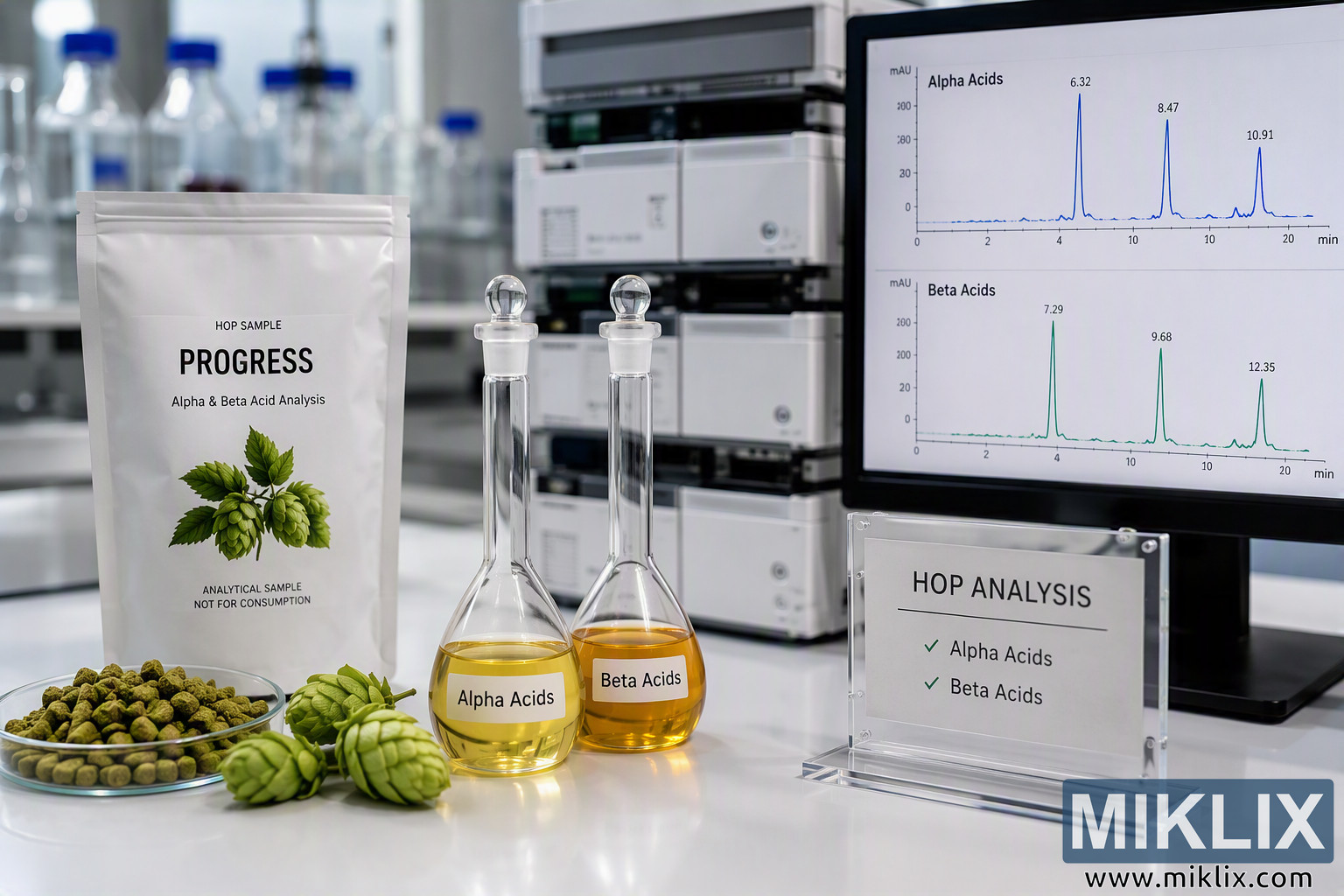
Large size (3,072 x 2,048)
Very large size (4,608 x 3,072)
Extra large size (6,144 x 4,096)
Comically large size (1,048,576 x 699,051)
- Still uploading... ;-)
Image description
A high-resolution landscape-oriented photograph depicts a clean, modern analytical laboratory dedicated to the examination of hop chemistry, with a specific focus on the measurement and comparison of alpha acids and beta acids extracted from Progress hops. The scene is arranged as a professional scientific workspace and combines physical hop samples, laboratory glassware, analytical instruments, and digital measurement displays into a single composition that communicates the process of chemical quality assessment. The image is brightly illuminated with soft, even laboratory lighting that creates subtle reflections on glass and metal surfaces while maintaining a neutral and highly technical appearance.
In the foreground, a white stand-up laboratory sample pouch is positioned on the left side of the image. The pouch serves as the central sample identifier and prominently displays the word “PROGRESS” along with references to alpha and beta acid analysis. An illustration of green hop cones appears on the front of the package, visually linking the sample to the hop plant. Additional text on the package indicates that the contents are intended as an analytical sample rather than a consumer product. The matte white surface of the pouch contrasts strongly with the surrounding laboratory equipment and helps draw attention to the sample under investigation.
Directly in front of the pouch sits a shallow transparent laboratory dish containing numerous hop pellets. The pellets are green-brown in color and irregularly cylindrical in shape, representing a processed form of hops commonly prepared for storage, transport, or analytical testing. Nearby, several whole green hop cones are placed on the laboratory bench. Their layered bracts, natural texture, and fresh coloration provide a visual comparison between raw botanical material and processed pelletized material. The presence of both forms emphasizes the chain of analysis from agricultural product to chemical measurement.
Near the center of the image are two clear glass laboratory flasks with rounded bulb-shaped bases and fitted glass stoppers. The flask on the left contains a pale yellow liquid identified as an alpha acid extract, while the flask on the right contains a darker amber-colored liquid identified as a beta acid extract. Labels affixed to the flasks explicitly distinguish the two analytical fractions. The transparent glass vessels exhibit realistic reflections from the laboratory lighting and allow unobstructed viewing of the liquid contents. The difference in color between the two extracts visually reinforces the concept that separate chemical compounds are being isolated, measured, and compared.
Occupying much of the middle background is a stack of advanced analytical instrumentation. The equipment resembles high-performance liquid chromatography or a similar laboratory separation system composed of multiple interconnected modules. The instruments feature clean rectangular forms, white and metallic surfaces, control panels, and access compartments. Their arrangement suggests a workflow in which prepared hop extracts are introduced into analytical systems capable of separating and quantifying individual chemical constituents. The equipment contributes a strong sense of scientific rigor and laboratory authenticity.
On the right side of the image, a large computer monitor displays analytical results. Two chromatographic plots are visible, one labeled “Alpha Acids” and another labeled “Beta Acids.” Each graph contains multiple peaks rising above a baseline signal. The distinct peaks represent separated compounds detected during analysis and illustrate the type of output commonly associated with chromatographic testing. Numerical values appear above several peaks, indicating measured retention points or analytical reference values. The blue graph associated with alpha acids and the green graph associated with beta acids provide immediate visual differentiation between the two categories of compounds. The monitor therefore functions as the primary evidence display for the laboratory analysis being conducted.
In front of the monitor stands a transparent sign holder displaying the heading “HOP ANALYSIS.” Beneath the heading, a short checklist references both alpha acids and beta acids, each accompanied by a check mark. This element reinforces the analytical purpose of the scene and visually summarizes the testing objectives represented by the surrounding samples, instruments, and graphical outputs.
The laboratory bench itself is smooth, clean, and reflective, contributing to the controlled scientific environment portrayed in the image. Reflections from the glass flasks, acrylic sign holder, and metallic instrument surfaces create a polished appearance consistent with professional research facilities. The depth of field is relatively shallow, keeping foreground objects sharply in focus while softly blurring less important background details. This photographic technique directs attention toward the hop samples, chemical extracts, and analytical results rather than the broader laboratory environment.
Color distribution throughout the image supports the scientific narrative. Neutral whites, grays, and metallic tones dominate the laboratory setting, while green hues from the hop cones and pellets introduce natural agricultural elements. Yellow and amber liquids within the flasks add warmth and visual contrast. The blue and green chromatographic traces on the monitor further strengthen the distinction between alpha acid and beta acid measurements. The resulting composition balances botanical subject matter with advanced laboratory technology.
Overall, the photograph presents a comprehensive visualization of hop quality analysis in a professional research environment. Botanical samples, processed hop material, chemical extracts, laboratory instrumentation, and digital chromatographic results are integrated into a single coherent scene. The image communicates themes of agricultural science, brewing ingredient evaluation, chemical composition testing, laboratory precision, product quality control, and analytical research focused on the characterization of Progress hop alpha acids and beta acids.
The image is related to: Hops in Beer Brewing: Progress