
Image: Sensory Evaluation of Progress Hop Aroma Characteristics in a Controlled Tasting Setup
Published: October 22, 2026 at 11:11:22 PM UTC
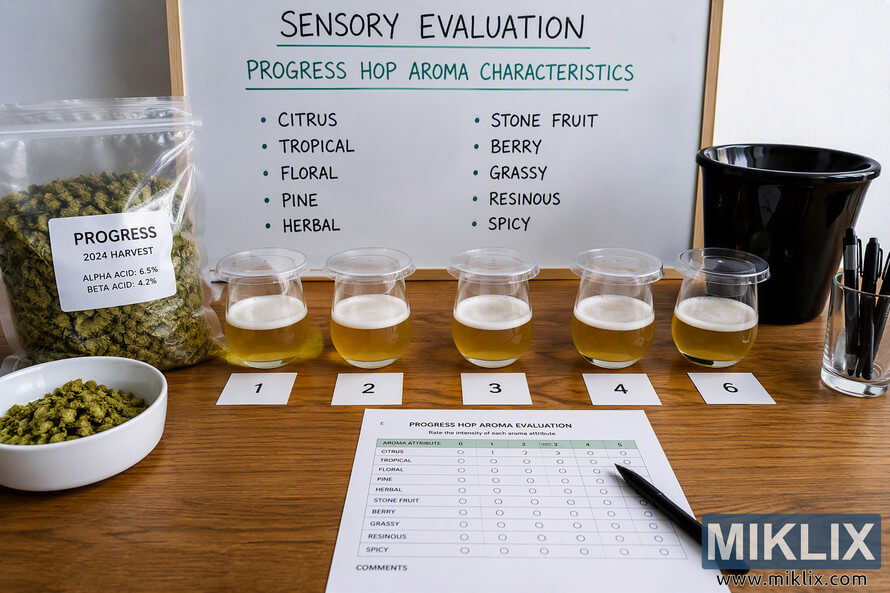
Detailed sensory evaluation setup for Progress hop aroma assessment, showing hop samples, tasting cups, evaluation forms, and a whiteboard displaying key aroma descriptors used in brewing and sensory analysis.
Available versions of this image
The image files available for download below are less compressed and higher resolution - and as a result of that, higher quality - than the images embedded in articles and pages on this website, which are more optimized for file size in order to reduce bandwidth consumption.
Regular size (1,536 x 1,024)
Large size (3,072 x 2,048)
Very large size (4,608 x 3,072)
Extra large size (6,144 x 4,096)
Comically large size (1,048,576 x 699,051)
- Still uploading... ;-)
Image description
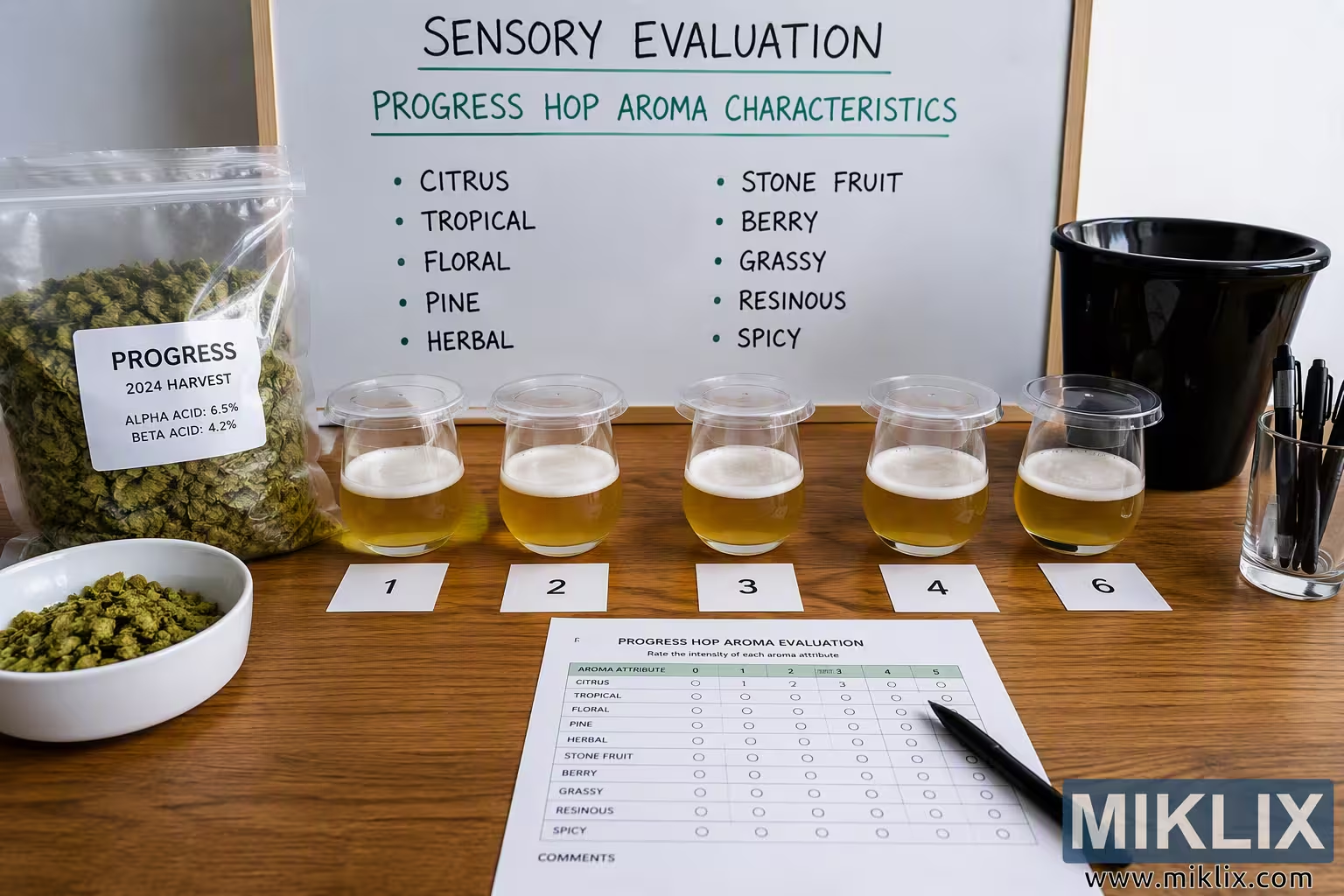
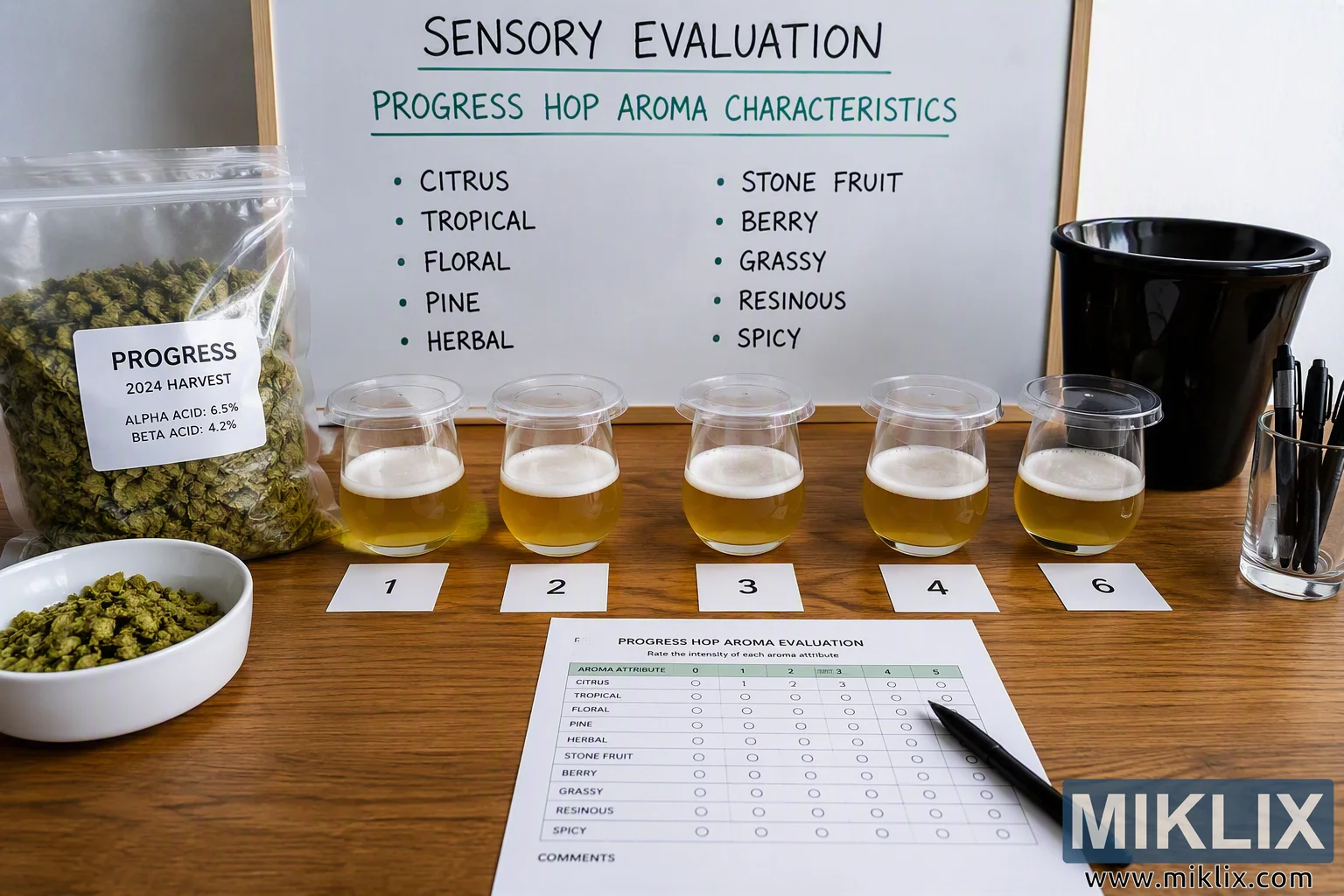
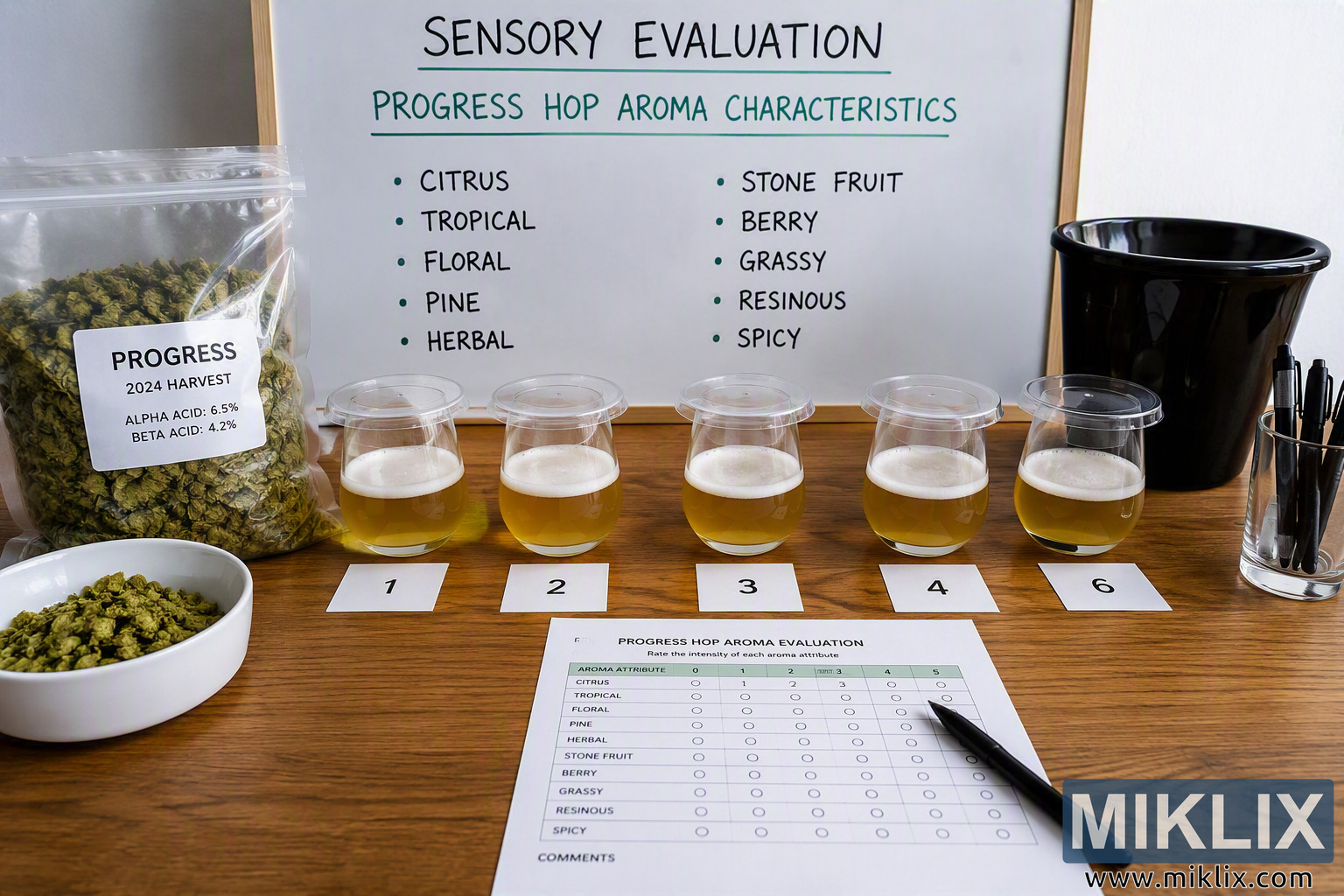
This landscape-oriented photograph depicts a structured sensory evaluation environment designed for the assessment of Progress hop aroma characteristics. The image presents a neatly organized tasting station arranged on a wooden tabletop, combining physical hop material, tasting samples, recording tools, and reference information intended to support systematic aroma evaluation. The composition emphasizes objective sensory analysis and provides a visual representation of a professional or educational hop assessment session.
On the left side of the image is a large transparent resealable pouch filled with dried hop cones. The hop cones display a muted green coloration with visible texture, indicating the compressed and dried form commonly used in brewing applications. Attached to the front of the pouch is a white label bearing the name “PROGRESS.” Additional text on the label references harvest information and numeric hop chemistry values. The package serves as the primary ingredient reference for the evaluation activity. In front of the pouch sits a shallow white bowl containing a quantity of processed hop material. The bowl provides an additional visual reference to hop appearance and may be used for direct aroma inspection during the sensory session.
Across the center of the table is a row of clear plastic tasting cups containing golden-colored liquid samples topped with light foam. The cups are positioned in a linear arrangement and spaced evenly to facilitate comparison between samples. Each sample appears visually similar in color and clarity, suggesting controlled preparation intended to isolate aroma-related differences rather than visual variation. White number cards are placed beneath the cups. Visible identifiers include the numbers 1, 2, 3, 4, and 6. The numbering system indicates a formalized sensory protocol in which individual samples are assessed independently or comparatively. The transparent cups allow observation of foam retention, color, and presentation while supporting aroma evaluation through direct smelling of the samples.
Positioned in the foreground is a printed evaluation sheet. The sheet is oriented toward the viewer and contains a structured scoring form designed specifically for hop aroma assessment. Rows correspond to aroma attributes and columns provide a numerical rating scale. A dark-colored pen rests diagonally on the form, indicating readiness for note-taking and score recording. The presence of the scoring document reinforces the analytical nature of the exercise by providing a mechanism for standardized observation and data collection.
The background of the image is dominated by a large whiteboard mounted in a wooden frame. The whiteboard acts as the central informational element within the scene. At the top of the whiteboard appears a prominent heading reading “SENSORY EVALUATION.” Beneath the heading is a secondary title referring to “PROGRESS HOP AROMA CHARACTERISTICS.” Below the title, aroma descriptors are organized into two vertical lists. The left column includes citrus, tropical, floral, pine, and herbal characteristics. The right column includes stone fruit, berry, grassy, resinous, and spicy characteristics. These descriptors represent commonly used sensory categories for hop evaluation and provide a shared vocabulary for assessors participating in the tasting session.
On the right side of the table stands a large dark container resembling a spittoon or disposal vessel commonly used during tasting exercises. Nearby is a clear holder containing several writing instruments. These accessories contribute to the functional nature of the workspace by supporting note-taking and sample handling. Their placement suggests preparation for multiple participants or repeated evaluations.
The overall arrangement reflects a methodical and educational approach to sensory science. Every visible component serves a purpose within the evaluation process: the hop material provides the ingredient reference, the tasting samples provide sensory stimuli, the scoring sheet supports documentation, and the whiteboard establishes the framework of aroma descriptors. The image does not feature any visible people, allowing complete focus on the evaluation materials and procedure.
Lighting within the photograph is bright, even, and natural in appearance. The illumination highlights the textures of the hop cones, the reflective surfaces of the clear tasting cups, and the warm grain patterns of the wooden table. Color contrast is balanced, with green hop materials, golden liquid samples, white documentation surfaces, and darker accessory elements creating a visually structured composition. The scene appears clean, organized, and intentionally prepared for sensory assessment.
From a broader perspective, the photograph communicates themes of brewing science, ingredient evaluation, quality assessment, and sensory training. It illustrates a controlled environment in which aroma characteristics are examined systematically using standardized descriptors and recording tools. The visual focus remains on the relationship between raw hop ingredients and the sensory attributes they contribute, making the image suitable for educational material, brewing documentation, sensory analysis reports, quality control discussions, hop variety presentations, or training resources related to beverage production and flavor evaluation.
The image is related to: Hops in Beer Brewing: Progress