
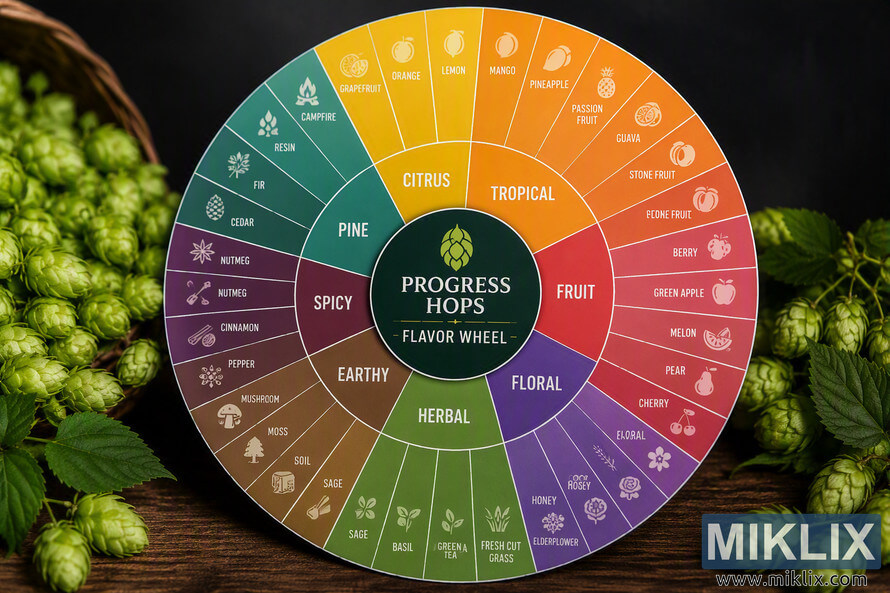
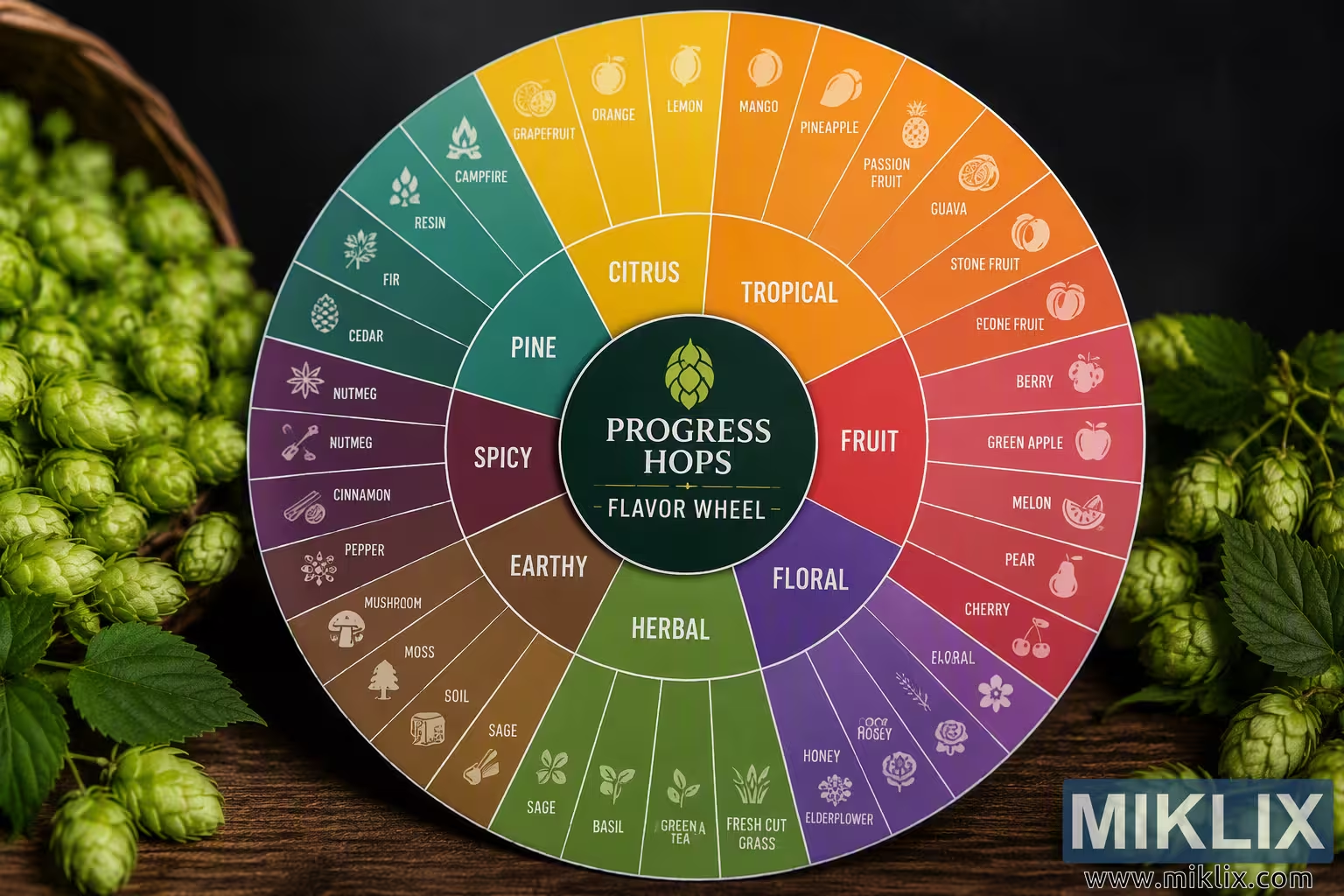
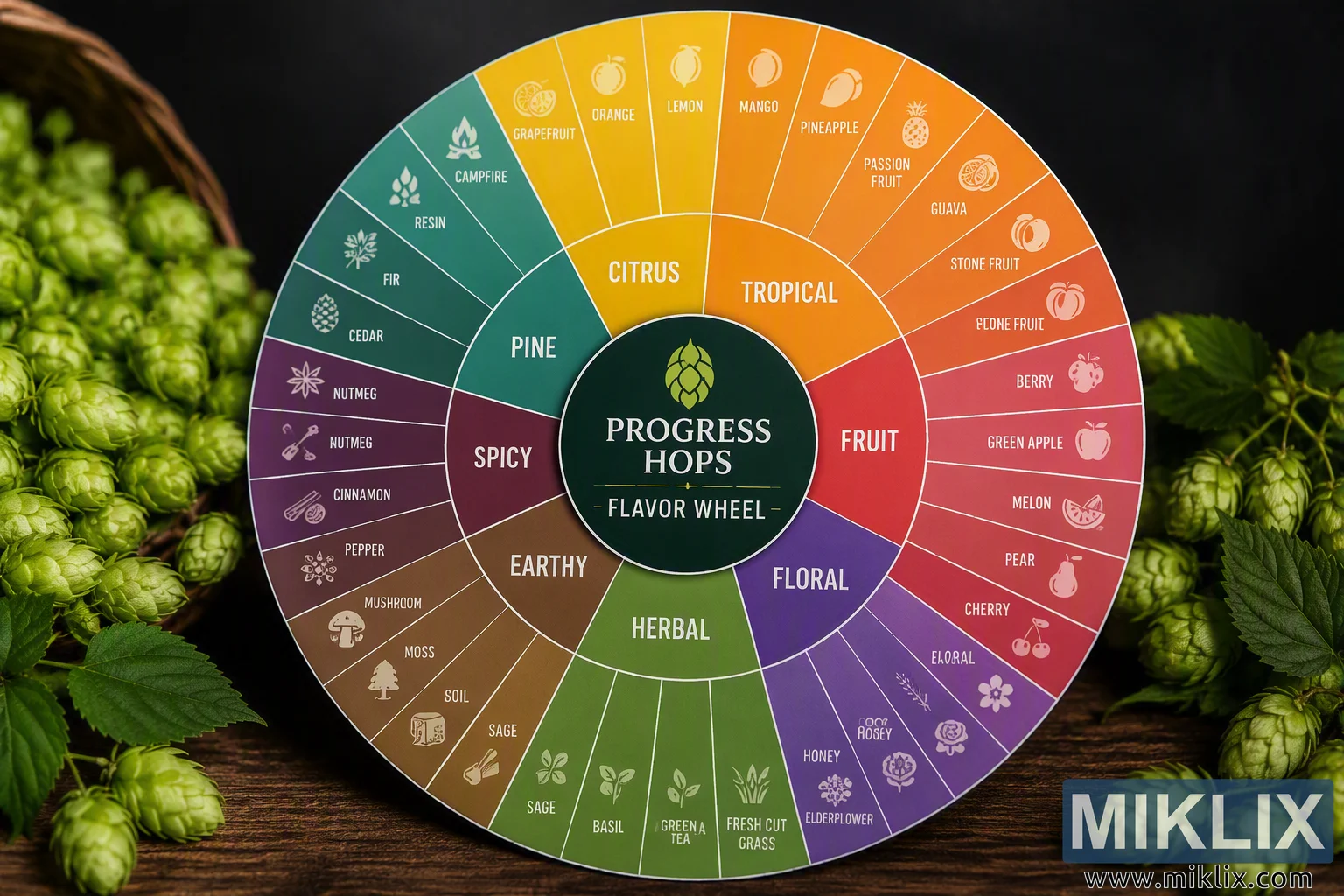
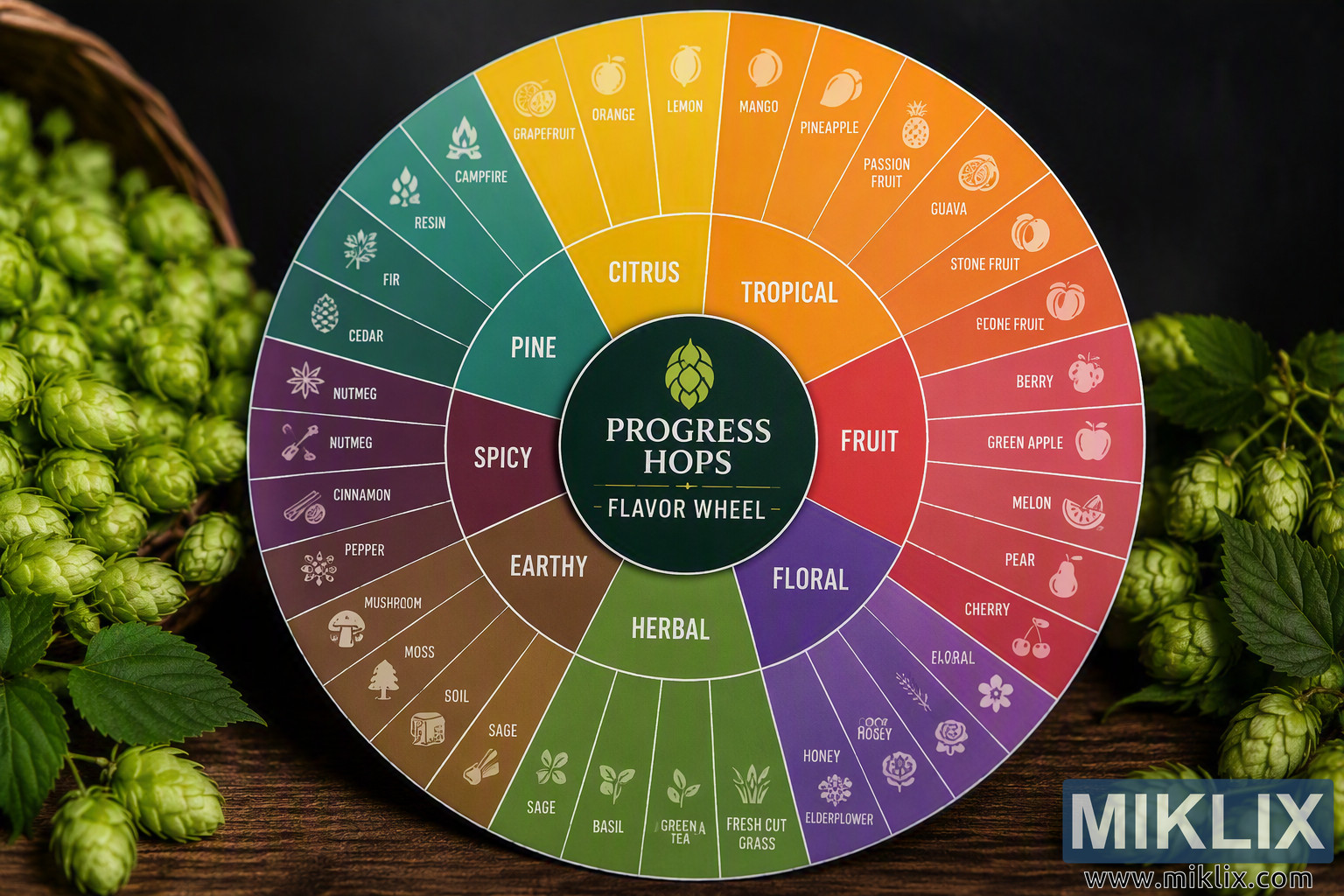
Image: Progress Hops Flavor Wheel Showing Hop-Derived Tasting Notes
Published: October 22, 2026 at 11:11:22 PM UTC
Detailed landscape photograph featuring a progress hops flavor wheel with categorized tasting notes, surrounded by fresh hop cones on a wooden surface. The image presents citrus, tropical, fruit, floral, herbal, earthy, spicy, and pine aroma families in a visually striking color-coded circular diagram suitable for brewing, sensory evaluation, and craft beverage education.
Available versions of this image
The image files available for download below are less compressed and higher resolution - and as a result of that, higher quality - than the images embedded in articles and pages on this website, which are more optimized for file size in order to reduce bandwidth consumption.
Regular size (1,536 x 1,024)
Large size (3,072 x 2,048)
Very large size (4,608 x 3,072)
Extra large size (6,144 x 4,096)
Comically large size (1,048,576 x 699,051)
- Still uploading... ;-)
Image description
The image is a professionally styled landscape-oriented photograph centered around a circular flavor wheel dedicated to hop-derived tasting notes. The composition places the flavor wheel prominently in the middle of the frame, making it the dominant visual element and the immediate focal point for the viewer. The wheel is positioned upright on a dark wooden tabletop and is surrounded by clusters of fresh green hop cones arranged along the left and right edges of the image. The overall presentation combines the look of a sensory reference chart with the visual appeal of a product or editorial food-and-beverage photograph.
At the center of the wheel is a dark circular hub containing the primary title text. Above the title is a stylized hop-cone icon rendered in green tones, visually reinforcing the subject matter. The central area is enclosed by crisp circular borders that separate the middle hub from the surrounding flavor categories. The typography is bold, clean, and highly legible, designed to stand out against the dark background of the central circle.
Radiating outward from the center are large color-coded flavor families that divide the wheel into major sensory categories. These categories include Citrus, Tropical, Fruit, Floral, Herbal, Earthy, Spicy, and Pine. Each category occupies a wedge-shaped segment of the wheel, and each segment transitions into multiple smaller subdivisions representing increasingly specific aroma or flavor descriptors. The result is a layered structure that moves from broad sensory concepts toward detailed tasting-note characteristics.
The Citrus section is rendered in bright yellow and golden tones. Various citrus-related descriptors extend outward toward the rim of the wheel. Nearby, the Tropical segment transitions into warm orange hues and includes references to tropical fruit character. The Fruit section shifts into reds and pinks and contains a range of fruit-oriented tasting notes. The Floral region adopts shades of purple and violet, visually distinguishing delicate flower-like aromas from the fruit-focused categories adjacent to it.
The Herbal section appears in green tones and includes descriptors associated with fresh plant material, garden herbs, and grassy characteristics. The Earthy segment transitions into brown and amber tones that visually suggest soil, woodland, and natural earth-like qualities. The Spicy portion uses darker burgundy and purple shades, reflecting spice-forward aroma associations. The Pine section is represented with teal and blue-green colors, helping differentiate resinous, forest-like characteristics from adjacent flavor families.
Each subdivision includes small icons and labels that visually represent the associated tasting notes. The icons depict fruits, flowers, herbs, spices, trees, campfire imagery, botanical elements, and other symbolic references. These graphical details contribute to the educational function of the wheel by helping viewers quickly associate visual symbols with flavor concepts. The icon style remains consistent throughout the graphic, creating a cohesive and professional appearance.
The color palette is one of the most striking aspects of the image. Smooth gradients flow around the circumference of the wheel, moving from yellows and oranges to reds, purples, greens, browns, and teal shades. The spectrum-like arrangement creates a vivid and visually engaging reference tool while also making it easier to distinguish neighboring flavor categories. The saturated colors stand out strongly against the dark background and contribute substantial visual energy to the composition.
Surrounding the wheel are numerous fresh hop cones. These hop cones exhibit layered petals and a characteristic textured structure. Their bright green coloration contrasts beautifully with both the dark background and the multicolored wheel. Hop cones are visible in baskets and loose arrangements near the edges of the frame, creating a sense of abundance and freshness. The placement of the hops naturally frames the wheel without obscuring any major details.
The tabletop beneath the wheel appears to be made of dark-stained wood with visible grain patterns. The wood surface introduces an organic texture that complements the botanical nature of the hops. The warm brown tones of the wood also balance the cooler hues found in portions of the flavor wheel, creating a harmonious visual relationship between the graphic and its environment.
Lighting in the image resembles controlled studio photography. Soft directional illumination highlights the face of the wheel while casting subtle shadows around its edges. The lighting enhances readability, emphasizes the wheel's circular form, and creates depth within the scene. The hop cones also benefit from the lighting, with highlights accentuating the contours and layered structure of each cone. Shadows remain soft rather than harsh, maintaining a polished commercial-photography aesthetic.
The background is predominantly dark and out of focus. This shallow depth of field isolates the primary subject and prevents distractions. The dark backdrop also increases contrast, helping the vibrant wheel and fresh green hops appear even more prominent. The photographic style uses selective focus effectively, keeping the flavor wheel sharp while allowing peripheral elements to soften gradually toward the edges of the frame.
From a design perspective, the image combines educational information with strong visual storytelling. The wheel functions as a sensory map that communicates relationships among hop flavor characteristics, while the surrounding hop cones establish a direct connection to brewing ingredients and flavor origins. The image can be interpreted as a visual guide for tasting, sensory training, craft beverage evaluation, brewing education, or discussions of hop varieties and aromatic profiles.
Overall, the photograph presents a colorful, highly detailed, and visually balanced depiction of a hop flavor wheel surrounded by fresh hops. The composition emphasizes clarity, organization, and sensory exploration through carefully arranged colors, icons, category divisions, textures, and lighting. The result is an image that is both informative and aesthetically engaging, successfully illustrating a broad spectrum of hop-associated tasting notes within a professional studio-style presentation.
The image is related to: Hops in Beer Brewing: Progress