
Image: Rakau Hop Aroma Wheel Showing Fruity, Herbal, Floral, Spicy, and Woody Flavor Components
Published: October 24, 2026 at 12:23:02 AM UTC
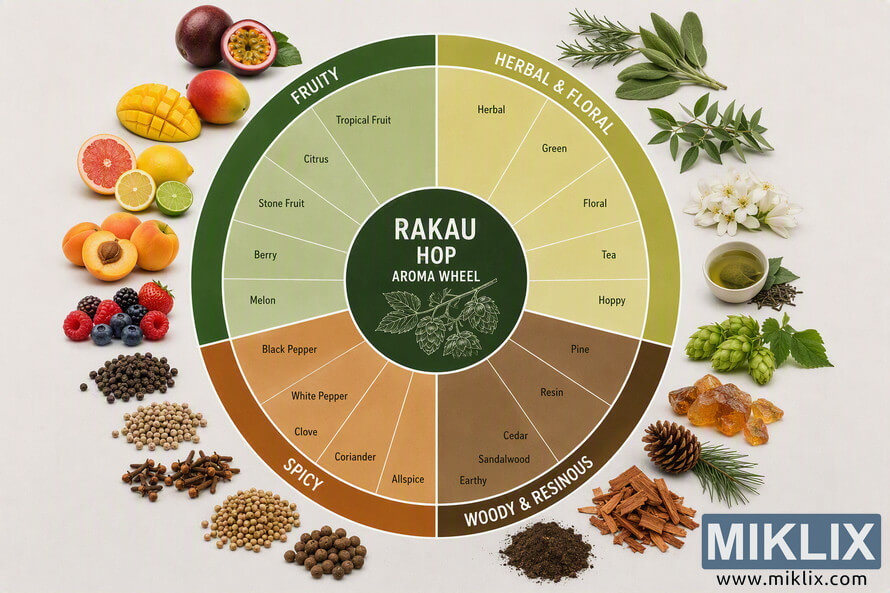
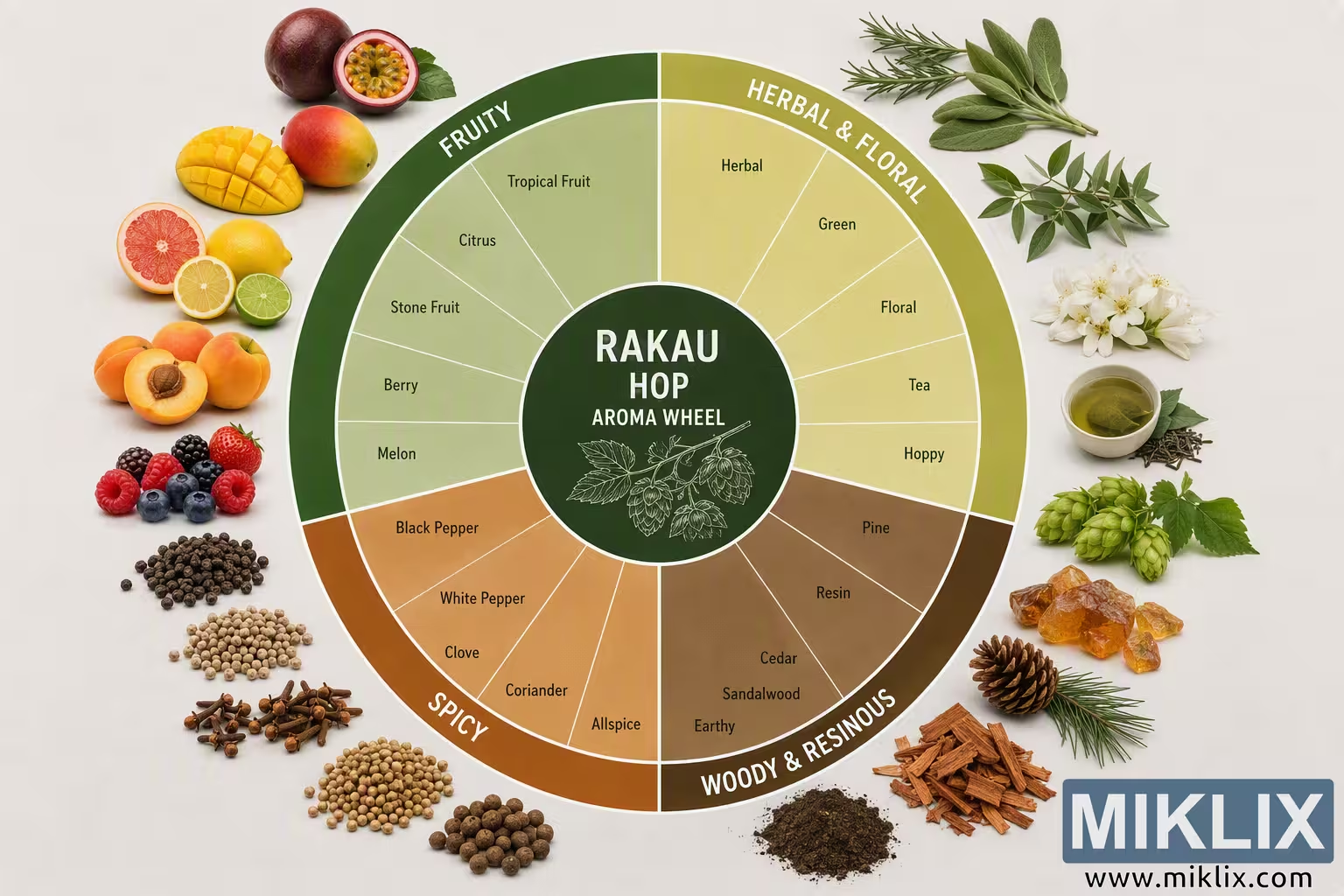
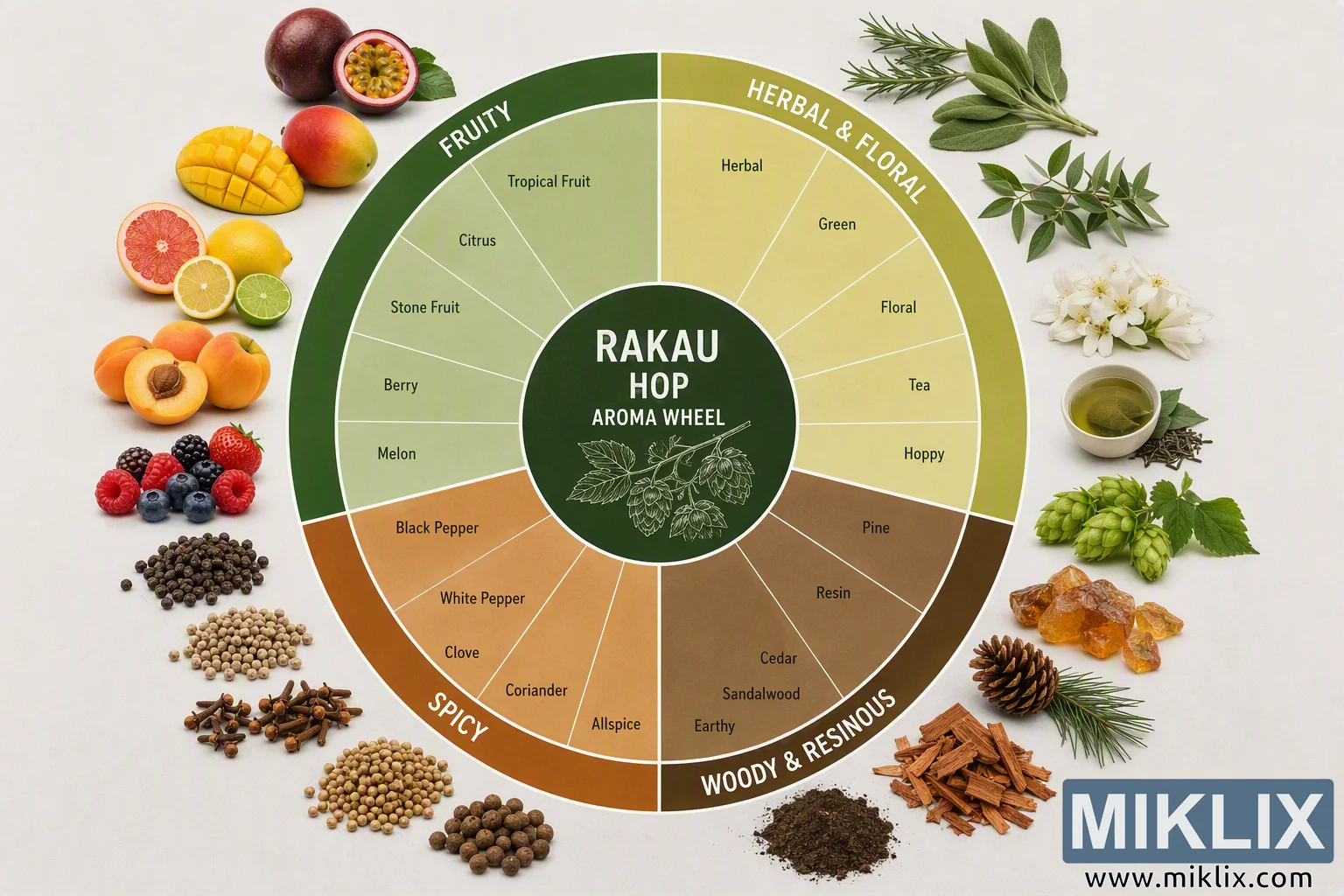
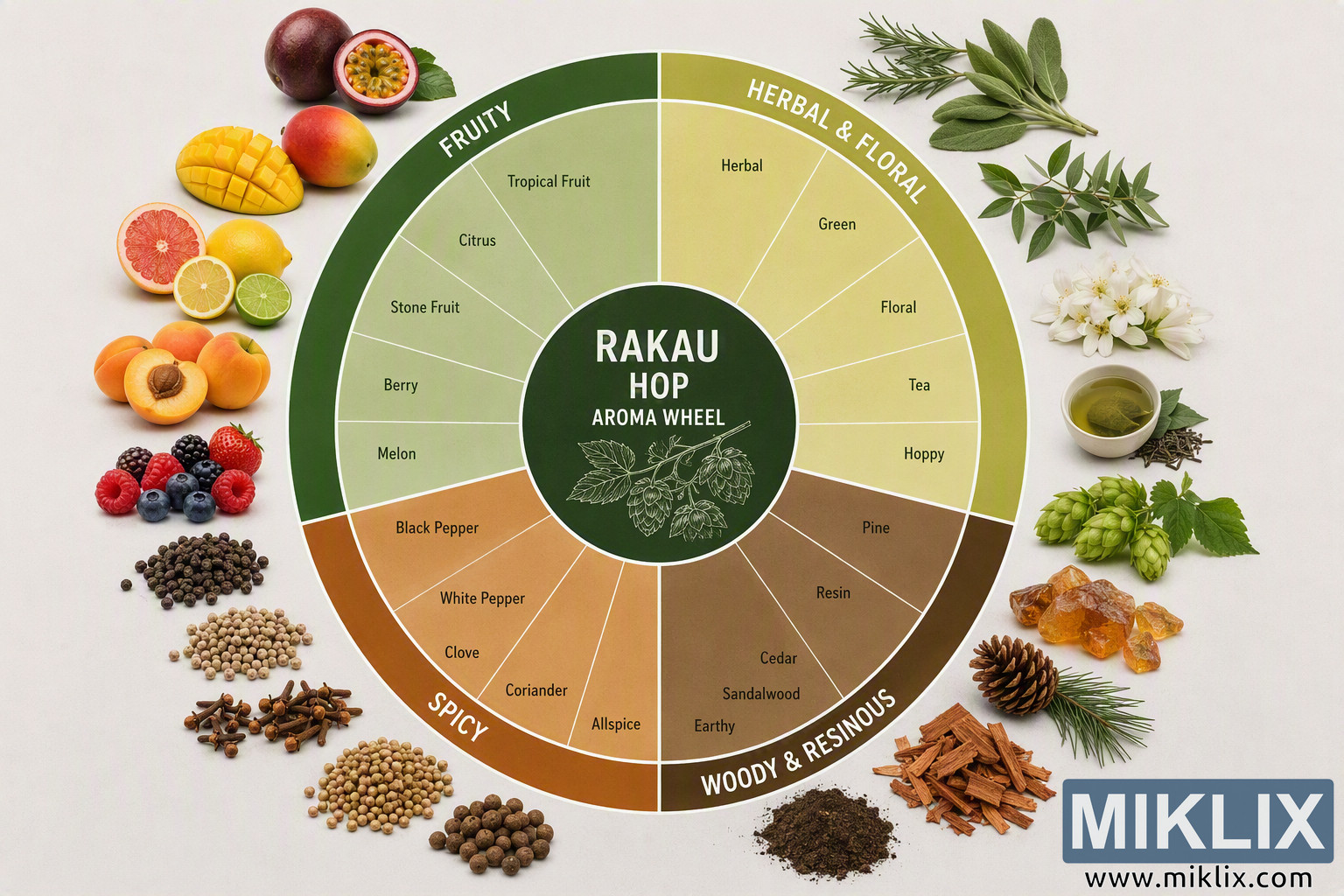
Comprehensive Rakau hop aroma wheel infographic highlighting fruit-forward hop characteristics and associated herbal, floral, spicy, woody, and resinous flavor components. The circular chart visually organizes aroma descriptors and ingredient references commonly associated with Rakau hop sensory profiles.
Available versions of this image
The image files available for download below are less compressed and higher resolution - and as a result of that, higher quality - than the images embedded in articles and pages on this website, which are more optimized for file size in order to reduce bandwidth consumption.
Regular size (1,536 x 1,024)
Large size (3,072 x 2,048)
Very large size (4,608 x 3,072)
Extra large size (6,144 x 4,096)
Comically large size (1,048,576 x 699,051)
- Still uploading... ;-)
Image description
The image presents a professionally designed aroma wheel dedicated to Rakau hop flavor and aroma characteristics. The composition is arranged in a landscape orientation with a large circular wheel occupying the center of a clean, light-colored background. The diagram combines infographic design with realistic photographic ingredient illustrations to communicate a complex sensory profile in an accessible visual format.
At the center of the image is a dark green circular hub containing the main title text. The central circle displays the words “RAKAU HOP AROMA WHEEL” in large, high-contrast lettering. Beneath the text is a decorative line drawing of hop bines featuring hop cones and leaves, reinforcing the brewing and hop-related theme of the graphic. The central hub serves as the anchor point from which the sensory categories radiate outward.
Surrounding the center is a multi-segment wheel divided into four major sensory regions. Each region is represented by a different color family and contains several subcategories describing specific aroma and flavor notes. The wheel uses subtle color gradients to distinguish each sensory group while maintaining a cohesive appearance.
The largest green-toned section on the left side is labeled “FRUITY.” This category contains multiple fruit-related sensory descriptors arranged in individual wedge-shaped segments. Visible descriptors include Tropical Fruit, Citrus, Stone Fruit, Berry, and Melon. The green color transitions smoothly through lighter shades toward the center, helping separate the category from neighboring regions while maintaining visual continuity. The fruity section emphasizes the fruit-forward nature associated with Rakau hop character.
At the upper-right portion of the wheel is a yellow-green section labeled “HERBAL & FLORAL.” This section includes descriptors such as Herbal, Green, Floral, Tea, and Hoppy. The lighter tones and botanical associations suggest freshness, plant-derived aromatics, and delicate floral characteristics. The segment transitions naturally from the Fruity section and introduces more vegetative and aromatic notes.
The lower-right portion of the wheel is rendered in warm brown tones and is labeled “WOODY & RESINOUS.” This section contains descriptors including Pine, Resin, Cedar, Sandalwood, and Earthy. The brown coloration evokes wood, bark, forest, and resin-associated sensory impressions. These descriptors provide a contrast to the brighter fruit and floral notes found elsewhere in the wheel and represent deeper, grounding aroma elements.
The lower-left section is colored in orange and amber hues and is labeled “SPICY.” This category features descriptors such as Black Pepper, White Pepper, Clove, Coriander, and Allspice. The warm palette reinforces the spice association and creates a strong visual separation from the green and brown regions adjacent to it.
Around the outside perimeter of the aroma wheel are realistic ingredient photographs positioned to correspond visually with the relevant sensory categories. These photographic elements function as visual examples of each aroma descriptor and help viewers quickly understand the associated flavors.
In the upper-left area near the Fruity section are several tropical and orchard fruits. Visible items include a mango, a halved passion fruit revealing seeds and pulp, and a scored mango segment. Slightly lower are sliced citrus fruits, including grapefruit, lemon, and lime. Below the citrus examples are apricots representing the stone fruit category. Further down are mixed berries including raspberries, blueberries, blackberries, and a strawberry. These ingredients collectively illustrate the broad range of fruit aromas featured in the Fruity category.
Adjacent to the Herbal & Floral section in the upper-right area are fresh botanical ingredients. Visible examples include rosemary sprigs, sage leaves, leafy green branches, and clusters of white flowers. Slightly lower is a cup containing tea accompanied by tea leaves, illustrating the tea descriptor. A cluster of green hop cones appears nearby, visually connecting the category to brewing ingredients and hop-derived aromas.
Near the Woody & Resinous region at the lower-right edge are objects associated with forests, wood, and resin. Visible items include amber-colored resin-like pieces, a pine cone resting on a pine branch, scattered wood chips resembling cedar or aromatic wood fragments, and a small pile of dark earthy material. These visual references reinforce the descriptors pine, resin, cedar, sandalwood, and earthy.
Around the Spicy section in the lower-left corner are numerous whole spices. Visible ingredients include black peppercorns, white peppercorns, cloves, coriander seeds, and round allspice berries. These spices are arranged in small piles and correspond directly to the spicy descriptors displayed inside the wheel.
The overall color palette is dominated by greens, golds, browns, and oranges, reflecting natural plant, fruit, spice, and forest themes. Lighting is bright, soft, and even, producing gentle shadows beneath the ingredient photographs and giving the image a clean, modern, editorial appearance. The background is a light neutral tone that allows both the wheel and the surrounding ingredients to stand out clearly.
Typography throughout the wheel is highly legible, using large category labels along the outer ring and smaller labels within the individual flavor segments. White dividing lines separate every segment and help organize the information in a structured manner. The wheel design balances scientific-style categorization with attractive visual presentation, making the diagram suitable for brewing education, hop sensory analysis, beer tasting materials, product documentation, marketing collateral, or flavor reference guides.
Overall, the image functions as a comprehensive sensory map of Rakau hop characteristics. Through a combination of color-coded categories, precise flavor descriptors, realistic ingredient imagery, and a carefully structured circular layout, the diagram visually communicates how fruit, herbal, floral, woody, resinous, and spicy aromas contribute to the overall sensory identity represented by the Rakau hop aroma wheel.
The image is related to: Hops in Beer Brewing: Rakau