
Image: Laboratory Analysis of Hop Alpha Acids Using Chromatographic Instrumentation
Published: October 24, 2026 at 12:23:02 AM UTC
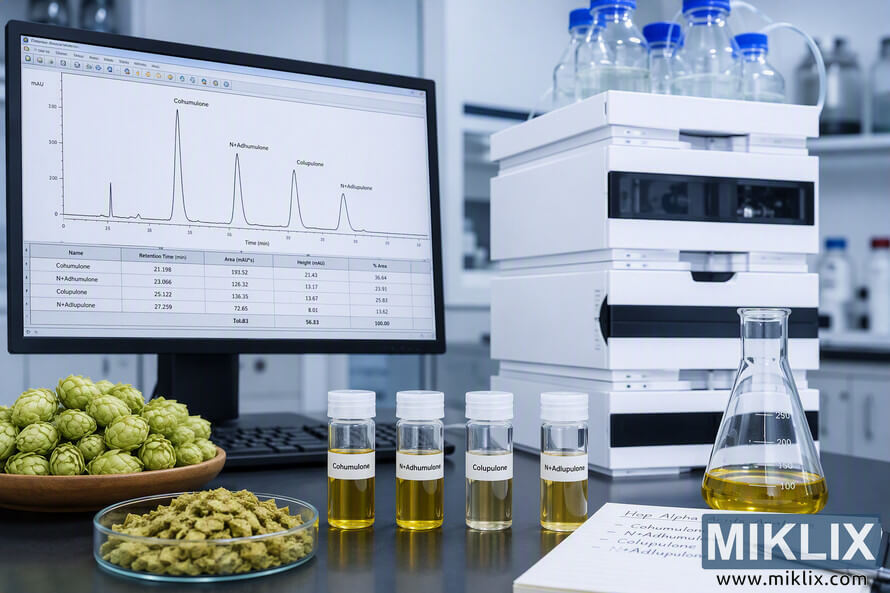
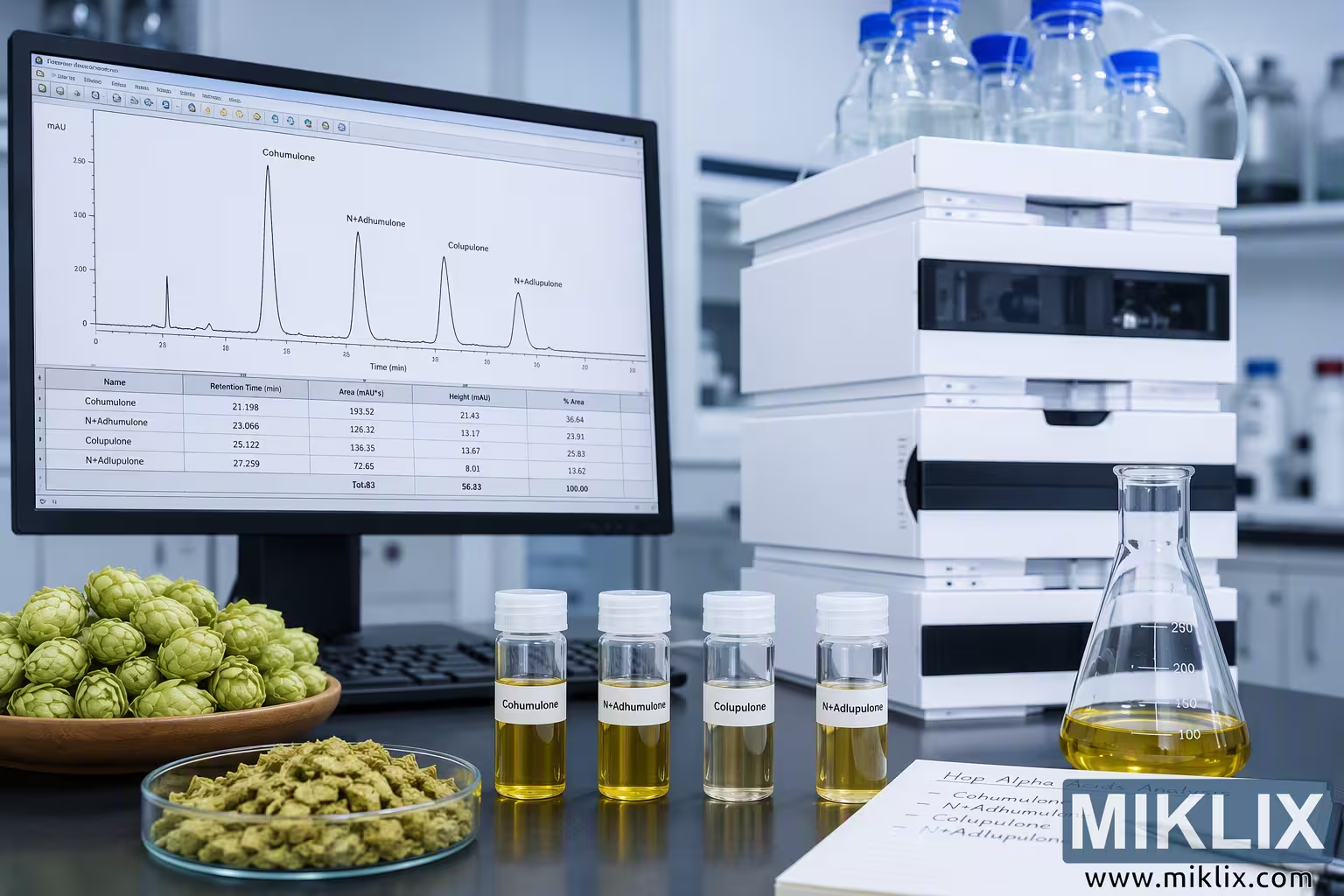
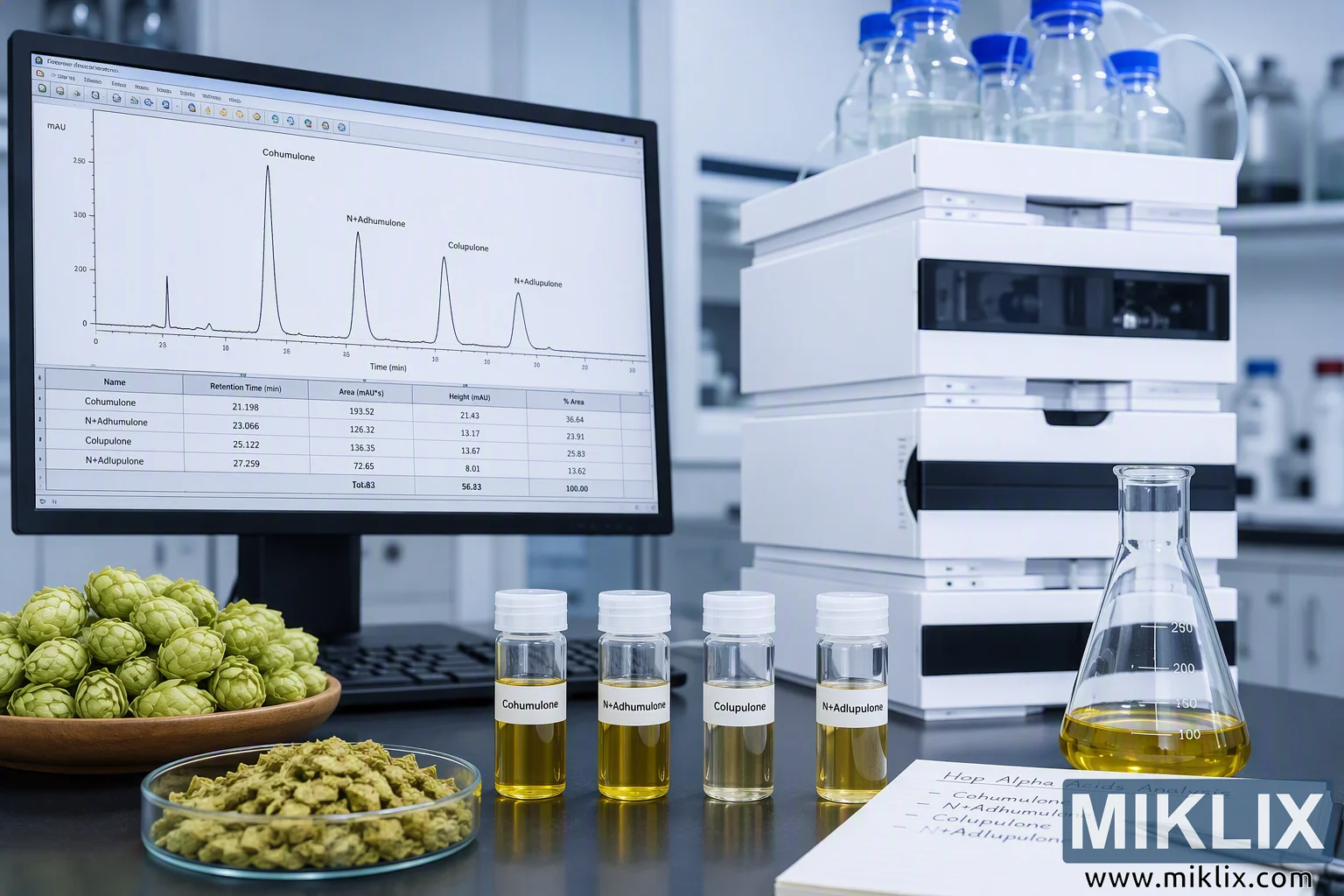
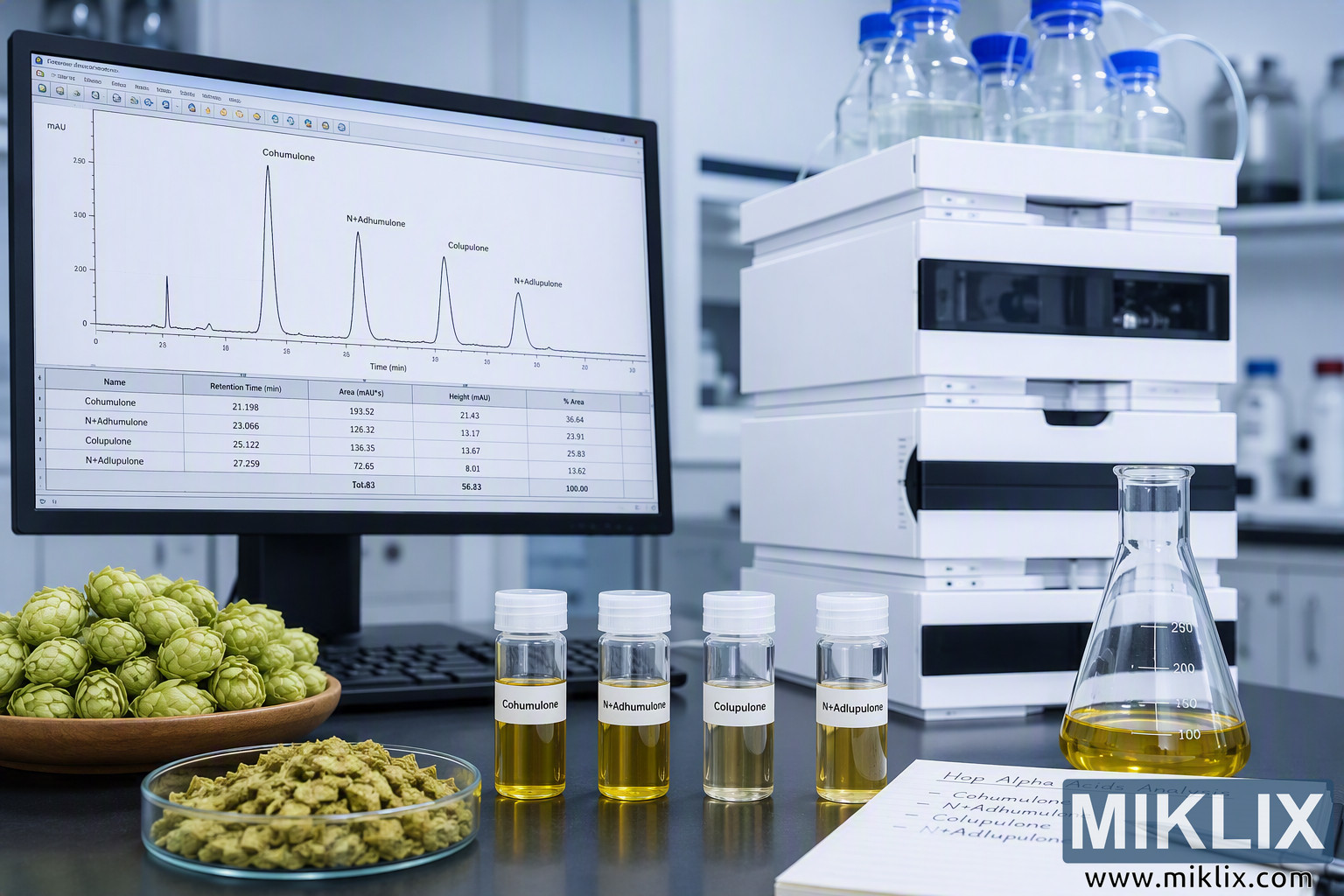
Professional laboratory image depicting the analysis of hop alpha acids with chromatography equipment, analytical software, fresh hop cones, sample vials, and scientific glassware in a modern research setting.
Available versions of this image
The image files available for download below are less compressed and higher resolution - and as a result of that, higher quality - than the images embedded in articles and pages on this website, which are more optimized for file size in order to reduce bandwidth consumption.
Regular size (1,536 x 1,024)
Large size (3,072 x 2,048)
Very large size (4,608 x 3,072)
Extra large size (6,144 x 4,096)
Comically large size (1,048,576 x 699,051)
- Still uploading... ;-)
Image description
The image presents a detailed scientific laboratory environment focused on the chemical analysis of hop-derived compounds, specifically hop alpha acids commonly evaluated in brewing and agricultural research. The scene is captured in a landscape-oriented composition and features a modern analytical workstation positioned on a clean laboratory bench. The overall visual style is bright, highly detailed, and professional, emphasizing precision, research, and laboratory quality control.
On the left side of the image is a large flat-panel computer monitor. The monitor displays analytical software containing a chromatographic graph with several labeled peaks of varying heights. A horizontal time axis extends across the graph, while a vertical measurement axis indicates signal intensity. Beneath the graph is a results table containing analytical values associated with the displayed peaks. The software interface resembles laboratory data analysis tools used for chromatography-based measurements. The monitor serves as a focal point that visually communicates the scientific purpose of the workstation.
In front of the monitor, near the lower-left corner of the image, sits a shallow wooden bowl filled with numerous fresh green hop cones. The hop cones exhibit layered bracts and a textured appearance characteristic of harvested hops. The green coloration contrasts with the neutral laboratory environment and immediately identifies the agricultural source material being analyzed. Adjacent to the bowl is a clear glass dish containing processed hop material in a compact pellet-like or granulated form. The combination of whole hop cones and processed hop product illustrates different stages of sample preparation and provides visual context for the analytical work taking place.
Extending across the center foreground of the image is a row of four transparent sample vials. Each vial contains a liquid sample of slightly different coloration and transparency. White labels are attached to the vials, indicating that each sample corresponds to a specific measured compound or analytical fraction. The liquids range from pale yellow to deeper golden hues, suggesting extracted plant components or prepared laboratory standards. The vials are arranged neatly and evenly, reinforcing the image's theme of methodical scientific investigation and controlled experimental procedures.
Dominating the right side of the image is a large laboratory analytical instrument composed of several stacked modules. The equipment features a clean white exterior with dark horizontal viewing panels and multiple interconnected sections. Flexible tubing and laboratory containers are visible near the upper region of the system. The modular structure and arrangement strongly suggest sophisticated analytical instrumentation such as chromatography equipment used for chemical separation and quantification. The instrument's presence indicates that the displayed analytical results originate from a rigorous laboratory workflow rather than simple visual observation.
In the right foreground stands a transparent laboratory flask partially filled with a clear golden-yellow liquid. Graduated markings are visible on the flask, indicating its use for measurement and sample preparation. The liquid color visually relates to the hop-derived substances shown elsewhere in the scene and contributes to the narrative of extraction, preparation, and chemical evaluation. Light reflections on the glass surface highlight the cleanliness and controlled nature of the laboratory environment.
Near the flask lies a sheet of paper positioned on the laboratory bench. The document contains handwritten notes and a title referring to hop alpha acid analysis. A pen rests on top of the paper, suggesting active documentation of observations, measurements, or laboratory findings. This detail reinforces the scientific workflow, demonstrating that analytical data are being recorded and reviewed as part of the experiment or quality-control process.
The laboratory bench itself is dark in color and provides a stable visual foundation for the various scientific objects. Reflections from glassware, vials, and equipment are subtly visible on the bench surface, adding realism and visual depth. The arrangement of objects appears intentional and organized, conveying professionalism and adherence to laboratory standards.
The background consists of a softly blurred laboratory interior. Shelving, bottles, containers, and additional scientific equipment are visible but remain out of focus. This shallow depth of field guides attention toward the analytical workstation while simultaneously establishing the broader setting as a modern research laboratory. The blurred background contributes to a photographic aesthetic that highlights key instruments and samples without distracting from the primary subject matter.
Lighting throughout the scene is bright, cool, and evenly distributed. The illumination creates crisp visibility of labels, glassware, metallic components, and instrument surfaces. Light reflections on transparent materials add dimensionality, while the predominantly white and gray laboratory environment conveys cleanliness and technical sophistication. The green hop cones and golden liquids provide natural color accents that stand out against the otherwise neutral palette.
Overall, the image depicts a comprehensive scientific workflow involving the laboratory analysis of hop alpha acids. Fresh botanical material, prepared samples, analytical instrumentation, chromatography data, laboratory documentation, and scientific glassware are all integrated into a single cohesive scene. The composition communicates themes of quality control, chemical analysis, brewing science, agricultural research, and analytical chemistry. The image successfully conveys a professional laboratory setting where hop-derived compounds are being measured, documented, and evaluated using advanced scientific methods.
The image is related to: Hops in Beer Brewing: Rakau