
Image: Comparison of Hop Pellets and Whole Cone Hops in Glass Bowls
Published: October 24, 2026 at 12:23:02 AM UTC
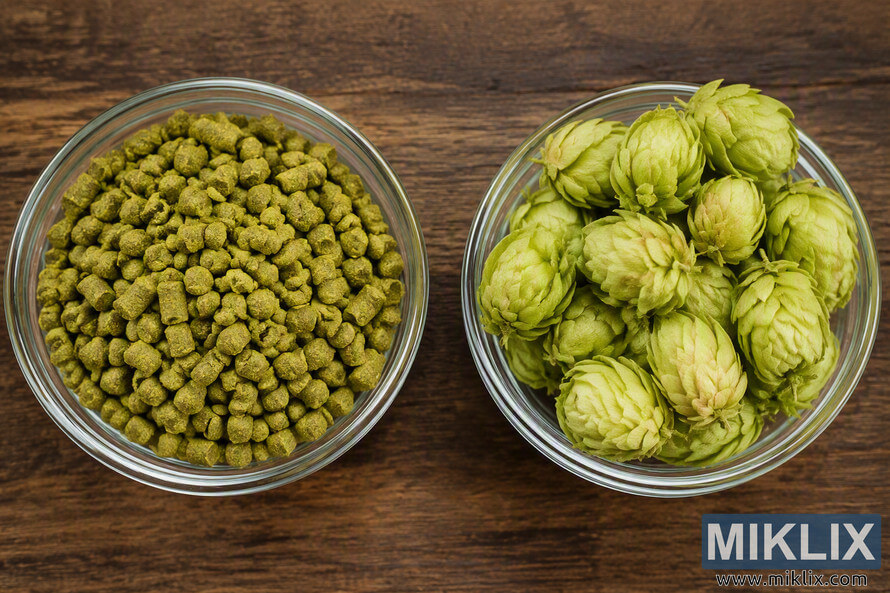
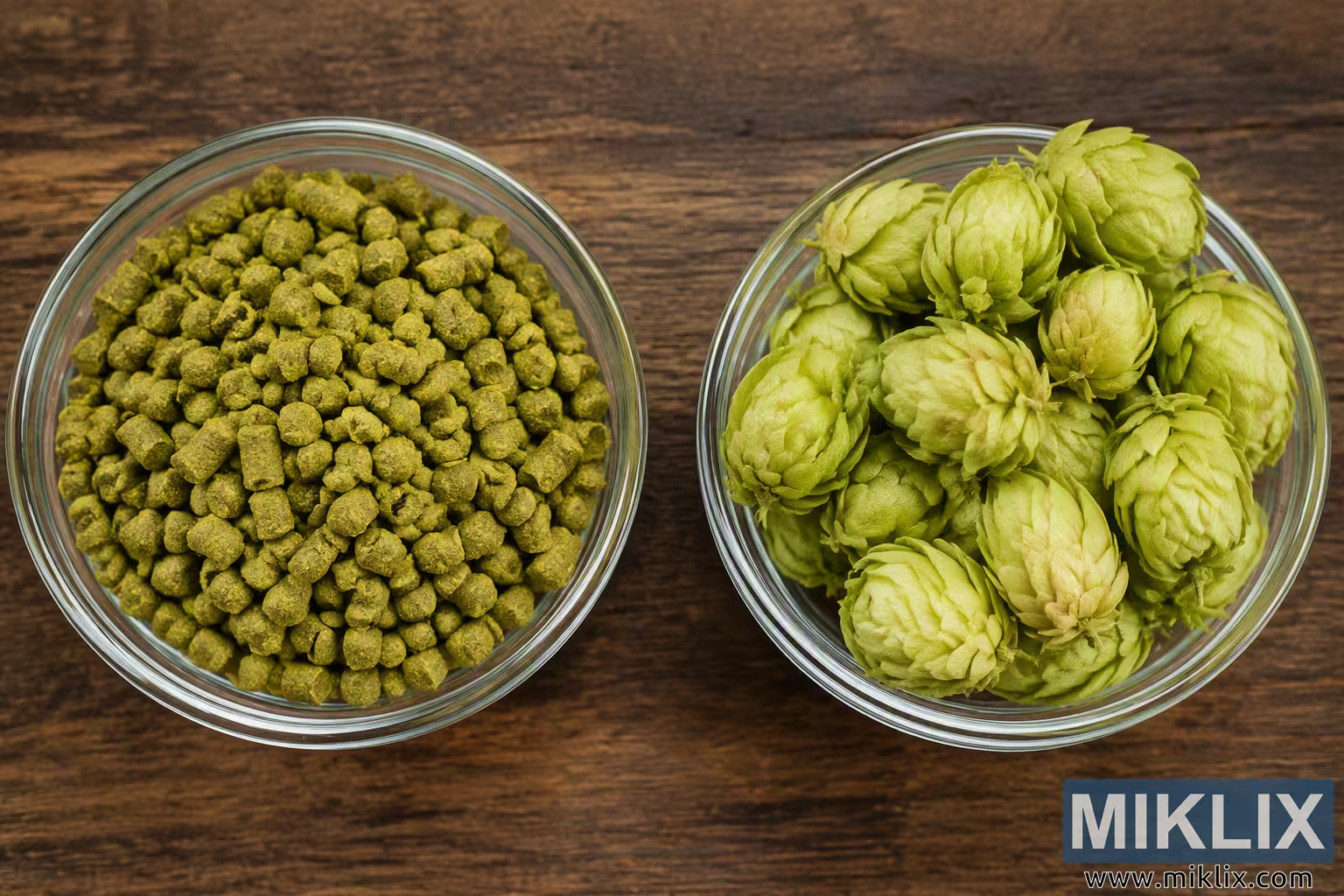
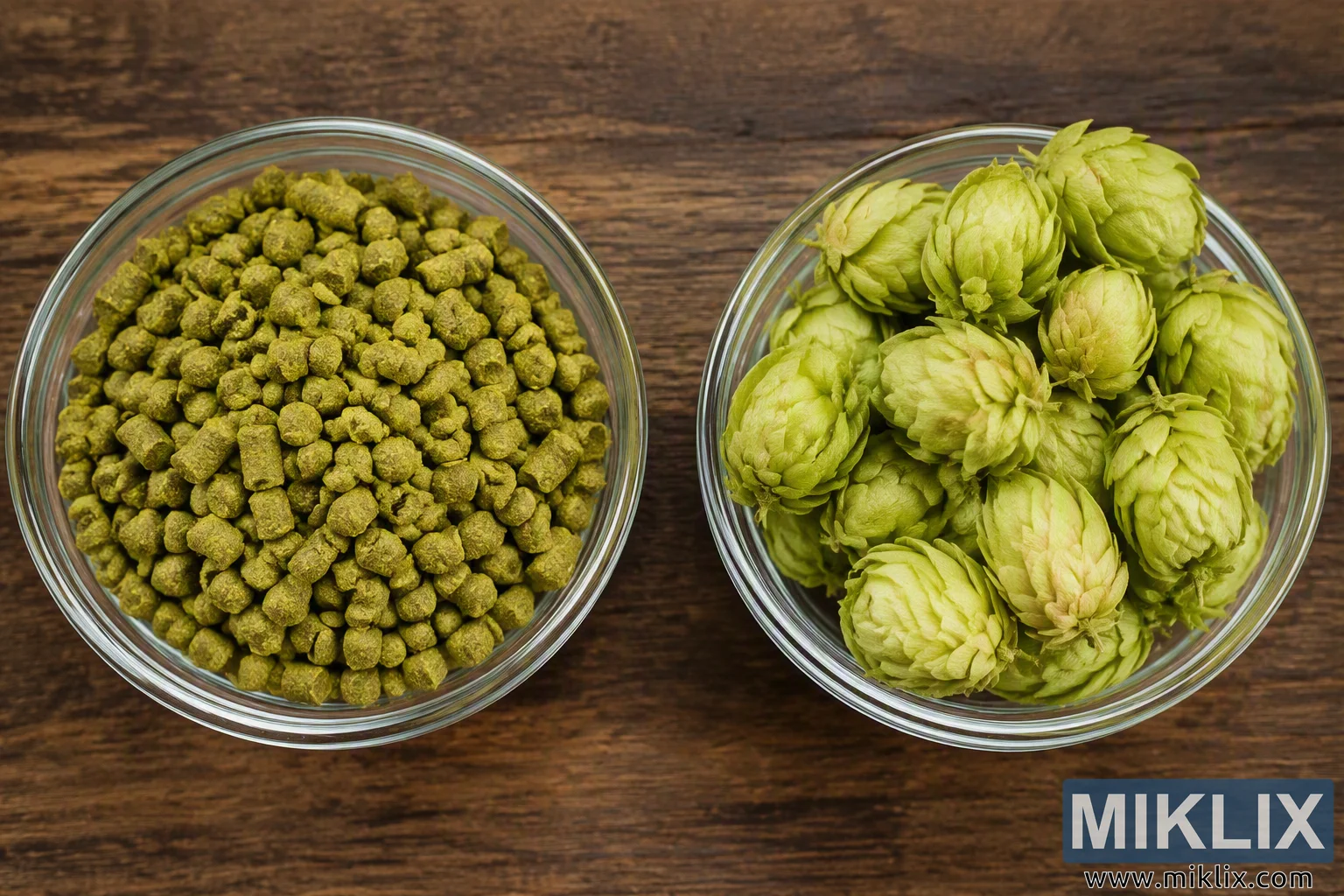
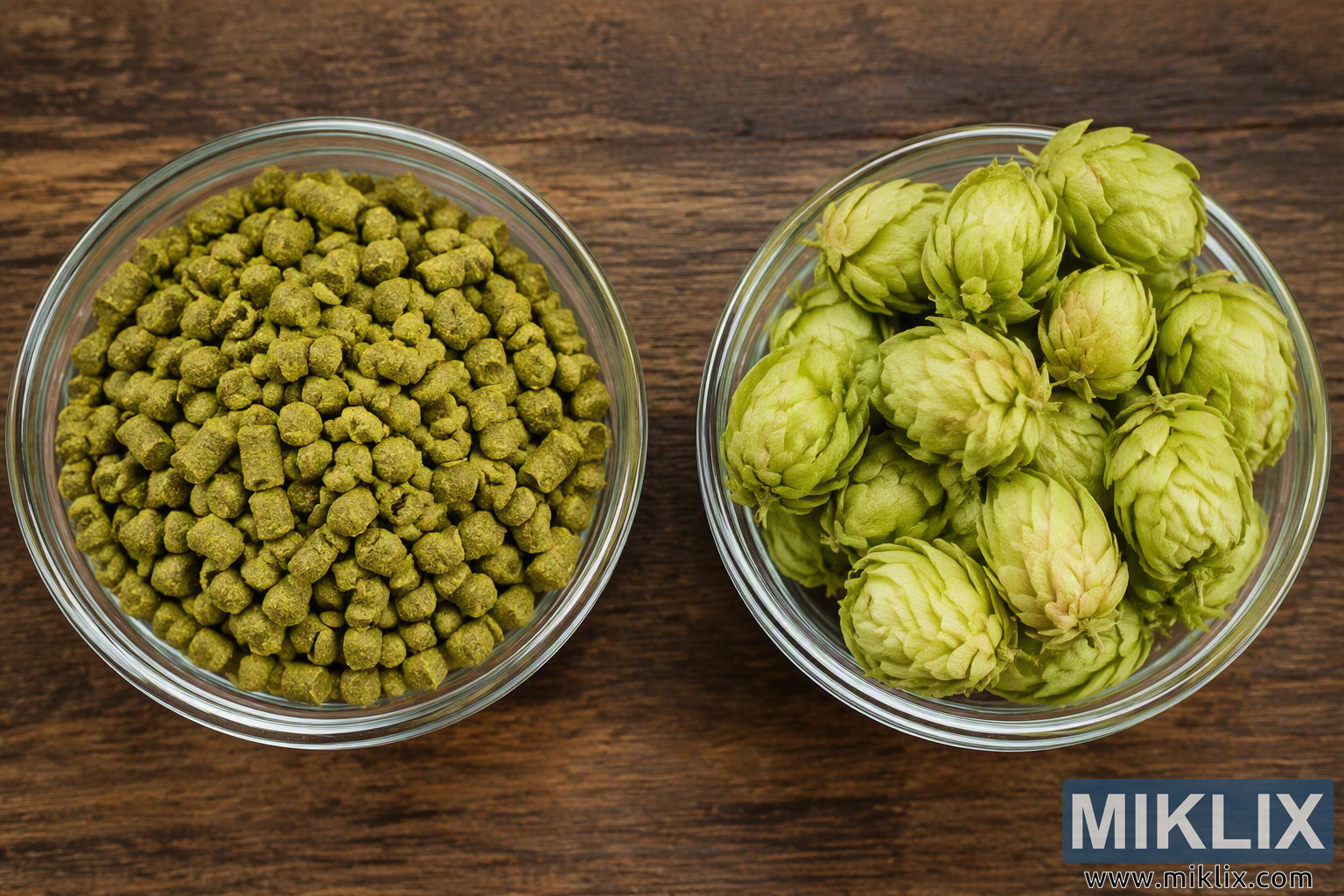
High-resolution landscape image comparing hop pellets and whole cone hops displayed in glass bowls on a wooden tabletop. The side-by-side composition emphasizes differences in form, texture, density, and appearance commonly associated with brewing ingredients.
Available versions of this image
The image files available for download below are less compressed and higher resolution - and as a result of that, higher quality - than the images embedded in articles and pages on this website, which are more optimized for file size in order to reduce bandwidth consumption.
Regular size (1,536 x 1,024)
Large size (3,072 x 2,048)
Very large size (4,608 x 3,072)
Extra large size (6,144 x 4,096)
Comically large size (1,048,576 x 699,051)
- Still uploading... ;-)
Image description
This high-resolution landscape photograph presents a clear side-by-side comparison of two common forms of hops used in brewing: hop pellets and whole cone hops. The image is captured from a directly overhead, top-down perspective, creating a balanced and informative composition that allows viewers to easily compare the characteristics of both hop formats. The scene is arranged on a rustic wooden tabletop with a warm brown coloration and visible wood grain patterns extending across the entire background. The natural texture of the wood provides visual contrast against the vibrant green tones of the hop materials and helps emphasize the organic agricultural nature of the subjects.
Positioned on the left side of the image is a transparent glass bowl filled with hop pellets. The bowl appears circular and is viewed from above, making the rim and interior contents clearly visible. The hop pellets exhibit a muted green color with subtle variations ranging from olive green to yellow-green. Individual pellets are densely packed within the bowl, creating a textured surface composed of small cylindrical and irregularly rounded compressed pieces. Some pellets appear intact, while others show minor fragmentation, producing a granular appearance. The compressed nature of the pellets gives them a uniform, manufactured look, reflecting the processing that transforms hop flowers into a concentrated pelletized form. Fine powder and small particle fragments are visible between some of the pellets, contributing additional texture and realism to the presentation. The bowl is filled nearly to the top, creating a sense of abundance and making the pellet structure easy to examine.
On the right side of the image is a matching transparent glass bowl containing whole cone hops. The bowl mirrors the size and shape of the bowl on the left, reinforcing the comparison-oriented composition. Inside this bowl are numerous intact hop cones clustered together. The hop cones display light green to yellow-green coloration with subtle hints of pale cream and faint pinkish-beige tones on some of the overlapping bracts. Individual cones possess a layered, petal-like structure that gives them a distinctive pinecone-like appearance. The scales of each cone are visible, creating a soft and organic texture that contrasts strongly with the compact, uniform appearance of the pellets shown in the opposite bowl. The cone hops appear fuller, larger, and more dimensional, occupying more physical space within the bowl. Variations in shape, orientation, and overlap create visual depth and emphasize the natural structure of the flowers.
The image composition is highly symmetrical and intentionally educational in nature. Both bowls occupy similar proportions of the frame and are spaced evenly across the horizontal axis. This arrangement naturally draws attention to the differences between the two hop forms rather than favoring one over the other. The glass bowls are clean and transparent, allowing viewers to see the contents clearly without distraction. Reflections on the glass are subtle and controlled, suggesting soft, diffused lighting conditions.
Lighting throughout the scene is even and well-balanced. Shadows are minimal and soft, indicating illumination from a broad light source. The lighting enhances surface detail without creating harsh contrasts. The hop pellets display visible texture and definition, while the layered bracts of the whole cone hops are rendered with clarity and depth. The color palette is dominated by green hues, supplemented by the warm brown tones of the wooden background. This combination creates a natural, earthy visual aesthetic commonly associated with agricultural products, brewing ingredients, and handcrafted beverages.
No people are present in the image. No text, logos, trademarks, labels, packaging, measurement tools, brewing equipment, or branded elements are visible anywhere in the scene. The focus remains entirely on the visual comparison between hop pellets and whole cone hops. The image serves as a straightforward reference illustration that highlights differences in size, texture, shape, density, and visual appearance between the two hop forms. The pellet side conveys compactness, uniformity, and processing, while the whole cone side emphasizes natural structure, botanical detail, and organic form.
Overall, the photograph functions as an effective visual comparison resource. Through its overhead perspective, balanced composition, clear lighting, and detailed presentation of the two hop types, the image communicates the distinguishing visual characteristics of hop pellets and whole cone hops in an objective and easily understandable manner. The result is a clean, professional, educational image suitable for brewing-related articles, ingredient guides, agricultural references, product comparisons, instructional materials, and informational content discussing different hop formats.
The image is related to: Hops in Beer Brewing: Rakau