
Image: Vacuum-Sealed Hop Packages in Freezer Storage
Published: October 24, 2026 at 12:23:02 AM UTC
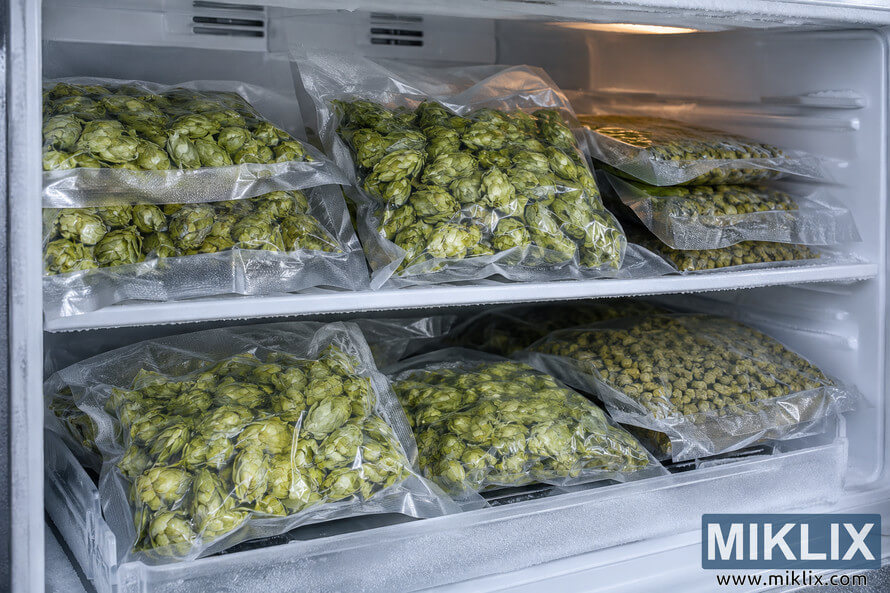
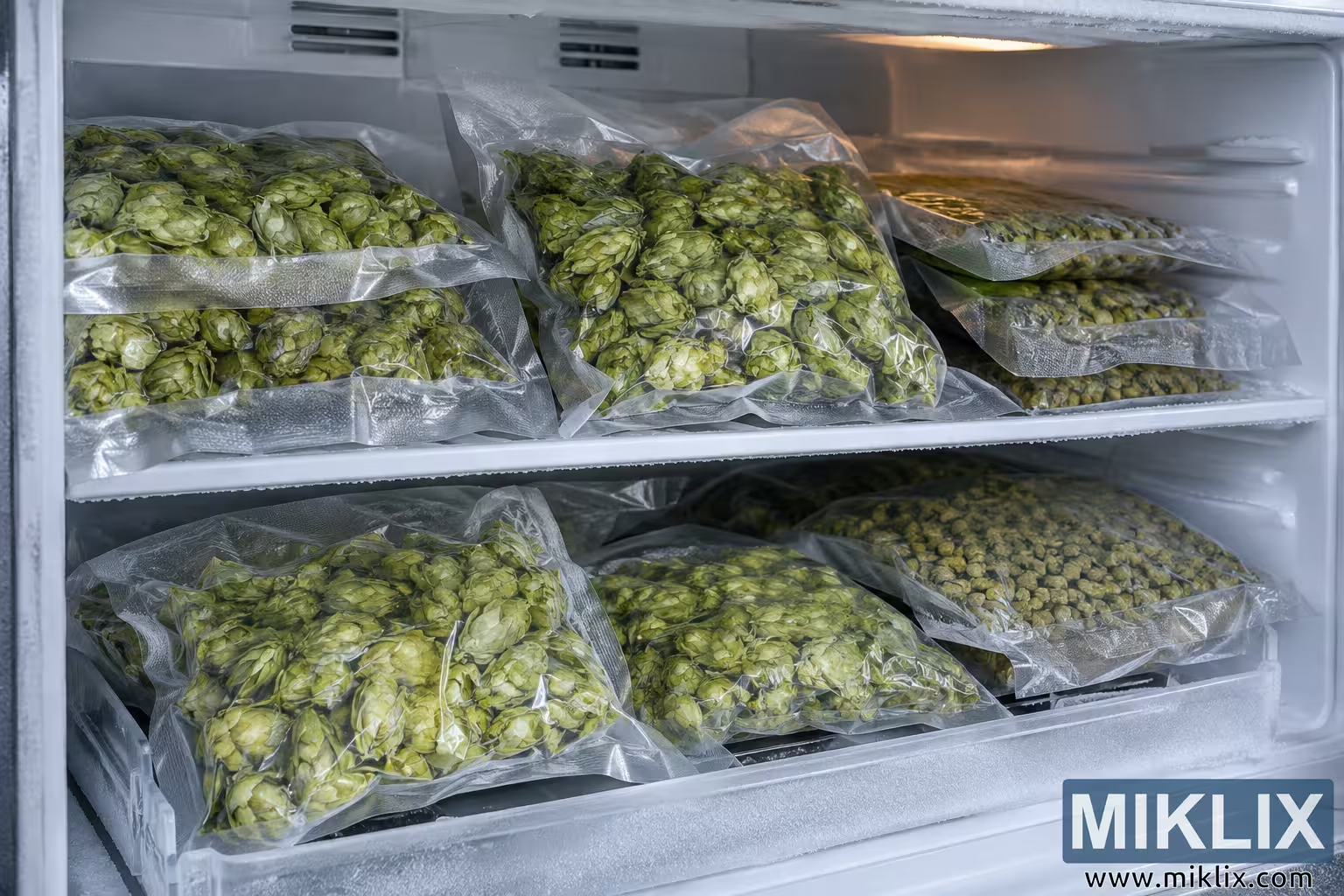
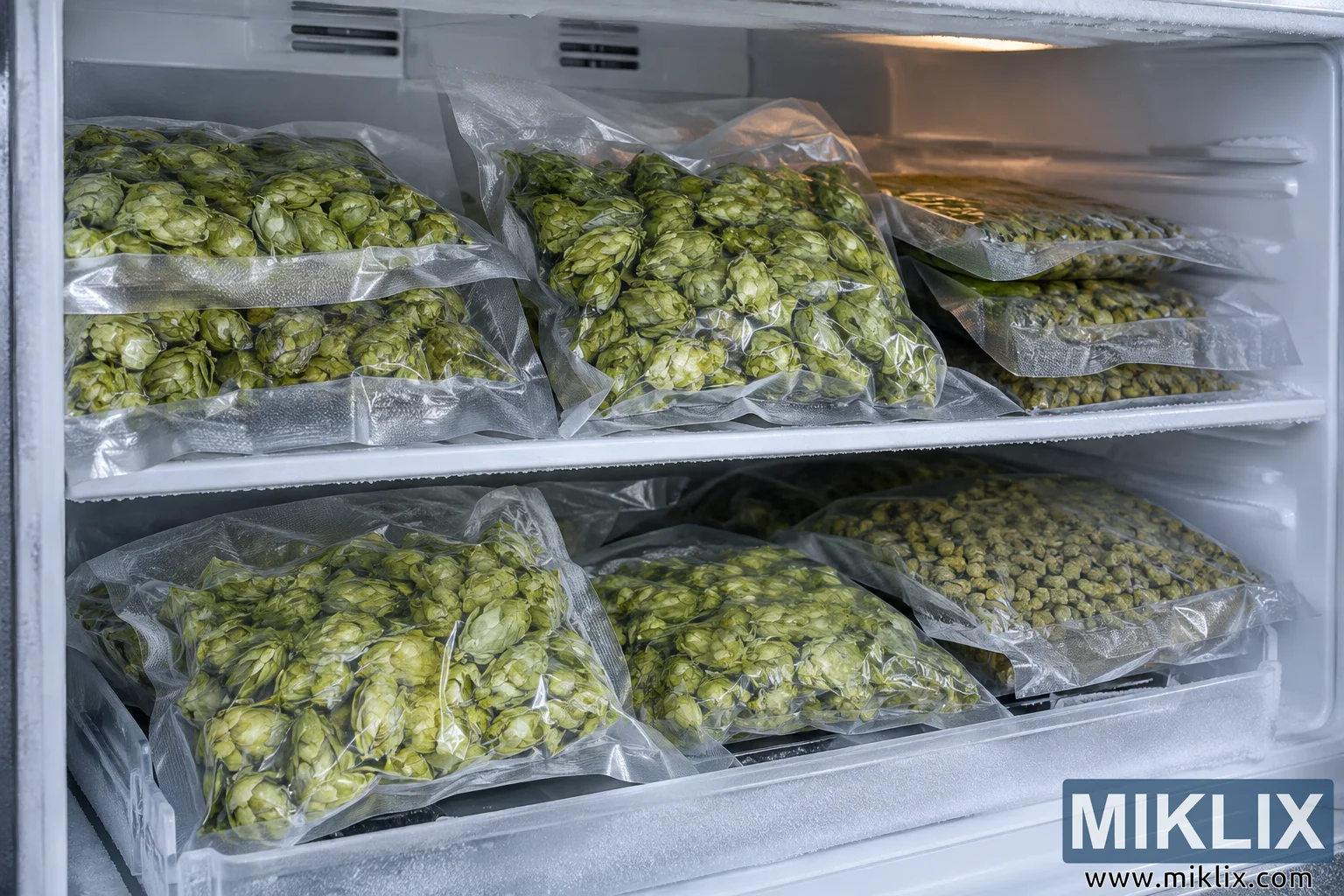
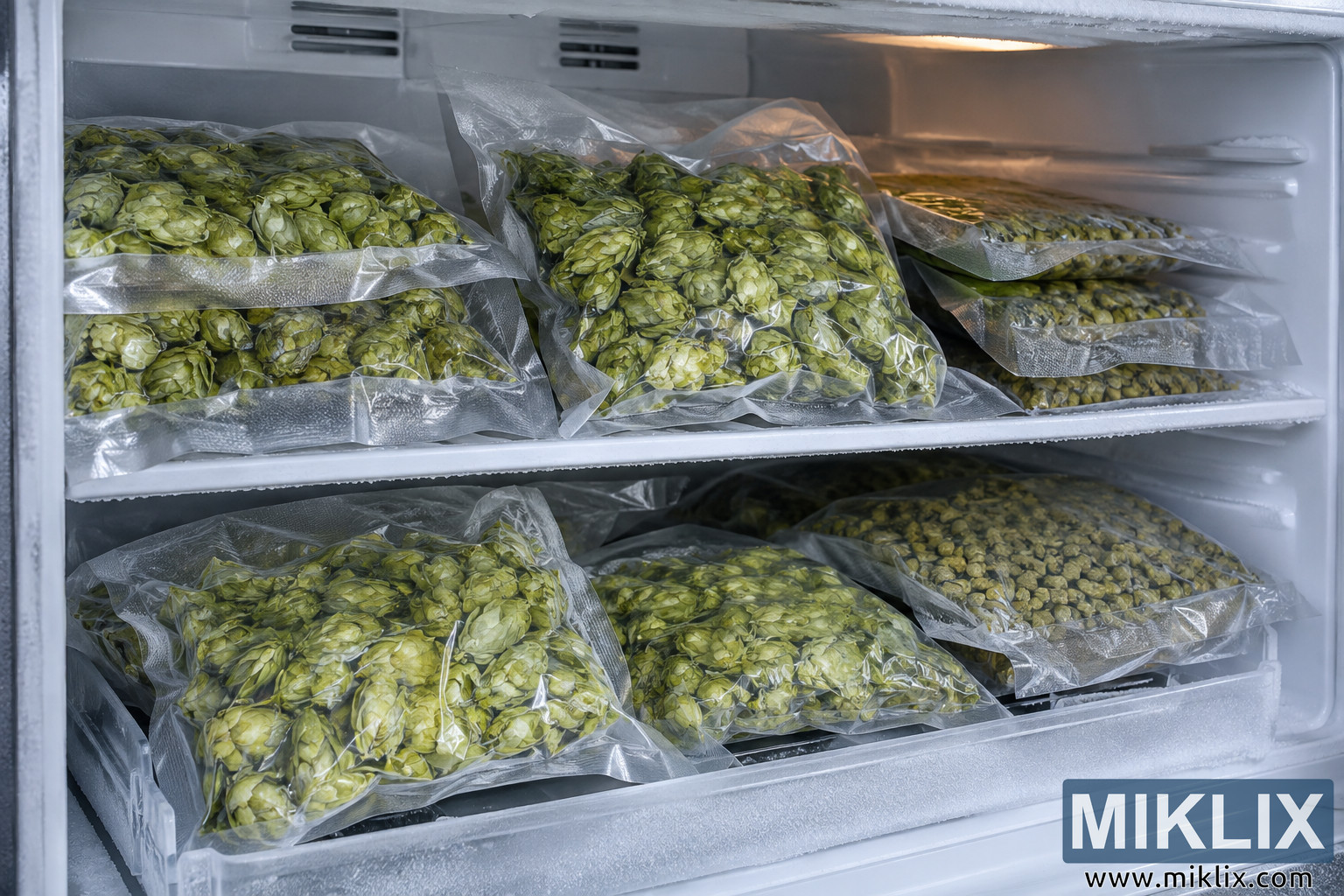
Photorealistic view of vacuum-sealed whole hops and hop pellets stored in a frosty freezer, illustrating organized cold storage and ingredient preservation.
Available versions of this image
The image files available for download below are less compressed and higher resolution - and as a result of that, higher quality - than the images embedded in articles and pages on this website, which are more optimized for file size in order to reduce bandwidth consumption.
Regular size (1,536 x 1,024)
Large size (3,072 x 2,048)
Very large size (4,608 x 3,072)
Extra large size (6,144 x 4,096)
Comically large size (1,048,576 x 699,051)
- Still uploading... ;-)
Image description
A high-resolution, landscape-oriented photograph shows the interior of a compact freezer filled with numerous vacuum-sealed packages of hops. The viewpoint is positioned directly in front of the open freezer, looking inward at two densely packed storage levels. The composition emphasizes the hops and their protective packaging, presenting the scene as practical cold storage for ingredients that need to remain fresh over an extended period. No people, branding, logos, product names, labels, or other identifying commercial elements are visible anywhere in the image.
The upper shelf contains several large transparent vacuum-sealed bags filled primarily with whole hop cones. The hops have a natural range of green tones, from pale yellow-green and muted sage to deeper olive green. Individual cones are clearly recognizable through the plastic, with overlapping layers of delicate, leaf-like bracts forming their characteristic compact shapes. The vacuum sealing has drawn the clear plastic closely around the hops, creating wrinkles, folds, compressed areas, and reflective highlights across the surfaces of the packages. This close contact between the plastic and plant material makes the texture and structure of the hops particularly visible. Some packages are stacked horizontally while others sit at slight angles, giving the storage arrangement an organized but realistic appearance rather than an artificially perfect display.
On the left side of the upper shelf, two broad packages filled with hop cones are stacked one above the other. Their transparent plastic surfaces catch the freezer light and create bright silver-white reflections along the sealed edges and folds. Near the center is another prominent package containing a generous quantity of whole hop cones. This bag leans slightly forward and forms one of the strongest visual focal points in the photograph. Behind and beside it are additional flattened packages extending toward the rear of the freezer. On the right side, several thinner packages are stacked in a compact arrangement, reinforcing the impression that the available freezer space has been used efficiently.
The lower storage level is similarly full. A large bag of whole hop cones occupies much of the lower-left foreground, with the cones pressed firmly against the clear vacuum packaging. Another substantial bag rests near the center, containing hops with slightly lighter green and yellowish tones. On the lower-right side is a noticeably different package containing small, densely packed hop pellets rather than whole cones. These pellets appear as numerous short, compact cylindrical pieces in subdued olive-green and brown-green shades. Their granular, uniform texture contrasts with the layered botanical appearance of the whole hops elsewhere in the freezer. Additional packages are partly visible behind the foreground bags, suggesting that the freezer extends deeper than the immediately visible contents.
The freezer itself is predominantly white and pale gray, providing a cool, neutral background that makes the green hops stand out. Frost and thin accumulations of ice are visible along shelf edges, the upper interior surface, and portions of the lower compartment. The frost gives the scene a convincingly cold appearance and communicates that the packages are being stored at freezing temperatures. At the top rear of the freezer are dark horizontal ventilation openings set into the white housing. These vents add realistic appliance detail and provide a small amount of visual contrast against the otherwise light-colored interior.
A small interior freezer light near the upper-right area produces a slightly warmer glow than the overall cool illumination. This subtle warm highlight falls across parts of the rear wall and nearby packages, while the rest of the image is dominated by cool white and bluish-gray tones. Reflections on the transparent packaging range from soft gray highlights to bright white streaks, helping define the irregular folds and sealed seams of each bag. Despite the reflective plastic, the contents remain clearly visible, and the hops retain natural-looking colors rather than appearing overly saturated.
The photograph has a documentary, realistic style, similar to an image illustrating proper ingredient storage in a home-brewing, craft-brewing, agricultural, or food-preservation context. The camera appears relatively close to the freezer opening, allowing the packages in the foreground to fill most of the frame. Details such as the textured hop cones, compressed pellets, condensation-like patterns on the bags, frost crystals, plastic seams, shelf edges, vents, and interior surfaces are rendered sharply. The depth of the freezer remains apparent because the foreground packages overlap additional bags farther toward the back.
The arrangement communicates abundance and careful preservation. Vacuum sealing visually suggests that excess air has been removed from the packages, while the frozen environment conveys long-term cold storage. Together, these elements imply an effort to protect the hops from exposure to air, warmth, and environmental conditions that could reduce their quality. The image does not show the sealing process itself, nor does it include equipment used to package the hops; instead, it focuses entirely on the completed vacuum-sealed packages after they have been placed into freezer storage.
The overall composition is horizontal and well suited to a landscape format. Strong horizontal lines created by the freezer shelves divide the scene into upper and lower sections, while the irregular shapes of the packages prevent the image from feeling rigid. The brightest areas occur on the white freezer surfaces and reflective plastic seams, whereas the hops provide the principal color throughout the frame. There are no decorative props or unrelated objects, keeping attention firmly on the stored hops. The result is a clean, informative, photorealistic depiction of vacuum-sealed whole hops and hop pellets being kept in a frosty freezer, with an emphasis on freshness, organized storage, protective packaging, and the distinctive green texture of the brewing ingredient.
The image is related to: Hops in Beer Brewing: Rakau