
Image: Fresh Hops vs. Oxidized Hops: Visual Comparison
Published: October 24, 2026 at 12:23:02 AM UTC
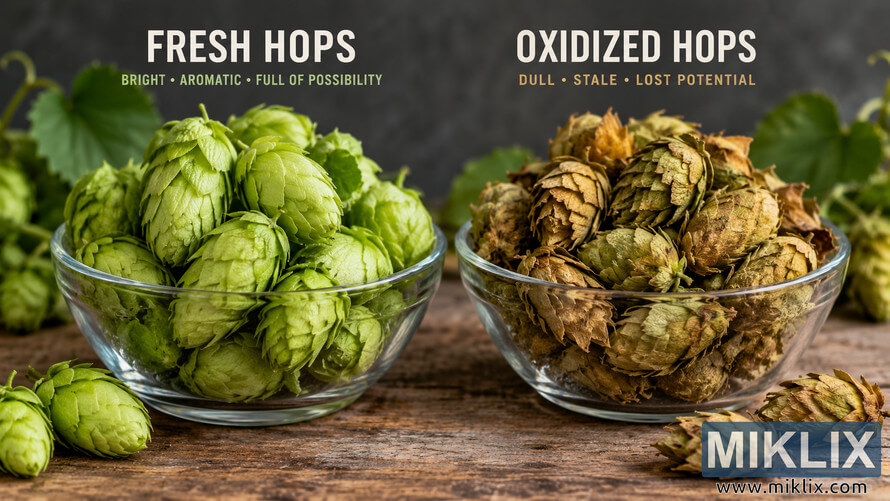
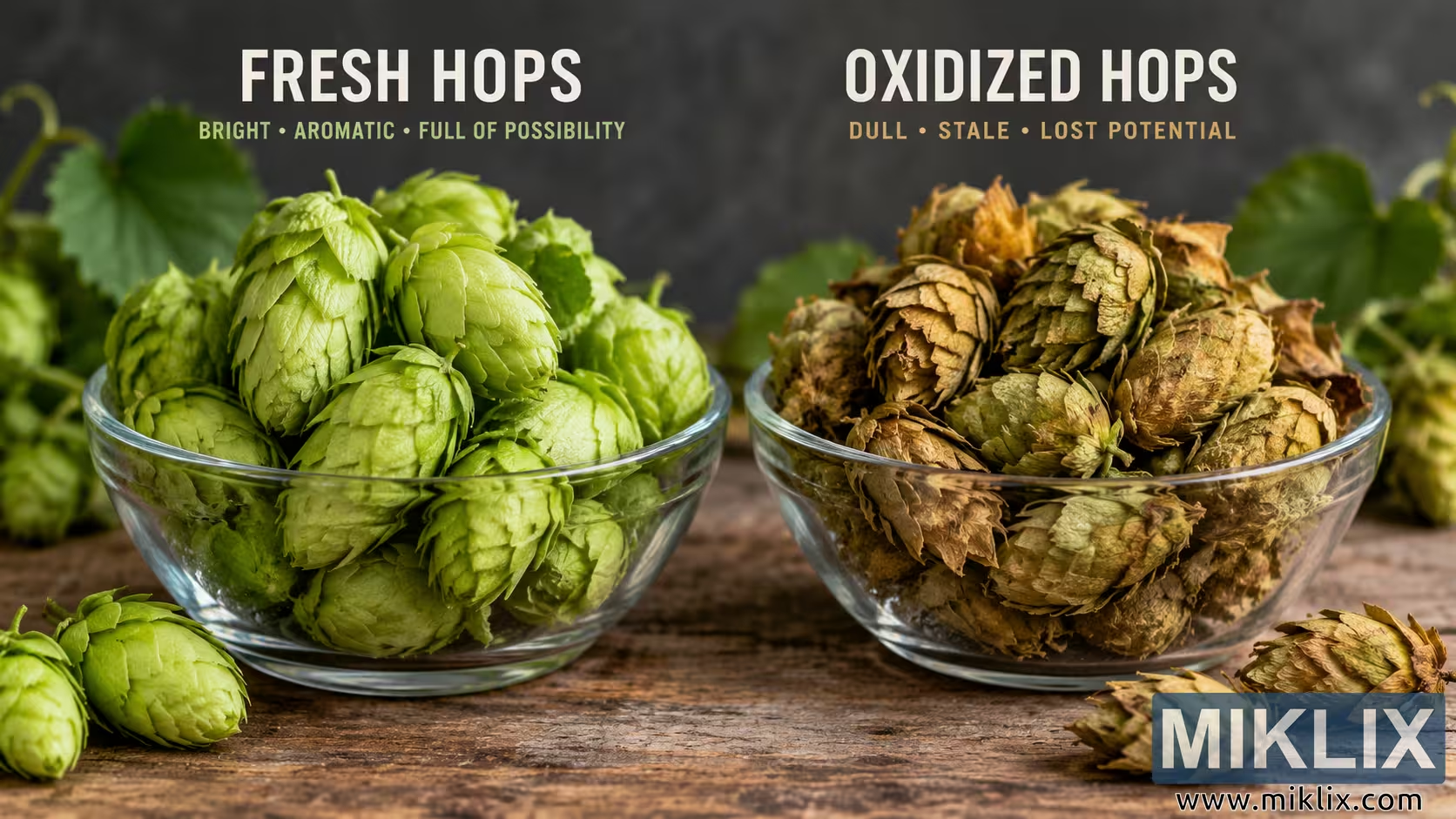
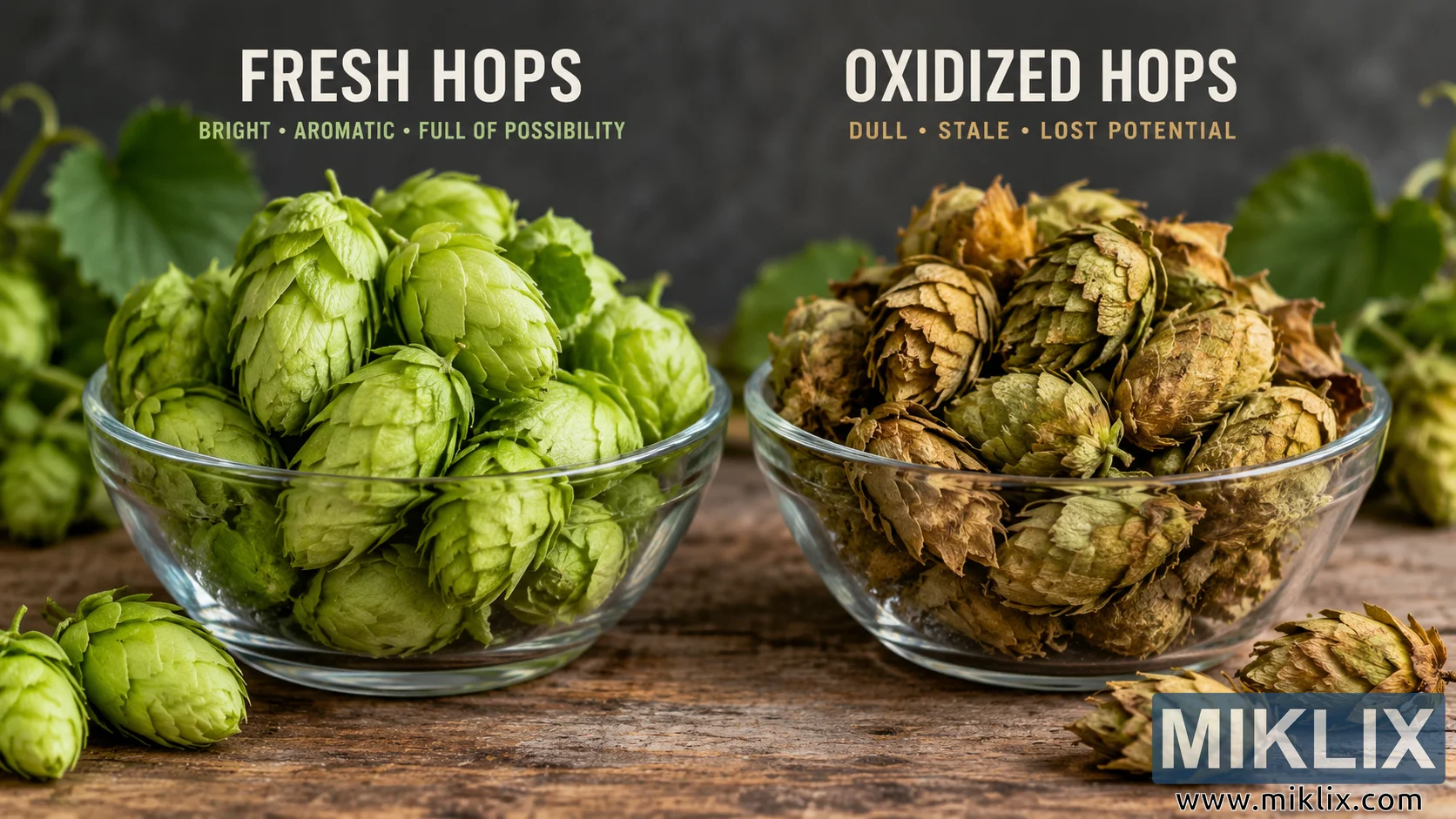
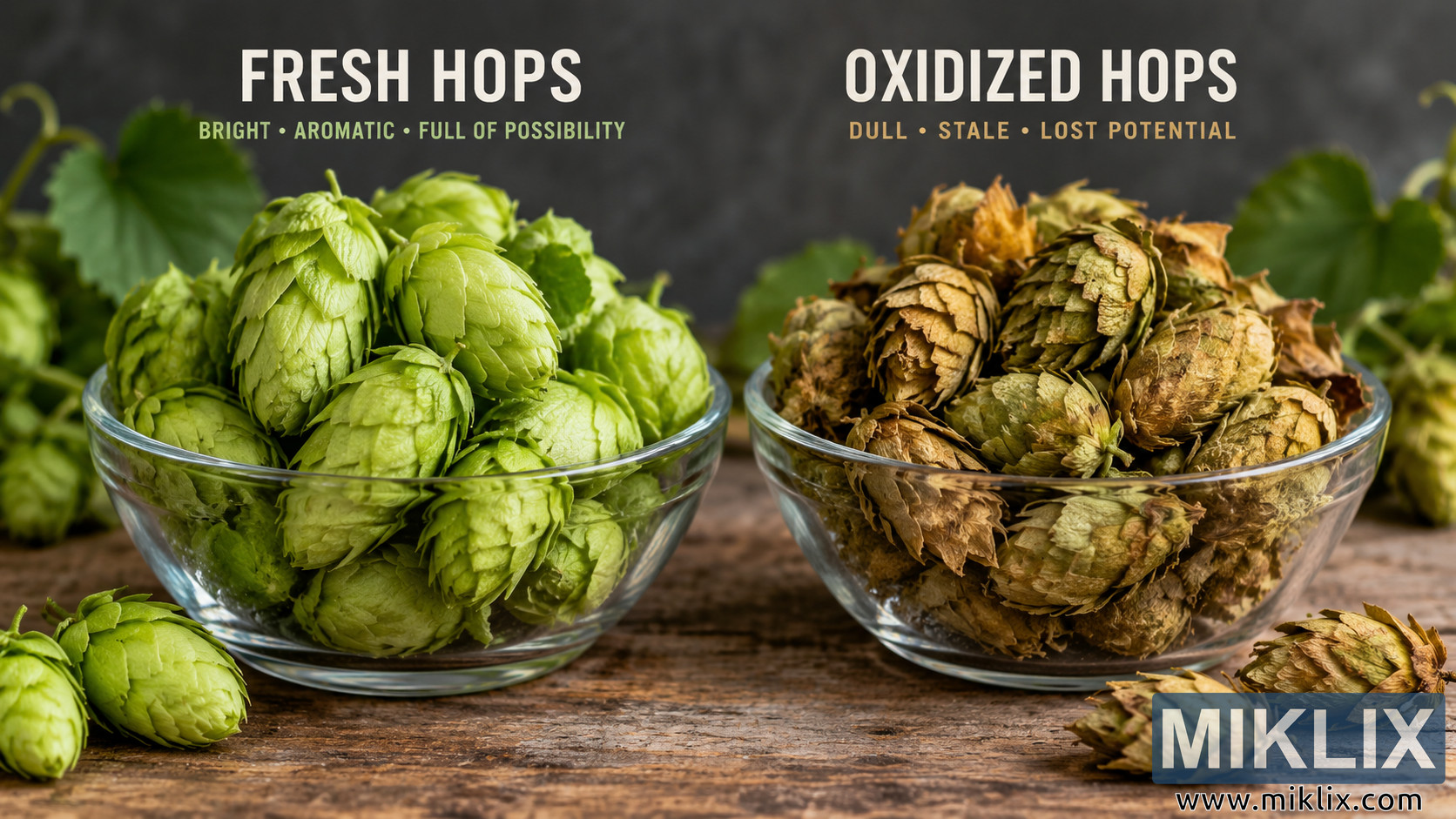
A detailed side-by-side visual comparison of fresh and oxidized hops, showing the bright green appearance of fresh hop cones versus the dull, brown, dry appearance associated with oxidation.
Available versions of this image
The image files available for download below are less compressed and higher resolution - and as a result of that, higher quality - than the images embedded in articles and pages on this website, which are more optimized for file size in order to reduce bandwidth consumption.
Regular size (1,672 x 941)
Large size (3,344 x 1,882)
Very large size (5,016 x 2,823)
Extra large size (6,688 x 3,764)
Comically large size (1,048,576 x 590,138)
- Still uploading... ;-)
Image description
A high-resolution, landscape-oriented photographic image presents a clear side-by-side comparison between fresh hops and oxidized hops. The composition is divided visually into two balanced halves, with fresh hop cones displayed on the left and oxidized hop cones displayed on the right. Both groups of hops are arranged in transparent glass bowls positioned on the same rustic wooden surface, allowing the differences in color, texture, condition, and overall appearance to be compared immediately. The photographic treatment is realistic and detailed, with shallow depth of field, soft natural-looking illumination, and a subdued background that keeps attention focused on the hop cones.
On the left side of the image, a clear glass bowl is generously filled with fresh hop cones. The hops have a vivid, lively green coloration ranging from bright yellow-green highlights to somewhat deeper natural green tones in the shaded areas. Their overlapping bracts appear relatively smooth, intact, supple, and well defined. The cones have a plump, healthy-looking form, with tightly layered structures that create a sense of freshness and physical vitality. Several cones rise above the rim of the bowl, producing a full, abundant arrangement. Additional fresh hop cones are placed loosely on the wooden surface in the foreground near the lower-left corner. These foreground cones reinforce the fresh appearance through their saturated green color and clearly visible layered texture. Green hop leaves and plant material are also visible behind the bowl, although the background is deliberately blurred so that these elements provide atmosphere without competing with the main subject.
Above the left bowl, large uppercase lettering reads “FRESH HOPS.” Directly beneath this heading is a smaller line of uppercase text reading “BRIGHT • AROMATIC • FULL OF POSSIBILITY.” The typography is clean, bold, and highly legible against the dark, softly blurred background. The secondary text uses a greenish tone that visually corresponds with the color of the fresh hops below it. Together, the heading and supporting phrase clearly identify the left side as the fresh example and emphasize the visual impression of vibrant, recently harvested hop material.
The right side provides a strong visual contrast. A matching clear glass bowl contains oxidized hop cones that have noticeably lost the vivid green appearance seen on the left. Their colors range through muted olive green, tan, ochre, yellow-brown, and deeper brown shades. Many of the cones appear dry, brittle, papery, curled, or unevenly discolored. Some bracts have darkened edges, while others show patchy brown areas and a generally faded appearance. The oxidized hops look less plump and less uniform than the fresh hops, creating a clear impression of aging and deterioration. Their rougher, drier surfaces are emphasized by the detailed photographic lighting, which reveals creases, curled edges, and irregular textures throughout the pile.
Several oxidized hop cones are scattered on the tabletop in the lower-right foreground. These loose examples make the contrast particularly easy to observe because their brown, dry surfaces can be viewed independently from the larger pile in the bowl. The cones display combinations of pale tan, dull green, golden brown, and darker brown coloration. Behind the oxidized bowl, additional hop leaves and cones form part of the blurred background. Although some background foliage remains green, the principal oxidized specimens are unmistakably distinguished by their muted coloration and visibly dried condition.
Above the right bowl, large uppercase lettering reads “OXIDIZED HOPS.” Beneath this heading is the smaller uppercase phrase “DULL • STALE • LOST POTENTIAL.” This supporting text appears in a warm tan or golden-brown tone that complements the oxidized hop colors below. The heading is positioned symmetrically with the fresh-hop heading on the opposite side, strengthening the image's function as a direct visual comparison.
The two bowls are approximately equal in size and are photographed from the same perspective. This symmetry is important to the comparison because it minimizes unrelated visual differences between the two sides. Both bowls sit at approximately the same height, occupy similar amounts of space, and are illuminated in a comparable way. As a result, the condition of the hops themselves becomes the dominant difference. The transparent glass also prevents the containers from introducing competing colors and allows some of the lower hop cones to remain visible through the sides of each bowl.
The surface beneath the bowls is a weathered, rustic wooden tabletop with visible grain, scratches, tonal variation, and natural imperfections. Its warm brown character works especially well as a neutral setting for the comparison: the bright green fresh hops stand out strongly against it, while the oxidized hops visually relate to its warmer brown tones. The background transitions into dark gray and charcoal shades with softly blurred green vegetation. This creates strong separation between the foreground subjects and the background while maintaining an agricultural, botanical atmosphere appropriate to hops.
Lighting is soft but directional enough to reveal the three-dimensional structure of individual hop cones. Highlights on the fresh hops accentuate their smooth, layered bracts and saturated green color, while highlights on the oxidized hops emphasize their dryness, curled edges, wrinkles, and rougher surfaces. The glass bowls contain subtle reflections and highlights that add photographic realism without obscuring the contents. Shadows beneath and around the bowls help anchor them naturally to the tabletop.
Overall, the image functions as an educational visual comparison of hop condition. Its most immediate distinction is color: the fresh hops are vivid and consistently green, whereas the oxidized hops are faded, brownish, tan, and uneven in coloration. Texture provides a second major distinction, with the fresh cones appearing fuller and more supple while the oxidized cones appear drier, rougher, and more brittle. The symmetrical arrangement, matching glass bowls, descriptive headings, rustic setting, and detailed close-up photography make these differences easy to understand at a glance. No recognizable commercial branding, company logos, product packaging, or trademarked visual elements are present; the image focuses exclusively on the botanical material and the contrast between fresh and oxidized hop cones.
The image is related to: Hops in Beer Brewing: Rakau