
Image: New Zealand Hop Varieties Comparison Chart
Published: October 24, 2026 at 12:23:02 AM UTC
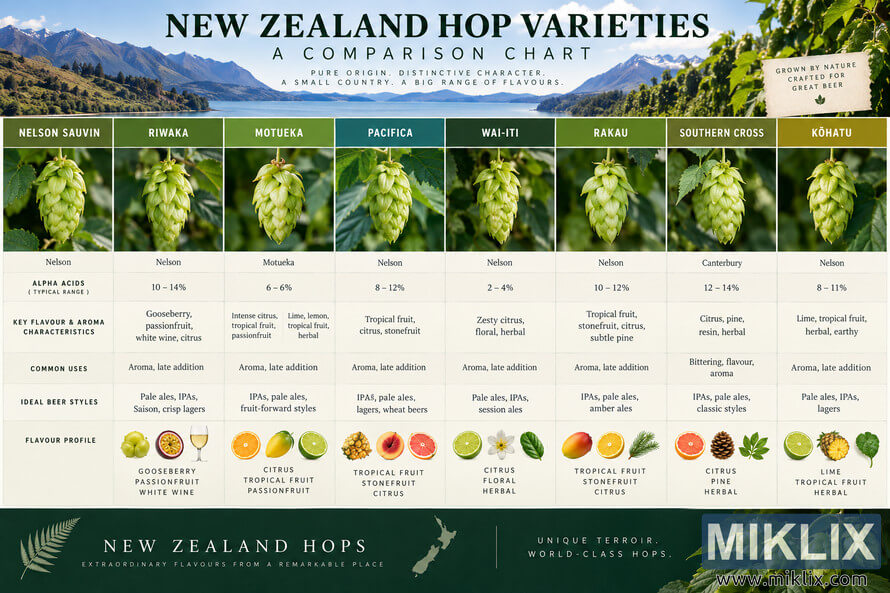
Explore a visual comparison of eight New Zealand hop varieties, including their flavour and aroma profiles, alpha-acid ranges, brewing uses, ideal beer styles, and distinctive botanical characteristics.
Available versions of this image
The image files available for download below are less compressed and higher resolution - and as a result of that, higher quality - than the images embedded in articles and pages on this website, which are more optimized for file size in order to reduce bandwidth consumption.
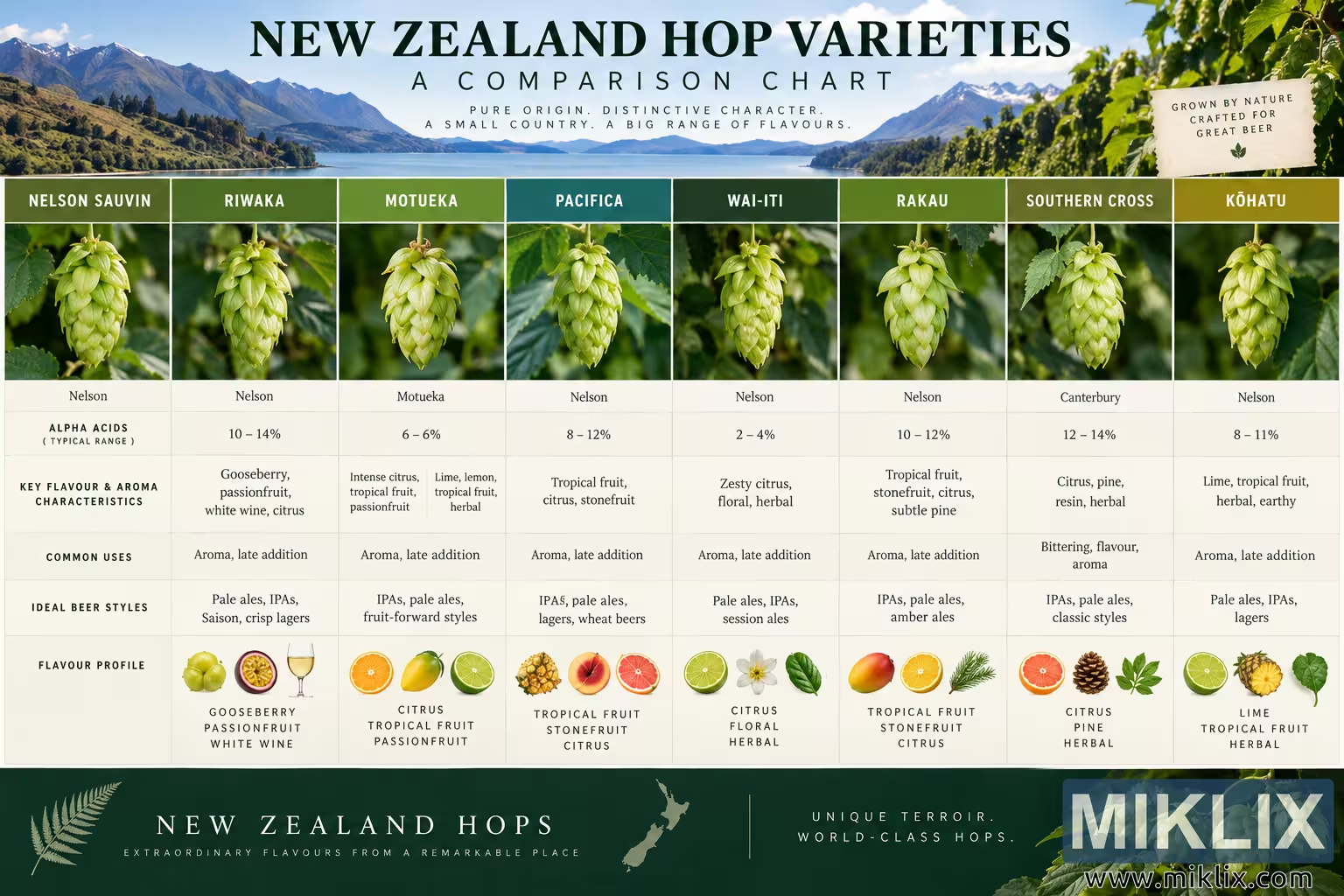
Regular size (1,536 x 1,024)
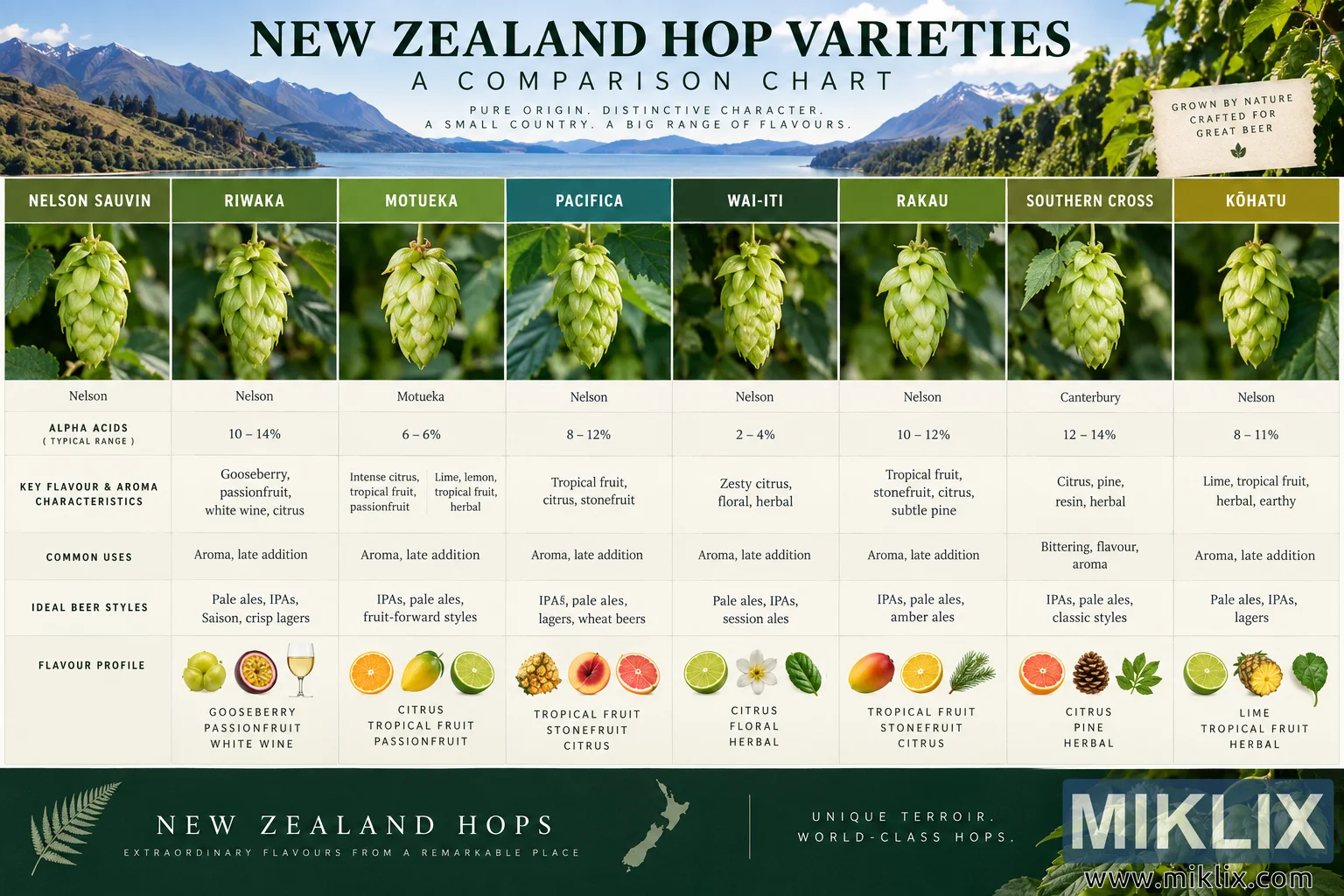
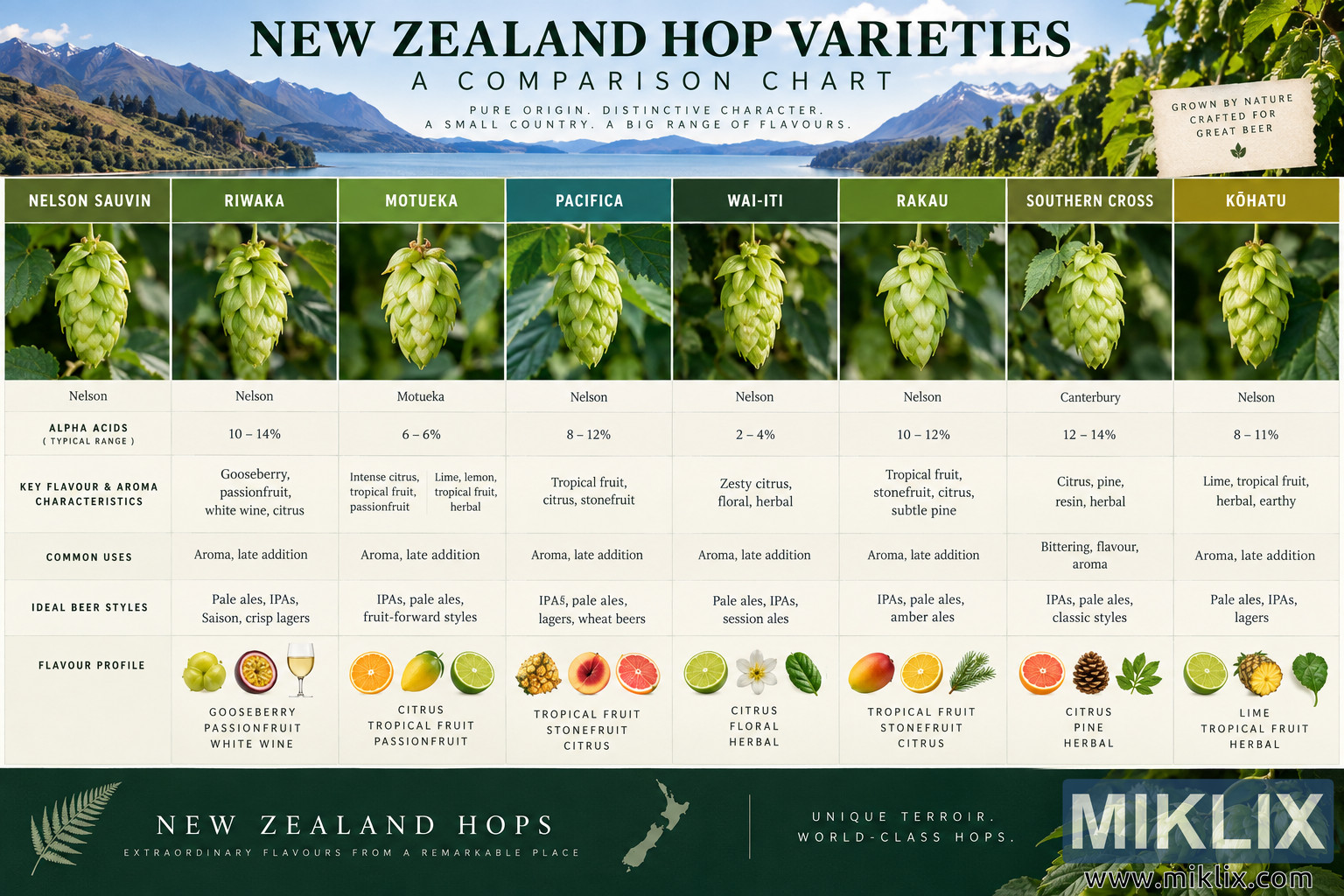
Large size (3,072 x 2,048)
Very large size (4,608 x 3,072)
Extra large size (6,144 x 4,096)
Comically large size (1,048,576 x 699,051)
- Still uploading... ;-)
Image description
A wide, landscape-format infographic presents a visual comparison of New Zealand hop varieties against a fresh, nature-focused backdrop. The overall design combines landscape photography, botanical hop imagery, a structured comparison table, and restrained editorial typography. Across the top is a panoramic New Zealand-inspired mountain and lake scene beneath a bright blue sky. Rugged mountains rise on both sides of a calm body of water, with distant snow-touched peaks visible toward the horizon. Green vegetation and hop plants frame portions of the scenery, reinforcing the agricultural theme. Centered prominently over this landscape is the large heading “NEW ZEALAND HOP VARIETIES,” followed by the subtitle “A COMPARISON CHART.” Smaller text underneath emphasizes the hops’ origin, distinctive character, and broad range of flavours. At the upper right, a small cream-colored label among green hop foliage reads “GROWN BY NATURE CRAFTED FOR GREAT BEER,” accompanied by a simple botanical symbol.
The central and largest portion of the image is an eight-column comparison chart. Each column represents a different New Zealand hop variety: Nelson Sauvin, Riwaka, Motueka, Pacifica, Wai-iti, Rakau, Southern Cross, and Kōhatu. The variety names appear in uppercase lettering inside dark green, olive, teal, or golden-green header panels. Immediately beneath every header is a close-up photograph of a fresh green hop cone hanging naturally among hop leaves. Although the photographs are visually similar and maintain a consistent presentation, subtle differences in lighting, foliage, and cone shape give each column an individual botanical appearance.
Below the hop photographs, the table compares several characteristics. The first information row identifies an associated growing location or regional reference, with Nelson appearing frequently and other entries including Motueka and Canterbury. Another row covers alpha-acid information or typical alpha-acid ranges. Visible numerical ranges include values such as 10–14%, 6–6%, 8–12%, 2–4%, 10–12%, 12–14%, and 8–11%, while the first column uses a general alpha-acids label rather than a clearly displayed numerical value. The next section is devoted to key flavour and aroma characteristics. Nelson Sauvin is associated with descriptors such as gooseberry, passionfruit, white wine, and citrus. Riwaka is presented with intense citrus, tropical fruit, and passionfruit characteristics. Motueka includes lime, lemon, tropical fruit, and herbal notes. Pacifica is associated with tropical fruit, citrus, and stonefruit. Wai-iti emphasizes zesty citrus, floral, and herbal qualities. Rakau features tropical fruit, stonefruit, citrus, and subtle pine. Southern Cross highlights citrus, pine, resin, and herbal qualities, while Kōhatu is associated with lime, tropical fruit, herbal, and earthy characteristics.
A further row describes common brewing uses. Most varieties are presented primarily as aroma or late-addition hops, while Southern Cross is shown as suitable for bittering, flavour, and aroma applications. The following row suggests ideal beer styles. Across the chart these include pale ales, IPAs, saisons, crisp lagers, fruit-forward beers, wheat beers, session ales, amber ales, and other classic beer styles. The repeated references to pale ales and IPAs visually reinforce the strong association between expressive New Zealand hops and hop-forward brewing.
The bottom row of the main comparison table turns the flavour information into a more immediate visual language. Small photographic or illustrated ingredient symbols represent the sensory profile of each hop. The Nelson Sauvin column uses imagery such as pale green fruit, passionfruit, and a glass of white wine to communicate gooseberry, passionfruit, and wine-like notes. Riwaka uses citrus imagery, including orange, lemon-like fruit, and lime, alongside text describing citrus, tropical fruit, and passionfruit. Motueka is illustrated with tropical and citrus fruits. Pacifica uses fruit imagery suggestive of stonefruit and grapefruit or citrus. Wai-iti combines lime, a delicate pale flower, and green herbs or leaves to represent citrus, floral, and herbal qualities. Rakau uses mango-like stonefruit, orange, and a pine or evergreen sprig. Southern Cross includes grapefruit-like citrus, a pine cone, and green leaves, reinforcing citrus, pine, and herbal notes. Kōhatu combines lime, tropical fruit imagery, and leafy herbs to convey its lime, tropical, and herbal character. These ingredient images make the comparison accessible even at a glance and add color and texture to the otherwise orderly table.
The chart itself uses a warm off-white background with thin dividing lines and generous spacing, creating the feel of a premium educational poster or brewery reference guide. Typography alternates between strong condensed uppercase labels and more traditional serif body text. Deep greens dominate the visual palette, complemented by cream, olive, yellow-green, teal, and the natural colors of fruit and foliage. The use of realistic hop photography gives the infographic an agricultural and tactile quality, while the carefully aligned table structure gives it an informative, reference-oriented character.
A dark forest-green footer spans the entire bottom of the image. On the left, a pale fern frond provides a recognizable New Zealand botanical motif. Large spaced lettering reads “NEW ZEALAND HOPS,” with a smaller line underneath referring to extraordinary flavours from a remarkable place. Near the center is a simplified silhouette map of New Zealand. A fine vertical divider separates the map from the phrase “UNIQUE TERROIR. WORLD-CLASS HOPS.” On the far right, a lush close-up cluster of ripe green hop cones and leaves extends into the footer, visually bringing the design back to its central subject. The footer creates a strong visual conclusion and gives the infographic the polished appearance of a high-end brewing, agriculture, or hop-education poster.
Overall, the image communicates a comparative overview of eight New Zealand hop varieties through a combination of botanical photography, brewing information, sensory descriptors, fruit-and-herb imagery, and New Zealand landscape cues. Its horizontal format allows all eight varieties to be viewed side by side, making differences in aroma, flavour, brewing use, and suggested beer styles easy to scan. The composition is informative but strongly visual, balancing technical brewing-reference content with an inviting portrayal of New Zealand scenery and hop agriculture. No recognizable commercial beer, brewery, hop supplier, or other actual brand logo is displayed; the design instead relies on generic New Zealand, brewing, landscape, and botanical themes.
The image is related to: Hops in Beer Brewing: Rakau