
Image: Common Homebrewing Mistakes: Oxidized and Improperly Stored Hops
Published: October 24, 2026 at 6:16:59 PM UTC
Learn how oxygen, warmth, light, poor packaging, and age can damage brewing hops, with a visual comparison of fresh and oxidized hops and proper storage practices.
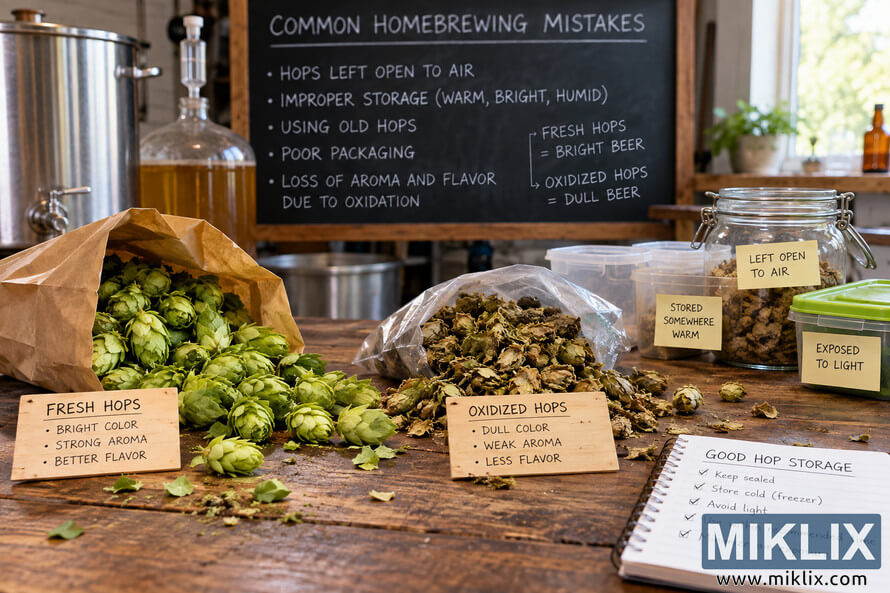
Available versions of this image
The image files available for download below are less compressed and higher resolution - and as a result of that, higher quality - than the images embedded in articles and pages on this website, which are more optimized for file size in order to reduce bandwidth consumption.
Regular size (1,536 x 1,024)
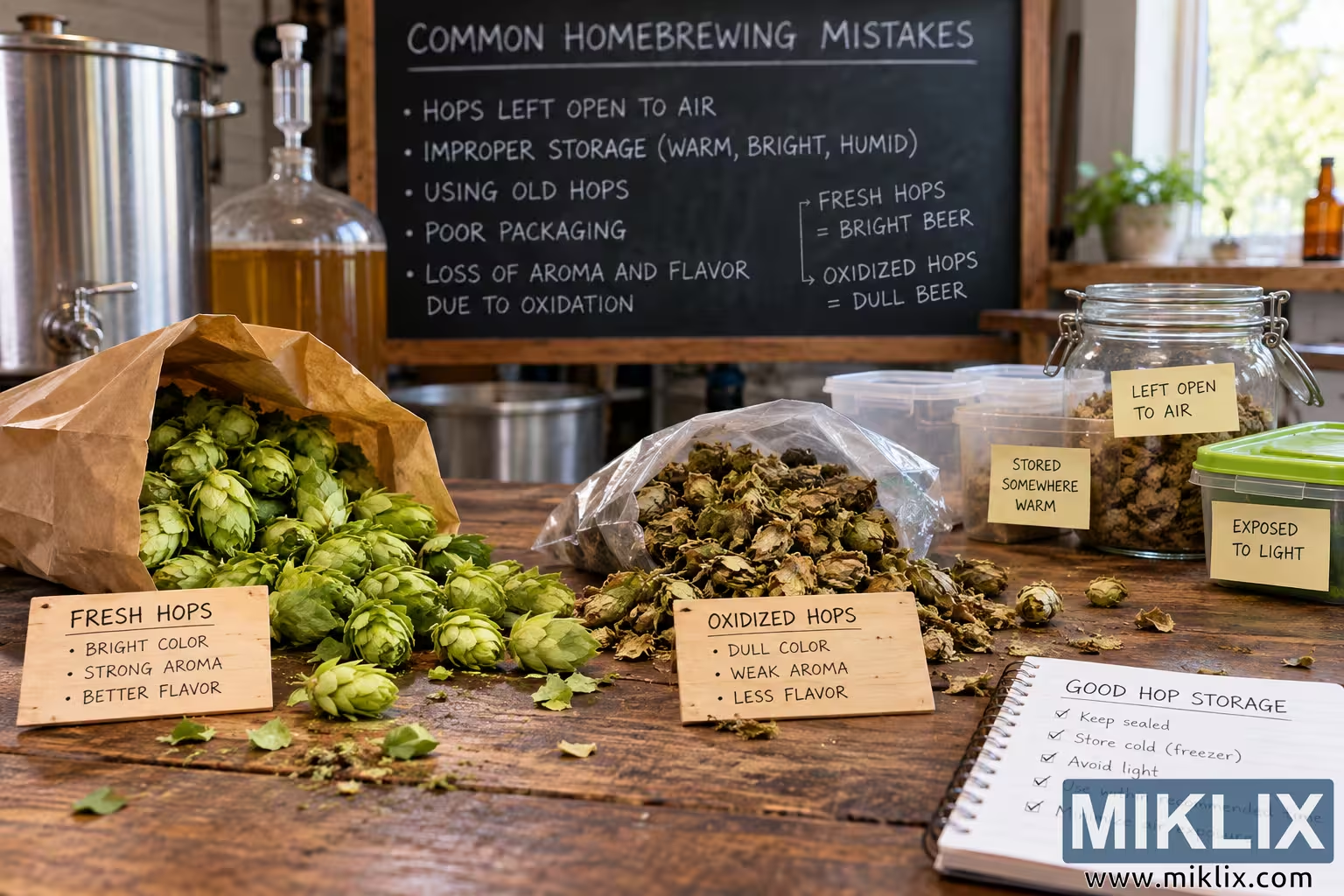
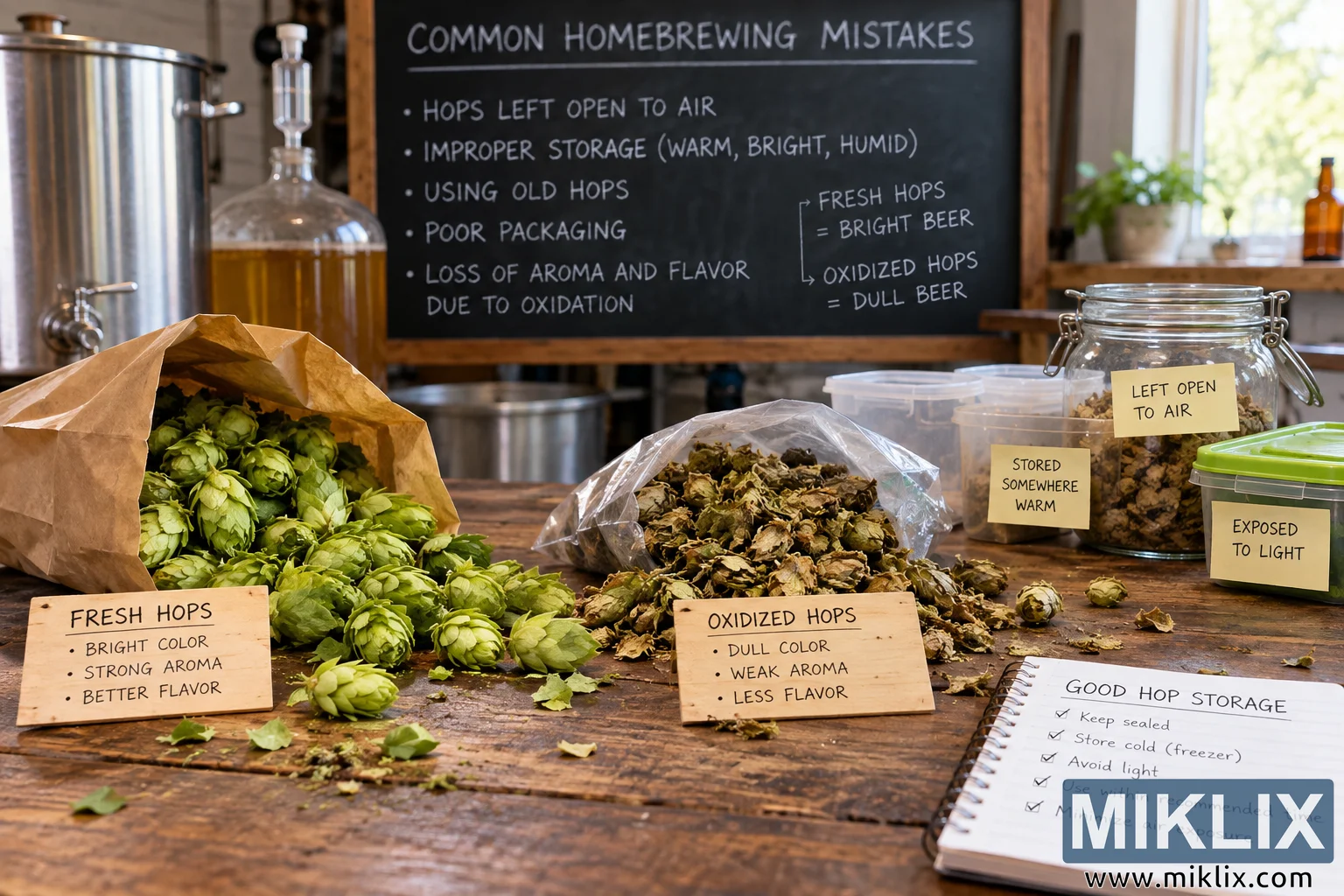
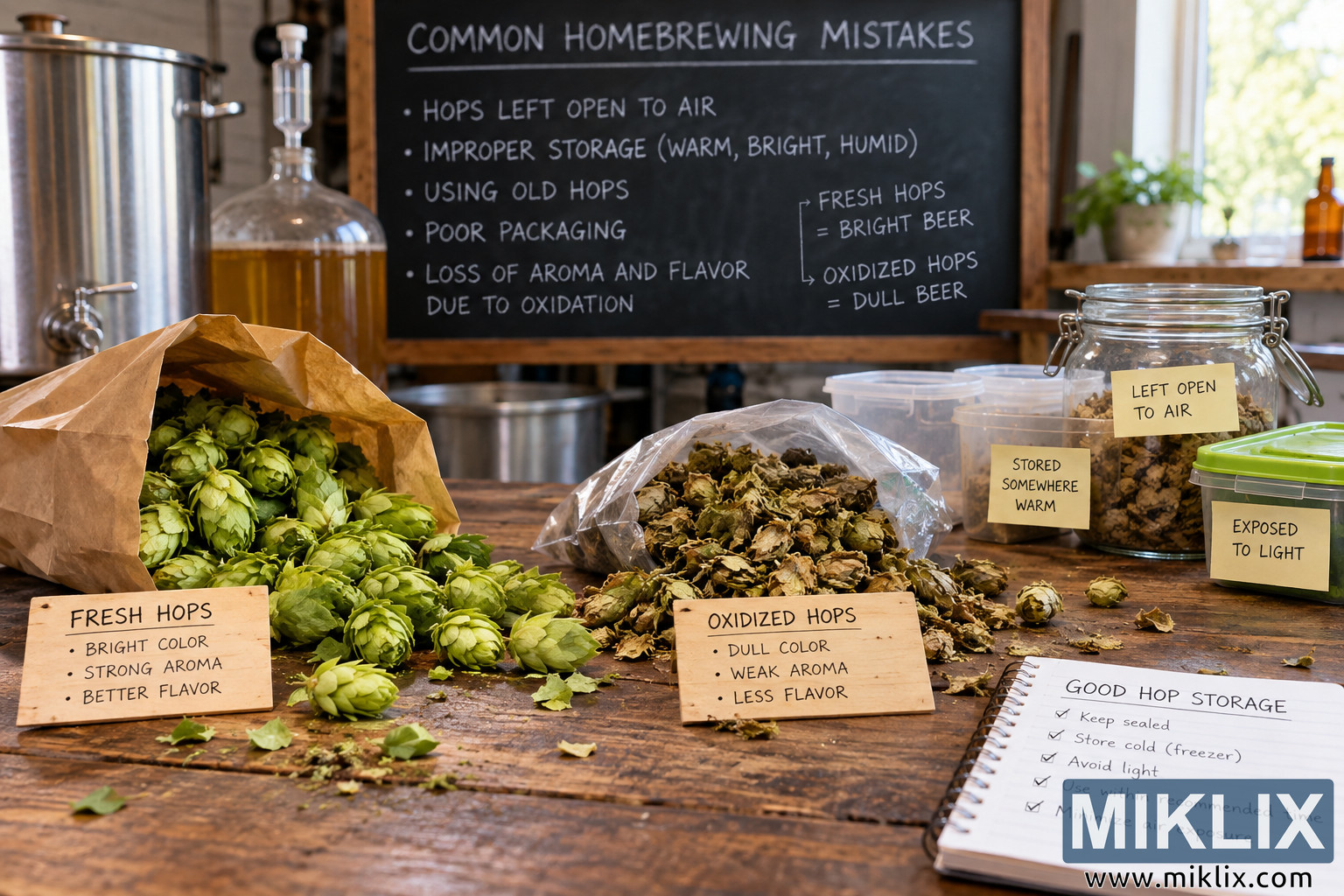
Large size (3,072 x 2,048)
Very large size (4,608 x 3,072)
Extra large size (6,144 x 4,096)
Comically large size (1,048,576 x 699,051)
- Still uploading... ;-)
Image description
A wide, landscape-oriented, photorealistic scene depicts a rustic homebrewing workspace designed to illustrate common mistakes involving oxidized and improperly stored hops. The composition is arranged on a worn wooden workbench, with brewing equipment, fresh hops, deteriorated hops, storage containers, handwritten notes, and a large chalkboard combining to create an educational visual about hop freshness and storage. The setting has the atmosphere of a small home brewery or workshop, with warm natural light entering from a window on the right side of the image. No recognizable commercial brands, logos, trademarks, or branded packaging are visible anywhere in the scene.
In the foreground on the left is a large brown paper bag lying open on the wooden table. A generous quantity of fresh green hop cones spills from the bag onto the work surface. These hops have a vivid green to yellow-green appearance and look relatively plump, intact, and aromatic. Their fresh color and structured petals visually contrast with the older hops positioned closer to the center of the image. In front of the fresh hops is a small rectangular handwritten card labeled 'FRESH HOPS.' Beneath the heading, the card lists positive characteristics including bright color, strong aroma, and better flavor. Several loose green leaves and fragments are scattered naturally around the pile, giving the workbench an active, recently used appearance.
Near the center of the table is the contrasting example of oxidized hops. A partially opened transparent plastic bag contains a collection of dried, brownish hop material, with additional hops spilling out onto the workbench. Compared with the fresh hops, these specimens appear noticeably duller, more brittle, faded, and brown. Their muted olive, tan, and brown coloration visually communicates deterioration caused by age, oxygen exposure, or unsuitable storage. A handwritten card positioned in front of this pile reads 'OXIDIZED HOPS' and notes characteristics such as dull color, weak aroma, and less flavor. The juxtaposition between the vibrant green fresh hops and the faded oxidized hops provides the central visual comparison in the image.
On the right side of the workbench are several examples of questionable hop-storage practices. A large clear glass jar containing dried hop material has a note attached to it reading 'LEFT OPEN TO AIR,' emphasizing exposure to oxygen as a common mistake. Nearby, a translucent plastic container bears a handwritten note indicating that the hops were stored somewhere warm. Another plastic container with a bright green lid has a note reading 'EXPOSED TO LIGHT.' Together, these containers demonstrate several environmental conditions that can accelerate the loss of hop quality: oxygen, warmth, and light. Because the containers are generic and unbranded, the educational message remains focused on storage practices rather than any specific product or manufacturer.
A spiral-bound notebook occupies the lower-right foreground. Its visible page is headed 'GOOD HOP STORAGE' and contains a checklist of recommended practices. The notes emphasize keeping hops sealed, storing them cold, avoiding light, using them within an appropriate period, and minimizing exposure to air. The notebook provides a visual counterpoint to the deliberately poor storage examples directly above it. The handwriting and casual workshop presentation make the information feel like practical notes from a homebrewer rather than a commercial advertisement.
Dominating the middle background is a large black chalkboard framed in wood. Across the top, handwritten chalk lettering reads 'COMMON HOMEBREWING MISTAKES.' Below the heading is a list describing several problems associated with hop handling and storage. These include leaving hops open to air, storing them under warm, bright, or humid conditions, using old hops, relying on poor packaging, and experiencing a loss of aroma and flavor because of oxidation. On the right side of the chalkboard, a simple comparison connects fresh hops with brighter beer characteristics and oxidized hops with duller results. The chalkboard functions as the main educational backdrop while the physical ingredients on the table provide tangible examples of the concepts it describes.
Additional brewing equipment fills the background without distracting from the hops. On the far left stands a large stainless-steel brewing vessel with a lid, fittings, and a spigot, reinforcing the homebrewing context. Slightly to its right is a clear glass fermentation vessel containing amber-gold liquid and fitted with an airlock. Other metallic brewing containers are partially visible behind the workbench. On the far right, near the window, a generic amber glass bottle sits on a wooden surface. It has no visible label or branding. A small green plant and softly blurred outdoor foliage add a domestic, natural quality to the environment.
The lighting is warm and directional, with daylight entering from the right and illuminating the hops, containers, wooden surfaces, and brewing equipment. The fresh green hops receive particularly attractive illumination, making their color stand out strongly against the darker chalkboard and brown workbench. The oxidized hops are intentionally more subdued and earthy in appearance. Moderate depth of field keeps the foreground ingredients and educational labels clear while allowing some background details to soften naturally. Reflections on the stainless-steel brewing vessel and glass fermentation container enhance the photographic realism.
Overall, the image communicates a straightforward educational message about preventing hop degradation during homebrewing. Fresh hops are represented as green, aromatic, and flavorful, while oxidized hops are represented as faded, dry, and less desirable. The arrangement highlights several common causes of deterioration, particularly prolonged exposure to oxygen, light, warmth, unsuitable packaging, and excessive storage time. At the same time, the notebook introduces better practices such as airtight storage, cold temperatures, protection from light, timely use, and reduced air exposure. The realistic workshop environment, side-by-side hop comparison, handwritten annotations, brewing vessels, and storage examples make the image suitable as an educational illustration for an article, guide, blog post, or instructional resource about hop storage and common homebrewing mistakes.
The image is related to: Hops in Beer Brewing: Record