
Hops in Beer Brewing: Record
Published: October 24, 2026 at 6:16:59 PM UTC
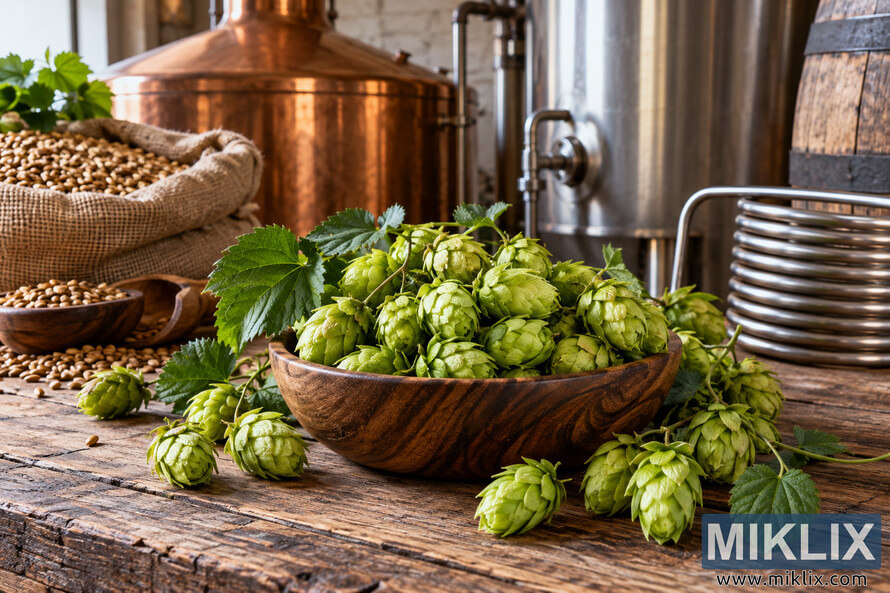
Record is an English-bred dual-purpose hop known for its smooth bitterness and mild fruity, floral, and spicy character with subtle earthy notes—well suited to traditional ales, bitters, porters, and other balanced homebrews.
Click or tap the image for more information and higher resolutions.
Every homebrewer knows that selecting the right hop variety can transform an ordinary beer into something extraordinary. Record hops have emerged as a versatile choice for craft brewers seeking balanced bitterness and distinctive aroma profiles. Whether you're crafting your first pale ale or perfecting a complex IPA recipe, understanding hop characteristics makes all the difference.
This comprehensive guide walks you through everything needed to master Record hops in your homebrewing adventures. From alpha acid content to storage techniques, you'll discover practical insights that elevate your brewing skills.
Understanding Record Hops: Origin and Characteristics
Record hops represent a distinctive variety cultivated primarily in European hop-growing regions. These hops gained recognition among brewers for their reliable performance and well-balanced chemical composition. The variety emerged from selective breeding programs focused on creating hops suitable for multiple beer styles.
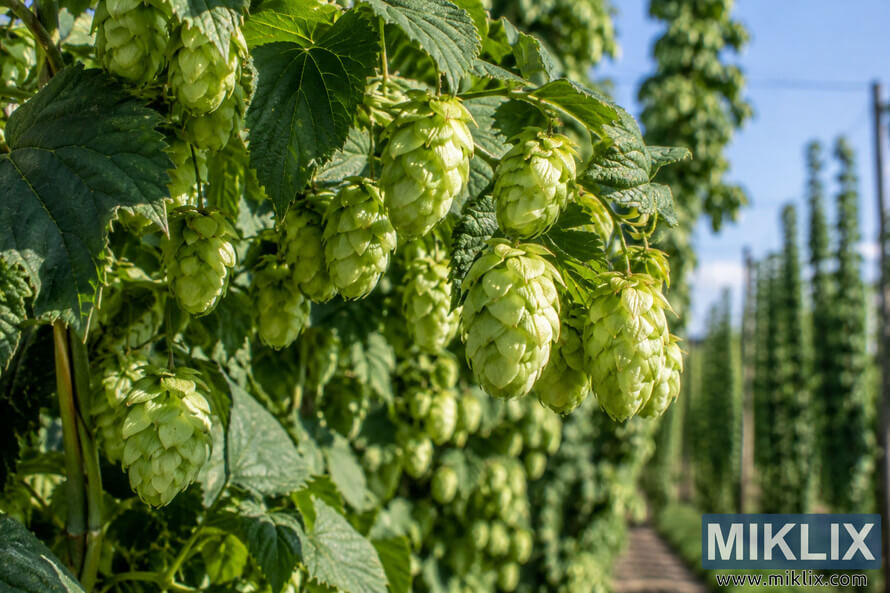
The physical appearance of Record hop cones shows medium-sized, compact structures with pale green coloring. Brewers appreciate their consistent lupulin content and aromatic oil distribution. These characteristics make them predictable performers in the brew kettle.
Click or tap the image for more information and higher resolutions.
Key Physical Attributes
Cone Structure
Record hops display medium-dense cone formation with well-developed lupulin glands. The cones maintain structural integrity during processing and storage.
Visual Markers
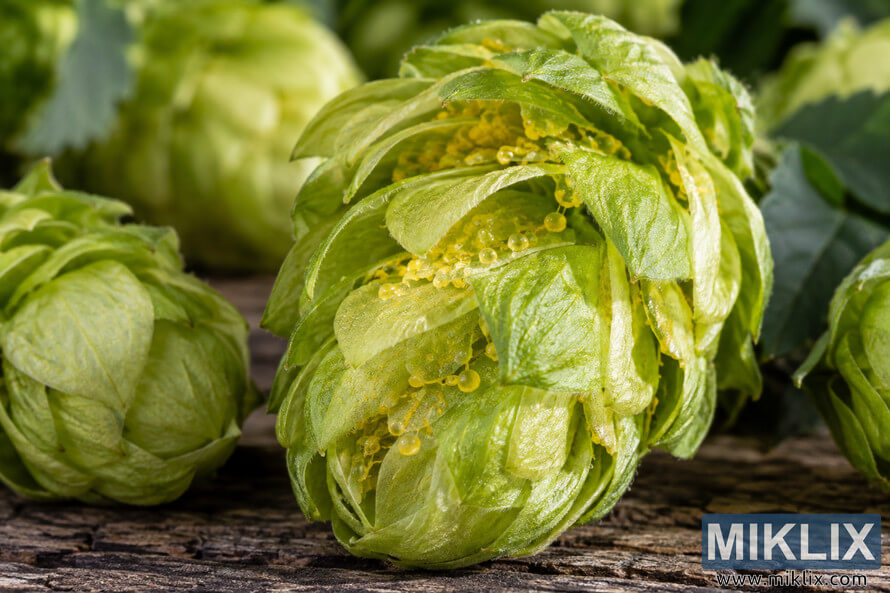
Fresh Record hops exhibit vibrant pale green hues with golden lupulin visible when cones are pulled apart. This coloring indicates proper harvest timing and quality.
Flavor Profile Foundation
The flavor characteristics of Record hops blend floral notes with subtle earthy undertones. Brewers often detect hints of spice and mild citrus when used in appropriate quantities. These qualities work exceptionally well in traditional European beer styles.
Unlike more aggressive modern hop varieties, Record hops offer restrained aromatics that complement rather than dominate beer recipes. This makes them ideal for balanced brewing approaches where hop character supports malt profiles.
Alpha Acid Content and Bittering Properties
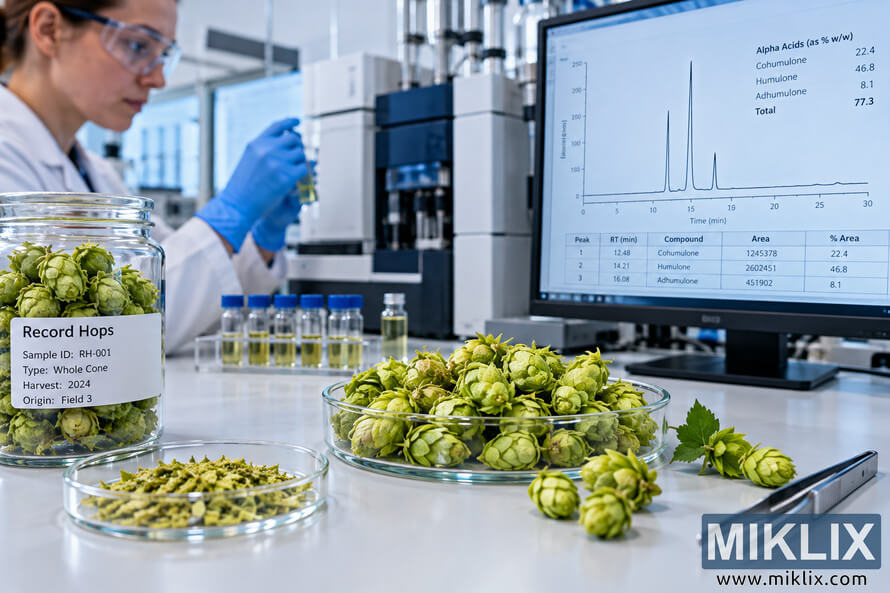
The alpha acid content in Record hops typically ranges between 4.5% and 6.5%, placing them in the moderate bittering category. This range provides sufficient bittering power for most beer styles without overwhelming delicate flavor profiles.
Bittering Calculations for Homebrewing
When calculating International Bitterness Units (IBUs) for your recipes, Record hops deliver predictable results. A 60-minute boil addition of one ounce in a five-gallon batch contributes approximately 25-30 IBUs, depending on the specific alpha acid percentage.
| Boil Time | Hop Amount (oz) | Approximate IBUs (5-gal batch) | Best Use |
| 60 minutes | 1.0 | 25-30 | Primary bittering |
| 30 minutes | 0.75 | 15-18 | Flavor development |
| 15 minutes | 0.5 | 6-8 | Late flavor addition |
| 5 minutes | 1.0 | 3-5 | Aroma boost |
| Dry hop (post-fermentation) | 1.0-2.0 | 0-1 | Pure aroma |
The moderate alpha acid level means Record hops work efficiently as both bittering and dual-purpose additions. You won't need excessive quantities to achieve desired bitterness, which helps control costs in homebrewing operations.
Pro Tip: Always adjust your calculations based on the specific alpha acid percentage listed on your hop package. Variations between harvest years can affect final bitterness levels in your finished beer.
Click or tap the image for more information and higher resolutions.
Aroma and Flavor Contributions in Beer
The aromatic profile of Record hops delivers complexity through multiple sensory layers. Floral characteristics dominate the initial impression, reminiscent of fresh garden flowers and herbal tea. These floral notes create an inviting nose that draws drinkers into the beer experience.
Primary Flavor Components
- Floral character with rose and jasmine undertones
- Earthy notes reminiscent of fresh soil and dried herbs
- Subtle citrus hints providing brightness without sharp acidity
- Mild spice elements adding depth and complexity
- Clean finish without harsh or lingering bitterness
The earthy qualities in Record hops ground the flavor profile, preventing it from becoming too ethereal or one-dimensional. This earthiness pairs naturally with malt sweetness in traditional beer recipes.
Click or tap the image for more information and higher resolutions.
Essential Oil Composition
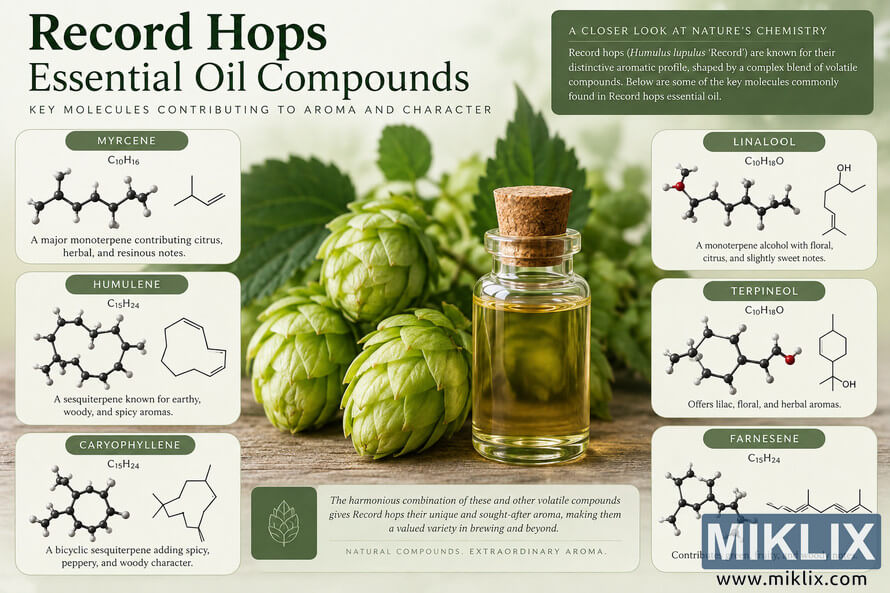
The essential oil content in Record hops contributes significantly to their aromatic properties. These oils contain various compounds that survive the brewing process to flavor your finished beer. Understanding these components helps predict how Record hops will perform in different brewing applications.
Myrcene Content
Myrcene provides the foundational herbal and earthy characteristics. This compound appears in moderate concentrations in Record hops, contributing to their balanced nature.
When added late in the boil or during dry hopping, Record hops showcase their aromatic potential most effectively. The volatile compounds that create those desirable floral and citrus notes preserve better with minimal heat exposure.
Click or tap the image for more information and higher resolutions.
Best Beer Styles for Record Hops
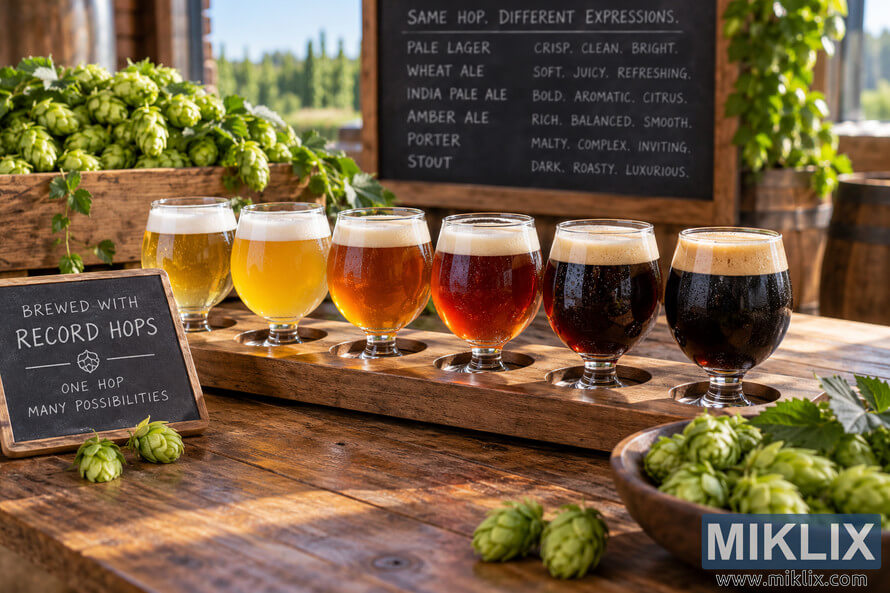
Record hops shine brightest in beer styles that emphasize balance and traditional character. Their moderate alpha acids and refined aromatics suit recipes where hops play a supporting rather than starring role.
Click or tap the image for more information and higher resolutions.
Traditional European Styles
German Pilsners benefit tremendously from Record hops in both bittering and aroma additions. The clean, crisp bitterness complements pilsner malt without introducing inappropriate fruity or piney notes. Many brewers consider Record hops ideal for authentic pilsner character.
English Bitters and Pale Ales gain depth from Record hops additions. The earthy and floral qualities align perfectly with British brewing traditions. These hops won't overpower the malt-forward profiles that define these classic styles.
Modern Craft Applications
Session IPAs
Lower alcohol IPAs need restrained hop character. Record hops provide sufficient flavor interest without excessive bitterness in session-strength beers.
Belgian Ales
Saisons and Belgian Blondes welcome Record hops subtle spice notes. These hops complement rather than compete with Belgian yeast esters.
Amber Ales
The earthy characteristics of Record hops harmonize with caramel malts in amber ales, creating cohesive flavor profiles that showcase both ingredients.
Style-Specific Recommendations
Excellent Pairings
- German Pilsner
- English Bitter
- Kölsch
- Belgian Blonde Ale
- Session IPA
- Cream Ale
Good Pairings
- American Pale Ale
- Amber Ale
- Saison
- Golden Ale
- Blonde Ale
- Wheat Beer
Consider Alternatives
- Double IPA
- Imperial Stout
- Hazy IPA
- Fruit Beers
- Sour Ales
- Barleywine
The versatility of Record hops allows experimentation across many styles. Start with recommended pairings and adjust based on personal taste preferences and brewing goals.
Using Record Hops at Different Brewing Stages
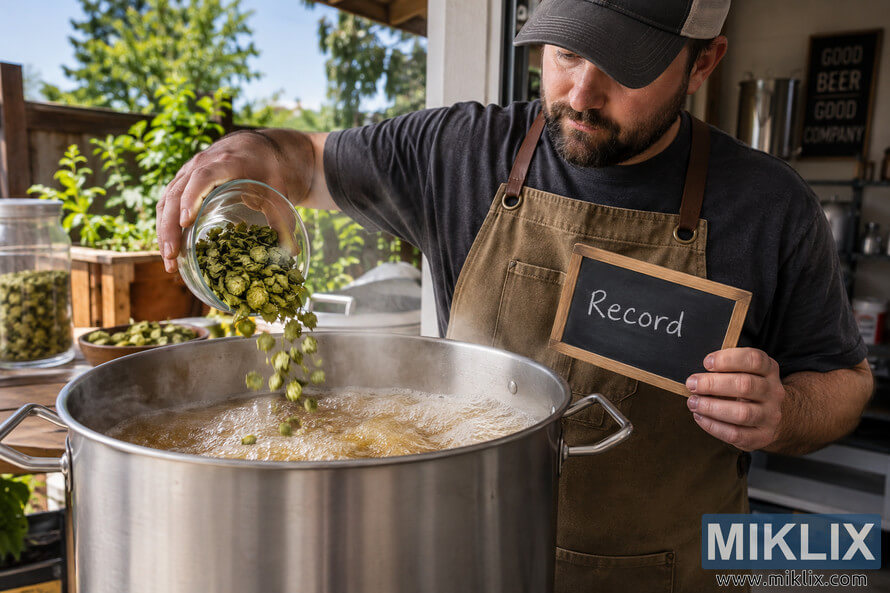
Strategic hop additions at various brewing stages unlock different qualities from Record hops. Understanding when to add hops determines whether you extract bitterness, flavor, or aroma from the same ingredient.
Click or tap the image for more information and higher resolutions.
Early Boil Additions for Bittering
Adding Record hops at the start of your boil, typically 60 minutes before knockout, maximizes bitterness extraction. The extended boil time isomerizes alpha acids, converting them into soluble bitter compounds. Most aromatic qualities dissipate during long boils, leaving clean bitterness behind.
For a standard five-gallon batch targeting 30 IBUs, add approximately one ounce of Record hops with 5.5% alpha acids at the 60-minute mark. This timing provides the backbone bitterness for your beer without harsh astringency.
Mid-Boil Flavor Additions
Additions between 20 and 30 minutes before the end of boil capture both residual bitterness and emerging flavor characteristics. Record hops added at these intervals contribute their earthy and floral qualities while still providing some bittering effect.
30-Minute Addition
This timing balances flavor and bitterness contributions, ideal for beers needing both elements from Record hops.
- Moderate flavor intensity
- Some bitterness contribution
- Good for single-hop recipes
- Economical hop usage
20-Minute Addition
Emphasizes flavor over bitterness while preserving more aromatic compounds than longer boils.
- Enhanced flavor presence
- Minimal bitterness added
- More volatile oils retained
- Works well in pale ales
15-Minute Addition
Late enough to preserve aromatics while extracting significant flavor contributions from Record hops.
- Strong flavor character
- Light bittering effect
- Excellent for layering
- Boosts hop presence
10-Minute Addition
Very late additions focus almost entirely on flavor and aroma with negligible bitterness contributions.
- Intense flavor delivery
- Emerging aroma qualities
- Minimal IBU impact
- Great for hop-forward beers
Late Boil and Whirlpool Additions for Aroma
Adding Record hops in the final five minutes of boil or during whirlpool preserves their delicate aromatic compounds. These late additions showcase the floral and citrus notes that define the hop variety's character.
For maximum aroma impact, add one to two ounces of Record hops at flameout or during a 20-minute whirlpool at 180°F. This technique extracts aromatic oils without boiling off volatile compounds.
Dry Hopping for Pure Aroma
Post-fermentation dry hopping with Record hops delivers pure aromatic expression without any bitterness. Add one to three ounces per five gallons during secondary fermentation or conditioning. Leave hops in contact for five to seven days for optimal extraction.
Temperature Matters: Dry hop at fermentation temperatures (65-70°F) rather than cold storage temperatures. Warmer temperatures improve oil extraction and aroma intensity.
Practical Homebrewing Tips and Dosage Recommendations
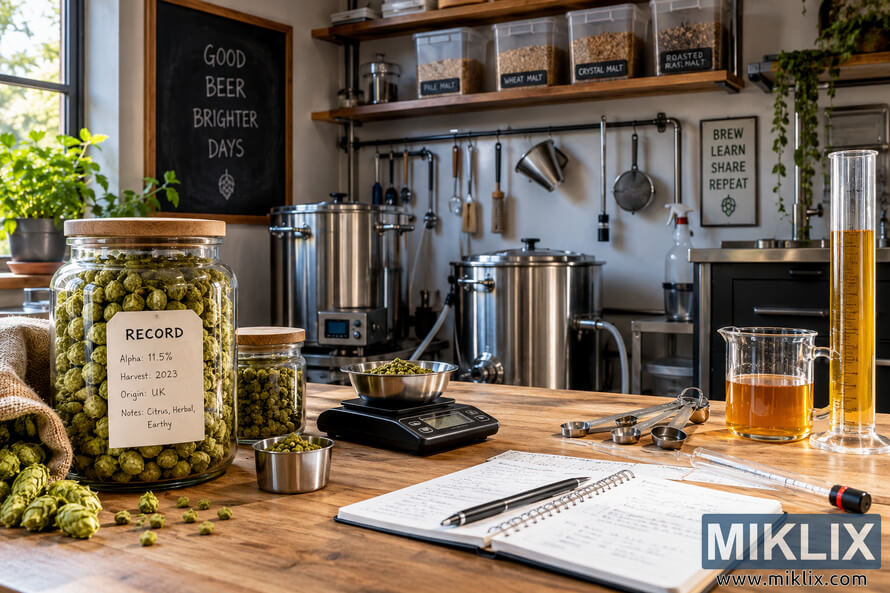
Success with Record hops begins with proper measurement and timing. Invest in a digital scale accurate to 0.1 grams for precise hop additions. Small measurement errors can significantly impact bitterness levels in five-gallon homebrew batches.
Dosage Guidelines by Beer Style
Start with conservative amounts when first experimenting with Record hops. You can always increase quantities in subsequent batches, but excessive hopping in your first attempt wastes ingredients and creates unbalanced beer.
| Beer Style | Bittering (60 min) | Flavor (20 min) | Aroma (5 min) | Dry Hop |
| German Pilsner | 1.0 oz | 0.5 oz | 0.5 oz | Optional |
| English Bitter | 0.75 oz | 0.5 oz | 0.25 oz | None |
| Session IPA | 0.5 oz | 1.0 oz | 1.0 oz | 1.0 oz |
| Belgian Blonde | 0.75 oz | 0.25 oz | 0.5 oz | Optional |
| Cream Ale | 0.5 oz | 0.25 oz | 0.25 oz | None |
Click or tap the image for more information and higher resolutions.
Storage Best Practices
Proper storage preserves Record hops quality between brewing sessions. Oxygen exposure degrades alpha acids and aromatic oils, reducing hop effectiveness over time. Follow these storage guidelines to maintain hop freshness.
- Store hops in airtight containers or original vacuum-sealed packaging
- Keep hops frozen at 0°F or below for long-term storage
- Minimize freeze-thaw cycles by portioning hops before freezing
- Use opened packages within six months even when frozen
- Label packages with purchase date and alpha acid percentage
- Never store hops near strong odors that could transfer flavors
Water Chemistry Considerations
Water chemistry affects how Record hops express themselves in finished beer. Sulfate levels enhance hop bitterness perception, while chloride accentuates malt character. For hop-forward beers using Record hops, target a sulfate-to-chloride ratio of 2:1.
Water Profile Suggestion: Aim for 150 ppm sulfate and 75 ppm chloride when brewing pale ales or IPAs with Record hops. This ratio highlights hop character without creating harsh bitterness.
Timing Your Additions Precisely
Set multiple timers when brewing to ensure accurate hop addition timing. Missing your scheduled addition by even five minutes alters the final bitterness and flavor profile. Many brewers use brewing software or apps that provide audio alerts for hop additions.
Comparing Record Hops to Other Popular Varieties
Understanding how Record hops compare to other common varieties helps homebrewers make informed substitution decisions. Each hop variety offers unique characteristics, but some overlap in flavor profiles or usage applications.
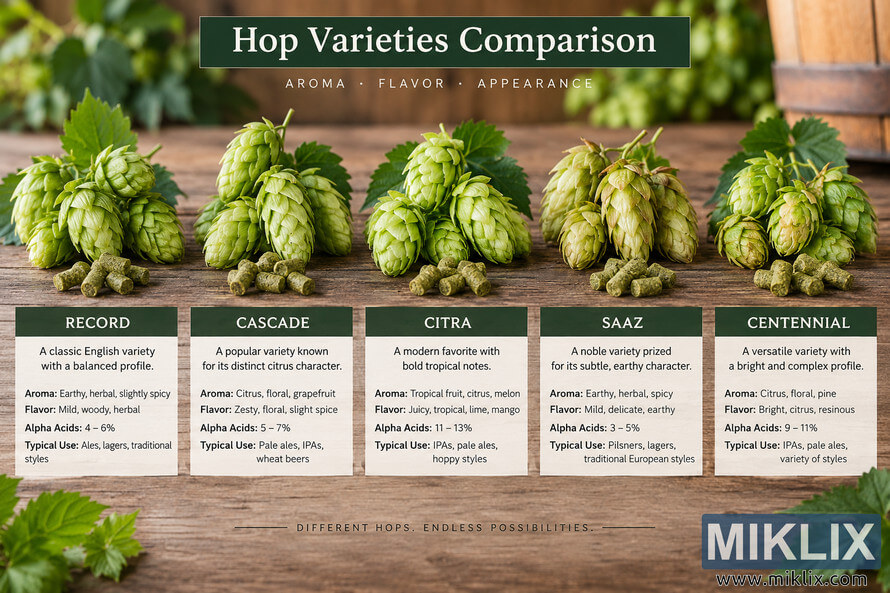
Click or tap the image for more information and higher resolutions.
European Noble Hop Comparisons
Record hops share characteristics with traditional European noble hops, though they offer distinct differences that affect recipe outcomes.
Detailed Variety Comparisons
Record Hops vs. Saaz Hops
Saaz hops deliver more pronounced spice character with lower alpha acids (3-4.5%) compared to Record hops. Saaz works beautifully in Czech Pilsners where its earthy spice defines the style. Record hops offer slightly more bittering power and broader style versatility.
Record Hops vs. Hallertau Mittelfrüh
Hallertau provides similar floral qualities but leans more heavily toward mild spice and hay-like characteristics. Record hops offer cleaner floral expression with less rustic earthiness. Both work interchangeably in German lagers, though purists prefer Hallertau for traditional recipes.
Record Hops vs. East Kent Goldings
East Kent Goldings display more pronounced earthy and honey-like qualities compared to Record hops floral focus. Goldings suit English ales perfectly, while Record hops adapt more readily to continental European styles.
- Goldings: More earthy and honeyed
- Record: More floral and clean
- Both offer moderate alpha acids
- Different regional style preferences
Record Hops vs. Tettnang
Tettnang hops share Record hops moderate alpha acid range but emphasize herbal and woody characteristics. Record hops provide more distinct floral aromatics, making them preferable when flowers take center stage.
- Tettnang: Herbal and woody
- Record: Floral and citrus
- Similar bittering potential
- Comparable brewing applications
Substitution Guidelines
When recipes call for Record hops but availability becomes an issue, several substitution options maintain similar beer character. Adjust quantities based on alpha acid differences to preserve intended bitterness levels.
| Original Hop | Substitute Option 1 | Substitute Option 2 | Adjustment Notes |
| Record | Hallertau Mittelfrüh | Tettnang | Increase by 10-15% for similar bitterness |
| Record | Saaz | Crystal | Increase by 20-25% due to lower alpha acids |
| Record | Perle | Liberty | Similar alpha acids, adjust minimally |
Common Mistakes to Avoid When Brewing with Record Hops
Even experienced homebrewers make errors when working with new hop varieties. Learning from common mistakes saves ingredients, time, and disappointment. These pitfalls appear frequently in homebrew forums and brewing communities.
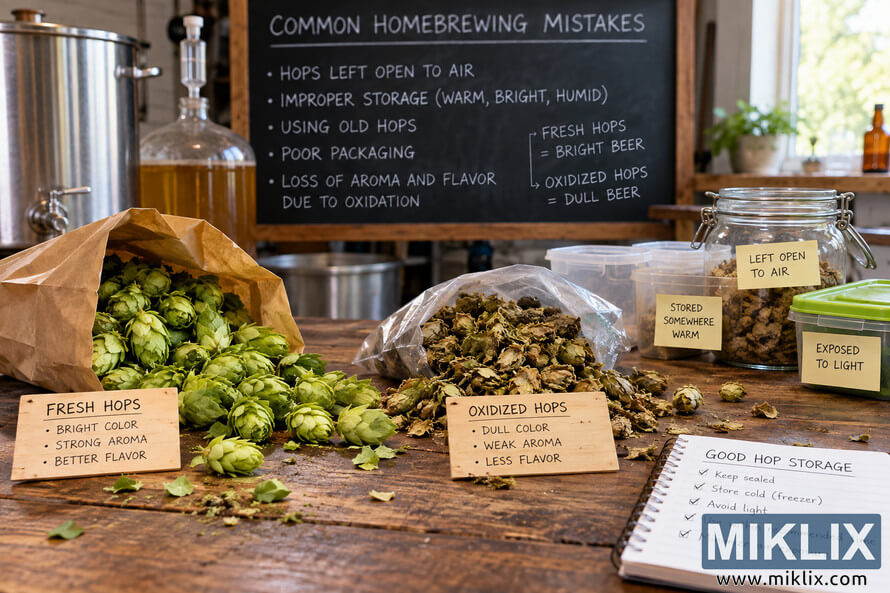
Click or tap the image for more information and higher resolutions.
Over-Hopping Your Recipe
The biggest mistake beginners make involves adding excessive Record hops quantities. More hops doesn't automatically create better beer. Record hops work best in balanced applications where their subtle characteristics shine through supporting malt profiles.
Start with recommended quantities and increase gradually in subsequent batches. Taking notes on each brew allows you to dial in your preferred hopping rates over time.
Ignoring Alpha Acid Variations
Alpha acid content varies between harvest years and even between different packages from the same harvest. Always check the alpha acid percentage printed on your hop package and adjust recipes accordingly. Using last year's calculations with this year's hops creates inconsistent results.
Calculate Every Time: Never assume alpha acid percentages remain constant. Recalculate your IBUs for each brewing session based on actual package specifications.
Poor Storage Leading to Degradation
Leaving hops at room temperature or in oxygen-permeable containers rapidly degrades their quality. Oxidized hops smell cheesy or like old cardboard rather than fresh and aromatic. This degradation ruins beer character even when using perfect brewing techniques.
Incorrect Addition Timing
Confusing addition times wastes the unique qualities of Record hops. Adding these hops too early when aroma is desired boils off volatile aromatic compounds. Adding them too late when bittering is needed fails to isomerize enough alpha acids.
Best Practices
- Measure hops precisely with digital scales
- Store hops frozen in airtight containers
- Calculate IBUs based on package alpha acids
- Time additions accurately with multiple timers
- Take detailed brewing notes for each batch
- Start with conservative hop quantities
Common Errors
- Estimating hop weights without scales
- Storing hops at room temperature
- Using old alpha acid calculations
- Missing addition times during brew day
- Brewing without documenting recipes
- Over-hopping initial recipe attempts
Temperature Management During Dry Hopping
Dry hopping at refrigeration temperatures (38-45°F) limits aromatic oil extraction. Record hops release their best aromatic compounds at warmer fermentation temperatures. Cold dry hopping requires extended contact time and delivers less intense results.
Not Accounting for Hop Form Differences
Whole cone hops and pelletized hops extract differently during brewing. Pellets offer better extraction efficiency due to increased surface area. When substituting whole cones for pellets, increase quantities by approximately 10-15% to achieve similar results.
Neglecting Water Chemistry
Brewing water significantly impacts how Record hops express themselves. High bicarbonate levels create harsh bitterness and mute hop character. Test your water and adjust mineral content to support hop-forward recipes when working with Record hops.
Mastering Record Hops in Your Homebrewing Journey
Record hops offer homebrewers a versatile ingredient that bridges traditional European brewing heritage with modern craft beer innovation. Their balanced alpha acid content, refined aromatic profile, and reliable performance make them excellent choices for brewers developing their skills.
The moderate bittering power allows Recipe hops to function effectively across multiple brewing stages. Whether you need clean bitterness, subtle flavor contributions, or delicate floral aromatics, this hop variety delivers consistent results. Its compatibility with numerous beer styles provides creative freedom in recipe development.
Success with Record hops comes from understanding their characteristics and applying them thoughtfully in your recipes. Measure carefully, time your additions precisely, and store hops properly between brewing sessions. These fundamental practices ensure you extract maximum value from every ounce of Record hops.
As you gain experience brewing with Record hops, you'll develop intuition about when and how to use them most effectively. Each batch teaches valuable lessons about hop character, beer balance, and flavor development. Keep detailed notes to track your progress and refine your techniques over time.
The homebrewing community continues exploring Record hops potential in innovative beer styles. Share your experiences, exchange recipes with fellow brewers, and stay curious about new applications. This collaborative spirit drives continuous improvement in homebrewing craft.

Click or tap the image for more information and higher resolutions.
Further Reading
If you enjoyed this post, you may also like these suggestions:
- Hops in Beer Brewing: Bullion
- Hops in Beer Brewing: Hersbrucker Red-Stem
- Hops in Beer Brewing: Hersbrucker E