
Image: Fresh Pale Green Saphir Hop Cones on the Vine
Published: October 25, 2026 at 4:07:21 PM UTC
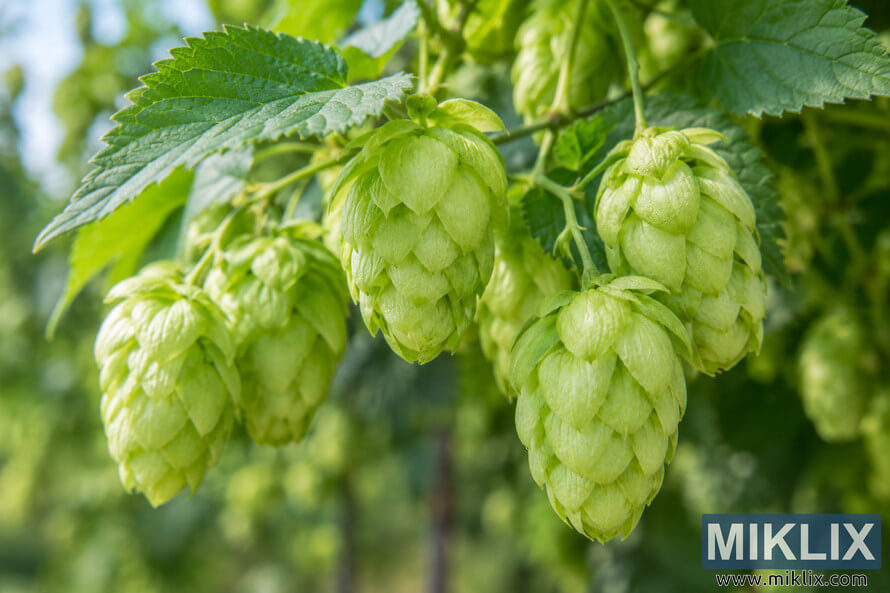
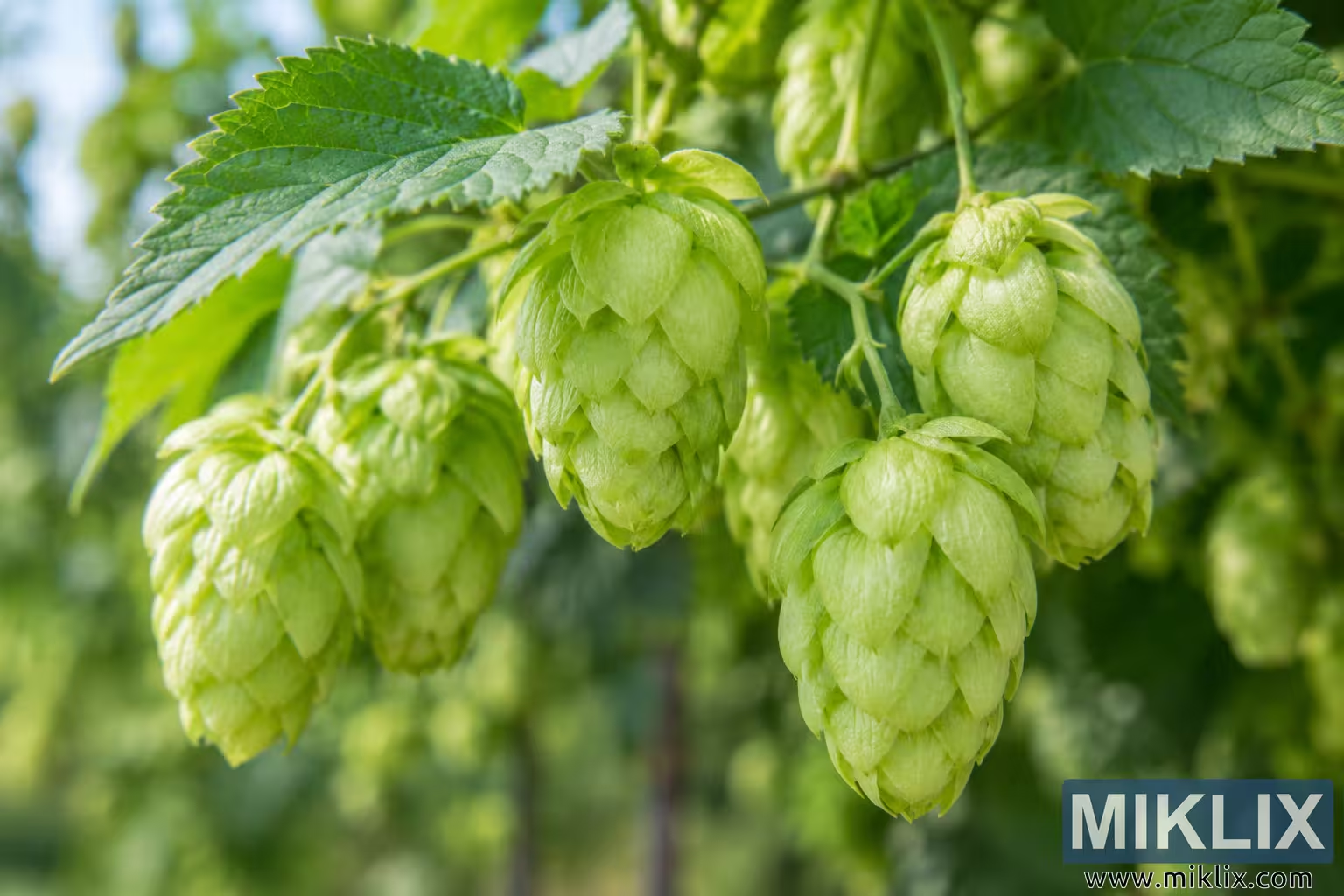
Photorealistic close-up of fresh pale green Saphir hop cones displaying compact layered bracts among serrated leaves, stems, and softly blurred foliage.
Available versions of this image
The image files available for download below are less compressed and higher resolution - and as a result of that, higher quality - than the images embedded in articles and pages on this website, which are more optimized for file size in order to reduce bandwidth consumption.
Regular size (1,536 x 1,024)
Large size (3,072 x 2,048)
Very large size (4,608 x 3,072)
Extra large size (6,144 x 4,096)
Comically large size (1,048,576 x 699,051)
- Still uploading... ;-)
Image description
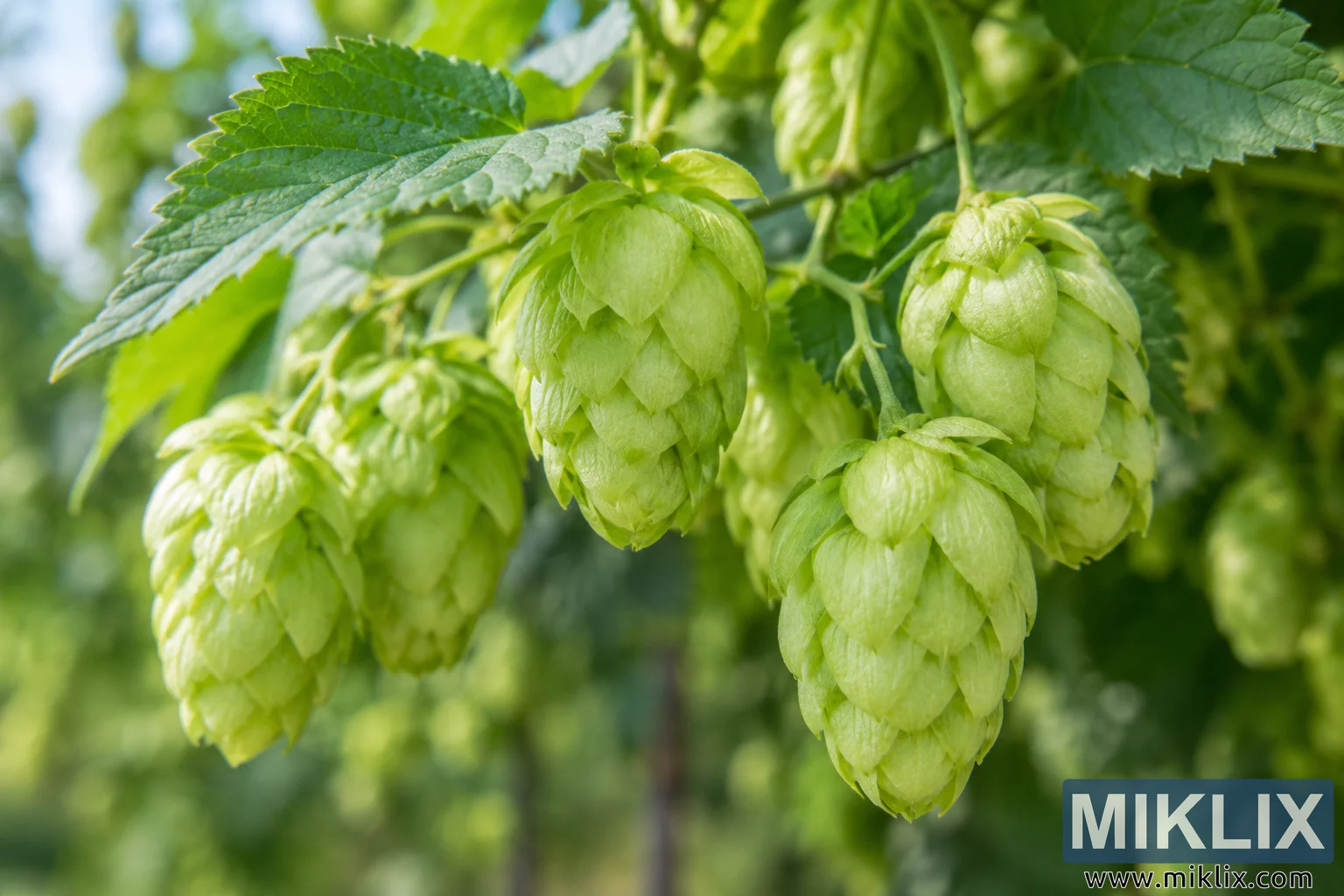
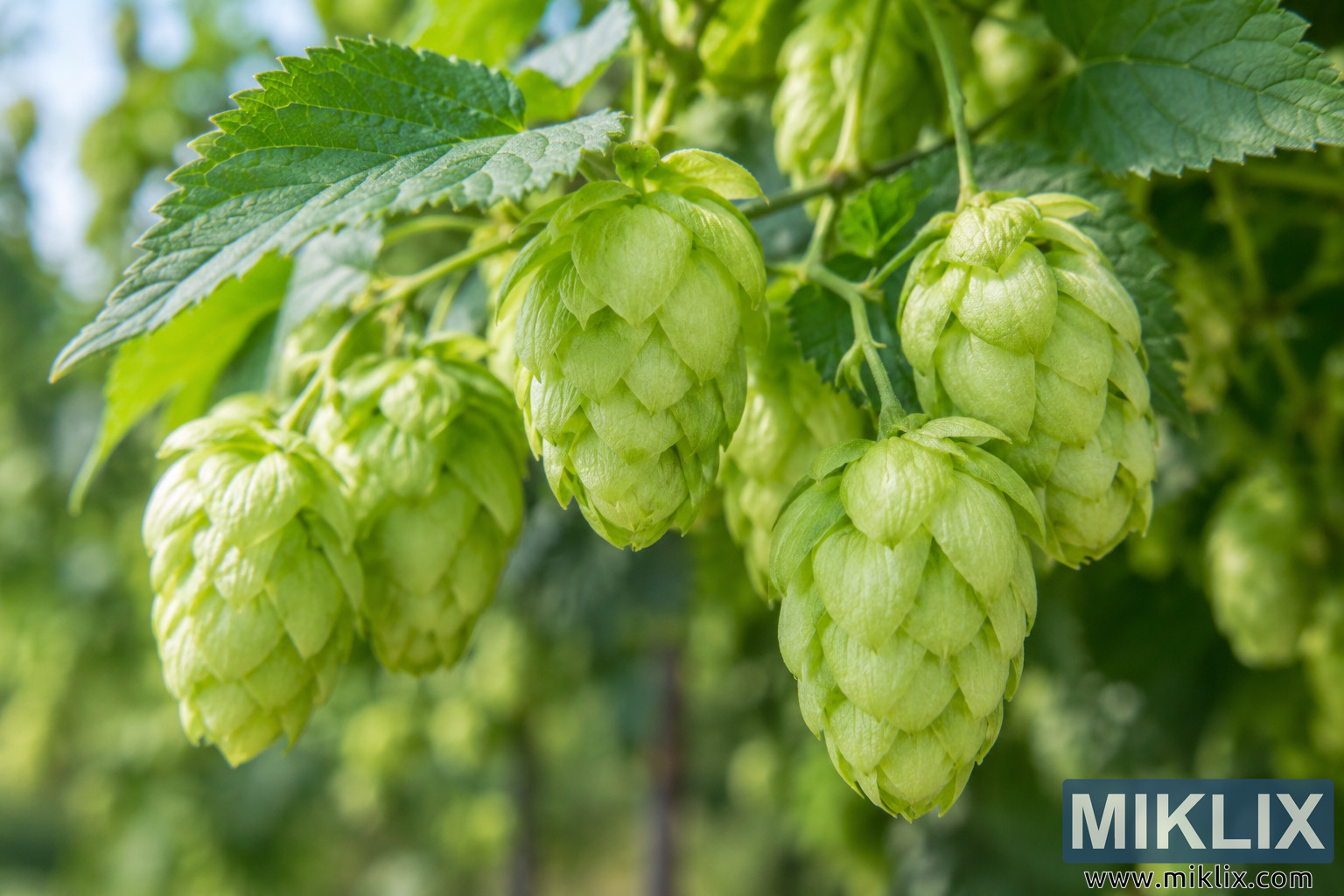
A crisp, photorealistic close-up photograph shows a cluster of fresh hop cones hanging naturally from a vigorous hop plant in bright daylight. The image is presented in a wide landscape composition, with the primary cones occupying the central and lower portions of the frame while green foliage spreads across the upper area and into the softly blurred background. The hops display a characteristic pale, fresh green coloration, ranging from luminous yellow-green where direct sunlight passes through the delicate plant tissue to somewhat deeper green in shaded folds. Their compact, overlapping structure is especially prominent. Each cone is composed of numerous tightly layered bracts arranged in an orderly, scale-like pattern, creating the distinctive tapered, slightly oval form associated with mature hop flowers. The individual bracts have gently pointed ends and subtly curved surfaces, giving the cones a dimensional, tactile appearance rather than a flat or uniform texture.
The largest and most visually dominant hop cone hangs near the center of the photograph. It is suspended vertically from a slender green stem and is shown with particularly sharp detail. Its overlapping bracts form a dense structure that becomes slightly narrower toward the bottom. Fine natural textures are visible across the surfaces of the bracts, including delicate veins, faint wrinkles, and variations in translucency. Sunlight illuminates portions of the cone from above and from the side, producing soft highlights along the raised edges while leaving small pockets of shadow between the overlapping layers. These subtle differences in light and shade emphasize the compact construction of the flower and make the individual bracts easy to distinguish.
Several additional hop cones surround the central specimen. To the right, another substantial cone hangs among stems and leaves, with its upper bracts catching strong natural light. Below and slightly left of it is another prominent cone that extends downward into the lower-right portion of the frame. This cone is also densely formed, with broad pale green bracts layered closely together. On the left side of the image, a group of smaller and partially overlapping cones creates additional depth. Some are sharply defined while others become progressively softer as they recede from the focal plane. Further hop cones can be glimpsed in the background, where they dissolve into smooth green shapes because of the shallow depth of field.
The surrounding leaves provide a rich botanical context. Large hop leaves stretch across the upper part of the photograph, displaying serrated edges and clearly defined networks of veins. One broad leaf extends diagonally from the upper-left region toward the center, partially framing the main hop cone. Its surface is a deeper green than the cones and shows subtle texture created by veins, small ridges, and variations in reflected sunlight. Additional leaves occupy the upper-right portion of the composition and appear at different levels of focus, reinforcing the impression of a dense, healthy climbing plant. Thin green stems connect the cones and foliage, crossing naturally through the scene and making it clear that the flowers are still growing on the plant rather than having been harvested or arranged artificially.
Natural sunlight is an important visual element throughout the photograph. The illumination is bright but remains soft enough to preserve fine detail in the pale hop bracts. Areas facing the light have a fresh, almost translucent glow, while shaded areas shift toward richer green tones. The combination creates a convincing sense of volume and highlights the delicate botanical structure of the cones. There are no harsh artificial reflections or studio-style effects. Instead, the lighting suggests a clear or lightly filtered sunny day in a hop garden or cultivated hop yard. Small patches of pale blue and white visible through the foliage near the upper-left background suggest open sky beyond the plant.
The background is intentionally rendered with a pronounced shallow depth of field. It consists primarily of soft green foliage, indistinct stems, and circular or gently diffused highlights created by sunlight filtering through vegetation. This natural bokeh separates the sharply focused foreground cones from their surroundings without making the setting feel artificial. Darker green areas behind the central subjects provide useful contrast against the pale green hops, while brighter blurred areas toward the left contribute an airy, sunlit quality. The gradual transition between sharply rendered foreground details and the smooth background gives the photograph considerable visual depth.
The overall composition communicates freshness, agricultural vitality, and botanical detail. The cones look recently developed and healthy, with intact bracts and no obvious drying, browning, damage, packaging, labels, text, or commercial branding. Their pale green color and compact construction are the defining visual characteristics of the scene. Rather than depicting processed hops or brewing ingredients removed from their source, the photograph focuses on the living flowers as they hang naturally from the vine. The close viewing distance makes the structure of the cones immediately apparent and allows the viewer to appreciate the fine surface details of the individual bracts.
The photograph has a clean, naturalistic aesthetic suitable for illustrating fresh hops, hop cultivation, botanical characteristics, brewing ingredients, agriculture, or aromatic hop varieties without relying on any brand identity. Its landscape orientation provides room for multiple cones and surrounding foliage while retaining a clear focal point in the central flower. The combination of pale green hop cones, deeper green serrated leaves, slender stems, warm natural sunlight, and a softly blurred garden background produces an inviting and realistic representation of freshly growing hops. The visual emphasis remains consistently on the compact form, layered bracts, fresh coloration, and healthy appearance of the hop cones, with the surrounding plant and diffuse outdoor environment serving as complementary context.
The image is related to: Hops in Beer Brewing: Saphir