
Image: Beer Styles Suited to Saphir Hops in a Rustic Brewery Setting
Published: October 25, 2026 at 4:07:21 PM UTC
Explore a rustic selection of beer styles suited to Saphir hops, from wheat beer and pale ale to amber and dark beers, surrounded by fresh hops, grain and wheat.
Available versions of this image
The image files available for download below are less compressed and higher resolution - and as a result of that, higher quality - than the images embedded in articles and pages on this website, which are more optimized for file size in order to reduce bandwidth consumption.
Regular size (1,536 x 1,024)
Large size (3,072 x 2,048)
Very large size (4,608 x 3,072)
Extra large size (6,144 x 4,096)
Comically large size (1,048,576 x 699,051)
- Still uploading... ;-)
Image description
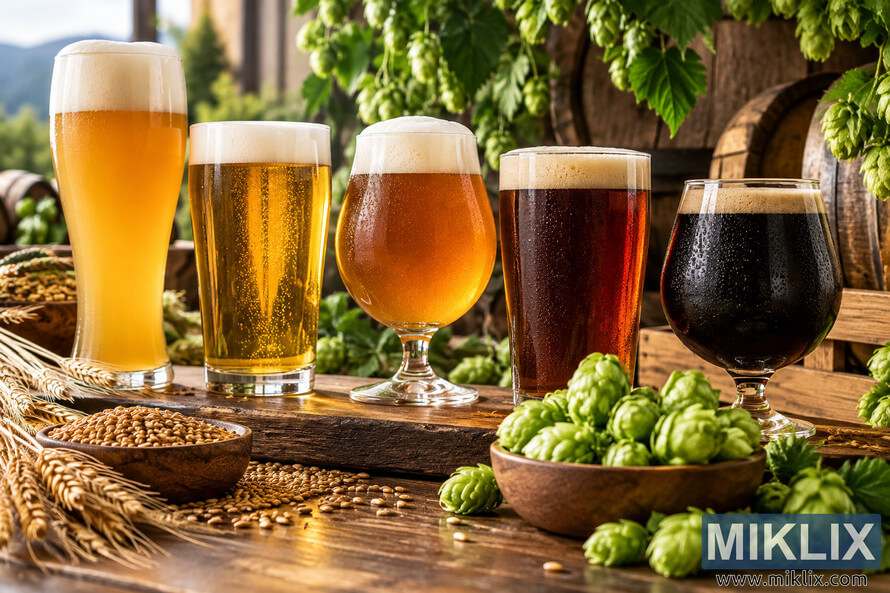
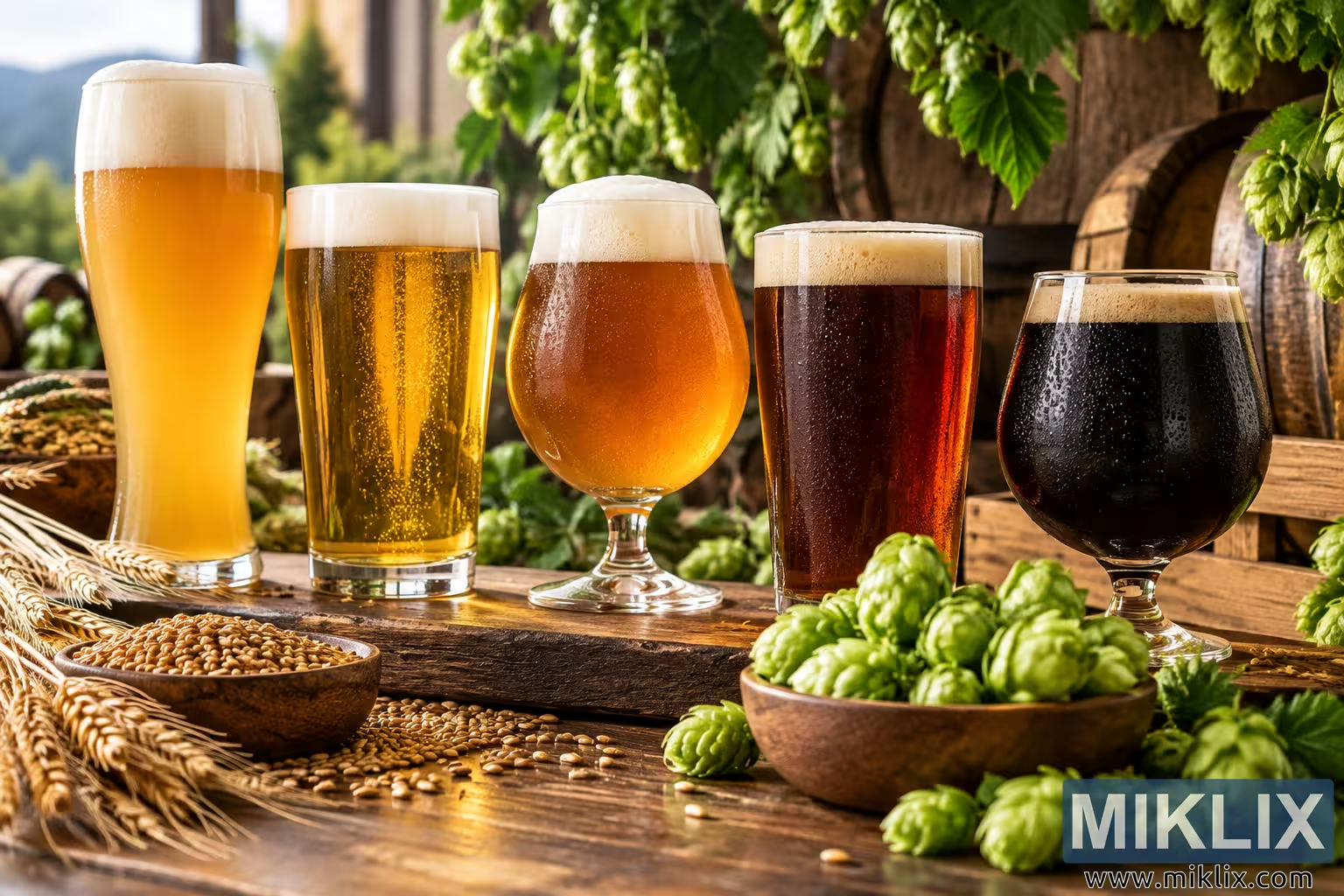
A richly detailed, high-resolution landscape photograph presents an inviting assortment of beer styles arranged in a rustic brewery-inspired setting, with fresh green hop cones, grain, wheat stalks, wooden barrels, and natural foliage reinforcing the connection between brewing ingredients and the finished drinks. Five different beers form the central visual focus, each served in a distinctive glass that complements its appearance and character. Together, the glasses create a gradual spectrum of beer colors, ranging from a pale, cloudy golden yellow through brilliant gold and warm amber to deep reddish brown and almost opaque black. The composition suggests the diversity of beer styles that can be brewed with aromatic hops such as Saphir, while remaining completely free of visible branding, packaging, labels, logos, or commercial trademarks.
On the far left stands a tall, elegant wheat beer glass containing a hazy, luminous golden-yellow beer. Its cloudy appearance immediately distinguishes it from the clearer beers beside it and visually evokes a traditional wheat beer. A generous cap of dense, creamy white foam sits above the beer and reaches close to the rim of the glass. Warm sunlight passes through the cloudy liquid, producing glowing yellow and orange highlights that give the beer a fresh, refreshing appearance. Tiny droplets and subtle reflections on the glass add realism and emphasize the impression that the drink has recently been poured and is pleasantly chilled.
Next to the wheat beer is a straight-sided, slender glass filled with a bright, clear golden beer reminiscent of a pale ale, lager, or similarly light-colored hop-forward style. Numerous tiny bubbles are visible rising through the transparent liquid, adding a lively sense of carbonation. A thick white foam head crowns the beer. Because the glass is positioned where the warm natural light can shine directly through it, the liquid takes on an intense jewel-like golden glow. This brilliant glass provides a crisp visual contrast with the softer haze of the wheat beer on its left.
At the center of the arrangement is a rounded, stemmed beer glass containing a deeper golden-amber beer. The glass has a broad bowl that narrows slightly toward the opening and stands on a short stem and circular foot. Its beer is warmer and more copper-toned than the two lighter examples, with a creamy off-white foam head resting across the surface. Light passing through the rounded bowl creates a glowing amber center and subtle variations in color around the curved edges. The central placement and distinctive glass shape make this beer an important visual anchor in the composition, connecting the pale beers on the left with the progressively darker styles on the right.
To the right of center is a tall pint-style glass filled with a dark amber to reddish-brown beer. The liquid appears substantially darker than the central golden beer while remaining translucent enough for warm ruby and mahogany highlights to shine through where the sunlight reaches it. A compact beige foam head covers the top. Fine condensation and highlights on the glass contribute to the photographic realism. The rich color suggests a maltier or more deeply colored ale while demonstrating how hops can appear within a broad spectrum of beer styles rather than being associated exclusively with pale beer.
The final glass, positioned on the far right, is a rounded stemmed goblet containing an extremely dark brown beer that appears almost black in its deepest areas. A modest tan foam head sits on top, and the glass surface is covered with visible condensation droplets. Although the beer is very dark, subtle reddish-brown highlights appear around thinner portions near the edges of the glass where the warm light penetrates the liquid. The curved goblet shape and nearly opaque beer create a strong visual endpoint for the progression from light to dark across the image.
The beers stand on thick, weathered wooden boards with pronounced grain, irregular edges, scratches, and warm brown tones. These boards rest on a larger rustic wooden tabletop scattered with brewing ingredients. In the foreground, an abundant collection of fresh green hop cones occupies a prominent position, particularly toward the lower right. Several hops are gathered in a simple wooden bowl, while others are loosely scattered across the table. Their layered green bracts are sharply defined, giving them a fresh, tactile quality. Additional hop vines and leaves hang from the upper portion of the scene, creating a natural green canopy and framing the beers from above.
The lower left foreground contains golden wheat stalks arranged casually across the wooden surface. Beside them is a small wooden bowl filled with pale brown grain or malt kernels, with additional kernels scattered naturally across the table and boards. These ingredients visually communicate the agricultural origins of beer and complement the prominent hops. The combination of hops, wheat, and grain creates a clear brewing context without relying on text, labels, branded bottles, or other commercial cues.
Behind the glasses, rustic wooden barrels and crates add depth and establish the atmosphere of a traditional brewery, hop farm, or countryside brewing environment. The barrels are partially obscured by the beer glasses and greenery, allowing them to support the setting without distracting from the main subjects. In the distance, softly blurred vegetation and hints of hills or mountains can be seen through an opening on the left side. The shallow depth of field keeps the beer and foreground ingredients crisp while allowing the background to dissolve into soft shapes and colors.
Warm natural sunlight enters predominantly from the left and slightly behind the subjects. This directional illumination is particularly effective on the lighter beers, making their golden and amber tones glow from within. Highlights along the glass rims, reflections on the tabletop, translucent hop leaves, and illuminated grain reinforce the impression of late-afternoon or early-evening sunlight. The darker beers receive enough side lighting to preserve their contours and reveal subtle reddish tones without losing their deep, rich appearance. Shadows remain soft and warm, contributing to a welcoming, artisanal atmosphere rather than a stark studio aesthetic.
The overall composition balances brewing craftsmanship, agricultural ingredients, and the visual diversity of beer. The row of five glasses forms a clear left-to-right progression in color and style, while the hops surrounding them provide a strong thematic connection to hop-driven brewing. Wheat stalks and grain introduce additional texture and context, and the aged wood and barrels give the scene a handcrafted, traditional character. Despite the abundance of detail, the photograph remains organized around the beers themselves, which are sharply rendered and visually dominant. The result is an appetizing, atmospheric representation of multiple beer styles—including wheat beer and pale ale—that can complement the refined aromatic qualities associated with Saphir hops, presented without any identifiable commercial brand.
The image is related to: Hops in Beer Brewing: Saphir