
Image: Dry Hopping with Saphir Hops in a Stainless-Steel Fermenter
Published: October 25, 2026 at 4:07:21 PM UTC
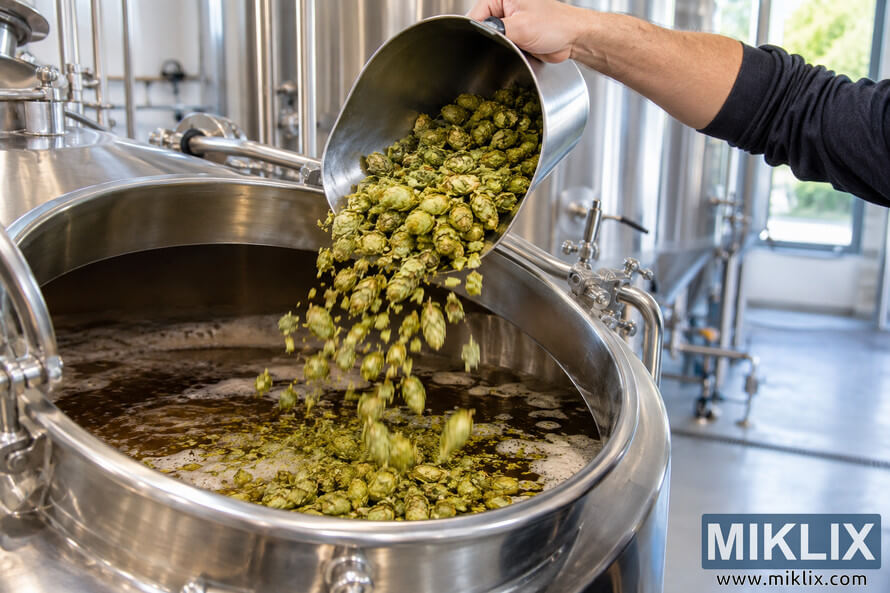
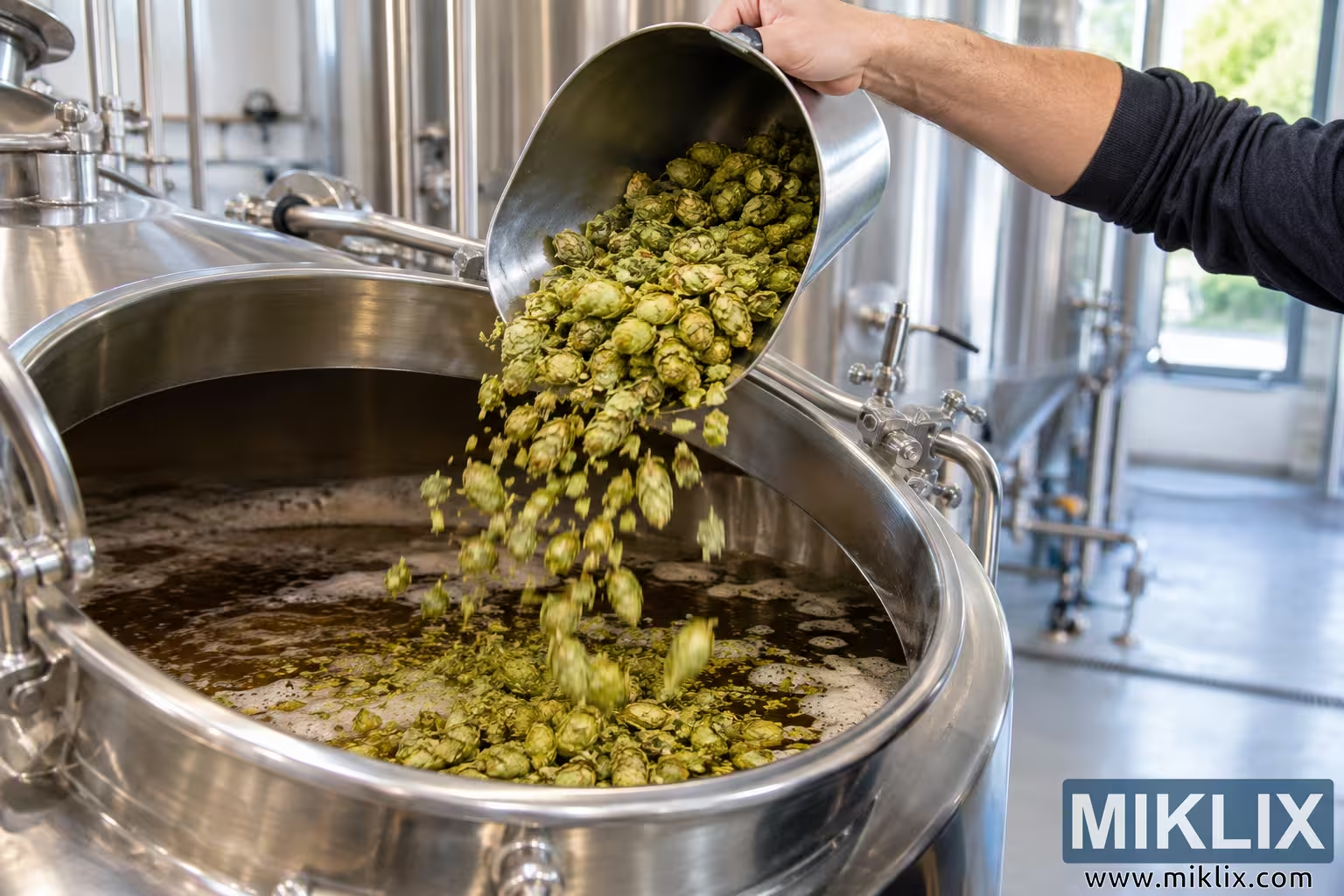
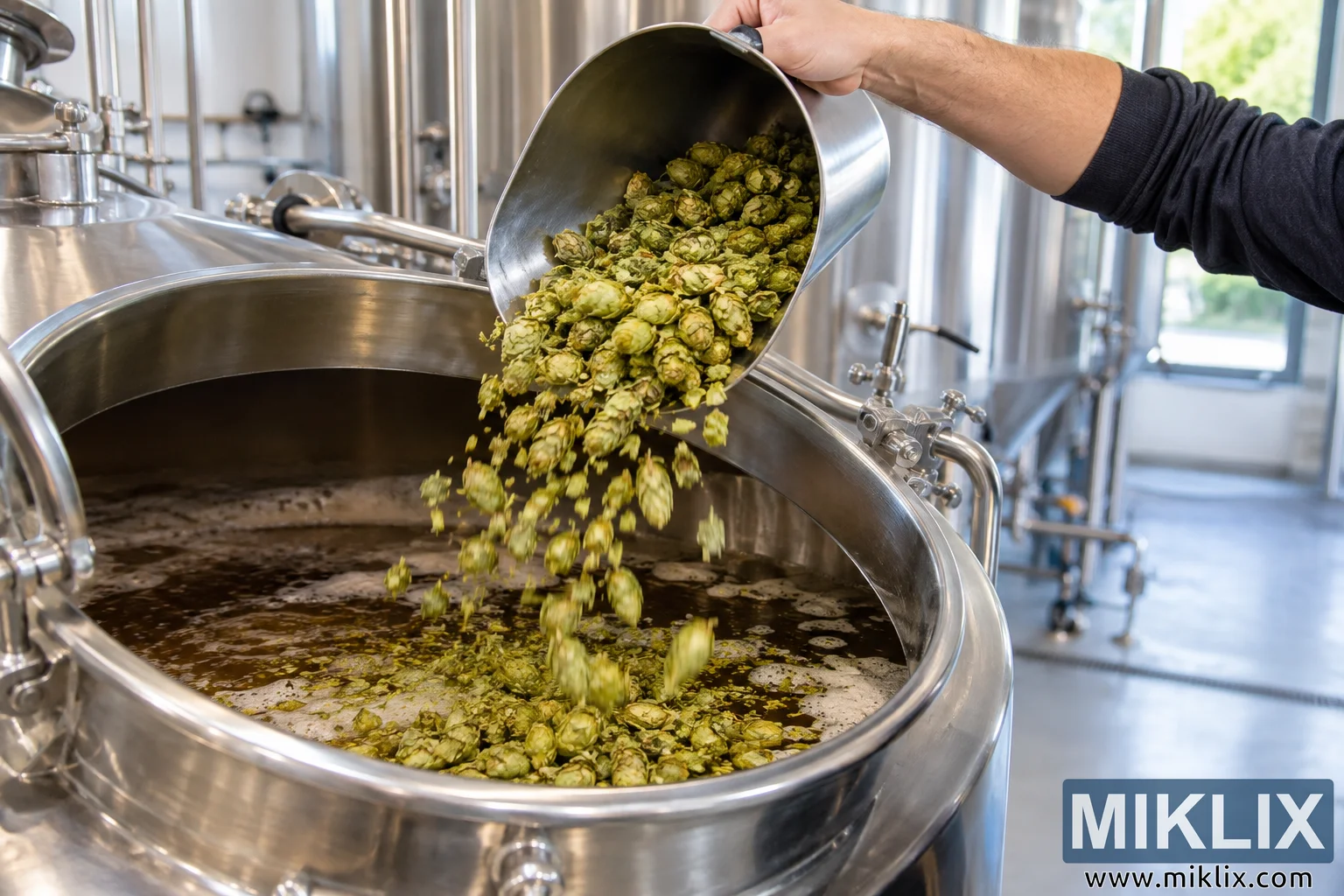
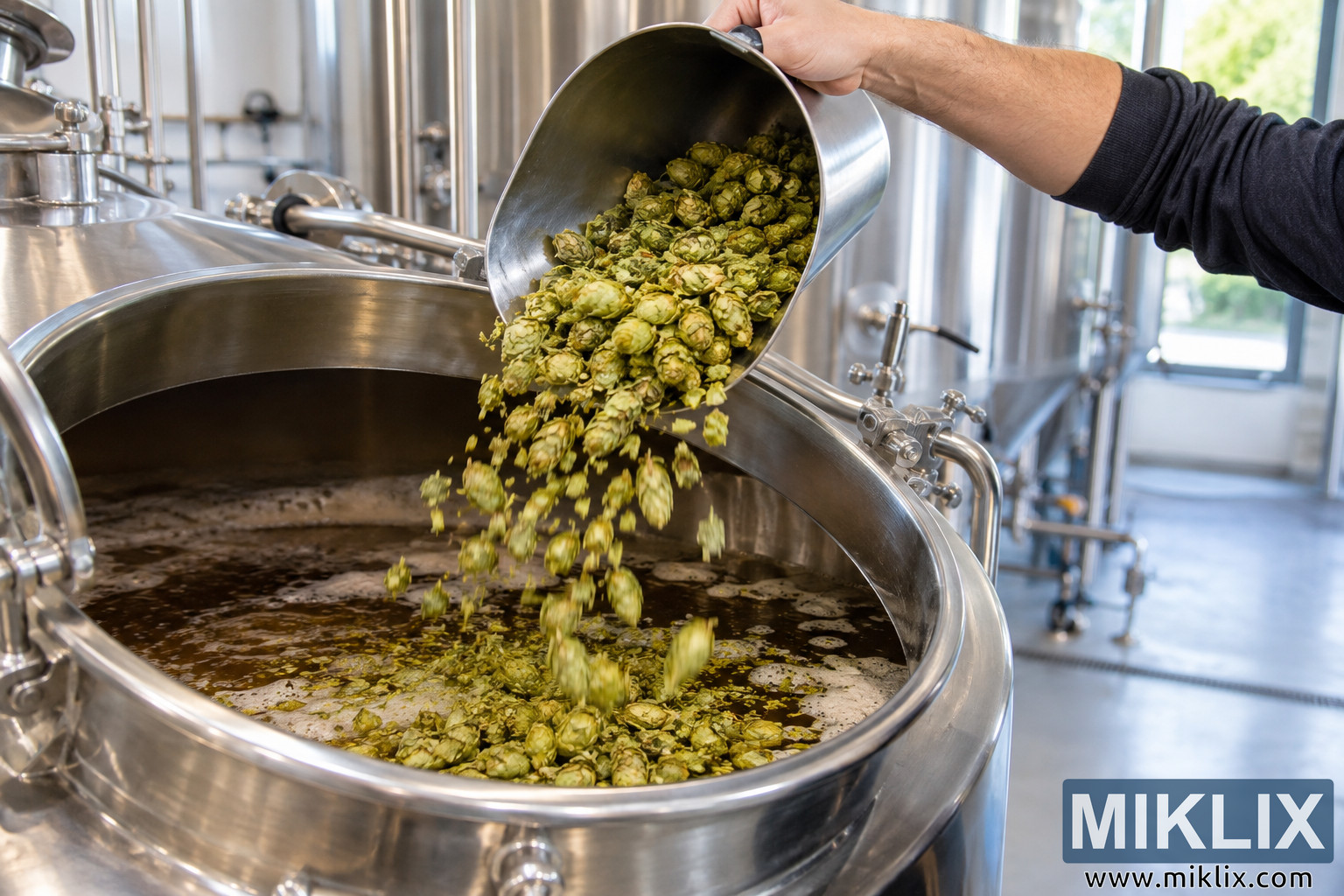
High-resolution brewery image showing the dry hopping technique as green Saphir hops are poured into an open stainless-steel fermenter filled with beer.
Available versions of this image
The image files available for download below are less compressed and higher resolution - and as a result of that, higher quality - than the images embedded in articles and pages on this website, which are more optimized for file size in order to reduce bandwidth consumption.
Regular size (1,536 x 1,024)
Large size (3,072 x 2,048)
Very large size (4,608 x 3,072)
Extra large size (6,144 x 4,096)
Comically large size (1,048,576 x 699,051)
- Still uploading... ;-)
Image description
A high-resolution, landscape-oriented photograph depicts the dry hopping stage of beer production inside a clean, modern brewery. The composition focuses closely on a large, open stainless-steel fermenter positioned prominently across the foreground and left side of the image. The vessel has a broad circular opening surrounded by a thick, polished metal rim that reflects the ambient light of the brewery. Inside the fermenter is a substantial volume of dark amber-brown beer. The surface of the liquid is active and visually textured, with irregular patches of pale tan foam, small bubbles, darker areas of liquid, and scattered green hop material floating across the top. The open vessel provides a clear view of the point at which hops are being introduced directly into the fermenting or conditioning beer, visually illustrating the dry hopping process.
From the upper right portion of the frame, an adult person's forearm extends toward the center of the image. The person is wearing a dark, long-sleeved garment with the sleeve pushed or fitted around the forearm. Their hand firmly holds the handle of a large, unbranded stainless-steel scoop or container. The scoop is tilted downward over the open fermenter, and a generous quantity of green hop cones is pouring from it. The hops form a dynamic cascade between the container and the beer below. Some cones remain packed inside the metal scoop, while others are captured in midair at different stages of their fall. Several pieces appear sharply defined, while faster-moving hops display a slight natural motion blur. This variation gives the photograph a strong sense of movement and makes the addition of the hops feel immediate and active.
The hop material is visually distinctive against the metallic brewery equipment and the dark beer. The cones range from muted olive green to brighter yellow-green tones, with visible overlapping bracts and textured surfaces characteristic of dried brewing hops. Smaller fragments and particles accompany the larger cones as they fall. A concentration of green hop material has already accumulated on the surface of the beer near the front and center of the fermenter, indicating that the addition is actively underway rather than merely about to begin. The fresh green tones provide the strongest color contrast in the scene and naturally draw attention to the ingredient being added. The image represents Saphir hops conceptually through the brewing context, without displaying branded packaging, trademarks, logos, labels, or other brand-identifying elements.
The fermenter itself dominates much of the lower half of the composition. Its stainless-steel construction has a smooth, reflective finish, with soft highlights following the curvature of the vessel. The thick circular rim catches bright reflections and creates a strong visual boundary around the dark liquid inside. Various fittings, pipes, clamps, valves, and polished metal components are visible around the vessel. To the right of the opening, a compact arrangement of stainless-steel tubing and valves adds technical detail and reinforces the professional brewing environment. These components appear clean and well maintained, with realistic reflections and subtle variations in brightness across their surfaces.
Behind the primary fermenter, the brewery continues into a softly focused industrial background. Several tall, cylindrical stainless-steel tanks rise vertically through the middle and upper portions of the frame. Their reflective surfaces catch elongated bands of light, while additional pipes and horizontal metal connections run between pieces of equipment. The background is intentionally less sharp than the foreground, creating depth and ensuring that the viewer's attention remains on the dry hopping action. Despite the shallow depth of field, the recognizable shapes of the tanks, fittings, and brewing infrastructure clearly establish the setting as a professional production brewery rather than a domestic brewing environment.
On the far right side of the image, large windows or glazed doors admit bright natural daylight into the room. Through the glass, softly blurred greenery and outdoor light are visible. The daylight creates a cool, clean illumination that complements the stainless-steel equipment and gives the brewery a spacious, hygienic atmosphere. The floor in the background appears smooth and light gray, with a narrow drainage channel visible near the brewing equipment. The combination of natural light, polished metal, clean flooring, and organized industrial infrastructure contributes to a contemporary craft or small-production brewery aesthetic.
The photograph is composed from a close, slightly elevated viewpoint that allows the viewer to see both the interior of the fermenter and the falling hops. The fermenter's circular opening creates a strong curved shape across the lower foreground, while the tilted scoop forms a diagonal line from the upper center toward the beer. The falling hops visually connect these two major elements. The person's arm enters from the upper right and reinforces the diagonal direction of the action, guiding the eye toward the center of the fermenter. This composition communicates the technique clearly without requiring explanatory labels or text.
Lighting is bright and naturalistic, with realistic highlights on the stainless steel and softer illumination on the hops and beer. The image balances warm and cool tones: the dark amber and brown beer introduces warmth, the hops contribute earthy green and yellow-green colors, and the surrounding tanks provide neutral silver and gray tones. The window light adds cooler highlights in the background. Reflections are visible but controlled, preserving detail in the polished metal instead of allowing the surfaces to become excessively bright. The overall exposure makes both the brewing ingredients and industrial environment easy to distinguish.
The scene emphasizes the practical act of adding aromatic hops to beer after or during fermentation, a technique commonly associated with increasing hop aroma without relying primarily on additional kettle bitterness. Rather than presenting the hops as a packaged commercial product, the photograph concentrates on the physical brewing process itself: an operator manually tips a stainless-steel vessel, hop cones fall through the air, and the plant material reaches the surface of the beer inside an open fermenter. There are no visible company names, logos, trademarks, product labels, branded containers, signs, captions, or other commercial identifiers anywhere in the composition. The result is a realistic, educational, and visually engaging representation of dry hopping with Saphir hops in a professional brewery setting.
The image is related to: Hops in Beer Brewing: Saphir