
Image: Hop Varieties: Complementary Options to Saphir
Published: October 25, 2026 at 4:07:21 PM UTC
Explore a rustic visual guide to hop varieties that complement Saphir, including floral, herbal, spicy, citrus, earthy, and fruity hop options.
Available versions of this image
The image files available for download below are less compressed and higher resolution - and as a result of that, higher quality - than the images embedded in articles and pages on this website, which are more optimized for file size in order to reduce bandwidth consumption.
Regular size (1,536 x 1,024)
Large size (3,072 x 2,048)
Very large size (4,608 x 3,072)
Extra large size (6,144 x 4,096)
Comically large size (1,048,576 x 699,051)
- Still uploading... ;-)
Image description
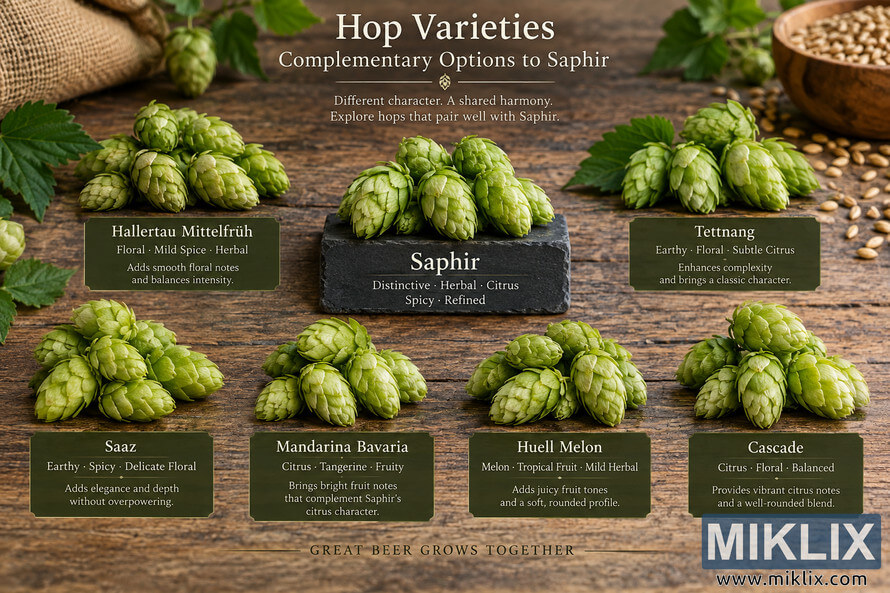
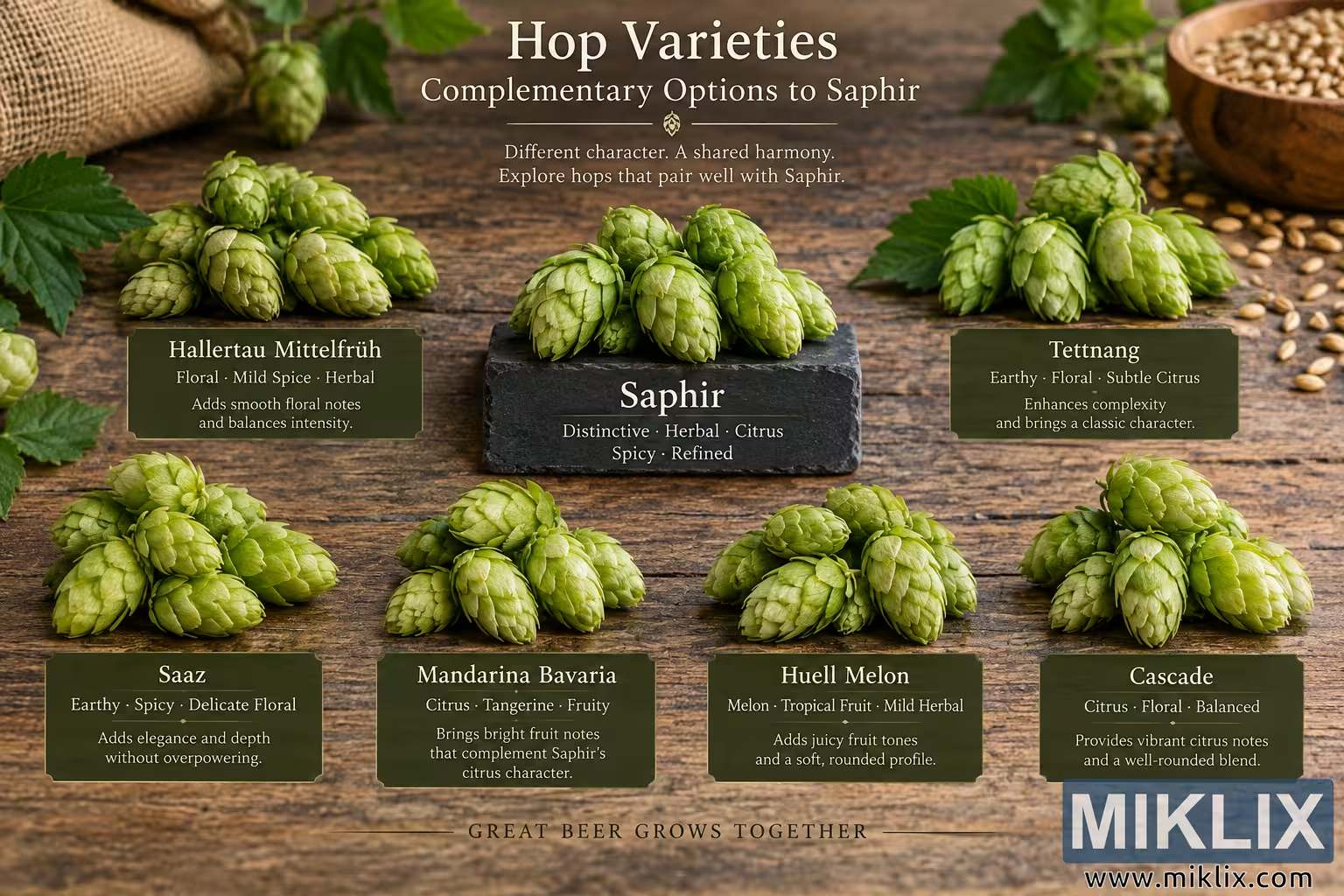
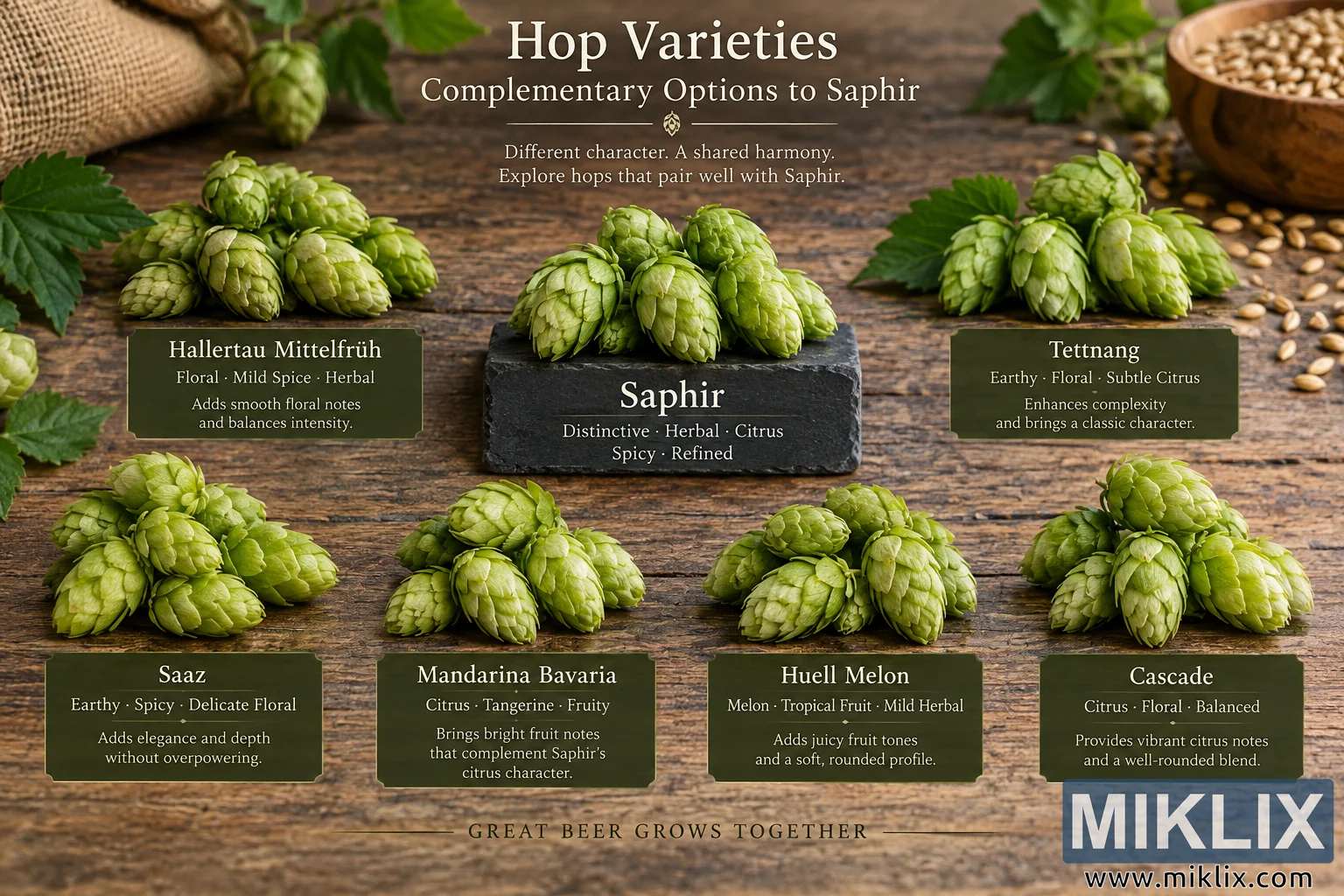
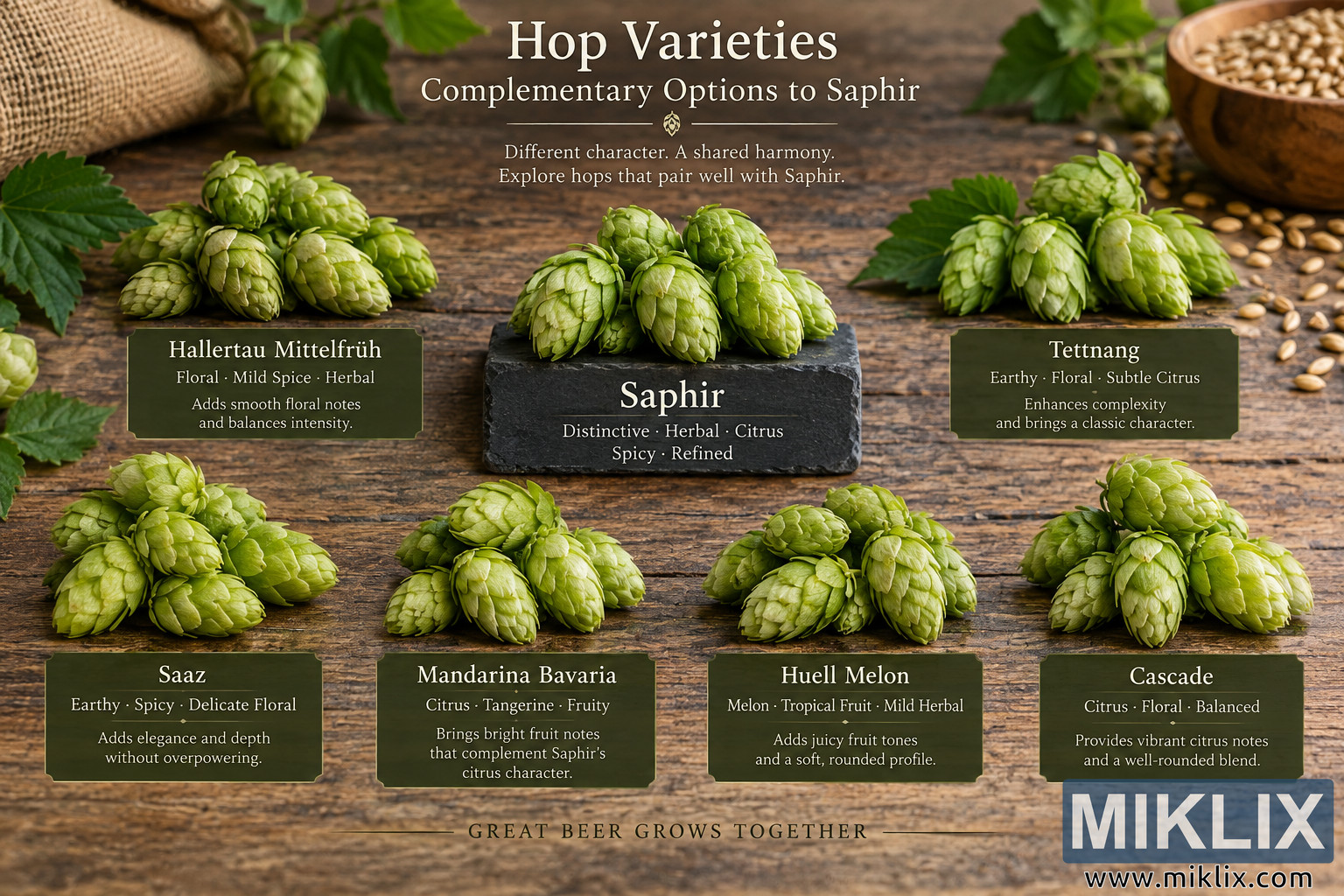
A wide, landscape-oriented editorial still-life image presents a carefully organized selection of fresh green hop cones on a rustic wooden tabletop, designed to illustrate hop varieties that can complement Saphir. The overall composition combines realistic botanical photography with the structured clarity of an educational brewing infographic. Warm, soft natural lighting falls across the scene, bringing out the layered scales, subtle yellow-green highlights, and organic texture of the hop cones while maintaining a rich, earthy atmosphere. The background and tabletop consist of weathered brown wooden boards with visible grain, knots, scratches, and tonal variation, reinforcing an artisanal, agricultural character.
At the center of the image is the principal group of hop cones representing Saphir. Several plump, fresh cones are arranged in a compact cluster and elevated on a rectangular dark slate block. The nearly black charcoal surface of the slate creates strong visual contrast with the vivid green hops and makes the central variety immediately identifiable as the reference point for the surrounding selections. On the front face of the slate, the name "Saphir" appears prominently in large light-colored serif lettering. Beneath the name is a concise sensory profile describing the hop as distinctive, herbal, citrus, spicy, and refined. This central placement establishes Saphir as the visual anchor from which the other hop options are considered.
Across the upper part of the composition, a large heading reads "Hop Varieties," followed by the subtitle "Complementary Options to Saphir." A small stylized hop symbol and thin horizontal decorative rules provide separation between the headline and supporting copy. Below this is a short introductory statement emphasizing that different hop characters can share a harmonious relationship and inviting the viewer to explore varieties that pair well with Saphir. The typography uses an elegant serif style in a warm off-white tone, complementing the natural and traditional brewing aesthetic.
Six additional hop selections surround the central Saphir display. In the upper left, a generous mound of fresh hop cones represents Hallertau Mittelfrüh. A dark olive-green rectangular information panel below the cones identifies the variety and summarizes its profile with floral, mild spice, and herbal characteristics, explaining that it can contribute smooth floral notes and help balance intensity. The hop cones are arranged casually but deliberately, with individual cones overlapping one another and leafy green foliage extending toward the edge of the frame.
In the upper right, another cluster represents Tettnang. The cones are grouped against several broad green hop leaves, giving the arrangement a freshly harvested appearance. Its accompanying information panel describes earthy, floral, and subtle citrus qualities and suggests that the variety can enhance complexity while contributing a classic character. The symmetrical placement of Hallertau Mittelfrüh and Tettnang on either side of the elevated Saphir group creates a balanced triangular structure in the upper half of the image.
Along the lower half of the tabletop are four additional clusters, each positioned above its own dark green information card. From left to right, these are Saaz, Mandarina Bavaria, Huell Melon, and Cascade. The Saaz grouping consists of numerous light green cones arranged in a low, broad pile. Its sensory descriptors emphasize earthy, spicy, and delicate floral qualities, with supporting text suggesting elegance and depth without overpowering the overall profile. The Mandarina Bavaria grouping is slightly smaller and more compact, with bright green cones overlapping naturally. Its card highlights citrus, tangerine, and fruity characteristics and explains that these bright fruit notes can complement the citrus character associated with Saphir.
The Huell Melon selection appears to the right of Mandarina Bavaria and features another loose mound of realistic hop cones. Its description focuses on melon, tropical fruit, and mild herbal notes, suggesting juicy fruit tones and a soft, rounded profile. At the far lower right, Cascade is represented by a particularly full, rounded cluster of hops. The corresponding card emphasizes citrus, floral, and balanced characteristics and describes the variety as contributing vibrant citrus notes and a well-rounded blend. Together, these lower four selections form a visually consistent row while retaining subtle differences in cone arrangement and shape.
Additional agricultural details frame the central infographic without distracting from it. In the upper left corner, coarse natural burlap fabric is partially visible, suggesting a traditional harvest sack. Hop leaves and isolated cones extend into the scene around it. In the upper right corner, a small wooden bowl contains pale tan grain kernels, with additional kernels scattered loosely across the tabletop. These details connect the hops to brewing ingredients and farm-grown raw materials while enriching the tactile quality of the still life. The foliage throughout the image uses deep and medium greens that contrast with the lighter hop cones and warm brown wood.
Near the bottom edge, a centered line of widely spaced capital letters reads "GREAT BEER GROWS TOGETHER," flanked by thin horizontal decorative lines. This phrase functions as a concluding visual statement and reinforces the image's theme of combining complementary hop characteristics. The design contains no visible commercial logos, packaging, trademarks, or actual product branding. Instead, it focuses entirely on generic brewing imagery, botanical ingredients, hop variety names, and descriptive sensory information.
The image has a polished but approachable visual language that sits between premium food photography, agricultural editorial imagery, and an educational craft-brewing reference chart. Depth of field is controlled enough to retain detail across the principal hop clusters while allowing peripheral elements to feel slightly softer and more atmospheric. Fine details in the overlapping hop bracts, veins of the leaves, rough slate, woven burlap, individual grains, and aged wood make the scene feel tactile and realistic. The repeated green hop clusters and uniformly styled information panels create order, while differences in placement and natural shapes prevent the arrangement from feeling mechanically repetitive. Overall, the image communicates the idea of exploring multiple hop varieties as complementary companions to Saphir, presenting floral, herbal, spicy, citrus, earthy, and fruit-oriented possibilities within one coherent, rustic brewing-themed composition.
The image is related to: Hops in Beer Brewing: Saphir