
Hops in Beer Brewing: Sonnet
Published: March 31, 2026 at 8:41:45 PM UTC
Sonnet hops are celebrated for their delicate floral and honeyed aroma. They are a favorite among brewers for their ability to enhance aroma-driven beers. The Sonnet hop profile offers a unique blend of honeysuckle, light citrus, and subtle earthiness. This combination is perfect for elevating the flavors of English ales, lagers, and modern hybrid styles.
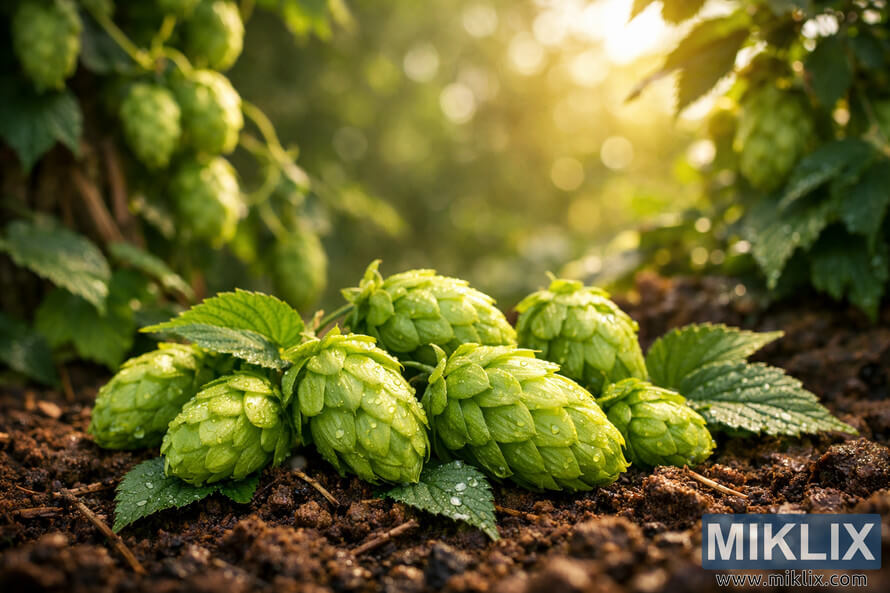
Click or tap the image for more information and higher resolutions.
Key Takeaways
- Sonnet hops are an American aroma hop suited to aroma-forward beers.
- The Sonnet hop profile emphasizes floral, honey, and light citrus notes.
- Sonnet brewing works well with delicate malt bills and neutral to English yeast strains.
- Commonly available from specialty suppliers like Yakima Valley Hops and grown in Oregon.
- This article will cover analytics, usage in boil/whirlpool/dry hop, and practical recipes.
What Are Sonnet Hops and Their Origin
Sonnet hops originate from a targeted American selection of classic Golding and Saaz traits. They are celebrated for their floral and herbal notes, which take on brighter citrus and honeysuckle flavors in the US. This variety's origin stems from a deliberate breeding effort to preserve old-world aromas while adapting to Oregon's climate.
The Sonnet's parentage is rooted in its Golding-type aroma hop lineage. Breeders combined English Kent Golding and Saaz lines to achieve a gentle spice and floral backbone. This heritage is why Sonnet is often chosen for late additions and dry hopping in recipes.
Virgil Gamache Farms spearheaded the US development and commercialization of Sonnet. The trademark and ownership are held by Virgil Gamache Farms, Inc., which registered the variety under the international code SON. The farm focused on ensuring reliable aroma performance for American craft and small-scale commercial brewers.
References from Yakima and the industry confirm Sonnet as an American-grown version of English Kent Golding. It retains the delicate spice and honey character of Kent Golding but leans towards livelier citrus top notes. This adaptation is well-suited to modern brewing styles.
- Breeding focus: retain Golding aroma, increase bright citrus and honeysuckle.
- Growing region: exclusive US production, notably Oregon plantings under Virgil Gamache Farms.
- Use case: aroma additions and dry hopping rather than primary bittering.
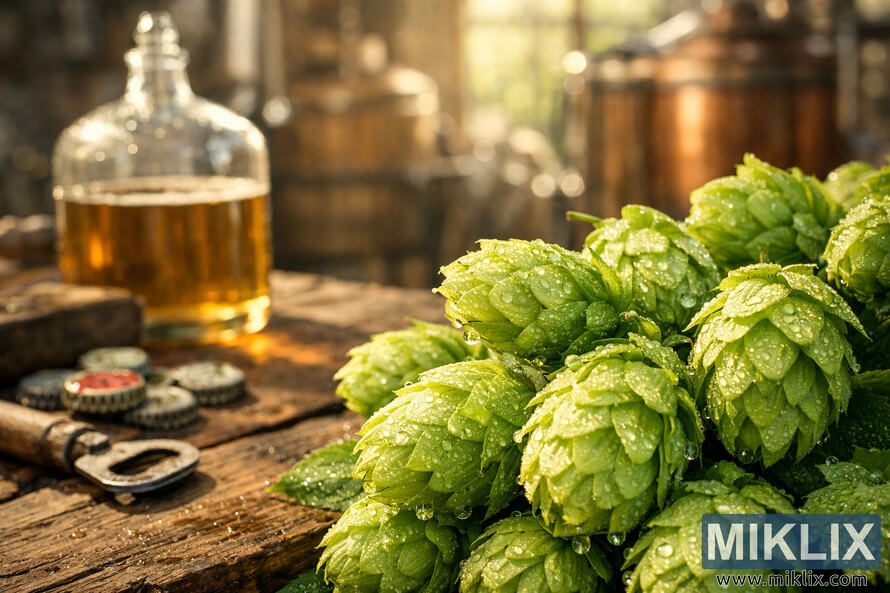
Click or tap the image for more information and higher resolutions.
Flavor and Aroma Profile of Sonnet Hops
Sonnet hops present a bright, inviting scent. It combines delicate florals with a clear citrus lift. Brewers value this hop for its ability to enhance the beer's top notes without overpowering malt or yeast esters.
The essence of Sonnet's flavor profile is its honeysuckle and floral notes. These floral hops introduce a soft sweetness, reminiscent of fresh gardens. They are particularly suited for English ales and cask-conditioned beers.
Additionally, Sonnet's aroma includes a lemon-citrus element, keeping the beer lively. The use of lemon citrus hops in late additions adds a clean, zesty edge. This brightens pale malts and light lagers.
There's also a subtle layer of earth and grass that grounds the hop. These earthy, grassy tones complement traditional malt backbones and English ale yeast.
A hint of honey and light oak further rounds out the profile. These sweet and woody undertones add complexity. They are particularly noticeable when Sonnet is used in dry hopping or late whirlpool additions.
- Honeysuckle hops: bright, floral perfume suitable for aroma-forward beers.
- Lemon citrus hops: crisp zest that lifts the beer’s finish.
- Floral hops with earthy backing: balance between perfume and structure.
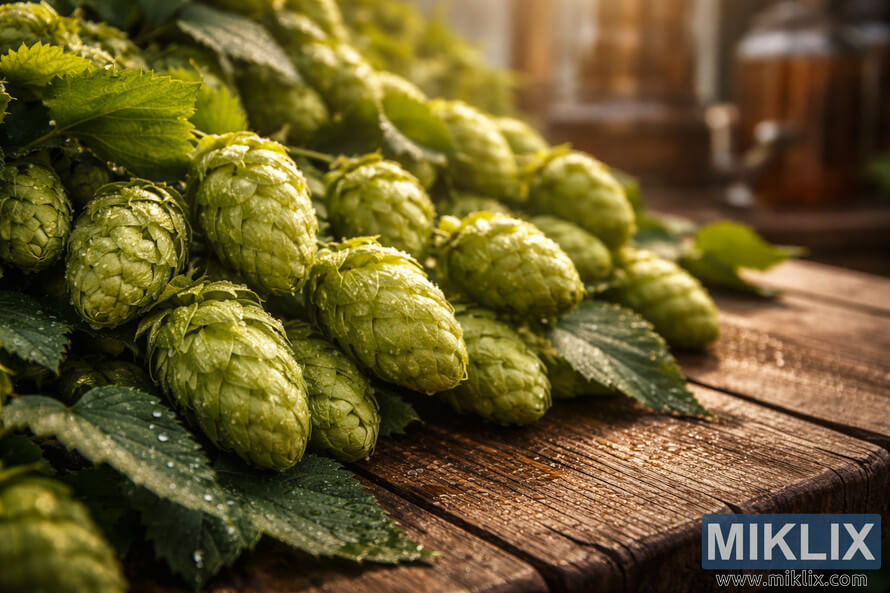
Click or tap the image for more information and higher resolutions.
Analytical Brewing Values for Sonnet Hops
Brewers depend on precise analytical data when selecting hops for their recipes. Sonnet analytical values are crucial for determining bittering, late additions, and dry hopping. Below, you'll find typical ranges and practical notes for using Sonnet in your brews.
Alpha acid range and average bitterness contribution
Sonnet alpha acids are relatively low for a commercial hop. Reports vary from 2.6% to 7.4%, with an average around 5%. Yakima Valley Hops provides a narrower range of 4.5–4.7%. This indicates Sonnet is best used as an aroma hop, not a primary bittering agent. It's ideal for minor bittering adjustments or blended with higher-alpha hops for sharper bitterness.
Beta acids, alpha-beta ratio, and aroma impact
Sonnet beta acids range from 2.0% to 3.7%, averaging 2.9% to 3.5% depending on the supplier. The alpha-beta ratio is often around 1:1 for aroma hops, but can reach up to 4:1. This balanced ratio supports stable hop character and a softer bitter finish, preserving aromatic traits. Monitoring Sonnet beta acids is key to predicting aging and oxidation in packaged beer.
Total oil content and its effect on late additions
Sonnet total oils are low to moderate, averaging 0.5–0.6 mL/100 g. These levels are perfect for late-boil, whirlpool, and dry-hop additions to capture floral and citrus notes. Adjust timing for late additions to protect delicate terpenes. Always refer to the current lab sheet from the supplier, as Sonnet total oils can vary yearly, impacting the beer's aroma.
- Check Sonnet analytical values for each crop year before finalizing hopping rates.
- Use Sonnet alpha acids as a supplemental bittering source, not the primary one for high-IBU beers.
- Favor late additions and dry hopping to showcase the hop's floral and citrus profile given its total oil range.

Click or tap the image for more information and higher resolutions.
How to Use Sonnet Hops in the Boil and Whirlpool
Sonnet hops shine when added late in brewing to maintain their floral and citrus notes. Brewers often use Sonnet boil additions and a controlled whirlpool to enhance honeysuckle and lemon flavors. This approach avoids harsh bitterness.
- Late hop additions: add Sonnet within the last 5–15 minutes of the boil. Short contact in the kettle limits loss of volatile terpenes and helps preserve hop oils responsible for floral aroma.
- Use measured quantities when you plan late hop additions. Adjust amounts by checking crop-year oil levels from suppliers such as Yakima Valley Hops to match your target intensity.
Post-boil hop stands and whirlpooling extract aromatic compounds without excessive alpha-acid isomerization. A Sonnet whirlpool or hop stand lets you capture delicate citrus top-notes while keeping bitterness in check.
- Target whirlpool temperatures below 180°F (82°C) when possible. Cooler temperatures preserve the most volatile compounds that give Sonnet its signature scent.
- Limit contact time to about 15–30 minutes before chilling. Shorter stands reduce loss of the same oils that late hop additions aim to preserve.
- For recipes that emphasize aroma, shift a portion of the late boil charge into the whirlpool. This balances extraction between isomerized bitterness and aromatic oil retention.
Practical notes: if crop-year analyses show lower total oils (for example toward the lower end of Yakima Valley Hops’ 0.5–1.0 mL/100g range), consider increasing Sonnet boil additions or extending hop-stand time slightly. Keep adjustments modest to preserve the delicate honeysuckle and citrus character.
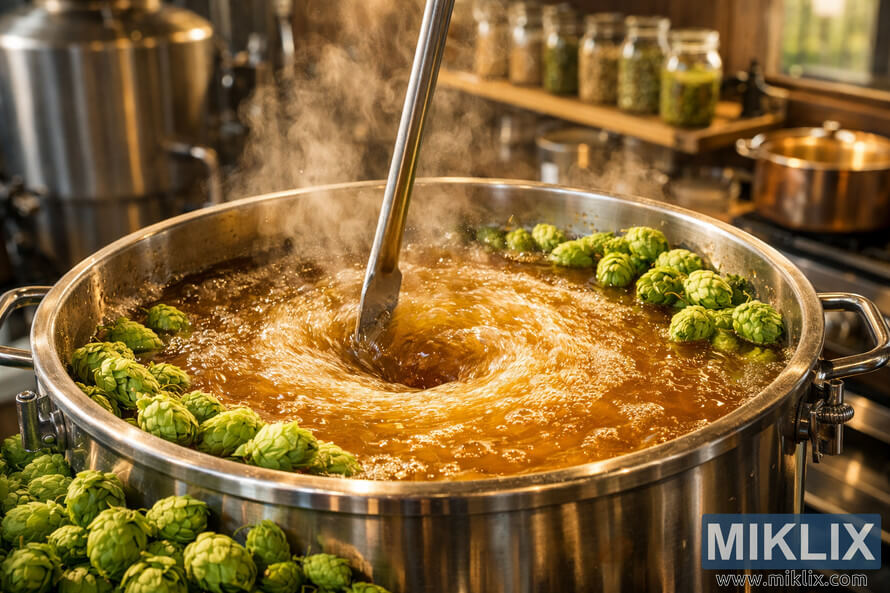
Click or tap the image for more information and higher resolutions.
Dry Hopping with Sonnet for Aroma-Forward Beers
Sonnet is ideal for dry hopping, enhancing beers with bright floral and citrus notes. It's used to accentuate honeysuckle and lemon without overpowering with pine or resin. Adjust rates and timing based on the beer's yeast and malt characteristics.
Guidelines for Sonnet dry hopping rates vary by style. For English ales, a common range is 0.5–1.5 oz per gallon (about 5–12 g/L). Lagers typically require less, around 0.5 oz per gallon, to preserve their delicate balance. Adjustments should be made based on batch size and desired intensity. Vendor packs from Yakima Valley Hops can aid in scaling.
Timing for Sonnet dry hopping is crucial for achieving the desired aroma. Early additions, during active fermentation or high krausen, enhance biotransformation and add estery complexity. Late or post-fermentation additions preserve the delicate top-notes, emphasizing honeysuckle and citrus.
- Typical contact time: 3–7 days for most ales and lagers.
- Shorter contact reduces grassy extraction in lighter beers.
- Cold crash and quick packaging lock in volatile aromatics.
Many brewers split their dry hopping additions for an aroma-forward approach. A small early dose is used for biotransformation, followed by a larger late dose for fresh aroma. Monitoring the intensity of Sonnet dry hop is essential to avoid over-contact and maintain a clean profile.
Keeping records of Sonnet dry hopping rates and timing across batches is crucial. Small changes in timing or grams per liter can significantly alter the final aroma. Consistent records help refine the aroma without risking vegetal off-notes.
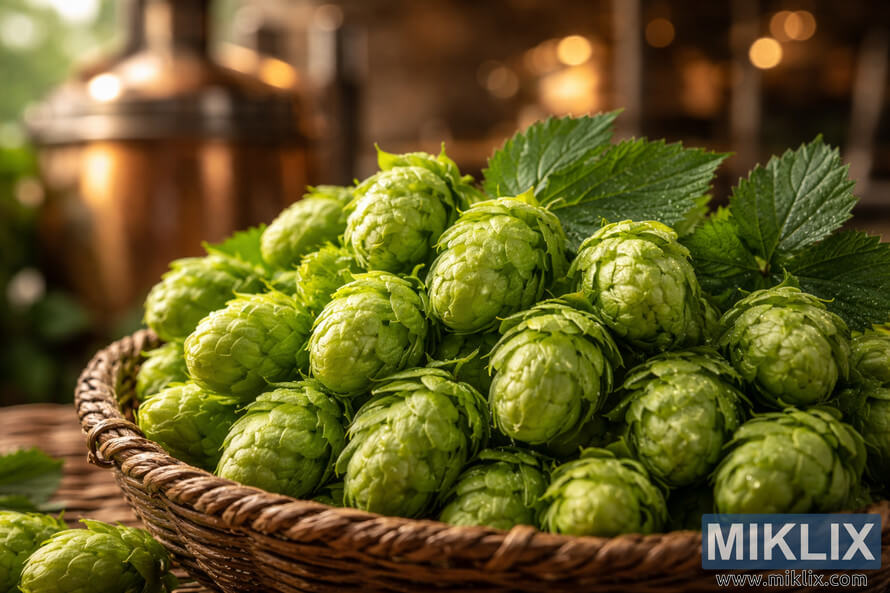
Click or tap the image for more information and higher resolutions.
Best Beer Styles for Sonnet Hops
Sonnet hops are a perfect fit for both traditional and modern beer styles. They bring floral honeysuckle, gentle citrus, and subtle honey notes to the brew. This makes them ideal for adding a bright top layer without overpowering malt or yeast flavors.
When selecting hop timing and intensity, it's crucial to match the style. Late additions and dry hopping enhance aroma. Whirlpooling at moderate temperatures helps preserve delicate oils. Below, we outline practical style matches and offer small tips for each.
- Classic English ales and cask-conditioned ales
- In English ales, Sonnet works well as a late-addition and dry-hop option. It adds floral and honeysuckle notes that complement English malts and traditional ale yeasts. Use it sparingly to support, not dominate, the cask-conditioned profile.
- Lagers
- For lagers, Sonnet benefits from low-temperature fermentation and clean lager yeasts. Late whirlpool and light dry hopping highlight clean citrus-floral top-notes. Keep bitterness modest and focus on aroma for a refreshing, bright lager.
- Belgian ales
- In Belgian ales, Sonnet pairs well with spicy, phenolic yeasts to add a floral-citrus sheen. Use it sparingly so yeast character remains central. The hop’s sweetness and honeysuckle can lift esters without clashing.
- New-world twists on traditional recipes
- Blend Sonnet with classic aroma varieties for brighter, more citrus-forward takes. It can substitute part of an East Kent Golding bill or be mixed with US aroma hops to create playful reinterpretations. Experiment with late additions to dial the effect.
Across styles, aim for balance. Match Sonnet’s aromatic profile to yeast and malt choices. For recipe testing, start with conservative rates and scale up based on tasting feedback. This approach highlights Sonnet beer styles while preserving the base identity of English ales, lagers, and Belgian ales.
Substitutions for Sonnet Hops
When Sonnet hops are out of stock, several alternatives can replicate their delicate floral and mild citrus notes. Brewers should select a substitute based on the desired aroma, bitterness, and timing in the recipe.
For the closest match, choose an East Kent Golding alternative or US Golding. These hops offer a similar floral-herbal profile, ideal for late boil and dry-hop roles. Adjust the rates to match Sonnet’s oil levels and the desired aroma lift.
- East Kent Golding alternative — perfect for traditional English ales and cask-conditioned beers, where gentle floral notes are essential.
- US Golding — a good choice for a slightly brighter, cleaner finish while maintaining Sonnet-like character.
Saaz and Hersbrucker are viable Saaz substitutes for a milder spice and earthy backbone. They offer less honeysuckle and citrus brightness than Sonnet.
- Saaz substitute (Czech or US) — ideal for soft noble spice and subtle herbal notes in lagers and pilsners.
- Hersbrucker vs Sonnet — Hersbrucker adds gentle floral and noble-like earthiness, with less citrus and honey tones than Sonnet.
- Crystal — use to add sweet, perfumed fruitiness, enhancing rounded sweetness alongside floral character.
Practical tip: adjust late-addition amounts and dry-hop grams per gallon to account for differences in alpha acids and total oil. Small trials at 10–20% higher or lower rates help fine-tune the target aroma.
Availability, Forms, and Purchasing Sonnet Hops
Sonnet hops are available in various brewing formats, catering to both hobbyists and professional brewers. They can be found through specialty suppliers and online marketplaces. It's crucial to check the product pages for details on crop year, analysis, and packaging. This ensures the hops are fresh before making a purchase.
They come in whole cone and pellet forms, accommodating different brewing setups. Vendors offer Sonnet whole cone in various sizes for retail. On the other hand, Sonnet hop pellets are available in smaller packs for homebrewers and larger quantities for commercial use.
- Whole cone: preferred for traditional handling and gentle aroma extraction.
- Pellets: practical for storage, dosing accuracy, and easier wort integration.
Currently, there is no commercially available lupulin powder or Cryo/Lupomax style product for Sonnet hops. Brewers looking for concentrated lupulin should be aware of the lack of a Cryo or Lupomax option when sourcing ingredients.
The choice of where to buy depends on the volume and price sensitivity. Specialty suppliers like Yakima Valley Hops and select hop merchants offer Sonnet hop pellets and whole cone in multiple sizes. Online marketplaces, however, may have retail packs for small-scale brewers.
- Verify crop year and lab analysis to track alpha and oil variability.
- Compare package sizes and price per ounce for bulk versus retail buys.
- Confirm shipping and cold-storage practices to protect aroma compounds during transit.
Sonnet availability can change with harvest and supplier stock. Prices and quantities differ by vendor and listing. Therefore, it's wise to shop early if you rely on a specific crop year or package size in your recipes.
Crop Characteristics and Harvest Timing
Sonnet hops exhibit consistent field behavior, yet each year introduces minor changes crucial for brewers. US aroma varieties typically begin to be harvested in mid-to-late August. It's wise to consult the specific Sonnet crop year analysis before finalizing recipes or ordering in bulk.
The Pacific Northwest's typical hop harvest timing for aroma hops spans from August to September. During this period, decisions on when to pick are influenced by cone maturity, lupulin color, and moisture levels. Commercial harvest timing aims to maximize oil retention while managing weather risks and logistical challenges.
Year-to-year, the chemical profiles of Sonnet hops can significantly impact bitterness and aroma. Historical data shows alpha acids ranging from 2.6% to 7.4% and total oils from 0.2 to 1.0 mL/100g. Suppliers like Yakima Valley Hops provide ranges, but stress the importance of reviewing the current Sonnet crop year report for exact figures.
- Monitor alpha and beta numbers on the crop analysis to set hopping rates.
- Factor Sonnet oil variation into late additions and dry hop weights to retain floral and citrus character.
- Adjust boil schedules if the Sonnet harvest report shows higher or lower alpha profiles than expected.
Practical steps in the brewery include requesting the lot analysis at purchase. Small adjustments to hop amounts or timing can help maintain consistency in bitterness and aroma, despite annual variations. Keeping records tied to each Sonnet crop year aids in replicating recipes across different vintages.
Practical Recipe Examples Using Sonnet Hops
Below are two compact, testable outlines for homebrewers and small breweries aiming to highlight Sonnet’s floral and citrus traits. These examples detail grain bills, hop timing, and fermentation notes. This allows you to adjust weights based on batch size and current crop analysis.
Ale recipe outline highlighting Sonnet dry hopping
- Grain bill: Maris Otter or British pale malt as the base; 5–10% crystal malt (10–20 L) for sweetness; optional 1–2% roasted barley or black malt for color depth.
- Bittering: use a neutral high-alpha hop such as Magnum or Target at boil start for target IBUs. Keep early bitterness restrained to let Sonnet’s aroma shine.
- Flavor/aroma boil additions: Sonnet at 10–15 minutes and at 5 minutes before flameout to layer honeysuckle and lemon notes.
- Dry hop: 3–7 days post-primary fermentation. Use 0.5–1.5 oz/gal depending on desired intensity. Adjust per Sonnet recipes guidance and crop-year oil levels.
- Yeast and conditioning: English ale strains such as Wyeast 1968 or White Labs WLP002 will accentuate floral esters while keeping a balanced malt frame.
Lager recipe outline highlighting Sonnet late additions
- Grain bill: Pilsner malt base with 5–10% Vienna or light Munich for body and slight toasty sweetness.
- Bittering: minimal early hops for a clean backbone; aim for low to moderate IBUs so late Sonnet additions can dominate aroma.
- Whirlpool/hop-stand: add Sonnet at sub-180°F and hold 15–30 minutes. This preserves volatile oils and brings forward honeysuckle and lemon-citrus nuances in the finished beer.
- Dry hop: light post-fermentation dry hop at reduced rates versus ales. Use lower 0.3–0.8 oz/gal to avoid vegetal notes while keeping delicate aroma.
- Fermentation and lagering: use clean lager strains such as Wyeast 2124 or White Labs WLP830. Cold lagering will tighten flavors while showcasing Sonnet’s subtle sweetness.
Tweak hop weights based on your Sonnet hopping schedule, measured alpha acids, and total oil content for each crop year. BeerMaverick and Yakima Valley Hops both recommend late additions for classic English styles and lagers to preserve the hop’s floral and lemon character.
Pairing Sonnet Hops with Yeast and Malt Choices
Choosing the right yeast and malt for Sonnet hops enhances its honeysuckle and citrus notes. Selecting the right pairings protects the delicate aromas while adding depth. Below, we explore yeast and malt options that complement Sonnet, along with tips for balancing your recipe.
Yeast selection can steer Sonnet towards classic English character or crisp, modern clarity. For beers with floral esters, moderate ester producers like Wyeast 1968 London ESB or White Labs WLP002 English Ale are ideal. These strains add soft fruity notes, enhancing Sonnet's character in English ales.
For lagers, where citrus top-notes should remain bright, opt for clean, low-ester strains. Wyeast 2124 Bohemian or White Labs WLP830 German Lager are good choices. These yeasts preserve clarity, making Sonnet's yeast pairing perfect for crisp, aromatic lagers.
Belgian strains introduce spicy phenolics and complex esters, creating an intriguing contrast to Sonnet's floral profile. Use restrained fermentation temperatures to avoid overpowering the hop character when experimenting with yeast for floral hops.
- Wyeast 1968 or White Labs WLP002 — accentuates floral notes for English-style ales.
- Wyeast 2124 or White Labs WLP830 — keeps Sonnet’s citrus clean in lagers.
- Belgian ale yeasts — add spicy layers that pair with floral hops when used carefully.
For Sonnet malt pairing, start with a base that supports honey and sweet undertones without hiding them. Maris Otter or British pale malt offers a slightly biscuity backbone, complementing Sonnet in traditional ales.
Light crystal malts in the 10–20 L range add a touch of caramel and sweetness, echoing Sonnet's lemon-honey facets. Use these sparingly to enhance, not dominate, the aroma profile.
In lagers, pale Pilsner malt provides a neutral stage for Sonnet aromatics to shine. Avoid heavy roasted or dark malts, as they can mask delicate floral and citrus notes. Keep the malt bill balanced for the best results.
- Maris Otter or British Pale Malt — a malty, biscuity base that supports Sonnet.
- Light Crystal (10–20 L) — adds sweetness and caramel to match Sonnet’s honey.
- Pilsner Malt — neutral platform for Sonnet in lager recipes.
Practical tips: maintain a moderate original gravity to keep yeast esters pleasant. Use late hop additions and dry hops to showcase Sonnet's top notes. When planning recipes, ensure that Sonnet yeast pairing and malt to match Sonnet work together harmoniously.
Storage, Handling, and Quality Considerations
Proper storage and careful handling are crucial for preserving Sonnet hops' delicate oils. Small changes in temperature, oxygen exposure, or packaging can significantly affect aroma and alpha-acid readings. Treat incoming batches as perishable brewing ingredients and verify lab data before use.
Cold storage is the single best way to preserve volatile oils. Store Sonnet hops at or below 0°F (-18°C) in oxygen-barrier packaging when possible. Vacuum-sealed bags or Mylar with oxygen absorbers extend usable life and maintain hop freshness during long-term storage.
Minimize exposure to air and heat when handling hops. Keep unopened pellets or whole cones in their original packaging until needed. When repackaging, purge bags with CO2 or use oxygen absorbers to reduce oxidation. Gentle handling preserves aroma precursors and keeps the product true to label.
Batch variability is common with aroma varieties. BeerMaverick and Yakima Valley Hops report year-to-year swings in alpha acids, beta acids, and oil content. Check the crop year on each lot and compare it to Sonnet crop analysis supplied by your vendor to set accurate hop rates.
- Always request a certificate of analysis (COA) for each shipment.
- Adjust your recipes based on the COA and measured hop freshness.
- Rotate stock FIFO to avoid aging effects on aroma and bitterness.
Practical steps reduce risk when dialing in recipes. Measure hop freshness by smell and, when possible, by lab data. Use the supplier COA to confirm alpha acids and oil ranges before scaling up a batch or making substitution decisions.
Sonnet hops
Sonnet is an aroma hop with clear commercial identity and predictable analysis for brewers. This short overview covers ownership, industry coding, and practical buying notes. It helps both homebrewers and breweries source the variety with confidence.
Trademark and ownership
The Sonnet trademark is held by Virgil Gamache Farms, Inc. They register and market the cultivar under that name. Brewers referencing Sonnet trademark should note the proprietary link to the grower when checking labels and product pages.
International code and trade information
In trade listings and inventory systems, the hop is assigned the Sonnet SON code for easy identification. Using the Sonnet SON code speeds ordering. It helps match crop year and COA details across suppliers.
Commercial and supplier notes
- Yakima Valley Hops lists Sonnet as an Oregon-grown cultivar. They highlight brighter citrus and honeysuckle compared to classic English Goldings. Product sizes commonly offered include 2 oz, 8 oz, 16 oz, and 11 lb packs.
- Typical analytical ranges reported by suppliers give an alpha around 4.5–4.7%, beta near 3.2–3.7%, and total oil roughly 0.5–1.0 mL/100g. These figures guide usage for late additions and dry hopping.
- Market notes show no widely available lupulin powder (Cryo/Lupomax) version from major lupulin producers. That limits formats to whole cone and pellet for now.
- Retail listings vary by vendor and harvest year. BeerMaverick and specialty retailers list multiple sellers, with price and stock depending on crop and supplier packaging.
Practical purchasing tips
- Check the supplier page for crop year and COA to verify oil and alpha details before buying.
- Compare pack sizes to match brewery scale; homebrew needs differ from commercial orders.
- Read Sonnet supplier notes about origin and handling to ensure freshness and expected aroma profile.
Keeping the Sonnet trademark, Sonnet SON code, Virgil Gamache Farms Sonnet, and Sonnet supplier notes in mind helps brewers make informed purchasing decisions. It predicts how the hop will perform in recipe trials.
Conclusion
Sonnet summary: Sonnet is an American-bred aroma hop from Virgil Gamache Farms. It combines the gentle essence of English Goldings and Saaz with brighter honeysuckle and lemon-citrus notes. Its moderate alpha acids and balanced oil content make it perfect for brewers. They seek floral clarity without overwhelming bitterness.
Sonnet brewing takeaway: For the best results, use Sonnet in late-boil and whirlpool additions. Dry hopping is key to preserving its volatile floral and citrus oils. Pair it with malts that add a touch of sweetness and yeasts that enhance aroma. This will highlight Sonnet’s honey and floral character in various beer styles.
Sonnet hops conclusion: Obtain Sonnet as whole cone or pellets from trusted suppliers like Yakima Valley Hops. Always verify the supplier's COA for alpha, beta, and oil values by crop year. Store hops cold and plan additions and whirlpool timing carefully. This will ensure consistent, expressive results in every brew.
FAQ
What are Sonnet hops and where did they originate?
Sonnet hops, with the international code SON, are an American-grown aroma hop. They were developed by Virgil Gamache Farms, Inc. in the United States, mainly in Oregon. These hops aim to capture the floral and herbal essence of English Kent Golding and Saaz, while adding a brighter citrus and honeysuckle lift.
What is Sonnet’s breeding and parentage background?
Sonnet is a Golding-type selection bred to emulate Saaz and East Kent Golding in a U.S. climate. Its lineage focuses on floral, honeysuckle, and lemon-citrus qualities typical of classic European varieties. However, it brings American-grown intensity and nuance to these traits.
How does Sonnet relate to Saaz and East Kent Golding?
Sonnet is an American-grown interpretation of Saaz and English Kent Golding. It shares their mild, floral, and herbal profile but offers brighter citrus and honeysuckle top-notes. This differentiation makes it stand out in modern brewing.
What are the key flavor and aroma characteristics of Sonnet hops?
Sonnet offers a prominent honeysuckle and floral aroma with clear lemon-citrus and sweet undertones. It also has light earthy and grassy tones, honeyed sweetness, and a soft oak nuance. These characteristics add complexity and complement malty backbones.
How pronounced are Sonnet’s lemon and honeysuckle notes?
Sonnet's honeysuckle and floral notes are its hallmark, supported by a sweet lemon-citrus lift. This combination creates a bright top-note suitable for late additions and dry hopping. The subtler earthy and honey tones provide depth.
What are Sonnet’s typical analytical brewing values?
Analytical ranges vary by crop year. Typical alpha acids are moderate, ranging from 2.6–7.4% with supplier typicals around 4.5–4.7%. Beta acids are also moderate, ranging from 2–3.7% with supplier ranges of 3.2–3.7%. Total oil typically sits near 0.5–1.0 mL/100g, supporting strong late-aroma performance.
Should Sonnet be used for bittering or aroma?
Sonnet is primarily an aroma hop. Its moderate alpha range means it is not commonly relied upon as a primary bittering hop. Brewers use it for late-boil additions, whirlpool/hop stands, and dry hopping to preserve and showcase volatile aromatic oils.
How should Sonnet be used in the boil?
Add Sonnet late in the boil—typically within the final 5–15 minutes—to retain honeysuckle and citrus top-notes. Avoid long boil times for late additions, as extended heat strips volatile oils and diminishes the delicate floral character.
What are the whirlpool temperature and timing recommendations for Sonnet?
Use a post-boil whirlpool or hop stand with Sonnet at lower temperatures to maximize aroma without excessive isomerization. Target whirlpool temperatures below about 180°F (82°C) when practical, with contact times around 15–30 minutes before chilling to preserve delicate floral and citrus notes.
How is Sonnet best used for dry hopping?
Sonnet responds well to dry hopping, which highlights its honeysuckle and lemon aromatics. Typical dry-hop contact times are 3–7 days to avoid grassy extraction. Brewers may dry-hop during late fermentation (for biotransformation effects) or post-fermentation to preserve volatile top-notes.
What dry-hop rates work for Sonnet in English ales and lagers?
For aroma-forward English ales, guideline dry-hop rates range from about 0.5–1.5 oz per gallon (approximately 5–12 g/L), adjusted for batch size and desired intensity. For lagers, use slightly lower rates to respect the delicate malt and yeast balance. Always consult crop-year oil data to fine-tune amounts.
Which beer styles suit Sonnet hops best?
Sonnet fits classic English ales and cask-conditioned ales, lagers, Belgian ales, and “new‑world” twists on traditional recipes. Its floral-honeysuckle and lemon-citrus top-notes complement English yeast esters, clean lager profiles, and spice-forward Belgian phenolics.
What recipe roles does Sonnet play in English ales and lagers?
In English ales Sonnet is used for late additions and dry hopping to add floral and honeyed brightness without overpowering malt and yeast character. In lagers it is added in whirlpool or as a light dry hop to preserve clean citrus-floral top-notes while keeping bitterness restrained.
Which hops are good substitutes for Sonnet?
East Kent Golding and US Golding are the closest substitutes for Sonnet’s floral and herbal profile. Saaz (Czech or U.S.), Hersbrucker, and Hallertau Mittlefrüh are workable swaps for milder spice and earthy notes. Crystal can be used when a sweeter, perfumed accent is desired. Adjust late-addition and dry-hop rates to account for different oil and alpha levels.
In what formats is Sonnet sold and where can I buy it?
Sonnet is commonly available as whole cone and pellet hops. Suppliers such as Yakima Valley Hops offer multiple package sizes (for example 2 oz, 8 oz, 16 oz, and 11 lb). Retailers and online marketplaces stock Sonnet—check supplier pages for crop-year COA, format, and pricing.
Is there a Cryo/lupulin powder version of Sonnet?
As of current supplier information, Sonnet does not have a widely available Cryo or lupulin powder (Cryo/Lupomax/LupuLN2) product from major lupulin producers like Yakima Chief Hops, BarthHaas, or Hopsteiner.
When is Sonnet harvested and how much do analytics vary by year?
U.S. aroma hops typically are harvested mid-to-late August, and Sonnet follows a similar window in Oregon. Year-to-year variation in alpha, beta, and oil levels is common; brewers should verify crop-year analytical data and COA from the supplier before finalizing hop rates.
How should Sonnet hops be stored and handled to preserve quality?
Store Sonnet hops cold—ideally frozen at or below 0°F (-18°C)—in oxygen-barrier, vacuum-sealed packaging. Minimize heat, light, and oxygen exposure. When repackaging, use oxygen absorbers or purge with CO2 to preserve volatile oils and aroma.
What yeast and malt pairings best showcase Sonnet?
English ale yeasts with moderate ester production (for example Wyeast 1968, White Labs WLP002) enhance Sonnet’s floral and honeysuckle notes. Clean lager yeasts (e.g., Wyeast 2124, White Labs WLP830) preserve citrus top-notes. Maris Otter or British pale malts with light crystal (10–20 L) complement Sonnet’s honey and sweet undertones; Pilsner malt works well for lagers.
Where can I find supplier-specific commercial and trademark information on Sonnet?
Sonnet® is a registered trademark owned by Virgil Gamache Farms, Inc., listed under the code SON. Suppliers such as Yakima Valley Hops provide commercial notes, product sizes, and typical analytical ranges. Always consult supplier listings and COAs for legal, commercial, and crop-year details.
Further Reading
If you enjoyed this post, you may also like these suggestions: