
Hops in Beer Brewing: Southern Promise
Published: April 8, 2026 at 8:24:06 PM UTC
Last updated: April 8, 2026 at 8:26:34 PM UTC
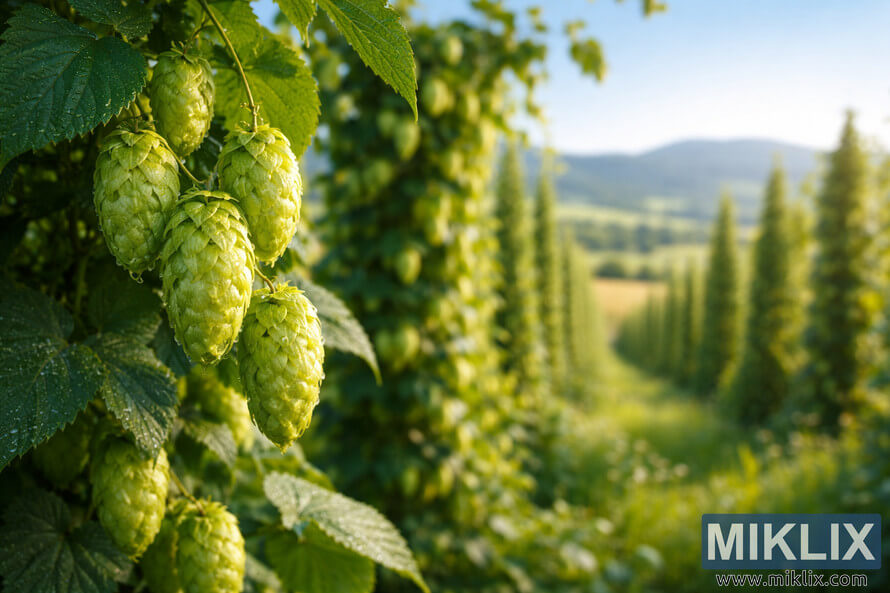
Southern Promise hops, a South African variety, are celebrated for their dual-purpose nature. They were bred from Southern Brewer and a wild Slovenian male in 1992. This cultivar was designed for the Cape region's shorter days and milder sunlight. It boasts fairly high alpha acids and low cohumulone, offering brewers a balanced yet smooth bitterness.
Click or tap the image for more information and higher resolutions.
The hop's aroma profile is rich in woody and earthy notes, complemented by herbal, floral, citrus, and red-berry scents. This versatility makes Southern Promise suitable for both bittering and aroma additions. It is widely recognized in the brewing community, available in various formats such as pellets, whole-cone, and processed.
Harvested in late summer, typically from late February to March in South Africa, Southern Promise hops cater to diverse brewing needs. They are favored by homebrewers and commercial brewers alike for their balanced bitterness and subtle fruit-wood aroma. Their adaptability to South African conditions also appeals to those seeking unique regional flavors.
Key Takeaways
- Southern Promise hops are a South African, dual-purpose variety released in 1992.
- The hop offers fairly high alpha acids and low cohumulone for smooth bitterness.
- Aroma tags include woody, earthy, herbal, floral, citrus, and red-berry notes.
- Available in pellet and whole-cone formats and used across many beer styles.
- Harvest time is late February into March in South Africa, reflecting southern-season timing.
Overview of Southern Promise hops and their origin
Southern Promise is a commercial hop bred for brewing and regional cultivation. It has the international code SPR and is available in pellet and whole-cone formats. Its traits were selected for reliable yields and flavor consistency in the southern hemisphere.
The breeding of Southern Promise started with a cross between Southern Brewer and a wild Slovenian male. Breeders chose a diploid seedling for its agronomic strength and unique aroma. This selection aimed to combine useful brewing traits with plant vigor.
The project aimed to overcome local challenges. Southern Promise originated in southern Africa, where day length and sunlight differ from northern hop regions. These conditions influenced hop adaptation and selection criteria during trials.
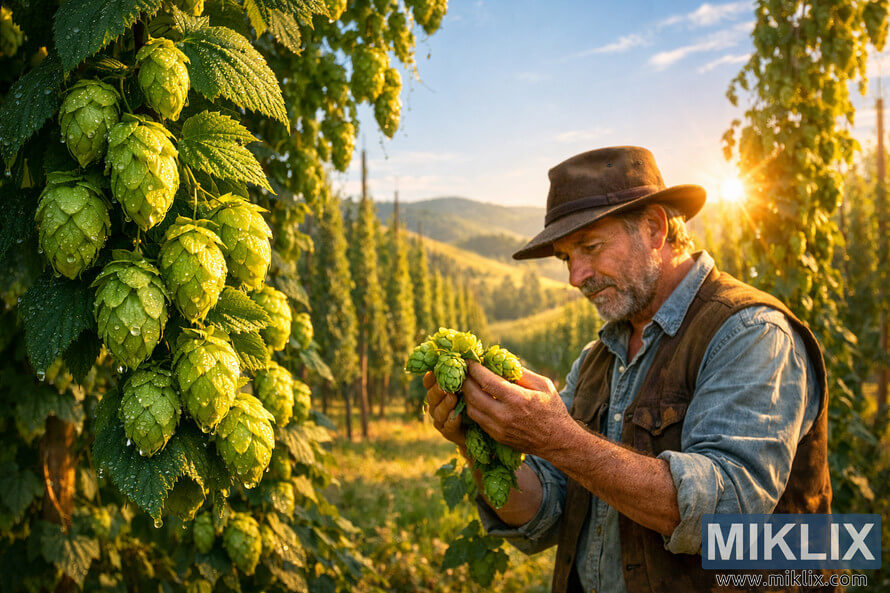
After formal evaluation, growers were introduced to Southern Promise in 1992. Since then, growers have adapted cultivation practices and harvest timing to Southern Hemisphere seasons. Harvest typically occurs late February into March.
Growers and brewers need to adapt to Southern Promise's unique characteristics. Standard propagation, pelletizing, and whole-cone distribution make it accessible to commercial brewers. This option is bred for regional needs.
Click or tap the image for more information and higher resolutions.
Plant genetics and lineage of Southern Promise
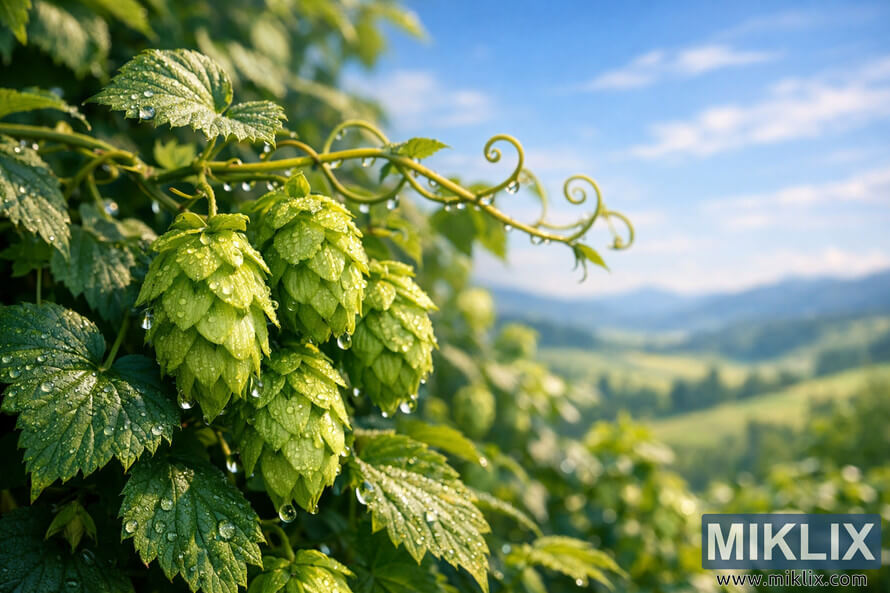
The genetics of Southern Promise stem from a deliberate cross, aiming to merge brewing quality with resilience. This variety is a diploid seedling, bred from a Southern Brewer parent and a Slovenian wild male. This combination brings a familiar chromosome count and wild aromatic traits from central Europe.
Being diploid, Southern Promise follows the typical hop chromosome pattern found in commercial varieties. This status supports steady vigor, predictable cone development, and makes propagation easier for nurseries and growers.
The Southern Brewer parent contributes traits beneficial for brewing: reliable alpha-acid production, smooth bitterness, and a balance ideal for dual-purpose use. The Slovenian wild male, on the other hand, brings hop lineage effects that introduce woody, earthy, and herbal aromatic notes, reminiscent of Styrian and continental hops.
Growers and brewers observe the impact of hop lineage in both agronomy and sensory aspects. In the field, lineage influences adaptation to daylength and resistance patterns. In the kettle and fermenter, it shapes alpha ranges, cohumulone proportion, and oil profiles, defining aroma and perceived bitterness.
- Genetic type: diploid, aiding uniform growth and cone set.
- Female parent: Southern Brewer parent, supplying brewing-oriented acids and smooth bitterness.
- Male contributor: Slovenian wild male, adding continental aromatic character and unique oils.
Comparing it with other regional hybrids reveals how parentage influences yield and flavor. Varieties with wild Styrian lineage often present distinct herbal or woody facets, enhancing modern American and European brewing styles. Southern Promise exemplifies how targeted crossing can result in versatile agronomy and a complex sensory profile for brewers to discover.
Click or tap the image for more information and higher resolutions.
Chemical brewing values and alpha/beta profile
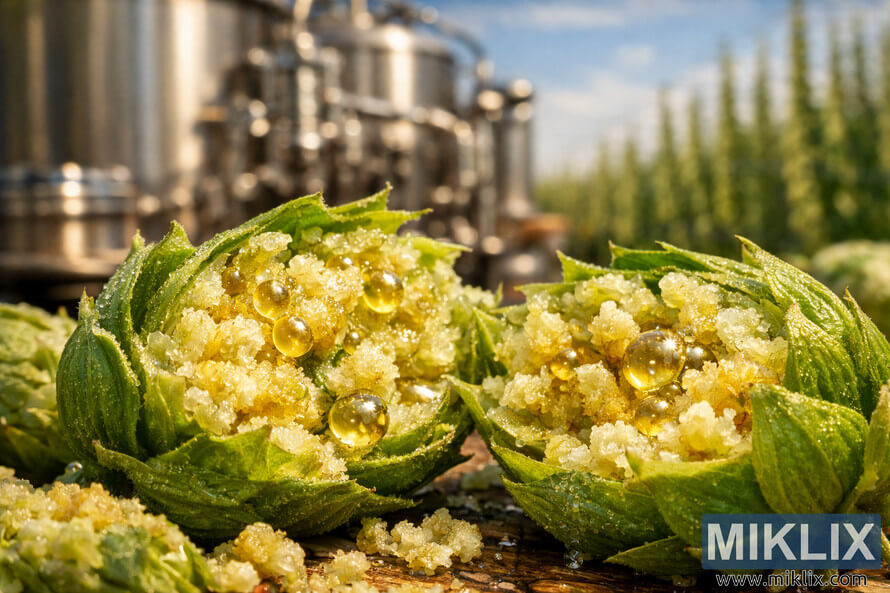
Understanding Southern Promise's chemical makeup is crucial for brewers. Metrics like alpha and beta acid levels, cohumulone percentage, and the alpha-beta ratio are key. They determine how this hop performs in different brewing stages.
The alpha acid range is from 9.5% to 14.5%, averaging around 12%. This indicates Southern Promise has a strong bittering potential, fitting it for dual-purpose use. Beta acids, however, are lower, ranging from 3.6% to 5.8%, averaging 4.7%. They contribute to bitterness over time due to oxidation.
Cohumulone content is about 20%–22% of the alpha acids, averaging 21%. This relatively low cohumulone level results in a smoother bitterness when boiled. It's perfect for beers needing a clean, balanced backbone.
The alpha-beta ratio is usually between 2:1 and 4:1, averaging 3:1. This ratio affects bitterness evolution during aging and storage. Brewers can adjust kettle timing and hopping rates to balance longevity and bright bittering.
- Alpha behavior: Moderate-to-high alpha acids support efficient bittering and flexible addition timing.
- Beta role: Beta acids add depth during aging and can be considered for beers intended to mature.
- Hop chemistry note: The mix of alpha, beta, and cohumulone gives Southern Promise a bright, smooth bittering profile ideal for multiple styles.
Click or tap the image for more information and higher resolutions.
Essential oil composition and aroma contributors
Southern Promise total oils average about 0.9 mL per 100 g, with a typical range of 0.7–1.1 mL/100 g. These oils are highly volatile, boiling off during long boil additions. Brewers preserve aroma by favoring late kettle additions or dry hopping.
Oil volatility greatly influences how the hop expresses in beer. A hop with moderate total oils can serve as a dual-purpose variety. It provides usable bittering values while offering aroma when handled gently. This balance makes Southern Promise useful across many styles.
Total oils and volatility
Late additions and dry hopping retain the volatile fraction. Early boil additions will keep alpha acids but lose much of the aromatic lift. Workflows that minimize high-heat exposure help the myrcene-rich fraction and delicate terpenes survive into the finished beer.
Cold-side handling and short whirlpool rests at reduced temperature will keep more aromatic oil. These steps maximize perceived citrus and fruity top notes tied to the hop oil mix.
Breakdown of major oil constituents
Myrcene sits around 21–25% of the profile and gives resinous, citrus, and fruity tones. Humulene averages 23–27% and adds woody, noble, and spicy character. Caryophyllene appears near 7–11% and brings peppery, woody, and herbal accents.
- Myrcene — bright citrus and fruity lift that fades with heat.
- Humulene — provides a stable woody backbone and spicy depth.
- Caryophyllene — contributes pepper and herbal bite in small doses.
- Minor oils (farnesene, linalool, geraniol, β-pinene, selinene) — supply floral, green, and complex nuances.
The hop oil breakdown shows roughly 36–49% made up of those minor but impactful compounds. This diversity allows layers of berry, floral, herbal, and green notes to sit atop the citrus and woody core.
Taken together, this oil mix places Southern Promise among versatile hops. Brewers can emphasize citrus and fruit by preserving myrcene or lean into woody and spicy traits by managing addition timing to showcase humulene and caryophyllene.
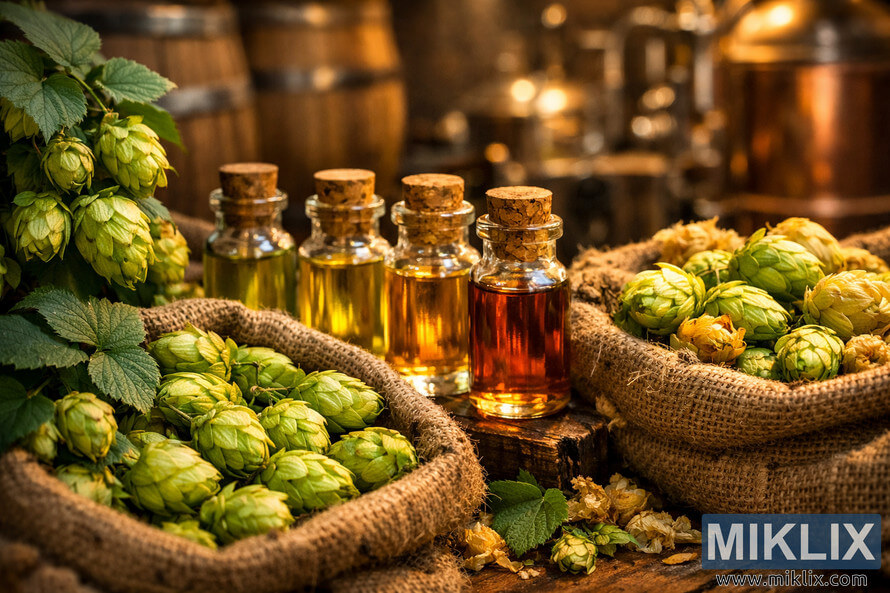
Click or tap the image for more information and higher resolutions.
Flavor and aroma profile for brewers
Southern Promise offers a balanced mix of aromatics and bitterness, ideal for IPAs and more subtle ales. It presents a woody, earthy foundation with hints of berry and citrus when hops are treated gently. This makes it perfect for both straightforward bittering and for showcasing hop flavors in late additions.
Tasting notes and descriptive tags
Common hop tasting notes include herbal and floral touches, layered over woody and earthy tones. Red berry and light citrus emerge in late or dry-hop additions. Some brewers also detect faint vegetable and spicy notes at higher rates.
- Herbal and floral highlights
- Berry and citrus top notes
- Woody, earthy base that is pleasant and unobtrusive
- Subtle spicy or vegetal hints at heavy dosages
Practical implications for recipe design
When designing recipes with Southern Promise, focus on late-boil, whirlpool, or dry-hop additions to preserve volatile oils. Total oils are near 0.9 mL/100g, so avoid long, high-heat exposure to preserve delicate berry and citrus notes.
Alpha acids average around 12 percent, aiding in efficient bittering. The low cohumulone share ensures a smoother boil bitterness. Use moderate bittering additions early, then add aroma with smaller late additions to highlight hop flavors without harshness.
- Balance woody/earthy base with malts that are neutral or slightly biscuity.
- Choose yeast strains that enhance fruity ester character rather than masking hop nuance.
- Avoid prolonged, high-temperature boils for aroma-forward beers.
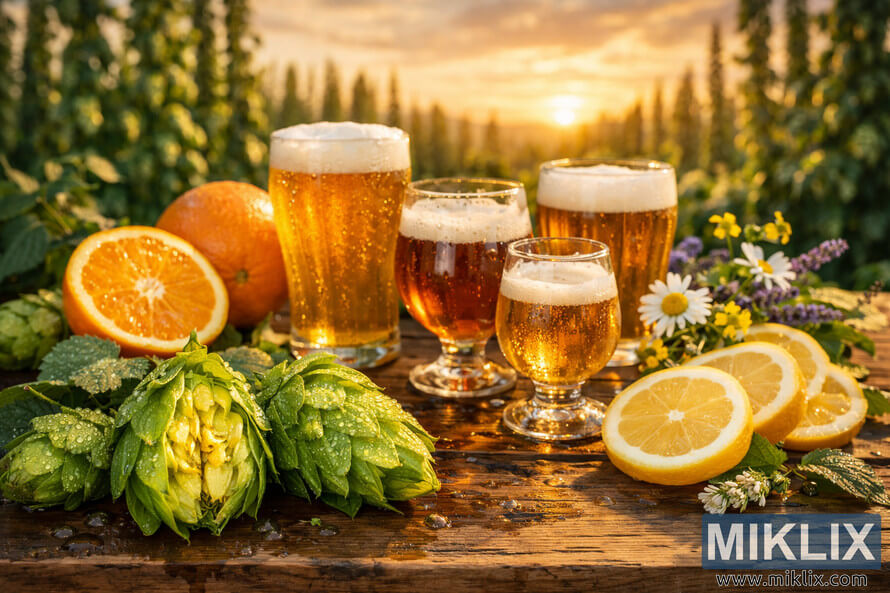
Click or tap the image for more information and higher resolutions.
Beer styles that suit Southern Promise hops
Southern Promise hops are versatile, fitting a variety of beer styles. They add a subtle woody and earthy complexity to clean-fermented beers. In hoppier ales, they bring out brighter berry and citrus notes. Here's a quick guide to styles and dosing ideas for common brews.
Common styles and why they work
- Pilsners and lagers benefit from restrained use of Southern Promise. It adds a faint herbal lift without masking malt clarity. Clean lager yeast lets the hop's mild spice and earthiness show.
- Pale ales take advantage of the hop's fruity edge. Moderate additions in whirlpool or late kettle highlight berry and citrus notes while keeping bitterness balanced.
- Wheat beers and hefeweizens receive a soft floral and herbal accent. This complements banana and clove from classic yeast strains.
- IPAs welcome Southern Promise in blends. It brings a nuanced spicy-fruity profile that pairs well with citrus-forward and resinous American varieties.
Dosage guidance by style
- Lagers and pilsners: Use low to moderate rates for flavor and aroma. Target conservative kettle additions to keep IBUs gentle and preserve a clean finish.
- Pale ales: Apply moderate whirlpool or late additions to emphasize fruit and spice. Balance with a single-digit to mid-range bittering target for drinkability.
- Wheat beers and hefeweizens: Add small aroma amounts late or as light dry hops. This lifts floral notes without competing with wheat character.
- IPAs: When using Southern Promise in IPAs, use it as part of a blend. Combine smaller portions with bold varieties for brightness. For dry hop, choose small-to-moderate amounts to avoid grassy or vegetal off-notes.
Practical note: calculate additions using the batch-specific alpha-acid reported by your supplier. For bittering in larger beers aim for 15–30 IBUs from kettle hops when appropriate. Adjust whirlpool and dry-hop grams per batch to taste and to avoid overpowering delicate lager and pilsner profiles.
Substitutes and pairing hops for Southern Promise
When Southern Promise is unavailable, brewers seek alternatives that mirror its lineage and aroma. The Southern Brewer substitute is a direct match, offering citrus and resin notes similar to Southern Promise. This choice is favored for its bittering and late addition capabilities, ensuring a similar flavor without recipe reformulation.
It's important to note that concentrated lupulin products like Cryo, LupuLN2, or Lupomax are not commonly available for this variety. This limits brewers to whole-cone or pellet forms, impacting extraction rates and dosing. Substitution planning must consider these format differences.
Below are common substitutes and the rationale for each choice.
- Southern Brewer substitute — genetic match, similar citrus-resin balance, reliable alpha range for bittering and aroma.
- Cascade — bright citrus and floral lift that complements Southern Promise’s fruit tones when used in late additions.
- Citra — intense tropical-fruit aroma useful in hop-forward ales to push juiciness without clashing.
- Styrian Golding-type hops — subtle herbal and floral notes to round the blend and add European character.
Pairing strategies help highlight different sides of Southern Promise. Use American or Styrian varietals to lift citrus and fruit, or add spicy and earthy hops to emphasize woody character.
Try these hop combination approaches for effective blends.
- Late whirlpool: Southern Brewer substitute plus Citra for a bold tropical-citrus bouquet.
- Dry hop: Southern Promise (or substitute) with Cascade and a small amount of Styrian Golding-type to balance brightness with herbaceous depth.
- Balanced IPA: Start with the Southern Brewer substitute for bittering, then layer with Cascade and a touch of Styrian hop for complexity.
Test small pilot batches when swapping hops. Measure alpha acids and adjust rates for whole pellets versus lupulin concentrates. This ensures aroma and bitterness remain true to the recipe intent while using suitable Southern Promise substitutes and refining hop pairings Southern Promise in your beers.
Yeast and malt pairings with Southern Promise
Choosing the right yeast and malt is crucial for showcasing Southern Promise's unique flavors. This hop offers woody, berry, citrus, and floral notes. A clean yeast and a light malt base enhance these aromas. Brewers should balance hop timing with yeast behavior using recipe building hops principles.
Yeast strains that highlight hop character
- Clean lager strains such as Wyeast 2124 or White Labs WLP820 reveal citrus and floral top notes without masking subtle berry tones.
- American ale strains like SafAle US-05 or WLP001 suit hop-forward pales and IPAs where crisp fermentation supports bright hop expression.
- English ale strains such as Wyeast 1968 or White Labs WLP005 introduce mild esters and biscuit notes that pair well with Southern Promise’s woody elements when a fuller profile is desired.
Malt backbones and adjuncts
- Light base malts — Pilsner, US two-row, or Maris Otter — provide a neutral canvas for hop-driven beers. These choices create room for yeast pairing Southern Promise to be noticed.
- Use Vienna or light Munich sparingly when you want warm malt sweetness to echo the hop’s citrus and berry facets. Small amounts of light caramel malt add fruit-forward complexity without overpowering aroma.
- Wheat malt suits seasonal or hefe-style brews by enhancing floral and herbal notes. Keep wheat under 40% to avoid masking hop clarity.
- Adjuncts should be minimal. Light fruit adjuncts that mirror berry or citrus can complement Southern Promise. Avoid lactose and heavy sugars when the goal is a delicate hop showcase.
Practical pairing tips
- For a crisp pale ale, combine a clean American ale yeast with a pilsner or two-row base and follow recipe building hops guidelines for late and dry hop additions.
- To highlight woody and berry tones, pick an English ale yeast and add 5–10% light caramel to support fruitiness without muddling hop aroma.
- When brewing lagers, choose a neutral lager strain and a Pilsner malt to showcase citrus and floral lift in both aroma and finish.
Brewing techniques to maximize Southern Promise character
Southern Promise shines as a dual-purpose hop, balancing bittering and aroma. Its moderate alpha acids and low cohumulone ensure clean boil bitterness. Total oils are volatile, so plan for late additions and dry hops to capture fruit, citrus, and woody notes.
Addition timing
- Early-kettle: Use for bittering when stable alpha acids are needed. Early additions ensure clean bitterness without harshness.
- Whirlpool or late boil: Aim for 5–15 minutes remaining or a short whirlpool rest. This preserves myrcene and humulene aromatics. A gentle whirlpool at 170–180°F for 10–20 minutes enhances fruit and citrus notes.
- Dry hop: Add Southern Promise after primary fermentation or during cold crash. This layers fresh hop aroma without harsh polyphenols.
Extraction tips
- Avoid long, vigorous late-boil or extended high-temperature rests. Short, controlled whirlpool times retain aroma.
- Use pellets for efficient extraction and cleaner handling. Pellets release oils faster and reduce vegetal particulates.
- Control dry-hop temperature. Cold dry hopping or pitching at fermentation temps limits vegetal extraction. Keep contact times moderate to avoid grassy notes.
- Moderate dosing prevents vegetal overload. Too much dry hop introduces grassy, green flavors. Start conservatively and adjust in future brews.
Practical recipe notes
- For bitterness and aroma, split the charge: a measured early addition for alpha-driven bittering, a whirlpool Southern Promise charge for midline aroma, and a modest Southern Promise dry hop for top-note freshness.
- Track contact time and temperature across brews. Small changes in whirlpool duration or dry-hop temperature will alter the balance between fruitiness and vegetal cues.
- Rely on the hop's smoother bitterness profile to push a bit more early-kettle addition when the recipe calls for a noticeable backbone without harshness.
Recipe examples and community usage
Home brewers and professionals have shared templates showcasing Southern Promise's versatility in various beer styles. It's featured in 453 community brew examples, predominantly in Lager, Pale Ale, Pilsner, Hefeweizen, Wheat Beer, and IPA. These recipes serve as a starting point for experimentation and scaling.
These templates act as simple guides. They highlight how to emphasize woody, berry, and citrus flavors without overshadowing the hop's essence. They're suitable for single-hop tests and blended recipes.
- Pilsner / Single-hop test: Use 90% Pilsner malt and 10% Munich. Bittering hops are added at target AA for 18–22 IBU. Late whirlpool additions are made at 170°F for 20 minutes. Dry hop with 4 g/L for three days. This recipe keeps malt light, allowing Southern Promise aromatics to dominate.
- Pale Ale: Mix 85% two-row, 10% crystal 10L, and 5% oats. Bitter to 30–35 IBU. Heavy late additions and a 5–7 g/L dry hop are used. American strains like Wyeast 1056 or White Labs WLP001 enhance citrus and berry notes alongside earthy depth.
- IPA blend: Combine base malt with Citra and Cascade in late additions. Add Southern Promise at whirlpool and dry hop for an earthy, woody anchor. Aim for 50–70 IBU with a focus on late hop aroma.
- Hefeweizen / Wheat beer: Use 60% wheat malt and 40% Pilsner. Weihenstephan yeast adds clove and banana esters. Southern Promise is added as a modest late-hop accent to complement floral, herbal yeast notes without overpowering them.
Community pairings reveal interesting patterns. Brewers often pair Southern Promise with Citra and Cascade to enhance fruit tones while maintaining a solid backbone. Styrian and American hops are frequently used to create complex aroma profiles. Southern Passion is a popular pairing that complements the woody-berry edge.
Forums and hop databases highlight Southern Promise's versatility. It's used for both bittering and late-addition aroma. Its alpha range allows for 9.5–14.5% AA bittering, followed by repeat additions for aroma. These templates and community examples facilitate quick recipe adaptation.
For homebrew Southern Promise trials, start with single-hop or simple blend recipes. Track hop weights, timings, and yeast choices. Small-batch tests help reveal how variations impact perception, making it easier to scale up to draft or keg sizes.
Market and historical context of Southern Promise
Southern Promise emerged in 1992, bred in South Africa to meet local brewing demands. It's listed in hop catalogs and databases as a dual-purpose variety. This variety has found a niche in regional markets and caught the eye of international craft brewers.
Homebrewers appreciate Southern Promise for its unique woody, earthy flavors with berry and citrus undertones. This popularity underscores the hop's distinct character and the growing trend in craft brewing for unique, locally-sourced ingredients. The Southern Promise market caters to brewers seeking complex, continental flavors rather than tropical fruit notes.
Understanding Southern Promise's lineage is key to grasping its aroma profile. It's a descendant of Southern Brewer and Styrian/Slovenian hops, leaning towards herbaceous and floral notes. This makes it a preferred choice for brewers aiming for balance, with its earthy and spicy undertones complementing subtle fruitiness.
- Market role: positioned in catalogs with dual-purpose and regional hops.
- Niche appeal: favored by craft and homebrewers seeking South African character.
- Stylistic fit: better for continental and Saison styles than for hop-forward West Coast IPAs.
Comparing Southern Promise to American hops like Citra or Amarillo reveals a stark contrast. American hops are known for their bright tropical and citrus flavors. Southern Promise, however, offers a more balanced oil profile with myrcene, humulene, and caryophyllene. This earthier character makes it ideal for brewers desiring complexity without overpowering fruitiness.
In the context of South African hops history, Southern Promise is a pioneering variety. It was bred to enhance local self-sufficiency and introduce unique flavors globally. It's grouped with other regional cultivars, highlighting its status as a specialty option in a market dominated by more commercially popular varieties.
Conclusion
Southern Promise summary: This South African hop is a diploid dual-purpose variety. It offers reliable bittering and a distinct aroma. The aroma includes woody, earthy, berry, citrus, floral, and spicy notes. With alpha acids around 12% and total oils near 0.9 mL/100g, it strikes a balance between classic bittering and aromatic hops.
For hop selection Southern Promise, it's ideal for lagers, pale ales, pilsners, hefeweizens, wheat beers, and IPAs. Use it in late kettle or whirlpool additions and targeted dry hops. This preserves volatile oils like myrcene and humulene. Pair it with clean, expressive yeasts and a malt bill that enhances its berry and citrus highlights.
This brewing conclusion emphasizes the importance of checking the harvest year alpha acid. Also, buy from reputable suppliers, as lupulin powder is rare. Treated as a dual-purpose workhorse, Southern Promise rewards careful timing and pairing. It brings out its unique character in many beer styles.
FAQ
What is Southern Promise and where did it originate?
Southern Promise, known by the international code SPR, is a South African hop. It was bred in 1992 for the limited sunlight near the southern tip of Africa. Now, it's available in hop catalogs and on Amazon.
What is the breeding history and parentage of Southern Promise?
Southern Promise comes from a cross between Southern Brewer and a wild Slovenian male. This mix aimed to create a hop that thrives in South Africa, blending local traits with Styrian/Slovenian aromas.
How do the genetics and lineage affect its agronomy and flavor?
Its diploid genetics ensure typical vigor and cone development. Southern Brewer adds brewing-relevant alpha acids and smooth bitterness. The wild Slovenian male contributes continental aromas, including woody, earthy, herbal, and berry notes. This blend shapes its agronomic traits and balanced flavor.
What are the typical alpha and beta acid values for Southern Promise?
Southern Promise has alpha acids ranging from 9.5–14.5% with an average of 12%. Beta acids range from 3.6–5.8% with an average of 4.7%. These values allow for effective use in both kettle bittering and late additions for flavor.
What is the co-humulone level and alpha:beta ratio, and why do they matter?
Co-humulone is about 20–22% of alpha acids, averaging 21%. The alpha:beta ratio is 2:1–4:1, averaging ~3:1. Lower co-humulone levels result in smoother bitterness, making Southern Promise suitable for bright, less harsh boil bitterness.
How much total oil does Southern Promise contain and how volatile are those oils?
Southern Promise contains total oils ranging from 0.7–1.1 mL/100g, averaging 0.9. These oils are volatile, best preserved through late-kettle, whirlpool, and dry-hop additions.
What are the major essential oil constituents and their aromatic contributions?
Major oil fractions include myrcene (21–25%), humulene (23–27%), caryophyllene (7–11%), and farnesene (~0–1%). Minor oils add floral, herbal, and green nuances. This mix contributes to its complex aroma.
How would you describe Southern Promise’s flavor and aroma?
Southern Promise offers woody and earthy base notes with herbal, floral, citrus, berry, and spicy accents. It also has vegetal or red-berry impressions. The balance of myrcene and humulene provides fruity/citrus lift and woody/spicy depth.
How should Southern Promise be used in recipe design?
Use early-kettle additions for clean bittering. Preserve aroma with whirlpool/late-boil and dry-hop additions. Pair it with light malt backbones and clean yeast strains to showcase its delicate berry/citrus notes. Choose supporting malts and hops to complement its woody/earthy character.
Which beer styles suit Southern Promise best?
Southern Promise is versatile. It suits lagers and pilsners for subtle woody or herbal complexity. It's also great in pale ales and IPAs for berry/citrus and spicy lift. Use it in wheat beers or hefeweizens for floral and herbal accents. Its dual-purpose nature makes it useful across many styles.
What dosage guidance should brewers follow by style?
For bittering, calculate IBUs from the supplier’s AA% (target kettle IBUs typically 15–30 depending on style). For whirlpool and flavor additions, use moderate amounts to preserve woody/berry notes. For dry-hop, use small-to-moderate doses to emphasize aroma without extracting vegetal character. Adjust to batch size and desired intensity.
What are good substitutes and hop pairings for Southern Promise?
Southern Brewer is a common substitute due to similar genetic and sensory traits. Pair Southern Promise with bright American hops (Citra, Cascade) or Styrian/Slovenian varieties to layer citrus, fruit, and herbal/woody notes. Southern Passion and other regional or Styrian hops also complement its profile.
Which yeast strains and malts work best with Southern Promise?
Clean lager yeasts and neutral American ale strains highlight hop nuance. English strains add complementary yeast complexity for darker or malt-forward beers. Use Pilsner or Pale Ale malts to let hop aromatics shine; wheat malt and light specialty malts can accentuate floral and fruity notes. Avoid heavy adjuncts that mask hop character.
In what forms is Southern Promise sold and what is not commonly available?
Southern Promise is commonly sold as pellets and whole cones. Lupulin concentrates such as Cryo (LupuLN2), Lupomax, or similar branded powders are not available for this variety. Brewers should plan around pellets or whole cones.
Where can I buy Southern Promise and what should I check before purchasing?
It appears in commercial hop catalogs and homebrew supplier listings. It can be found through multiple vendors and online marketplaces. Verify the harvest year and supplier-listed alpha acid percentage, confirm the form (pellet vs whole cone), check availability and shipping from South Africa, and compare crop notes and price.
What brewing techniques maximize Southern Promise’s character?
Use early additions for bittering and late-boil, whirlpool, or dry-hop for aroma preservation. Keep whirlpool times and temperatures controlled to avoid excessive oil volatilization. Prefer pellet form for efficient extraction but monitor for vegetal matter. Moderate dry-hop dosing and controlled contact temperatures minimize grassy extraction.
Are there community recipe examples using Southern Promise?
Yes. Homebrew databases and forums list hundreds of recipes that use Southern Promise across lagers, pale ales, pilsners, hefeweizens, wheat beers, and IPAs. Brewers often use it as a single-hop showcase in lighter styles or blend it with American/Styrian hops in IPAs for layered aroma.
How popular is Southern Promise and how does it compare to other regional hops?
Southern Promise occupies a niche as a South African regional cultivar with a distinctive woody/earthy plus berry/citrus profile. It’s less tropical than modern American varieties like Citra, and closer in character to Styrian/continental hops. Its inclusion in supplier catalogs and community recipes shows ongoing interest among brewers seeking regional diversity.
Further Reading
If you enjoyed this post, you may also like these suggestions:
- Hops in Beer Brewing: Perle
- Hops in Beer Brewing: Styrian Golding
- Hops in Beer Brewing: Early Prolific