
Image: Beer Styles Brewed with Spalt Hops
Published: October 26, 2026 at 6:11:59 PM UTC
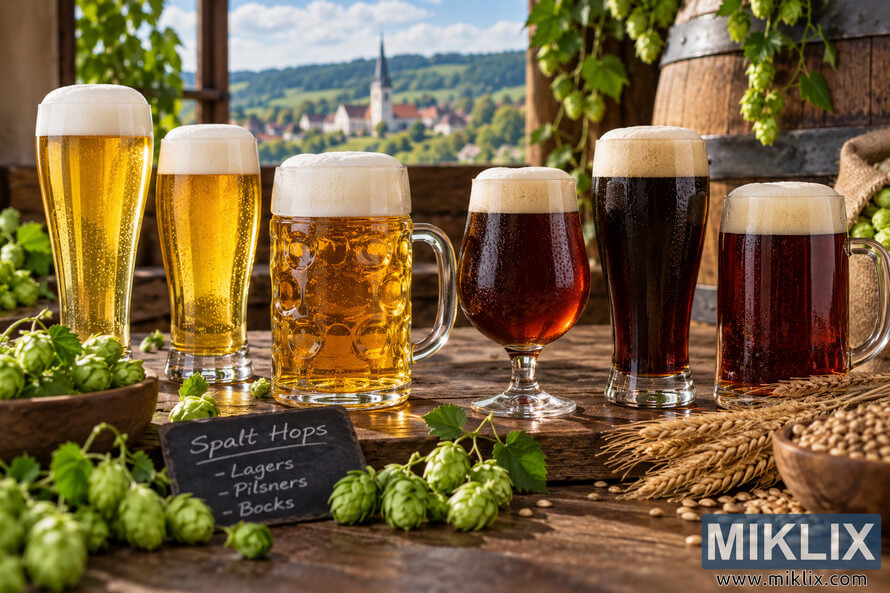
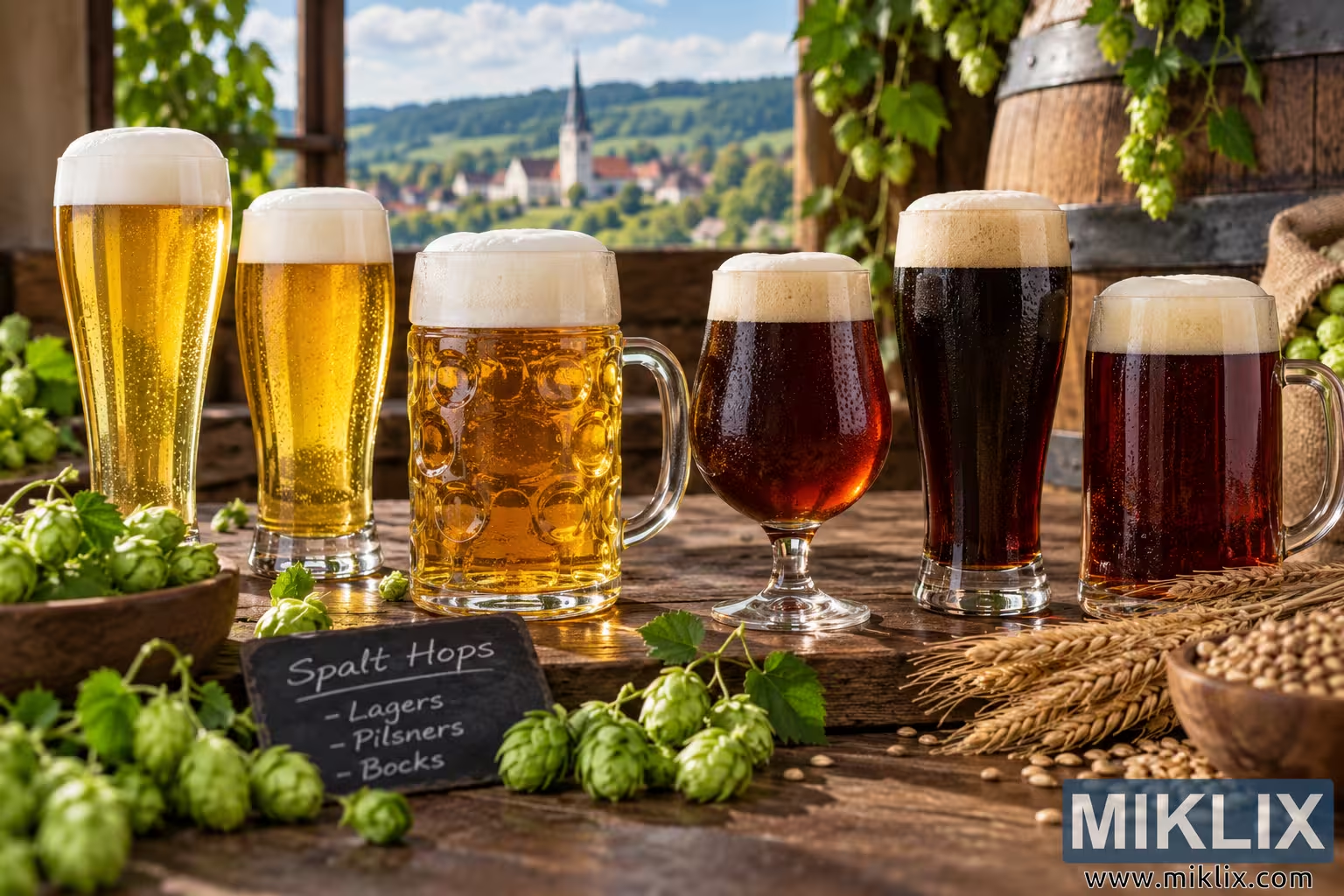
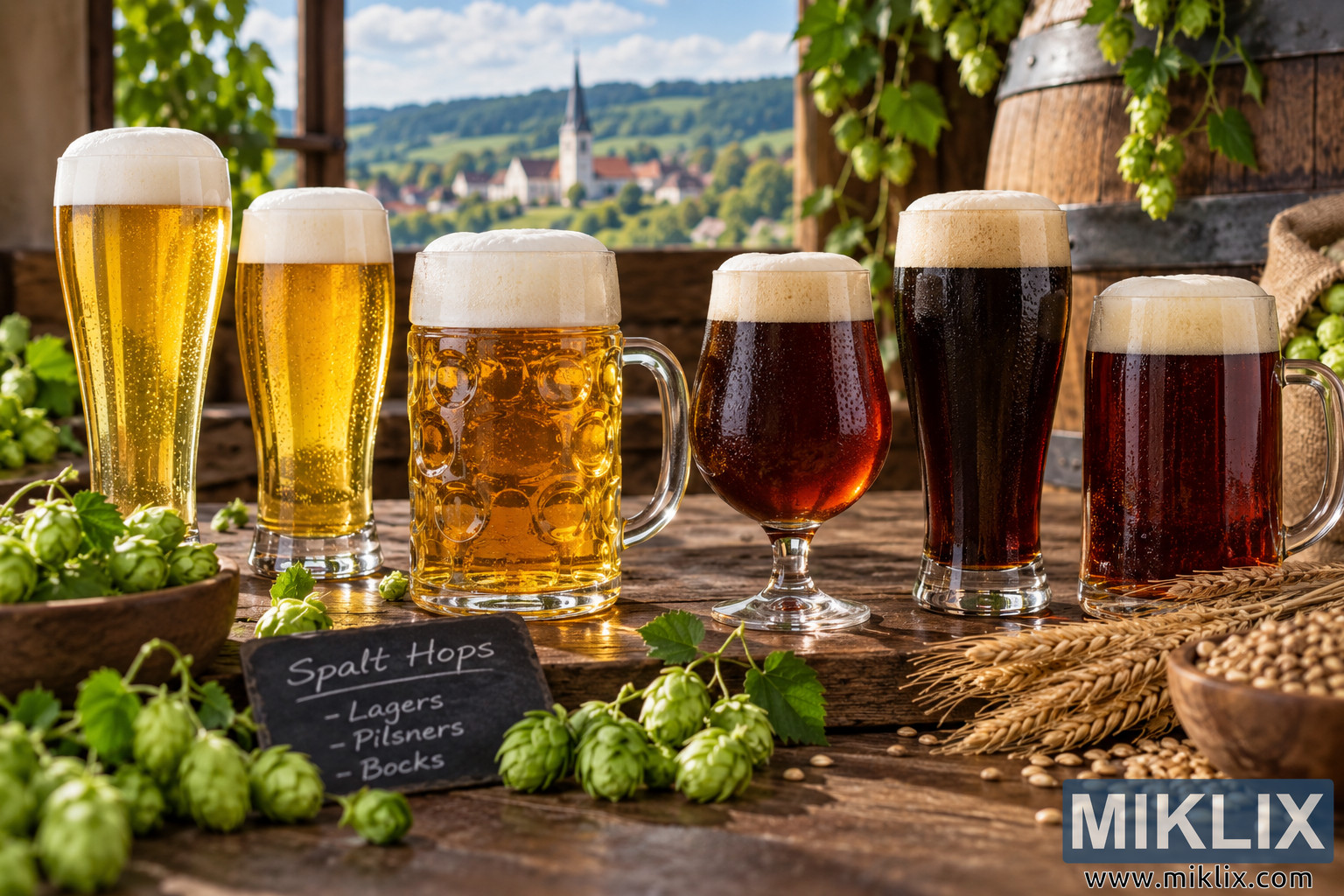
Rustic landscape image featuring an array of unbranded lagers, pilsners, and bock-style beers with fresh Spalt hops, barley, grain, and a traditional countryside brewery setting.
Available versions of this image
The image files available for download below are less compressed and higher resolution - and as a result of that, higher quality - than the images embedded in articles and pages on this website, which are more optimized for file size in order to reduce bandwidth consumption.
Regular size (1,536 x 1,024)

Large size (3,072 x 2,048)
Very large size (4,608 x 3,072)
Extra large size (6,144 x 4,096)
Comically large size (1,048,576 x 699,051)
- Still uploading... ;-)
Image description
A wide, landscape-oriented photographic still life presents an inviting assortment of six different beers inspired by styles brewed with Spalt hops. The composition is arranged across a heavy, weathered wooden table in a rustic brewery or countryside beer-garden setting. Warm natural sunlight enters from the left and from the large open window behind the drinks, illuminating the glassware and making the golden beers glow with rich amber and yellow highlights. The overall atmosphere is traditional, artisanal, and welcoming, with an emphasis on beer, hops, grain, and the rural landscape associated with European brewing culture.
Across the center of the image, six glasses display a progression of beer colors and styles. On the far left stands a tall, slender glass filled with a brilliant pale-golden beer. Fine streams of carbonation are visible through the clear liquid, and a thick, creamy white foam cap rises slightly above the rim. Beside it is another tall glass of golden beer, somewhat deeper in color, with a dense white head and numerous tiny bubbles catching the sunlight. The third beer is served in a traditional heavy glass mug with a large handle and circular decorative indentations. Its clear golden-amber liquid is brightly illuminated, creating jewel-like reflections through the thick glass, while a generous layer of pale foam rests on top.
The three beers toward the right introduce increasingly darker tones. The fourth glass is a rounded, stemmed beer glass containing a deep reddish-brown or mahogany-colored beer. Light passing through its lower portion reveals warm ruby and amber highlights beneath a substantial tan-tinged foam head. Next to it stands a tall glass filled with a very dark brown beer, nearly opaque in its center but showing subtle reddish undertones where sunlight reaches the edges. A creamy beige head forms a contrasting layer at the top. On the far right is a sturdy handled mug containing another dark reddish-brown beer. Its color is slightly lighter and more translucent than the neighboring darkest beer, and the glass is topped with a thick, softly textured off-white to beige foam head. Together, the six glasses visually suggest a range that includes pale lagers and pilsners as well as richer, malt-forward bock-style beers.
Fresh green hop cones and leafy hop vines are distributed generously throughout the foreground and background. Several large hop cones lie directly on the wooden table in front of the beer glasses, while a shallow wooden bowl at the lower left contains additional hops. More hop foliage climbs around the wooden posts and the large barrel in the upper-right area, reinforcing the connection between the beers and their hop ingredient. A small black chalkboard sign rests at an angle near the lower-left center of the table. Written in informal white chalk lettering are the words “Spalt Hops,” followed by the beer-style references “Lagers,” “Pilsners,” and “Bocks.” The handwritten presentation gives the scene the character of a small traditional brewery, tasting room, hop farm, or educational beer display rather than a commercial advertisement.
Grain and malt ingredients occupy much of the lower-right foreground. Several golden stalks of ripe barley or similar brewing grain extend diagonally across the table, their detailed heads and awns catching the warm light. Loose kernels are scattered naturally over the wood, and a small wooden bowl filled with additional grain appears at the extreme right edge. These elements balance the green hops on the opposite side of the composition and visually communicate the two principal agricultural ingredients associated with brewing. The rough texture of the tabletop, the natural imperfections in the timber, and the scattered plant material contribute to the handcrafted, farm-to-brewery aesthetic.
Behind the beer display, a large traditional wooden barrel occupies the right side of the scene. The barrel is constructed from dark, aged wooden staves held together by broad metal hoops. Hop vines and green leaves hang around it and descend from above, softening its substantial shape. Wooden structural posts frame the open view in the background, suggesting that the table may be positioned inside an old brewery, barn, hop shed, or rustic tasting room overlooking the surrounding countryside.
Through the broad opening behind the beers, the background falls into a gentle photographic blur. A picturesque European-style village sits in a green valley under a bright blue sky. White and light-colored buildings with red or warm-toned roofs cluster around a tall church steeple, which rises prominently near the center-left of the distant scene. Beyond the village are rolling green fields, wooded hills, and cultivated countryside. Puffy white clouds float in the blue sky, and the bright daylight creates a fresh late-spring or summer feeling. Although the village remains deliberately out of focus, its traditional architecture and pastoral surroundings provide geographic and cultural context for the brewing theme without drawing attention away from the beer glasses.
The photograph uses a shallow depth of field: the beers, hops, grain, chalkboard, and nearby tabletop are rendered with crisp detail, while the distant village and landscape are softly blurred. Reflections and highlights on the glassware emphasize transparency, carbonation, and variations in beer color. Condensation-like highlights and tiny bubbles add a refreshing quality to the drinks. The foam heads vary subtly in shade from bright white on the pale beers to warmer cream and beige on the darker beers. The lighting is predominantly golden and natural, producing a warm, convivial mood reminiscent of an afternoon tasting at a traditional brewery.
No recognizable commercial brewery logos, branded bottles, packaged products, advertising marks, or actual beer brands appear anywhere in the image. Instead, the scene focuses generically on beer styles and brewing ingredients, with Spalt hops identified as the unifying hop variety. The visual storytelling moves naturally from fresh green hops in the foreground to the range of finished beers, then to grain, a wooden barrel, and finally the pastoral brewing landscape beyond. The resulting image communicates variety, craftsmanship, agricultural heritage, and traditional European brewing, while clearly showcasing pale lager and pilsner-like beers alongside darker amber and bock-like examples.
The image is related to: Hops in Beer Brewing: Spalt