
Hops in Beer Brewing: Spalt
Published: October 26, 2026 at 6:11:59 PM UTC
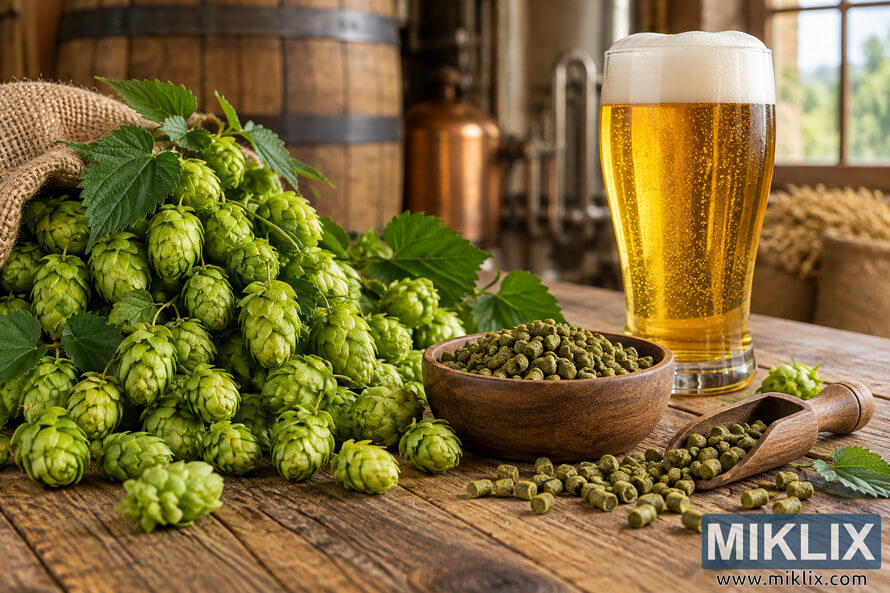
Spalt is a traditional German noble hop from the Spalt region, prized for its delicate spicy, herbal, and floral aroma with subtle earthy notes—an excellent choice for pilsners, lagers, Kölsch, and other classic German-style homebrews.
Click or tap the image for more information and higher resolutions.
Brewing exceptional beer starts with selecting the right hops. Spalt hops stand among Europe's most respected noble hop varieties. This ancient German hop brings delicate flavors and aromas that have defined classic lagers for centuries.
Homebrewers often struggle with specialty European hops. Questions about usage rates and timing create uncertainty. This guide removes that confusion.
You'll discover everything needed to brew confidently with Spalt hops. From historical origins to exact addition schedules, each section provides practical information. Whether you're crafting your first lager or perfecting a recipe, these techniques will elevate your brew.
Origins and Historical Significance of Spalt Hops
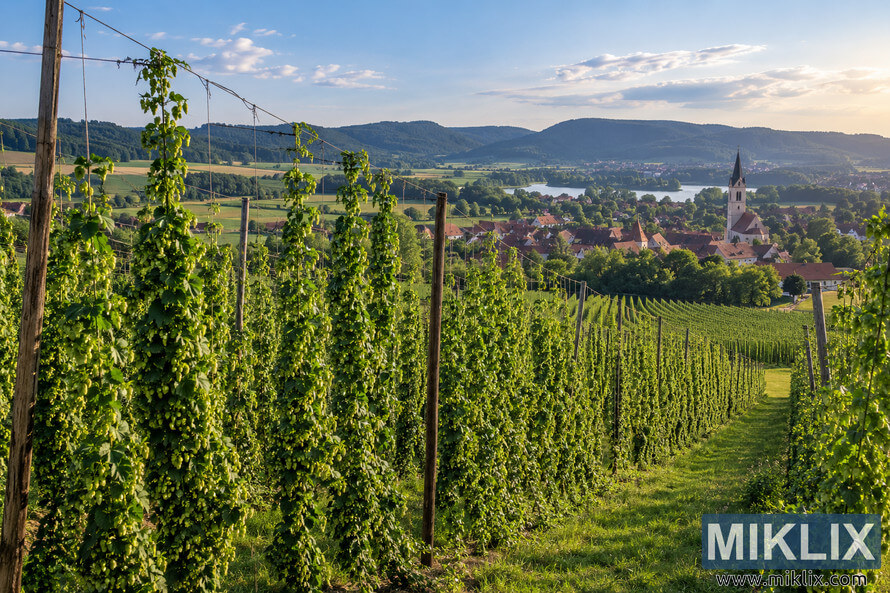
The town of Spalt in Bavaria, Germany has cultivated hops since medieval times. This region's unique climate and soil create ideal growing conditions. Records show hop cultivation here dating back over 1,000 years.
Spalt hops earned their place among four noble hop varieties. These include Hallertau, Tettnang, and Saaz. Noble hops share specific characteristics that brewers prize for traditional European beer styles.
German brewers developed strict purity laws over centuries. These regulations shaped brewing practices across Europe. Spalt hops became essential for authentic German lagers during this era.
The variety nearly disappeared in the 20th century. Disease and changing agricultural practices threatened production. Modern cultivation techniques saved this historic hop from extinction.
Key Historical Fact: Spalt hop farming peaked in the 19th century with over 800 acres under cultivation. Today, the crop covers approximately 50 acres, making authentic Spalt hops a premium specialty ingredient.
Click or tap the image for more information and higher resolutions.
Understanding Spalt Hops Flavor and Aroma Characteristics
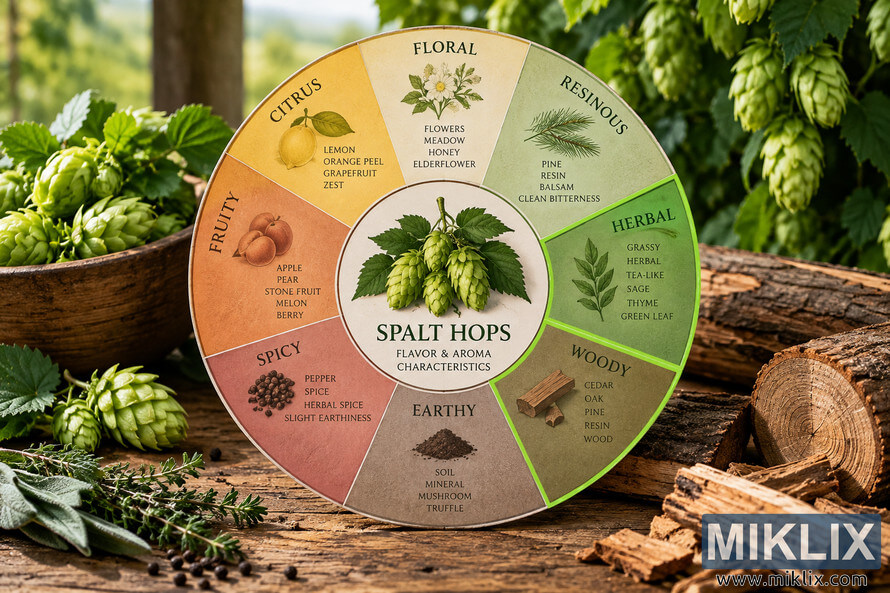
Spalt hops deliver subtle, refined flavors that complement rather than dominate. The aroma profile combines earthy, herbal, and woody notes. Some brewers detect hints of citrus in fresh crops.
The flavor intensity remains mild compared to modern hop varieties. This restraint makes Spalt ideal for balanced beer styles. Noble character shines through without overwhelming malt sweetness.
Click or tap the image for more information and higher resolutions.
Primary Flavor Components
Herbal Notes
The dominant herbal character creates a clean, refreshing quality. Think of dried herbs and tea leaves. This trait works beautifully in lagers and pilsners.
Woody Undertones
Subtle woody flavors add depth and complexity. These notes mature gracefully as beer ages. The woody character never becomes harsh or overpowering.
Mild Spice
A gentle spice quality rounds out the profile. Not peppery or aggressive, but pleasantly warm. This spice complements traditional German and Czech beer styles.
Essential Oil Composition
The oil content in Spalt hops ranges from 0.5 to 0.9 mL per 100g. This relatively low oil concentration contributes to the variety's refined character. Oil composition breaks down into key components that define aroma.
| Oil Component | Typical Range | Aroma Contribution |
| Humulene | 20-25% | Herbal, woody character |
| Caryophyllene | 8-12% | Spicy, earthy notes |
| Farnesene | 5-8% | Floral, citrus hints |
| Myrcene | 25-35% | Mild herbal base |
Alpha and Beta Acid Content in Spalt Hops
Alpha acids determine bittering potential in any hop variety. Spalt hops contain relatively low alpha acid levels. This characteristic makes them perfect for subtle bittering and aroma applications.
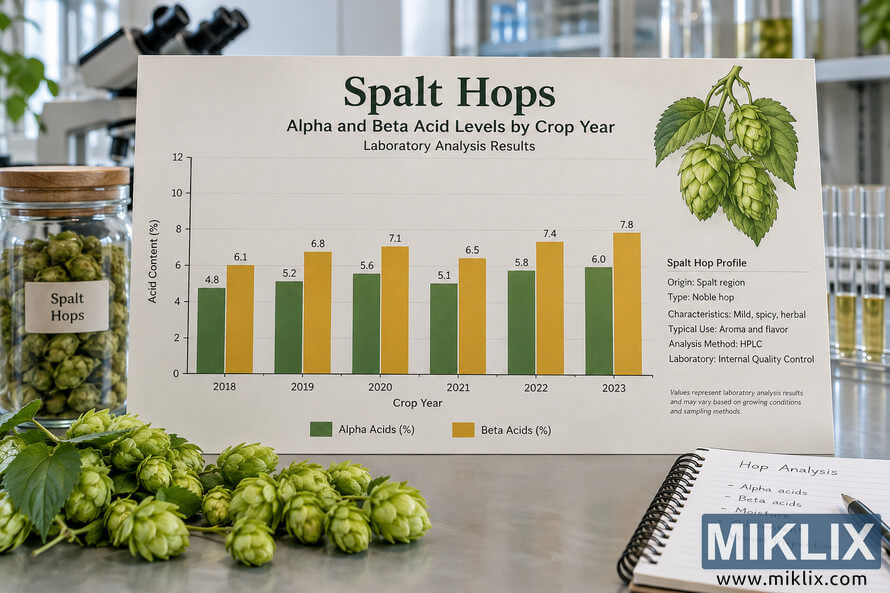
The typical alpha acid range falls between 3.0% and 5.5%. Most crops average around 4.0% to 4.5%. This low percentage requires larger quantities compared to high-alpha hops.
Beta acids contribute to hop stability and aging characteristics. Spalt hops show beta acid ranges from 3.0% to 5.0%. The ratio between alpha and beta acids influences beer stability over time.
Click or tap the image for more information and higher resolutions.
Calculating Bitterness Units
International Bitterness Units (IBU) measure perceived bitterness in beer. Calculating IBUs helps achieve target flavor balance. The formula accounts for alpha acids, hop weight, boil time, and batch size.
Quick IBU Formula: (Hop Weight in oz × Alpha Acid % × Utilization %) ÷ (Batch Size in gallons × 1.34) = IBU contribution. For a 60-minute boil, utilization averages 25-30% for pellets.
Acid Content Variation by Crop Year
Growing conditions affect alpha and beta acid levels each year. Weather patterns, soil nutrition, and harvest timing all play roles. Smart brewers check current crop specifications before brewing.
| Crop Year | Alpha Acids % | Beta Acids % | Total Oil mL/100g |
| 2023 | 4.2 | 4.1 | 0.7 |
| 2022 | 4.5 | 4.3 | 0.8 |
| 2021 | 3.8 | 3.9 | 0.6 |
Best Beer Styles for Spalt Hops
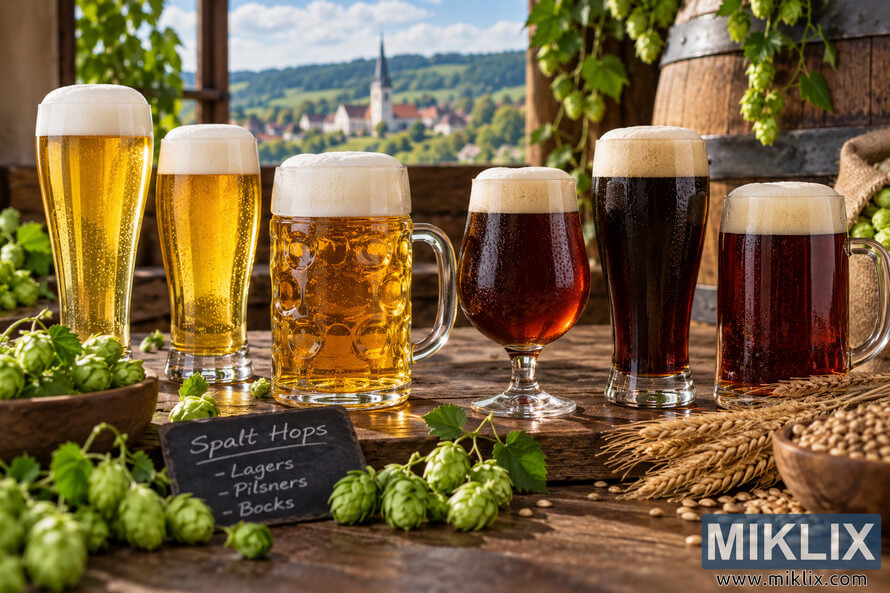
Spalt hops shine brightest in traditional European beer styles. The noble character perfectly complements malt-forward recipes. Understanding style pairings maximizes brewing success.
Click or tap the image for more information and higher resolutions.
Traditional German Lager Styles
German lagers represent the natural home for Spalt hops. These styles developed alongside the hop variety over centuries. The pairing creates authentic, balanced beer.
Perfect Style Matches
- Munich Helles - showcases herbal character
- German Pilsner - provides clean bitterness
- Dortmunder Export - adds subtle complexity
- Bock and Doppelbock - complements malt richness
- Märzen/Oktoberfest - traditional pairing
Excellent Alternatives
- Belgian Pale Ale - noble hop character works
- Kölsch - gentle bitterness suits style
- Czech Pilsner - authentic European flavor
- English Bitter - provides earthy notes
- Cream Ale - subtle hop presence
Challenging Styles
- IPA - insufficient bitterness punch
- Stout - overpowered by roast
- Imperial styles - inadequate alpha acids
- Hazy beers - wrong flavor profile
- Fruit beers - competing flavors
Practical Brewing Process: When and How to Add Spalt Hops
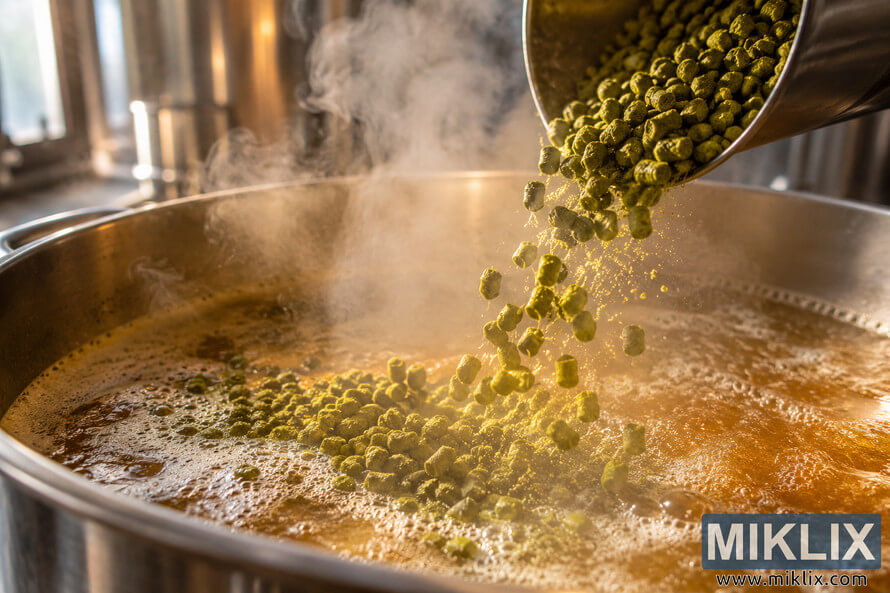
Timing hop additions correctly extracts desired characteristics while minimizing unwanted qualities. Spalt hops work across all addition points. Understanding each stage helps craft better beer.
Early Addition Bittering (60-90 Minutes)
Early boil additions extract maximum bitterness from alpha acids. The longer boil time drives off aromatic compounds. This stage creates the foundation bitterness level.
Use 0.5 to 1.5 ounces per five-gallon batch for bittering. The exact amount depends on target IBU and alpha acid percentage. Lower alpha content means higher hop quantities.
First Wort Hopping
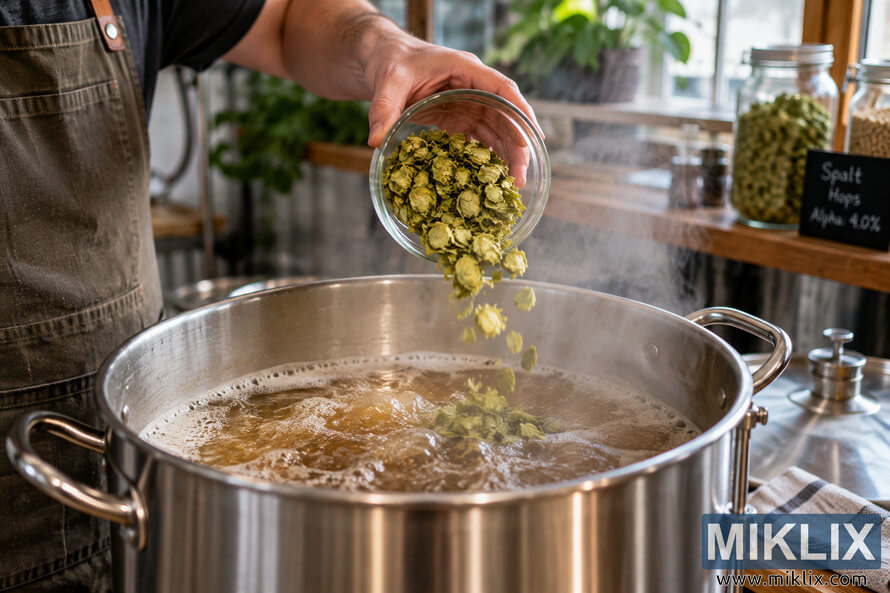
Add hops before the boil starts as wort enters the kettle. This technique produces smoother bitterness.
- Reduces harsh bite
- Improves flavor integration
- Increases utilization slightly
- Traditional German method
60-Minute Addition
Standard bittering addition point provides predictable results. Most brewing software bases calculations on this timing.
- Maximum bitterness extraction
- Minimal aroma contribution
- Easy IBU calculation
- Proven technique
90-Minute Addition
Extended boil time increases utilization for very low alpha hops. Consider for extra-light lagers.
- Highest possible utilization
- Complete aroma loss
- Smooth bitterness quality
- Energy intensive
Click or tap the image for more information and higher resolutions.
Dosage Calculator
Quick reference for common batch sizes and target bitterness levels.
- 15 IBU = 0.75 oz (60 min)
- 25 IBU = 1.25 oz (60 min)
- 35 IBU = 1.75 oz (60 min)
- Based on 4.5% AA
Mid-Addition Flavor (20-40 Minutes)
Mid-boil additions contribute both bitterness and flavor. Some aromatic compounds survive shorter boil times. This creates layered hop character.
Add 0.25 to 0.75 ounces at 20-30 minutes remaining. This timing balances flavor extraction with aroma preservation. The herbal qualities of Spalt hops emerge beautifully here.
Pro Brewing Tip: Split your total hop addition into multiple stages. Use 60% at 60 minutes for bitterness, 25% at 20 minutes for flavor, and 15% at flameout for aroma. This creates more complex hop character than single additions.
Late Addition Aroma (0-15 Minutes)
Late additions preserve delicate aromatic compounds. Minimal bitterness develops with short boil exposure. This stage showcases the noble aroma character.
Add 0.5 to 1.5 ounces in the final 10 minutes or at flameout. Steeping hops in hot wort below boiling temperature extracts aroma without harsh bitterness. Many brewers prefer this gentle approach.
Whirlpool and Hop Stand Techniques
After boiling stops, create a whirlpool to settle trub. Add hops during this phase at 170-180°F. Let them steep for 15-30 minutes before chilling.
- Maintains temperature below boiling
- Extracts oils without isomerizing alpha acids
- Produces fuller aroma profile
- Reduces vegetal flavors
Click or tap the image for more information and higher resolutions.
Dry Hopping for Enhanced Aroma
Dry hopping adds raw hops to fermenting or finished beer. No heat means pure aroma extraction. Spalt hops create subtle, refined dry hop character.
Use 0.5 to 1.0 ounces per five gallons for dry hopping. Add during active fermentation or after it completes. Contact time between three and seven days produces optimal results.
Important Note: Dry hopping with noble hops like Spalt produces different results than modern varieties. Expect subtle enhancement rather than explosive aroma. This restraint suits traditional lager styles perfectly.
Storage Recommendations for Maximum Freshness
Proper storage preserves hop quality and brewing potential. Spalt hops degrade quickly under poor conditions. Following storage best practices protects your investment.
Critical Storage Factors
Three main enemies attack hop quality: oxygen, light, and heat. Each factor accelerates chemical breakdown. Controlling these elements maintains hop freshness.
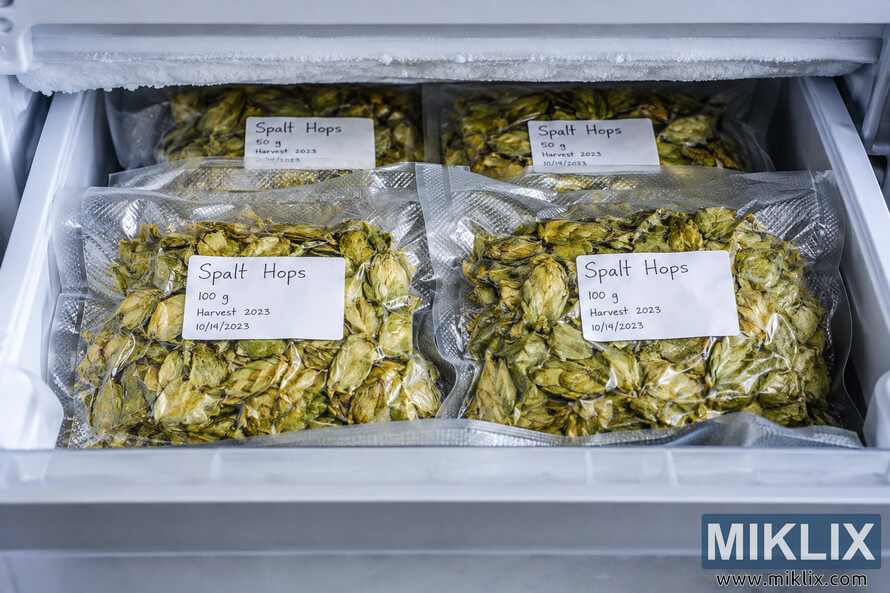
Oxygen causes oxidation that destroys alpha acids and aromatic oils. Even small air exposure reduces brewing value. Vacuum sealing or oxygen barrier packaging prevents this damage.
Light triggers photochemical reactions that create off-flavors. Ultraviolet rays prove especially harmful. Dark storage spaces or opaque packaging blocks light damage.
Heat speeds all degradation processes exponentially. Each 10°F temperature increase doubles the reaction rate. Cold storage dramatically extends hop lifespan.
Optimal Storage Conditions
- Temperature below 32°F (freezer storage ideal)
- Vacuum sealed or nitrogen flushed packaging
- Complete darkness or opaque containers
- Minimal temperature fluctuations
- Separate from strong odors
Storage Life Expectancy: Properly stored Spalt hops retain 80% of their brewing value for two years when frozen in vacuum-sealed packaging. Room temperature storage reduces this to just 3-6 months.
Click or tap the image for more information and higher resolutions.
Recognizing Degraded Hops
Learn to identify hops past their prime. Visual and aromatic clues reveal deterioration. Catching problems early prevents ruined batches.
Fresh Hop Indicators
- Bright green color with minimal browning
- Strong herbal and woody aroma
- Sticky to touch from lupulin oils
- Firm texture, not crumbly
- Pleasant, clean smell
Degraded Hop Signs
- Brown or oxidized appearance
- Cheesy or sweaty sock smell
- Dry, powdery texture
- Weak or no aroma
- Garlic or onion odors
Essential Guidance for Homebrewers Using Spalt Hops
Homebrewing with specialty hops requires attention to detail. Small batches magnify mistakes. These practical tips help homebrewers succeed with Spalt hops.
Equipment Considerations
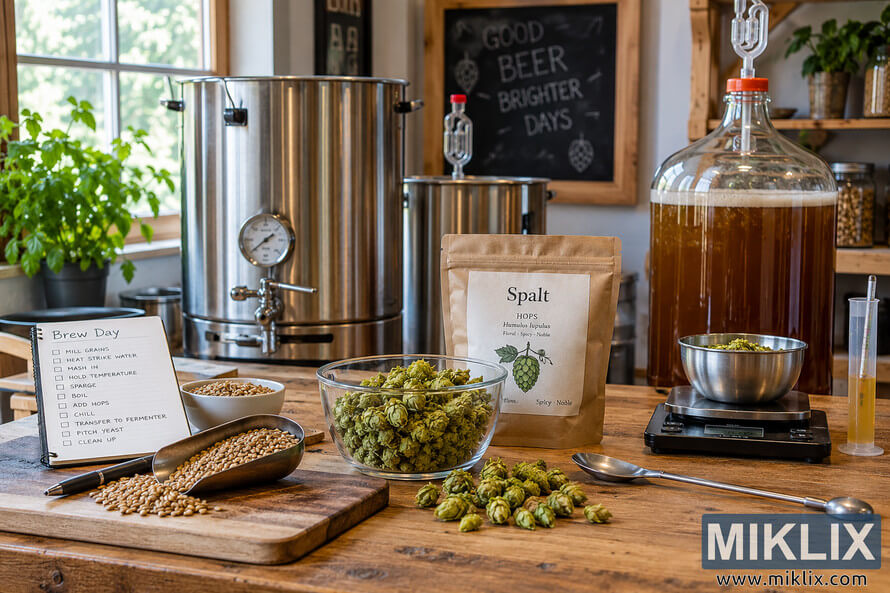
Most homebrewing equipment works fine for Spalt hop additions. A few specific tools improve results. Investing in the right gear pays dividends.
Essential Equipment
- Hop bags or spider for easy removal
- Accurate gram scale for precise measuring
- Thermometer for temperature control
- Hydrometer for gravity readings
- Airtight containers for storage
Nice-to-Have Tools
- Refractometer for quick measurements
- Hop spider for cleaner wort
- Oxygen absorbing caps
- Temperature controlled fermentation
- Kegging system for serving
Click or tap the image for more information and higher resolutions.
Dosage Recommendations by Batch Size
Scaling hop additions correctly ensures consistent results. These guidelines work for typical homebrew batches. Adjust based on personal preference and style requirements.
| Batch Size | Bittering (60 min) | Flavor (20 min) | Aroma (Flameout) | Target IBU |
| 1 Gallon | 0.15 oz | 0.10 oz | 0.10 oz | 20-25 |
| 2.5 Gallons | 0.40 oz | 0.25 oz | 0.25 oz | 20-25 |
| 5 Gallons | 0.80 oz | 0.50 oz | 0.50 oz | 20-25 |
| 10 Gallons | 1.60 oz | 1.00 oz | 1.00 oz | 20-25 |
Common Mistakes to Avoid
Learning from others' errors saves time and ingredients. These frequent mistakes trip up brewers working with Spalt hops. Awareness prevents problems before they start.
Overpowering with Hops
Using too many Spalt hops creates vegetal, grassy flavors. Noble hops work best with restraint. Less produces better results than more.
Wrong Water Chemistry
Hard water accentuates bitterness harshly. Soft water suits Spalt hop character better. Check your water profile before brewing.
Inadequate Temperature Control
Warm fermentation creates fusels that clash with noble hop flavors. Lager yeast needs proper cold temperatures. Invest in temperature control.
Ignoring Freshness
Old hops ruin beer regardless of brewing technique. Always verify crop year and storage conditions. Buy from reputable suppliers only.
Recipe Development Tips
Creating original recipes with Spalt hops requires understanding balance. These guidelines help formulate winning recipes. Start conservative and adjust based on results.
Recipe Building Framework: Begin with a proven lager recipe as your base. Replace 100% of noble hops with Spalt. Maintain the same IBU targets and addition schedule. Brew, evaluate, then make incremental changes to perfect your house recipe.
Water Profile Recommendations
Water chemistry significantly impacts hop character perception. Building the right mineral profile enhances Spalt hop qualities. These ranges work well for German-style lagers.
| Mineral | Ideal Range (ppm) | Impact on Beer |
| Calcium | 50-100 | Enzyme function, clarity |
| Sulfate | 50-150 | Hop bitterness character |
| Chloride | 50-100 | Malt sweetness, body |
| Sulfate/Chloride Ratio | 1:1 to 1.5:1 | Hop/malt balance |
Essential Brewing Calculations and Ratios
Mathematics ensures consistency in brewing. These calculations remove guesswork from hop additions. Understanding the formulas empowers better brewing decisions.
IBU Calculation Deep Dive
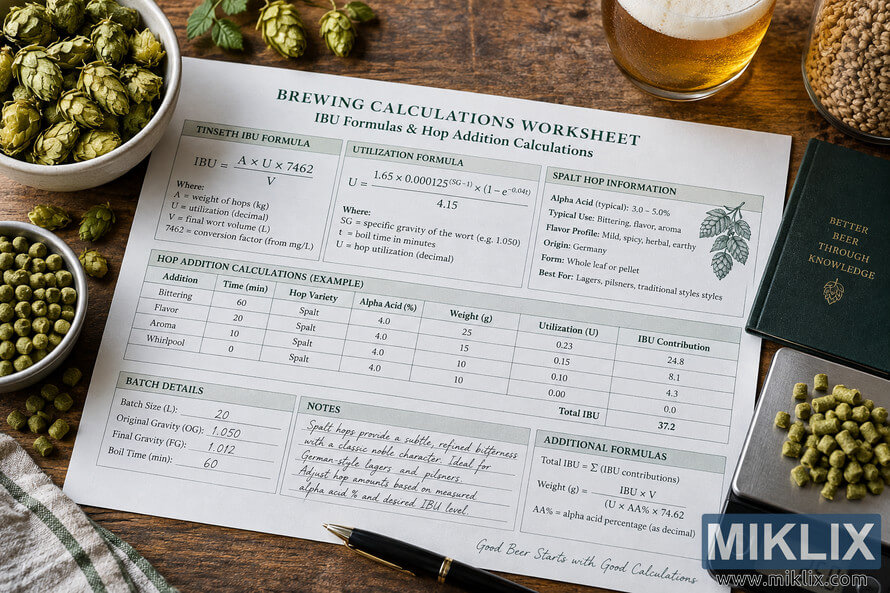
The Tinseth formula provides accurate IBU predictions for homebrewing. This method accounts for boil time, gravity, and hop utilization. Most brewing software uses this approach.
Tinseth IBU Formula: IBU = (Hop Weight in grams × Alpha Acid % × Utilization % × 1000) ÷ (Batch Volume in liters × Wort Gravity Factor). The utilization percentage depends on boil time and wort gravity.
Click or tap the image for more information and higher resolutions.
Utilization Percentage by Boil Time
Longer boil times extract more alpha acids but destroy aroma compounds. This table shows typical utilization rates. Actual values vary with equipment and technique.
| Boil Time | Utilization % | Primary Use |
| 90 minutes | 32% | Maximum bitterness |
| 60 minutes | 28% | Standard bittering |
| 30 minutes | 18% | Flavor additions |
| 15 minutes | 12% | Late flavor/aroma |
| 5 minutes | 6% | Aroma only |
| Flameout | 2% | Pure aroma |
Hop Substitution Ratios
Sometimes Spalt hops become unavailable or expensive. These noble hop varieties provide similar character. Adjust quantities based on alpha acid percentages.
- Tettnanger - Use 1:1 ratio, very similar profile
- Hallertau - Use 0.9:1 ratio, slightly more alpha acids
- Saaz - Use 1:1 ratio, more floral character
- Sterling - Use 0.8:1 ratio, American-grown alternative
- Liberty - Use 0.85:1 ratio, domestic Hallertau descendant
Scaling Recipes Between Batch Sizes
Moving recipes between batch sizes requires proportional adjustments. Hop quantities scale linearly with volume. Bitterness levels remain consistent when properly calculated.
Quick Scaling Method: Divide your target batch size by the original recipe size to get your scaling factor. Multiply all hop weights by this factor. Example: Scaling from 5 to 10 gallons = factor of 2. Double all hop additions.
Conclusion
Spalt hops bring centuries of brewing tradition to modern homebrewing. Their subtle noble character elevates lagers and traditional ales. Understanding their unique properties unlocks brewing potential.
Success requires attention to freshness, proper storage, and correct usage rates. The low alpha acid content demands larger quantities than modern hops. This characteristic creates smooth, refined bitterness perfect for balanced beer.
Start with proven recipes and traditional styles. German lagers showcase Spalt hops beautifully. Build confidence through experience before experimenting with creative applications.
Quality ingredients produce quality beer. Source fresh Spalt hops from reputable suppliers. Store them properly to maintain brewing value. These simple steps protect your investment.
The brewing journey never ends. Each batch teaches new lessons about ingredients and process. Spalt hops reward patient brewers who respect their delicate nature. Your next great beer awaits.
Click or tap the image for more information and higher resolutions.
Further Reading
If you enjoyed this post, you may also like these suggestions: