
Image: Vacuum-Sealed Spalt Hops Stored in a Home Freezer
Published: October 26, 2026 at 6:11:59 PM UTC
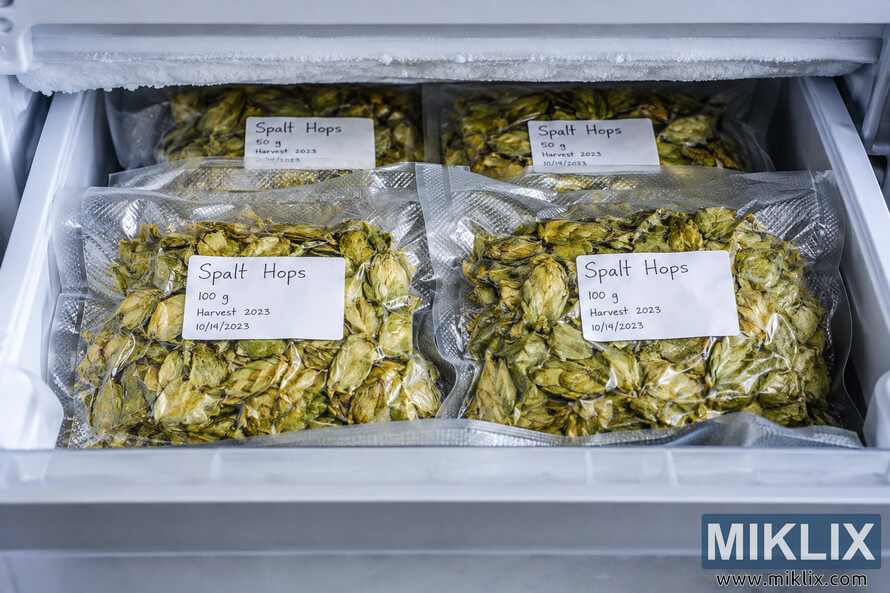
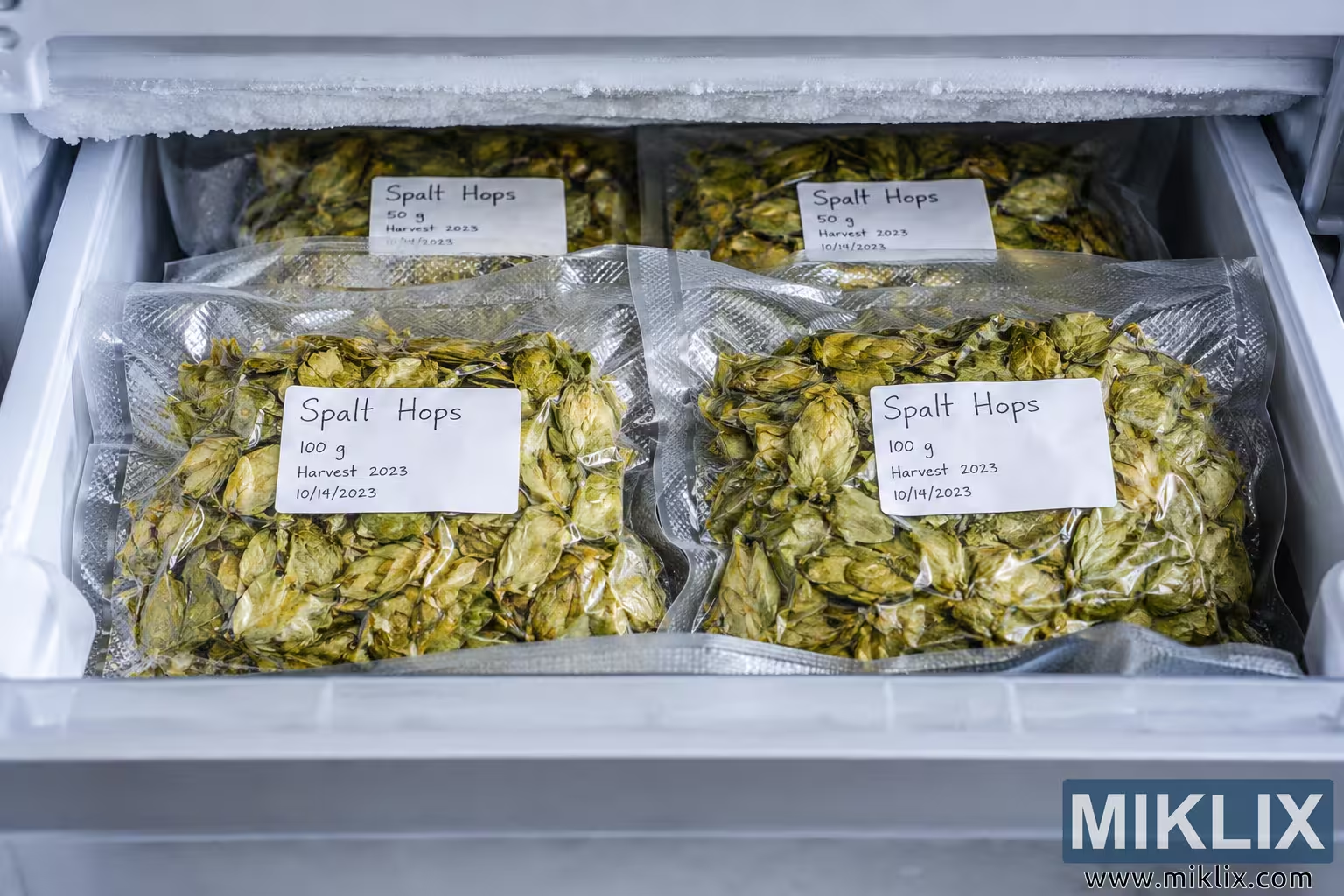
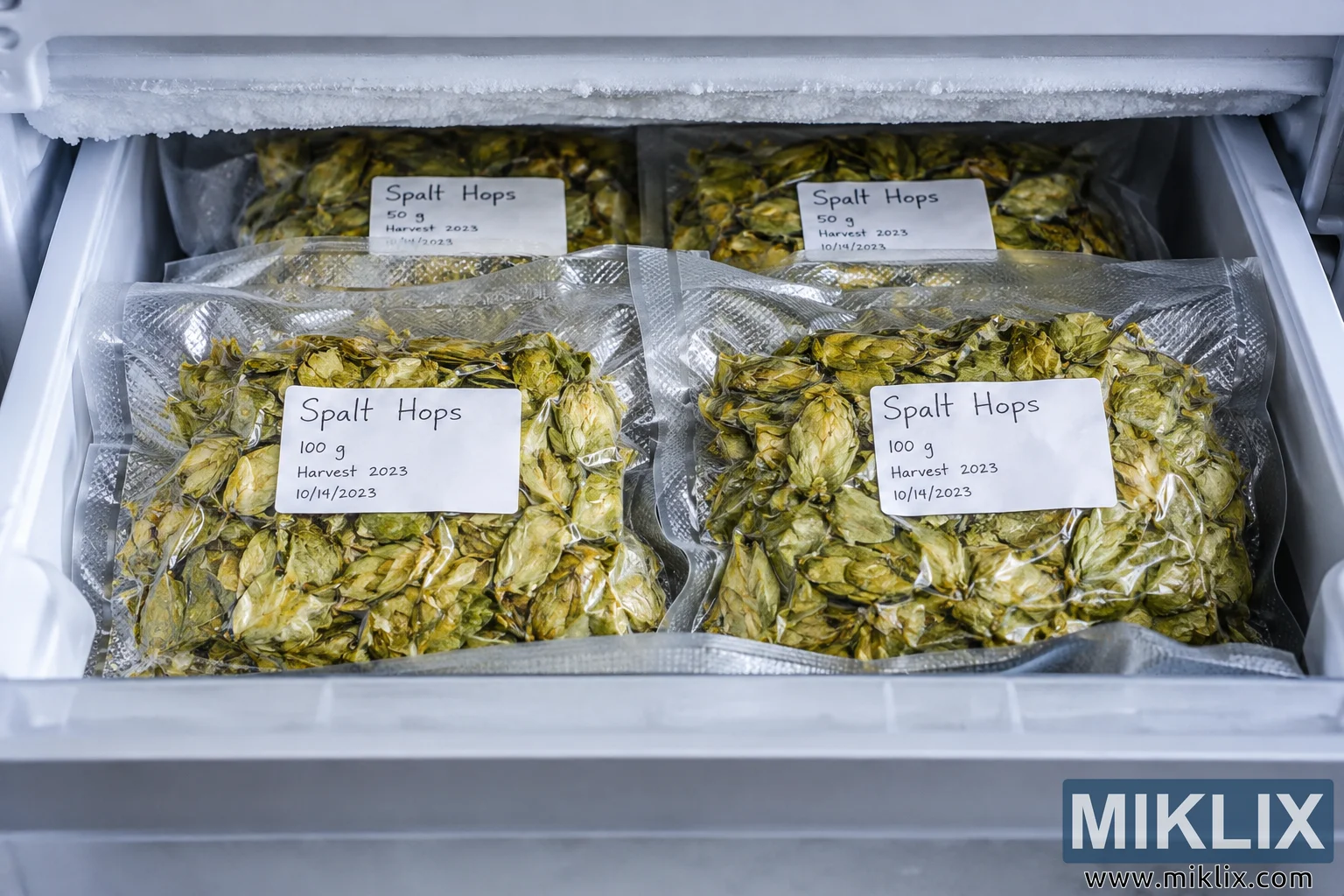
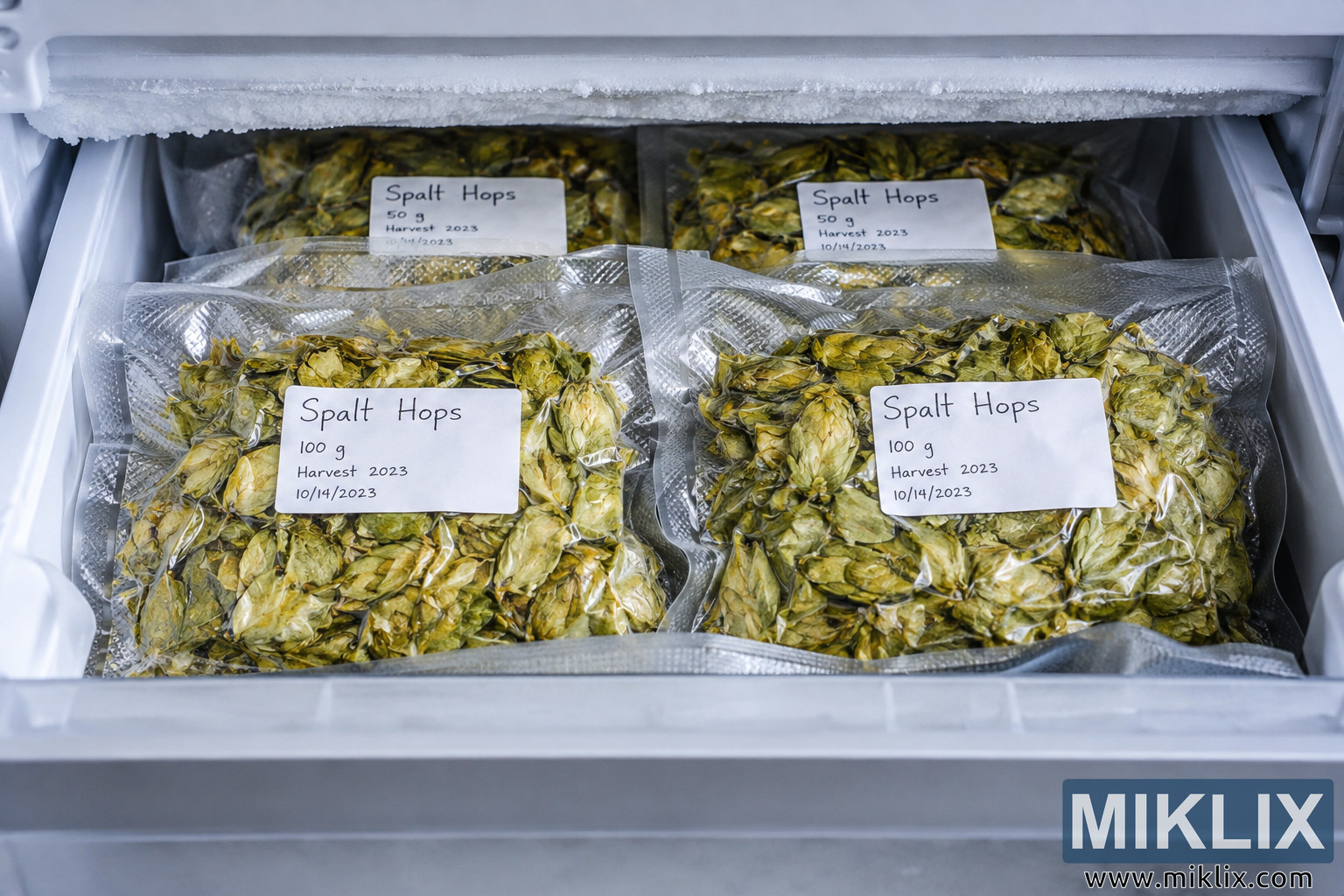
Realistic photo of vacuum-sealed Spalt hops stored in a home freezer, showing labeled portions, dried hop cones, clear packaging, and frosted cold storage.
Available versions of this image
The image files available for download below are less compressed and higher resolution - and as a result of that, higher quality - than the images embedded in articles and pages on this website, which are more optimized for file size in order to reduce bandwidth consumption.
Regular size (1,536 x 1,024)
Large size (3,072 x 2,048)
Very large size (4,608 x 3,072)
Extra large size (6,144 x 4,096)
Comically large size (1,048,576 x 699,051)
- Still uploading... ;-)
Image description
A realistic landscape-oriented photograph shows the inside of an open household freezer drawer filled with neatly stored, vacuum-sealed packages of Spalt hops. The composition is viewed almost straight into the freezer, giving the image the practical, documentary quality of a home food-storage or homebrewing photograph. The freezer interior is predominantly white and pale gray, creating a cool, clean visual environment that contrasts strongly with the muted green, yellow-green, olive, and light brown tones of the dried hop flowers. Along the upper edge of the photograph, a horizontal freezer shelf or compartment edge is covered with a visible layer of white frost and small ice crystals. This frosted surface immediately communicates the cold storage conditions and reinforces the idea that the hops are being kept frozen for long-term preservation.
Four vacuum-sealed packages of hops are clearly visible, arranged in two approximate rows. Two larger packages occupy most of the foreground, while two additional packages sit farther toward the rear of the freezer. The transparent vacuum bags have been tightly compressed around the hops, reducing the amount of air surrounding the plant material. Their plastic surfaces contain wrinkles, folds, sealed seams, reflective highlights, and small areas of condensation or moisture, all of which contribute to the convincing appearance of vacuum-packed ingredients stored at low temperature. The flattened packaging allows the individual hop cones, petals, leafy fragments, and compressed clusters to remain visible through the clear plastic.
The two foreground packages dominate the image. Each contains a substantial quantity of dried hop cones with a natural mixture of pale green, yellowish green, olive, beige, and slightly brown tones. The hops have the papery, layered texture characteristic of dried hop flowers, and many individual cone shapes can be distinguished despite being compressed by the vacuum packaging. The left foreground bag is positioned slightly diagonally and fills much of the lower-left and central portion of the frame. The right foreground bag mirrors it on the opposite side, creating a balanced arrangement. Both packages are pressed closely together inside the freezer drawer, emphasizing an efficient use of storage space.
A simple white rectangular label is attached to each of the two foreground packages. The labels use dark handwritten lettering rather than commercial printing or branded packaging. The most prominent wording reads “Spalt Hops,” identifying the hop variety. Beneath that, the foreground labels indicate a weight of 100 g, followed by “Harvest 2023” and the date “10/14/2023.” The handwriting and uncomplicated paper labels give the scene a distinctly homemade character, suggesting that the hops have been portioned, vacuum sealed, labeled, and frozen by a homebrewer or someone preserving their own brewing ingredients. There are no commercial logos, manufacturer marks, product trademarks, or recognizable brand identities visible anywhere in the scene.
Behind the foreground bags are two more vacuum-sealed packages positioned toward the back of the freezer. They are partly obscured by the larger packages in front but remain clearly identifiable as additional portions of the same hops. Their labels also read “Spalt Hops” and “Harvest 2023,” while the visible weight markings indicate 50 g portions. The repeated labeling creates a sense of an organized storage system in which the hops have been divided into measured quantities for later use. The smaller rear packages are tucked beneath the frosted upper section of the freezer, further emphasizing the depth of the compartment.
The transparent plastic bags catch the freezer light in numerous places, producing bright highlights along the creases and textured sealing material. These reflections contrast with the matte, organic surfaces of the dried hop cones inside. The vacuum sealing is visually apparent because the plastic closely follows the irregular contours of the hops instead of remaining inflated like an ordinary storage bag. This detail supports the central subject of the photograph: careful preservation of hops by limiting their exposure to air and keeping them at freezer temperature.
The freezer itself appears functional and ordinary rather than luxurious or commercial. White plastic walls frame the stored hops on the left and right sides, while a broad pale drawer front or compartment lip runs across the bottom of the photograph. Frost accumulation is especially noticeable across the upper horizontal edge, where rough white ice crystals form an uneven band. Subtle cooler shadows occur toward the rear corners of the compartment, while the front packages receive brighter illumination. The lighting is crisp enough to reveal fine details in the hops, plastic packaging, handwritten labels, and frost without making the scene appear artificially staged.
The overall arrangement conveys organization, preservation, and preparation for future brewing. By dividing the Spalt hops into individually labeled vacuum-sealed portions, the scene visually suggests a storage method intended to help protect the hops from air and environmental exposure while frozen. The image focuses entirely on the ingredients and their storage conditions rather than on finished beer or brewing equipment. There are no people in the photograph and no unrelated objects competing for attention. The combination of clearly visible hop cones, tightly sealed transparent bags, handwritten portion labels, and a visibly frosted home freezer makes the purpose of the scene immediately understandable. It presents Spalt hops as carefully portioned homebrewing ingredients being kept in cold storage for optimal preservation, with a straightforward, realistic photographic style and no visible commercial branding.
The image is related to: Hops in Beer Brewing: Spalt