
Image: Brewing Calculations Worksheet with IBU Formulas and Spalt Hop Additions
Published: October 26, 2026 at 6:11:59 PM UTC
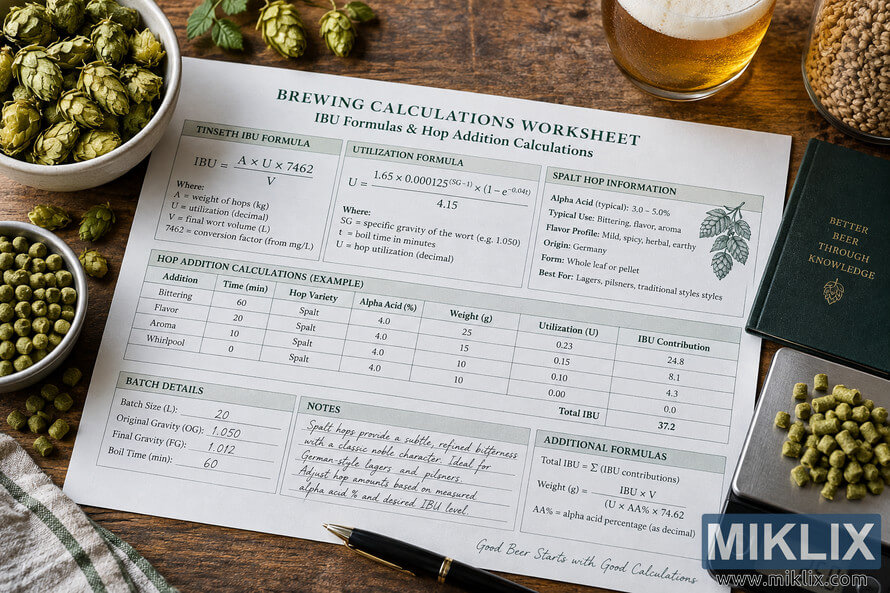
High-resolution brewing workspace featuring an IBU calculation worksheet with Spalt hop addition formulas, hop cones, pellets, brewing grain, digital scale, pen, notebook, and golden beer.
Available versions of this image
The image files available for download below are less compressed and higher resolution - and as a result of that, higher quality - than the images embedded in articles and pages on this website, which are more optimized for file size in order to reduce bandwidth consumption.
Regular size (1,536 x 1,024)
Large size (3,072 x 2,048)
Very large size (4,608 x 3,072)
Extra large size (6,144 x 4,096)
Comically large size (1,048,576 x 699,051)
- Still uploading... ;-)
Image description
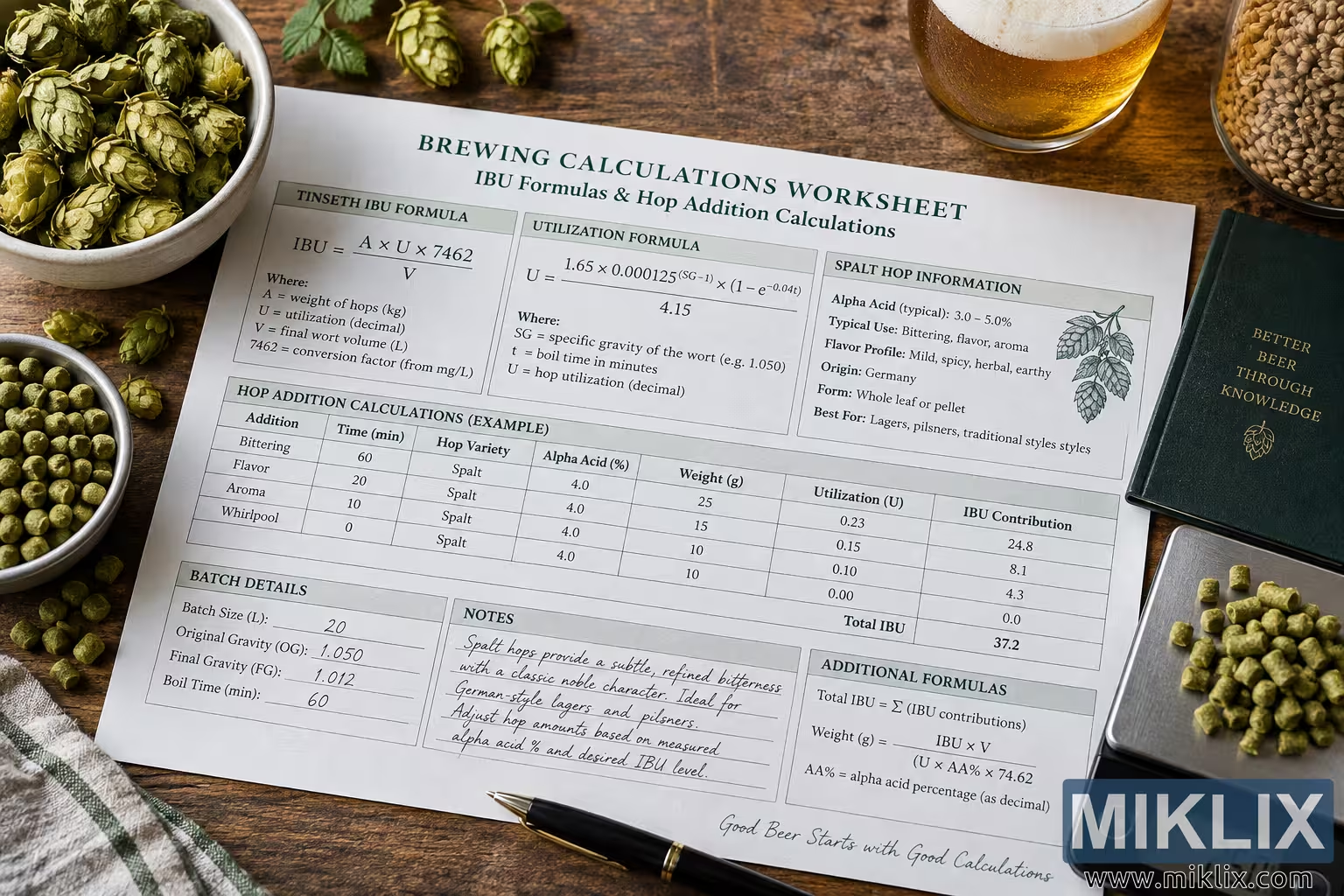
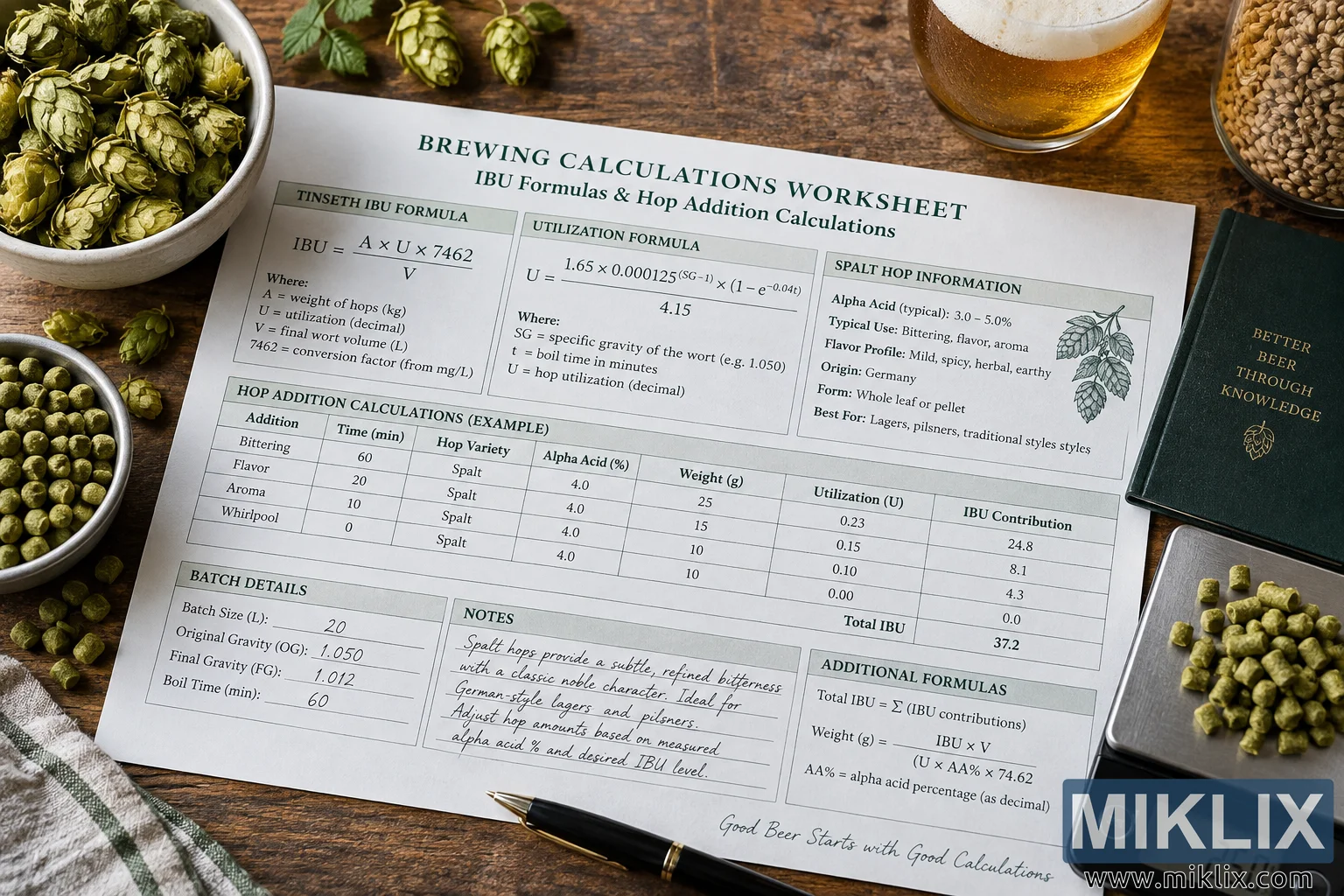
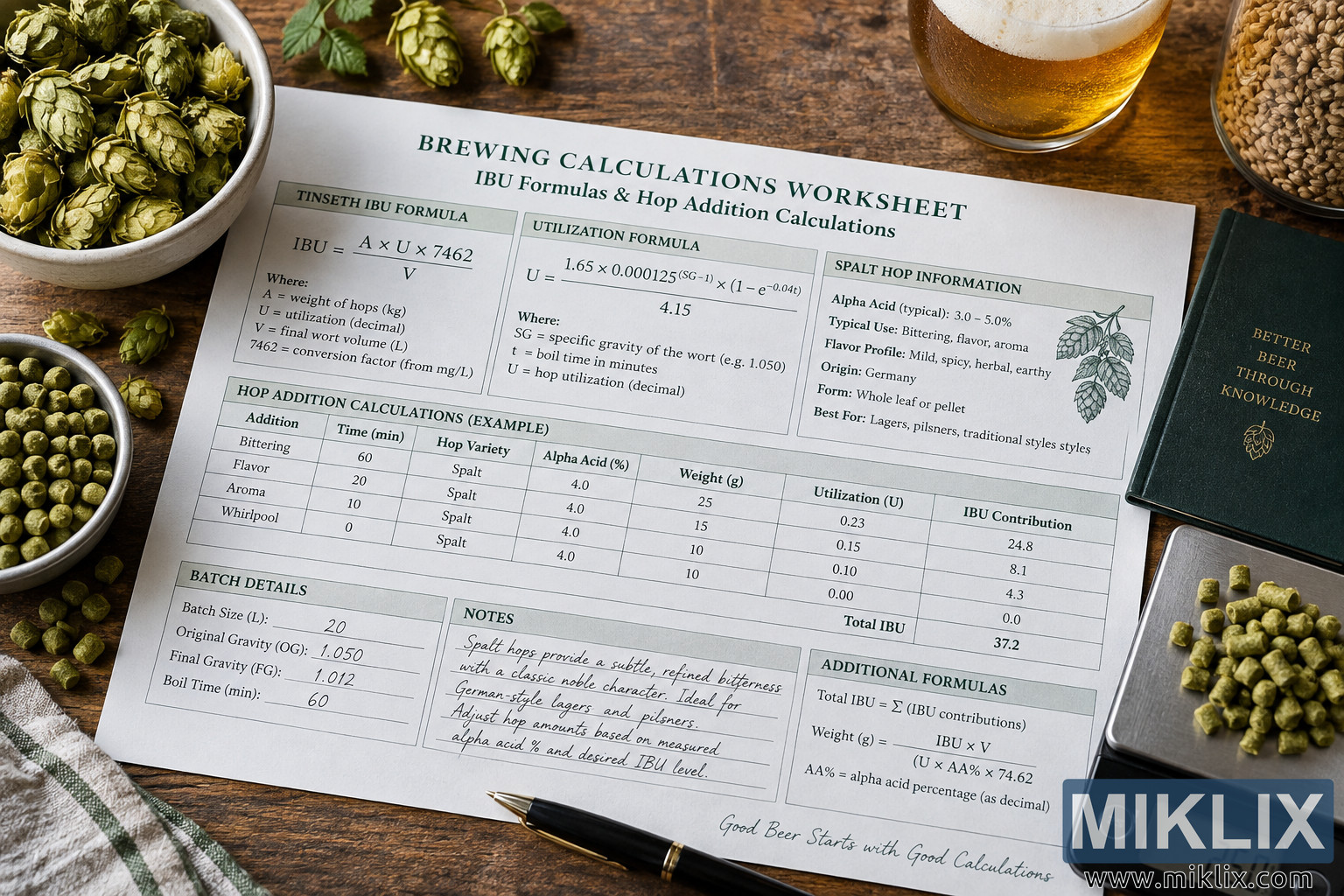
A high-resolution, landscape-oriented photograph presents an overhead view of a carefully arranged craft-brewing workspace centered on a detailed brewing calculations worksheet. The scene is photographed on a richly textured, rustic wooden tabletop whose warm brown tones give the composition the atmosphere of a traditional home brewery or small experimental brewing station. The large white worksheet occupies most of the center of the frame and is positioned at a slight diagonal, creating a natural working-desk appearance rather than a rigid technical-document presentation. Its prominent heading reads “BREWING CALCULATIONS WORKSHEET,” followed by the subtitle “IBU Formulas & Hop Addition Calculations.” The page is divided into several clearly structured sections using fine lines, tables, headings, formulas, handwritten notes, and numerical examples.
Across the upper portion of the worksheet are three principal information areas. The first presents a Tinseth IBU formula for calculating bitterness and defines variables associated with hop weight, utilization, final wort volume, and the conversion factor used in the calculation. Beside it is a utilization formula incorporating wort specific gravity and boiling time. Mathematical notation, fractions, multiplication signs, and explanatory definitions give the page the appearance of a practical technical reference for someone designing or evaluating a beer recipe. The third upper section is devoted to Spalt hop information. It identifies Spalt as a traditional German hop variety and provides an example alpha-acid range along with notes about its typical use for bitterness, flavor, and aroma. The flavor profile is described in terms such as mild, spicy, herbal, and earthy, while a small botanical-style illustration of hop cones and leaves visually reinforces the subject.
The middle of the worksheet contains a large table titled “HOP ADDITION CALCULATIONS (EXAMPLE).” Columns organize the brewing data by addition type, time in minutes, hop variety, alpha-acid percentage, weight in grams, utilization, and IBU contribution. Several example additions are shown, including bittering, flavor, aroma, and whirlpool stages. Spalt is consistently listed as the hop variety, creating a coherent worked example demonstrating how hop additions made at different points in the brewing process can contribute different amounts of bitterness. Values for hop weight, utilization, and IBU contribution vary by addition. A bold total at the bottom of the table shows a combined example bitterness value of 37.2 IBU. The numerical structure makes the sheet look like a brewer's working calculation aid rather than a decorative poster.
The lower portion of the worksheet is separated into additional practical sections. A batch-details box contains example entries for batch size, original gravity, final gravity, and boil time. Nearby, a notes area contains handwriting-style text discussing the subtle and refined bitterness associated with Spalt hops, their traditional noble-hop character, their suitability for German-style lagers and pilsners, and the importance of adjusting hop quantities according to measured alpha-acid percentage and the desired bitterness level. An additional-formulas panel provides further mathematical relationships for total IBU and hop weight. Near the lower edge of the sheet, a handwritten-style phrase reads “Good Beer Starts with Good Calculations,” reinforcing the educational and methodical theme of the composition.
Brewing ingredients and tools surround the worksheet and make the technical calculations feel connected to an actual brewing process. At the upper left is a ceramic bowl filled generously with whole green hop cones. Additional loose hop cones and green leaves rest directly on the wooden surface above the paper, giving the scene an organic botanical element. At the lower left, a metal bowl contains compact green hop pellets, with several pellets scattered casually around its edge and across the table. A striped cloth or brewing towel enters the frame from the bottom-left corner, softening the otherwise hard surfaces and adding a lived-in workshop quality.
On the right side of the composition, a digital kitchen scale supports a small pile of green hop pellets. Its illuminated display shows a weight of approximately 25.0 grams, visually connecting the physical ingredients with the weight values listed in the worksheet's calculations. Above the scale sits a dark green notebook with understated decorative lettering and a small hop-inspired emblem. The notebook suggests recipe development, brewing records, or technical notes without displaying any recognizable commercial branding. At the upper right is a glass containing clear golden beer beneath a pale foamy head. Only part of the glass is visible, allowing it to serve as contextual atmosphere without competing with the worksheet as the primary subject. Nearby, a container filled with pale brewing grain or malt reinforces the connection between raw brewing ingredients and the finished beverage.
A dark pen with metallic accents lies diagonally along the bottom edge of the worksheet, positioned as though a brewer has just finished entering measurements or is about to revise a calculation. The mixture of printed technical information and handwritten-style notes creates a convincing impression of an active brewing session. The overall arrangement is orderly but not sterile: scattered hop pellets, loose hop cones, grain, the towel, notebook, scale, pen, and beer glass make the workspace feel practical and authentic while maintaining a polished photographic composition.
Soft natural-looking illumination falls across the table from above and slightly from one side, producing gentle shadows beneath the bowls, worksheet, glass, notebook, and scale. The warm wood contrasts with the white paper and multiple shades of hop green, while the golden beer introduces a complementary amber highlight. Fine details such as the papery texture of whole hop cones, cylindrical hop pellets, individual grains, wood grain, printed table lines, and handwritten annotations contribute to the high-resolution photographic character. The broad landscape framing allows the worksheet to remain the clear visual focal point while still showing enough surrounding brewing equipment and ingredients to establish context. No people appear in the image, and there are no actual commercial brand names or recognizable brand logos. Overall, the photograph combines technical brewing education with the tactile atmosphere of craft beer production, visually illustrating the relationship between IBU formulas, hop utilization, measured Spalt hop additions, and practical recipe development.
The image is related to: Hops in Beer Brewing: Spalt