
Image: Macro Close-Up of a Hop Cone with Golden Lupulin Glands
Published: October 29, 2026 at 8:06:39 PM UTC
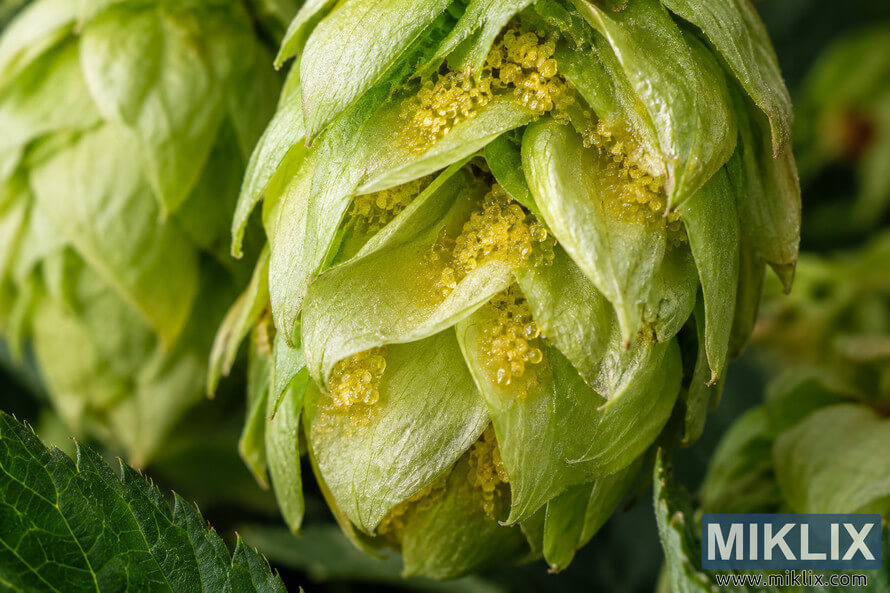
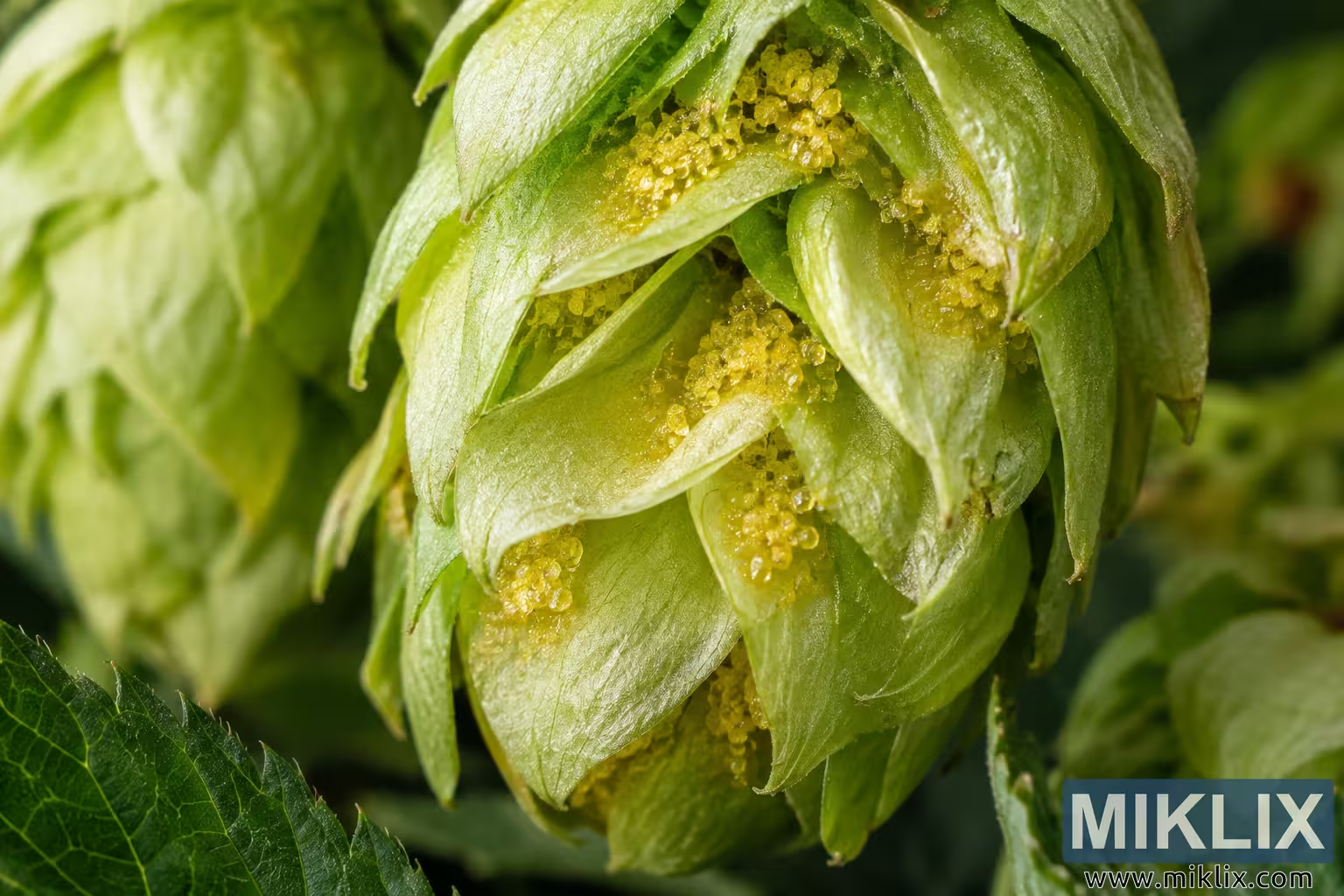
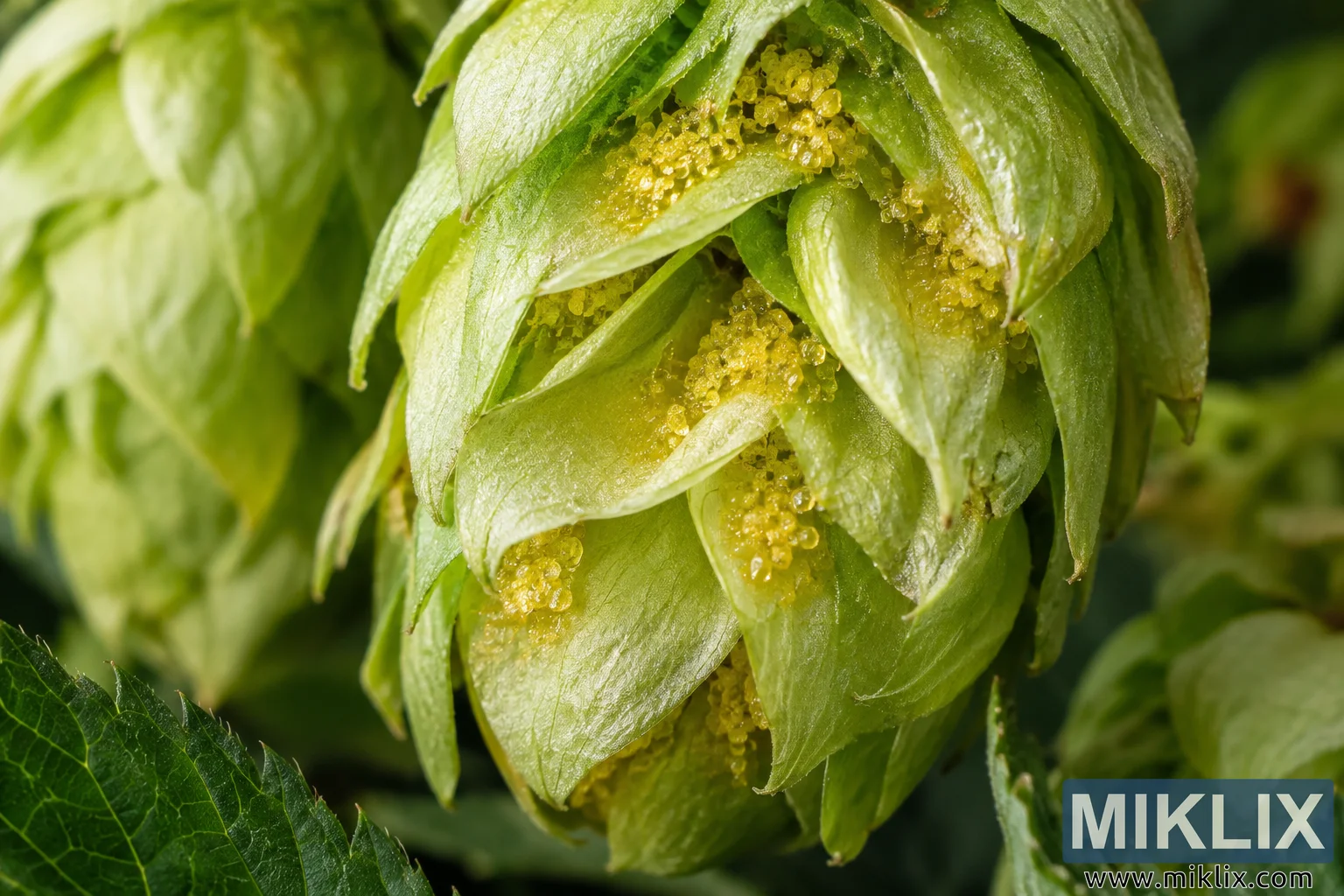
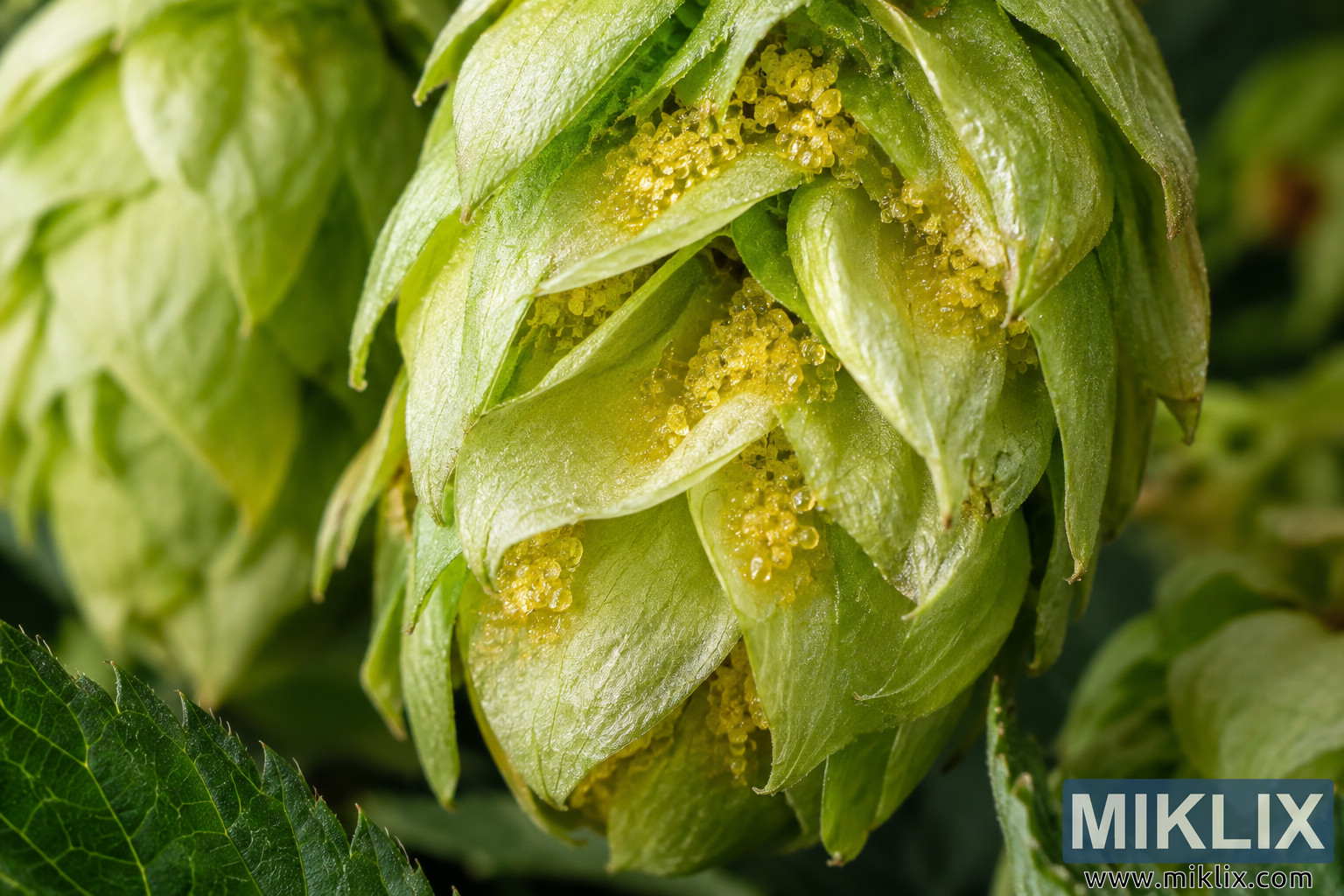
Detailed macro photograph of a fresh green hop cone revealing golden-yellow lupulin glands between its layered bracts, with natural light and soft botanical bokeh.
Available versions of this image
The image files available for download below are less compressed and higher resolution - and as a result of that, higher quality - than the images embedded in articles and pages on this website, which are more optimized for file size in order to reduce bandwidth consumption.
Regular size (1,536 x 1,024)
Large size (3,072 x 2,048)
Very large size (4,608 x 3,072)
Extra large size (6,144 x 4,096)
Comically large size (1,048,576 x 699,051)
- Still uploading... ;-)
Image description
A highly detailed, photorealistic macro photograph presents an extreme close-up of a fresh green hop cone, with special emphasis on the golden-yellow lupulin glands nestled between its overlapping bracts. The hop cone dominates the frame and occupies most of the central and right-hand portions of the composition. Its layered structure is clearly visible: numerous pale to medium green bracts overlap one another like delicate scales, creating a dense, dimensional botanical form. Each bract tapers toward a pointed tip and displays subtle variations in shape, curvature, translucency, and surface texture. The close viewing distance reveals exceptionally fine details that would be difficult to perceive with the naked eye, giving the photograph both a naturalistic and almost scientific quality.
The most visually distinctive feature is the concentration of lupulin glands visible within the folds of the hop cone. These glands appear as clusters of tiny, translucent to golden-yellow granules and droplets gathered along the inner surfaces and bases of several bracts. Their rich yellow and amber coloration contrasts strongly with the surrounding fresh green plant tissue. Some of the glands catch the light and appear glossy or slightly crystalline, producing minute highlights that emphasize their resinous character. The lupulin is particularly prominent near the upper central area of the cone and through several openings between the bracts, where dense deposits form irregular golden bands and clusters. Smaller accumulations continue farther down the cone, reinforcing the impression that the photograph is intended to reveal the internal resin-bearing structures of the hop flower in exceptional detail.
The bracts themselves exhibit a wide range of natural green tones, from bright yellow-green where direct illumination passes through the thinner plant material to deeper olive and forest-green shades in recessed areas. Their surfaces have a slightly glossy, organic appearance, with delicate veins and faint wrinkles visible across many of the individual structures. Fine edges, tiny imperfections, subtle discoloration near some tips, and variations in thickness make the cone feel convincingly natural rather than artificially uniform. Several bracts curve outward from the main body of the cone, creating small openings that expose the yellow lupulin beneath them. This combination of overlapping layers, curved edges, and recessed cavities gives the central subject considerable depth.
Lighting is warm, bright, and directional, resembling natural sunlight or carefully controlled macro photography designed to imitate daylight. Highlights fall across the upper and left-facing surfaces of the bracts, while narrow shadows form underneath overlapping layers. This interplay of illumination and shadow accentuates the three-dimensional construction of the cone. The lupulin glands respond especially strongly to the light, appearing luminous and saturated compared with the softer green surfaces around them. Despite the close-up scale, the highlights retain visible texture rather than washing out the details, allowing individual gland-like particles and resinous formations to remain distinguishable.
The depth of field is deliberately shallow. The primary hop cone is rendered with crisp detail around its central region, while objects positioned farther behind it gradually dissolve into a smooth botanical blur. A second hop cone is visible in the background toward the left side of the image, but it is substantially out of focus. Its recognizable oval, layered silhouette provides environmental context without competing with the main subject. Additional blurred green foliage fills much of the remaining background, producing soft shapes and transitions rather than distinct botanical details. The resulting bokeh helps isolate the foreground cone and directs attention toward the exposed lupulin glands.
In the lower-left foreground, a dark green serrated leaf enters the frame diagonally. Unlike the softly blurred background foliage, this leaf retains enough detail for its branching vein network and sharply toothed edge to be clearly visible. Its deeper color provides tonal contrast against the brighter hop cone and anchors the lower edge of the composition. Toward the lower-right area, additional green plant material appears partially in focus before fading into the shallow depth of field. These surrounding elements establish the hop cone within a natural growing environment while preserving the macro photograph's concentrated visual focus.
The composition has a horizontal, landscape orientation and uses the large central hop cone as its unmistakable focal point. The cone is cropped closely enough that the viewer feels physically near the plant, emphasizing texture rather than presenting the entire vine or broader agricultural setting. There are no people, containers, tools, labels, logos, packaging elements, typography, or recognizable commercial branding anywhere in the scene. The visual language is purely botanical and photographic.
Overall, the image communicates freshness, botanical complexity, and the intricate anatomy of a hop cone. Its combination of macro magnification, selective focus, natural green coloration, warm illumination, and prominently exposed golden lupulin creates an informative yet visually rich representation of the plant. The contrast between the soft, papery green bracts and the glossy yellow resin glands is the defining visual feature. The photograph would be suitable for illustrating hop anatomy, brewing ingredients, botanical cultivation, agricultural material, or educational content concerning lupulin, while remaining an aesthetically engaging nature macro photograph in its own right.
The image is related to: Hops in Beer Brewing: Star