
Hops in Beer Brewing: Star
Published: October 29, 2026 at 8:06:39 PM UTC
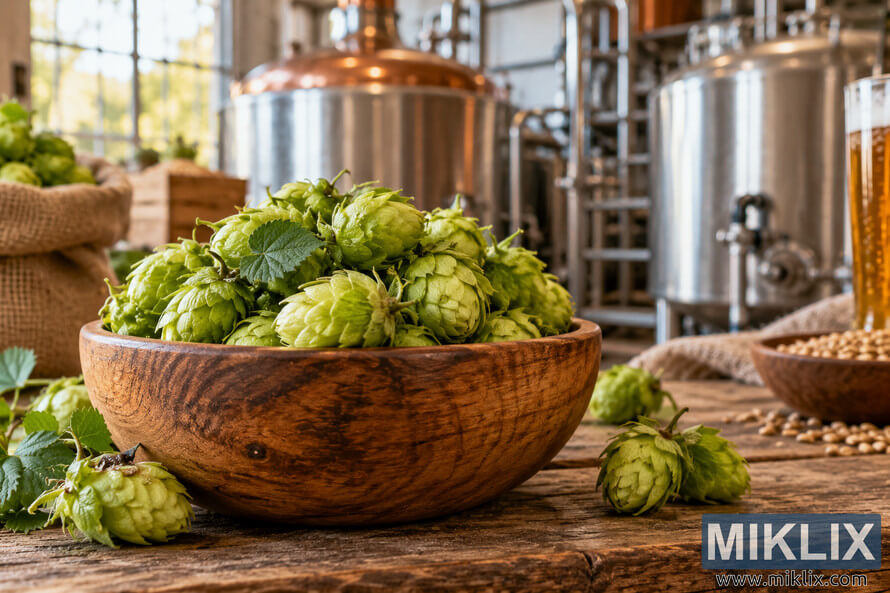
Star is a classic English hop variety with a mild, traditional aroma profile featuring floral, herbal, and earthy notes with a touch of spice—well suited to bitters, milds, porters, and other traditional British-style homebrews.
Click or tap the image for more information and higher resolutions.
Star hops represent one of the most versatile and aromatic varieties available to homebrewers today. This unique hop variety brings distinctive characteristics that can transform your homebrew from ordinary to exceptional.
Whether you're crafting your first batch or you're a seasoned brewer looking to expand your hop repertoire, understanding Star hops opens new possibilities. This comprehensive guide walks you through everything you need to know.
From origin stories to practical brewing applications, you'll discover how to harness the full potential of Star hops. Let's explore what makes this variety special and how you can use it effectively in your next brew day.
Origin and History of Star Hops
Star hops emerged from careful breeding programs aimed at creating hop varieties with unique aroma profiles. Developed in the late 20th century, this variety quickly gained recognition among craft brewers.
The breeding process focused on combining desirable traits from multiple parent varieties. Breeders sought to create a hop that offered both aromatic complexity and practical growing characteristics.
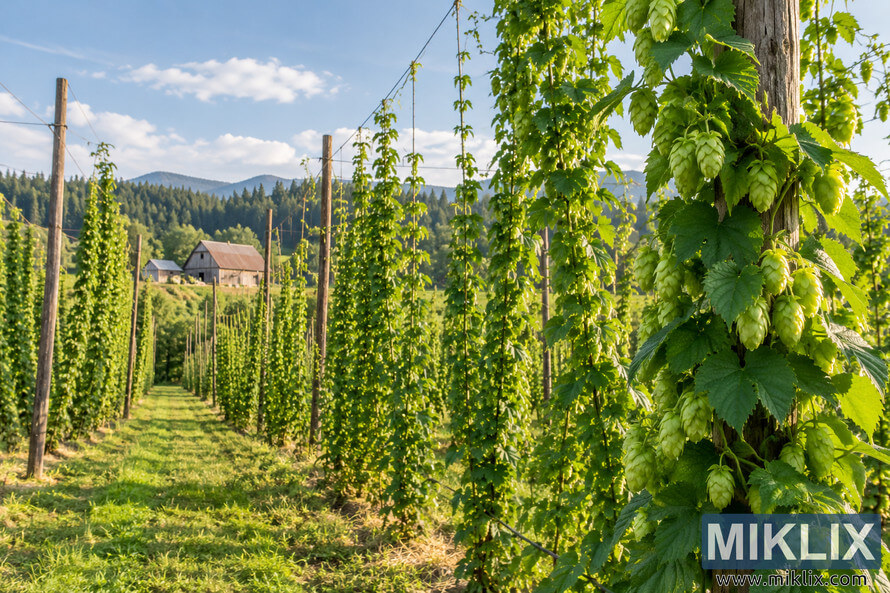
Today, Star hops are cultivated primarily in the Pacific Northwest region of the United States. The climate and soil conditions in this area provide an ideal environment for developing the hop's signature characteristics.
Click or tap the image for more information and higher resolutions.
Key Development Timeline
- Initial breeding program started in research facilities
- First commercial plantings established in hop-growing regions
- Gained popularity among craft brewing community
- Expanded cultivation to meet growing demand
- Recognized for distinctive aroma profile
The variety's name reflects its stellar performance in brewing applications. Brewers appreciate how Star hops contribute to a wide range of beer styles without overwhelming other flavors.
Click or tap the image for more information and higher resolutions.
Star Hops Characteristics and Aroma Profile
Understanding the chemical and sensory profile of Star hops is essential for effective brewing. These characteristics determine how the hop performs at different stages of the brewing process.
Alpha Acid Content and Bittering Potential
Star hops typically contain alpha acids in the moderate range. This makes them suitable for both bittering and aroma applications in your homebrew recipes.
The alpha acid percentage usually ranges between eight and twelve percent. This provides sufficient bittering power while maintaining flexibility in recipe formulation.
Click or tap the image for more information and higher resolutions.
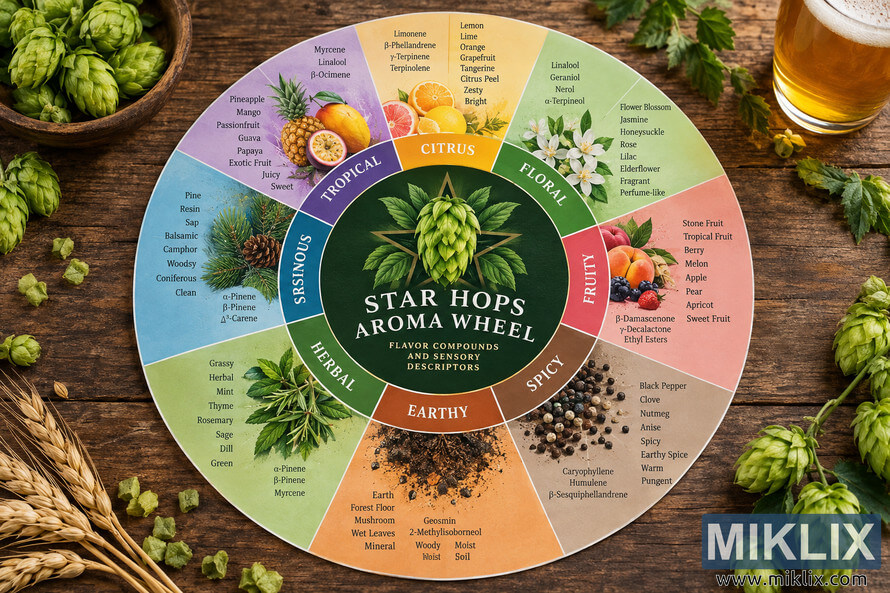
Aroma and Flavor Compounds
The aroma profile of Star hops reveals complex layers of flavor. Brewers often describe notes that include floral, citrus, and subtle spice characteristics.
Essential oils in Star hops contribute to its distinctive character. These volatile compounds create the sensory experience that defines your finished beer.
Primary Aroma Notes
- Bright citrus with lemon and grapefruit hints
- Floral undertones reminiscent of jasmine
- Subtle herbal and earthy background
- Light tropical fruit suggestions
Secondary Characteristics
- Mild peppery spice notes
- Clean, crisp finish
- Pleasant resinous quality
- Balanced bitterness profile
Click or tap the image for more information and higher resolutions.
Physical Characteristics
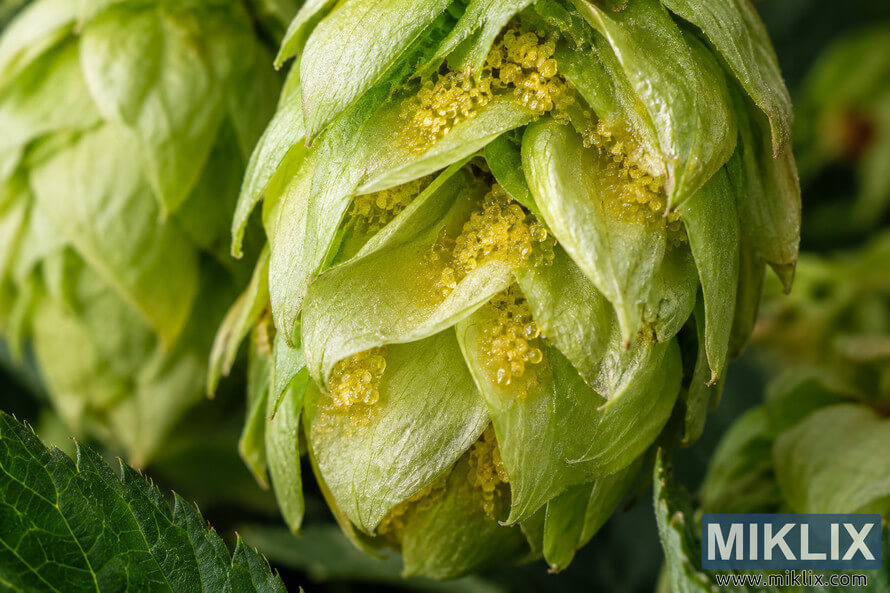
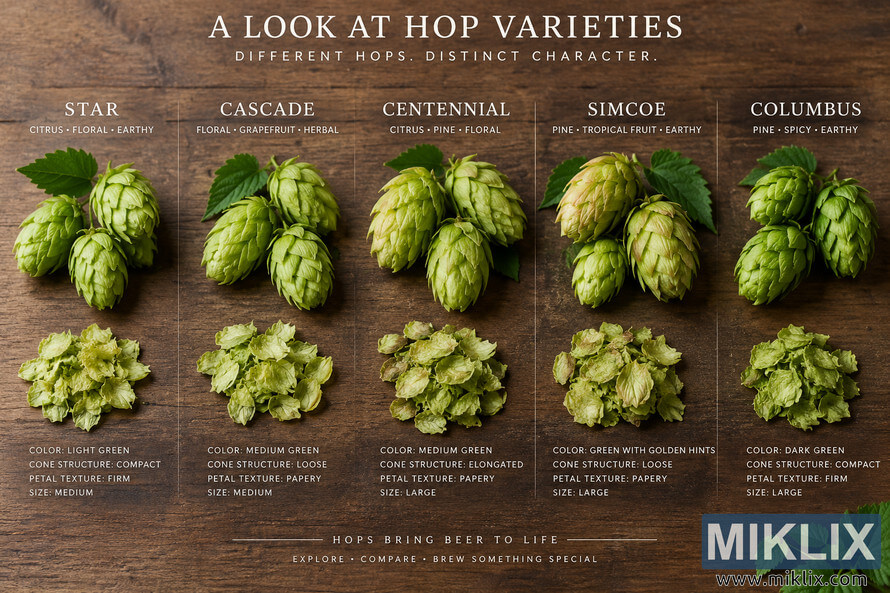
Star hops display medium-sized cone structures with a pleasing green color. The lupulin glands inside the cones contain the precious oils and acids that flavor your beer.
| Characteristic | Specification | Brewing Impact |
| Alpha Acids | 8-12% | Moderate bittering potential |
| Beta Acids | 4-6% | Good storage stability |
| Cohumulone | 24-28% | Smooth bitterness quality |
| Total Oils | 1.2-1.8 ml/100g | Strong aroma contribution |
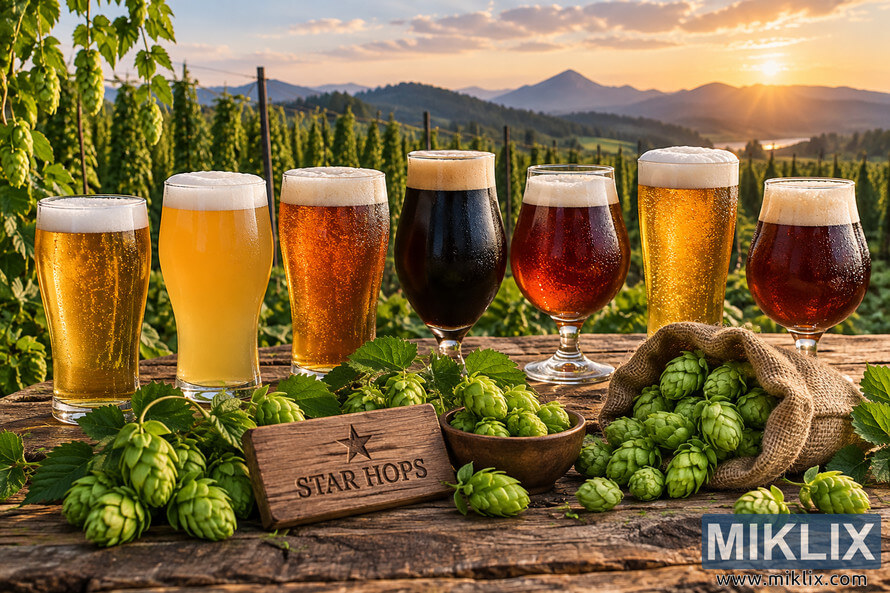
Best Beer Styles for Star Hops
Star hops shine in multiple beer styles. The versatility of this hop variety allows brewers to experiment across different brewing traditions and flavor profiles.
Click or tap the image for more information and higher resolutions.
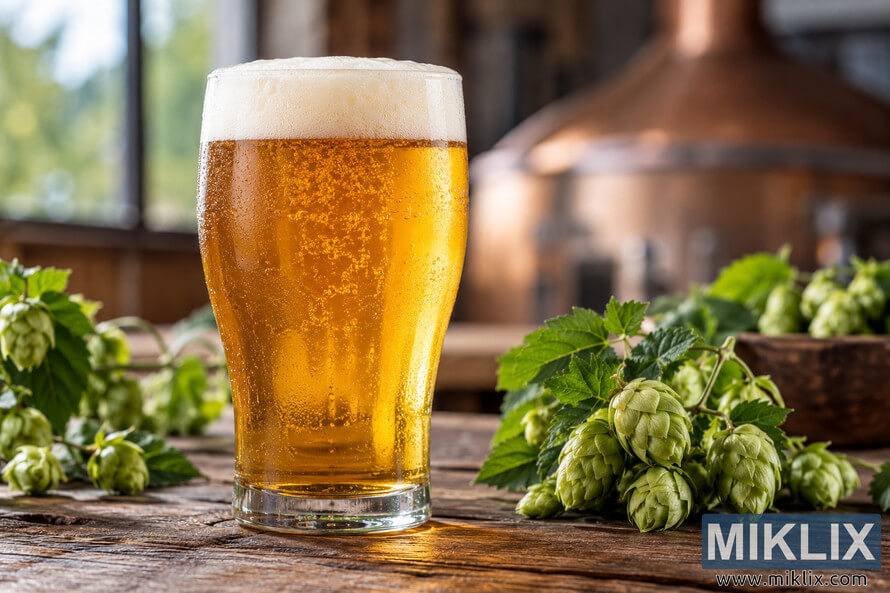
Pale Ales and India Pale Ales
American pale ales benefit tremendously from Star hops additions. The citrus and floral notes complement the malt backbone while providing a clean bitterness.
India Pale Ales showcase the hop's aromatic qualities at their best. Both West Coast and hazy IPA styles work well with Star hops as a primary or supporting variety.
Click or tap the image for more information and higher resolutions.
Wheat Beers and Belgian Styles
Wheat beers gain interesting complexity from Star hops additions. The floral and citrus characteristics harmonize beautifully with the wheat malt's natural flavors.
Belgian-style ales also pair well with this hop variety. The subtle spice notes in Star hops complement the yeast-driven flavors typical of these styles.
Lagers and Pilsners
Clean lager styles benefit from Star hops' balanced profile. The hop provides sufficient bitterness without overwhelming the delicate malt character.
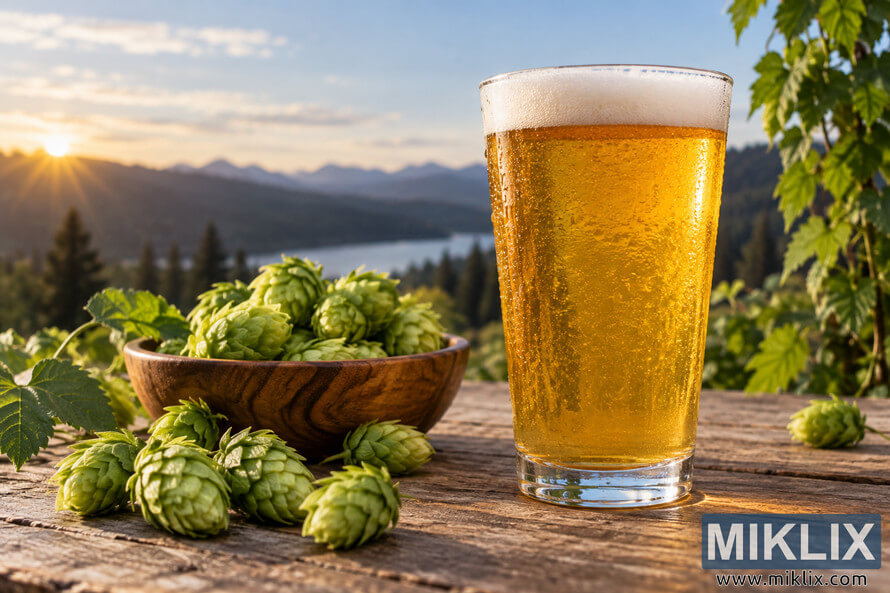
Hoppy Ales
- American Pale Ale
- India Pale Ale
- Double IPA
- Session IPA
Click or tap the image for more information and higher resolutions.
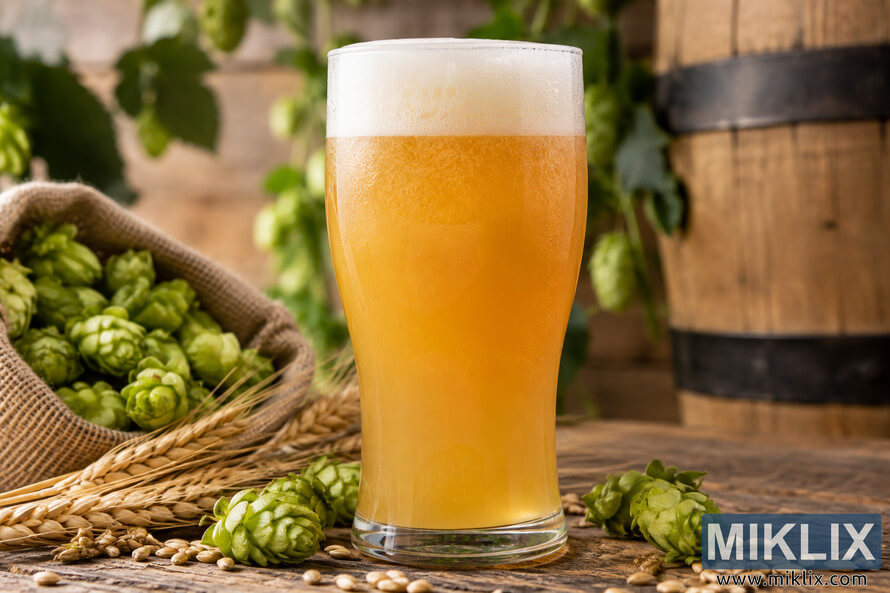
Wheat & Belgian
- American Wheat
- Witbier
- Belgian Blonde
- Saison
Click or tap the image for more information and higher resolutions.
Lagers
- American Pilsner
- Czech Pilsner
- Helles Lager
- IPL
Click or tap the image for more information and higher resolutions.
Experimental and Hybrid Styles
Don't hesitate to experiment with Star hops in unconventional applications. The variety's balanced profile makes it forgiving for creative brewing endeavors.
Optimal Usage Rates and Addition Timing
The timing and quantity of hop additions dramatically affect your beer's final character. Understanding when and how much to add ensures you get the most from Star hops.
First Wort Hopping
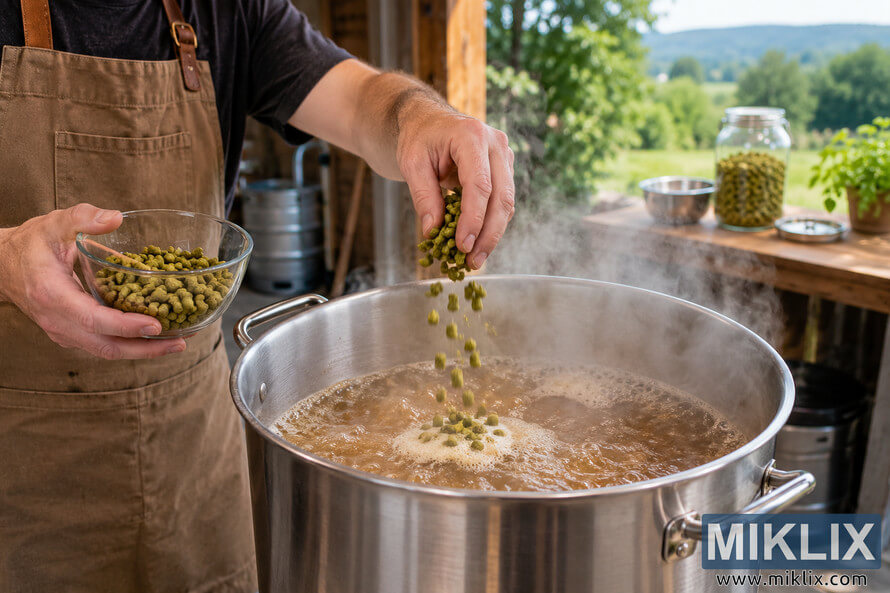
First wort hopping involves adding hops to the kettle before the boil begins. This technique with Star hops produces a smooth, integrated bitterness.
For first wort additions, consider using twenty to thirty percent of your total hop bill. This method extracts both bittering compounds and aromatic oils efficiently.
Click or tap the image for more information and higher resolutions.
Boil Additions
Traditional boil additions remain the most common way to use Star hops. The timing of these additions determines whether you emphasize bitterness or aroma.
60-Minute Addition
- Primarily for bittering
- Use 0.5-1.5 oz per 5 gallons
- Provides base bitterness level
- Minimal aroma contribution
- Good for achieving target IBU
15-Minute Addition
- Balanced flavor and aroma
- Use 0.5-1.0 oz per 5 gallons
- Adds hop flavor character
- Some aroma preservation
- Versatile addition point
Flameout Addition
- Maximum aroma impact
- Use 1.0-2.0 oz per 5 gallons
- Preserves volatile oils
- Minimal bittering effect
- Best for hop character
Whirlpool and Hop Stand Techniques
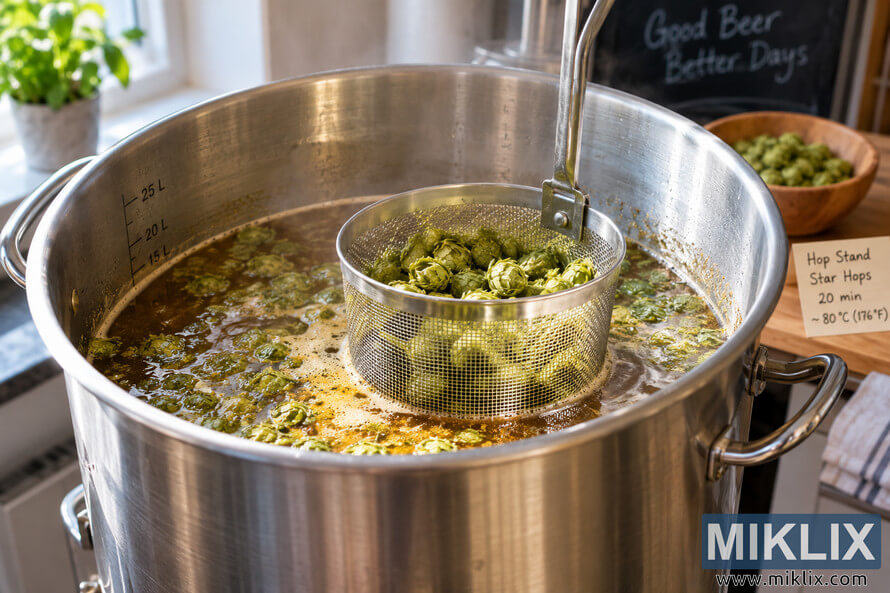
Whirlpool additions occur after the boil, when the wort temperature drops slightly. This technique captures Star hops' aromatic qualities while minimizing bitterness extraction.
For optimal results, add hops when wort reaches between one hundred seventy and one hundred eighty degrees Fahrenheit. Allow the hops to steep for fifteen to thirty minutes.
Click or tap the image for more information and higher resolutions.
Dry Hopping Applications
Dry hopping adds powerful aroma without increasing bitterness. Star hops excel in dry hop applications, contributing bright citrus and floral notes.
Add dry hops during or after primary fermentation. Most brewers find three to five days of contact time provides the best results.
| Addition Timing | Temperature | Typical Amount (5 gal) | Primary Effect |
| First Wort | Before boil | 0.5-1.0 oz | Smooth bitterness |
| 60 Minutes | 212°F / 100°C | 0.5-1.5 oz | Bittering |
| 15 Minutes | 212°F / 100°C | 0.5-1.0 oz | Flavor |
| Whirlpool | 170-180°F / 77-82°C | 1.0-2.0 oz | Aroma |
| Dry Hop | 60-68°F / 16-20°C | 1.0-3.0 oz | Maximum aroma |
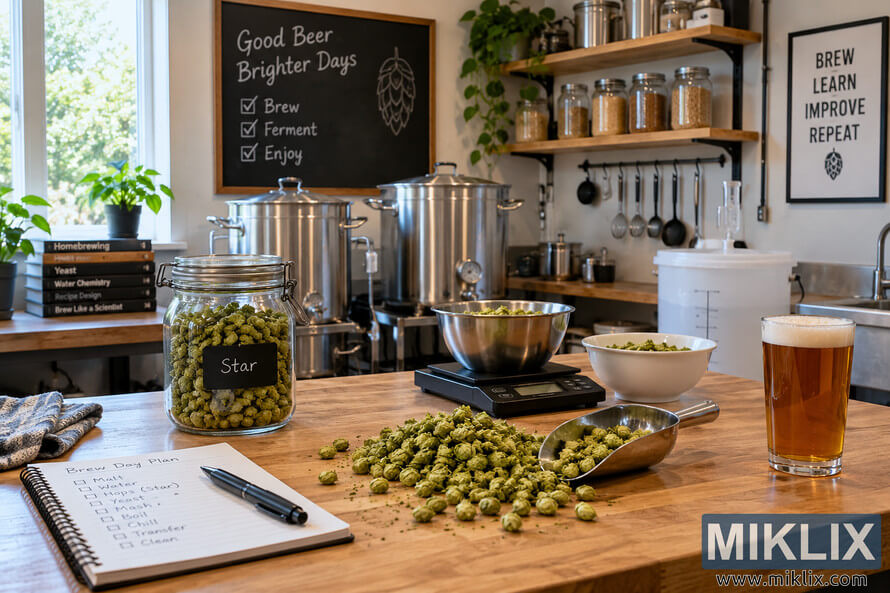
Click or tap the image for more information and higher resolutions.
Selecting Quality Star Hops
Always purchase hops from reputable suppliers who provide harvest date information. Fresher hops deliver superior aroma and more predictable alpha acid levels.
Look for hops stored in oxygen-barrier packaging. Proper packaging protects the delicate oils and acids from degradation.
Signs of Quality Hops
- Bright green color without brown spots
- Strong, fresh aroma when opened
- Recent harvest date clearly marked
- Vacuum-sealed or nitrogen-flushed packaging
- Lab analysis results provided
- Proper storage temperature maintained
Red Flags to Avoid
- Brown or oxidized appearance
- Weak or cheesy off-aromas
- Unknown or old harvest date
- Poor packaging or damaged seals
- No alpha acid information
- Stored at room temperature
Measuring and Scaling Recipes
Accurate measurement ensures consistent results batch after batch. Invest in a quality digital scale that measures to the tenth of an ounce.
When scaling recipes up or down, maintain the same hop-to-wort ratio. A five-gallon batch requiring one ounce of hops would need two ounces for a ten-gallon batch.
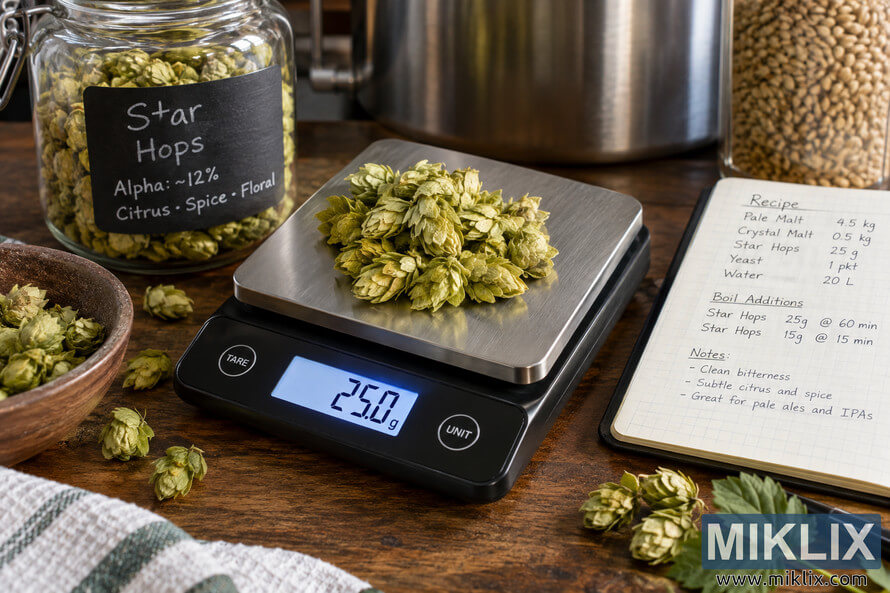
Click or tap the image for more information and higher resolutions.
Water Chemistry Considerations
Water chemistry affects how hop bitterness is perceived in your finished beer. Higher sulfate levels tend to accentuate hop character and create a drier finish.
For Star hops showcase beers, consider a sulfate-to-chloride ratio favoring sulfate. A two-to-one ratio often works well for hop-forward styles.
Preventing Hop Matter Issues
Hop debris can cause problems during fermentation and packaging. Use a hop bag or spider strainer to contain pellets during boil additions.
Avoid Hop Creep
Excessive dry hopping can cause renewed fermentation through enzyme activity. Monitor gravity readings when using large dry hop charges to prevent over-carbonation.
Managing Hop Utilization
Boil vigor affects hop utilization rates. A rolling boil extracts alpha acids more efficiently than a gentle simmer.
Wort gravity also impacts utilization. Higher gravity worts extract fewer alpha acids, requiring adjustment to reach target bitterness levels.
Beginner Tips
Start your Star hops journey with these foundational practices.
- Begin with proven recipes using Star hops
- Keep detailed brewing notes for each batch
- Store hops properly immediately after opening
- Measure carefully using a reliable scale
Advanced Techniques
Elevate your brewing with these sophisticated methods.
- Experiment with hop stands at different temperatures
- Try biotransformation dry hopping during fermentation
- Blend Star hops with complementary varieties
- Adjust water chemistry to enhance hop character
Common Mistakes
Avoid these typical errors when working with Star hops.
- Using old or improperly stored hops
- Adding too much too early in brewing experience
- Neglecting temperature control during hopping
- Failing to sanitize dry hopping equipment
Troubleshooting
Solutions for common Star hops brewing challenges.
- Grassy flavors indicate excessive hop contact time
- Weak aroma suggests insufficient late additions
- Harsh bitterness means too much early boil addition
- Oxidized character points to storage problems
Storage Recommendations for Maximum Freshness
Proper storage preserves the quality of your Star hops investment. The delicate oils and acids degrade quickly without appropriate protection from oxygen, light, and heat.
Optimal Storage Conditions
Freeze your hops immediately if you won't use them within a few days. Freezer storage dramatically slows degradation of alpha acids and aromatic compounds.
Temperature control is critical for long-term hop storage. Keep hops at or below freezing temperatures whenever possible.
Storage Temperature Guidelines
Ideal: 0°F (-18°C) or below in freezer
Acceptable: 32-40°F (0-4°C) in refrigerator
Avoid: Room temperature storage for more than a few hours
Packaging and Container Selection
Oxygen is the primary enemy of hop freshness. Vacuum-sealed bags or oxygen-barrier packaging provide the best protection.
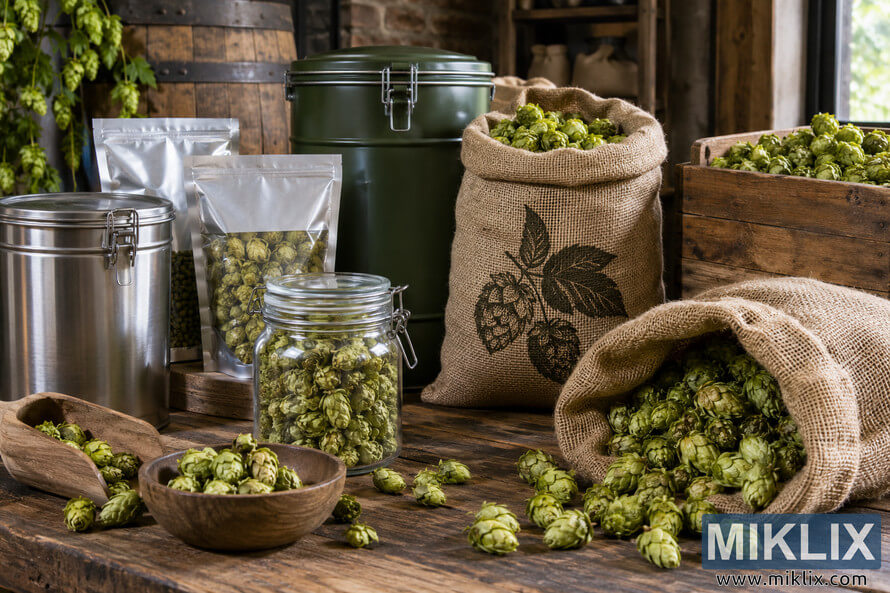
Click or tap the image for more information and higher resolutions.
If you open a larger package, repackage unused portions immediately. Use a vacuum sealer or squeeze out as much air as possible before resealing.
Labeling and Inventory Management
Label every hop package with the variety name, harvest year, and date opened. This simple habit prevents confusion and helps track hop age.
- Record the harvest date on the package
- Note the date you opened the original package
- Include alpha acid percentage if known
- Mark the package with the supplier name
- Track quantity remaining for recipe planning
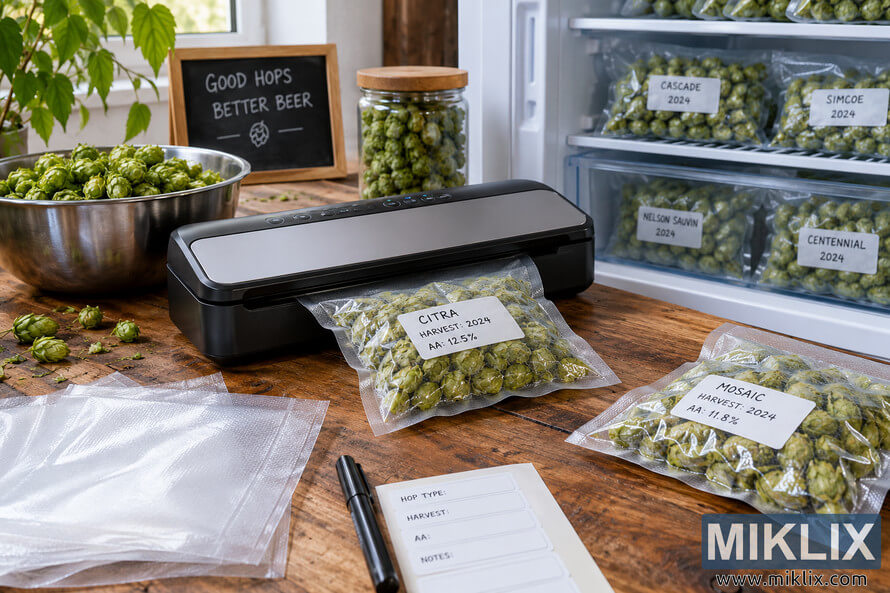
Click or tap the image for more information and higher resolutions.
Monitoring Hop Degradation
Check stored hops periodically for signs of degradation. Fresh Star hops should maintain their bright green color and strong citrus aroma.
| Storage Method | Expected Freshness Duration | Alpha Acid Retention |
| Freezer (vacuum-sealed) | 12-24 months | 90-95% |
| Freezer (zip-lock bag) | 6-12 months | 80-85% |
| Refrigerator (vacuum-sealed) | 3-6 months | 75-80% |
| Room temperature | 1-2 weeks | 60-70% |
Buying the Right Quantity
Purchase hops in quantities appropriate for your brewing frequency. Buying in bulk saves money, but only if you can use the hops before they degrade.
For occasional brewers, smaller packages make more sense. Frequent brewers benefit from larger purchases divided into smaller, vacuum-sealed portions.
Premium Hop Storage Solutions
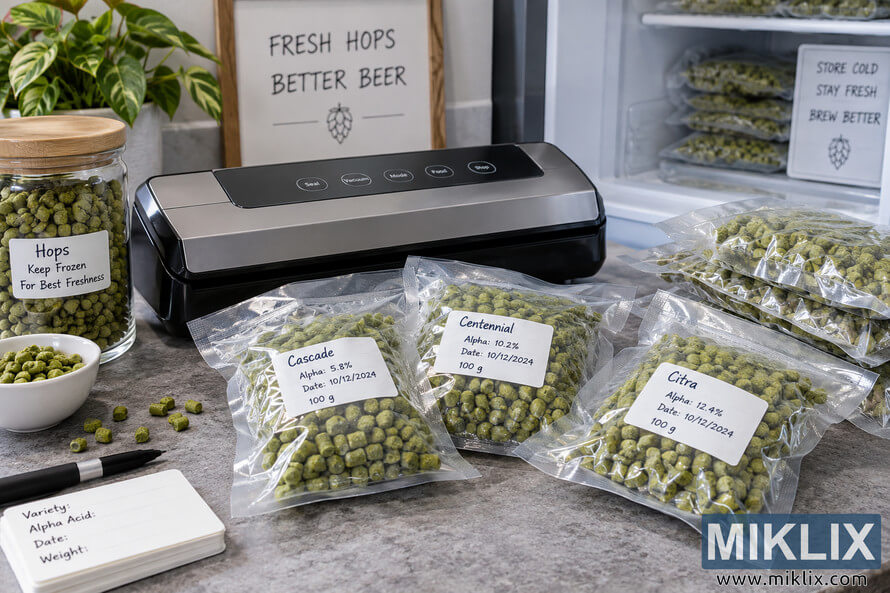
Keep your Star hops fresh with professional-grade storage equipment. Vacuum sealers and oxygen-barrier bags preserve hop quality.
- Commercial-grade vacuum sealer
- Food-safe oxygen-barrier bags
- Reusable vacuum containers
- Oxygen-absorbing packets
Click or tap the image for more information and higher resolutions.
Notable Brewing Considerations and Best Practices
Beyond basic usage guidelines, several important considerations affect your success with Star hops. Understanding these factors helps you make better brewing decisions.
Pairing Star Hops with Other Varieties
Star hops blend exceptionally well with other hop varieties. Consider complementary pairings that enhance the overall hop profile.
Citrus-forward hops like Cascade or Centennial create synergy with Star hops. The combined effect produces a more complex aroma than either variety alone.
Complementary Pairings
These varieties enhance Star hops' best qualities.
- Cascade for additional citrus notes
- Centennial for balanced bitterness
- Amarillo for tropical fruit complexity
- Citra for bold citrus amplification
Contrasting Pairings
Create complexity through contrasting characteristics.
- Fuggle for earthy undertones
- Saaz for noble hop character
- Warrior for clean bittering
- Magnum for neutral bitterness
Experimental Blends
Try these adventurous combinations for unique results.
- Galaxy for passion fruit notes
- Mosaic for berry complexity
- Nelson Sauvin for wine-like character
- Simcoe for piney resin balance
Click or tap the image for more information and higher resolutions.
Adjusting for Seasonal Variations
Hop crops vary slightly from year to year based on growing conditions. Alpha acid percentages can fluctuate, requiring recipe adjustments.
Always check the alpha acid analysis for your specific lot. Adjust addition rates to maintain consistent bitterness levels across batches.
Understanding Biotransformation
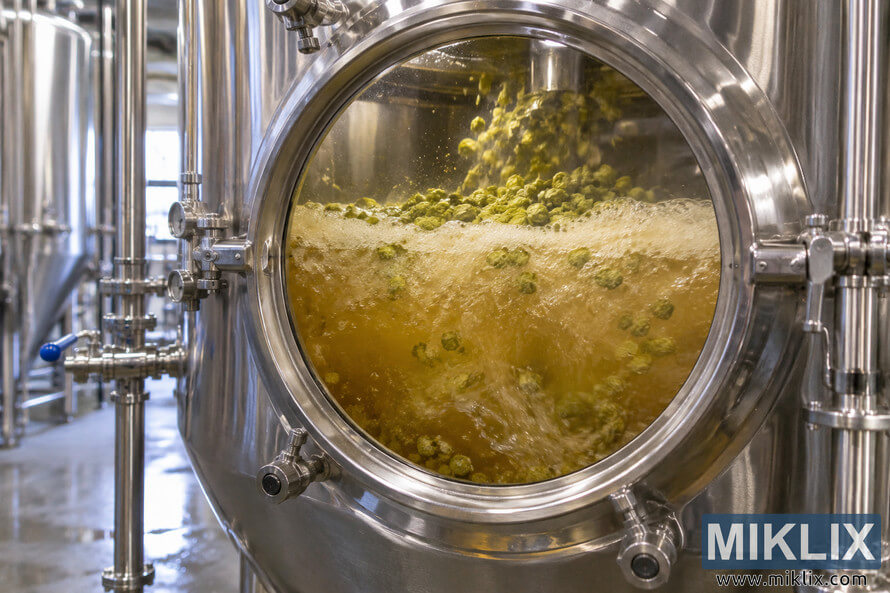
Dry hopping during active fermentation allows yeast enzymes to modify hop compounds. This biotransformation creates unique flavors not achieved through standard dry hopping.
Add Star hops when fermentation is about fifty percent complete for biotransformation effects. Monitor for hop creep and potential over-carbonation.
Click or tap the image for more information and higher resolutions.
Sanitation When Dry Hopping
Dry hopping introduces potential contamination risks. While hop acids provide some antimicrobial protection, proper sanitation remains essential.
Sanitize any equipment that contacts dry hops. Use sanitized hop bags or add pellets directly to sanitized fermenters.
Calculating IBU Contributions
International Bitterness Units help predict perceived bitterness. Various formulas estimate IBU based on alpha acids, boil time, and wort gravity.
Quick IBU Estimation
For approximate IBU calculation: (Ounces of hops × Alpha acid % × Utilization % × 7490) / (Gallons × Wort gravity)
Utilization varies by boil time: 60 min = 30%, 15 min = 15%, Flameout = 5%
Troubleshooting Common Issues
Even experienced brewers encounter challenges. Recognizing problems early allows for timely corrections.
Why does my beer taste grassy or vegetative?
Excessive dry hop contact time or too much vegetative matter can cause grassy flavors. Limit dry hopping to three to five days and remove hops promptly.
How can I increase hop aroma in my finished beer?
Focus on late additions, whirlpool hops, and dry hopping. These techniques preserve volatile aromatic compounds that boil off during extended boiling.
My bitterness seems harsher than expected. What happened?
High mineral content, excessive boil additions, or old oxidized hops can create harsh bitterness. Check water chemistry and hop freshness first.
Can I substitute Star hops in recipes calling for other varieties?
Yes, Star hops can substitute for similar varieties like Cascade or Centennial. Adjust quantities based on alpha acid differences to maintain desired bitterness levels.
Record Keeping for Continuous Improvement
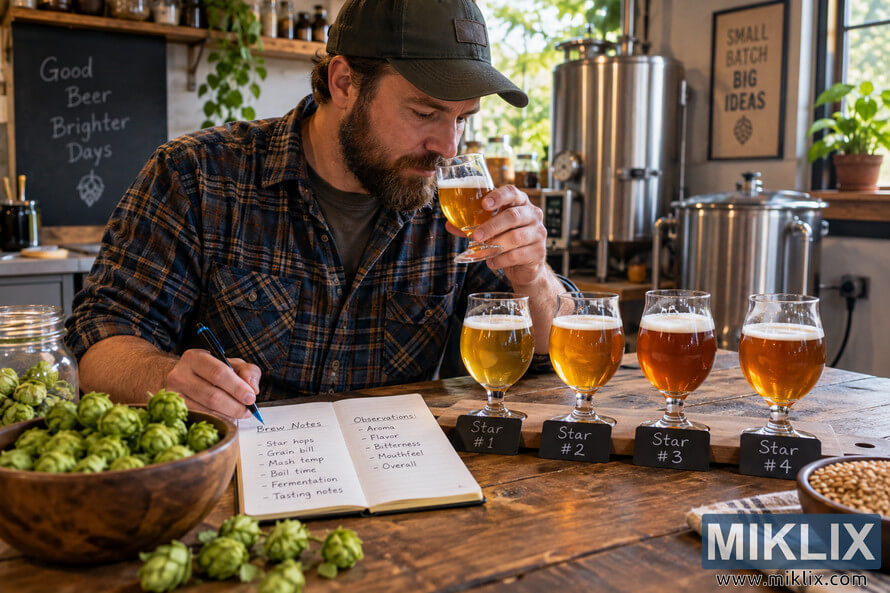
Detailed brewing records accelerate your learning and help replicate successful batches. Note every variable that might affect the outcome.
Track Star hops usage rates, addition timings, and sensory impressions. Review notes before brewing to refine your approach with each iteration.
Conclusion
Star hops offer homebrewers a versatile and rewarding ingredient for creating exceptional beers. From pale ales to pilsners, this variety delivers consistent performance across multiple styles.
The journey to mastering Star hops begins with quality ingredients and proper technique. Pay attention to storage, measure carefully, and keep detailed notes of each brewing session.
Your experimentation with different addition timings and usage rates will develop your palate and brewing intuition. Each batch teaches valuable lessons that inform future brewing decisions.
Remember that brewing is both art and science. While guidelines provide a foundation, your personal preferences and creative instincts drive innovation in your recipes.
The homebrewing community continues to discover new applications for Star hops. Share your experiences, learn from other brewers, and contribute to the collective knowledge.
Start your next brew day with confidence, knowing you have the information needed to showcase Star hops effectively. Your friends and family will appreciate the delicious results of your efforts.

Click or tap the image for more information and higher resolutions.
Further Reading
If you enjoyed this post, you may also like these suggestions: