
Image: Proper Hop Storage Setup with Vacuum Sealer and Freezer Bags
Published: October 29, 2026 at 8:06:39 PM UTC
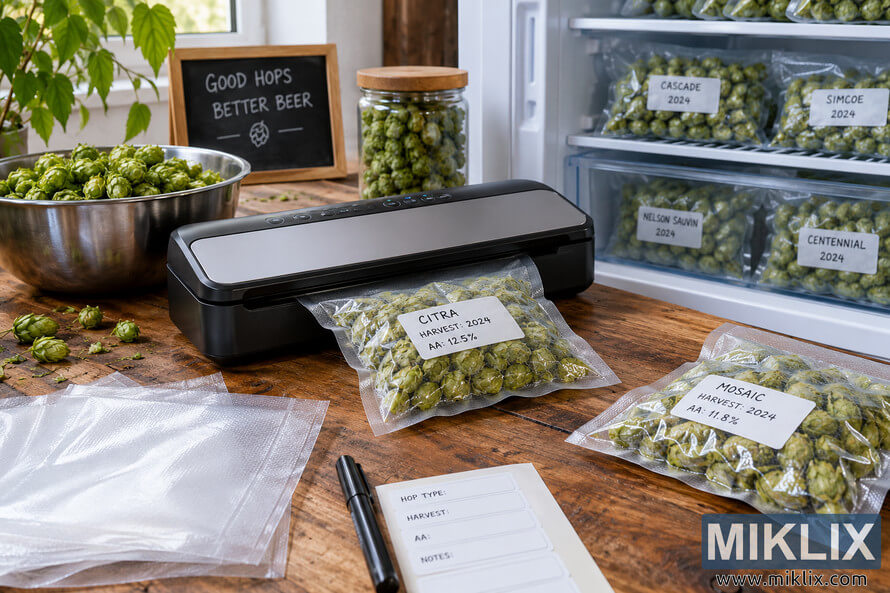
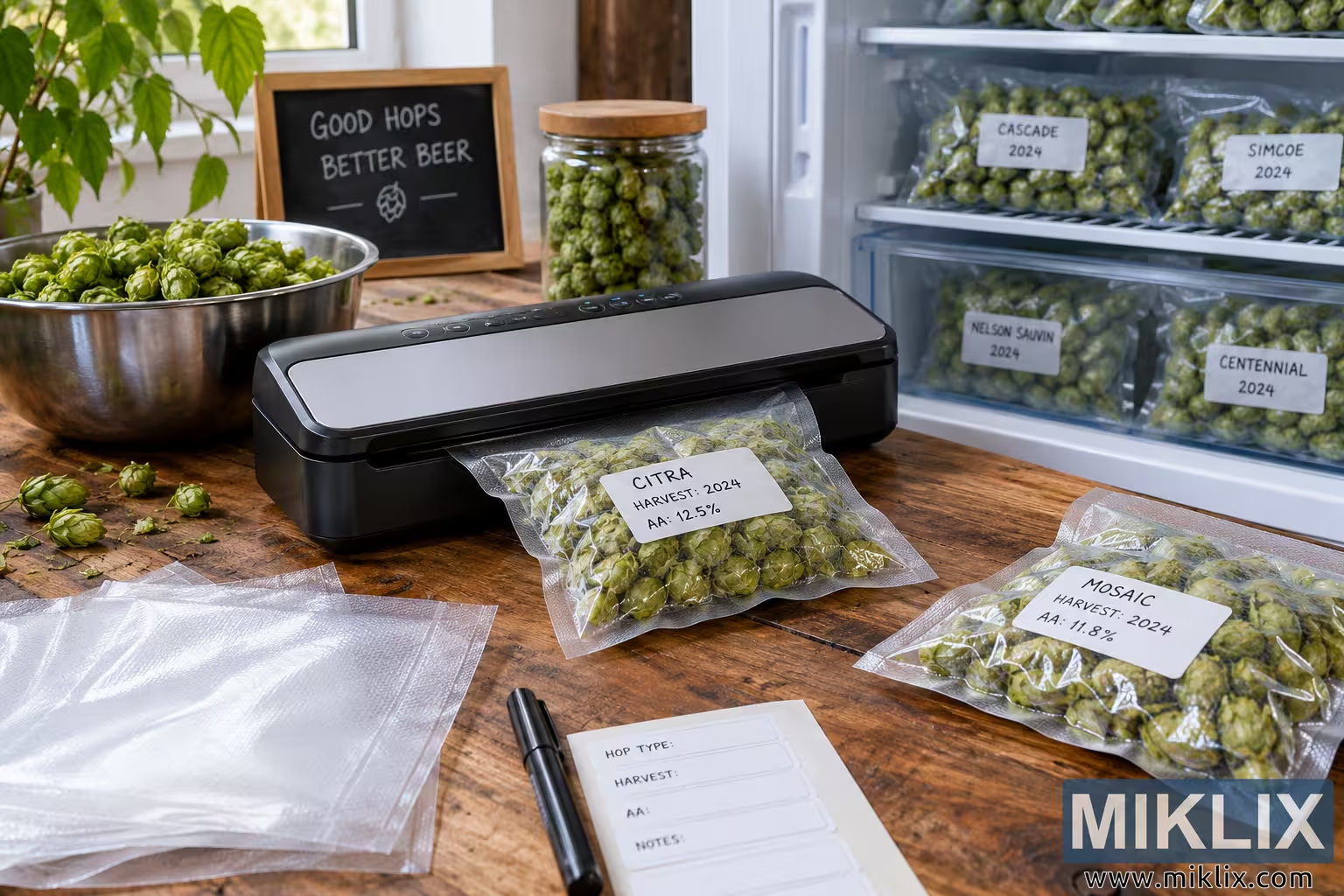
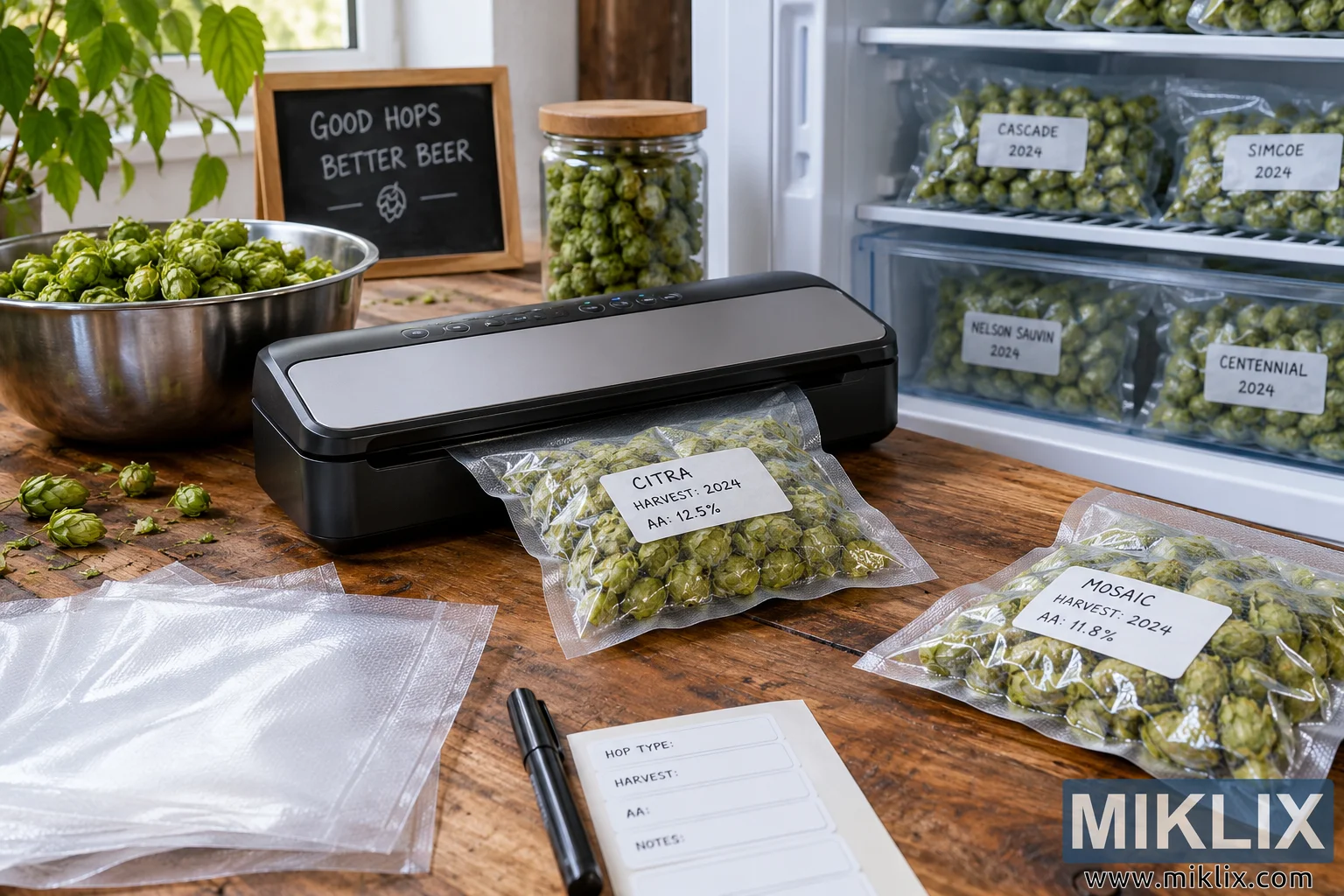
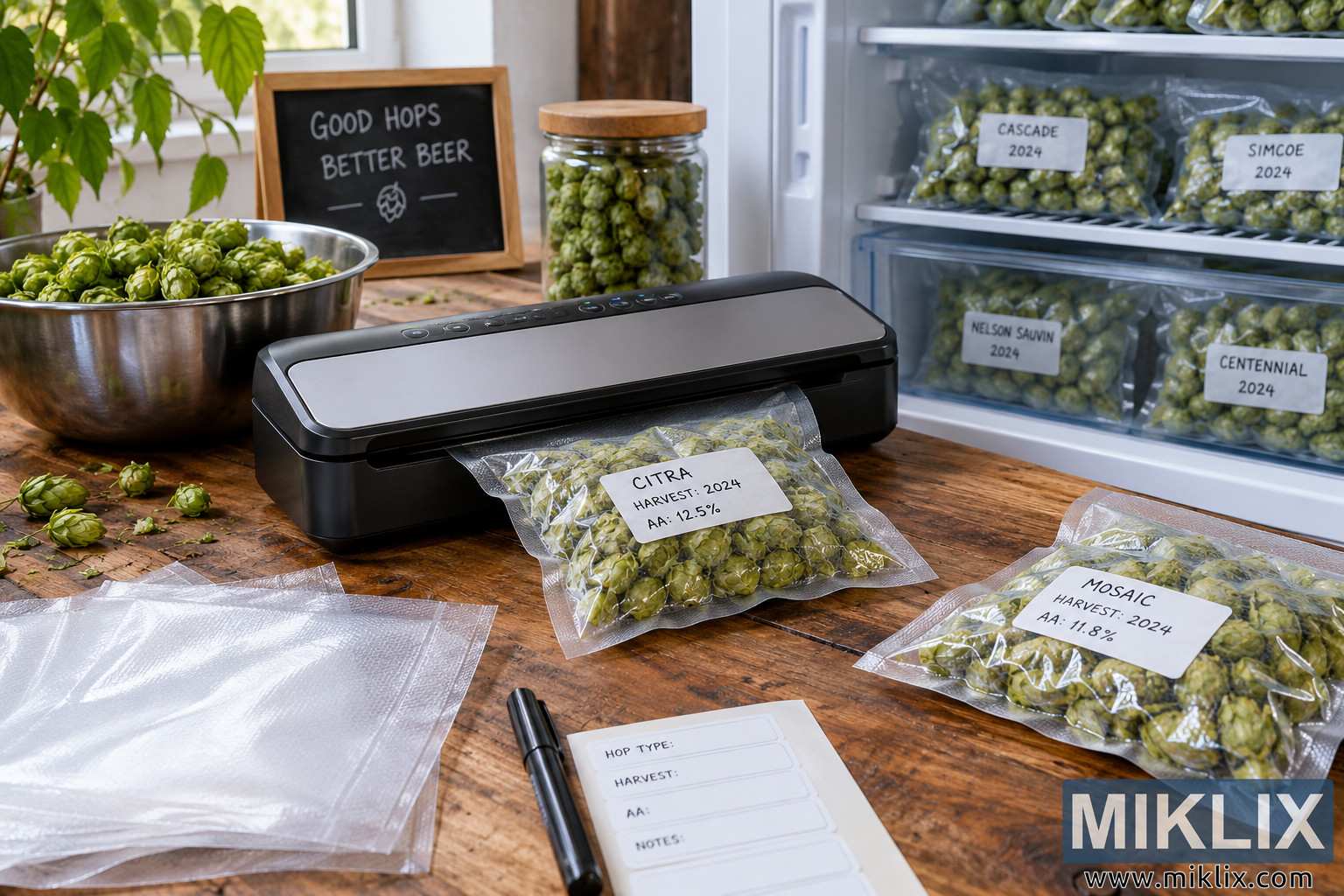
A detailed hop storage setup showing fresh hops, an unbranded vacuum sealer, labeled airtight freezer bags, and organized frozen hop packages for long-term preservation.
Available versions of this image
The image files available for download below are less compressed and higher resolution - and as a result of that, higher quality - than the images embedded in articles and pages on this website, which are more optimized for file size in order to reduce bandwidth consumption.
Regular size (1,536 x 1,024)
Large size (3,072 x 2,048)
Very large size (4,608 x 3,072)
Extra large size (6,144 x 4,096)
Comically large size (1,048,576 x 699,051)
- Still uploading... ;-)
Image description
A bright, highly detailed landscape photograph presents a carefully organized hop storage and preservation setup in a clean home kitchen or small craft-brewing workspace. The scene is arranged across a broad, rustic wooden workbench with a warm, visibly grained surface. Natural daylight enters from a window in the upper-left portion of the image, illuminating the fresh green hop cones, transparent storage bags, metal equipment, and surrounding workspace. The overall composition communicates a practical process for preparing hops for longer-term frozen storage while keeping individual varieties clearly separated and identified.
The central object is a compact, unbranded vacuum-sealing machine positioned prominently on the wooden counter. Its body is predominantly black with a smooth metallic-gray upper panel and a simple row of controls along the top edge. No commercial logo or recognizable brand name is visible. A transparent textured vacuum bag extends from the front of the machine toward the viewer. Inside the bag are numerous green hop cones compressed together for storage. A white handwritten label attached to the package identifies the contents as Citra hops from the 2024 harvest and notes an alpha-acid value of 12.5 percent. The flattened shape of the package and the close-fitting plastic demonstrate the intended result of vacuum sealing: minimizing excess air around the hops before they are placed into cold storage.
To the right of the vacuum sealer is another prepared package of hops resting diagonally on the workbench. This clear bag is also tightly packed with green hop cones and carries a white handwritten label identifying the variety as Mosaic, with a 2024 harvest date and an alpha-acid value of 11.8 percent. The two labeled packages in the foreground emphasize a systematic approach in which hop variety, harvest year, and useful brewing information are recorded before storage. Several unused transparent vacuum-sealer bags lie stacked in the lower-left foreground, showing the supplies used to continue packaging additional portions.
Near the bottom center of the image, a black marker rests beside a sheet of blank storage labels. The label template contains separate fields for hop type, harvest information, alpha-acid information, and notes. These small organizational details reinforce the practical purpose of the scene and suggest a repeatable workflow: portion the hops, place them into appropriate bags, label each package, remove the air with the vacuum sealer, and transfer the sealed packages to the freezer.
Fresh hops are displayed on the left side of the workbench. A large stainless-steel mixing bowl is filled generously with vivid green hop cones, with several additional cones scattered naturally across the wooden surface nearby. The hops have layered, overlapping bracts and varied shades of green, giving them a fresh and tactile appearance. Behind the bowl stands a small framed chalkboard with the handwritten message 'GOOD HOPS BETTER BEER' and a simple hop-cone illustration. The sign adds a casual craft-brewing atmosphere without displaying any commercial branding. A leafy green houseplant and the bright window behind it soften the utilitarian workspace and contribute to the fresh, natural character of the photograph.
A tall clear glass jar with a wooden lid stands behind the vacuum sealer near the center of the composition. It is filled with additional hop cones, visually connecting the loose hops on the left with the sealed packages in the foreground. The transparent container makes the distinctive texture and green color of the hops clearly visible. Its simple, unbranded design complements the practical equipment elsewhere in the scene.
The right side of the image shows an open white freezer containing neatly organized packages of hops. Multiple transparent bags are arranged horizontally on shelves and inside a lower compartment or drawer. Visible white labels identify several hop varieties and their storage year, including Cascade 2024, Simcoe 2024, Nelson Sauvin 2024, and Centennial 2024. The bags appear compact and consistently arranged, illustrating how vacuum-packed hops can be separated by variety and stacked efficiently inside a freezer. Additional bags of green hops are visible on an upper shelf, extending the impression of an established and well-maintained storage system.
The photograph uses a wide landscape composition that allows the entire hop-storage workflow to be understood in a single scene. Fresh loose hops and the bowl occupy the left side, the vacuum-sealing equipment dominates the center, labeled finished packages occupy the foreground, and organized frozen storage fills the right side. This left-to-right visual progression subtly illustrates the preservation process from fresh hops to sealed portions and finally to freezer storage. The warm brown wood, fresh green hops, cool stainless steel, transparent plastic, and clean white freezer create a balanced palette with strong visual separation between the different components.
Lighting is bright, soft, and natural, producing realistic highlights on the stainless-steel bowl, glass jar, plastic bags, and metallic surface of the vacuum sealer. Fine details such as wrinkles in the vacuum bags, reflections on the freezer shelves, handwritten labels, individual hop bracts, and scratches and grain in the wooden counter contribute to the photorealistic appearance. The depth of field keeps the important equipment and packaged hops sharply readable while preserving a natural photographic sense of space. Overall, the image depicts an orderly, practical, and approachable hop-storage station centered on vacuum sealing, clear labeling, portion control, and freezer storage, with no visible commercial brands.
The image is related to: Hops in Beer Brewing: Star